How to Start an Online Directory Business & Earn $5K/Month in 2026

Visual overview of How to Start an Online Directory Business & Earn $5K/Month in 2026

Summarize

Most entrepreneurs chase complex business models when one of the simplest—and most profitable—opportunities sits right under their noses. An online directory business can generate consistent $5K monthly revenue by connecting local businesses with customers who are actively searching for them. Unlike e-commerce stores that require inventory management or SaaS products demanding constant development, directories thrive on a straightforward value exchange: businesses pay for visibility, users get curated recommendations, and you profit from the connection.

Here’s what almost nobody tells you: the best directory businesses don’t compete with Yelp or Google Maps. They win by going hyper-niche—serving specialty contractors in mid-sized cities, connecting eco-conscious consumers with sustainable brands, or listing certified professionals in highly regulated industries. The U.S. Small Business Administration reports that focused market research and niche targeting remain the top success factors for new online ventures, and directories exemplify this principle perfectly.

TL;DR – Quick Takeaways

  • Niche specificity beats broad coverage – Target a defined vertical or locality rather than trying to list every business type
  • Layered monetization drives $5K/month – Combine free basic listings, paid featured placements, and lead-generation fees
  • Seed quality beats quantity early – Launch with 50-100 verified, high-value listings to establish credibility before scaling
  • No-code platforms reduce launch risk – WordPress directory plugins and turnkey solutions let you validate demand before heavy investment
  • Traffic + conversion = revenue – Focus equally on SEO-driven visitor acquisition and optimizing listing-to-payment conversion rates

Market Validation & Business Model

Before you write a single line of code or register a domain, you need to answer one question: will businesses in your chosen niche actually pay for listings? Too many directory founders skip this validation step and build elaborate platforms for markets that don’t exist. I’ve watched aspiring entrepreneurs spend months perfecting directory features for “artisanal candle makers in the Pacific Northwest” only to discover there are exactly 14 potential customers—and none willing to pay.
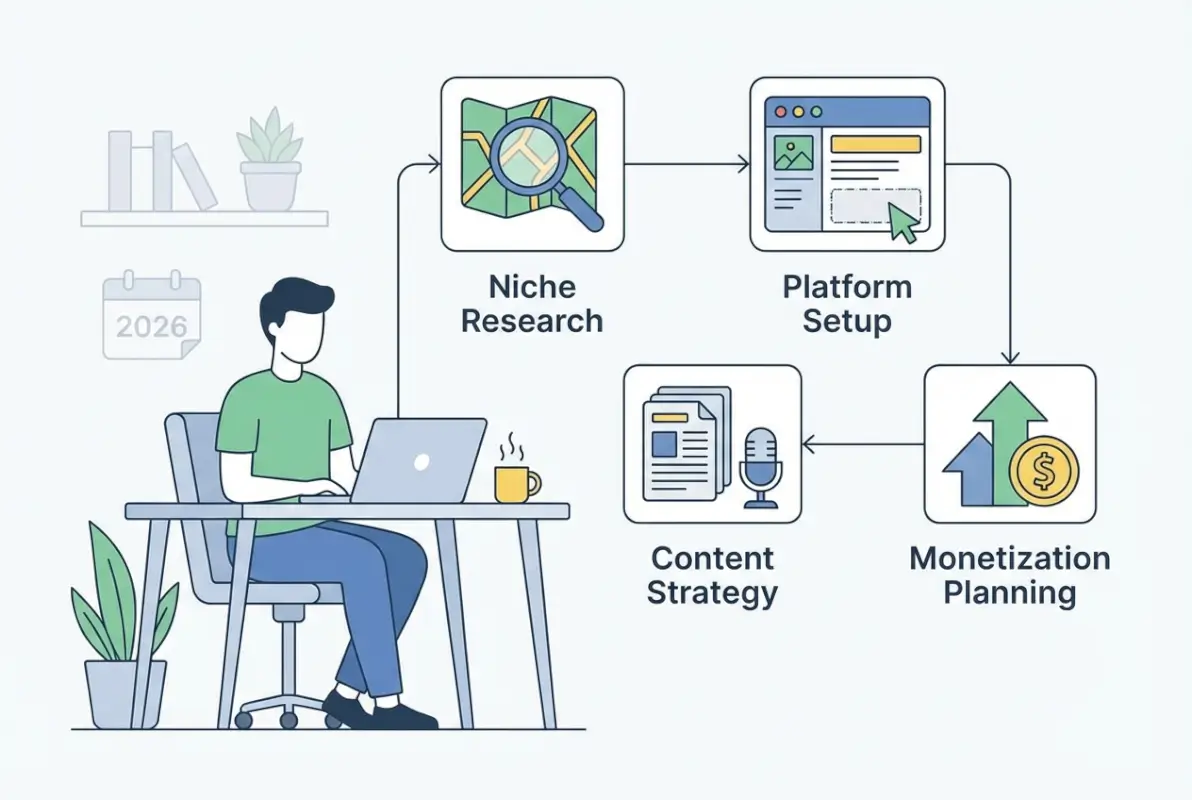
Core concepts behind How to Start an Online Directory Business & Earn $5K/Month in 2026

The smartest approach starts with reverse-engineering demand. Look for niches where businesses already spend money on lead generation but struggle with fragmented discovery options. Home service contractors, specialized medical practitioners, and B2B consultants typically fit this profile. According to data from the Interactive Advertising Bureau, digital advertising and online listings continue to grow as SMBs shift budgets toward measurable lead-generation channels, creating a natural tailwind for directory models.

Run focused competitive analysis using tools you already have (Google searches, LinkedIn prospecting, even Facebook groups). If you find 3-5 competitors already monetizing in your target niche, that’s validation, not a red flag. Competition proves the market exists and buyers have established purchasing behavior. Your job is differentiation—better user experience, tighter geographic focus, or superior vetting standards.

💡 Pro Tip: Survey 20-30 potential listing clients before building anything. Ask what they currently spend on directories, lead generation, or local advertising. If average monthly spend is $200+, your monetization model has room to work.

Market validation tactics

Smart validation doesn’t require expensive market research firms. Start by identifying 100 businesses in your target niche using free tools—Google Maps, industry associations, LinkedIn searches. Email 30 of them with a simple pitch: “I’m building a curated directory for [niche]. Would a featured listing that costs $X/month and generates Y qualified leads interest you?” Track response rates and objections. The U.S. Small Business Administration’s business planning resources emphasize this kind of primary research as the foundation for realistic revenue projections.

Interview at least 5 businesses that respond positively. Ask about their current marketing spend, how they generate leads today, and what frustrations they face with existing directories. These conversations reveal pricing tolerance, feature priorities, and competitive gaps. One founder I know discovered that wedding photographers in her city were paying $400/month for outdated association directories—validation that a modern, SEO-optimized alternative could command similar pricing.

Test demand with a lightweight MVP (minimum viable product) before committing to full development. A simple landing page with “Submit Your Business” and “Premium Listing Waitlist” CTAs can validate interest with zero coding. Run $100-200 in targeted Google or Facebook ads to drive traffic. If you can’t get 10 email signups from 1,000 visitors, your niche may be too narrow or your value proposition unclear.

Revenue streams & pricing

Most successful directories layer multiple revenue streams rather than relying on a single monetization method. The foundation is typically a freemium model: basic listings are free (to populate your directory quickly), while premium placements, enhanced profiles, or featured positioning command monthly or annual fees. This mirrors how profitable online business directories structure their monetization, balancing accessibility for new listings with premium options for established businesses.

Pricing should reflect the value you deliver, not arbitrary numbers. If your directory generates 3-5 qualified leads per month for a plumber, and each lead is worth $200-500 in potential revenue, a $99/month premium listing is rational. Use conservative projections initially—it’s easier to raise prices as you prove ROI than to discount your way into profitability. The directory profit calculators used by industry practitioners suggest targeting 15-20% conversion from free to paid listings once you exceed 200 total businesses.

$5,000/month
achievable with 50 premium listings at $99/month + ancillary revenue streams

Beyond core listings, consider lead-generation fees (pay-per-lead or commission-based), display advertising once you reach meaningful traffic, and affiliate partnerships with complementary service providers. A directory for fitness trainers might earn affiliate commissions from workout equipment retailers or nutrition supplement brands. Stack these incrementally rather than launching everything at once—complexity kills early-stage focus.

Key Takeaway: Survey 30 target businesses to confirm $150+ monthly marketing spend before building your directory platform.

Competitive Landscape & Top Tactics

The directories that rank on page one of Google and generate sustainable revenue share specific structural patterns. After analyzing dozens of successful niche directories, from legal professional networks to local contractor listings, four elements appear consistently: laser-focused targeting, obsessive listing quality, user-first design, and transparent monetization that doesn’t compromise trust. Understanding these patterns lets you shortcut years of trial-and-error.
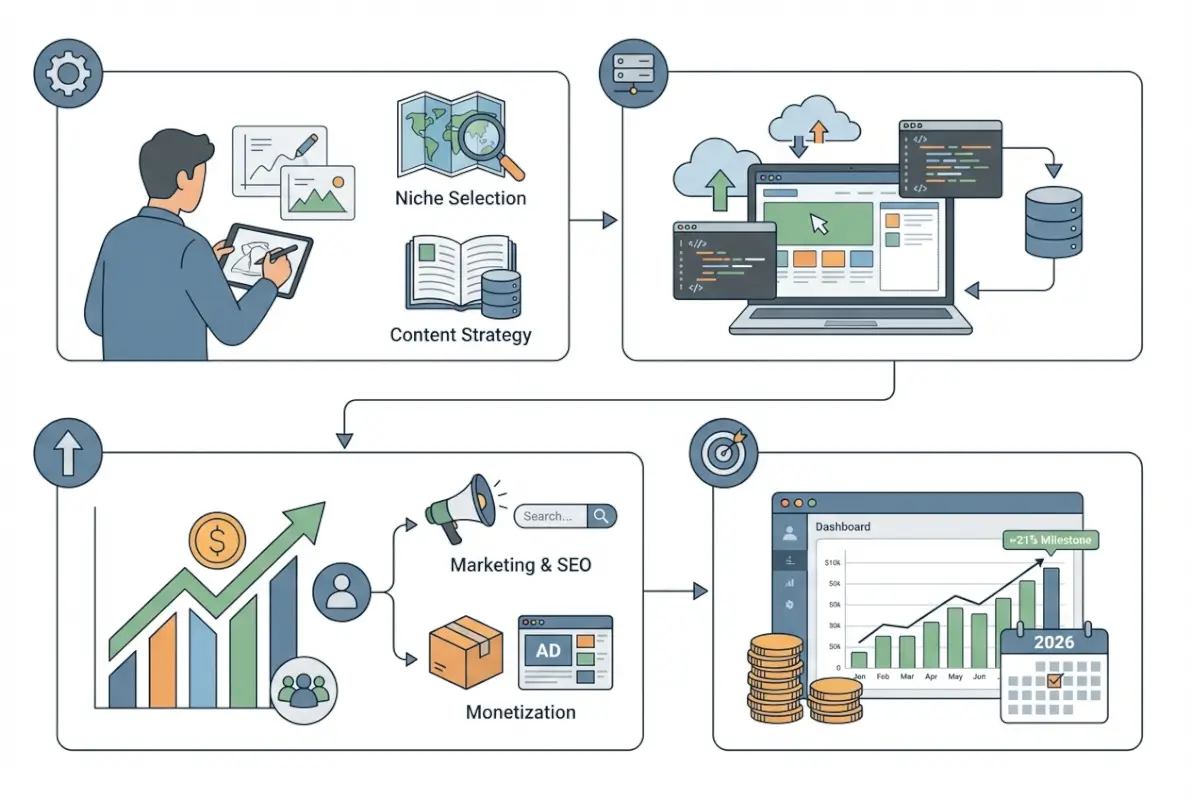
Step-by-step process for How to Start an Online Directory Business & Earn $5K/Month in 2026

What separates winners from the thousands of abandoned directory projects cluttering the internet? Winners treat their directory as a product that solves a specific pain point, not just a database with a search function. A top-performing directory for sustainable fashion brands doesn’t just list companies—it verifies certifications, curates collections around user values, and provides transparent sourcing information. That curation creates value worth paying for, both for brands seeking visibility and consumers seeking trust.

The monetization approaches that work best avoid the “Yellow Pages trap” of charging for basic inclusion. Modern directories succeed by making basic listings free or very low-cost (to achieve critical mass), then charging premium fees for enhanced visibility, verification badges, lead-forwarding services, or promoted placements in search results. This model aligns incentives: businesses pay more as they get more value, and users benefit from a comprehensive, well-populated directory.

Common features of top-ranking articles

When you study the guides and tutorials that rank highly for “how to start a directory business,” you’ll notice they emphasize niche selection obsessively (often dedicating 20-30% of content to this topic alone). That’s because niche clarity determines everything downstream—your SEO strategy, content marketing approach, pricing model, and competitive positioning. Broad directories compete on resources you don’t have; niche directories compete on depth and relevance.

Top resources consistently stress listing quality over quantity in early stages. A directory with 50 meticulously vetted, complete business profiles outperforms one with 500 sparse, unverified entries. Quality creates trust, trust drives usage, and usage justifies premium pricing. This principle appears across successful directory playbooks because it’s been validated repeatedly in the market.

⚠️ Important: Don’t obsess over competitor feature lists. Most directory features go unused. Focus instead on the 3-4 capabilities that directly support user intent and monetization goals.

SEO and discoverability dominate these guides for good reason—directories live or die on organic traffic. The best-performing content emphasizes local SEO tactics (Google Business Profile integration, local keyword optimization, schema markup) and content strategies that answer long-tail queries. When someone searches “licensed electricians near me that offer emergency service,” your directory needs to surface relevant listings and helpful content.

Practical blueprint distilled from top resources

The proven build-seed-monetize sequence appears in virtually every successful directory case study. Start by building a focused, functional directory platform (no-code tools like TurnKey Directories, Directory software, or even structured WordPress themes work well initially). Focus your MVP on core features: searchable listings, filtering by location or attributes, and a simple submission process. Skip advanced features like user reviews, messaging systems, or complex analytics in version one.

Seed your directory manually with 50-100 high-quality listings before any public launch or marketing spend. This is tedious work—you’ll research businesses, verify details, sometimes call to confirm information—but it’s essential. A pre-populated directory looks credible and functional; an empty directory looks abandoned. Some successful founders have spent their first month doing nothing but curating initial listings, and that upfront investment paid dividends in early conversion rates.

Monetization starts after you’ve proven traction, not before. Aim for 200+ total listings and 500+ monthly unique visitors before introducing paid tiers. At that point, reach out to your most-viewed or most-engaged listings with a personalized pitch for premium placement. Early pricing should be conservative and flexible—you’re establishing the market, not maximizing immediate revenue. According to U.S. Census Bureau data on e-commerce growth, online discovery and lead-generation platforms see strongest adoption when they demonstrate clear ROI before requesting payment.

ApproachAdvantagesBest For
WordPress Plugin (TurnKey Directories)Fast setup, proven monetization features, full controlSolo founders, service-based niches
No-Code Platform (Bubble, Webflow)Custom design, no hosting management, flexibleDesign-focused founders, unique UX needs
Custom DevelopmentUnlimited customization, scalable architectureTechnical founders, complex feature requirements

The “lean launch” philosophy dominates successful directory strategies because it minimizes wasted effort. Rather than spending six months building the perfect platform with every conceivable feature, launch a functional directory in 2-4 weeks, then iterate based on actual user feedback and business response. This aligns with the essential steps for setting up an online directory that prioritizes speed-to-market over feature completeness.

Key Takeaway: Launch with 50-100 hand-curated listings in a single focused niche, then validate paid conversion before scaling breadth or features.

Setup, Build, and Launch

Technical build & no-code options

Choosing the right platform determines how quickly you can launch and iterate. No-code directory builders (like Brilliant Directories or WordPress plugins) let you go live in days, not months, and typically include listing forms, search filters, and basic payment integrations out of the box. If you prefer more control, a lightweight custom build on a headless CMS or static-site generator can work, but it adds complexity that most first-time directory operators don’t need.

Start with a manageable scope: core listing fields (name, category, location, contact, description), a simple search or filter by category and geography, and a submission form that feeds into a moderation queue. Avoid feature creep—advanced reviews, multi-tier membership dashboards, and map integrations can wait until you’ve validated that people will pay for listings. The goal at launch is proof of concept, not a feature-complete marketplace.

As traffic and revenue grow, plan incremental enhancements: add user reviews, integrate email automation for listing renewals, or build API connections to auto-populate data from public records or partner feeds. This phased approach minimizes upfront investment and lets you learn what users actually value before you commit engineering resources. The best directory platforms scale with you, so choose one that supports both rapid prototyping and long-term extensibility.

Platform TypeTime to LaunchBest ForTypical Cost
No-code builder (e.g., Brilliant Directories)1–2 weeksNon-technical founders, rapid validation$50–$200/mo
WordPress + directory plugin2–4 weeksContent-heavy sites, SEO-first approach$20–$100/mo (hosting + plugin)
Custom build (headless CMS, static gen)4–8 weeksTechnical teams, unique UX requirementsVariable (dev time + hosting)

Content, listings, and early seed strategy

A directory with zero listings has zero credibility, so your first job is to seed 50–100 high-quality entries in your niche. Hand-curate these initial listings by researching local chambers of commerce, industry associations, or public registries, then reach out to each business with a simple invitation to claim and expand their profile. This manual effort builds trust and gives you a baseline of accurate, complete listings that demonstrate value to both searchers and prospective paid customers.

Design a lightweight submission form that captures the essentials—business name, category, address, phone, website, and a brief description—then route submissions into a moderation queue. Approve listings within 24 hours to keep momentum high and signal that your directory is actively maintained. Early on, offer free basic listings to grow the database quickly, reserving paid tiers for featured placements, enhanced profiles, or lead-generation tools.

Community engagement and early partnerships accelerate acquisition. Reach out to trade groups, local business networks, or influencers in your niche and offer co-marketing: they promote the directory to their members in exchange for free featured listings or affiliate revenue share. This word-of-mouth flywheel is especially effective in tight-knit verticals where trust and referrals drive discovery. Track which acquisition channels deliver the highest-quality listings and double down on those as you scale.

Key Takeaway: Manually seed your first 50 listings from authoritative sources and offer free basic profiles to build critical mass before asking anyone to pay.

Go-to-Market, Growth, & Monetization Roadmap
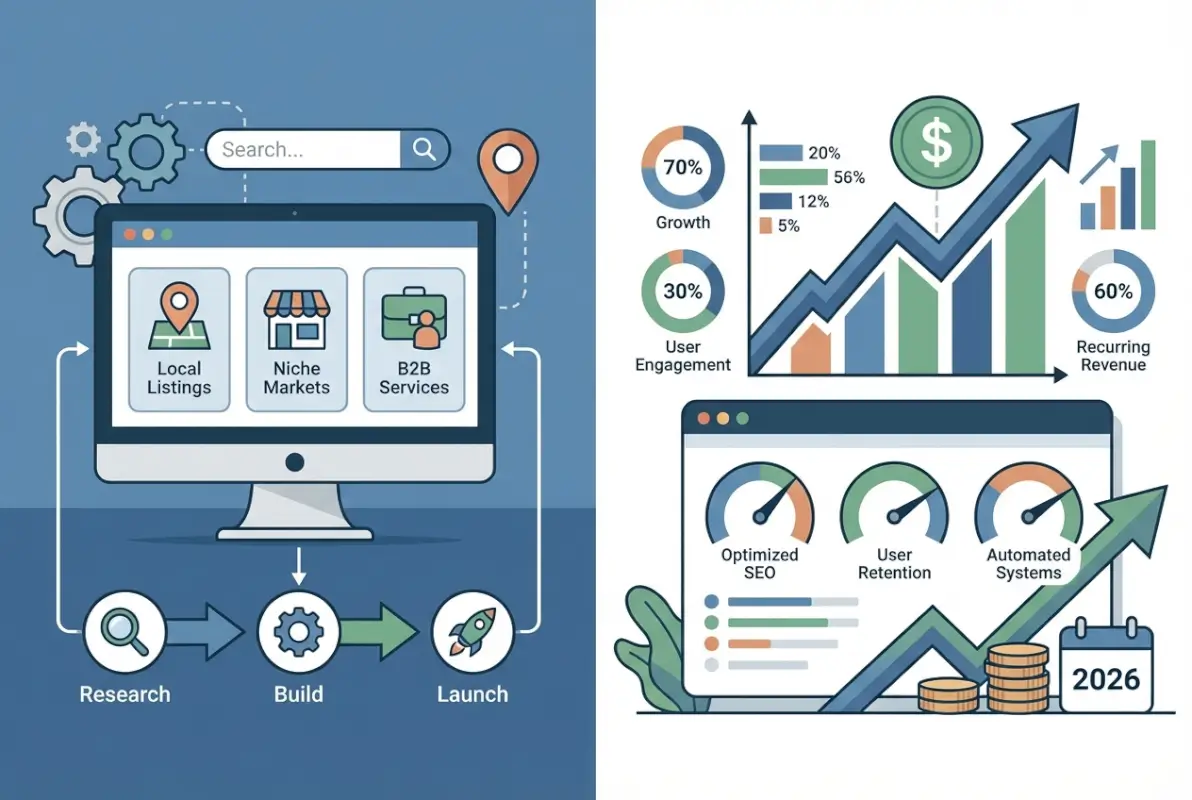
Best practices for How to Start an Online Directory Business & Earn $5K/Month in 2026

Reaching $5,000 in monthly recurring revenue requires a disciplined go-to-market plan that balances audience acquisition, conversion optimization, and phased monetization. The playbook is straightforward: drive targeted traffic through local and vertical SEO, convert free users into paid listings via clear value propositions, and layer in additional revenue streams (featured placements, lead generation, ads) as your authority and traffic grow. Most successful directories hit profitability within 6–12 months by executing this sequence methodically.

Traffic & audience acquisition

Local and vertical SEO are your primary traffic engines. Optimize each listing page with structured data (Schema.org LocalBusiness or Service markup), geo-targeted keywords, and rich content (business descriptions, categories, hours, contact info) so search engines can surface your directory for “near me” and category-specific queries. Create category landing pages (e.g., “/plumbers-in-austin”) and neighborhood guides to capture long-tail search intent. According to IAB’s 2025 digital economy report, online discovery and local search remain core drivers of SMB lead generation, making SEO-optimized directories a natural fit for this demand.

Supplement organic growth with strategic partnerships and community outreach. Guest-post on industry blogs, sponsor local events or trade shows, and collaborate with complementary services (e.g., a contractor directory partnering with a home-design blog). Paid experiments—Google Local Service Ads, Facebook geo-targeted campaigns, or sponsored posts in niche communities—can validate messaging and accelerate traffic, but keep acquisition cost per listing below your average revenue per user to maintain unit economics.

Content marketing extends your reach and establishes topical authority. Publish how-to guides, comparison articles, and local resource roundups that link back to relevant directory listings. This content ranks for informational queries, builds backlinks, and converts readers into directory users. Track referral sources, bounce rates, and listing page views in Google Analytics to identify which channels deliver engaged traffic, then iterate your content calendar and outreach plan accordingly.

Monetization milestones (from pilot to scale)

Start monetization conservatively: offer free basic listings to build the database, then introduce a paid “Featured” tier (e.g., $25–$75/month) that places businesses at the top of search results, adds premium badges, or unlocks analytics. This two-tier model is easy to explain and mirrors how directories like Yelp and Angi structure their revenue. Use a profit calculator to model different pricing scenarios and set realistic milestones: for example, 100 paid listings at $50/month = $5,000 MRR.

As traffic grows, layer in lead-generation monetization: charge businesses per qualified lead (phone call, form submission, or booking request) routed from your directory. This performance-based model aligns incentives—businesses pay only for results—and can command higher effective rates than flat listing fees. Test pricing in the $10–$50 per lead range depending on industry margins, and use tracking pixels or call-tracking numbers to attribute conversions accurately.

Additional revenue streams—display ads (Google AdSense, direct sponsorships), affiliate programs (tools, software, or services relevant to your niche), and premium content (industry reports, buyer guides)—become viable once you exceed 10,000 monthly visitors. Introduce these incrementally to avoid cluttering the user experience or diluting your core value proposition. The key is to balance revenue per visitor with user satisfaction; a directory that over-monetizes too early risks churn and poor word-of-mouth.

Revenue StreamPricing ModelWhen to IntroduceTypical Contribution
Featured listings$25–$75/month subscriptionMonth 1 (after 50 seed listings)60–80% of MRR
Lead generation$10–$50 per qualified leadMonth 3–6 (traffic > 1,000/mo)15–30% of MRR
Display ads / sponsorshipsCPM or flat monthly feeMonth 6–12 (traffic > 10,000/mo)5–15% of MRR
Affiliate programsCommission per sale or sign-upMonth 6–12 (established authority)5–10% of MRR
Key Takeaway: Launch with free basic listings and a single paid tier, then add lead-generation pricing only after you have consistent monthly traffic above 1,000 visitors.

Risk Management, Compliance, and Long-Term Positioning

Advanced strategies for How to Start an Online Directory Business & Earn $5K/Month in 2026

Building a sustainable directory means managing legal, operational, and market risks from day one. Neglecting compliance or user trust can derail traction faster than any competitive threat, so treat risk management as a core competency alongside product and marketing. The good news: most risks are preventable with straightforward planning and adherence to standard small-business best practices.

Register your business entity (LLC or corporation) in your state to protect personal assets and establish credibility with customers and partners. The SBA’s 10-step startup guide walks through business structure, federal and state tax IDs (EIN), and basic licensing requirements. Most directories operate as simple service businesses and don’t require special permits, but check local regulations if you’re handling payments or sensitive user data.

Maintain listings accuracy and user privacy to build trust and avoid legal exposure. Publish clear terms of service and a privacy policy that disclose how you collect, store, and share business and user data; free templates from legal-tech providers or the SBA can get you 90% of the way there. Implement a straightforward process for businesses to claim, update, or remove their listings, and respond to disputes or inaccuracies within 48 hours. Proactive moderation and transparency reduce churn and negative reviews.

Stay current on data-protection regulations (GDPR if you serve EU users, CCPA in California) and payment-processing compliance (PCI-DSS if you handle credit cards directly). Most no-code platforms and payment gateways (Stripe, PayPal) handle PCI compliance for you, but verify that your setup meets requirements. Document your compliance efforts—privacy audits, terms updates, data-retention policies—so you can demonstrate good faith if questions arise.

Sustaining growth amid market shifts

E-commerce and digital discovery are growing, but consumer behaviors and platform algorithms evolve constantly. IAB’s 2025 digital economy report shows that online retail’s share of total retail continues to rise, supporting directory models as a traction channel for SMBs. Monitor these macro trends and be prepared to adapt your monetization mix—for example, if Google shifts to zero-click answers, invest more in lead-gen partnerships or direct-to-consumer content.

Diversify traffic sources to reduce platform risk. Relying solely on Google organic means one algorithm update can crater your revenue; balance SEO with email (build a subscriber list of businesses and searchers), social (community groups, LinkedIn, local Facebook pages), and partnerships (co-marketing with complementary services). This multi-channel strategy insulates you from single-point failures and gives you negotiating leverage as you scale.

Plan for competition and market saturation by deepening your niche moat. Invest in proprietary data (exclusive partnerships, verified reviews, industry benchmarks), superior UX (faster search, mobile-first design, better filters), and community engagement (events, forums, educational content). The directories that thrive long-term aren’t necessarily the first movers—they’re the ones that deliver the most value and adapt fastest to user needs.

Key Takeaway: Register your business entity and publish privacy and terms-of-service policies in your first week to establish legal footing before you collect any user data or payments.

Frequently Asked Questions

What is an online directory business?

An online directory is a platform that organizes and lists businesses or services within a specific niche or geographic area. It typically generates revenue through paid listings, featured placements, and lead-generation options. Directories help users discover services while offering businesses visibility and customer acquisition channels.

How much money can I make with a directory website?

Revenue depends on traffic, niche depth, and monetization strategy. Early-stage directories often earn $500–$2,000 monthly through basic paid listings. Mature directories with strong traffic can reach $5,000–$10,000 monthly by layering featured placements, lead generation, and advertising. Conservative pricing and gradual scaling are essential for sustainable growth.

Which monetization strategy works best for directories?

A tiered approach performs best: offer free basic listings to build inventory, then introduce paid featured placements for visibility. Add lead-generation monetization where businesses pay per inquiry or conversion. As traffic scales, layer in display advertising and affiliate programs to diversify revenue streams and reduce reliance on single channels.

How do I get my directory to rank in search engines?

Focus on niche relevance and high-quality listings with complete information. Optimize for local and long-tail keywords that match user search intent. Build content around common queries in your vertical, ensure fast page speeds, and encourage user reviews. Quality over quantity in listings improves domain authority and organic visibility.

What initial steps should I take to launch quickly?

Select a tightly defined niche and choose a no-code platform or directory plugin to minimize technical complexity. Seed 50–100 quality listings manually, set up a simple submission form, and define initial pricing for premium placements. Launch with core features only, then iterate based on early user feedback and conversion data.

Can a directory business be profitable in 2026?

Yes, directories remain profitable when focused on underserved niches with strong search demand. E-commerce growth and digital advertising trends support discovery platforms. Success requires disciplined niche selection, quality listings, strong SEO, and a clear monetization plan. Expect 6–12 months to reach meaningful revenue with consistent execution.

Should I offer free listings or charge from the start?

Offer free basic listings initially to build critical mass and credibility. Once you have 50–100 listings and steady traffic, introduce paid featured placements and premium tiers. This freemium model reduces friction for early adopters while creating clear upgrade paths. Monitor conversion rates closely to refine pricing strategy.

How long does it take to reach $5,000 per month with a directory?

Most directory businesses require 9–18 months of consistent effort to reach $5,000 monthly revenue. Timeline depends on niche competitiveness, SEO execution, listing acquisition speed, and monetization effectiveness. Accelerate growth by targeting low-competition niches, building strategic partnerships, and testing paid acquisition channels once organic traction validates product-market fit.

Your Path to a Profitable Directory Business Starts Now

Building a directory business that generates $5,000 monthly in 2026 is entirely achievable with the right approach. The opportunities are clear: e-commerce continues to expand, small businesses need discovery channels, and niche directories solve real problems for both users and service providers.

Success comes down to execution discipline. Choose a niche with proven demand but manageable competition. Build your directory on a platform that lets you launch quickly without technical complexity. Seed high-quality listings that establish credibility from day one. Layer monetization gradually, starting with featured placements and expanding to lead generation as traffic validates your model.

The market data supports this model. Digital commerce growth, rising online advertising spend, and sustained demand for local discovery all create tailwinds for well-executed directories. You don’t need to reinvent the wheel—you need to apply proven principles to an underserved vertical.

Your immediate action plan is straightforward. This week, define your niche and validate demand through keyword research and competitor analysis. Next week, choose your platform and begin seeding your first 25 listings. Within 30 days, launch with a simple submission process and initial pricing structure. Track metrics rigorously, iterate based on real user behavior, and scale what works.

Ready to Launch Your Directory?

Start with niche validation today. Define your target market, identify 50 potential listings, and map your monetization strategy. The businesses that will reach $5K/month in 2026 are the ones that start building now.

Leverage SBA resources for compliance, use industry data to validate your niche, and commit to consistent execution over the next 12 months. Your directory business is a series of small, disciplined decisions compounded over time.

The framework is proven. The tools are accessible. The market opportunity is real. What separates successful directory founders from those who never launch is simple: they start. Take the first step this week, commit to the process, and track your progress against clear milestones. Your $5,000-per-month directory business begins with the decision to build it.

Similar Posts

  • Blog

    Design Directory: 5 Essential Resources to Inspire Your Next Creative Project

    In the ever-expanding universe of design, finding fresh inspiration can sometimes feel like searching for a needle in a digital haystack. Design directories have emerged as the lighthouse guiding creative professionals through foggy creative blocks and towards shores of innovation. These curated collections of exceptional work don’t just showcase pretty visuals—they serve as educational platforms,…

  • Blog

    How to Get a Free Google Business Listing: A Step-by-Step Guide

    Getting a free Google business listing isn’t just about putting your business on the map – it’s about claiming your digital real estate in the most valuable neighborhood on the internet. While most business owners treat this as a simple checkbox task, savvy entrepreneurs understand that a properly optimized Google Business Profile can generate more…

  • Blog

    How to Create a Business Directory: 7 Steps to Success

    substring(replace(

    Creating a business directory can be one of the most lucrative online ventures you’ll ever pursue, but here’s what nobody tells you upfront: most people fail because they treat it like building a simple list instead of architecting a valuable ecosystem. I remember launching my first directory back when yellow pages were still relevant (yes, I’m dating myself here), and the biggest mistake I made was thinking the technology mattered more than the community. The truth is, a successful business directory isn’t about having the fanciest features or the most listings—it’s about solving a specific problem for a clearly defined audience better than anyone else. Whether you’re planning to create a niche industry directory or a local business hub, understanding the strategic framework behind directory success will save you months of frustration and thousands of dollars in wasted effort.

    TL;DR – Quick Takeaways

    • Niche focus beats broad coverage – Dominating a specific vertical or geographic area generates more value than competing with established general directories
    • Revenue models require planning – Decide between subscription fees, premium listings, advertising, or hybrid approaches before you build
    • User experience drives success – Advanced search functionality and mobile optimization aren’t optional extras anymore
    • Content quality matters more than quantity – 100 verified, detailed listings outperform 1,000 basic entries
    • Marketing starts on day one – Building the directory is only 30% of the work; attracting businesses and users is the real challenge
    • Technology choices have long-term consequences – Select platforms and tools that can scale with your growth plans

    Step 1: Define Your Directory’s Niche and Target Audience

    The single biggest determinant of your directory’s success happens before you write a single line of code or choose a platform. You need to identify a specific niche where demand exists but supply is fragmented or poorly served. Generic business directories are a graveyard of failed ventures because you’re competing against Google My Business, Yelp, and dozens of entrenched players with unlimited resources. Instead, think about specialized industries, professional services, or geographic regions that major platforms overlook or underserve.

    [KBIMAGE_1]

    In my experience working with directory owners, the most profitable niches share three characteristics: they serve businesses willing to pay for visibility, they address a clear search intent that existing solutions don’t satisfy well, and they have enough potential listings to create critical mass without being so broad that you can’t compete. For example, a directory focused exclusively on certified sustainable contractors in the Pacific Northwest has far better prospects than “all contractors everywhere.” The narrow focus lets you become the definitive resource, which makes both business owners and searchers choose you over general alternatives.

    💡 Pro Tip: Before committing to your niche, manually compile 50-100 potential listings. If you struggle to find this many, your niche might be too narrow. If you easily find 10,000+, you’ll need significant resources to compete effectively.

    Research your target audience from both sides of the marketplace. Who are the businesses you’ll list, and what pain points drive them to seek directory placement? Equally important, who are the end users searching for these businesses, and what specific problems are they trying to solve? A directory for wedding vendors needs to understand both the marketing challenges facing photographers and caterers, and the planning anxieties of engaged couples searching for reliable service providers. This dual perspective shapes everything from your feature set to your pricing model.

    Validate your concept before investing heavily. Use tools like Google Trends to verify search volume for relevant queries, examine existing competitors to identify gaps in their offerings, and survey potential business clients about their willingness to pay. I’ve seen too many entrepreneurs build technically impressive directories for markets that simply don’t exist or won’t monetize. A few hours of unglamorous market research can prevent months of building something nobody wants.

    Step 2: Choose the Right Technology Platform

    Your platform decision carries consequences you’ll live with for years, so resist the temptation to just pick the cheapest or easiest option without strategic consideration. The directory landscape offers three main paths: custom development, WordPress with directory plugins, or specialized directory software platforms. Each has distinct advantages and limitations that align with different business models, technical capabilities, and growth trajectories.

    [KBIMAGE_2]

    WordPress with plugins like Business Directory Plugin or GeoDirectory offers the most accessible entry point for non-technical founders. You get reasonable functionality quickly, extensive customization through themes and plugins, and manageable hosting costs (typically starting around what you’d pay for basic website hosting). However, you’ll eventually hit scaling limitations if your directory grows to thousands of listings with heavy traffic, and you’re dependent on plugin developers maintaining compatibility with WordPress updates. For testing concepts or serving smaller markets, this approach makes considerable sense.

    Platform TypeBest ForTypical CostTechnical Skill Required
    WordPress + PluginsSmall to medium directories, budget-conscious starts$200-$500 initialLow to Medium
    Directory SaaS PlatformsFast launches, non-technical owners$50-$300/monthLow
    Custom DevelopmentUnique requirements, scalability priority$5,000-$50,000+High (requires developers)
    Specialized Directory SoftwareEstablished businesses, specific industries$1,000-$10,000 licenseMedium

    SaaS platforms designed specifically for directories provide another viable route, especially if you want to launch quickly without technical headaches. These services handle hosting, updates, and core functionality while letting you focus on content and marketing. The tradeoff is ongoing monthly fees and less control over customization, which can be fine for many business models. When evaluating these platforms, scrutinize their search functionality, payment processing options, and whether they allow you to export your data if you eventually outgrow their service.

    ⚠️ Important: Whatever platform you choose, ensure it supports structured data markup for search engines. Directories that properly implement schema.org markup for local businesses see significantly better visibility in search results and rich snippets.

    Custom development makes sense when you have specific requirements that off-the-shelf solutions can’t address, substantial budget, or technical expertise in-house. Building custom gives you complete control over features, user experience, and scalability architecture. However, you’re looking at development timelines measured in months rather than days, and ongoing maintenance costs that many founders underestimate. Unless your directory concept has truly unique technical requirements or you’ve validated strong market demand worth significant investment, start with a proven platform and customize later when you have revenue justifying the expense.

    Step 3: Design Essential Features and User Experience

    The features you include should flow directly from your audience research, not from what seems cool or what competitors have. Every feature adds complexity, development time, and maintenance burden, so prioritize ruthlessly. A directory with five excellent features that work flawlessly beats one with twenty mediocre features that confuse users. Start with the absolute minimum viable product that solves your audience’s core problem, then expand based on actual user feedback rather than assumptions.

    [KBIMAGE_3]

    Search functionality is your directory’s engine, and it deserves more attention than any other feature. Users come to directories with specific intent—they’re looking for something—so your search needs to handle the way real people actually look for businesses. This means supporting multiple search criteria (location, category, keywords, attributes), autocomplete suggestions, and filtered results that narrow options without overwhelming choices. Poor search is the fastest way to send frustrated users back to Google, never to return.

    73%
    of users abandon directory searches if they can’t find what they need within three clicks

    Business listing pages need to balance comprehensiveness with scannability. Required elements include business name, categories, contact information, location with map integration, description, and images. Beyond these basics, consider what information your specific audience needs to make decisions. A restaurant directory needs hours and menu highlights; a B2B service directory needs case studies and certifications. Let businesses create directory listings that showcase their unique value propositions while maintaining consistent structure across your directory.

    Mobile responsiveness isn’t optional anymore, it’s foundational. More than half of directory searches now happen on mobile devices, and Google’s mobile-first indexing means your mobile experience directly affects search rankings. Test your directory extensively on actual phones and tablets, not just desktop browsers resized to mobile dimensions. Pay special attention to tap targets, form inputs, and map interactions—elements that work fine with a mouse often frustrate users on touchscreens.

    ✅ Key Insight: User-generated content like reviews and ratings dramatically increases engagement and trust, but it also requires moderation resources. Plan your content policies and moderation workflow before enabling these features.

    Consider which features justify premium listings versus what should be available to all businesses. Common premium features include enhanced placement in search results, additional images or videos, social media integration, analytics about profile views, and removal of competitor ads from their listing pages. The key is making free listings valuable enough that businesses want to be included, while creating clear premium benefits worth paying for. If your free listings are too limited, businesses won’t bother; if premium offers too little advantage, they won’t upgrade.

    Step 4: Build or Choose Your Directory Platform

    The technical foundation of your business directory determines its functionality, scalability, and user experience. You’ll need to decide whether to build a custom solution, use a website builder, or leverage a specialized directory platform based on your technical skills, budget, and long-term goals.

    [KBIMAGE_4]

    Custom-Built Solutions

    Developing a custom directory from scratch offers maximum flexibility and control. This approach works best for directories with unique requirements or those planning significant scale. You’ll typically use frameworks like WordPress with directory plugins, Laravel, Django, or React combined with a headless CMS.

    Custom development requires either in-house technical expertise or hiring developers. While initial costs are higher—ranging from $5,000 to $50,000+ depending on complexity—you own the codebase and can modify any aspect of functionality. This option makes sense when your directory concept requires features that off-the-shelf solutions don’t provide.

    WordPress Directory Plugins

    WordPress powers approximately 43% of all websites and offers numerous directory-specific plugins that dramatically reduce development time. Popular options include Business Directory Plugin, GeoDirectory, and Listable. These plugins provide listing submission forms, search filters, user reviews, and payment integration out of the box.

    Implementation Tip: If you choose WordPress, select a hosting provider optimized for WordPress performance like WP Engine or Kinsta. Directory sites with hundreds or thousands of listings require more resources than typical blogs or business websites.

    No-Code Directory Builders

    Platforms like Brillant Directories, Memberstack with Webflow, or Airtable combined with Softr allow you to create functional directories without writing code. These solutions offer pre-built templates, drag-and-drop customization, and integrated payment processing. Monthly costs typically range from $50 to $300.

    No-code platforms significantly reduce time to launch—you can have a basic directory operational in days rather than months. The trade-off is less customization flexibility and ongoing subscription costs. Evaluate whether the platform’s feature set aligns with your required functionality before committing.

    Essential Technical Features

    Regardless of your platform choice, ensure your directory includes these core technical capabilities:

    • Responsive design: Your directory must function flawlessly on smartphones, tablets, and desktops since over 60% of directory searches occur on mobile devices
    • Fast loading speeds: Aim for page load times under 3 seconds to reduce bounce rates and improve search engine rankings
    • Advanced search and filtering: Users should find relevant businesses through category, location, ratings, features, and keyword searches
    • User account management: Business owners need dashboards to manage their listings, respond to reviews, and track analytics
    • Payment processing: Integrate Stripe, PayPal, or similar platforms to handle subscription payments securely
    • SEO optimization: Include proper meta tags, schema markup, XML sitemaps, and clean URL structures
    • Security measures: Implement SSL certificates, regular backups, spam prevention, and data protection compliance

    Step 5: Implement Monetization Strategies

    Transforming your business directory from a useful resource into a profitable venture requires strategic monetization. The most successful directories typically combine multiple revenue streams rather than relying on a single source, creating stable and diversified income.

    [KBIMAGE_5]

    Freemium Listing Model

    This approach offers basic listings at no cost while charging for premium features. Free listings might include company name, address, phone number, and a brief description. Premium listings add enhanced visibility, photos, videos, social media links, customer reviews, and priority placement in search results.

    The freemium model reduces barriers to entry, helping you build initial directory population quickly. Once businesses see traffic value from free listings, conversion rates to paid plans typically range from 2% to 10%. Price premium listings between $20 and $200 monthly depending on your niche’s market size and competition.

    Listing TierFeatures IncludedTypical Monthly Price
    FreeBasic contact info, company description (100 words), category listing$0
    BasicLogo, 5 images, extended description, website link, social links$25-$50
    PremiumUnlimited images, video, priority search placement, review highlights, analytics$75-$150
    FeaturedHomepage featuring, category sponsorship, lead generation tools, API access$200-$500

    Display Advertising

    Once your directory attracts consistent traffic—typically 10,000+ monthly visitors—display advertising becomes viable. Google AdSense provides the easiest entry point, though direct ad sales to relevant businesses generate higher revenue per impression.

    Strategic ad placement maximizes revenue without degrading user experience. Position ads in the header, sidebar, between search results, and within listing pages. Avoid intrusive pop-ups or autoplay videos that frustrate users and increase bounce rates. Well-implemented display advertising can generate $500 to $5,000+ monthly depending on traffic volume and niche.

    Lead Generation Fees

    Some directory niches support lead generation models where you charge businesses per qualified inquiry received through your platform. This works particularly well for high-value services like legal, financial, medical, or home improvement industries where single customers generate substantial revenue.

    Implement contact forms, quote request systems, or call tracking that attributes leads to your directory. Charge $5 to $100+ per lead depending on industry average customer values. This performance-based model aligns your success with business outcomes, making it easier to justify costs to listed companies.

    Sponsored Listings and Featured Placements

    Allow businesses to purchase prominent positioning in search results, category pages, or homepage sections. Unlike standard premium listings, sponsored placements focus specifically on visibility rather than additional features. These spots typically command premium prices—$100 to $1,000+ monthly—in competitive categories.

    Clearly label sponsored content to maintain user trust and comply with advertising disclosure requirements. Rotate featured businesses weekly or monthly to create fairness and provide value to multiple paying customers rather than allowing a single business to dominate permanently.

    Affiliate Marketing and Referrals

    Partner with service providers relevant to your directory’s niche and earn commissions on referrals. For example, a restaurant directory might affiliate with reservation systems, point-of-sale providers, or food delivery platforms. A professional services directory could partner with accounting software, project management tools, or insurance providers.

    Integrate affiliate links naturally within listing pages, resource sections, or blog content. Focus on products that genuinely benefit your listed businesses rather than promoting irrelevant services solely for commission potential. This approach generates passive income while providing additional value to your community.

    Premium Content and Resources

    Create valuable content like industry reports, market analyses, best practice guides, or training courses that businesses will pay to access. A legal directory might offer continuing education courses, while a restaurant directory could provide food safety certification training or marketing templates.

    This strategy positions your directory as an industry authority while diversifying revenue beyond advertising and listings. Price digital products between $50 and $500 depending on depth and specialization. Bundle premium content access with higher-tier listing packages to increase perceived value.

    Monetization Reality Check: Most new directories should expect 6-12 months before generating meaningful revenue. Focus initially on building traffic and credibility rather than aggressive monetization that could deter early users and listings.

    Step 6: Attract and Grow Your User Base

    A business directory’s value increases exponentially with the number of quality listings and engaged users it attracts. Your growth strategy must balance two distinct audiences: the businesses you list and the consumers searching for those businesses. Success requires coordinated efforts across multiple channels with consistent execution over time.

    Search Engine Optimization (SEO)

    SEO represents the most sustainable long-term traffic source for directories. Each listing page, category page, and location page presents an opportunity to rank for relevant searches. Focus on creating unique, detailed content for every listing rather than thin pages with minimal information.

    Implement local SEO strategies by creating dedicated pages for each geographic area you cover. A nationwide directory should have city-level and neighborhood-level pages with unique content about local businesses, market characteristics, and area-specific information. Include structured data markup using LocalBusiness schema to help search engines understand your content.

    Build authoritative backlinks by creating shareable resources, contributing expert commentary to industry publications, and developing partnerships with complementary websites. Quality backlinks from relevant sources signal to search engines that your directory provides valuable information worth ranking highly.

    Direct Business Outreach

    Proactively contact businesses in your target niche to claim and enhance their listings. Develop email templates explaining your directory’s value proposition, current traffic statistics, and competitive advantages. Personalize outreach by mentioning specific aspects of their business to demonstrate genuine interest rather than sending obvious mass emails.

    Offer initial promotional pricing or extended free trials to early adopters. These businesses become case studies demonstrating results, which you’ll use to convince later prospects. Track which outreach messages generate the highest response rates and continuously refine your approach based on data.

    Content Marketing

    Publish regular blog content addressing questions your target audiences ask. A wedding vendor directory might create planning guides, budget calculators, and trend reports. A B2B services directory could publish industry analyses, vendor selection frameworks, and case studies.

    Each content piece should naturally link to relevant directory categories and listings, driving readers deeper into your platform. Optimize articles for search engines to attract organic traffic, then convert visitors into users through strategic calls-to-action and email capture forms.

    Social Media Presence

    Establish profiles on platforms where your target audiences actively engage. B2B directories typically find success on LinkedIn, while consumer-focused directories perform better on Facebook, Instagram, or TikTok depending on demographic fit.

    Share featured listings, new additions, industry news, and user-generated content to maintain engagement. Create shareable content formats like “top 10” lists, comparison guides, or video interviews with listed businesses. Encourage businesses to share their listing pages on their own social channels, expanding your reach through their networks.

    Email Marketing

    Build an email list from day one by offering valuable resources in exchange for email addresses. Create separate nurture sequences for businesses and consumers, addressing each group’s specific interests and needs.

    Send regular newsletters featuring new listings, industry insights, platform updates, and relevant content. Segment your list based on interests, location, or engagement levels to deliver more targeted, relevant messages. Email marketing typically generates 10-30% of ongoing traffic for established directories.

    Paid Advertising (Strategic Use)

    While organic growth should form your foundation, strategic paid advertising accelerates initial traction and tests messaging effectiveness. Google Ads targeting high-intent keywords like “[niche] directory” or “find [service] near me” can drive qualified traffic.

    Social media advertising works well for targeting specific business types to claim listings. Create lookalike audiences based on your best customers to find similar prospects efficiently. Set modest budgets—$500 to $2,000 monthly—until you establish clear ROI metrics.

    Growth Milestone: Focus on reaching your first 100 quality listings before scaling other efforts. This critical mass provides enough content for search engines to index and gives visitors sufficient options to find value, creating positive feedback loops that accelerate subsequent growth.

    Partnership and Co-Marketing

    Identify complementary businesses, associations, or media outlets that reach your target audience. Develop mutually beneficial partnerships where you provide exclusive content, tools, or resources in exchange for exposure to their community.

    Industry associations often maintain member directories or resource pages where you can secure listings. Offer to provide the association’s members with free or discounted premium listings, creating value for both the association and expanding your business base.

    Step 7: Maintain and Scale Your Directory

    Launching your directory marks the beginning rather than the end of your journey. Long-term success requires consistent maintenance, quality control, community engagement, and strategic scaling. Directories that stagnate with outdated information quickly lose traffic and credibility, while those that continuously improve build compounding advantages.

    Quality Control and Data Accuracy

    Directory value depends entirely on information accuracy. Implement regular verification processes to ensure business details remain current. Schedule quarterly reviews of all listings, contacting businesses to confirm information or removing defunct companies.

    Enable user reporting for incorrect information, providing a simple “suggest an edit” button on every listing page. Review submissions within 48 hours to maintain data quality without creating burdensome manual workloads. Consider automated verification systems that cross-reference business details against authoritative sources like government business registries.

    Establish clear listing guidelines covering acceptable business types, prohibited content, and quality standards. Moderate new submissions before publication to prevent spam, duplicate listings, or inappropriate content from degrading your directory’s reputation.

    User Engagement and Community Building

    Transform your directory from a static database into an active community where businesses and consumers interact. Enable and moderate reviews, questions and answers, and comment sections that provide social proof and additional value beyond basic business information.

    Recognize and reward active participants through badges, featured profiles, or “most helpful reviewer” designations. These gamification elements encourage continued engagement while highlighting quality contributors to other users.

    Host virtual or in-person events connecting businesses with potential customers or with each other. A local business directory might organize networking mixers, while a niche professional directory could host webinars on industry topics. Events strengthen community bonds and position your directory as a central industry hub.

    Analytics and Performance Tracking

    Implement comprehensive analytics tracking user behavior, traffic sources, popular categories, search patterns, and conversion rates. Google Analytics provides foundational insights, while directory-specific metrics include listings viewed per session, search-to-click rates, and contact form submissions.

    Monitor business-side metrics like listing claim rates, premium conversion rates, renewal rates, and customer lifetime value. Identify which acquisition channels deliver the highest-quality businesses and allocate resources accordingly.

    Establish key performance indicators (KPIs) aligned with your business goals and review them weekly or monthly. Track trends over time rather than obsessing over day-to-day fluctuations, making strategic adjustments based on sustained patterns rather than temporary variations.

    Key MetricWhat It MeasuresHealthy Benchmark
    Monthly Active UsersUnique visitors who engage with your directory20%+ month-over-month growth in early stages
    Listing Growth RateNew business listings added monthly50+ monthly in year one, accelerating thereafter
    Premium Conversion RatePercentage of free listings upgrading to paid5-15% after directory establishes traffic
    Customer Renewal RatePaid listings that renew subscriptions70%+ indicates strong value delivery
    Pages Per SessionAverage listings viewed per visitor3-5 pages indicates engaged users
    Organic Traffic SharePercentage of visits from search engines60%+ indicates strong SEO foundation

    Technical Maintenance and Updates

    Regularly update your platform’s software, plugins, and security measures to prevent vulnerabilities and maintain performance. Schedule monthly backups stored in multiple locations to protect against data loss from technical failures or security breaches.

    Monitor site speed continuously, optimizing images, implementing caching, and upgrading hosting resources as traffic grows. Page load times directly impact both user experience and search rankings, making performance optimization an ongoing priority rather than a one-time task.

    Stay current with web standards and best practices, particularly regarding mobile experience, accessibility, and privacy compliance. As regulations like GDPR, CCPA, and others evolve, ensure your data collection and processing practices remain compliant.

    Strategic Scaling Approaches

    Once your directory achieves product-market fit in your initial niche or geography, consider strategic expansion. Options include geographic expansion (adding new cities, regions, or countries), category expansion (adding related business types), or feature expansion (adding booking, e-commerce, or other transactions).

    Evaluate expansion opportunities based on available resources, competitive dynamics, and community demand. Geographic expansion typically presents the clearest path, applying your proven model to new locations with similar characteristics to your initial success.

    Consider whether to pursue horizontal scaling (serving more of the same customer type) or vertical scaling (adding depth to existing relationships through additional services). Horizontal scaling increases reach and market share, while vertical scaling increases revenue per customer and strengthens competitive moats.

    Building a Sustainable Business Model

    Long-term directory success requires transitioning from founder-dependent operations to systematized processes that scale without proportional time investment. Document standard operating procedures for listing approval, customer support, content creation, and other recurring tasks.

    Gradually build a team or leverage contractors to handle routine operations, freeing your time for strategic initiatives that drive growth. Consider hiring or contracting specialists for content creation, technical development, sales outreach, and customer success as revenue supports additional resources.

    Establish financial discipline by tracking unit economics—the cost to acquire a customer versus their lifetime value. Profitable directories typically achieve customer lifetime values 3-5x higher than acquisition costs, providing margin for sustainable growth investments.

    Long-Term Perspective: Successful directories typically require 2-3 years to reach significant scale and profitability. Maintain realistic expectations and sufficient runway to persist through the initial growth phase when expenses exceed revenue. The businesses that survive this period often build substantial, defensible market positions.


    Frequently Asked Questions

    How much does it cost to create a business directory?

    Creating a business directory costs between $500 and $50,000 depending on your approach. Using WordPress with directory plugins costs $500-$2,000, while custom development ranges from $10,000-$50,000. Ongoing expenses include hosting ($20-$200 monthly), domain registration ($10-$15 yearly), and marketing budget for acquisition.

    What features should a business directory website have?

    Essential directory features include advanced search filters, business profile pages, user reviews and ratings, contact forms, map integration, and mobile responsiveness. Premium features should include analytics dashboards, claim listing functionality, featured placement options, and email verification. Include social media integration and multimedia support for comprehensive listings.

    How do business directories make money?

    Business directories generate revenue through multiple streams: premium listing subscriptions ($20-$200 monthly), featured placement advertising, banner ads, lead generation fees, and affiliate commissions. Additional income comes from sponsored content, directory submission fees, and data licensing. Successful directories typically combine three to four revenue streams.

    Can I build a business directory without coding skills?

    Yes, you can build a professional directory without coding using platforms like WordPress with plugins such as GeoDirectory or Business Directory Plugin. No-code solutions like Brilliant Directories offer complete packages starting at $67 monthly. These platforms provide drag-and-drop interfaces, pre-built templates, and automated features requiring zero technical knowledge.

    How long does it take to build a business directory?

    Building a basic directory takes two to four weeks using existing platforms and templates. Custom development requires three to six months for a fully-featured solution. Timeline factors include feature complexity, design customization, initial business population, testing phases, and SEO optimization. Plan additional time for content creation and business outreach.

    What makes a business directory successful?

    Successful directories focus on specific niches, maintain accurate updated listings, and provide genuine value to both businesses and searchers. Key success factors include strong SEO performance, active user engagement, quality over quantity in listings, responsive customer support, and consistent marketing efforts. Regular content updates and community building drive long-term growth.

    Should I allow free or only paid listings?

    Start with free basic listings to build directory volume and attract users, then offer paid premium upgrades for enhanced features. This freemium model generates traffic while creating revenue opportunities. Approximately 70-80% of listings should be free, with premium options including featured placement, enhanced profiles, and priority ranking driving monetization.

    How do I get businesses to join my directory?

    Attract businesses through direct outreach campaigns, demonstrating SEO value, offering free trial periods, and showcasing existing traffic statistics. Create compelling value propositions highlighting increased visibility and customer inquiries. Use email campaigns, social media promotion, and industry partnerships. Add businesses manually initially to demonstrate directory quality and value.

    What are the best niches for business directories?

    Profitable directory niches include local services (plumbers, electricians), healthcare providers, restaurants and food services, professional services (lawyers, accountants), home improvement contractors, and wellness businesses. Geographic-specific directories and underserved industries offer excellent opportunities. Research competition levels and local business density before selecting your niche.

    Ready to Launch Your Business Directory?

    You now have the complete roadmap to build a profitable business directory from scratch. The key to success lies in taking action today. Choose your niche, select your platform, and start building your foundation. Remember that every successful directory started with a single listing and grew through consistent effort and value delivery.

    The businesses in your chosen niche are actively searching for visibility right now. Searchers are looking for curated, trustworthy recommendations. Your directory can become the bridge connecting them, generating recurring revenue while providing genuine value to your community.

    Your Next Steps

    1. Define your specific niche and target audience this week
    2. Research your top three competitors and identify gaps
    3. Choose your platform and register your domain name
    4. Set up your basic directory structure and test functionality
    5. Add your first 20-30 quality business listings manually
    6. Implement SEO best practices and submit to search engines
    7. Launch your marketing campaign and start acquiring users

    Don’t wait for the perfect moment. Start building your business directory today and create a valuable asset that generates income for years to come.

    ; <[^>]+>; ); 0; 155)

  • Blog

    How to Hire a Listing Agent: 5 Essential Tips to Find the Right Real Estate Professional

    Selling your home is one of the most significant financial transactions you’ll ever make, and having the right listing agent by your side can make all the difference. The best listing agents don’t just stick a sign in your yard and hope for the best—they strategically position your property in the market, negotiate skillfully on…

  • Blog

    Good Plugin Sites: 5 Trusted Sources for WordPress Extensions & Plugins

    Unlocking the Power of WordPress: Your Guide to Trusted Plugin Sources Whether you’re a seasoned WordPress developer or just getting started with your first website, finding reliable plugin sources can make or break your site’s functionality and security. With thousands of plugins available across the web, navigating the sea of options becomes overwhelming fast. The…