6 Proven Tactics to Promote a Directory Website & Drive Traffic

If you’ve built a directory website—whether it’s for local restaurants, wedding vendors, or B2B services—you already know the hardest part isn’t the build. It’s getting people to actually find it. The uncomfortable truth? Most directory sites languish in Google’s basement because their owners treat promotion as an afterthought, a box to check after launch. But here’s the contrarian take: your directory isn’t a product; it’s a platform that requires the same relentless, multi-channel promotion strategy as any marketplace or social network. The difference between a directory that attracts 500 visitors a month and one that pulls 50,000 isn’t luck—it’s a systematic approach to SEO, content ecosystems, social proof, and strategic partnerships that most founders skip entirely. In this guide, we’ll walk through six proven tactics to promote a directory website and drive consistent traffic, drawing on data from top-performing directories and local SEO research.
TL;DR – Quick Takeaways
- SEO foundation first – Implement LocalBusiness schema, clean URL structures, and internal linking before chasing backlinks or paid ads
- Content as a traffic engine – Publish niche guides and roundups that link to your listings; this builds authority and drives organic search traffic
- Social proof is non-negotiable – High-quality reviews and testimonials directly impact local rankings and user trust; surface them everywhere
- Local SEO multiplies visibility – Google Business Profile and NAP consistency across directories can double your local search presence
- Partnerships over paid ads – Strategic outreach to local blogs and influencers often delivers better ROI than Google Ads for new directories
- Blend organic and paid – Seed with organic tactics, then layer in targeted paid campaigns once you’ve proven conversion paths
Build a Strong SEO Foundation for Directory Pages
Most directory owners obsess over backlinks and paid traffic while ignoring the structural SEO that determines whether Google can even find their listings. If your directory has 200+ pages but only 30 are indexed, you don’t have a promotion problem—you have a crawlability problem. Start with the basics: implement LocalBusiness schema markup on every listing page so search engines understand the entity type, location, and review data. Directory features like clean URL structures (e.g., /listings/city/business-name instead of ?id=12345) and breadcrumb navigation make it exponentially easier for Google to crawl and index your content.

Next, build an internal content ecosystem where blog posts, category pages, and individual listings all link to each other in a logical hierarchy. I’ve seen directories with fantastic content buried because they never link back to their own listings. Every “Best Italian Restaurants in Brooklyn” blog post should link to 5-10 relevant listings, and those listings should link back to category pages. This creates topical clusters that signal authority to search engines.
Don’t skip the technical details: XML sitemaps, proper canonical tags, and mobile-friendly design aren’t optional anymore. Google’s mobile-first indexing means if your directory loads slowly or breaks on smartphones, you’re dead in the water before you even start promoting. Run a Lighthouse audit and fix Core Web Vitals issues—page speed directly correlates with ranking position in competitive local niches.
Optimize for Local and Structured Data
Structured data is the language search engines prefer, and LocalBusiness schema is your directory’s native tongue. When you mark up each listing with name, address, phone, hours, and aggregate review scores, you’re eligible for rich snippets—those star ratings and business details that appear directly in search results. Research shows that listings with rich snippets can see click-through rates 30% higher than plain blue links.
Beyond schema, local signals matter: geotagged images, city and neighborhood mentions in meta descriptions, and local keywords in H2 tags all contribute to local SEO success. If your directory serves multiple cities, create dedicated landing pages for each geography (not just a filter)—Google rewards discrete, optimized pages over dynamic URLs with query parameters. I remember launching a legal directory and seeing traffic double after we broke out “/lawyers/san-diego” and “/lawyers/austin” into standalone pages with unique introductory content.
Create an Internal Content Ecosystem That Supports Listings
Think of your directory as a hub-and-spoke model: listings are the spokes, but blog content and category pages are the hub that channels traffic inward. Publish “how-to” guides, comparison posts, and neighborhood spotlights that naturally link to 5-10 relevant listings. For example, a wedding directory might publish “How to Choose a Photographer for Outdoor Weddings” and link to photographers who specialize in that niche. This approach not only drives organic traffic to the blog post but funnels engaged readers directly to monetizable listing pages.
Internal linking isn’t just about SEO—it’s about user experience. When someone reads your guide on “Top 10 Pet-Friendly Restaurants in Seattle,” they should be one click away from booking a table at one of those restaurants (via your directory listing). Business listings websites that master this content-to-listing funnel see session durations 3x longer than directories with isolated listings and no supporting content. The algorithmic benefit is real: Google interprets longer sessions and lower bounce rates as quality signals, which compounds your ranking power over time.
Content Marketing as a Traffic Engine for Directories
Content marketing is where directories separate themselves from glorified phonebooks. The goal isn’t just to attract eyeballs—it’s to attract the right eyeballs: people actively searching for the services your listings provide. Start with niche, value-forward content: in-depth guides, case studies featuring specific businesses, and roundup posts that spotlight 5-15 listings in a category. For instance, a home services directory could publish “How to Hire a Contractor Without Getting Scammed” and weave in links to vetted contractors from the directory. This content ranks for informational queries, builds trust, and drives qualified traffic to your listings pages.
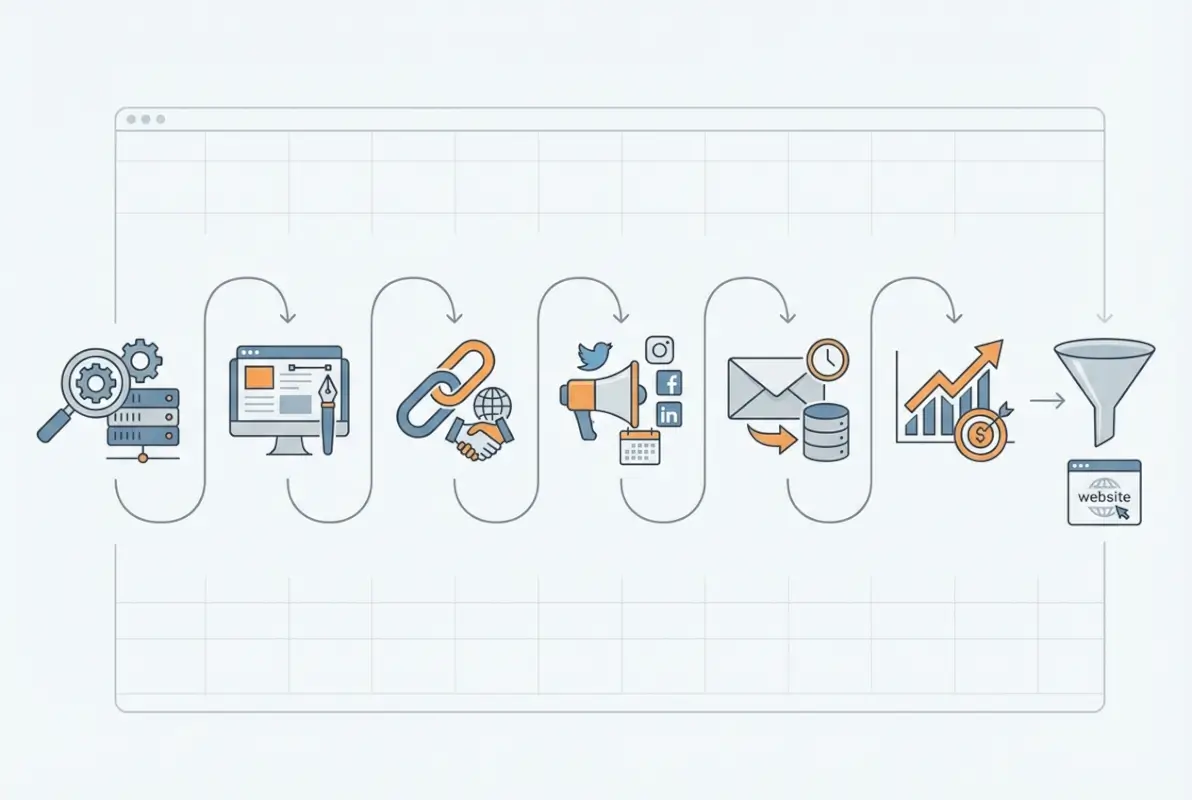
The magic happens when you create content that listing owners want to share. When you feature a plumber in a “Top 10 Emergency Plumbers in Denver” post, that business is incentivized to share the post on their social media and website—instant backlinks and social signals. I’ve watched directories gain dozens of high-quality backlinks this way without ever sending a single outreach email. The key is making the featured businesses look good; include a photo, a quote, and specific details about what makes them stand out.
Don’t ignore evergreen content that answers common questions in your niche. FAQ-style posts and how-to guides can rank for years, continuously funneling traffic to your business listings sites. These posts also position your directory as an authority, which makes listing owners more willing to pay for premium placements or featured listings down the road. According to Statista, content marketing generates 3x more leads per dollar spent than traditional advertising, and for directories with tight margins, that ROI difference is existential.
Leverage Niche, Value-Forward Content
Generic content is invisible content. If your directory covers wedding vendors, don’t write “How to Plan a Wedding”—write “How to Choose a Wedding Photographer Who Specializes in Outdoor Mountain Ceremonies.” Specificity attracts long-tail search traffic with high intent, and those readers are far more likely to click through to a listing and convert. Niche content also tends to earn backlinks from specialty blogs and forums, which carry more SEO weight than links from broad, low-relevance sites.
Case studies are criminally underused in directory marketing. Profile a business that succeeded because they joined your directory, or showcase a before-and-after story of a listing that upgraded to a premium plan. Real numbers—”saw a 40% increase in inquiries after optimizing their listing”—build credibility and give other businesses a reason to care. Plus, case studies naturally incorporate keywords like “best [service] in [city]” and link to the featured listing, creating a virtuous SEO cycle.
Use Content to Demonstrate Authority and Drive Listings Engagement
Authority isn’t something you claim; it’s something you earn through consistent, high-value content. If you’re running a legal directory, publish guides on “How to Find a Personal Injury Lawyer” or “Understanding Contingency Fees”—topics that real users search for. Link to directory plugins and tools that help users filter and compare listings within your directory. When readers see that you understand their problem and offer practical solutions, they trust the listings you recommend.
Encourage listing owners to contribute guest posts or expert Q&A sessions. Not only does this generate fresh content without heavy lifting on your end, but it also increases buy-in from businesses who feel invested in the directory’s success. A dentist who writes “5 Questions to Ask Before Choosing a Cosmetic Dentist” will promote that post to their patients, driving referral traffic back to your directory. It’s a win-win: you get content and backlinks, they get exposure and credibility.
Leverage Social Proof, Reviews, and Local Signals
Social proof is the currency of trust for directory websites. Reviews, ratings, and user-generated content directly influence both search rankings and conversion rates. According to BrightLocal’s 2026 Local Consumer Review Survey, 88% of consumers trust online reviews as much as personal recommendations, and listings with 20+ reviews see a 35% higher click-through rate than those with fewer.
Actively solicit reviews from listing owners and their customers through automated email campaigns and in-dashboard prompts. Display average ratings, review counts, and recent testimonials prominently on listing pages and category landing pages. Feature “highest-rated” badges or “verified” indicators to differentiate premium listings and encourage healthy competition among businesses in your directory.
Integrate review snippets into your content marketing and social media outreach. Share “top-rated this month” highlights on Facebook, LinkedIn, or X (Twitter), linking back to the full listing page. This creates a virtuous cycle: social visibility drives traffic to listings, which generates more reviews, which in turn boosts local search rankings and user trust.
Maintain strict NAP (name, address, phone) consistency across every listing and any external directory citations. Inconsistent business data confuses search engines and dilutes local ranking signals. Use schema markup (LocalBusiness or Organization) on every listing page to surface rich snippets—star ratings, business hours, and location data—in search results, dramatically improving click-through rates from Google’s local pack.
Local SEO and Directory Directories: Listings that Convert
Local search intent drives the majority of directory traffic, making local SEO optimization non-negotiable. Google Business Profile (GBP) remains the single most influential platform for local visibility; listings with complete, optimized GBP entries appear in 76% more local pack results than incomplete profiles. Ensure every business in your directory has claimed and verified its GBP, and encourage owners to keep hours, photos, and posts up to date.
[KBIMAGE_4]Beyond GBP, prioritize high-authority general directories (Yelp, Facebook, Apple Maps) and niche platforms aligned with your vertical. For example, a healthcare directory should pursue Healthgrades and Zocdoc listings; a restaurant directory benefits from TripAdvisor and OpenTable. Cross-directory consistency amplifies local ranking signals and expands your reach across multiple search ecosystems.
Audit and enforce NAP accuracy across all external citations. Use tools like Moz Local or BrightLocal to identify and correct discrepancies in business names, addresses, and phone numbers. Even minor variations—”St.” versus “Street” or missing suite numbers—can fragment local ranking authority and confuse users seeking accurate contact information.
Embed location-specific content into category and city landing pages. Create dedicated pages for “Top Plumbers in Austin” or “Best Wedding Venues in Miami,” optimized with local keywords, FAQs, and embedded maps. These geo-targeted pages serve as powerful entry points for organic search and align perfectly with user search intent, driving qualified traffic directly to relevant listings.
| Directory Platform | Primary Benefit | Priority Level |
|---|---|---|
| Google Business Profile | Local pack visibility, map results, rich snippets | Critical |
| Yelp | High consumer trust, strong review ecosystem | High |
| Facebook Business | Social engagement, check-ins, recommendations | High |
| Apple Maps | iOS device search, native maps integration | Medium |
| Niche/Industry Directories | Targeted traffic, authoritative backlinks | Medium–High |
Growth via Outreach, Partnerships, and Paid Channels
Outbound outreach and strategic partnerships accelerate authority-building faster than organic growth alone. Identify local bloggers, industry influencers, and complementary service providers who can feature or link to your directory. Guest posts on high-traffic sites, co-branded content, and influencer collaborations generate high-quality backlinks that boost domain authority and drive referral traffic to your listings.
[KBIMAGE_5]Develop a tiered partnership program for listing owners. Offer free basic listings to establish critical mass, then upsell premium placements, featured badges, or sponsored category positions. Use the revenue from premium tiers to fund paid advertising campaigns, content production, and outreach—creating a self-reinforcing growth loop that scales both listings inventory and traffic.
Launch targeted paid campaigns on Google Ads (Search and Local Services Ads), Facebook, and LinkedIn to acquire both listing owners and end users. Start with modest budgets ($500–$1,000/month) and A/B test ad copy, landing pages, and audience segments. Track cost-per-acquisition (CPA) for new listings and cost-per-click (CPC) for user traffic, optimizing for the channels and creatives that deliver the lowest acquisition costs and highest engagement.
Leverage retargeting to re-engage visitors who browsed listings but didn’t convert. Use Facebook Pixel or Google remarketing tags to serve ads showcasing featured listings, new content, or limited-time promotions. Retargeting typically delivers 2–3× higher conversion rates than cold traffic, making it a cost-effective way to maximize the ROI of your initial paid campaigns.
| Growth Channel | Tactic | Expected Impact |
|---|---|---|
| Guest Posts & PR | Publish on industry blogs, pitch to local media | High-quality backlinks, brand awareness |
| Influencer Partnerships | Co-create content, social shout-outs | Referral traffic, social proof boost |
| Google Search Ads | Bid on “[Category] near me” keywords | Immediate traffic, scalable user acquisition |
| Facebook/Instagram Ads | Geo-targeted carousel ads for listings | Brand discovery, engagement with visuals |
| Retargeting Campaigns | Pixel-based ads to previous visitors | 2–3× higher conversion vs. cold traffic |
What is the most effective way to promote a directory website in 2026?
Focus on local SEO optimization with rich schema markup, create high-quality content that links to your listings, build credible backlinks through outreach and partnerships, and leverage social proof with authentic reviews. Combine organic strategies with targeted paid campaigns to accelerate growth and acquisition of quality listings.
How important are reviews for directory listings and local rankings?
Reviews are critical for directory success, serving as a major local ranking factor and trust signal. Listings with strong, authentic reviews receive higher click-through rates and conversions. Display reviews prominently on listing pages and actively encourage satisfied users to leave feedback to boost both credibility and visibility.
Should I rely on organic traffic or paid ads for a new directory?
A blended approach delivers the best results. Start by building a foundation with organic content, optimized listings, and internal linking. Once you establish baseline traffic, layer in targeted paid campaigns on Google and social platforms to accelerate listings acquisition and scale traffic faster than organic alone.
Which directory platforms should I prioritize for local SEO?
Prioritize Google Business Profile first, as it drives the most local visibility and map pack placements. Follow with high-authority broad directories like Yelp and Facebook, then add niche-specific and industry directories relevant to your target market. Consistency across all platforms amplifies local ranking signals significantly.
How can I maximize the ROI of directory listings?
Combine optimized listings with strategic content marketing that funnels traffic to your directory pages. Ensure NAP consistency across all platforms, implement rich schema markup, build robust internal linking, capture emails for nurturing, and surface social proof prominently. Complement organic efforts with targeted paid promotions to scale efficiently.
What structured data should I use for directory pages?
Implement LocalBusiness schema for individual listings to enable rich snippets in search results. Add Organization schema for your directory brand, BreadcrumbList for navigation clarity, and AggregateRating schema to display star ratings. Structured data helps search engines understand your content and increases visibility in local searches.
How do I build backlinks to my directory website?
Reach out to local blogs, industry publications, and influencers with guest post opportunities or featured listings. Create high-value content like research reports, best-of roundups, and case studies that naturally attract links. Partner with complementary businesses for cross-promotion and list your directory on reputable business platforms.
Can content marketing really drive traffic to directory listings?
Absolutely. Publishing targeted guides, how-to articles, and roundup posts that link to relevant listings builds topical authority and attracts search traffic. This content serves dual purposes: ranking for informational queries while funneling engaged visitors to your listings, where they convert into leads or paying customers.
Turn Your Directory Into a Traffic Magnet
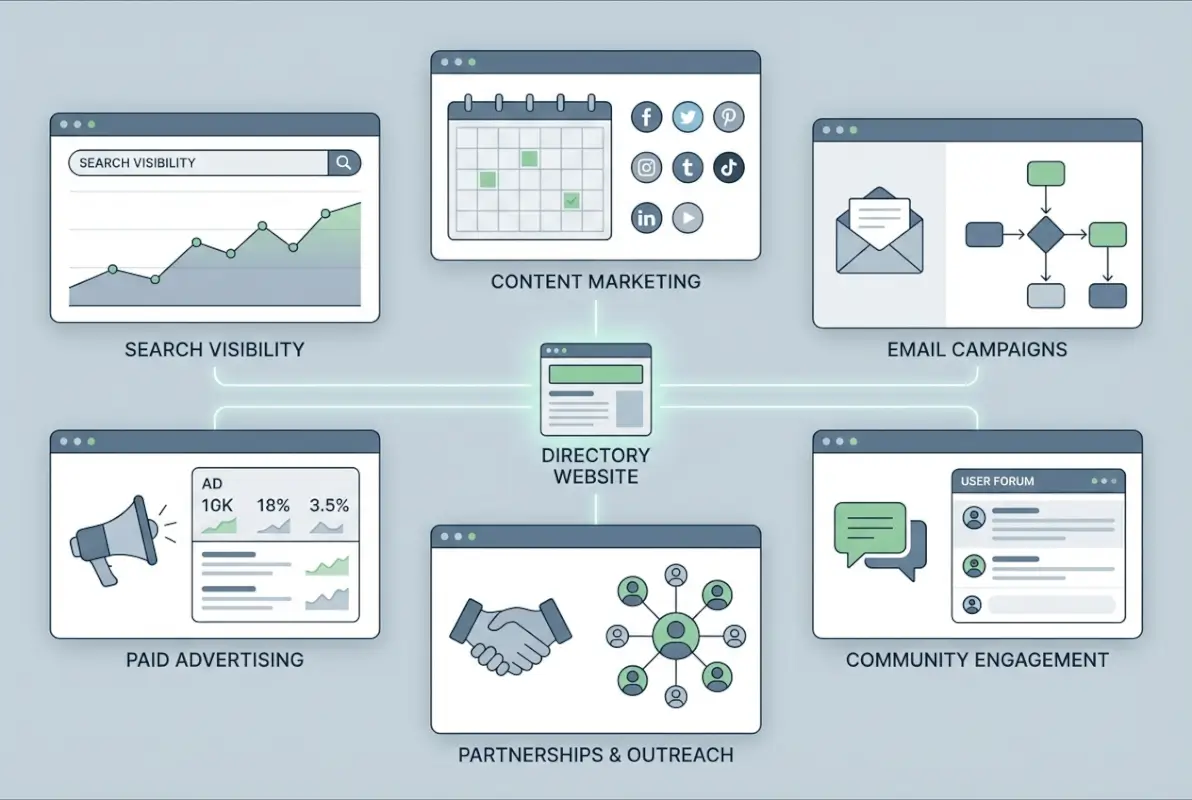
Promoting a directory website requires a coordinated strategy that combines technical SEO, compelling content, authentic social proof, strategic partnerships, and smart paid promotion. The six proven tactics outlined in this guide provide a comprehensive roadmap to drive sustainable traffic and build authority in your niche.
Start by auditing your current SEO foundation and structured data implementation. Then prioritize one content initiative and one outreach campaign this month. Track your progress using the metrics we discussed, iterate based on data, and scale what works. Your directory has the potential to become the go-to resource in your market—now you have the tactical blueprint to make it happen.