6 Ways to Make Money from an Online Directory (Earn $10K/Month)

Generating summary...
If you’ve built an online directory but haven’t figured out how to turn it into a serious revenue stream, you’re sitting on a goldmine that’s waiting to be tapped. Most directory owners focus on traffic and listings, but the real magic happens when you layer multiple monetization strategies on top of each other. The difference between a struggling directory earning a few hundred dollars a month and one pulling in five figures isn’t just traffic volume—it’s how cleverly you’ve stacked your revenue sources and aligned them with what your users actually value.
Here’s something most people miss: directories have an inherent advantage over other online businesses because they operate as platforms, not just content sites. You’re not just selling ad space or affiliate products; you’re creating a marketplace where business owners, service providers, and consumers all converge. That convergence is where the money lives, and smart operators know how to extract value from every angle without compromising user trust. The best part? You can start implementing these strategies today, even if your directory is still relatively small.
TL;DR – Quick Takeaways
- Multiple revenue streams compound – Premium listings, ads, lead generation, affiliate partnerships, service marketplaces, and data products work best when layered together
- Trust equals pricing power – Verified listings, quality controls, and transparent processes let you charge premium rates that users gladly pay
- Traffic quality trumps quantity – A niche directory with 10,000 highly-targeted monthly visitors can outperform a generic one with 100,000
- Start with quick wins – Premium listing upgrades and featured placements can generate revenue within 30 days while you build more complex systems
- Metrics drive decisions – Track ARPU, LTV, and churn religiously; they’ll tell you exactly which monetization levers to pull harder
Validate Your Niche and Build a Scalable Foundation
Before you can monetize at scale, you need to ensure your directory actually solves a problem that people care about enough to pay for solutions. I’ve seen too many directory owners chase broad markets when the real money sits in tightly-defined verticals where search intent is crystal clear. If someone lands on your directory looking for “plumbers in Austin” or “SaaS tools for email marketing,” they’re ready to take action—and that intent is monetizable.
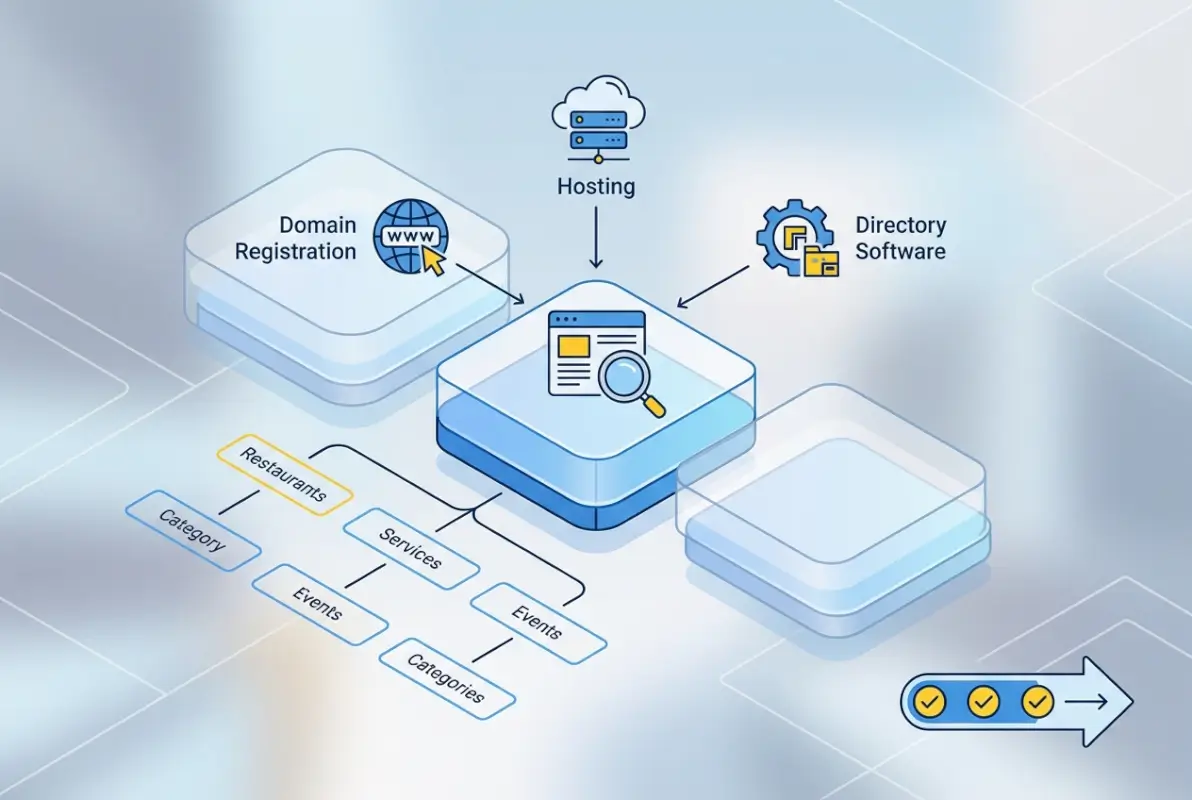
The first step is auditing what you already have. Look at your current traffic patterns and conversion paths. Which categories get the most searches? Where do users drop off? If you’re getting traffic but no engagement, that’s a signal your listings aren’t meeting user expectations or your categories are too broad. Narrowing down to a specific vertical (think “commercial real estate brokers” instead of “real estate professionals”) makes everything easier—from SEO to monetization.
Define Your Target Vertical and User Intent
Your directory needs a clear identity. Are you serving consumers looking for local services, businesses searching for B2B vendors, or professionals seeking industry resources? Each audience type responds to different monetization models. Consumer directories monetize well through advertising and lead generation, while B2B directories can command higher subscription fees because the lifetime value of each business connection is substantially larger.
Map out the user journey from search to action. What questions are they asking? What information do they need before making a decision? The more friction you remove from that journey, the more valuable your directory becomes—and value translates directly to revenue. If businesses know that being listed on your directory leads to qualified inquiries, they’ll pay for premium placement without hesitation.
Audit Existing Traffic and Listing Quality
Run the numbers on your current performance. What’s your monthly traffic? How many unique visitors convert into clicks on listings? How many listings are complete versus skeleton profiles? Incomplete or outdated listings kill trust faster than anything else, which makes monetization nearly impossible. Before you ask anyone to pay for premium features, make sure your baseline quality is solid.
Set up conversion tracking if you haven’t already. You need to know which traffic sources bring users who actually engage with listings, not just bounce. Google Analytics with enhanced measurement or dedicated event tracking will show you exactly where your monetization opportunities live. The data might surprise you—sometimes a small category with lower traffic converts at 10x the rate of your highest-traffic category.
Build Core Features That Support Monetization
Your tech stack needs to support tiered offerings without creating a maintenance nightmare. At minimum, implement the ability to differentiate between free, basic, and premium listings with distinct features at each level. Premium listings might include priority placement, enhanced profile features, lead capture forms, and monthly analytics reports. The key is making the value difference obvious to users browsing your directory.
Don’t overcomplicate the backend. Many successful directories run on WordPress with plugins like GeoDirectory or on purpose-built platforms like Brilliant Directories. The platform matters less than the features you implement. Focus on making it easy for businesses to add their business to directory systems quickly while giving you control over verification, featured placements, and promotional cycles.
Establish Your Baseline Metrics and Monetization Playbook
Start tracking these metrics today: Customer Acquisition Cost (CAC), Lifetime Value (LTV), Average Revenue Per User (ARPU), monthly churn rate, and funnel conversion rates at each stage. These numbers tell you whether your monetization strategy is working or burning cash. If your CAC is higher than your LTV, you’re in trouble no matter how many revenue streams you add.
Create a simple spreadsheet that maps out your monetization experiments by month. Maybe January focuses on launching premium listing tiers, February tests lead-gen pricing, and March introduces your first affiliate partnerships. This roadmap keeps you from trying to do everything at once (which usually means doing nothing well) and gives you clear decision points based on results.
Core Monetization Streams for Online Directories
The real power in directory monetization comes from stacking multiple revenue sources that complement rather than compete with each other. When done right, a visitor might trigger revenue through ad impressions, click on a premium listing (generating visibility value for that business), submit a lead form (which you charge for on a CPL basis), and then purchase a recommended tool through your affiliate link. That’s four monetization touches from a single user session, and it happens naturally when your directory provides genuine value.
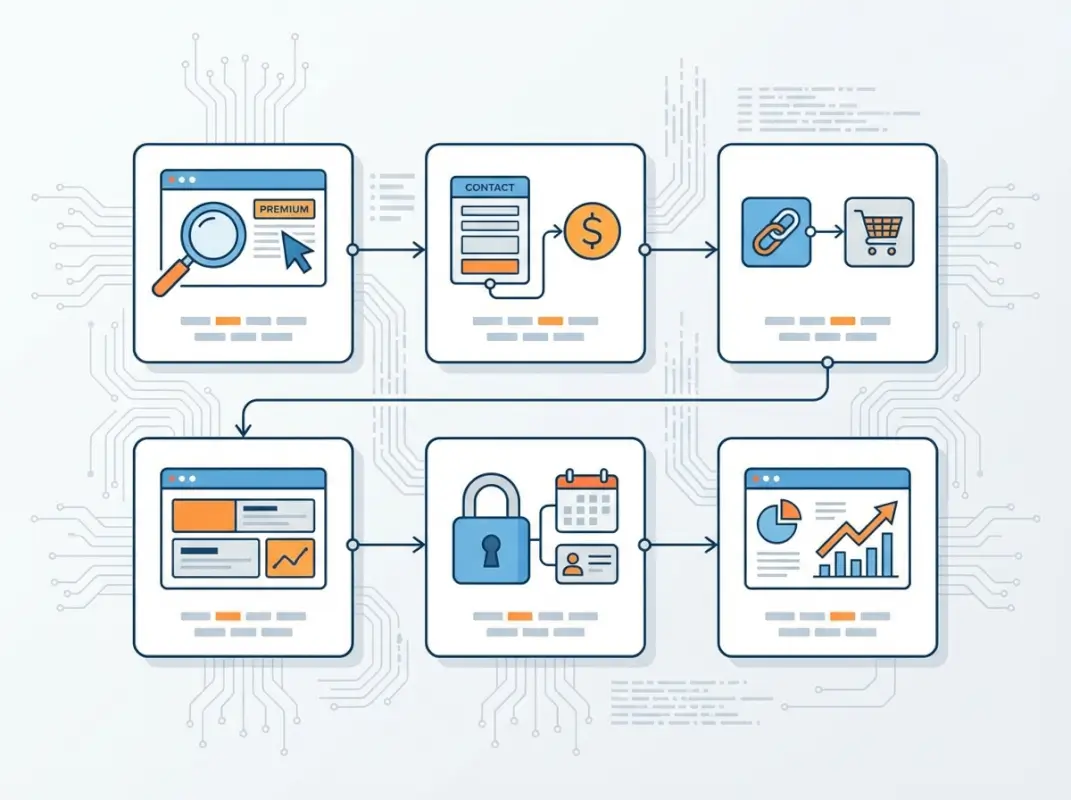
Let’s break down each revenue stream with practical implementation details. According to industry research on directory monetization, the most successful directories combine at least three of these approaches rather than relying on a single income source.
Premium Listings and Tiered Subscription Models
This is your bread and butter. Premium listings work because they solve a real problem for businesses: standing out in a crowded marketplace. Structure your tiers carefully—free listings should provide enough value to attract submissions, but premium tiers need compelling upgrades that drive revenue. Think enhanced visibility in search results, featured placement on category pages, verified badges, detailed analytics, custom branding, and direct lead capture forms.
Pricing strategy matters enormously here. Monthly subscriptions create predictable recurring revenue but may face higher churn than annual plans. Consider offering annual plans at a 20-30% discount to encourage upfront commitments. For B2B directories, monthly pricing of $99-$299 is typical for premium tiers, while local service directories often work in the $49-$149 range depending on market size and competition.
| Tier | Monthly Price | Key Features | Best For |
|---|---|---|---|
| Free | $0 | Basic listing, limited info | Startups, testing waters |
| Basic | $49-79 | Full profile, images, links | Small local businesses |
| Premium | $149-249 | Featured placement, badge, analytics, lead forms | Established businesses, competitive niches |
| Enterprise | $399+ | Multiple locations, priority support, API access | Chains, franchises, agencies |
Run seasonal promotions strategically. Offer discounts during your slow months or when launching new features to drive adoption. Volume discounts for multi-location businesses or agencies managing multiple clients can significantly boost ARPU. Just make sure your pricing psychology is sound—never discount so heavily that you devalue your premium tiers or create an expectation that “nobody pays full price.”
Advertising and Lead Generation
Display advertising and lead generation are complementary but distinct revenue streams. Display ads work best when you have substantial traffic—think 50,000+ monthly visitors minimum to make programmatic advertising worthwhile. Below that threshold, direct ad sales to relevant businesses in your niche typically generate higher CPMs than automated networks. Native ads that match your directory’s design tend to perform better and annoy users less than banner blindness-inducing rectangles.
Lead generation is where many directories find their highest-margin revenue. If you can deliver qualified leads to businesses at a cost below their current acquisition channels, they’ll pay premium rates. Charge on a per-lead basis (CPL) with qualification criteria—verified contact information, specific service requests, geographic match—or on a cost-per-acquisition basis if you can track conversions. CPL rates vary wildly by industry, from $10 for home services to $100+ for high-ticket B2B leads.
Featured Placements and Homepage Highlights
Featured placements are premium real estate that commands premium pricing. These include top-of-category positioning, homepage carousels, search result pinning, and “Editor’s Choice” badges. The key is rotation and fairness—if the same businesses occupy featured spots permanently, you create resentment among other paying subscribers and users start ignoring those placements altogether.
Sell featured placement packages in limited quantities with time-bound commitments (weekly, monthly, quarterly). This scarcity drives demand and ensures you can charge appropriately. Provide ROI proof through analytics—show businesses exactly how many impressions and clicks their featured placement generated compared to standard listings. When they see a 5x visibility boost, renewing becomes an easy decision.
Consider implementing an auction model for highly competitive categories where demand exceeds supply. Businesses bid for featured placement positions, and the highest bidders win the spots for a defined period. This maximizes revenue in hot categories while keeping prices competitive. Just ensure transparency in how the auction works to maintain trust.
Affiliate Partnerships and Revenue Sharing
Smart directory operators integrate affiliate partnerships that genuinely help their users while generating passive income. If you run a directory of SaaS tools, affiliate programs from the tools themselves make perfect sense. A business services directory might partner with payment processors, CRM platforms, or marketing automation tools that listed businesses commonly need.
The key is relevance and value alignment. Don’t plaster random affiliate links across your directory just because the commission looks attractive. Users smell desperation and manipulation a mile away, and it destroys the trust that makes your directory valuable in the first place. Instead, curate a “Resources” section with genuinely useful tools, write honest reviews, and let your affiliate relationships emerge naturally from your content strategy. For more insights on how businesses can maximize directory platforms, check out these ways businesses can leverage directory systems effectively.
Services Marketplace and Upsells
Transforming your directory into a services marketplace adds a high-value revenue stream. Beyond basic listings, offer vendor onboarding packages, premium content creation (professional business descriptions, video profiles, case studies), verification services, and dedicated account management. These services command one-time fees or premium subscription add-ons that significantly boost ARPU.
Managed services work particularly well for less tech-savvy businesses that want directory presence but lack time or expertise to optimize their profiles. Charge $200-500 for complete profile setup, optimization, and ongoing management. At scale, this becomes a substantial revenue stream—50 managed accounts at $300/month is $15,000 in recurring revenue from a single service offering.
Data-Backed Value-Added Services
Your directory generates valuable data that businesses will pay to access. Build analytics dashboards that show premium subscribers their profile views, click-through rates, lead conversion metrics, and competitive benchmarking against category averages. This data-driven approach transforms your directory from a static listing service into an essential marketing intelligence tool.
Consider offering market reports, competitive intelligence digests, and API access for enterprise clients who want to integrate directory data into their own systems. These premium data products typically serve your most sophisticated users and command the highest prices. A quarterly market analysis report might sell for $500-1000, while API access could justify $1000+ monthly fees for enterprise accounts.
Traffic Growth and Audience Building to Maximize Monetization
All the monetization strategies in the world mean nothing without traffic, but not just any traffic—you need targeted visitors with high intent who actually engage with listings. I remember when I first realized that 10,000 visitors from a niche industry forum converted better than 100,000 from generic social media traffic, it completely changed how I approached growth. Quality beats quantity every single time when it comes to directory monetization.

The beautiful thing about directories is they naturally lend themselves to SEO if you structure them properly. Every listing is a unique page with potential to rank for long-tail searches. Every category page targets broader industry terms. The challenge is scaling this content creation while maintaining quality and freshness—because outdated directories rank poorly and convert worse.
Organic Growth Through SEO for Directories
Directory SEO starts with proper technical foundation. Implement schema markup for every listing (LocalBusiness, Organization, or relevant schema types depending on your niche). Google loves structured data because it makes content machine-readable, which often results in rich snippets that improve click-through rates. Category pages should have unique, valuable descriptions rather than thin auto-generated content that screams “low quality” to search algorithms.
Local directories need special attention to NAP (Name, Address, Phone) consistency. Ensure every listing includes complete, accurate location data and that your directory aggregates this information properly. Integrate with map services and enable location-based search filtering. These signals boost local SEO performance dramatically, particularly for “near me” and city-specific searches that drive high-intent traffic.
Paid Acquisition That Scales Profitably
Paid traffic for directories works when your LTV clearly exceeds CAC with comfortable margin. Start with highly targeted campaigns—specific geographic areas, industry verticals, or service categories where you know conversion rates are strong. Google Ads for brand + category terms (e.g., “plumbers directory Austin”) captures high-intent traffic, while Facebook/LinkedIn ads work better for building awareness of niche B2B directories.
Allocate your budget across the funnel intelligently. Top-of-funnel awareness campaigns should cost less per click but generate brand recognition and build your overall search volume over time. Mid-funnel consideration ads retarget people who visited but didn’t engage. Bottom-funnel conversion ads target business owners searching for directory submission opportunities or consumers ready to hire from your listings.
Referral Programs and Network Effects
The most profitable directory traffic comes from referrals because it’s essentially free and pre-qualified. Partner with industry associations, chambers of commerce, trade publications, and complementary service providers who can refer their audiences to your directory. Offer reciprocal benefits—maybe association members get discounted premium listings, or you provide co-branded directory sections that drive traffic back to partner organizations.
Build affiliate cross-promotion programs where related directories or industry websites earn commission for referring new premium subscribers. The beauty of recurring subscription revenue is that affiliate payouts remain profitable even when paying 20-30% commission because the LTV of a year-long subscriber far exceeds the first-month acquisition cost.
Content and Community Building
Turn your directory into a content hub that attracts traffic beyond listing searches. Publish buyer guides, vendor spotlights, case studies, how-to articles, and industry news that your target audience actively seeks. This content serves double duty—it drives organic traffic through informational search queries and it positions your directory as an authoritative resource rather than just a list of businesses.
User-generated content amplifies this effect. Encourage reviews, ratings, photos, and Q&A on listing pages. Moderate aggressively to maintain quality and prevent spam, but recognize that authentic user content builds trust signals that both users and search engines value. A listing with 50 genuine reviews converts exponentially better than an identical listing with zero social proof, and Google’s algorithms recognize this engagement as a quality indicator.
Operational Tactics to Sustain Revenue and User Trust
Monetization isn’t just about getting money in the door; it’s about keeping it flowing predictably while maintaining the trust that makes your directory valuable. I’ve watched too many directories nail their initial sales and then bleed subscribers because their onboarding was confusing and their support was non-existent. The operational details might seem boring compared to revenue strategy, but they directly impact your bottom line through retention and referrals.

Onboarding and Activation Playbooks
Create templated onboarding sequences for every subscription tier. When a business signs up for premium listing, they should receive immediate guidance on optimizing their profile, step-by-step checklists, and examples of high-performing listings in their category. The faster you get new subscribers to “activation”—meaning they’ve completed their profile and started seeing value—the lower your churn will be.
Build a self-service help center with FAQ articles, video tutorials, and troubleshooting guides. Every support question you answer manually is time you’re not spending on revenue-generating activities. Invest upfront in comprehensive documentation and you’ll reduce support burden while improving user satisfaction. For directories with complex features or technical integrations, consider how platforms handle directory configurations—many businesses need guidance on Windows Small Business Server directory setups when integrating with enterprise systems.
Quality Controls and Trust Signals
Verification workflows separate legitimate directories from spam-filled wastelands. Implement multi-step verification for new listings—email confirmation, phone verification, business documentation for premium tiers. Display verification badges prominently on confirmed listings. Users trust verified content exponentially more than unverified, which means they engage more and convert better.
Reviews and ratings need active moderation. Create clear community guidelines, remove obvious fake reviews (both suspiciously positive and maliciously negative), and provide mechanisms for businesses to report issues and respond to feedback. The goal isn’t censorship; it’s maintaining integrity. Transparent moderation practices build long-term trust even when some businesses complain about removed content.
Retention Levers and Churn Prevention
Track your churn rate ruthlessly and understand why subscribers cancel. Exit surveys reveal patterns—if price is the primary objection, your value proposition isn’t clear enough. If lack of results drives cancellation, you need better success stories and ROI education. If technical issues or confusion dominate, fix your onboarding and support.
Implement retention triggers before subscribers reach their renewal date. Send anniversary emails highlighting their year-to-date stats (profile views, leads generated, competitive position). Offer renewal incentives like discounted annual plans or feature unlocks for long-term subscribers. Create a customer success tier for your highest-value accounts with dedicated support and proactive optimization recommendations.
Compliance, Ethics, and Transparency
Nothing kills monetization faster than regulatory problems or ethical scandals. Clearly disclose sponsored placements, affiliate relationships, and advertising. Follow FTC guidelines for endorsements and testimonials. Implement proper data privacy practices and comply with GDPR, CCPA, and other relevant regulations depending on your audience geography.
Create fair competition guidelines for featured placements and search ranking. If businesses suspect you’re manipulating results based on who pays the most rather than relevance and quality, they’ll lose faith in your directory’s value. Transparency about how you rank listings (combination of paid placement, user engagement, profile completeness, reviews, etc.) maintains trust while still allowing monetization.
Pricing Architecture and Growth Experiments
Pricing is psychology as much as mathematics. The same directory can generate $2,000 or $20,000 monthly depending entirely on how you structure, position, and test your pricing. Most directory owners undercharge dramatically because they lack confidence in their value or haven’t properly segmented their offerings. Meanwhile, confident operators with clear value differentiation charge premium rates and still maintain healthy conversion rates because their positioning is dialed in.

Bundling Strategies and À La Carte Add-Ons
Design your pricing architecture around bundles that guide users toward higher-value tiers while offering à la carte options for specific needs. For example, your core offering might be tiered subscriptions (Basic, Premium, Enterprise), but you also sell one-time add-ons like homepage features, newsletter sponsorships, or content creation services. This flexibility captures revenue from businesses at different budget levels and with different priorities.
Bundling works because it increases perceived value while simplifying decision-making. A premium package that includes featured placement, analytics, lead forms, and priority support for $199/month feels like a better deal than buying each feature separately for $250 combined. Plus, bundles reduce decision fatigue—users don’t have to calculate the optimal combination of features because you’ve done it for them.
Price Testing Framework
Never guess at pricing; test systematically. Run A/B tests on your pricing page showing different price points or tier structures to statistically significant sample sizes. Track not just conversion rate but also downstream metrics—did the users who paid higher prices churn faster, or did they actually have higher LTV because they were more serious customers?
Test pricing dimensions beyond just dollar amounts. Experiment with annual vs. monthly positioning, promotional discount levels, payment plan options, and feature bundling. Sometimes a $99/month plan converts identically to a $149/month plan, meaning you’ve been leaving 50% revenue on the table. Other times, small price increases tank conversions, revealing that you’ve hit a psychological ceiling for your market.
| Test Variable | What to Measure | Typical Impact |
|---|---|---|
| Price point | Conversion rate, revenue per visitor | 15-40% revenue variation |
| Billing frequency | Cash flow, churn rate, LTV | Annual plans = 3-5x better LTV |
| Feature bundling | Tier distribution, ARPU | 10-25% ARPU increase |
| Discount level | Conversion rate, perceived value | 20%+ discount drives 2x conversion |
Internationalization and Localization Considerations
If your directory serves multiple countries or regions, pricing must adapt to local purchasing power and competitive dynamics. A $149/month premium listing might work perfectly in the US or Western Europe but price out most businesses in Southeast Asia or Latin America. Implement multi-currency support and regional pricing tiers that reflect local market conditions while maintaining your profitability.
Localization goes beyond just currency conversion. Payment method preferences vary dramatically—credit cards dominate in North America, bank transfers are common in Europe, mobile payments rule in parts of Asia and Africa. Partner with payment processors that support regional preferences or you’ll lose conversions at the final step. Language support, local customer service hours, and culturally-adapted marketing all impact your ability to monetize international audiences effectively.
Real-World Patterns and Your Path to $10K Monthly Revenue
Let’s get concrete about what a $10,000+ monthly directory actually looks like in practice. This isn’t some theoretical exercise; it’s a combination of proven patterns that successful directory operators implement consistently. The exact mix varies by niche, but the fundamental structure remains remarkably similar across verticals.
Revenue Mix Example
A directory hitting $10,000 monthly might break down as follows: 40 premium listings at $149/month ($5,960), 25 featured placements rotating monthly at $79 each ($1,975), lead generation revenue from 150 qualified leads at $15 CPL ($2,250), display and native advertising ($1,200), affiliate commissions from recommended tools and services ($800), and miscellaneous services like profile optimization ($815). That’s $13,000 in monthly recurring revenue from multiple streams that reinforce rather than cannibalize each other.
Notice the diversification—no single revenue source accounts for more than 45% of total income. This resilience matters because markets shift, competitors emerge, and economic conditions change. When one stream dips, others compensate. That’s the power of the multi-stream approach that directory revenue calculators consistently recommend.
Timeline and Milestones
Realistically, reaching $10K monthly from scratch takes 12-24 months of consistent execution depending on your starting point. Months 1-3 focus on foundation: setting up premium listing tiers, implementing basic analytics, and securing your first 5-10 premium subscribers through outreach and relationship building. Months 4-6 add lead generation and featured placements as traffic grows organically. Months 7-12 scale all channels, implement affiliate partnerships, and begin experimenting with data products and value-added services.
The businesses that achieve this trajectory fastest share common traits: tight niche focus, aggressive SEO from day one, strong outreach to potential premium subscribers, and relentless testing of conversion optimization. They don’t wait for traffic to appear magically; they actively recruit quality listings that attract organic traffic through their inherent SEO value. If you’re looking to set up directory listing business infrastructure properly, investing time upfront in the technical foundation pays dividends throughout your scaling journey.
Industry Benchmarks and Common Pitfalls
Typical ARPU for B2B directory premium listings ranges from $100-300/month depending on the industry and competitive intensity. Local service directories often see lower ARPU ($50-150) but can make up for it with higher volume. Churn rates vary widely—excellent directories maintain under 10% monthly churn, while struggling ones see 20%+ as subscribers fail to see ROI and cancel.
Common pitfalls include underpricing (charging $29/month when the market would bear $99), neglecting retention (focusing only on acquisition), poor listing quality control (letting spam devalue the directory), and over-reliance on a single revenue stream. The cure for all of these is discipline: benchmark your pricing against competitor directories and value delivered, implement systematic retention workflows, enforce quality standards religiously, and diversify revenue sources deliberately.
90-Day Action Plan to Begin Your Journey
Start with quick wins that generate revenue and build momentum. Days 1-30: Set up premium listing tiers with clear feature differentiation, manually recruit your first 10 premium subscribers through direct outreach to your best free listings, implement basic analytics to track listing views and clicks. Days 31-60: Launch featured placement program with 2-3 rotation slots per category, add display advertising to high-traffic pages, create your first affiliate partnerships with 2-3 relevant tools or services. Days 61-90: Build lead capture forms for premium listings, implement automated onboarding sequences, analyze your first round of data to identify which monetization streams perform best, and double down on winners while optimizing or eliminating losers.
This 90-day sprint won’t get you to $10K immediately, but it establishes all the core revenue infrastructure and teaches you which levers work best for your specific directory and audience. From there, it’s about scaling what works and continuing to test new approaches. Resources like guides on how to present large online directory content effectively can help you optimize the user experience that underpins all monetization efforts.
Frequently Asked Questions
How long does it take to monetize an online directory?
You can start generating revenue within the first month by offering premium listing upgrades to existing free listings. However, reaching sustainable four-figure monthly revenue typically takes 6-12 months of consistent execution, while $10K+ monthly usually requires 12-24 months. The timeline depends heavily on your niche, starting traffic, and how aggressively you implement monetization strategies.
What are the best revenue streams for a directory site?
Premium listing subscriptions provide the most predictable recurring revenue, followed by featured placements and lead generation services. Advertising works well once you exceed 50,000 monthly visitors, while affiliate partnerships and value-added services (profile optimization, analytics dashboards) offer high-margin supplementary income. The most successful directories combine 3-5 revenue streams rather than relying on just one.
How do I price premium listings without chasing away users?
Start by offering genuine free listings with real value to build your directory’s credibility and traffic. Price premium tiers based on tangible benefits—enhanced visibility, lead capture, analytics—rather than arbitrary features. Test pricing starting at $99-149/month for B2B or $49-79 for local services, and adjust based on conversion rates and competitive benchmarks. Always communicate ROI through case studies and analytics data.
How can I attract advertisers to a new directory?
Focus on traffic quality over quantity. Advertisers care about targeted, high-intent visitors more than raw page views. Create a media kit showing your niche focus, audience demographics, and engagement metrics. Start with direct sales to businesses in your vertical rather than programmatic networks. Offer performance-based pricing (CPL or CPA) to reduce advertiser risk and prove value before asking for flat-rate commitments.
What are reliable ways to verify listings and maintain trust?
Implement multi-step verification including email confirmation, phone verification, and business documentation for premium tiers. Use third-party verification services for additional credibility. Display verification badges prominently on confirmed listings. Actively moderate user reviews, remove obvious spam, and provide response mechanisms for businesses. Transparency about verification criteria builds trust with both users and listed businesses.
Can a directory be profitable with only organic traffic?
Absolutely. Many successful directories generate six figures annually purely through organic search traffic combined with strategic monetization. The key is strong SEO fundamentals, consistent content creation around high-value keywords, and excellent listing quality that attracts natural backlinks. Organic traffic often converts better than paid because it’s pre-qualified by search intent. However, growth is typically slower than combining organic with targeted paid acquisition.
How do I measure ROI for directory monetization strategies?
Track revenue generated per channel (premium listings, ads, leads, affiliates), compare against acquisition costs for each channel, and calculate LTV to CAC ratio for subscription revenue. Monitor ARPU across customer segments, churn rates by acquisition channel, and funnel conversion rates from free to paid. Use cohort analysis to understand how monetization performance changes over time. Tools like Google Analytics with enhanced e-commerce tracking plus your billing system data provide the necessary metrics.
What are the pitfalls of directory monetization and how to avoid them?
Common pitfalls include underpricing due to lack of confidence, over-reliance on single revenue streams that create vulnerability, aggressive advertising that damages user experience, neglecting listing quality which erodes trust, and failing to track metrics properly leading to blind optimization. Avoid these by researching competitive pricing, diversifying revenue deliberately, maintaining strict ad standards, enforcing quality controls, and implementing comprehensive analytics from day one.
How can I scale from a few hundred dollars to $10K per month?
Focus on increasing both subscriber count and ARPU simultaneously. Recruit more premium subscribers through improved conversion optimization and targeted outreach. Add higher-tier offerings (Enterprise packages, managed services) that increase ARPU from top customers. Layer additional revenue streams (featured placements, lead generation, affiliates) that monetize the same traffic multiple ways. Improve retention to compound growth rather than constantly replacing churned subscribers. Track metrics obsessively to identify your highest-leverage growth opportunities.
What data-driven metrics should I track for monetization success?
Core metrics include Monthly Recurring Revenue (MRR), Average Revenue Per User (ARPU), Customer Lifetime Value (LTV), Customer Acquisition Cost (CAC), monthly churn rate, conversion rates at each funnel stage, traffic quality indicators (time on site, pages per session), and revenue per traffic source. Segment these metrics by customer tier, acquisition channel, and industry vertical. Track trends over time rather than point-in-time snapshots to identify whether your monetization is genuinely improving or just experiencing random fluctuation.
Conclusion: Your Directory Revenue Engine Awaits
Building a directory that generates $10,000+ monthly isn’t about discovering some secret formula—it’s about systematically implementing proven monetization strategies, maintaining unwavering focus on user and subscriber value, and treating your directory as a real business rather than a passive income side project. The six revenue streams we’ve covered (premium listings, advertising, lead generation, featured placements, affiliate partnerships, and value-added services) work individually, but they become exponentially more powerful when thoughtfully combined.
The foundation of everything is trust. Users need to trust that your listings are accurate and valuable. Businesses need to trust that their investment in premium placement will generate real ROI. Advertisers need to trust that your traffic quality justifies their spend. Build that trust through verification processes, quality controls, transparent operations, and relentless focus on delivering value rather than extracting maximum short-term revenue.
The market opportunity for well-executed niche directories remains strong despite the proliferation of general platforms. Why? Because specialization wins. Your tightly-focused directory that serves a specific vertical exceptionally well will always outperform generic competitors trying to be everything to everyone. That specialization creates the pricing power and user loyalty that makes six-figure annual revenue not just possible, but probable when you execute with discipline.
Stop leaving money on the table. Your directory already has traffic and users; now it’s time to monetize that attention intelligently and sustainably. Implement your 90-day action plan starting today, measure everything, optimize based on data rather than hunches, and keep your focus on long-term value creation rather than short-term revenue extraction. The difference between a struggling directory earning a few hundred dollars monthly and a thriving one generating five figures is simply the willingness to treat monetization as a serious operational discipline rather than an afterthought.
Was this article helpful?