Business Directory Pricing: 7 Factors to Consider When Setting Fees

Generating summary...
Most business directory owners struggle with the same paradox: price too low and you leave money on the table (while signaling low value), price too high and you scare away the very businesses you’re trying to attract. I’ve watched directory operators agonize over this decision for weeks, only to pick a number that “feels right” and hope for the best. But pricing isn’t about gut instinct—it’s about understanding the intersection of value perception, cost structure, competitive positioning, and buyer psychology. When you set fees for business directory listings, you’re not just choosing a number; you’re encoding a message about who you serve, what you deliver, and how you want your market to perceive you.
TL;DR – Quick Takeaways
- Value proposition drives price willingness — buyers pay more when they understand exactly what outcomes your directory delivers (leads, visibility, data)
- Choose a pricing model that matches your market — freemium, tiered subscriptions, and per-listing fees each signal different positioning and buyer expectations
- Know your true costs — hosting, moderation, support, and payment processing eat margins faster than most directory owners anticipate
- Benchmark competitors, then differentiate — don’t copy prices; use competitor data to find gaps and position your unique value
- Communicate price changes transparently — grandfathering, notice periods, and clear upgrade paths reduce churn when you adjust fees
- Review pricing quarterly — market dynamics shift fast; static pricing strategies become outdated within months, not years
- Build in ROI metrics — directories that help buyers measure lead quality and conversion justify higher renewal rates
Value Proposition and Market Positioning
Your directory’s value proposition is the single most powerful lever for pricing. Buyers don’t pay for “a listing” — they pay for the outcomes that listing generates. If your directory delivers qualified leads, boosts local search visibility, or gives businesses access to a high-intent audience, that’s what justifies your fee. The mistake most directory operators make is pricing based on features (enhanced profile, logo, social links) instead of results (50 monthly inquiries, top-three ranking in category searches, 200% ROI on listing cost).

When you articulate value clearly, buyers mentally anchor your price to that outcome, not to your competitors’ rates. A local service directory that demonstrates it generates an average of $5,000 in new business per quarter for plumbers can charge $200/month without hesitation. A generic listing site that offers “more exposure” struggles to justify $29/month, because the value is vague and the buyer can’t measure return.
Understanding Customer Value in a Directory
Different buyer segments value different features. Solo consultants prioritize personal branding tools (headshots, bio space, testimonials). Multi-location franchises need bulk listing management and location pages. SaaS vendors want rich media embeds, integration badges, and trust signals. Map these priorities to pricing tiers by asking: what does each segment need to achieve their core goal, and what are they already paying for similar outcomes elsewhere?
Lead generation directories can charge premium fees because the value is measurable. If you provide analytics (inquiry sources, click-through rates, conversion funnels), buyers see exactly what they’re getting. Business directories remain profitable when they shift from “pay to be listed” to “pay for performance-driven exposure” framing. Feature emphasis matters less than outcome emphasis.
Aligning Pricing with Market Positioning
Positioning is how you want buyers to categorize you relative to alternatives. Are you the premium, curated directory with verified businesses and strict quality standards? Or the open-access, volume-play directory where anyone can list affordably? Your price signals that position. A $500/year listing communicates exclusivity, vetting, and high-intent traffic. A $10/month tier signals accessibility and broad reach, but also commoditization.
Differentiation strategies should shape your fee structure. If you offer manual verification, editorial reviews, or third-party trust badges (Better Business Bureau integration, background checks), those justify premium pricing. A directory using TurnKey Directories can layer on membership tiers, sponsor placements, and featured listings to create clear value gaps between free and paid options. When competitors offer generic “basic vs. premium” splits, you can differentiate with outcome-based tiers (Lead Starter, Lead Pro, Lead Enterprise) tied to specific traffic or inquiry thresholds.
Price signaling works both ways. Underpricing can hurt you more than overpricing in high-trust markets. If your directory targets professional services (lawyers, accountants, medical practitioners), a $15/month fee raises red flags about quality and audience. Buyers assume “you get what you pay for” and skip listings on low-cost directories, fearing spam or low-intent traffic. In those markets, starting at $99/month or $600/year positions you as a serious player worth evaluating.
Pricing Models and Structures
The pricing model you choose sets expectations for how buyers engage with your directory long-term. Per-listing models work well for low-touch, transactional relationships where businesses want one profile and minimal ongoing interaction. Subscription models (monthly or annual) suit directories that promise continuous value—traffic growth, updated analytics, or recurring lead flow. Freemium models attract volume and create an upgrade funnel, but they require strong feature gating and clear value gaps between free and paid tiers.
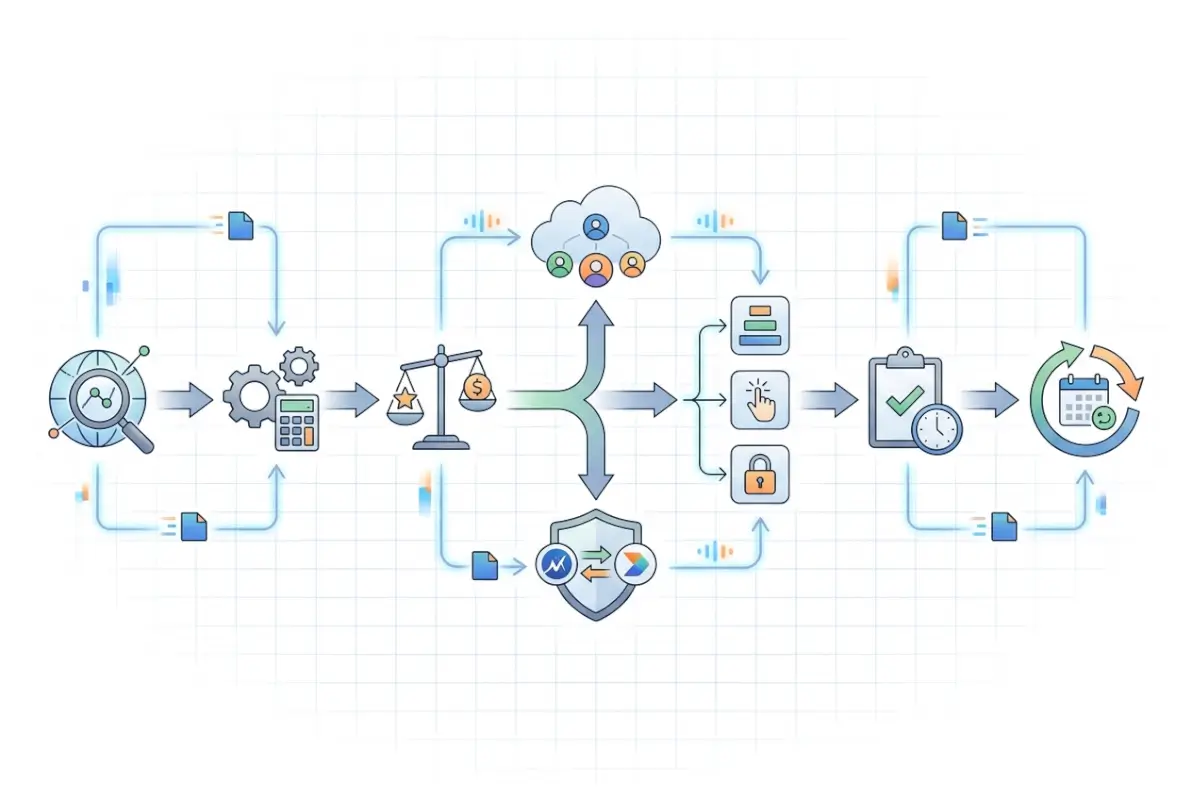
Tiered plans are the most common structure because they segment buyers by willingness to pay and feature need. A typical three-tier setup might look like: Basic (free or low-cost listing with name, address, phone), Pro (enhanced profile, logo, images, priority placement in category), and Premium (featured homepage placement, lead forwarding, dedicated account support). The key is making each tier feel like a logical step-up, not an arbitrary feature bundle. If your Pro tier doesn’t deliver measurably better outcomes than Basic, buyers won’t upgrade.
Common Pricing Models for Directories
Per-listing pricing charges a one-time or recurring fee for each business profile. It’s simple to communicate and easy for small businesses to budget. However, it can limit expansion revenue—once a business has one listing, they have no reason to spend more unless you offer add-ons (extra categories, featured badges, promoted posts). This model works best for niche directories with high buyer intent and clear ROI per listing, such as specialized trade directories or hyper-local service platforms.
Freemium models lower the barrier to entry and build a large user base quickly, then monetize through upgrades. The challenge is balancing free value (enough to attract listings) with paid value (enough to drive conversions). Many directories fail freemium because they give away too much in the free tier. A proven approach: free tier gets basic visibility, paid tiers unlock lead capture forms, analytics, and preferential search placement. Employee directory templates often use freemium structures to scale adoption before monetizing enterprise features.
Dynamic vs. Static Pricing Considerations
Static pricing keeps fees consistent across all buyers and time periods, creating predictability for both you and your customers. Dynamic pricing adjusts based on demand signals—geography, category saturation, seasonality, or buyer characteristics. Dynamic pricing strategies let you capture more value in high-demand markets (charging more for listings in competitive categories or premium locations) while staying accessible in emerging niches.
When to adjust dynamically: if your directory has geographic tiers (metro vs. rural), category maturity differences (established vs. emerging sectors), or seasonal demand spikes (tax services in Q1, landscaping in spring). Price anchors (a “regular” price shown crossed-out next to a current rate) and limited-time offers can drive urgency without confusing buyers, as long as you don’t overuse them. Bundles—like “list in three categories for the price of two”—work well when businesses operate across multiple verticals and you want to increase average order value without discounting core pricing.
The risk with dynamic pricing is perceived unfairness. If two businesses discover they paid different amounts for the same listing, trust erodes. Mitigate this by tying price differences to objective criteria (listing date, plan features, contract length) and communicating the logic clearly. A directory that charges more for instant approval vs. standard review, or for annual vs. monthly billing, feels fair because the buyer controls the variable driving the price difference.
Costs, Margins, and Profitability
Every directory fee you set must cover the actual cost of delivering, maintaining, and improving the platform. Understanding your full cost base—hosting infrastructure, data moderation, payment processing, customer support, marketing spend, and ongoing product development—is foundational to sustainable pricing. Without granular cost visibility, you risk underpricing listings or subsidizing unprofitable tiers, which erodes margin and limits reinvestment capacity over time.

Break down costs into fixed and variable buckets to calculate the contribution margin for each listing tier or directory package. Fixed costs include server hosting, core software licenses, and salaried staff; variable costs scale with usage, such as email notifications, API calls, third-party verification fees, and transactional payment fees. A clear per-listing or per-directory cost model helps you set minimum viable prices and identify which offerings generate the most profit per incremental sale.
Target margins should align with your growth stage and strategic goals. Early-stage directories often accept lower margins (20–30%) to accelerate adoption and network effects, while mature platforms with strong brand recognition can sustain 50–70% contribution margins on premium tiers. Review pricing and cost structures at least biannually, adjusting fees when hosting costs drop, moderation workflows improve, or new feature bundles shift perceived value upward.
Plan for break-even scenarios and long-term profitability by forecasting monthly recurring revenue (MRR), churn rates, and customer acquisition cost (CAC) relative to lifetime value (LTV). If your CAC exceeds LTV by more than a 3:1 ratio, either reduce acquisition spend or raise fees to improve unit economics. Transparent financial planning ensures that pricing decisions support both immediate cash flow and multi-year platform health.
Competitive Benchmarking and Market Data
Competitive benchmarking grounds your pricing in real-world market expectations and prevents you from leaving money on the table or pricing yourself out of the conversation. Start by mapping five to ten direct and adjacent competitors—directories serving the same geography, industry vertical, or customer segment—and document their public-facing pricing tiers, feature sets, and any advertised discounts or trial periods. Ethical benchmarking relies on publicly available information; avoid deceptive practices like posing as a customer solely to extract pricing details.

Translate raw competitor prices into normalized metrics—price per listing per month, price per feature point, or price per thousand impressions—to enable apples-to-apples comparisons. Create a value-score matrix that weights features by buyer importance (e.g., analytics dashboards, premium placement, verification badges) and plots each competitor’s price against its aggregate value score. This exercise reveals whether you’re positioned as a low-cost alternative, a mid-market standard, or a premium solution, and highlights gaps where you can differentiate or adjust fees.
| Competitor | Basic Tier ($/mo) | Premium Tier ($/mo) | Key Features | Value Score (1–10) |
|---|---|---|---|---|
| Directory A | $29 | $99 | Basic listing, analytics, 3 photos | 6 |
| Directory B | $0 (freemium) | $149 | Verified badge, priority placement, unlimited photos, lead tracking | 9 |
| Directory C | $49 | $199 | Enhanced profile, SEO tools, monthly reporting | 7 |
| Your Directory | $39 | $119 | Custom URL, basic analytics, 5 photos, email support | 7 |
Use benchmarking data to define price bands for each tier—minimum, target, and ceiling—and set discount policies that preserve margin while remaining competitive. If the market median for a mid-tier listing is $79 per month and you offer comparable features, pricing at $69 signals value without triggering race-to-the-bottom dynamics. Renewal pricing should typically match or slightly exceed new-customer rates once initial promotional periods expire, provided you communicate value consistently and deliver measurable outcomes like lead volume or traffic growth.
Revisit benchmark data every six months or whenever a major competitor launches new features, changes pricing, or exits the market. Market conditions shift—new entrants can compress pricing, while consolidation or feature innovation can lift willingness to pay. Tracking these signals in a living benchmarking dashboard ensures your fees remain defensible, competitive, and aligned with current buyer expectations.
Governance, Communication, and Execution
Pricing is not a one-time decision; it requires ongoing governance, stakeholder alignment, and disciplined change management to avoid internal confusion and customer backlash. Establish a pricing committee or review cadence—quarterly for high-growth directories, biannually for mature platforms—that includes product, finance, sales, and customer success representatives. This cross-functional team evaluates cost trends, competitive shifts, feature roadmaps, and customer feedback to recommend fee adjustments, new tiers, or promotional strategies in a coordinated, data-driven manner.

Internal approvals should document the rationale behind every pricing change: which cost drivers increased, how competitor benchmarks shifted, what new features justify higher fees, and projected impact on revenue, churn, and acquisition. Clear documentation prevents ad-hoc discounting, ensures consistency across sales channels, and creates an audit trail for future reviews. It also empowers customer-facing teams to articulate value confidently, reducing friction during renewal or upsell conversations.
Transparency with buyers builds trust and reduces churn when fees change. Announce price increases with at least 60–90 days’ notice, explain the reasons (new features, improved support, infrastructure investments), and offer grandfathering or migration paths for long-tenured customers. For example, existing subscribers might retain their current rate for 12 months if they commit to an annual plan, while new buyers pay the updated fee immediately. Clearly communicate upgrade paths—how a basic-tier customer can unlock premium features mid-cycle—and provide self-service tools to compare plans and calculate ROI.
| Communication Element | Best Practice | Example |
|---|---|---|
| Notice Period | 60–90 days before effective date | “Your rate will increase to $49/mo on March 1, 2025” |
| Rationale | Link change to value delivered | “We added lead tracking, 24/7 support, and verified badges” |
| Grandfathering | Honor old rate for loyal customers | “Members since 2023 keep $39/mo rate through Dec 2025” |
| Migration Path | Offer seamless upgrade or downgrade | “Switch plans anytime; prorated credit applied immediately” |
| Self-Service Tools | Interactive plan comparison, ROI calculator | Dashboard widget shows feature delta and expected lead lift |
Execution discipline ensures pricing changes roll out smoothly across billing systems, marketing collateral, sales decks, and help documentation. Coordinate updates to your website’s pricing page, email templates, CRM workflows, and payment processor settings on the same day to avoid confusion or contradictory information. Monitor support ticket volume and sentiment during the first 30 days after a change; spikes indicate messaging gaps or value misalignment that require rapid clarification or targeted outreach.
Frequently Asked Questions
What pricing models do successful business directories use?
Successful directories typically combine tiered subscription plans with freemium options. Common models include per-listing fees, monthly or annual memberships with feature tiers, and premium add-ons such as enhanced profiles, priority placement, or analytics dashboards. Many blend free basic listings with paid upgrades to maximize market penetration and revenue.
How should I price premium listings versus basic listings?
Price premium listings at three to five times the basic tier, anchoring the difference on tangible benefits like featured placement, multimedia content, lead analytics, and priority support. Clearly communicate the incremental value in visibility and conversion outcomes. Test price points with customer surveys and A/B testing to optimize willingness to pay.
How can I justify directory fees to wary business owners?
Provide case studies, lead-generation data, and average ROI metrics showing how listings convert to customer inquiries or sales. Offer free trials or performance guarantees to reduce risk. Transparent pricing breakdowns that link cost to features—verification badges, SEO benefits, customer support—build trust and demonstrate fair value exchange.
What components should I include in a listing package to maximize perceived value?
Include rich media uploads, customer review integration, detailed analytics dashboards, social media links, priority search placement, and trust signals like verification badges. Bundle complementary features—event promotion, blog posts, or coupons—to differentiate tiers and create upsell paths that enhance buyer perception without significantly increasing marginal cost.
How often should directory pricing be reviewed or adjusted?
Review pricing quarterly to track cost trends, competitive shifts, and customer feedback; adjust annually or when launching major features. Frequent small tweaks confuse customers, so bundle changes with product releases or renewal cycles. Maintain a formal governance process to ensure pricing aligns with strategic goals and financial targets.
How do discounts, promotions, or longer-term commitments affect revenue?
Annual prepayments at 15–20% discounts improve cash flow and reduce churn, while limited-time promotions accelerate acquisition. However, deep discounts can erode perceived value and train customers to wait for deals. Use promotions strategically for launches or seasonal peaks, and offset volume discounts with higher lifetime value and lower acquisition costs.
What is the best way to handle price increases for existing customers?
Provide at least 60 days’ notice, clearly explain the added value or cost drivers, and offer grandfathering or transition discounts for loyal customers. Communicate through multiple channels and pair increases with new features or improved service levels. Transparent, respectful messaging minimizes churn and maintains trust during pricing adjustments.
How can I measure the ROI of directory pricing strategies?
Track customer lifetime value, churn rate, average revenue per user, and conversion from free to paid tiers. Monitor lead quality, listing engagement, and renewal rates by pricing tier. Use cohort analysis and A/B testing to isolate pricing impact, then iterate based on profitability, growth, and satisfaction metrics.
Conclusion: Turn Pricing Into Your Competitive Advantage
Setting directory fees is both an art and a science. By grounding your pricing in the seven factors we’ve explored—value proposition, cost structure, competitive benchmarks, target margins, pricing model flexibility, governance processes, and transparent communication—you create a framework that adapts to market shifts while protecting your bottom line.
The most successful directory operators treat pricing as a living strategy, not a one-time decision. They gather customer feedback, monitor competitor moves, and refine their tiers and bundles to stay aligned with what buyers value most. They balance accessibility with profitability, ensuring that free or low-cost tiers drive network effects while premium offerings generate sustainable margins.
Your next step is straightforward: audit your current offering against the seven factors. Map each listing feature to customer outcomes. Draft pricing bands that reflect both your costs and the value you deliver. Then test, measure, and iterate. Consider running a small pilot with a segment of your market before rolling out changes directory-wide.
Ready to Optimize Your Directory Pricing?
Start with a quick pricing audit. Download our free pricing worksheet to map features, benchmark competitors, and calculate target margins—then build a pricing revision roadmap that aligns with your growth goals.
Schedule a quarterly pricing review to keep your strategy sharp and your revenue growing.
Remember: pricing is one of the fastest levers you can pull to improve profitability and customer satisfaction. Treat it with the rigor it deserves, communicate changes with clarity and respect, and watch your directory thrive in an increasingly competitive landscape.
Was this article helpful?