Criss Cross Directory Online Cost: Pricing & Subscription Options

Generating summary...
If you’re exploring the costs and subscription options for Criss Cross Directory Online—or any modern online directory service—you’ve probably noticed something frustrating: pricing pages are often vague, buried behind “Contact Us” forms, or scattered across a maze of tier charts and add-on menus. The reality is that directory pricing is deliberately opaque because vendors want to segment customers and maximize lifetime value. But you deserve clarity before committing budget or integrating a new platform into your sales stack.
Here’s what most pricing pages won’t tell you upfront. The real cost of a directory service isn’t just the monthly subscription—it’s the hidden activation fees, the export quotas that force expensive upgrades, and the featured listing boosts that become mandatory if you want any visibility at all. In this guide, we’ll break down the pricing models, typical price bands, value drivers, and practical decision frameworks you need to budget accurately and avoid costly surprises. Whether you’re a solo consultant looking for basic exposure or an enterprise team needing robust data access, you’ll walk away with a clear roadmap for evaluating Criss Cross Directory Online cost structures—and comparable alternatives.
TL;DR – Quick Takeaways
- Freemium + tiered plans — Most directory platforms offer a free basic listing, with paid upgrades unlocking featured placement, analytics, and lead access.
- Typical monthly costs — Expect $19.99–$119+ per month for starter-to-premium tiers; annual billing often nets 15–25% discounts.
- Hidden fees matter — Activation fees, export caps, and required add-ons (e.g., homepage boosts) can double your total cost of ownership.
- ROI hinges on traffic quality — Premium tiers only pay off if the directory’s audience matches your buyer intent and the platform refreshes content frequently.
- Compare apples to apples — Use a feature-vs.-price checklist to evaluate whether higher tiers unlock genuinely valuable capabilities or just cosmetic upgrades.
Pricing Models and Plan Structures
Online directory platforms have converged on a handful of pricing models, each designed to capture different customer segments while maximizing upsell opportunities. The most common is the freemium model with paid feature boosts. You get a basic listing for free (name, contact info, category tag), but meaningful visibility—featured homepage placement, category-page spotlights, or analytics dashboards—requires a paid upgrade. This approach lowers the barrier to entry while creating a natural funnel toward premium subscriptions.

Recurring subscriptions dominate this space because they provide predictable revenue and lock in customers. Monthly and annual billing options are standard, with annual plans typically offering a discount of 15–25% (two months free is a common anchor). Some platforms experiment with one-time lifetime deals to capture early adopters or clear inventory, but these are rare and often come with caveats like limited feature access or expiring support. Usage-based pricing—caps on exports, API calls, or downloadable contact lists—layers on top of base subscriptions, especially for data-heavy use cases like sales prospecting or market research.
Featured listing boosts represent a critical revenue stream (and a hidden cost for buyers). Vendors offer optional upgrades to place your listing at the top of search results, pin it to the homepage carousel, or highlight it in category pages. These boosts are usually sold as monthly add-ons ($29–$99/mo is typical) or one-time campaigns ($199–$499 for a 30-day run). If the directory has high traffic and good SEO, the exposure can justify the spend; if traffic is thin or poorly targeted, you’re paying for vanity metrics. According to research from MIT’s Economics of Information course, transparency in feature-based pricing improves buyer confidence and reduces churn—yet many directory platforms still bury the details.
Platforms like TurnKey Directories (a WordPress plugin for building custom directories) let you own the pricing model: you decide whether to offer free listings, charge submission fees, or gate premium features. This flexibility is powerful if you’re building a niche directory and want to test pricing without vendor lock-in. For SaaS directory services, you’re at the mercy of their tier structure and feature gates, so understanding the underlying model is essential before signing up.
Current Price Bands and Subscription Options
Across the directory and listing-tool ecosystem, monthly subscription prices cluster in predictable bands. Starter or “Basic Premium” plans typically run $19.99–$39.99 per month and unlock features like custom branding, basic analytics, and removal of platform ads. Mid-tier plans ($49.99–$89.99/mo) add lead-capture forms, integration hooks (CRM, email marketing), and expanded export quotas. Enterprise or “Pro” tiers ($119–$299+/mo) include multi-user access, advanced analytics, priority support, and often white-label options or API access.
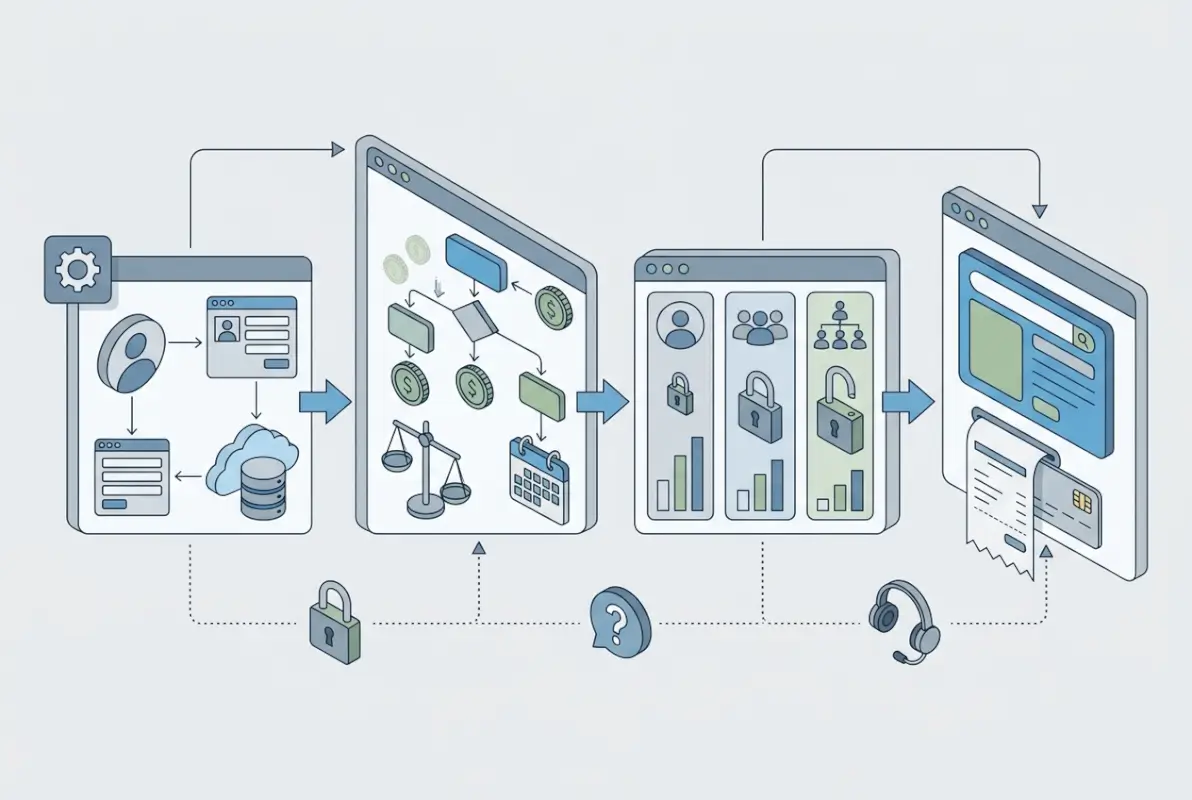
For example, cross-listing platforms like CrossLister offer a 14-day trial followed by tiered monthly plans starting around $19.99, with higher tiers unlocking more marketplace integrations and listing limits. Directory-focused SaaS tools follow a similar pattern, with annual billing typically offering two months free (a 16.7% discount). If you’re comparing options, always check whether the quoted price is monthly or annual—some vendors default to showing the annual-per-month rate to make pricing look lower.
Beyond the base subscription, activation fees and setup charges can add $99–$499 to your first bill. These cover onboarding, custom category setup, or data imports. Export limits are another hidden cost: a plan might include “up to 500 contacts per month,” but if your prospecting cadence requires 2,000 downloads, you’ll pay per-overage fees ($0.10–$0.50 per contact is common). Featured listing boosts, as mentioned, are sold separately and can easily double your monthly spend if you’re competing in a crowded category. For businesses evaluating cost list business directory pricing factors, it’s critical to model total cost of ownership—not just the headline subscription fee.
According to Statista, SaaS pricing transparency has improved industry-wide, with more vendors publishing full feature matrices on public pricing pages. Yet directory platforms still lag: many require you to “Request a Quote” for enterprise tiers or bury add-on costs in checkout. When budgeting, assume 20–40% on top of the base subscription for realistic usage (exports, boosts, integrations).
Value Drivers and ROI Considerations
Visibility, reach, and lead generation
Premium listings and featured exposure are the primary levers for improving discovery and inbound inquiries on directory platforms. When your business appears at the top of category pages, receives homepage callouts, or is highlighted in search results, you capture attention before competitors and drive measurably more clicks and contact requests. ROI depends on three core factors: the quality and volume of directory traffic, the alignment between your listing category and user search intent, and the frequency with which the directory refreshes or promotes new content.

Platforms that allow you to showcase enhanced content—such as image galleries, customer testimonials, video tours, or detailed service descriptions—further differentiate your listing and increase conversion rates. Many directories also provide analytics dashboards that track impression counts, click-through rates, and contact form submissions, enabling data-driven decisions about whether to renew or upgrade. For service providers targeting local or niche audiences, the marginal cost of a featured listing is often recouped within a single new customer contract.
Lead quality varies widely by directory niche and traffic source. Directories with organic search visibility, editorial curation, or integration into high-trust industry portals tend to deliver better-qualified leads than general aggregators that rely solely on paid ads. Before committing to a premium plan, review traffic demographics, user reviews of the directory itself, and competitor presence to gauge whether the audience aligns with your ideal customer profile.
Data access, exports, and integration capabilities
Beyond lead generation, many directory platforms unlock value through data exports, downloadable contact sets, and integrations with CRM or marketing automation tools. Plans that include higher export quotas let you build proprietary prospecting lists, enrich existing customer databases, or feed contact information directly into outbound sales workflows. For B2B users and agencies, this data access can materially affect downstream sales efficiency and campaign targeting accuracy.
Integration capabilities—such as one-click sync with HubSpot, Salesforce, or email marketing platforms—reduce manual data entry and ensure timely follow-up on new inquiries. Some directories also offer API access at higher tiers, enabling custom automation, real-time lead routing, or embedding directory search widgets on your own website. These features transform a passive listing into an active component of your marketing stack, justifying premium pricing through time savings and improved lead response rates.
When evaluating ROI, calculate the time saved per lead, the average value of each new customer, and the incremental conversion lift from richer listing data. If a premium plan costs $100/month and generates three additional qualified leads—each worth $500 in lifetime value—the payback period is immediate. Conversely, if the directory delivers low-intent traffic or requires manual re-entry of leads, the return may not justify the subscription cost.
Pricing Evaluation Framework
How to compare plans (checklist)
Start by mapping each plan’s features against your core requirements: does the higher tier unlock genuinely valuable capabilities, such as multi-state access, unlimited exports, multi-user logins, or priority customer support? Feature parity versus price is the first test—avoid paying for premium tiers that bundle features you’ll never use. Look for transparent side-by-side comparison tables that spell out included versus add-on features at each price point.
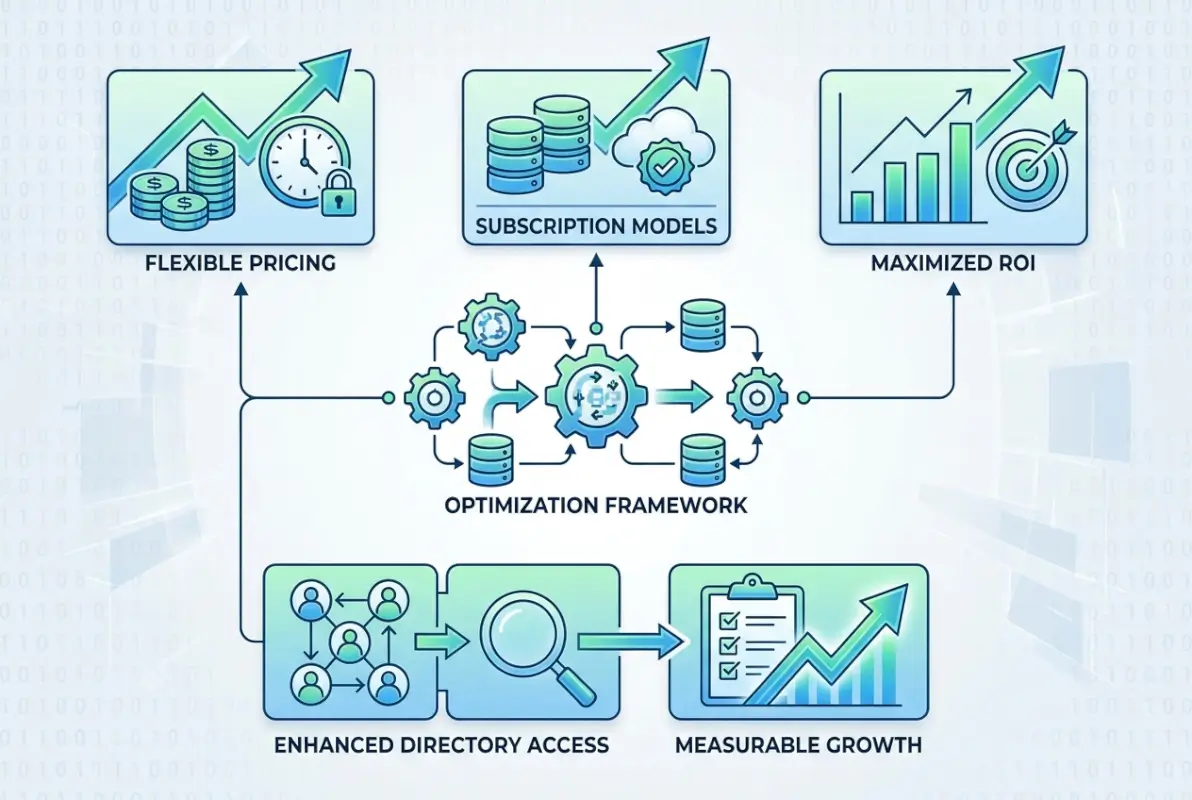
Next, scrutinize billing terms: monthly versus annual commitments, cancellation policies, and any auto-renewal traps. Annual plans typically offer 15–25 percent discounts but lock you in for a full year; confirm whether you can cancel mid-term with a prorated refund or whether you forfeit the remaining months. Review the fine print for setup fees, onboarding charges, or minimum contract lengths that inflate the effective cost beyond the advertised monthly rate.
Finally, identify hidden costs—overage penalties if you exceed export limits, per-user fees if you add team members, or mandatory add-ons required to reach baseline utility (for example, analytics modules sold separately). Calculate total cost of ownership over 12 months, including all recurring fees, one-time charges, and expected overages, then divide by the number of leads or data records you anticipate to determine true cost per acquisition.
| Comparison Dimension | What to Check | Red Flags |
|---|---|---|
| Feature parity vs. price | Side-by-side comparison, inclusion of must-haves | Core features sold as add-ons |
| Billing terms | Monthly vs. annual, cancellation policy, auto-renew | No prorated refunds, hidden renewal clauses |
| Hidden costs | Setup fees, overage penalties, per-user charges | Mandatory add-ons to reach baseline utility |
Practical decision criteria
If your primary need is discoverability and basic exposure—for instance, getting your business into a category listing and capturing occasional inbound inquiries—a lower-cost plan with optional boost add-ons may suffice. Many directories offer à la carte featured placements (for example, $29 for a 30-day homepage spotlight) that let you test visibility uplift before committing to a recurring premium tier. This approach minimizes fixed costs and aligns spending with campaign timing or seasonal peaks.
Conversely, if you require robust data access, large-scale exports (hundreds or thousands of contacts), or multi-state or multi-category coverage, a higher-tier or enterprise plan is more appropriate. Look for plans that bundle these capabilities into a flat monthly rate rather than charging per export or per geography, which can balloon costs unpredictably. Enterprise tiers also often include dedicated account management, custom integrations, and white-label options that justify the premium for agencies or franchisors managing listings at scale.
Use a simple decision matrix: list your top three use cases (for example, lead generation, data enrichment, brand visibility), assign each a priority score, then evaluate which plan delivers the highest combined score per dollar spent. This quantitative approach removes emotion from the buying decision and helps you avoid over-buying features or under-investing in capabilities that drive measurable business outcomes.
Alternatives and Competitive Landscape
Comparable directory/product pricing patterns
Other listing platforms—including cross-listing tools, industry-specific directories, and SaaS-based directory software—commonly structure pricing with a mix of monthly plans, annual commitments, and feature add-ons, making direct comparisons essential. For example, CrossLister offers Starter, Premium, and Enterprise tiers ranging from approximately $19.99 to $119+ per month, with a 14-day trial and discounts for annual billing. Best Directory employs a freemium model with one-time and recurring payment options for featured placements, category boosts, and export credits.

Across these platforms, you’ll notice recurring patterns: a free or low-cost entry tier with limited listings and basic visibility, a mid-tier plan (often labeled “Premium” or “Pro”) that unlocks analytics and enhanced exposure, and an enterprise tier with unlimited listings, API access, and custom integrations. Pricing transparency varies—some vendors publish full feature matrices and calculator tools, while others require contact-sales workflows for custom quotes. Platforms that embrace transparent, self-service pricing tend to convert faster and reduce buyer friction, according to SaaS pricing research.
When benchmarking Criss Cross Directory Online against alternatives, compare not only headline monthly fees but also the marginal cost of incremental listings, additional users, and geographic or category expansions. Some competitors charge per listing or per state, which can quickly exceed the cost of an all-inclusive plan if you operate in multiple markets. Others bundle unlimited listings but cap export volumes or API calls, shifting the cost choke-point to data access rather than listing count.
Practical takeaways from industry pricing studies
Academic and practitioner pricing literature emphasizes transparent, breakdown-friendly pricing pages that surface per-user or per-feature costs and clearly delineate what is included at each tier. Research from MIT and UNC Greensboro highlights that buyers exhibit higher confidence and shorter sales cycles when they can self-calculate total cost of ownership without speaking to a sales rep. This principle applies equally to directory services: publishing a simple calculator or interactive tier selector reduces perceived risk and improves conversion rates.
Pricing studies also recommend anchoring strategies—displaying a higher-priced “enterprise” plan alongside mid-tier options to make the premium plan appear more affordable by contrast. Many directory platforms apply this pattern by positioning an enterprise tier at three to five times the cost of the standard plan, even if most customers select the mid-tier option. Understanding these psychological anchors helps you evaluate whether a vendor’s pricing is genuinely competitive or designed to nudge you toward a specific tier.
Finally, consider switching costs and vendor lock-in when comparing alternatives. If a directory platform charges high export fees or restricts data portability, migrating to a competitor later becomes expensive and disruptive. Favor vendors that allow CSV or API-based bulk exports, support standard data formats, and offer month-to-month billing so you retain flexibility as your business needs evolve. This strategic perspective protects you from overpaying for convenience or becoming dependent on a single platform’s proprietary data ecosystem.
| Pricing Best Practice | Why It Matters | How to Spot It |
|---|---|---|
| Transparent feature breakdown | Reduces buyer uncertainty and shortens sales cycles | Side-by-side comparison table, visible on pricing page |
| Self-service calculator or tier selector | Lets buyers self-calculate total cost of ownership | Interactive tool or editable quote builder |
| Data portability (CSV/API exports) | Minimizes vendor lock-in and switching costs | Documented export formats and no per-export fees |
| Month-to-month billing option | Preserves flexibility as business needs evolve | No mandatory annual contract, cancel-anytime policy |
Frequently Asked Questions
What is Criss Cross Directory Online, and what does it cost?
Criss Cross Directory Online is a digital listing service offering search tools and business exposure. Pricing typically follows a freemium model with free basic access and paid premium tiers ranging from approximately $20 to over $100 per month, depending on features and visibility options.
Do you offer a free plan or trial for Criss Cross Directory?
Most directory platforms offer a free basic plan with limited listings and search access. Premium trials are commonly available, typically ranging from 7 to 14 days. These free options let you test core features before committing to a paid subscription.
What is included in the premium plan vs. the basic plan?
Premium plans typically unlock enhanced visibility through featured listings, advanced analytics, higher data export limits, multi-state or multi-location access, and priority placement on category pages. Basic plans offer standard directory listings with minimal analytics and restricted export capabilities.
Can I downgrade or cancel anytime, and are there cancellation fees?
Most directory platforms allow monthly subscribers to cancel without penalty before the next billing cycle. Annual plans may have early termination fees or pro-rated refunds. Always review the cancellation policy in your subscription agreement before committing to confirm flexibility.
Are there any hidden fees I should know about?
Watch for activation or setup fees, overage charges for exceeding export limits, and costs for add-ons like featured placements or API access. Some platforms charge extra for multi-user accounts or advanced integrations. Always request a full cost breakdown before signing up.
How does featured listing pricing work, and how much exposure does it buy?
Featured listings are paid add-ons that place your business at the top of search results or category pages. Pricing varies by platform and duration, often ranging from a one-time boost fee to monthly recurring charges, significantly increasing visibility and inbound inquiries.
Is there an annual billing option, and what discount is offered?
Annual billing typically offers discounts of 10 to 20 percent compared to monthly subscriptions. This upfront commitment reduces total cost while locking in your rate. Evaluate whether the savings justify the longer commitment and reduced flexibility before choosing annual plans.
How can I estimate ROI from using Criss Cross Directory for my business?
Calculate ROI by tracking lead volume, conversion rates, and customer acquisition costs from directory traffic. Compare subscription and add-on costs against revenue generated from directory-sourced customers. High-traffic categories and premium placements typically deliver stronger returns and faster payback periods.
Ready to Make Your Directory Investment Count?
Choosing the right Criss Cross Directory Online subscription is about more than comparing monthly fees. The framework you’ve explored here—from plan structures and value drivers to ROI evaluation and competitive alternatives—gives you the tools to make a data-informed decision that aligns with your business goals and budget realities.
Start by defining what success looks like for your organization. If you’re testing the waters or need basic exposure, a free or low-tier plan with the option to add featured listings may be the smartest entry point. For teams that depend on lead generation, robust data exports, or multi-location coverage, investing in a premium or enterprise tier can deliver measurable returns through increased visibility and streamlined workflows.
Don’t overlook the fine print. Hidden fees, auto-renewal terms, and overage penalties can turn an attractive advertised price into a budget headache. Use the evaluation checklist from this guide to compare plans side-by-side, factoring in total cost of ownership rather than headline monthly rates. Ask vendors for a transparent breakdown of all charges, including setup fees, add-ons, and cancellation policies.
Take advantage of free trials and freemium tiers to test platform features, user experience, and traffic quality before committing to a long-term contract. Track key metrics—lead volume, conversion rates, and customer acquisition cost—from day one so you can accurately measure ROI and adjust your plan as your needs evolve.
Take Action Today
Use the pricing framework and evaluation criteria from this guide to audit your current directory spend or to compare new platforms. Request detailed pricing from at least two providers, run a trial, and measure actual lead quality before signing an annual contract.
Your next high-value customer could be searching right now—make sure your listing is visible, competitive, and positioned for maximum ROI.
Was this article helpful?