
Directory Website Monetization: 5 Proven Tactics to Boost Revenue
Opens a Google-translated copy of this article in a new tab.
Most website owners treat directory sites like glorified phonebooks—and wonder why they barely break even. The truth? Directories occupy a unique monetization sweet spot that standard content sites can’t touch: you’re simultaneously building a searchable database and a two-sided marketplace where businesses compete for attention. Unlike ad-heavy blogs that monetize eyeballs, successful directory websites monetize intent—and that distinction changes everything about your revenue strategy.
The 2024-2026 landscape has shifted dramatically. Premium listings now account for 60-70% of serious directory revenue (according to platform monetization research from MDPI), while hybrid models combining subscriptions, lead generation, and targeted advertising are outperforming single-stream approaches by 3-4x. But here’s what almost nobody talks about: the directories making real money aren’t chasing every revenue tactic—they’re layering complementary streams that reinforce each other without degrading user experience.
TL;DR – Quick Takeaways
- Premium listings beat ads — 60-70% of directory revenue comes from paid placements, not display advertising
- Hybrid monetization wins — Directories using 3+ complementary revenue streams (listings + leads + data) see 3-4x higher returns
- Lead quality trumps volume — Charging $10-50 per qualified lead outperforms high-traffic, low-conversion models
- Data is your hidden asset — Structured directory data can be monetized through APIs, insights dashboards, and partner licensing
- Pricing follows value, not cost — Location-based and category-specific pricing can double ARPU compared to flat-rate models
Premium Listings, Subscriptions, and Lead Generation
Premium listing models work because they solve a fundamental marketplace problem: when 200 plumbers appear in search results, how does the best one stand out? Businesses will pay consistently—and often handsomely—for guaranteed visibility in their category. Unlike one-off advertising buys, premium listings create predictable recurring revenue through monthly or annual renewals.
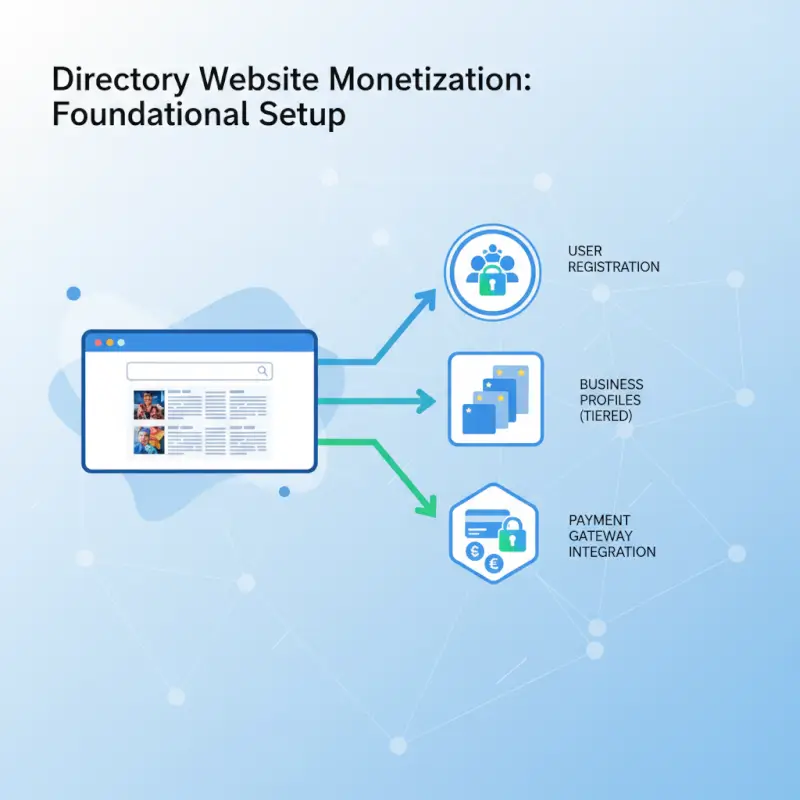
The implementation details matter more than most founders realize. Tiered pricing structures (basic free listing, enhanced at $29/month, premium at $99/month) let you capture willingness-to-pay across different business sizes while maintaining a free base that keeps your directory populated. According to eDirectory platform research, directories that offer 3-4 pricing tiers see 40% higher conversion rates than those offering only one paid option.
Value-added features justify the premium jump: high-resolution photo galleries, embedded video tours, priority placement in category searches, highlighted badges, and extended contact options (click-to-call buttons, instant quote requests) all increase perceived value. I’ve seen directories double their premium conversion simply by adding a “verified business” badge and moving those listings above the fold. Renewal cadence drives long-term value—annual subscriptions at a 15-20% discount lock in revenue and reduce churn compared to month-to-month billing.
Location and category demand should dictate pricing. A TurnKey Directories installation for wedding vendors in Manhattan can command $200/month for premium placement, while a rural tool rental directory might cap at $49. Run competitor analysis in your niche, survey your first 20 listed businesses about their marketing spend, then price premium listings as 5-10% of what they’d pay for Google Ads in that vertical (you’re often delivering better-qualified traffic at a fraction of the cost).
Premium Listings and Featured Positions
Featured positions tap into auction-style logic without the complexity of real-time bidding. Businesses competing for the top three spots in “Denver HVAC contractors” understand they’re buying the highest-intent traffic your directory delivers. Pricing these slots 2-3x higher than standard premium listings is justified when you can show click-through rates 5-10x higher than page-two placements.
Implement smart rotation for featured slots when you have more demand than inventory. If five businesses want three featured positions, rotate them through on a schedule (each gets featured 3 out of 5 days, for example) and charge 60% of the full featured price. This maximizes revenue per slot while keeping multiple businesses engaged. WordPress directory plugins like TurnKey Directories can automate rotation logic, pulling from a pool of featured-tier subscribers.
Geographic micro-targeting multiplies inventory. Instead of one “featured contractor” slot citywide, sell neighborhood-level featuring—”top 3 in Williamsburg,” “top 3 in Park Slope”—and charge 50-70% of the citywide rate. A Brooklyn directory could sell 20+ micro-geographic featured slots instead of 3 citywide ones, increasing total featured revenue 4-5x while delivering hyper-local relevance users actually prefer.
Lead Generation and Curated Intros
Lead generation flips the script: instead of charging businesses for visibility, you charge for results—actual customer inquiries. This model works best when your directory attracts high-intent searchers (people ready to buy, not just browsing). Build contact capture into every listing page with clear calls-to-action: “Get a Free Quote,” “Request Availability,” “Schedule Consultation.” The form data flows to the business, and you bill per qualified lead submitted.
Lead quality controls make or break this model. Require phone number and project details in your contact forms (not just email) to filter out tire-kickers. Some directories implement lead verification—a quick call or automated text confirming the inquiry is legitimate—before counting it as billable. According to MDPI platform monetization research, directories that pre-qualify leads can charge 2-3x more per lead ($25-75 instead of $8-15) while maintaining higher business satisfaction.
Pricing models vary: pay-per-lead works for service directories (landscapers, contractors, event vendors) where each inquiry has clear dollar value. Subscription-plus-leads hybrid—charge $49/month for the listing, then $15 per lead on top—aligns incentives: businesses get base visibility, you get rewarded for driving actual inquiries. Cap monthly lead charges ($150 max, for example) to avoid sticker shock and demonstrate you’re capping your take from any single business.
Curated inbox features add another monetization layer. Instead of blasting all incoming leads to all listed vendors (which dilutes value), offer an “exclusive lead” tier where one business pays $50-100 to be the only recipient of a high-value inquiry. This works particularly well in wedding, luxury service, and B2B directories where businesses prefer fewer, better-matched opportunities over high-volume spam.
Advertising, Sponsorships, and Affiliate Partnerships
Display advertising remains the easiest revenue stream to activate—sign up for Google AdSense, drop in ad units, start earning—but it’s also the lowest-margin approach for most directories. The directories making real money from ads aren’t running generic programmatic inventory; they’re selling direct sponsorships to category-relevant businesses at CPMs 10-20x higher than AdSense rates. A niche construction directory can sell a $500/month banner to a regional lumber supplier, delivering better ROI than the $30/month AdSense would generate from the same traffic.
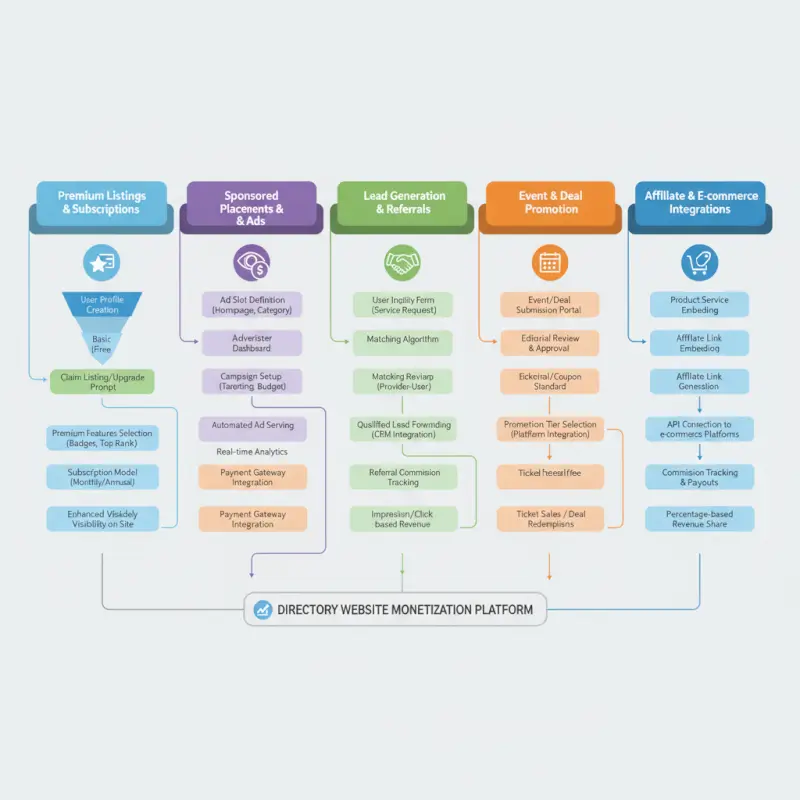
Ad density discipline separates sustainable directories from user-hostile ones. Limiting yourself to 2-3 ad placements per page—one contextual banner near category headings, one sidebar unit, maybe one in-content native ad—keeps user experience intact while still monetizing traffic. Research from platform monetization studies shows directories with low ad density (under 20% of viewport) maintain 60% higher return-visitor rates than ad-heavy competitors, and those returning visitors are the ones who convert to paid listings.
Privacy-respecting ad stacks matter more now than ever. Contextual advertising (serving ads based on page content, not user tracking) via platforms like Google AdSense for Content or direct deals with relevant brands keeps you compliant with GDPR and CCPA while often delivering better engagement than behavioral targeting. A directory about Firefox plugins can serve software-related ads contextually without needing any user tracking infrastructure.
Performance tracking closes the loop. Use UTM parameters on all ad placements and require advertisers to share conversion data (even if anonymized). When you can tell a roofing supplier that your $800/month sponsorship delivered 12 qualified leads last quarter, renewal becomes automatic. Most directory owners skip this step and lose sponsors after 2-3 months because neither party knows if it’s working.
Display Ads, Sponsored Content, and Programmatic Reach
Programmatic advertising (Google AdSense, Mediavine, Ezoic) makes sense as a baseline monetization layer for traffic you haven’t monetized otherwise. Set it up on category pages and blog content, but exclude it from high-intent pages (search results, individual listings) where premium placements or lead-gen forms should take priority. Think of programmatic as your “floor” revenue—it’s there, it’s passive, but it shouldn’t crowd out higher-value monetization.
Sponsored content in directories takes a different shape than in media sites. Instead of traditional advertorials, offer “Buyer’s Guide” or “How to Choose” pages sponsored by relevant businesses. A directory of financial advisors might publish “How to Choose a Retirement Planner in Texas” sponsored by a large advisory firm, who pays $1,000-2,000 for the association and a featured mention. The content still serves users (it’s genuinely helpful), but the sponsor gets brand lift and a trust halo.
Newsletter sponsorships unlock a separate revenue stream if you’ve built an email list from directory users. A weekly “New Listings in Your Area” email with 5,000 subscribers can command $200-400 per sponsor mention in a specific category. Limit to one sponsor per email to maintain value, rotate categories weekly, and track click-through religiously so you can justify pricing to sponsors.
Affiliate Programs and Industry Partnerships
Affiliate monetization works when your directory has clear purchase intent in specific categories. A restaurant directory can integrate OpenTable affiliate links (earning a few dollars per reservation), a software directory can embed affiliate links to trial signups, and a travel directory can link to booking platforms for commissions. The key is integration that feels native—users clicking through to book, not clicking an ad.
Partner vetting prevents the affiliate-spam trap. Only promote products or services you’d genuinely recommend to a friend in that category. If your wedding venue directory partners with a terrible photographer booking service just for the commission, you’ve traded long-term trust for short-term cash. I’ve seen directories lose 30-40% of their organic traffic after Google penalized them for thin affiliate content—don’t let that be you.
Attribution and disclosure keep you legally compliant and ethically sound. Use clear, conspicuous disclosure language (“We may earn a commission if you book through this link”) and implement proper tracking so you can see which affiliate partnerships actually drive revenue. Most directory owners sign up for 10 affiliate programs, integrate them all, and never check which ones convert—then they’re surprised when they earn $50/month from 10 programs instead of focusing on the two that could deliver $200 each.
Category-specific partnerships can be more lucrative than broad affiliate networks. A construction directory might partner directly with a project management software company for a 20% revenue share on signups, far exceeding what a generic affiliate network would pay. Reach out to SaaS tools, service providers, and product companies that serve your niche—many will do custom partnership deals that aren’t advertised publicly.
Data Monetization, Marketplaces, and Insights
High-quality, structured directory data is not just a service layer—it’s an asset that can generate recurring revenue. When directory operators invest in schema markup, clean categorization, and verified listings, they create datasets that partners, aggregators, and even competitors will pay to access. Research on platform economics shows that data monetization models scale well once foundational data hygiene is established, because marginal distribution costs are near zero (MDPI, 2024). Directory owners can package listings, contact metadata, market trends, or user behavior insights and license them under API agreements or monthly data subscriptions.

Beyond raw data licensing, niche directories can evolve into specialized marketplaces where buyers and sellers exchange not just contact information but curated signals—pre-qualified leads, industry benchmarks, or competitive intelligence dashboards. For example, a legal services directory might offer law firms anonymized search trend data showing demand by practice area and geography. A B2B supplier directory could provide manufacturers with dashboards tracking inquiries by product category, helping them refine their pricing or inventory. These value-added analytics command premium pricing because they directly inform strategic decisions.
Implementation starts with robust data governance: define what data can be shared, ensure user consent where required, and establish standard schemas (JSON-LD, OpenAPI) for portability. Set clear API rate limits and usage tiers—free access for light research, paid plans for bulk exports or real-time webhooks. Publish transparent documentation and sample queries to attract developer and analyst audiences. Monitor which endpoints or datasets are most requested, then bundle popular queries into self-service dashboards or monthly reports that non-technical buyers can purchase without coding.
Sustainability depends on continual data quality. Stale or inaccurate listings erode trust and devalue the dataset. Invest in automated validation (email verification, phone number checks, duplicate detection) and incentivize listing owners to keep their profiles current—for example, by offering free premium placement for a quarter if they verify their details. Clean master data not only drives better user engagement on-site but also underpins credible data products off-site (MDPI, 2024). As your data reputation grows, you can negotiate white-label partnerships where third-party platforms embed your listings via API and share a percentage of their subscription or ad revenue.
Structured Data as a Revenue Driver
Structured data is the foundation for machine-readable exports, programmatic integrations, and third-party enrichment services. By tagging every listing with schema.org markup (LocalBusiness, Organization, Product), directory operators make their catalogs indexable by search engines and digestible by partner systems. This structured foundation opens revenue channels: data aggregators pay to ingest clean feeds, vertical SaaS tools license category subsets, and analytics firms buy historical snapshots to train models or benchmark industries. Pricing models range from flat monthly licenses to usage-based fees tied to API call volume or record count.
Maintaining schema consistency requires clear documentation, automated validation on submission, and periodic audits. Offer listing owners a preview of their structured data card and a “completeness score” that gamifies profile enhancement—higher scores unlock better visibility and, for paid tiers, inclusion in premium data exports. Track which fields partners query most (location, industry codes, contact methods) and prioritize those in your quality-control workflow. Transparent consent flows—explaining how data may be shared and giving users opt-out checkboxes—build trust and keep you compliant with privacy regulations.
Niche Marketplaces and Data Exchange
Niche directories can graduate from passive listing hubs to active marketplaces by brokering data exchanges between supply and demand. For instance, a directory of freelance designers might sell aggregated portfolio analytics to design agencies scouting talent, or a healthcare provider directory could license appointment availability data to insurance networks optimizing referrals. These exchanges work best when both sides perceive clear, mutual value: buyers get actionable intelligence, suppliers gain qualified exposure or referrals, and the directory captures a transaction or subscription fee.
Implementation involves building role-based access controls (suppliers see their own metrics, buyers see anonymized aggregates) and usage dashboards that show quotas and billing in real time. Publish clear license terms—commercial use, attribution requirements, resale restrictions—and enforce them with automated rate limiting and watermarking for exported datasets. Segment your marketplace by vertical or use case: one API tier for market research, another for integration partners, and a white-glove tier for enterprise buyers who need custom extracts or SLAs. Monitor adoption metrics (API requests per customer, churn, average contract value) and iterate pricing to reflect the unique value each segment derives from your data.
| Data Monetization Tactic | Revenue Model | Typical Buyer | Pricing Range (2025) |
|---|---|---|---|
| API licensing (read-only) | Subscription | Developers, aggregators | $99–$999/mo |
| Bulk data export | One-time license | Market research firms | $500–$5,000 |
| Custom analytics dashboard | Subscription | Enterprise suppliers, buyers | $199–$2,499/mo |
| White-label data feeds | Revenue share / fixed license | Partner platforms | 10–30% rev share or $1,000+/mo |
Scalable Growth, Pricing Strategy, and Metrics
Effective pricing transforms features into revenue by clearly articulating the incremental value each tier delivers. Directory operators should anchor pricing on measurable outcomes—more profile views, more inbound leads, higher search rankings—and test multiple price points to discover willingness-to-pay thresholds. Research on dual-engine platform growth emphasizes the importance of aligning subscription tiers with user segments: free for casual contributors, mid-tier for small businesses seeking visibility, and enterprise tiers with white-glove support and API access (MDPI, 2025). A/B testing annual-versus-monthly billing often reveals that a modest discount on annual plans dramatically improves cash flow and reduces churn.
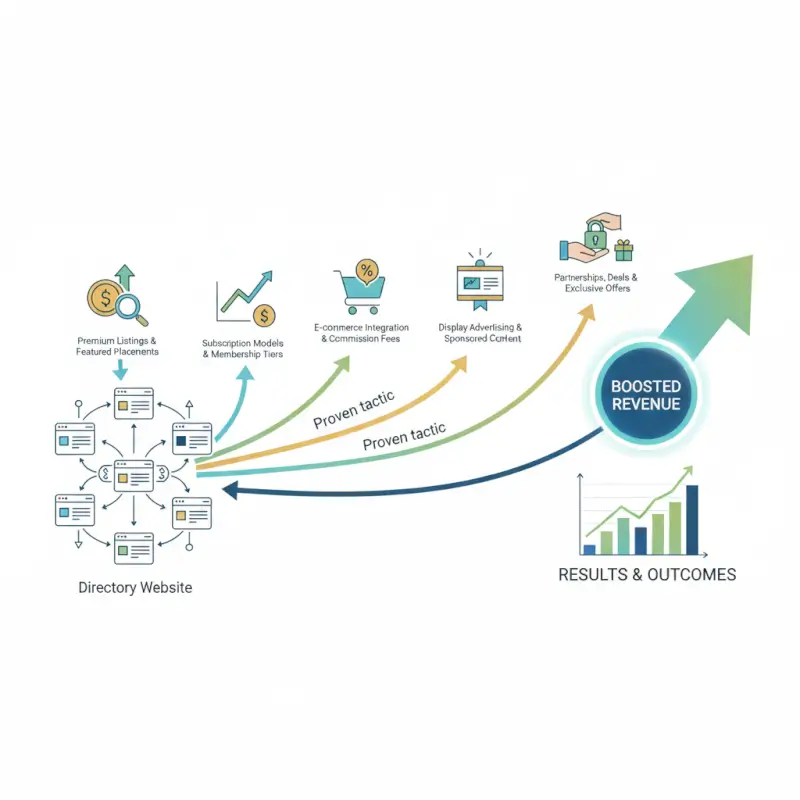
Pricing architecture should ladder benefits in a way that nudges users toward the next tier. For example, a basic free listing might allow one photo and plain contact details, a $29/month premium listing adds a gallery and priority placement in category results, and a $99/month featured listing includes homepage carousel slots and lead-routing integrations. Bundling complementary services—such as discounted advertising credits or free lead alerts—into higher tiers increases perceived value without proportionally raising cost. Publish transparent comparison tables on your pricing page so prospects can self-select the tier that matches their goals and budget.
Sustainable growth depends on rigorous tracking of key performance indicators: listing views per profile, inquiry conversion rate (visitors who submit a contact form or click to call), renewal rate, and average revenue per user (ARPU). Set up cohort analysis to compare retention across acquisition channels—organic search, paid ads, referrals—and identify which sources yield the highest lifetime value. Use these insights to refine targeting, adjust pricing, or double down on the channels that deliver profitable growth. Regularly review pricing elasticity: if a 10% price increase leads to less than 10% drop in conversions, your pricing has headroom; if churn spikes, roll back or add value to justify the cost.
Iterative optimization means shipping small changes, measuring impact, and scaling winners. Test headline copy on pricing pages, experiment with trial periods or money-back guarantees, and survey churned users to understand objections. Automate renewal reminders and offer one-click upgrade paths in user dashboards. Celebrate milestones—”Your listing received 500 views this month! Upgrade to premium to capture even more leads”—to trigger timely upsells. Over time, these incremental improvements compound into significant revenue gains and more predictable cash flow.
Pricing Architecture and Value Communication
Clear value propositions justify every dollar of your pricing. Quantify the benefit: “Premium listings receive 3× more profile views on average” or “Featured sponsors see a 40% higher inquiry rate.” Use before-and-after case studies, testimonials with specific metrics, and transparent analytics dashboards that let paying users watch their ROI in real time. When prospects understand the direct link between spending and outcomes, price resistance drops and conversion rates climb.
Segment your pricing by customer size and use case. Solo practitioners and microbusinesses may pay monthly for flexibility; larger firms often prefer annual contracts with volume discounts or multi-location bundles. Offer add-ons—extra photos, video embeds, priority support—as à la carte upsells that let users customize their investment. Display pricing in a comparison grid with a highlighted “Most Popular” tier to anchor decisions, and use scarcity or urgency sparingly (limited featured slots, early-bird discounts) to encourage action without eroding trust.
Analytics, KPIs, and Iterative Optimization
Instrumentation is the engine of optimization. Track every monetizable interaction: listing page views, click-to-call events, contact-form submissions, ad impressions, and API calls. Calculate conversion funnels for each revenue stream—visitors → profile views → inquiries → paid upgrades—and identify drop-off points where friction or unclear value messaging stalls progress. Monitor cohort retention weekly: new subscribers acquired this month versus renewals from prior cohorts. High early churn signals onboarding gaps; stable long-term retention validates product-market fit.
Average revenue per user (ARPU) and customer lifetime value (LTV) guide strategic investments. If ARPU is climbing but user growth is flat, focus on acquisition marketing; if ARPU is stagnant but volume is rising, prioritize upsell and cross-sell features. Benchmark your metrics against industry norms—directory platforms in mature verticals often see 60–80% annual renewal rates for premium listings—and set quarterly targets for improvement. Use dashboards to surface anomalies in real time: a sudden spike in API usage may indicate a new enterprise customer or a bot, while a dip in inquiry conversion could signal a site performance issue or seasonal lull.
| KPI | Definition | Healthy Benchmark (2025) | Action if Below Benchmark |
|---|---|---|---|
| Listing view rate | Profile views / total site visits | ≥20% | Improve search UX, category navigation |
| Inquiry conversion | Contact actions / profile views | 3–8% | Optimize CTA placement, trust signals |
| Annual renewal rate | Renewed subscriptions / expiring subscriptions | 60–80% | Enhance onboarding, deliver ROI reports |
| ARPU (monthly) | Total revenue / active paid users | $40–$150 | Test upsells, add premium features |
Compliance, Trust, and User Experience in Monetization
Monetization strategies succeed only when users trust the platform and find the experience valuable. Privacy regulations—GDPR in Europe, CCPA in California, and emerging frameworks worldwide—require explicit consent for data collection, transparent disclosures about how information is used, and easy opt-out mechanisms. Directory operators must document which data points are shared with advertisers, affiliates, or data buyers, and provide users with clear controls to review, edit, or delete their information. Non-compliance risks fines, lawsuits, and reputational damage that can erase years of revenue growth (MDPI, 2025). Building trust starts with readable privacy policies, cookie-consent banners that respect user choice, and regular third-party audits of data-handling practices.

Transparency extends to advertising and sponsored placements. Clearly label paid listings with “Sponsored” or “Featured” badges so visitors can distinguish organic results from promoted content. Disclose affiliate relationships when you earn commissions on clicks or purchases, using standard FTC-compliant language. Avoid deceptive design patterns—hidden fees, auto-renewing subscriptions without notice, or bait-and-switch pricing—that might boost short-term conversions but ultimately drive churn and negative reviews. Sustainable revenue models align incentives: users get better service or visibility in exchange for payment, and the directory earns predictable income without undermining editorial integrity.
User experience discipline means setting ad-density limits, ensuring fast page loads even with third-party scripts, and maintaining content quality. A homepage cluttered with banners and pop-ups may maximize impressions but degrades the core value proposition—helping users find the right listing quickly. Establish house rules: no more than two display ads per page, no auto-play video, and no interstitials on mobile until after a user has engaged with content. Regularly test site performance on real devices and connections; slow-loading pages increase bounce rates and reduce the likelihood of both organic conversions and paid upgrades.
Content moderation and listing quality controls protect both users and revenue. Implement automated checks (duplicate detection, spam filtering, profanity blockers) and manual review queues for new submissions. Verify business licenses or credentials for high-stakes categories (legal, medical, financial services) to prevent fraud and liability. Incentivize honest reviews by using verified-buyer badges or third-party review integrations, and enforce policies against fake testimonials. High-quality, trustworthy listings drive repeat visits, word-of-mouth referrals, and organic search rankings—all of which amplify monetization without additional ad spend.
Privacy, Transparency, and Ad Relevance
Privacy-first monetization respects user choice and still delivers relevant experiences. Implement consent management platforms (CMPs) that let visitors granularly opt in to analytics, advertising, or personalization cookies. Default to privacy-preserving modes—contextual ads based on page content rather than cross-site tracking—when users decline consent. This approach not only ensures compliance but also appeals to privacy-conscious audiences who reward transparent operators with loyalty and positive reviews.
Ad relevance improves both user satisfaction and advertiser ROI. Use category and keyword targeting to match ads to user intent: visitors browsing plumbing services see ads for plumbing tools or training courses, not unrelated consumer goods. Monitor click-through rates and user feedback to cull low-performing or off-brand creatives. Negotiate with ad partners for quality standards—no malware, no misleading claims, no excessive animation—and reserve the right to block ads that harm user experience. Higher relevance translates to better engagement, which justifies premium CPMs and attracts quality advertisers willing to pay for access to your niche audience.
User Experience and Content Quality
Content quality is the moat that defends your monetization strategy. Invest in editorial standards: require complete profiles with descriptions, contact details, and at least one photo; reject or de-list inactive or unverified entries; and highlight top contributors with “Verified” or “Top Rated” badges. Offer listing owners a dashboard showing completeness scores and actionable tips—”Add a logo to increase profile views by 30%”—to gamify improvement. Curate category pages with featured articles, buying guides, or industry news that add editorial value beyond the raw directory, positioning your site as an authority rather than a commodity aggregator.
Payment flows and renewal processes must be frictionless. Use one-click upgrade buttons in user dashboards, accept multiple payment methods (credit cards, PayPal, ACH for enterprise), and send clear invoices with itemized charges. Offer self-service tools to pause, upgrade, or downgrade subscriptions without forcing users to contact support. Automate renewal reminders at 30, 14, and 7 days before expiration, and include a quick ROI summary—”Your premium listing generated 42 inquiries last month”—to reinforce value. Smooth, respectful interactions reduce churn and free up your team to focus on product improvements rather than billing disputes.
| UX Best Practice | Why It Matters | Implementation Tip |
|---|---|---|
| Clear “Sponsored” labels | Maintains editorial credibility, FTC compliance | Use subtle badge, consistent placementFrequently Asked QuestionsHow much money can a directory website make?Revenue varies widely based on niche, traffic, and monetization tactics. Established directories often generate $2,000–$10,000 monthly through premium listings, ads, and lead generation. Niche directories with high buyer intent can achieve significantly higher ARPU by combining multiple revenue streams and focusing on quality over volume. What is the best revenue model for a new directory?Start with premium listings or featured placements to monetize demand without deterring early adopters. Once you build traffic, layer in display advertising or affiliate partnerships. Testing one or two models first helps you understand your audience’s willingness to pay before introducing hybrid monetization strategies. How do I price premium listings for my directory?Benchmark competitor directories in your vertical, then test tiered pricing based on visibility and features. Common starting points range from $29–$99 monthly for enhanced listings, with higher prices for top-of-category placements. Use A/B tests and conversion tracking to refine your pricing and bundle options over time. Can a directory succeed with a hybrid monetization model?Absolutely. Hybrid models combining paid listings, ads, and lead generation often outperform single-stream approaches by diversifying revenue and reducing dependence on any one channel. The key is balancing user experience with monetization intensity, ensuring ads and paid placements enhance rather than degrade directory value. How can I improve lead quality on my directory site?Implement form validation, require detailed inquiry fields, and use CAPTCHA to filter spam. Offer listers lead-quality feedback and track conversion metrics so you can refine targeting. Consider pay-per-qualified-lead pricing to align your incentives with listing owners and encourage continuous improvement of lead capture workflows. Should I use advertising or subscriptions for my directory?It depends on your audience and traffic volume. Subscriptions work well for high-value, low-traffic niches where businesses pay for visibility. Advertising suits high-traffic directories where ad revenue scales with impressions. Many successful directories blend both to maximize revenue while keeping barriers to entry low for new listers. What metrics should I track to optimize directory monetization?Monitor average revenue per user, conversion rate from free to paid listings, renewal rate, and cost per acquisition. Track listing views and inquiry rates to gauge engagement, and measure lifetime value to inform pricing decisions. Regular analysis of these KPIs helps you spot trends early and iterate on your monetization strategy effectively. How do I monetize directory data without violating privacy laws?Anonymize and aggregate data before sharing insights or selling access. Obtain explicit consent for any personalized data use, and clearly disclose how you handle information in your privacy policy. Leverage structured, non-personal listing metadata for market reports or API access, ensuring compliance with GDPR, CCPA, and other regulations. Conclusion: Build Your Monetization Engine with Discipline and DataDirectory websites occupy a unique position in the digital ecosystem. They connect supply and demand, curate valuable information, and serve as trusted hubs for niche communities. Monetizing that value effectively requires a clear strategy, disciplined execution, and an unwavering commitment to user experience. The five pillars covered in this guide—premium listings and lead generation, advertising and sponsorships, affiliate partnerships, data monetization, and scalable growth through analytics—offer a robust framework for building sustainable revenue. Each tactic has its strengths, and the most successful directories combine multiple streams to reduce risk and capture value at every stage of the user journey. Start lean. Choose one or two monetization methods that align with your audience’s needs and your operational capacity. Test your pricing, measure conversion and retention, and refine your approach based on real data. As your directory grows, layer in additional revenue streams, always asking whether each new tactic enhances or detracts from the core value you provide. Remember that monetization is not a one-time decision but an ongoing process. Markets shift, user expectations evolve, and competitive dynamics change. Stay close to your metrics, listen to feedback from both listers and visitors, and be ready to pivot when opportunities or challenges arise. Above all, prioritize trust and transparency. Respect privacy, deliver on promises, and maintain high-quality listings. A directory that earns its users’ confidence will enjoy stronger engagement, higher conversion rates, and more resilient revenue over the long term. Ready to Launch Your Monetization Strategy?Apply these proven tactics to your directory today. Start with premium listings, track your KPIs, and build a revenue engine that scales with your growth. The most successful directories blend multiple revenue streams while keeping user value front and center. Your next step: choose one tactic, test it, measure results, and iterate. Was this article helpful? Similar Posts
|