How to Sell a Directory Website: 6 Strategies to Maximize Profit

• Diversify revenue streams across premium listings, subscriptions, lead generation, and ads to reduce buyer risk and justify higher multiples instead of relying on a single income source.
• Focus on traffic quality over volume by targeting organic search, niche intent, and engaged users to signal durable demand and command premium valuations.
• Maintain clean financials with normalized EBITDA, documented recurring revenue, and clear growth metrics to facilitate smooth due diligence and attract competitive bids.
• Build defensible competitive advantages through curated data, exclusive partnerships, and protected traffic channels to differentiate your directory from commodity sites.
• Plan your exit 12-36 months in advance with strategic preparation rather than last-minute cleanup to secure the best terms and avoid rushed deal-making.
Selling a directory website isn’t just about finding a buyer and handing over the keys. The best exits happen when you’ve spent months (or years) building a monetization engine that runs like clockwork, proving consistent traffic and revenue, and packaging it all into a story that makes buyers compete for your asset. I’ve watched dozens of directory owners leave tens of thousands of dollars on the table because they treated the sale like a quick flip instead of a strategic exit. The difference between a mediocre 2x multiple and a premium 4-5x offer often comes down to how well you prepare the business for scrutiny, diversify your revenue streams, and present a growth narrative that excites strategic buyers.
What follows is a tactical roadmap for maximizing your exit value—covering monetization architecture, traffic optimization, financial positioning, deal structuring, and buyer outreach. These aren’t theoretical frameworks, they’re the strategies that separate six-figure exits from modest payouts in the online directory market.
TL;DR – Quick Takeaways
- Layer your revenue models — diversify across premium listings, subscriptions, lead generation, and ads to reduce buyer risk and justify higher multiples
- Traffic quality beats volume — organic search, niche intent, and engaged users signal durable demand and command premium valuations
- Clean financials unlock premium offers — normalized EBITDA, recurring revenue documentation, and growth metrics make due diligence smooth and bids competitive
- Buyers pay for moats — curated data, exclusive partnerships, and defensible traffic channels differentiate your directory from commodity sites
- Plan your exit 12-36 months ahead — strategic preparation (not last-minute cleanup) drives the best terms and protects against rushed deals
Build a Profitable, Sale-Ready Monetization Engine
The single biggest factor in your sale price is how you make money and how sustainable that income looks to a buyer. Directories with one revenue stream—say, just display ads or only premium listings—trade at steep discounts because buyers see concentration risk. The moment that channel weakens (algorithm changes, advertiser pullback, listing churn), revenue collapses. Top-performing directories stack multiple models: premium listings for high-intent categories, subscription memberships for ongoing access or perks, lead-generation fees when users contact businesses, and display or native ads for residual income from free traffic. Each stream validates the others and creates fallback revenue if one dips.
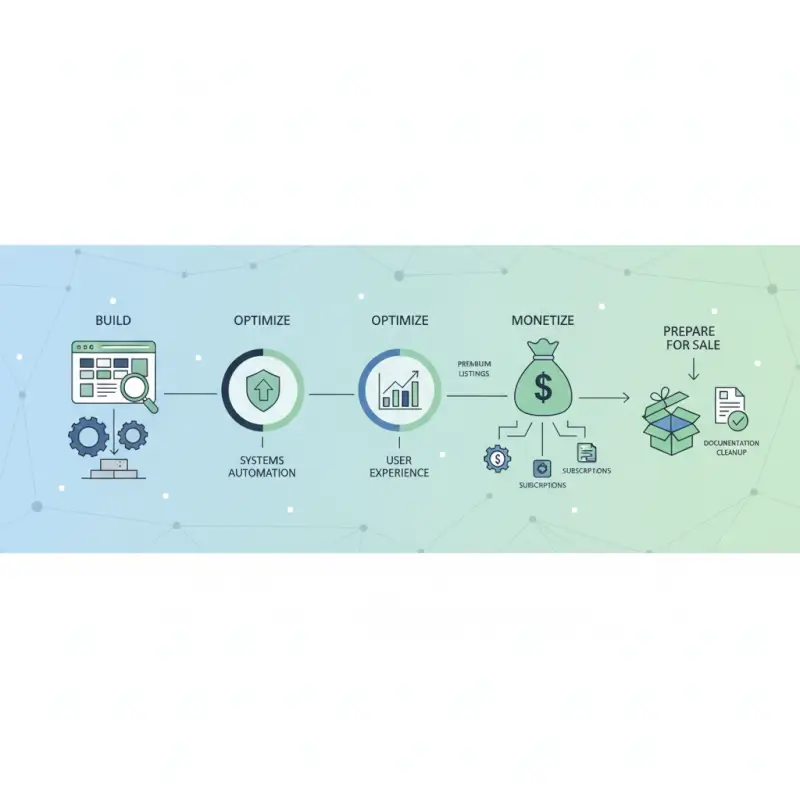
According to Statista, global digital advertising revenue continues to grow year-over-year, but relying solely on ad impressions leaves you vulnerable to CPM fluctuations and ad-blocker adoption. Smart directory owners add featured placements ($50-$500 per listing per month depending on niche), tiered membership plans for businesses that want analytics or priority placement, and pay-per-lead models where listings pay only when a user submits a contact form or initiates a call. This mix not only smooths monthly cash flow, it also tells buyers you’ve de-risked the business by diversifying income sources. When you present a revenue breakdown showing 40% from subscriptions, 30% from premium listings, 20% from leads, and 10% from ads, you’ve built a monetize online directory revenue streams portfolio that buyers can scale with confidence.
Operational metrics complete the picture. Buyers won’t take your word for profitability—they want dashboards showing monthly net profit after all expenses (including your time if you plan to hand off operations), customer acquisition cost (CAC) for each revenue channel, lifetime value (LTV) of a premium listing or subscription, and churn rates for recurring customers. Year-over-year growth trends matter more than any single month’s spike; consistent 10-15% monthly growth signals momentum, while erratic numbers raise red flags. Use tools like Google Analytics for traffic cohorts, Stripe or PayPal reporting for subscription metrics, and a simple spreadsheet to track LTV and CAC by channel. Present these in a clean dashboard (even a Google Data Studio report works) so buyers see transparency and operational rigor. When you can say “our average premium listing stays active for 18 months at $200/month, giving us an LTV of $3,600 against a CAC of $400,” you’ve just handed the buyer a defensible unit-economics story that justifies a premium multiple.
Optimize Traction Before the Sale (Traffic, Traffic Quality, and Value)
Traffic numbers alone don’t impress sophisticated buyers anymore. Anyone can buy a few thousand bot visits or run a short-term paid campaign to inflate session counts. What buyers scrutinize is traffic quality: the percentage coming from organic search, the intent signals (users landing on category or detail pages instead of bouncing from the homepage), and niche alignment (are visitors actually in-market for the services your directory catalogs?). A directory with 20,000 monthly organic sessions from long-tail, high-intent keywords will trade at a higher multiple than one with 50,000 sessions driven by paid social or referral spikes that dry up when you stop spending. Research from Google’s SEO guidelines emphasizes that sustainable rankings require quality content and relevant backlinks, both of which signal durability to buyers.
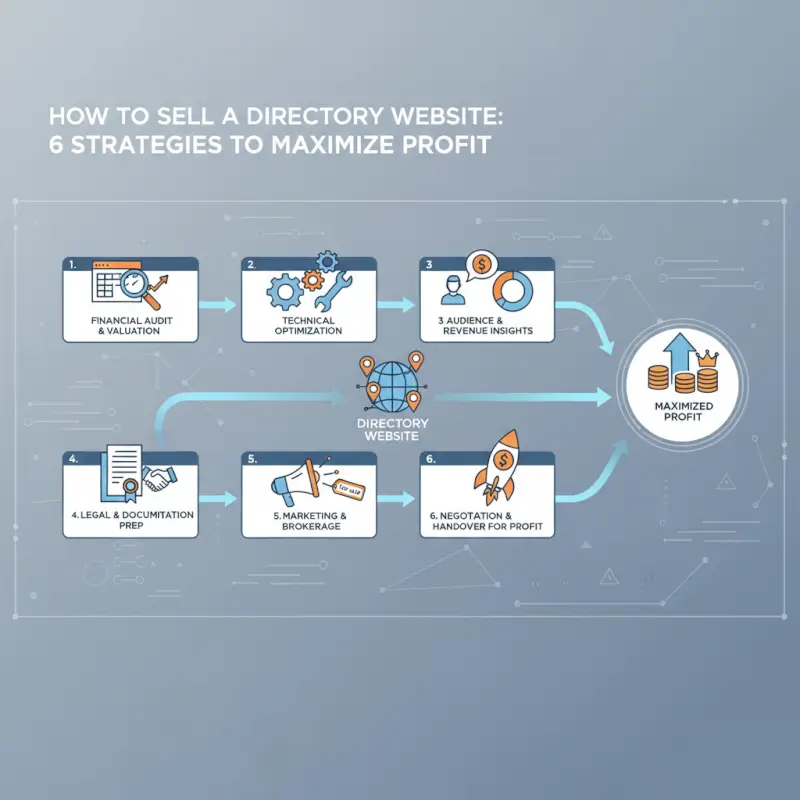
Focus on category-page performance as your primary quality metric. If users arrive via search terms like “plumbers in Austin” or “best yoga studios Denver” and land directly on a relevant category page, that’s high-intent traffic that converts into clicks, form fills, or calls—revenue events buyers can model. Check your Google Search Console data for the percentage of impressions and clicks going to category pages versus your homepage or blog. Buyers want to see at least 50-60% of organic traffic hitting category or listing pages, not generic informational content. This pattern proves your directory serves a real search need and isn’t just a content play. If your traffic skews toward blog posts or informational guides, you may be building an audience but not a free listing google maps claim business profile style utility that businesses pay to be part of.
Content, partnerships, and data quality create the moat that protects your traffic and justifies premium pricing. Pre-populate your directory with high-value business data—complete profiles, accurate contact details, verified hours, and fresh reviews or ratings—so listings aren’t just thin name-and-address entries. Buyers will spot-check 20-30 random listings during due diligence; if half are outdated or incomplete, they’ll discount your valuation or walk away. Partner with local chambers of commerce, industry associations, or data providers to show exclusivity or a data-refresh cadence. Completeness and freshness signal that your directory is a maintained asset, not an abandoned scrape. When you can demonstrate 85%+ listing completeness and a quarterly data-refresh process, you’ve built a defensible advantage that commodity free link directory sites boost backlinks can’t replicate overnight.
If you want to maximize perceived value, layer in exclusive content or partnerships that competitors can’t easily copy. That might mean original interviews with top-rated businesses in your niche, neighborhood guides written by local experts, or co-marketing agreements with industry players that drive referral traffic. Each exclusive element becomes a story point in your sales pitch: “We have the only directory with verified contractor insurance data in this metro,” or “Our partnership with the regional trade association gives us first access to new members.” These moats reduce buyer concerns about copycats and justify the premium you’re asking. Tools like TurnKey Directories make it easier to manage curated listings and membership tiers, giving you a platform advantage when you’re building these exclusive features into your site before the sale.
Preparation & Valuation Positioning (Financials, Documentation, and Seller Narrative)
Sale preparation begins 12–24 months before you list, not the week you hire a broker. Clean financials are your foundation: reconcile every payment processor, normalize discretionary expenses (owner perks, one-time marketing tests), and recast profit and loss statements to show sustainable, recurring earnings. Buyers will apply their own due diligence, so presenting adjusted EBITDA or Seller’s Discretionary Revenue (SDR) up front builds trust and anchors your asking price at a realistic multiple.

Compile a sale-ready data room with at least three years of financial statements, monthly traffic analytics (Google Analytics exports, Search Console data), revenue breakdowns by channel (premium listings, subscriptions, leads, ads), and a customer or listing database export. Document key operational workflows—listing approval, customer support, content updates—so buyers see a scalable, replicable system rather than a solo operation that depends entirely on your personal knowledge. The cleaner your records, the faster due diligence proceeds and the less room buyers have to negotiate downward on price.
Getting sale-ready: financial clean-up, normalized EBITDA/SDR earnings, and “story” for buyers
Normalized earnings strip out non-recurring costs and owner-specific expenses that won’t transfer to a new operator, revealing the true cash-generating capacity of your directory. For example, if you paid yourself a below-market salary and pocketed distributions, add back a fair-market manager salary to show what a professional operator would earn. Conversely, remove one-time website redesign costs or legal fees that skew a single year’s profit downward.
Craft a concise seller narrative—a two-page executive summary—that explains your niche, growth trajectory, and the strategic opportunity ahead. Highlight untapped monetization levers (e.g., “Only 15% of listings are premium; conversion to 30% would double revenue”), whitespace in adjacent verticals, or partnership deals in negotiation. Buyers pay for growth potential as much as historical performance, so quantify the runway and make it tangible with clear next steps they can execute on day one.
Valuation framing and deal structure options
Directory websites typically trade at 2.5–4.5× annual SDR for small-to-mid-sized sites, though high-growth, defensible directories with strong organic traffic can command 5–6× or more from strategic acquirers. Your multiple depends on revenue diversification (single revenue stream = lower multiple), profit margin (higher margin = higher multiple), traffic concentration (organic > paid), and defensibility (proprietary data, brand authority). Understand these levers so you can benchmark your ask against comparable sales on platforms like Flippa, Empire Flippers, or private M&A deal data.
Expect buyers to propose earnouts (a portion of the price paid contingent on hitting post-sale milestones) or seller financing (you hold a note for 10–30% of the purchase price) to bridge valuation gaps and reduce their upfront risk. Earnouts align your incentives during transition but can delay liquidity; seller notes reduce the buyer’s cash requirement and may unlock a higher headline price. Evaluate each structure against your liquidity needs, tax implications, and willingness to stay involved, and consult a CPA or M&A advisor before signing a letter of intent.
| Deal Structure | Buyer Benefit | Seller Trade-off |
|---|---|---|
| All-cash at close | Clean exit; no ongoing obligations | May result in lower valuation multiple |
| Earnout (performance-based) | Reduces upfront risk; aligns seller to transition success | Deferred liquidity; requires ongoing involvement |
| Seller financing (note) | Lower upfront cash; may justify higher total price | Collection risk; payments spread over 2–5 years |
Maximize Deal Terms and Risk Mitigation (Terms, Negotiation, and Transition)
Negotiation extends far beyond headline price: non-compete clauses, transition support duration, indemnity caps, and escrow holdbacks all shape your true net proceeds and post-sale obligations. A strong deal protects both parties—buyers want assurance you won’t launch a competing directory next month, and you want to cap liability for pre-close issues that surface during their operation. Define these terms explicitly in the letter of intent so due diligence and final purchase agreement negotiations stay on track.

Transition services agreements (TSAs) typically span 30–90 days and cover knowledge transfer, listing onboarding, customer support handoff, and vendor/partner introductions. Buyers will often request longer transitions (six months or more) to de-risk the handover, but extended commitments reduce your freedom and may expose you to operational headaches without commensurate compensation. Negotiate a reasonable scope—document processes, record training videos, provide email/call support—and set a fixed fee or hourly rate for any assistance beyond the agreed window.
Non-compete, transition services, and knowledge transfer
Non-compete provisions usually restrict you from operating a similar directory in the same niche and geography for 12–36 months post-close. Buyers need protection, but overly broad language can lock you out of adjacent verticals or unrelated projects; carve out exceptions for consulting, content sites, or different business models if relevant. Ensure the geographic and category scope is proportional to the actual business footprint—if your directory serves only U.S. contractors, a global non-compete is unreasonable.
Knowledge transfer should be structured and time-bound: prepare standard operating procedure (SOP) documents, record screencasts for administrative tasks (listing approval, payment reconciliation, email sequences), and schedule live training sessions for critical workflows. The cleaner your documentation, the shorter the transition period you’ll need to commit, freeing you to pursue new ventures while the buyer gains confidence in running the platform independently. Make transition deliverables a checklist in the purchase agreement so both parties have clear completion criteria.
Risk disclosures and contingency planning
Proactively disclose known issues—pending disputes, outdated listings, third-party API dependencies, traffic volatility, or regulatory gray areas—in your sale materials rather than waiting for buyers to uncover them in diligence. Transparency builds trust and allows you to frame risks with mitigation plans (e.g., “20% of listings need re-verification; we’ve budgeted $X and outlined the process”). Buyers will find problems anyway; presenting them first lets you control the narrative and negotiate solutions upfront.
Include representation and warranty insurance or negotiate indemnity caps (e.g., 10–20% of purchase price) to limit your post-close liability for breaches. Standard purchase agreements hold sellers liable for misrepresentations or undisclosed liabilities, but uncapped exposure can wipe out your proceeds if a major issue emerges. Work with a deal attorney to balance buyer protection with reasonable downside limits, and consider placing a portion of proceeds in escrow (typically 5–15%) for 6–12 months to cover minor claims without triggering costly arbitration.
Buyer Outreach and Exit Strategy Channeling (Markets, Channels, and Timing)
Your exit channel—private sale, broker-assisted listing, or auction marketplace—shapes buyer quality, timeline, and net proceeds. Private outreach to strategic acquirers (competitors, SaaS platforms, media companies in your niche) can yield premium multiples because these buyers see synergies (shared audience, technology stack, cross-sell opportunities) that financial buyers do not. However, private deals require your own network, NDA management, and negotiation expertise, making them slower and riskier without professional guidance.

Business brokers and M&A advisors streamline valuation, marketing, due diligence coordination, and closing logistics in exchange for 8–15% of the sale price (often on a sliding scale: higher percentage for smaller deals). Brokers bring pre-qualified buyer lists, standardized sale documents, and negotiation leverage, but their commission reduces your net and their incentive is to close quickly rather than maximize price. Evaluate broker track records in online businesses and directory sales specifically; generalist brokers may undervalue digital assets or misrepresent traffic and revenue quality to buyers.
Targeted buyer outreach and brokerage vs private sale
Marketplace platforms like Flippa, Empire Flippers, and FE International cater to different deal sizes and buyer sophistication. Flippa handles listings from a few thousand to mid-six figures with minimal vetting, attracting a broad but less-qualified audience; Empire Flippers and FE International vet sellers and buyers, target $100k–$10M+ deals, and provide escrow, migration support, and post-sale assistance. Choose a platform whose typical multiples and listing standards align with your business profile, and prepare for 30–90 day marketing windows plus 30–60 day due diligence and closing.
If you pursue private outreach, create a teaser document (one-page anonymous summary: niche, traffic, revenue, asking range) and a confidential information memorandum (CIM) for NDA-signed prospects. Reach out to 10–20 strategic contacts, portfolio companies of relevant private-equity firms, and industry consolidators. Track every inquiry in a CRM or spreadsheet, follow up weekly, and be prepared to run parallel negotiations with multiple parties to create competitive tension that lifts your final price and terms.
Timing considerations and post-sale planning
Plan your exit window 18–36 months in advance, aligning the sale with peak seasonality (if applicable) and upward revenue trends. Buyers anchor valuation on trailing-twelve-month (TTM) performance, so listing immediately after your strongest quarter maximizes the figures they see. Conversely, avoid selling during a traffic dip, post-algorithm-update recovery, or right after losing a major advertiser, as buyers will discount future projections heavily.
Post-sale, set aside 25–40% of proceeds for federal and state capital-gains taxes (consult a CPA for your effective rate), and develop a reinvestment or lifestyle plan before the funds hit your account. Many sellers underestimate the emotional and identity shift of exiting a business they built; line up your next project, advisory roles, or passive investments so you channel energy productively rather than second-guessing the sale. A smooth exit is one where you walk away financially whole, legally protected, and ready for the next chapter without regret or unfinished obligations.
| Exit Channel | Best For | Typical Commission | Timeline |
|---|---|---|---|
| Private strategic sale | High synergies; premium multiples | 0% (DIY) or 5–10% (advisor) | 3–9 months |
| Full-service broker | Hands-off; broad buyer network | 8–15% | 4–6 months |
| Marketplace (Empire Flippers, FE Intl) | $100k–$5M+ deals; vetted buyers | 10–15% | 2–4 months |
| Flippa (auction) | Sub-$100k; fast liquidity | 5–10% | 1–2 months |
Frequently Asked Questions
What is a typical valuation multiple for a directory website?
Directory websites typically sell for 2.5–4× annual seller discretionary revenue (SDR) or EBITDA, depending on revenue diversification, traffic quality, and growth trajectory. Niche directories with recurring subscriptions and strong organic traffic command higher multiples, while ad-dependent sites may see lower valuations due to perceived risk.
How can I maximize sale price for a directory site?
Build multiple revenue streams—premium listings, subscriptions, lead-gen, and ads—to demonstrate scalable income. Show clean, verifiable analytics with year-over-year growth, low customer churn, and high organic traffic. Present a detailed transition plan and growth roadmap that outlines untapped opportunities for the buyer.
What documents should I prepare for a buyer?
Compile three to five years of financial statements, traffic analytics (Google Analytics exports), revenue breakdowns by channel, customer databases, content and data-quality audits, and documented standard operating procedures. Include a transition plan detailing support handoff, login credentials, vendor contacts, and expected seller involvement post-sale.
Should I use a broker to sell my directory business?
Brokers streamline valuation, buyer vetting, and negotiation, often delivering faster sales and higher final prices by marketing to qualified buyers. Fees typically range 10–15% of sale price. If you lack M&A experience or time for outreach, a specialized online-business broker can be worth the commission.
What are common exit strategies for an online business?
Most online businesses exit through strategic acquisition (sold to a competitor or complementary company), financial buyer sale (private equity or individual investor), or private sale to a qualified individual. Public offerings remain rare for directories. Your choice depends on business size, growth rate, and liquidity goals.
How long does it take to sell a directory website?
Preparation, marketing, and due diligence typically require six to twelve months for established directories. Smaller sites with clear financials may close in three to four months, while larger, complex properties can take eighteen months or longer. Start planning at least twelve months before your target exit date.
Can I sell a directory site with minimal revenue?
Yes, but buyers will focus on traffic quality, email lists, domain authority, and data completeness rather than earnings. Expect lower valuations—often one to two times annual revenue—and be prepared to demonstrate growth potential through untapped monetization channels or partnership opportunities to justify the purchase price.
What risks should I disclose during the sale process?
Proactively disclose data-accuracy issues, reliance on third-party APIs, regulatory or compliance concerns, key-person dependencies, and any historical traffic or revenue volatility. Transparent risk disclosure builds buyer trust, reduces renegotiation risk during due diligence, and protects you from post-sale disputes or indemnification claims.
Ready to Maximize Your Directory Exit?
Selling a directory website is one of the most effective ways to unlock the value you’ve built—but only if you approach it strategically. The difference between a modest offer and a premium valuation comes down to how well you demonstrate profitability, diversify revenue streams, document traction, and present a seamless transition plan. Buyers aren’t just acquiring a website; they’re investing in recurring income, a curated audience, and future growth potential.
Start by stress-testing your monetization engine. Are you earning from premium listings, subscriptions, lead generation, and advertising—or leaning too heavily on a single channel? Layer in multiple revenue models now, and you’ll command a higher multiple at closing. Next, clean up your financials: normalize earnings, remove one-off expenses, and compile three years of verifiable data. Buyers will scrutinize every number, so make the story crystal-clear.
Focus on traffic quality over vanity metrics. Show that your visitors arrive with intent, convert into paying customers, and return month after month. Document organic search performance, category-page engagement, and user retention. Pair those numbers with a content and data-quality audit to prove you’ve built a defensible moat—not just a listing aggregator that anyone can replicate.
When you’re sale-ready, decide whether to engage a broker or pursue a private transaction. Brokers can accelerate the process and surface qualified buyers, but they charge 10–15% of the deal. If you have the time and M&A experience, a direct approach may save fees and give you tighter control over terms. Either way, prepare a comprehensive sale package: financials, analytics exports, revenue breakdowns, customer data, transition SOPs, and a growth roadmap.
Negotiate deal structure as carefully as price. Earnouts, seller financing, and transition-service agreements can bridge valuation gaps and reduce buyer risk—but they also tie you to the business post-close. Weigh the trade-offs, and don’t hesitate to walk away from unfavorable terms. The right buyer will recognize the value you’ve built and offer a deal that reflects it.
Take the First Step Today
Begin assembling your sale-ready documentation now—even if you’re twelve months away from listing. Audit your revenue streams, document key processes, and tighten your analytics tracking. The sooner you start, the stronger your negotiating position and the higher your final valuation.
A well-prepared exit turns years of hustle into life-changing liquidity. Make every buyer conversation count.
Was this article helpful?