How to Monetize an Online Directory: 6 Revenue Streams to Explore

Generating summary...
Most online directories leave serious money on the table. They launch with energy, attract a decent audience, then struggle to convert that traffic into meaningful revenue. The typical owner tries one monetization method—usually display ads—watches pennies trickle in, and wonders why their directory isn’t profitable. Here’s the truth: the most successful directories don’t rely on a single revenue stream. They orchestrate multiple income sources simultaneously, each one reinforcing the others, creating a compounding effect that transforms a hobby project into a sustainable business. In this guide, we’ll walk through six proven revenue streams that can turn your online directory into a genuine profit center, starting with the foundational work that makes monetization possible in the first place.
TL;DR – Quick Takeaways
- Multi-stream monetization reduces risk – Directories that layer 3-4 revenue sources outperform single-stream competitors by significant margins
- Premium listings are the cornerstone – Start here first; they’re easier to implement than complex ad networks and provide immediate validation
- Traffic quality matters more than volume – 10,000 highly targeted visitors convert better than 100,000 general browsers
- Data services unlock hidden value – Your directory’s aggregated insights have market value beyond direct listings or ads
- Start small, layer strategically – Launch with 1-2 streams, prove the model, then add complementary revenue sources as traction grows
Build a Directory That Attracts Paying Partners: Audience and Market Positioning
Before a single dollar flows into your directory, you need to solve a fundamental problem: why would anyone pay to be listed or advertise on your platform? The answer lies in your positioning. A directory without a clear niche is just another database nobody trusts. According to research from Pew Research Center, users gravitate toward specialized platforms that demonstrate domain expertise over generalist directories, even when the generalist site has more listings.
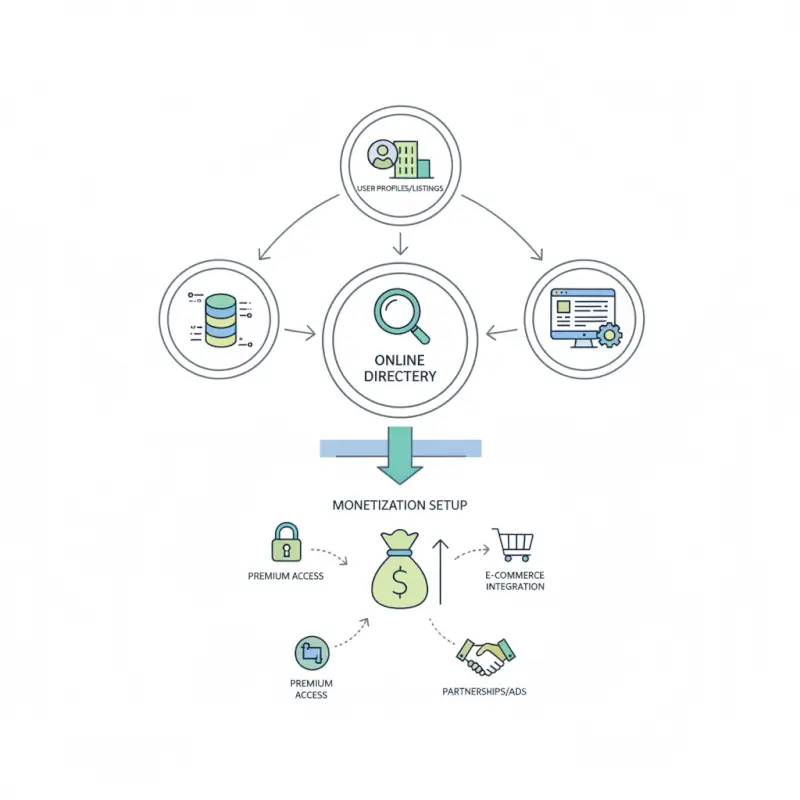
Your niche defines everything downstream—your pricing power, the types of advertisers you attract, and whether businesses will pay premium fees. Let’s say you’re building a directory for commercial roofing contractors in the Southeast United States. That specificity lets you speak directly to a defined buyer persona (facility managers, property owners) and a supplier persona (licensed roofing companies). Compare that to “home services directory” and you immediately see the difference in clarity and market fit. Broader categories mean you’re competing with established players like Yelp or Google Business Profile, platforms with massive budgets and decade-long head starts.
Traffic foundations come next, and this is where most directories stumble. They focus on quantity (vanity metrics like page views) when paying partners care about conversion signals. Google’s own guidance emphasizes user intent matching—are your visitors actively looking to hire, buy, or engage? Build credibility through user-generated content controls (verified reviews, photo submissions, response rates from businesses), strong local SEO signals, and listing completeness scores. I remember launching a local directory and obsessing over getting 500 listings as fast as possible, only to realize that 50 high-quality, fully completed profiles with real reviews drove more inquiries than the full 500 combined. Quality always wins when money is involved.
Trust signals matter exponentially when asking businesses to pay. Badges, verification checkmarks, editorial reviews, and even basic SSL certificates all contribute to perceived legitimacy. According to Statista, consumer trust in online directories correlates directly with visual credibility markers and third-party validation. If your directory looks like it was built in 2005 or has broken links and incomplete profiles, no business will hand over a credit card. Invest early in design polish, mobile responsiveness, and clear trust indicators (think “verified by [Your Directory Name]” badges for paid members).
Revenue Stream 1 — Premium Listings and Tiered Memberships
Premium listings represent the most accessible and reliable revenue stream for directories, which is why every major player uses them. The model is straightforward: offer basic (often free) listings to build inventory, then charge businesses for enhanced visibility, richer profiles, or priority placement. When implemented correctly, premium listings create a self-reinforcing cycle—better-performing businesses pay for upgrades, their enhanced profiles attract more clicks and inquiries, and that success convinces other businesses to upgrade. Platforms like TurnKey Directories make it simple to set up tiered memberships without complex custom development.

Featured placement works best when tied to clear performance benefits. Don’t just say “appear at the top”—quantify it. Show prospects that featured listings receive 3-5x more profile views and 2x more inquiry forms than standard listings (track these metrics from day one). Pricing models typically follow one of three structures: flat monthly/annual fees ($50-$500 per month depending on vertical), tiered packages with progressive features (bronze/silver/gold), or performance-based pricing where businesses pay per lead or click. I’ve found flat-rate tiers work better for smaller directories because they’re predictable for both you and the customer, while per-lead pricing scales better once you have volume and tracking infrastructure in place.
Enhanced profile features justify higher price points when they directly impact conversion. Think analytics dashboards showing businesses exactly how many people viewed their listing, clicked their website, or called their number. Add media galleries (more photos, video embeds), priority customer support, promotional spotlights in newsletters, or limited-time “deal” flags. According to Yelp’s recent annual report, their revenue from advertising and other services reached substantial levels precisely because they layered multiple value-adds beyond basic listings, turning simple directory presence into a full marketing suite for local businesses.
Freemium entry lowers the barrier for participation while creating an upgrade path. Allow businesses to claim a basic listing for free (name, address, phone, hours, one photo), then gate advanced features behind paid tiers. This builds your directory inventory quickly, establishes you as the go-to resource in your niche, and creates a qualified prospect list—every free listing holder is a potential upsell candidate. When your directory platform sends automated performance emails (“Your listing received 47 views this month—upgrade to see who’s viewing and get 3x more exposure”), conversions happen naturally. The psychology is simple: once a business sees proof that your directory drives real interest, the decision to upgrade becomes obvious rather than speculative.
Revenue Stream 2 — Advertising and Sponsored Content
Display and native ad formats within directory pages
Advertising offers immediate cash flow once your directory reaches meaningful traffic thresholds—typically 10,000+ monthly sessions for programmatic networks or 1,000+ for direct deals. Display ads work best when placed contextually: geo-targeted banners alongside local service listings, category-specific sidebar units, or in-feed native blocks that mirror listing styles. Start with a hybrid pricing model: flat CPM (cost per thousand impressions) for guaranteed inventory—industry benchmarks range from $2–$10 CPM for niche directories—and performance-based CPC (cost per click) or CPA (cost per acquisition) for advertisers seeking attribution.

Balance ad density carefully to preserve user experience and SEO performance; Google’s page experience metrics penalize excessive above-the-fold ads and slow load times. Limit display units to one or two per page, reserve premium placements for high-intent pages (category landing pages, city-specific indexes), and A/B test ad sizes to find the sweet spot between revenue and bounce rate. Native formats—sponsored cards styled as listings with clear “Sponsored” labels—typically deliver 2–5× higher CTR than banner ads while maintaining trust, provided you enforce strict editorial guidelines to prevent misleading placements.
For directories under 50,000 monthly sessions, direct-sold packages often outperform programmatic; you control pricing, maintain relationships, and capture 100% of spend versus the 30–50% platform fees charged by ad networks. Build a simple media kit with audience demographics, traffic by category and geography, and case-study CTR data, then pitch local franchises, service aggregators, or niche SaaS tools whose buyers overlap your user base. Once you cross 100,000 sessions, layer in programmatic header bidding via partners like Google Ad Manager or Mediavine to monetize remnant inventory while preserving premium slots for direct deals.
Sponsored content and partner spotlights
Sponsored content—branded blog posts, vendor case studies, “best of” guides with paid placements—commands 3–10× higher CPMs than display ads because it delivers trust, context, and SEO equity to sponsors. Structure sponsorships as fixed-fee packages ($500–$5,000 per piece depending on traffic and niche) that bundle content creation, promotion in your email newsletter, and guaranteed homepage or category-page placement for 30–90 days. Maintain editorial independence by clearly labeling sponsored posts, ensuring content provides genuine value to readers, and reserving the right to reject submissions that conflict with your directory’s quality standards or user interests.
Partner spotlights—dedicated profile pages, video interviews, or “featured provider” series—work particularly well for service-based directories where buyers seek validation and social proof before contact. Charge sponsors for enhanced storytelling (founder Q&As, customer testimonials, project galleries) that goes beyond standard listing data, and distribute spotlights across owned channels (blog, social, newsletter) to justify premium pricing. Track engagement metrics—time on page, scroll depth, outbound clicks—and share performance reports with sponsors to build retention and justify rate increases as your traffic grows.
Avoid the trap of over-monetizing editorial space; if more than 20% of your content is sponsored, organic reach and user trust decline sharply. Use an editorial calendar to plan a mix of unbiased buying guides, how-to articles, and market trend pieces alongside sponsored placements, and enforce a “no-follow” policy on sponsored outbound links to preserve SEO authority. The best-performing directories treat sponsored content as a partnership that elevates both the sponsor’s brand and the directory’s credibility, not a pay-to-play advertising slot.
Revenue Stream 3 — Lead Generation, Affiliate, and Service Partnerships
Leads API and attribution for service providers
Lead generation shifts the directory from passive advertising to active transaction facilitation: you capture user inquiries (contact forms, quote requests, phone calls) and deliver them to vendors in real time, charging per qualified lead or on a cost-per-acquisition basis. Pricing varies widely by vertical—home services leads command $15–$75 each, legal and financial leads $50–$300, B2B software demos $100–$500—so benchmark against competitors like HomeAdvisor, Angi, or Thumbtack for your niche. Build a simple intake form that collects user intent, location, budget, and timeline, then route leads via API or email to subscribed vendors, prioritizing those on premium tiers or bidding highest for the lead.
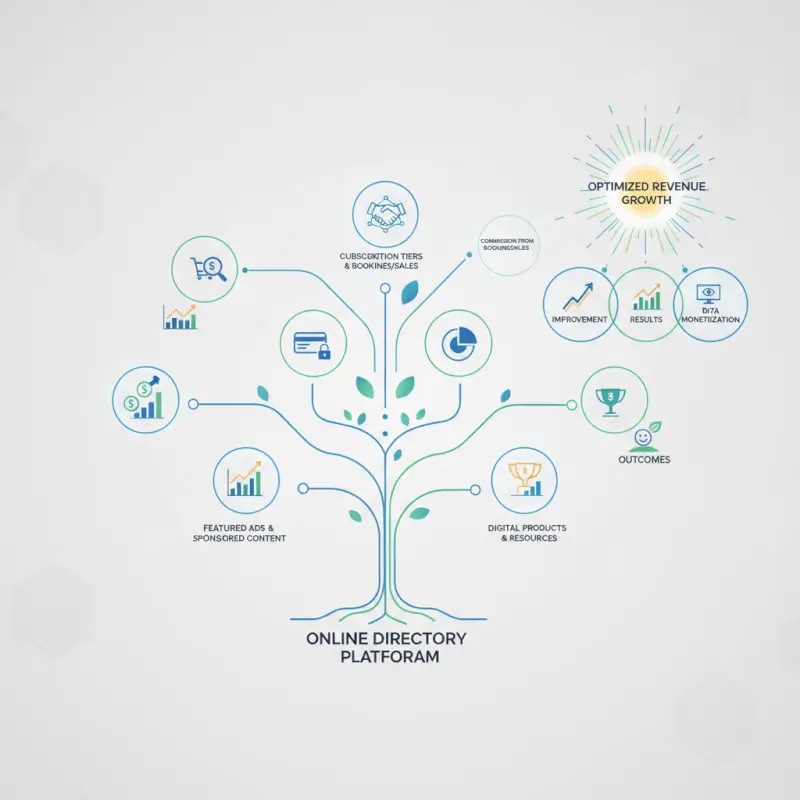
Attribution and fraud prevention are critical; leads lose value quickly if vendors receive duplicates, unqualified contacts, or bot-generated spam. Implement server-side validation (CAPTCHA, email verification, phone number lookup) to filter junk, track lead lifecycle from submission through vendor response and conversion, and enforce a quality threshold—if a vendor’s close rate falls below 5–10%, audit the lead source and refine targeting. Offer vendors a dashboard showing lead volume, response times, conversion rates, and cost per acquisition so they can optimize their own follow-up and justify continued spend.
For directories with high intent but lower traffic (under 10,000 sessions/month), exclusive lead sales—where a single vendor pays a premium to receive each inquiry without competition—can generate higher per-lead revenue than shared models. Conversely, high-traffic directories benefit from lead auctions or tiered distribution: the top-paying vendor gets first contact rights, then the lead cascades to lower bidders if the first doesn’t respond within a set window (typically 5–15 minutes). Always secure user consent for data sharing, provide opt-out mechanisms, and comply with TCPA (Telephone Consumer Protection Act) and GDPR rules to avoid legal exposure and platform penalties.
Affiliate partnerships and referral commissions
Affiliate revenue layers nicely atop directories because you’re already directing high-intent users toward services; embedding affiliate links to booking engines, subscription tools, or marketplace platforms turns clicks into passive income without requiring you to fulfill the service. Focus on products and services your audience already needs: payment processors, scheduling software, insurance brokers, or equipment suppliers for service-based directories; hotel booking engines, ticketing platforms, or tour operators for travel and event directories. Join established networks (ShareASale, CJ Affiliate, Impact) or negotiate direct partnerships with vendors offering 5–25% recurring commissions or $50–$500 per conversion.
Integrate affiliate offers contextually—link scheduling tools in your “how to choose a contractor” guide, embed booking widgets on venue listings, or feature marketplace partners in comparison tables—rather than scattering generic banner ads. Disclosure is non-negotiable: label affiliate links clearly (“We may earn a commission”) and use rel=”nofollow sponsored” tags to comply with FTC guidelines and avoid SEO penalties. Track performance by partner, content type, and user segment to identify your highest-converting placements, then double down on those relationships and negotiate higher commission tiers as your referral volume scales.
Hybrid models—where you earn both a referral fee and a rev-share on customer lifetime value—unlock the most lucrative partnerships, especially with SaaS platforms or subscription marketplaces. For instance, if you send 100 monthly signups to a CRM at $50/customer plus 10% of subscription revenue, you earn $5,000 upfront and recurring income as those customers renew. Prioritize partners with strong retention and product-market fit in your niche, and avoid commoditized offers (generic web hosting, low-value e-commerce) that dilute trust and deliver minimal ROI.
Revenue Stream 4 — Data, Insights, and Market Intelligence Services
Aggregated business data and market insights for advertisers
Your directory accumulates valuable behavioral and market data—search trends by geography and category, listing performance benchmarks, user intent signals, conversion rates—that vendors, advertisers, and investors will pay to access. Package anonymized, aggregated insights into quarterly or monthly reports (PDFs, dashboards, or API feeds) showing category growth rates, competitive density, pricing trends, or lead volume by region. Charge $500–$5,000 per report for SMB advertisers, $10,000–$50,000 for enterprise clients or private equity firms conducting market diligence, and structure tiered access (summary reports vs. raw data exports) to maximize revenue across buyer segments.

Focus on insights that drive business decisions: which service categories are over- or under-served in specific cities, seasonal demand fluctuations, average response times and conversion rates by vendor tier, or demographic breakdowns of searchers. Vendors use this intelligence to optimize ad spend, expand into new markets, or benchmark their own performance against category averages. For example, a home services advertiser might pay for a report showing that “HVAC repair” searches in Phoenix spike 300% in June–August, enabling them to front-load their ad budget and staffing accordingly.
Data monetization requires strict privacy and compliance hygiene: anonymize all user-level data, aggregate to minimum thresholds (typically 100+ records per data point) to prevent re-identification, and secure explicit consent for behavioral tracking via updated privacy policies and cookie notices. EU GDPR, California CPRA, and sector-specific rules (HIPAA for health, FCRA for credit) impose heavy penalties for misuse, so consult legal counsel before launching data products. Many directories mitigate risk by offering data only to logged-in business accounts under signed data-use agreements that prohibit re-sale or re-identification.
API-based data services for partners
APIs transform your directory from a destination into a platform, enabling partners—CRM providers, marketing automation tools, local search apps, comparison engines—to embed your listings, enrich their own databases, or power new features. Charge per API call ($0.001–$0.01 per request), tiered monthly fees ($500–$10,000 based on call volume), or rev-share arrangements where partners pay a percentage of revenue generated from your data. Structure access levels by data richness: basic APIs return business names and addresses, premium tiers include reviews, photos, hours, and contact info, enterprise tiers offer real-time updates and webhook notifications.
Target partners who benefit from fresh, structured, vertical-specific data they can’t easily scrape or compile themselves—niche CRMs, industry marketplaces, white-label platforms, or analytics tools serving your directory’s sector. For instance, a construction directory might license its project data to estimating software, a restaurant directory to reservation platforms, or a B2B directory to sales intelligence tools. Draft API terms that prohibit partners from reselling raw data, require attribution back to your directory, and mandate compliance with your privacy and usage policies to protect your brand and user trust.
Hybrid data + service bundles—where API access is packaged with co-marketing, lead sharing, or integration support—command higher prices and deeper partnerships than standalone data licenses. A CRM paying $5,000/month for API access plus $10,000 in co-marketing commits to promoting your directory to its user base, driving traffic and listings back to you while you monetize the data flow. Monitor API usage closely (rate limits, error rates, data freshness) to ensure partners deliver value and don’t degrade your infrastructure or violate user consent.
Frequently Asked Questions
What is the best monetization model for an online directory?
The best approach combines multiple revenue streams rather than relying on a single model. Premium listings and tiered memberships provide stable recurring revenue, while advertising and affiliate partnerships add incremental income. Start with one or two streams, validate demand, then layer additional channels as traffic and listing quality grow to reduce risk and maximize value.
How do premium listings work in a directory?
Premium listings give service providers enhanced visibility through top placement, featured badges, richer profiles, additional media, and priority support. Directories typically offer tiered pricing based on exposure level and features included. Providers pay monthly or annual subscriptions to maintain premium status, creating predictable recurring revenue while improving user experience through quality signals and detailed information.
Can a directory make money from advertising without alienating users?
Yes, if ads are relevant, well-placed, and clearly labeled. Contextual and geo-targeted ads that align with user intent enhance rather than detract from the experience. Limit ad density, maintain fast page speeds, and prioritize native formats like sponsored content over intrusive banners. Balance monetization with usability by testing ad placements and monitoring engagement metrics closely.
How much revenue can an online directory realistically generate?
Revenue potential varies widely by niche, traffic, and monetization sophistication. Niche directories with targeted audiences can generate thousands monthly through premium listings and ads, while established platforms serving large markets earn millions annually. Focus first on building quality traffic and engaged listings, then layer revenue streams progressively to achieve sustainable growth aligned with market demand.
What is the fastest way to launch a monetized directory?
Start with a focused niche, build a core set of quality listings, and implement one revenue stream like premium upgrades or simple ad placements. Use directory software or platforms that handle billing and listing management out of the box. Validate demand through early adopters before expanding features, ensuring you solve a clear problem for both users and paying vendors.
Should I charge for all directory listings or offer free options?
A freemium model works best for most directories. Offer basic free listings to build listing volume and traffic, then charge for premium placement, enhanced profiles, and additional features. Free listings attract providers and create network effects, while paid tiers generate revenue from businesses seeking competitive advantage. This approach balances growth with monetization and builds trust through value demonstration.
How do I price premium listings in my directory?
Base pricing on the value delivered, competitive benchmarks, and willingness to pay in your vertical. Start with tiered options like basic enhanced listings at a lower price point and premium placements with full features at higher tiers. Test pricing with early adopters, track conversion rates, and adjust based on perceived value and competitive positioning to optimize revenue.
Can I monetize directory data without violating user privacy?
Yes, through aggregated, anonymized insights that protect individual privacy. Sell market trends, category performance benchmarks, and audience behavior patterns without exposing personally identifiable information. Ensure compliance with data protection regulations, obtain proper consent, and be transparent about data use. API access to structured business data can also generate revenue while respecting privacy boundaries.
Your Next Steps: Build a Revenue Engine, Not Just a Directory
Monetizing an online directory is not about choosing a single revenue stream and hoping for the best. The directories that thrive layer multiple channels, test pricing strategies, and continuously refine their value proposition for both users and paying vendors. Premium listings, advertising, lead generation, affiliate partnerships, data services, and events each play a role in a diversified revenue plan that withstands market shifts and competitive pressure.
The path forward is clear: start with one or two revenue streams that align with your niche and audience maturity. If you have strong traffic and listing quality, premium memberships and contextual advertising are natural first steps. As you validate demand and refine your offering, layer in affiliate partnerships, lead generation, and data services to capture additional value from the platform you are building.
Success in directory monetization comes down to discipline and focus. Resist the temptation to launch every revenue stream at once. Instead, build a solid foundation with quality listings, invest in SEO and user experience, and earn the trust of both users and service providers. Once you have proven value in one channel, expand methodically to adjacent streams that complement rather than cannibalize your core revenue.
Ready to Turn Your Directory Into a Revenue Engine?
Apply these six revenue streams to your directory today. Pick one or two, validate with real users, and scale what works.
Start small, test pricing, and build a sustainable business that serves your audience and your bottom line.
The directories that win are those that treat monetization as an ongoing process of experimentation, optimization, and user alignment. Your directory has value, and with the right revenue framework, you can capture that value while delivering exceptional experiences to the users and vendors who depend on you. Take action now, implement your first revenue stream this week, and iterate from there.
Was this article helpful?