How to Start a Business Directory: 7 Steps to Launch & Monetize

Generating summary...
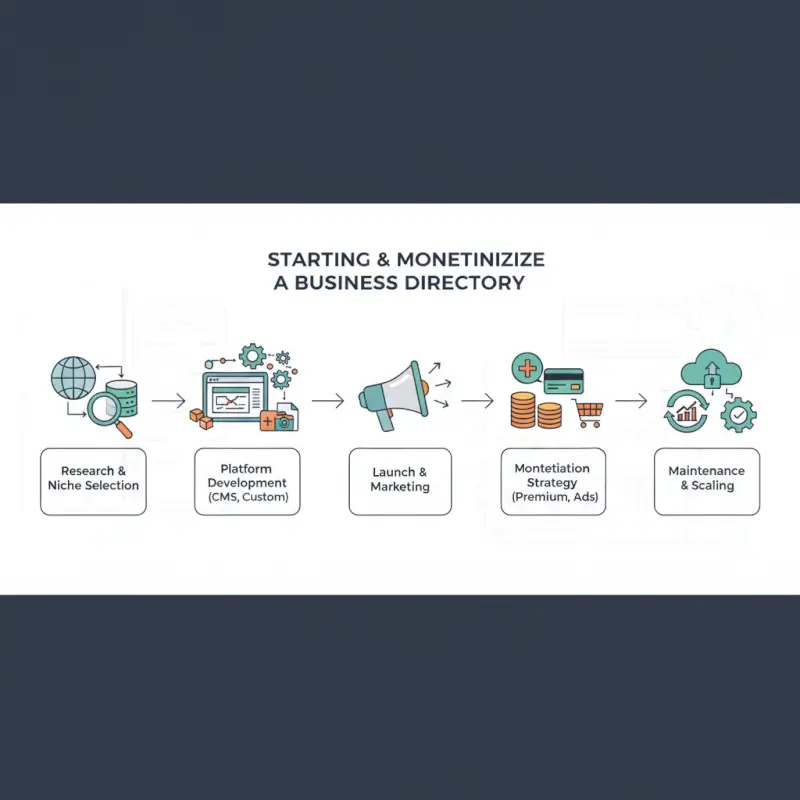
Most aspiring directory entrepreneurs make the same critical mistake: they build first, validate never. They sink months into a platform, curate hundreds of listings, launch with fanfare—and discover there’s no appetite for yet another Yelp clone. Here’s the uncomfortable truth I learned after consulting with dozens of failed directory projects: the hardest part isn’t the technology or even getting businesses to list. It’s proving that anyone actually wants what you’re building before you build it. A well-executed business directory can generate passive income, improve local commerce visibility, and create genuine value for both consumers and business owners—but only if you start with ruthless market validation and a defensible niche. The difference between directories that die in obscurity and those that scale profitably comes down to seven disciplined steps, each backed by market data and real-world learnings from both successes and cautionary tales.
TL;DR – Quick Takeaways
- Validate before you build – Market research and competitive analysis prevent wasted effort on directories nobody needs
- Niche wins over broad – Hyperlocal or category-specific directories outperform generic “everything” platforms in monetization and user loyalty
- Data quality trumps quantity – 200 verified, complete listings beat 2,000 stale entries; trust signals drive both traffic and revenue
- Platform choice shapes scale – Hosted solutions like TurnKey Directories accelerate launch; custom builds offer control but demand resources
- Monetization requires traffic – SEO optimization, local search tactics, and strategic partnerships are non-negotiable for sustainable revenue
- Launch metrics guide iteration – Track listings added, user engagement, and revenue per listing from day one to make data-driven pivots
Validate Your Market & Define Your Niche
Before you write a single line of code or register a domain, you need cold, hard evidence that your directory concept solves a real problem. I’ve seen too many founders fall in love with a “cool idea” only to discover that Google My Business and Facebook already satisfy 95% of their target market’s needs. Start by identifying friction points in local discovery that existing platforms fail to address—maybe it’s industry-specific credentialing (licensed contractors, board-certified specialists), hyperlocal granularity (neighborhood-level services), or unique filtering criteria (eco-friendly vendors, minority-owned businesses). According to the U.S. Census Bureau’s Statistics of U.S. Businesses, there are more than 33 million small businesses across diverse sectors, but most directories try to serve all of them poorly instead of serving a subset exceptionally well.
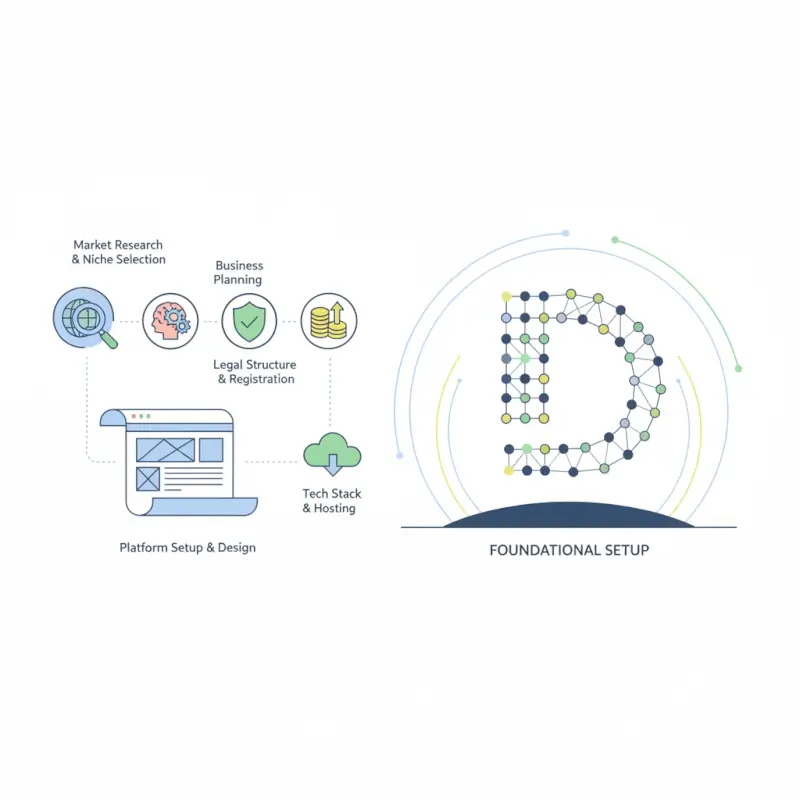
Your competitive analysis should dissect what incumbent directories actually do, not just what they claim. Sign up for competitor listings as both a consumer and a business owner, document every touchpoint: How easy is search? What trust signals exist (reviews, verification badges, editorial content)? What’s the pricing structure and perceived value? If you’re targeting local services, benchmark against platforms like Thumbtack, Angi, and regional chamber directories. For professional services, evaluate lawyer and doctor directories that gate listings behind credentials. Look for underserved niches where the SBA’s startup framework suggests demand exists but supply is fragmented or outdated. The goal isn’t to copy competitors—it’s to find defensible white space where you can own a category or geography.
Validation also means talking to real humans, not just analyzing spreadsheets. Interview 20-30 potential business customers and an equal number of end users. Ask business owners: “How do you currently get found online? What are you paying for leads or advertising? What would make you pay for a directory listing?” Ask consumers: “How do you discover new service providers? What frustrates you about existing directories?” If both groups struggle to articulate clear pain points your directory would solve, that’s a red flag. Successful directories boost visibility for businesses while simultaneously improving search outcomes for consumers—if you can’t demonstrate both value propositions with evidence, you don’t have a viable concept yet.
Define Category Scope, Audience, and Geography
Once you’ve validated demand, resist the temptation to expand scope prematurely. The most profitable directories I’ve studied started narrow: a single metro area, one professional category, or a tightly defined user persona. Broader coverage sounds appealing (more listings = more traffic, right?), but it dilutes your value proposition, complicates sourcing, and makes SEO nearly impossible against established giants. For example, a directory of certified eco-friendly home contractors in Austin has a fighting chance; a directory of “all contractors everywhere” does not. According to Census business-count data tools, even mid-sized metros contain thousands of firms across hundreds of NAICS codes—you cannot realistically curate and maintain comprehensive coverage without significant capital and operational infrastructure.
Map your audience personas with specificity: Who is the buyer searching your directory, and what job are they hiring it to do? A homeowner looking for a plumber has different needs than a facilities manager sourcing janitorial contracts at scale. Similarly, the business owner listing on your platform has distinct motivations—lead generation, brand credibility, competitive visibility—that vary by industry and maturity. Your niche should align these two sides efficiently (in my experience, the best directories create a tight feedback loop where happy customers leave reviews that attract more businesses, which improves selection and attracts more customers). Geography matters too; hyperlocal directories in cities with strong Google Maps saturation need additional differentiation, while underserved regions may offer easier traction with less competitive pressure.
Scope also determines your sourcing strategy and go-to-market complexity. If you choose a niche requiring specialized credentials (licensed therapists, certified financial planners), you’ll need verification workflows and potentially partnerships with licensing boards or professional associations, but you’ll also command higher listing fees and user trust. If you target a geographic cluster—say, a rural county underserved by national platforms—you can bootstrap with chamber of commerce data and local outreach, but monetization may require creative revenue streams beyond simple listing fees. The key question: Can you realistically become the best directory for this category-geography combination within 12-18 months? If not, narrow further or find a different wedge.
Plan Your Directory Platform & Data Model
Your technology choices in the early days will either accelerate your path to market or trap you in endless development cycles. The fundamental decision: hosted directory solution versus custom build. Hosted platforms—like TurnKey Directories, Brilliant Directories, or similar WordPress-based plugins—offer pre-built listing forms, search interfaces, payment integrations, and SEO scaffolding out of the box. They let you launch in weeks rather than months, which is critical when validating monetization and user behavior. Custom development gives you total control over data models, user experience, and proprietary features, but it demands significant upfront capital, ongoing maintenance, and technical expertise (I’ve watched startups burn through six-figure budgets building “simple” directories that a $200 plugin would have handled adequately in version one). For most founders, a hosted solution is the pragmatic choice—you can always migrate or rebuild once you’ve proven product-market fit and revenue justifies the investment.
Regardless of platform, invest time designing your data architecture early. Every business listing needs a consistent schema: Name, Address, Phone (NAP), category taxonomy, hours, website, description, media (photos, videos, documents), and optionally services offered, pricing tiers, or availability calendars. Your category taxonomy is especially critical—too broad and search becomes useless, too granular and you overwhelm users with choices. Study how YellowPages and industry-specific directories structure categories, then simplify ruthlessly for your niche. Plan for reviews and ratings from day one; user-generated content is the lifeblood of directory trust and SEO authority, so your data model must support verified reviews, response workflows, and moderation queues. If you envision API access or data licensing down the road (a lucrative exit or revenue channel), design your schema to be machine-readable and normalizable.
Scalability isn’t just about handling traffic—it’s about data consistency and update velocity as you grow. If you start with 50 manually curated listings, you can afford ad-hoc quality control; at 5,000 listings, you need automated duplicate detection, bulk import/export tools, and systematic refresh cycles to prevent your directory from becoming a graveyard of stale data. Choose a platform that supports versioning (track edits and rollback changes), bulk operations (CSV uploads, API integrations), and access controls (business owners can edit their own listings without touching others). Long-term maintainability also hinges on documentation and code hygiene—if you go custom, insist on clean, commented code and a staging environment for testing changes before they hit production. One broken deployment during a monetization push can crater trust and revenue for months.
Establish Data Standards, Governance, and Trust
Data quality is your moat in a world where every city has a dozen directories. Consumers abandon platforms with outdated hours, disconnected phone numbers, or spammy duplicate listings. Business owners distrust directories that let competitors hijack their profiles or fail to moderate fake reviews. Your data governance framework should define what constitutes a “complete” listing (minimum required fields, verification status), how often listings are refreshed (automated pings, manual audits, user-reported errors), and what happens when data conflicts arise (does the business owner always win, or do you adjudicate based on public records?). According to local search consumer behavior research, 80%+ of users lose trust in a directory after encountering just one or two inaccurate listings—there’s zero margin for error at scale.
Verification workflows separate credible directories from link farms. At minimum, require email confirmation and phone verification (automated PIN code) for new listings. For niches with formal credentials—licensed professionals, insured contractors, accredited institutions—build integrations with state licensing databases or require uploaded proof (certificates, insurance docs) that you review manually during onboarding. Display verification badges prominently; they signal legitimacy to both users and search engines. If resources allow, consider hybrid verification: automated checks (match business name and address against Census Bureau business registries or Secretary of State filings) supplemented by selective manual review of high-value or high-risk listings. Some directories also crowdsource trust through user flags—let visitors report errors or suspicious activity, then triage reports through a moderation queue.
Governance extends to reviews and user-generated content, which are both your biggest asset and biggest liability. Define clear community guidelines (no profanity, no personal attacks, no commercial solicitation), implement moderation (automated filters for obvious spam, human review for flagged content), and give business owners a right of response without the ability to delete legitimate negative reviews. The best directories publish transparency reports (how many reviews removed, reasons why) to build confidence. Update cadences matter too: commit to refreshing NAP data quarterly at minimum, either through automated scrapes of business websites, partnerships with data providers like Factual, or incentivized prompts for business owners to review and confirm their details. Stale data is worse than no data—it actively erodes the trust you’ve worked to build.
Acquire Listings & Drive Traffic
A directory lives or dies by its inventory. Without a critical mass of quality listings, search engines won’t rank your pages and visitors won’t return. The good news: you don’t need thousands of entries on day one. Focus on seeding 50–200 high-quality, verified listings in your niche, then leverage that foundation to attract organic submissions and partnerships. Prioritize completeness—rich profiles with photos, hours, contact details, and reviews—over sheer volume.

Strategic sourcing combines three channels: self-serve submissions from business owners, proactive outreach to local organizations (chambers of commerce, trade associations, co-working hubs), and selective data imports or crawls where permitted. Each channel requires a distinct workflow. Self-serve forms should capture structured data (category, address, service area, payment methods) and include verification steps—email confirmation or phone callback—to reduce spam. Outreach partnerships can yield bulk commitments; offer chambers a co-branded landing page or a free “Verified Member” badge to incentivize referrals.
Avoid the temptation to scrape competitors’ listings wholesale. Not only does that raise legal and ethical flags, it often imports stale or incorrect data that damages trust. Instead, use public sources—business registrations, permit databases, industry rosters—as lead lists, then reach out directly to invite owners to claim and enrich their profiles. This hands-on approach builds relationships and ensures you own a unique, compliant dataset. Over time, as your SEO improves, inbound claim requests will outpace manual outreach.
Sourcing Listings: Owner Submissions, Partnerships, and Crawls
Launch with a frictionless, mobile-optimized submission form that pre-fills fields using Google Places API lookups when possible. Require minimal information up front—business name, category, address, and contact—then encourage owners to return and add photos, hours, services, and payment options through a free dashboard. Gamify completeness: show a profile strength meter and unlock features (e.g., the ability to post updates or respond to reviews) at 80% completion. This approach lowers the barrier to entry while nudging users toward rich listings.
Partnerships amplify reach without draining resources. Approach local chambers, business improvement districts, and industry associations with a value proposition: their members get premium placement or an exclusive badge, and you gain bulk listings plus editorial credibility. Co-host webinars on local SEO or digital marketing, positioning your directory as the platform that amplifies members’ online visibility. Track which partnerships deliver the highest-quality listings (completeness, engagement, conversion) and double down on those channels. Many successful hyperlocal directories cite chamber partnerships as their fastest path to 100+ verified listings in the first quarter.
For niche verticals—accountants, contractors, health practitioners—consider licensing structured datasets from trade groups or using official registries (e.g., state licensing boards) as seed data, then invite professionals to claim and expand their profiles. Always disclose data sources in your terms of service and provide an easy opt-out mechanism. Transparency builds trust, and verified “claimed” badges differentiate active participants from passive listings, signaling quality to users and search engines alike.
| Sourcing Channel | Best For | Implementation Tip |
|---|---|---|
| Self-Serve Submission Form | Ongoing organic growth, owner engagement | Enable Google Places autocomplete; require email verification |
| Chamber/Association Partnerships | Bulk launch inventory, local credibility | Offer co-branded pages or exclusive “Verified Member” badges |
| Public Registries & Licensing Boards | Regulated professions (legal, medical, financial) | Seed profiles, then invite professionals to claim and enrich |
| Proactive Outreach | High-value or underrepresented categories | Personalize emails with clear value (local SEO boost, review platform) |
SEO & Local Search Optimization for Directories
Directory SEO is a multi-layered discipline: each listing page, category page, and location landing page must be optimized for distinct queries. Start with a clean URL structure—`/city/category/business-name` or `/category/city/business-name`—and ensure every page has a unique, keyword-rich title tag and meta description. For example, a plumber’s listing in Austin should target “plumber Austin TX” while the category page targets “plumbers in Austin.” Avoid duplicate content by requiring unique business descriptions and using canonical tags where necessary.
Structured data (schema.org LocalBusiness, AggregateRating, BreadcrumbList) is non-negotiable. Implement JSON-LD markup on every listing to feed search engines rich snippets—star ratings, address, phone, hours—that boost click-through rates in local packs and organic results. Google’s Rich Results Test lets you validate markup before launch. Directories that surface aggregate ratings and review counts in search results see 20–30% higher CTR than plain blue links, according to local SEO consumer behavior studies.
Invest in location-specific content beyond raw listings. Publish neighborhood guides, “Top 10” roundups, and seasonal spotlights (“Best Tax Accountants in Denver for 2025”) that interlink with category and listing pages. This hub-and-spoke model signals topical authority and captures long-tail queries. Use consistent NAP (Name, Address, Phone) formatting across all pages; inconsistencies confuse search engines and dilute local ranking signals. Finally, claim and optimize your directory’s own Google Business Profile—yes, directories can rank in local packs for branded queries—and encourage users to leave platform reviews that reinforce trust.
| Optimization Layer | Action | Impact |
|---|---|---|
| URL Structure | /city/category/business-name or /category/city/slug | Clear hierarchy, keyword-rich paths |
| Structured Data (Schema) | LocalBusiness, AggregateRating, BreadcrumbList JSON-LD | Rich snippets, higher CTR in SERPs |
| NAP Consistency | Standardize format (e.g., “Street” vs. “St.”) across all listings | Improved local pack rankings, fewer citation conflicts |
| Location-Specific Content | Neighborhood guides, seasonal roundups, Top 10 lists | Captures long-tail queries, signals topical authority |
| Internal Linking | Link category pages ↔ listings ↔ city pages | Distributes PageRank, reinforces relevance signals |
Monetization & Growth Strategy
Revenue models for directories span a spectrum from freemium (free basic listings, paid upgrades) to pure subscription (all listings require payment). The optimal mix depends on your niche, competition, and value proposition. In crowded markets—local services, restaurants—freemium dominates because users expect free options; monetization comes from premium placements, lead generation, and advertising. In specialized B2B or professional verticals—legal, financial—subscription or one-time fees work because listings deliver measurable ROI (client inquiries, referrals) and competition for visibility is lower.

Start with a simple two-tier model: free standard listings and a paid “Featured” tier that unlocks priority placement in search results, category pages, and homepage carousels, plus analytics (profile views, click-throughs, inquiries). Price the featured tier at a point where 10–20% of active businesses will convert—often $20–$50/month for hyperlocal, $100–$300/month for niche professional directories. Use anchor pricing: show a higher “monthly” rate alongside a discounted annual plan to nudge users toward longer commitments and reduce churn. As you grow, layer in à la carte upsells: boosted posts, photo galleries, video embeds, or priority customer support.
Track unit economics religiously. Calculate customer acquisition cost (CAC)—the blended cost of sales, marketing, and onboarding per new paying listing—and lifetime value (LTV)—average subscription length × monthly fee. Healthy directories target LTV:CAC ratios of 3:1 or higher. If CAC is too high, shift budget from paid ads to organic SEO, partnerships, or referral programs. If churn spikes, survey departing customers and address friction points—confusing dashboards, lack of leads, or poor support. Census data on business longevity reminds us that small firms churn naturally; plan for 15–25% annual customer churn and design win-back campaigns accordingly.
Pricing Models, Packages, and Value Levers
Freemium requires scale to succeed: you need enough free listings to attract users, and enough traffic to convert a meaningful percentage to paid. If your launch inventory is under 100 listings, consider starting with a paid-only or “free trial + paid” model to validate willingness to pay before investing in viral growth loops. Conversely, if you’re entering a saturated local market, offering永久 free basic listings can help you leapfrog competitors by becoming the most comprehensive resource, then monetizing through leads and ads rather than listing fees.
Tiered packaging works well when you can articulate clear value jumps. For example: Free (name, address, phone, category), Bronze ($29/month: logo, photos, extended description, social links), Silver ($79/month: priority placement, review management, monthly analytics), Gold ($199/month: homepage feature, sponsored content slot, dedicated account manager). Each tier should deliver 3–5× the perceived value of its cost; use analytics dashboards to quantify ROI—”Silver listings average 12 inquiries/month vs. 2 for free listings.” Anchor the pricing page with a Gold plan to make Silver look like the smart middle choice.
Non-listing revenue streams diversify risk and improve margins. Display or native advertising—banner slots, sponsored category pages—can generate $500–$5,000/month once you hit 10,000+ monthly visitors. Lead-generation arrangements (pay-per-lead or revenue share) work for high-ticket categories like legal, home services, or B2B; integrate contact forms or “Request Quote” CTAs and route leads to paying businesses. API access or bulk data licensing appeals to SaaS tools, market researchers, or affiliates; charge per API call or flat monthly fees. Finally, explore affiliate partnerships with complementary services—payment processors, booking systems, CRM tools—and earn recurring commissions when listed businesses sign up.
| Revenue Stream | Typical Pricing | Best Fit |
|---|---|---|
| Featured Listings (Monthly Subscription) | $20–$300/mo depending on niche | Core monetization for most directories |
| Display & Native Advertising | $500–$5,000/mo (CPM or flat sponsorships) | High-traffic directories (10k+ visitors/mo) |
| Lead Generation (Pay-per-Lead) | $10–$100 per qualified lead | High-ticket categories (legal, home services, B2B) |
| API / Data Licensing | $200–$2,000/mo per partner | Directories with unique, structured datasets |
| Affiliate Commissions (SaaS, Services) | 10–30% recurring or one-time bounty | Directories targeting business owners (CRM, booking tools) |
Partnerships, Advertising, and Lead Generation
Strategic partnerships extend your reach and credibility without ballooning CAC. Co-marketing with local chambers, business associations, or media outlets—”Official Directory Partner of the XYZ Chamber”—lends authority and drives referral traffic. Offer partners co-branded landing pages, embed widgets they can place on their sites, or white-label versions of your directory for their members. In return, ask for newsletter mentions, social shares, and event sponsorships. Track partner-driven sign-ups with UTM parameters and reward top referrers with revenue shares or exclusive features.
Programmatic and direct advertising require critical mass. Once you exceed 10,000 monthly uniques, approach local service providers—banks, insurance agents, SaaS vendors—with sponsorship packages: homepage banner, category takeovers, or sponsored content (e.g., “5 Ways to Improve Your Online Reputation” by a reputation management firm). Price sponsorships on a CPM basis ($5–$15 CPM for niche audiences) or as flat monthly fees ($500–$2,000). Use Google Ad Manager or direct deals to fill inventory; avoid low-quality ad networks that degrade user experience and dilute trust.
Lead-gen models require tight integration with CRM or contact forms and transparent disclosure. When a user clicks “Request Quote” on a plumber’s profile, route that inquiry to the business via email or API, then charge per lead or as a percentage of closed revenue. Set quality filters—validate phone numbers, block duplicate submissions—and offer satisfaction guarantees (“First three leads free, then $X per lead”). Some directories bundle lead routing into premium tiers; others operate pure marketplace models where businesses bid for leads. Either way, obsess over lead quality and response time; slow or spammy leads will tank retention and tarnish your brand.
Launch, Measure & Scale
A phased launch de-risks execution and preserves momentum. Plan a private beta (invite-only, 25–50 listings) to stress-test workflows, gather feedback, and fix UX friction before opening the floodgates. Follow with a public soft launch (open submissions, limited marketing) to validate SEO and conversion funnels, then a full launch with PR, partnerships, and paid acquisition. Each phase should have a 30–60 day window and clear go/no-go criteria—beta participants report <5% critical bugs, soft launch achieves ≥2% listing-to-paid conversion, full launch hits 500 listings in 90 days.

Define KPIs that ladder up to revenue and engagement. Track total listings, claimed vs. unclaimed ratio, monthly active users (visitors who perform a search or view ≥3 pages), and conversion rate (free → paid listings). For monetization, monitor monthly recurring revenue (MRR), customer acquisition cost (CAC), and churn rate. For content health, measure listing completeness (% with photos, hours, reviews) and user-generated activity (reviews submitted, photos uploaded). Dashboard these metrics weekly; Census business data APIs can provide external benchmarks for business counts and growth rates in your target geography.
Set realistic 6-month and 12-month targets grounded in industry data and competitive benchmarks. A hyperlocal directory in a metro of 500,000 might aim for 300 listings and 5,000 monthly visitors by month six, scaling to 1,000 listings and 20,000 visitors by month twelve. A niche B2B directory might target 100 high-quality listings and $5,000 MRR in six months, growing to 300 listings and $20,000 MRR in twelve. Use cohort analysis to understand user behavior: do businesses that upload photos in their first week retain better? Do users who leave a review return more often? Double down on high-impact actions and automate nudges (email drip campaigns, in-app prompts) to reinforce them.
Launch Plan, KPIs, and Go-to-Market Timing
Timing your launch around local events—Small Business Week, chamber expos, seasonal peaks (tax season for accountants, summer for home services)—can amplify early traction. Coordinate PR outreach, social media campaigns, and email blasts to hit inboxes when your audience is most receptive. Secure guest posts or podcast spots on local business blogs and shows; position yourself as the advocate for small-business visibility, not just another directory. Offer launch-week incentives—50% off annual subscriptions, free featured placement for the first 100 sign-ups—to create urgency and seed your paid base.
Your go-to-market motion should balance inbound (SEO, content marketing, organic social) and outbound (cold email, chamber partnerships, local ads). Allocate 60–70% of early effort to inbound because it compounds; every optimized listing page and blog post continues
FAQ: Frequently Asked Questions
What is a business directory, and why would I start one?
A business directory is an organized database of companies, professionals, or services, searchable by category, location, or keyword. Starting one creates recurring revenue through paid listings, featured placements, and advertising, while serving users who need trusted local or niche business discovery beyond generic search results.
How do you monetize a business directory site?
Common monetization models include paid premium listings, featured placements at the top of search results, tiered membership plans with analytics and lead-generation tools, banner or native advertising, and API access for data licensing. Combining multiple revenue streams maximizes long-term profitability and reduces dependence on a single channel.
What platform or tech stack should I use to build a directory?
For speed and ease, use WordPress with directory plugins like Business Directory Plugin or GeoDirectory, or no-code platforms such as Webflow with Airtable integrations. For scalability and custom workflows, consider headless CMS solutions or custom-built platforms using Node.js, Django, or Ruby on Rails paired with PostgreSQL or MongoDB databases.
How many listings do I need to start, and how do you source them?
Launch with at least 50–100 verified listings in your core categories to establish credibility and search utility. Source them through business owner self-submissions, partnerships with local chambers or trade associations, manual outreach, and ethical web scraping of publicly available data, always validating accuracy before publishing.
What metrics should I track to measure directory success?
Monitor total listings added, monthly active users, organic search traffic, click-through rates on listings, conversion rate from free to paid plans, average revenue per listing, and user engagement signals like reviews submitted and time on site. These KPIs reveal growth momentum, monetization health, and user trust.
Can I start a business directory with no technical experience?
Yes. No-code and low-code platforms like WordPress with directory themes, Webflow, Bubble, or Softr enable non-developers to launch functional directories quickly. Focus on data quality, user experience, and SEO first; you can always migrate to a custom solution as revenue and technical needs grow.
Should I focus on a local or national business directory?
Start local or hyperlocal to reduce competition, build deep category expertise, and capture high-intent “near me” searches. Once you dominate a metro area or niche, expand geography incrementally. National directories require far larger content volume and marketing budgets to compete with established players like Yelp or YellowPages.
How long does it take to launch a profitable business directory?
Expect three to six months to build, seed listings, and gain initial organic traction, then another six to twelve months to reach profitability through paid placements and advertising. Timelines vary by niche competitiveness, SEO investment, and your ability to activate business owners as early adopters and champions.
Conclusion: Turn Your Directory Vision into Reality
Building a successful business directory is not about scale alone. It’s about choosing a defensible niche, assembling clean and trustworthy data, optimizing every page for local search intent, and delivering measurable value to both users and business owners. The directories that thrive in the coming years will be those that combine technical rigor with genuine community insight, balancing monetization with user trust.
You now have a structured roadmap: validate your market, design a scalable data model, seed high-quality listings, drive organic and referral traffic through SEO and partnerships, and implement balanced revenue streams that grow alongside your audience. Track the right KPIs from day one, iterate based on real user behavior, and build feedback loops that keep your taxonomy, verification workflows, and UX sharp.
The opportunity in local and niche directories remains strong. Small businesses need discovery channels beyond Google Maps and generic review sites. Users want curated, category-specific resources they can trust. If you execute with discipline and focus, your directory can become the go-to hub for your chosen market, generating recurring revenue while genuinely serving both sides of the marketplace.
Ready to Launch Your Directory?
Pick your niche, choose your platform, and start building your first 100 verified listings this month. The data, the playbook, and the market are all in front of you. Now it’s time to execute.
Start with one city, one category, and one clear value proposition. Growth follows clarity.
Was this article helpful?