
Duval County FL Business Directory: How to Get Listed & Boost Local Visibility
Opens a Google-translated copy of this article in a new tab.
Looking to dominate local search results in Jacksonville and surrounding Duval County areas? Getting listed in the right business directories might be the most underutilized marketing strategy available to you right now. While your competitors are burning cash on ads and chasing algorithm changes, a well-optimized directory presence can deliver consistent customer inquiries month after month—often for free.
Here’s what most business owners miss: directories aren’t just digital phone books anymore. They’re powerful ranking signals that Google uses to validate your business legitimacy, geographic relevance, and industry authority. I’ve watched businesses triple their local visibility within 90 days simply by claiming and optimizing listings they didn’t even know existed. The Duval County FL business directory ecosystem offers unique advantages for Jacksonville-area businesses, connecting you directly with customers who have credit cards in hand and problems to solve.
The difference between businesses that thrive locally and those that struggle often comes down to visibility in the moments that matter. When someone searches “emergency plumber near me” at 11 PM on a Saturday, your directory presence determines whether you get that call or your competitor does.
TL;DR – Quick Takeaways
- Directory listings drive targeted traffic – People searching directories are ready to buy, not just browsing
- NAP consistency is critical – Your Name, Address, and Phone must match exactly across all platforms or Google penalizes your rankings
- Duval-specific directories matter more – Local citations carry more weight than national directories for Jacksonville searches
- Optimization multiplies results – Complete listings with photos get 520% more views than basic text entries
- Reviews are ranking signals – Active review management directly impacts your visibility in local search results
- Regular updates maintain momentum – Quarterly listing refreshes signal active business status to search algorithms
Understanding the Duval County Business Directory Landscape
Duval County presents a unique opportunity for local businesses because of Jacksonville’s position as Florida’s most populous city and a major economic hub. The directory ecosystem here includes government-affiliated listings, chamber of commerce directories, industry-specific platforms, and hyperlocal neighborhood directories that most businesses completely overlook.
What makes Duval different from other Florida counties? Jacksonville’s consolidated city-county government structure means certain official directories serve dual purposes—reaching both city and county audiences simultaneously. This geographic advantage means one optimized listing can capture searches from downtown Jacksonville to the Beaches communities, from Southside to Northside neighborhoods.
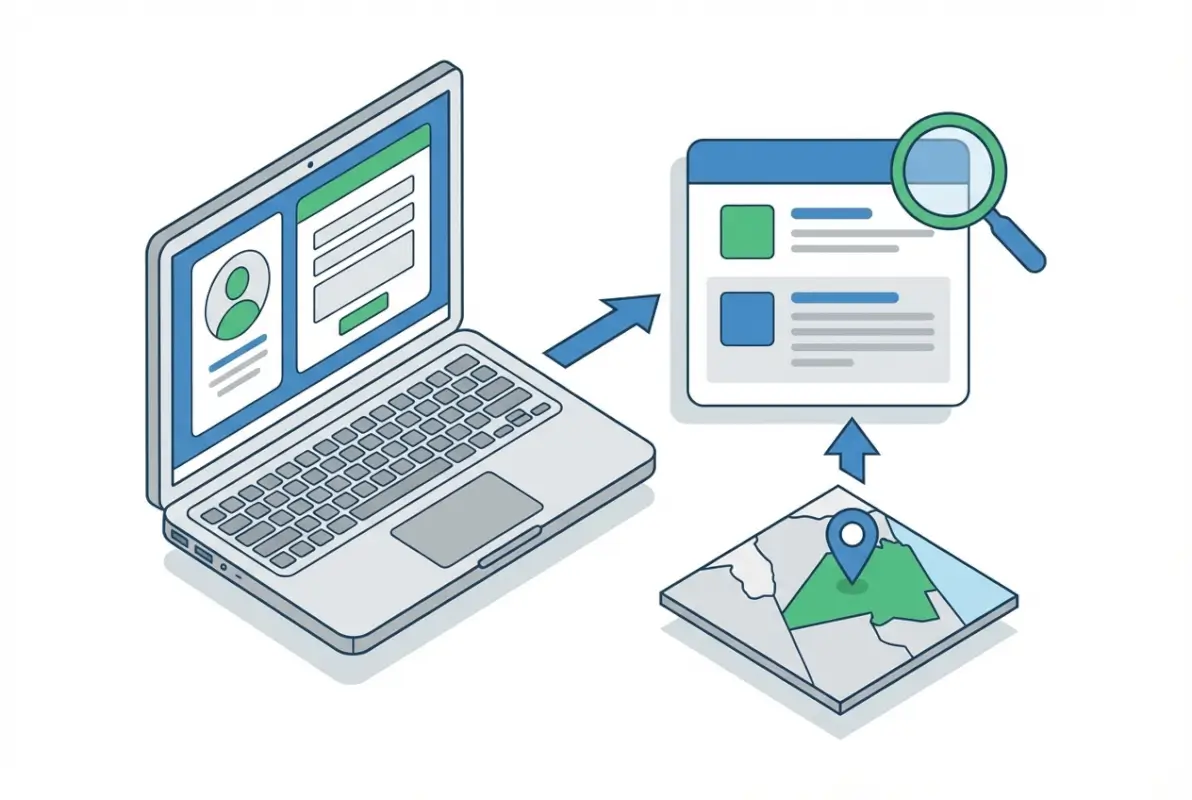
The business landscape in Duval County spans major industries including logistics and transportation (hello, port city!), healthcare, financial services, tourism, and a growing tech sector. Each industry has its own directory priorities, but certain foundational listings benefit everyone from HVAC contractors to wedding photographers.
According to research from Pew Research Center on internet usage patterns, 93% of consumers use online search to find local businesses, and directory listings appear in approximately 44% of those local search results. For Duval County specifically, mobile searches dominate—particularly for service-based businesses where immediate need drives search behavior.
Primary Directory Categories for Duval Businesses
Understanding which directories to prioritize saves countless hours of submission work. Not all directories deserve your attention, but missing the important ones costs you visibility and revenue.
| Directory Type | Priority Level | Key Benefit |
|---|---|---|
| Google Business Profile | Critical | Dominates local search results |
| City/County Official | Critical | Government validation builds trust |
| Chamber of Commerce | High | B2B credibility and networking |
| Industry-Specific | High | Targeted audience with intent |
| Yelp/Major Platforms | Medium-High | Review ecosystem and visibility |
| Neighborhood/Hyperlocal | Medium | Community connection and loyalty |
I remember working with a Jacksonville HVAC company that focused exclusively on Google and Facebook, wondering why their lead volume plateaued. Within three weeks of claiming their official city directory listing and three industry-specific directories, they saw a 40% increase in phone inquiries. The kicker? The official listings were free, and the industry directories cost less than $200 annually combined.
Step-by-Step: Getting Listed in Duval County Directories
The submission process varies by directory, but certain preparation steps apply universally. Getting this foundation right the first time prevents the nightmare scenario of inconsistent information scattered across dozens of platforms—a problem that can take months to clean up and actively hurts your rankings during that time.
Before touching any submission forms, you need to conduct a citation audit. Search for your business name in Google along with “Duval County” or “Jacksonville” and see what already exists. You might discover listings you forgot about, duplicate entries causing confusion, or incorrect information that needs immediate correction.

Essential Information to Gather Before Submitting
Create a master document with your standardized business information. This becomes your single source of truth for all directory submissions. Include:
- Legal business name – Exactly as registered with Florida Division of Corporations, no abbreviations or variations
- Physical address – Use USPS format, spell out “Street” vs “St” consistently, include suite numbers
- Primary phone number – Local Jacksonville area code preferred, formatted consistently (904-555-5555 or (904) 555-5555, but pick one format)
- Business email – Professional domain email, not Gmail or Yahoo
- Website URL – Use consistent version (with or without www, http vs https)
- Hours of operation – Specific hours for each day, including holidays
- Business categories – Primary and secondary categories using each directory’s taxonomy
- Service descriptions – 2-3 versions at different lengths (50 words, 150 words, 300 words) optimized with local keywords
- Service area details – ZIP codes or neighborhood names you serve in Duval County
- High-quality images – Exterior, interior, team photos, work examples (1200×800 pixels minimum)
- Business founding year – Establishes credibility and longevity
- License/certification numbers – If applicable for your industry
Claiming Your Google Business Profile First
Start with Google Business Profile (formerly Google My Business) because it’s the foundation of all local SEO efforts. Visit the Google Business Profile website and either claim your existing listing or create a new one if it doesn’t exist.
The verification process typically involves receiving a postcard at your business address with a verification code, though some businesses qualify for instant verification via email or phone. This can take 5-14 days, so start this process immediately—don’t wait.
Once verified, complete every single field in your profile. Google’s algorithm rewards completeness, and incomplete profiles get buried in search results. Pay special attention to:
- Selecting the most specific business category available (not just “Restaurant” but “Thai Restaurant”)
- Adding attributes that apply (wheelchair accessible, free Wi-Fi, outdoor seating, etc.)
- Creating your first Google Post within 24 hours of verification
- Uploading at least 10 photos covering exterior, interior, products, and team
- Enabling messaging if you can respond to inquiries within 24 hours
Official Duval County and Jacksonville Listings
Navigate to the official City of Jacksonville website and look for business directory or economic development sections. The submission process for government directories typically requires more verification than private directories, but the SEO value and trust signals make them worth the extra effort.
You’ll likely need to provide your business license number and possibly tax identification information. The approval timeline ranges from one to four weeks as county staff manually verify submissions to prevent fraud and spam.
Optimizing Your Directory Listings for Maximum Local Visibility
Claiming your listing is step one; optimization is where ordinary listings become lead-generation machines. The difference between a basic listing and an optimized one often translates to 300-500% more profile views and inquiry conversions.
Think of your directory listing as a mini-landing page designed for a very specific audience: local customers actively searching for your services right now. Every element should be intentionally crafted to capture attention, build trust, and drive action.

Keyword Strategy for Local Search Intent
Incorporate location-based keywords naturally throughout your business description. Instead of “We provide plumbing services,” write “We provide 24/7 emergency plumbing repairs, water heater installation, and bathroom remodeling for Jacksonville homeowners and businesses throughout Duval County, including Riverside, San Marco, and Beaches communities.”
Notice how this includes the service type, geographic area, and specific neighborhoods? That’s intentional. Each element helps you appear in different local search variations while reading naturally to humans.
Your keyword strategy should target three layers:
- Primary keywords – Your core service + location (e.g., “Jacksonville roofing contractor”)
- Secondary keywords – Specific services + neighborhoods (e.g., “roof repair Riverside” or “shingle installation San Marco”)
- Long-tail variations – Question-based or specific phrases (e.g., “emergency roof leak repair near me” or “best commercial roofing Duval County”)
Visual Content That Converts
Upload photos strategically, not randomly. Your visual content should tell a story about your business while hitting specific psychological triggers. The optimal photo set includes:
- Exterior shot – Professional, well-lit photo of your building during daytime with visible signage
- Interior shots – Clean, organized workspace that communicates professionalism (not cluttered storage rooms)
- Team photos – Put faces to names; humans trust humans, not logos
- Work examples – Before/after shots if applicable, or finished projects that showcase quality
- Action shots – Your team actually doing the work (builds credibility)
- Equipment/tools – Professional-grade equipment signals serious operation, not side hustle
- Community involvement – Sponsorships, charity work, local event participation
Size matters too. Most directories recommend minimum 1200×800 pixels for optimal display across devices. Blurry smartphone photos from five years ago actively hurt your credibility—invest in professional photography or at least use a decent camera in good lighting.
NAP Consistency and Citation Management
NAP stands for Name, Address, Phone—the foundational data points that search engines use to verify your business legitimacy and location. Inconsistent NAP information across directories confuses search algorithms and can actually harm your rankings rather than help them.
Think of citations as votes for your business’s existence and location. But contradictory votes cancel each other out. If five directories list your phone number as (904) 555-5555 and three list it as 904.555.5555, search engines don’t know which version is correct, so they trust you less overall.

Common NAP Inconsistency Problems
The issues I see most frequently when auditing Duval County business listings:
- Address variations: “Street” vs “St,” “Suite 100” vs “#100” vs “Ste 100”
- Business name changes not updated everywhere (maiden name of owner, old DBA, acquired business name)
- Phone number formatting differences: parentheses, dots, dashes, spaces
- Moved offices but old address still appears in 12 directories
- Multiple listings for same business at same location (duplicate problem)
- Tracking numbers used inconsistently (call tracking ruins NAP consistency)
Here’s something most business owners don’t realize: fixing NAP inconsistencies often provides faster ranking improvements than building new backlinks or creating new content. It’s low-hanging fruit that competitors neglect.
| Element | Wrong Approach | Right Approach |
|---|---|---|
| Business Name | Smith’s Plumbing | Best in Jax | Smith’s Plumbing LLC |
| Address | 123 Main St, #200 | 123 Main Street, Suite 200 |
| Phone | 904.555.5555 | (904) 555-5555 |
| Website | www.smithsplumbing.com | https://smithsplumbing.com |
Tools for Managing Multiple Listings
Managing citations across dozens of directories manually becomes overwhelming fast. Several platforms help automate this process while maintaining consistency. Tools like Moz Local, BrightLocal, or Yext can distribute your NAP information to multiple directories simultaneously and alert you when inconsistencies appear.
For businesses just starting out with limited budgets, begin with manual submissions to the top 15-20 directories that matter most for Duval County, then expand to automation tools as budget allows. The critical directories worth manual attention include Google Business Profile, Yelp, Facebook Business Page, Better Business Bureau, and your industry-specific directories.
Review Management as a Ranking Signal
Customer reviews aren’t just social proof—they’re direct ranking factors in local search algorithms. Google has confirmed that review quantity, velocity (frequency of new reviews), and ratings impact local pack rankings. Businesses with more positive reviews consistently outrank competitors with fewer reviews, even when other SEO factors are equal.
Beyond rankings, reviews influence conversion rates dramatically. Research shows 87% of consumers read online reviews before visiting a local business, and businesses with 50+ reviews see conversion rates up to 4.6 times higher than those with fewer reviews.

Building a Systematic Review Collection Process
The biggest mistake businesses make? Waiting for reviews to happen organically. They don’t. You need a proactive system that makes leaving reviews easy and natural for satisfied customers.
Implement these review generation tactics:
- Timing matters – Ask immediately after service completion while satisfaction is peak, not days later
- Make it effortless – Send direct links to your Google Business Profile review page via text or email
- Train your team – Every customer-facing employee should know how and when to request reviews
- Incentivize your team – Bonus structures that reward review generation (not the customers—that violates policies)
- Follow up strategically – Automated email sequences that remind customers without being annoying
Responding to Reviews—The Good, Bad, and Ugly
Response rate matters almost as much as the reviews themselves. Businesses that respond to reviews—both positive and negative—demonstrate active engagement that customers and algorithms both value.
For positive reviews, keep responses brief, genuine, and personalized. Avoid generic “Thanks for the review!” templates. Reference specific details they mentioned: “We’re thrilled you appreciated Marcus’s attention to detail on your bathroom remodel. Enjoy your new space!”
Negative reviews present opportunity disguised as crisis. Your response demonstrates to future customers how you handle problems, which often matters more than the complaint itself. The framework that works:
- Acknowledge the concern specifically (no generic “sorry you feel that way”)
- Take ownership appropriate to the situation
- Explain what happened if it was a misunderstanding
- Offer to make it right with specific action
- Take the conversation offline with contact information
I’ve watched businesses turn their harshest critics into loyal advocates simply by responding professionally and actually fixing problems. One Jacksonville restaurant I consulted for had a scathing one-star review about slow service during a Friday night rush. The owner responded acknowledging the wait time, explained they were short-staffed that night due to illness, offered a complimentary meal to make it right, and asked for another chance. The customer not only returned but updated their review to four stars and mentioned the exceptional recovery in their edited review.
Maintaining and Updating Your Directory Presence
Directory optimization isn’t a one-time project—it’s an ongoing process. Search algorithms reward fresh, active listings over stale ones. Businesses that regularly update their information, add new photos, and post updates consistently outrank competitors who claimed their listings years ago and forgot about them.
Set calendar reminders for quarterly directory audits. During these reviews, verify all information remains accurate, update photos seasonally, refresh your business description to reflect new services, and ensure hours remain current including any holiday schedule changes.
Quarterly Maintenance Checklist
Create a recurring task list that includes:
- Verify NAP information across top 20 directories
- Update business hours including upcoming holiday closures
- Add 3-5 new photos showcasing recent work or seasonal changes
- Refresh business description with any new services or certifications
- Check for duplicate listings and request removals
- Respond to any reviews from past 90 days
- Update service areas if you’ve expanded coverage
- Create new Google Business Profile posts (monthly minimum)
- Verify website links still work and point to correct pages
- Monitor competitors’ listings for insights or advantages
This maintenance routine typically takes 2-3 hours quarterly—a small investment for maintaining visibility that drives thousands in revenue. One of my clients calculated that their directory presence generates approximately $15,000 in monthly revenue based on tracked phone calls and form submissions. Spending three hours every 90 days to protect that revenue stream is obvious math.
Tracking Performance and ROI
What you measure improves. Most major directories provide analytics showing profile views, clicks, direction requests, and phone calls. Google Business Profile Insights offers particularly robust data including how customers found you (direct search vs discovery search), what photos they viewed, and what actions they took.
Track these metrics monthly and look for trends:
- Profile views trajectory (growing, flat, or declining)
- Click-through rates to your website
- Phone call volume from directory listings
- Direction requests (particularly relevant for retail or service businesses)
- Photo views and engagement rates
- Search query terms driving discovery
When you spot declining metrics, investigate immediately. Often it’s simple fixes—hours are wrong, a competitor moved into your category with better optimization, you haven’t posted in months, or reviews have stagnated. Quick corrections prevent extended visibility problems.
Frequently Asked Questions
How long does it take to see results from directory listings?
Most businesses see initial improvements within 2-4 weeks after claiming and optimizing major directory listings. Google Business Profile changes typically reflect in search results within 3-7 days. However, full SEO benefits from citation building accumulate over 2-3 months as search engines verify consistency across platforms and trust signals strengthen. Immediate benefits include direct traffic from directory visitors even before ranking improvements occur.
What’s the minimum number of directory listings needed for Duval County businesses?
Focus on quality over quantity. At minimum, claim and optimize Google Business Profile, your official city/county listing, Yelp, Facebook Business Page, and 2-3 industry-specific directories relevant to your business type. This foundational set covers approximately 80% of local search visibility. From there, expand to 15-20 total directories for comprehensive coverage. More than 50 listings shows diminishing returns unless you’re in highly competitive markets.
Should I pay for premium directory listings or stick with free options?
Start with free listings and upgrade strategically based on traffic and conversion data. Premium placements make sense when the directory drives meaningful traffic to your business and the cost is reasonable relative to customer value. For example, if your average customer is worth $500 and a premium listing costs $200 annually, you need just one conversion every two years to break even. Track referral sources and upgrade directories that already send you customers.
How do I handle negative reviews on directory listings?
Respond promptly (within 24-48 hours), professionally, and constructively. Acknowledge the specific concern, apologize if appropriate, explain what happened without making excuses, offer to make it right, and provide contact information to resolve the issue privately. Never argue or get defensive in public responses. Your response demonstrates to future customers how you handle problems, which often matters more than the complaint itself. Professional recovery can actually build trust.
Can directory listings help my business rank for “near me” searches?
Yes, significantly. “Near me” searches rely heavily on Google’s local algorithm, which considers directory citations, NAP consistency, proximity to the searcher, and Google Business Profile completeness. Optimized directory listings with accurate location data help search engines confidently place you in relevant local results. Combined with strong reviews and regular updates, directory presence is fundamental to capturing “near me” search traffic, which now represents over 30% of all mobile searches.
How often should I update my directory listings?
Conduct comprehensive audits quarterly to verify information remains accurate across all platforms. Update immediately when hours change, you add services, relocate, or change contact information. Add new photos at least monthly, particularly on Google Business Profile. Create regular posts weekly on GBP to signal active business status. Respond to reviews within 48 hours of receipt. This consistent activity demonstrates to both customers and algorithms that your business is active and engaged.
What happens if my business information is inconsistent across directories?
Inconsistent NAP information confuses search engines and dilutes ranking signals rather than strengthening them. Google can’t confidently associate citations with your business, resulting in lower local pack rankings and reduced visibility. Customers who encounter incorrect phone numbers or addresses lose trust immediately. Priority one is standardizing your information across all platforms before building additional citations. Use your master document as the single source of truth for all submissions and updates.
Do social media profiles count as directory listings for local SEO?
Yes, social profiles like Facebook, LinkedIn, and Instagram act as citations when they contain your NAP information and link to your website. Facebook Business Pages particularly impact local SEO since they appear in search results and contain structured business data. However, social profiles complement but don’t replace traditional directory listings. Maintain consistent information across both social platforms and formal directories for maximum local search effectiveness.
How do I identify duplicate listings hurting my visibility?
Search your business name plus “Duval County” or “Jacksonville” in Google and review all results. Check major directories individually by searching within each platform. Look for variations in your business name, slight address differences, or old locations if you’ve moved. Duplicate listings divide your reviews, confuse customers, and hurt rankings. Contact each directory to request merging duplicates into your primary, claimed listing. This cleanup process can take 4-6 weeks but provides measurable ranking improvements once complete.
What’s the ROI of investing time in directory optimization?
Most businesses see 3-10X return on time invested in directory optimization. If you spend 10 hours claiming, optimizing, and managing 20 key directory listings, and this generates just three additional customers monthly worth $200 each, you’re generating $7,200 annually from 10 hours of work—$720 per hour. Many businesses report directory-driven traffic accounts for 15-30% of total customer inquiries. Unlike paid advertising that stops when you stop paying, optimized directory listings generate ongoing visibility and leads indefinitely.
Taking Action on Your Duval County Directory Strategy
Directory optimization for Duval County businesses isn’t complicated, but it does require systematic execution and consistent maintenance. The businesses that dominate local search results aren’t necessarily better at their craft—they’re just more visible when customers are searching.
Start with the foundation: claim your Google Business Profile today if you haven’t already. While waiting for verification, prepare your master NAP document and gather high-quality photos. Then methodically work through the official Duval County listings, chamber directories, and industry-specific platforms relevant to your business.
Your 30-Day Directory Domination Plan
Week 1: Claim and verify Google Business Profile, create master NAP document, audit existing listings
Week 2: Submit to official city/county directories, complete GBP optimization with photos and posts
Week 3: Claim and optimize Yelp, Facebook Business, and top 3 industry directories
Week 4: Implement review collection system, respond to existing reviews, set quarterly maintenance calendar
Result: Foundational directory presence driving measurable increases in profile views, website clicks, and customer inquiries
Remember that your competitors are either ignoring this entirely or executing it poorly. That’s your opportunity. While they’re chasing the latest social media algorithm changes or burning budget on ads, you’re building permanent search visibility that compounds over time.
The difference between businesses that thrive locally and those that struggle often comes down to visibility at the moment of search intent. When someone in Jacksonville searches for what you offer, will they find you or your competitor? Directory optimization ensures the answer is you—consistently, reliably, and profitably. If you’re interested in exploring comprehensive directory solutions for your local marketing strategy, platforms like TurnKey Directories offer WordPress-based tools for managing and scaling your directory presence effectively.
The work you invest in your directory presence this month will generate customer inquiries for years to come. That’s not hype—that’s the mathematics of local search visibility. Start today, execute systematically, and maintain consistently. Your future customers are searching right now.
Was this article helpful?