
10 Best Business Directory Sites to List Your Business in 2026 (Free & Paid)
Opens a Google-translated copy of this article in a new tab.
Ever noticed how some local businesses appear everywhere online while others remain invisible? The secret isn’t a massive marketing budget—it’s strategic placement across the right business directory sites. When someone searches “plumbers near me” at 2 AM with a burst pipe, your directory listings determine whether they call you or your competitor.
I learned this the hard way when my consulting firm got outranked by a newer competitor despite having better credentials. The difference? They’d claimed their listings on business directories I hadn’t even heard of. That wake-up call sent me down a research rabbit hole that transformed my understanding of local visibility.
Here’s what most business owners miss: directories aren’t just digital phone books anymore. They’re trust signals that Google uses to verify your legitimacy, citation sources that boost your local SEO rankings, and high-intent touchpoints where customers make purchasing decisions. Getting this right can double your qualified leads without spending a dollar on ads.
TL;DR – Quick Takeaways
- Google Business Profile is non-negotiable – It powers 70% of local discovery moments and should be your first priority
- Quality beats quantity – Ten complete, optimized listings outperform 50 incomplete ones every time
- NAP consistency is critical – Even minor variations (Suite vs. Ste.) confuse search engines and hurt rankings
- Reviews drive conversions – Businesses with 10+ recent reviews convert 70% better than those without
- Industry directories matter more than you think – Niche platforms often deliver higher-intent leads than broad directories
- Free listings work – Most top directories offer robust free options; paid upgrades make sense only after optimizing free versions
Why Business Listing Sites Are Your Local SEO Foundation
Google’s local search algorithm relies heavily on citations—mentions of your business name, address, and phone number across the web. Each verified listing acts as a vote of confidence that your business exists and serves a legitimate purpose. The more consistent these citations appear across authoritative business listing sites, the more Google trusts your business information.
But there’s a catch (isn’t there always?). Not all directory listings carry equal weight. A citation from a spammy directory farm can actually harm your rankings, while a listing on an established platform like Yelp or the Better Business Bureau significantly boosts your credibility. The key is understanding which directories Google considers authoritative for your industry and location.

According to research from government business databases, businesses with complete directory profiles across 10+ platforms see 3x higher engagement rates than those with minimal presence. That’s because directory listings serve multiple functions simultaneously: they’re discovery channels, trust signals, and conversion touchpoints all rolled into one.
Beyond SEO benefits, the best business directories drive direct traffic during high-intent moments. When someone searches for “best Italian restaurant downtown,” they’re not browsing—they’re choosing where to eat tonight. Directory listings that appear in those moments, complete with photos, reviews, and current hours, capture customers at the exact second they’re ready to convert.
How to Evaluate Directory Quality Before Listing Your Business
Not all business directory sites deserve your time. Before creating a listing anywhere, evaluate these critical factors: domain authority, user engagement, industry relevance, and verification requirements. A directory that checks all four boxes will deliver measurable results; one that misses on multiple fronts wastes your effort.
Start with domain authority—you can check this using free tools from major SEO platforms. Directories with DA scores above 50 pass meaningful SEO value through backlinks, while those below 30 offer minimal benefit. Google Business Profile and Yelp both score above 90, making them essential regardless of your industry.
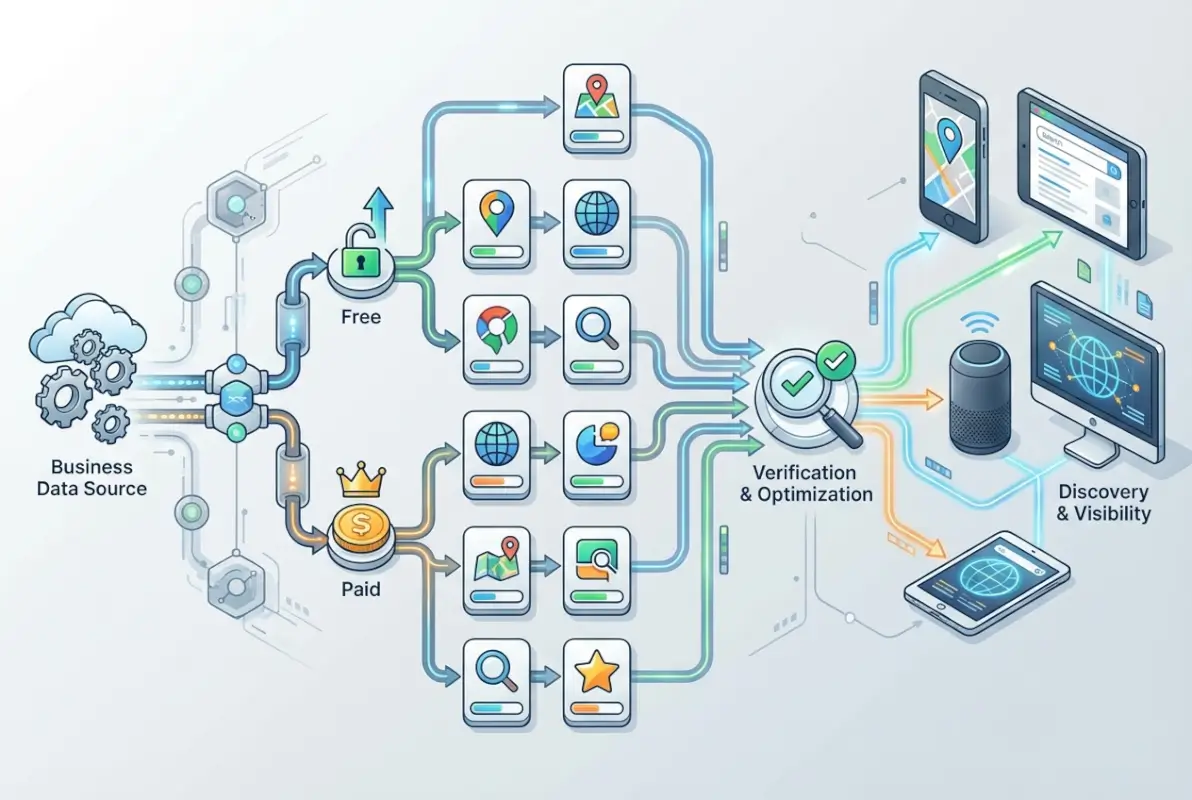
User engagement matters just as much as authority. A directory with millions of monthly visitors but zero review activity won’t help you. Look for platforms where users actively search, compare businesses, and leave feedback. Active engagement signals to Google that the directory provides value, which increases the weight of citations from that source.
| Directory Type | Best For | Typical DA Range | Cost |
|---|---|---|---|
| General Directories | Broad visibility across sectors | 60-95 | Free to $200/mo |
| Industry-Specific | Targeted professional audiences | 40-75 | Often free |
| Local/Regional | Community engagement | 30-60 | Membership fees |
| Review Platforms | Building social proof | 70-95 | Free with paid options |
Industry relevance can’t be overstated. A general directory like Yellow Pages helps most businesses, but a lawyer gains more from Avvo than from Yelp, while a restaurant benefits more from OpenTable than LinkedIn. Match your directory strategy to where your customers actually search for businesses like yours.
The 10 Best Business Directory Sites for Maximum Visibility
After testing dozens of platforms and tracking results across multiple industries, these ten business listing sites consistently deliver the best combination of visibility, trust signals, and conversion potential. Each serves a specific purpose in a comprehensive directory strategy.
1. Google Business Profile – The Non-Negotiable Foundation
Google Business Profile (formerly Google My Business) isn’t just another directory—it’s the central nervous system of local search. Your GBP listing directly controls how you appear in Google Search, Google Maps, and the local pack results that dominate “near me” queries. Businesses without a verified GBP are essentially invisible to the 90%+ of searchers using Google.

The platform offers features that directly drive conversions: appointment booking, messaging, product catalogs, and posts that appear in search results. I’ve seen service businesses double their inquiry volume simply by optimizing their GBP with complete information, weekly posts, and proactive review management. The verification process takes 5-14 days but should be your absolute first priority.
2. Yelp – The Review Powerhouse
With 178 million unique monthly visitors, Yelp dominates consumer decision-making for restaurants, retail, and service businesses. The platform’s review system carries enormous weight with consumers—a single negative review can cost you thousands in lost revenue, while a collection of positive reviews acts as a 24/7 sales team.
Yelp’s algorithm rewards businesses that engage authentically with their community through review responses and updated photos. The platform also offers premium features like competitor ad removal and enhanced placement, but the free listing remains powerful when properly optimized. For consumer-facing businesses, ignoring Yelp means abandoning a major discovery channel.
3. Bing Places for Business – The Overlooked Opportunity
Most businesses ignore Bing because it holds only 3% of the search market, but that’s precisely why it’s valuable. With less competition, ranking well on Bing Places is significantly easier than on Google. The platform also powers listings for Amazon Alexa, Cortana, and other Microsoft products, extending your reach beyond traditional search.
The verification process mirrors Google’s, and you can often import your GBP listing directly to Bing Places. Since the time investment is minimal (usually under 30 minutes), there’s no reason not to claim and optimize your Bing listing. Professional and B2B audiences tend to use Windows devices more frequently, making this particularly valuable for service providers targeting those demographics.
4. Facebook Business – Social Discovery Meets Local Search
Facebook increasingly functions as a local search engine, with users seeking recommendations from their network before making purchasing decisions. Beyond basic business listing information, Facebook pages enable direct customer communication through Messenger, event promotion, and robust advertising options that complement organic visibility.
The platform’s check-in feature and review system add social proof, while integration with Instagram extends your presence across multiple platforms from a single listing. For businesses targeting consumers under 50, Facebook Business isn’t optional—it’s where your customers spend hours daily and where purchase decisions increasingly begin.
5. Apple Maps – Capturing the iOS Ecosystem
iPhone users default to Apple Maps for navigation, making this platform critical for businesses in areas with high iOS adoption (typically urban and affluent demographics). Managing your Apple Maps listing requires creating an Apple Business Register account, but the process is straightforward and worth the 20-30 minute investment.

Apple Maps integrates deeply with Siri, meaning voice search queries flow through your listing data. When users ask Siri for nearby recommendations, an optimized Apple Maps profile determines whether you appear in results. The platform may not have Google’s reach, but for businesses serving premium markets, it’s essential for capturing high-value customers.
6. Better Business Bureau – The Trust Signal
For industries where consumer trust is paramount—home improvement, financial services, auto repair—a BBB profile signals credibility that younger platforms can’t match. While becoming accredited involves fees and standards compliance, creating a basic free profile still provides value through association with the BBB brand.
The BBB’s 110-year reputation for vetting businesses makes it particularly powerful for high-ticket purchases where consumers need reassurance before committing. A positive BBB rating can be the deciding factor when a customer is choosing between you and a competitor with similar offerings but no BBB presence.
7. Yellow Pages (YP.com) – Still Relevant for Service Businesses
The digital evolution of the traditional yellow pages maintains strong performance for service-based businesses like contractors, healthcare providers, and legal services. YP.com receives millions of monthly visitors who are specifically searching for local service providers, making it a high-intent traffic source.
The free basic listing includes essential business information and appears in search results, while premium options offer enhanced visibility and advertising opportunities. For established service businesses, YP.com often delivers a strong ROI on premium features due to the platform’s older, higher-spending demographic.
8. LinkedIn Company Directory – B2B Essential
Often overlooked as a business directory, LinkedIn offers unmatched visibility for B2B companies and professional services. Creating a company page is free and provides opportunities to showcase services, share industry insights, and connect with potential clients or partners through content marketing.
LinkedIn’s advanced search capabilities make it easy for potential clients to find businesses based on specific services, industries, and locations. The platform’s algorithm favors companies that post regularly and engage authentically, rewarding consistent effort with increased visibility among professional audiences.
9. Foursquare – The Data Multiplier
While Foursquare’s consumer app has evolved, its business directory powers location data for dozens of platforms including Snapchat, Twitter, and Uber. A single Foursquare listing multiplies your visibility across the digital ecosystem, making it valuable beyond its direct visitor base.
The platform performs particularly well for restaurants, nightlife, and retail businesses. Claiming your free listing allows you to update critical information and respond to tips left by customers, while the data syndication ensures accuracy across all platforms that rely on Foursquare’s API.
10. Chamber of Commerce Directories – Local Authority
Local Chamber of Commerce directories rank highly for regional business searches and carry significant authority with both search engines and local consumers. While most require membership fees, these directories frequently include networking opportunities, business development resources, and community involvement that extend beyond simple online visibility.

Chamber listings signal to local consumers that you’re an established community member rather than a fly-by-night operation. The networking opportunities often lead to partnerships and referrals that deliver value well beyond the SEO benefits of the directory listing itself.
Optimizing Your Listings for Maximum Impact
Creating listings is step one; optimization is where real results happen. The cornerstone of effective directory presence is completeness—fill every available field with accurate, detailed information. Search engines reward comprehensive listings, and consumers appreciate thorough details before deciding to visit or contact your business.
Start with your NAP (Name, Address, Phone) information, ensuring it’s formatted identically across all platforms. Even minor variations like “Suite” versus “Ste.” or phone numbers with different formatting can confuse search engines and dilute your citation strength. Create a master document with your exact NAP formatting and copy-paste from it religiously.
Visual content dramatically impacts engagement. Upload 15-20 high-quality photos showcasing your products, services, team, and location. Research consistently shows that businesses with comprehensive photo galleries receive 35% more website clicks and 42% more direction requests than those with few or no images. Professional photography pays for itself quickly through increased conversion rates.
Reviews represent perhaps your most powerful optimization lever. Actively encourage satisfied customers to leave reviews by following up after positive service experiences. When reviews appear—positive or negative—respond within 24 hours with professional, personalized replies. This engagement demonstrates customer commitment and actually improves visibility, since most platforms’ algorithms factor response rates into ranking calculations.
| Optimization Element | Impact on Visibility | Time Investment | Maintenance Frequency |
|---|---|---|---|
| Complete NAP Data | Critical | 15 min initial | Only when changing |
| Photo Gallery (15+) | High | 2-3 hours initial | Monthly additions |
| Service Descriptions | High | 30-45 min | Quarterly review |
| Posts & Updates | Medium | 15 min weekly | Weekly |
| Review Responses | Critical | 10 min daily | Daily monitoring |
| Q&A Management | Medium | 10 min weekly | Weekly check |
Don’t overlook the Q&A sections on platforms like Google Business Profile. Seed these with 5-10 common questions and detailed answers covering your services, pricing, and policies. This proactive approach prevents competitors from answering questions on your listing (yes, that can happen) and provides valuable information to potential customers researching your business.
Measuring Results and Iterating Your Strategy
Directory optimization without measurement is guesswork. Most major platforms provide built-in analytics showing views, clicks, and customer actions. Google Business Profile offers particularly robust insights including search queries, customer journey data, and comparison metrics against similar businesses in your area.
Beyond platform-specific analytics, track directory referral traffic through your website analytics. Setting up UTM parameters for directory links allows precise attribution of which best business listing sites drive the most valuable traffic. This data should inform where you invest additional time or budget for premium features.
Monitor review patterns across platforms for qualitative insights. Recurring themes in customer feedback reveal operational strengths to highlight in marketing or weaknesses requiring attention. Some directories also provide competitive analysis showing how your ratings and review volume compare to similar businesses.
The ultimate measure of directory effectiveness is conversion data—phone calls, form submissions, and in-store visits originating from listings. With proper tracking, you can calculate actual ROI for time spent optimizing listings or money invested in premium features. This data-driven approach prevents wasted effort on low-performing platforms while doubling down on high-performers.
Frequently Asked Questions About Business Directory Sites
What are the best free business listing sites for small businesses?
Google Business Profile, Bing Places for Business, Facebook Business Pages, and Apple Maps offer the most value at zero cost. These platforms provide robust features including reviews, photos, posts, and analytics without requiring paid upgrades. Yelp’s basic listing is also free and valuable for consumer-facing businesses. Start with these five before exploring paid options.
How many business directories should I list my company on?
Focus on 10-15 high-quality directories relevant to your industry and location rather than spreading thin across dozens. Start with the major general directories (Google, Bing, Facebook, Yelp, Apple Maps), then add 5-7 industry-specific or local platforms. Quality and completeness matter far more than quantity—abandoned listings on 50 sites provide zero value.
Can business directory listings actually improve my SEO rankings?
Yes, significantly. Directory listings improve local SEO through consistent citations, authoritative backlinks, and increased online visibility. Search engines use directory presence to verify business legitimacy and relevance. Businesses with consistent listings across 10+ authoritative directories typically rank higher in local search results, especially for location-based queries. The effect is cumulative and builds over 3-6 months.
How long does it take to see results from directory listings?
Initial visibility can occur within 24-48 hours for major platforms like Google Business Profile, but meaningful SEO impact requires 3-6 months of consistent presence. Review accumulation and citation consistency build over time. Most businesses report noticeable traffic increases within 60-90 days of establishing comprehensive, optimized listings across authoritative directories.
Should I pay for premium business directory features?
Start with free listings and optimize them fully before considering paid upgrades. Premium features make sense when analytics show a directory drives significant qualified traffic and when your market is competitive. Yelp and Yellow Pages offer enhanced visibility through paid plans, but many businesses succeed with free listings by focusing on optimization and review management first.
How do I maintain consistent business information across multiple directories?
Create a master document with your exact NAP information formatted identically for all platforms. Use a spreadsheet to track where you’re listed and audit it quarterly. Consider citation management tools for businesses with multiple locations. Set calendar reminders to review all listings quarterly and update immediately when core information changes like hours or phone numbers.
Where should I list my business for maximum local visibility?
Google Business Profile is absolutely essential, followed by Bing Places, Facebook, and Yelp. Add Apple Maps for areas with high iPhone usage. Beyond these core platforms, prioritize your local Chamber of Commerce directory and industry-specific platforms relevant to your business type. This combination provides comprehensive coverage of local search channels where customers actively look for businesses.
How should I handle negative reviews on business listing sites?
Respond within 24 hours with a professional, empathetic reply. Acknowledge the customer’s experience, apologize for shortcomings, and offer to resolve the issue offline with contact information. Never argue or become defensive. Research shows professional responses to negative reviews can actually improve your reputation more than having only positive reviews, as they demonstrate accountability.
Do B2B companies benefit from business directory sites?
Absolutely. While B2B companies benefit less from consumer-focused directories like Yelp, platforms like LinkedIn, Google Business Profile, and industry-specific directories remain valuable. B2B buyers conduct extensive online research, and directory listings provide credibility signals, accessible contact information, and improved visibility in industry-specific searches that influence purchasing decisions.
How often should I update my business directory listings?
Update immediately when core information changes (hours, address, phone, services). Add new photos monthly to keep listings fresh and engaging. Post weekly updates on platforms that support them (Google, Facebook). Review all listings quarterly for accuracy and completeness. Regular updates signal to both search engines and customers that your business is active and well-maintained.
Taking Action: Your Directory Optimization Roadmap
The business directory sites outlined here represent your foundation for local visibility, but knowledge without implementation accomplishes nothing. Start with Google Business Profile this week—claim, verify, and complete your profile with photos, services, and initial posts. This single action will improve your local visibility more than any other directory effort.
Next, block out two hours to claim and optimize your listings on Bing Places, Facebook, Apple Maps, and Yelp. Use your master NAP document to ensure perfect consistency. Upload the same photo set to each platform, and write unique service descriptions that include your target keywords naturally. These five platforms form your core directory foundation.
Your 30-Day Directory Action Plan
Week 1: Claim and verify Google Business Profile and Bing Places with complete information
Week 2: Complete Facebook Business, Yelp, and Apple Maps listings with photos and full details
Week 3: Research and create listings on 3-5 industry-specific directories relevant to your business
Week 4: Implement a review request system and respond to all existing reviews across platforms
Remember that directory optimization is ongoing, not a one-time project. Schedule quarterly audits to review all listings for accuracy, respond to reviews weekly, and add fresh content monthly. The businesses that treat directory management as a strategic initiative rather than a checkbox consistently outperform competitors who set it and forget it.
The customers searching for your services right now won’t wait for you to get around to optimizing your directory presence. They’ll choose from the businesses that appear in their search results with complete information, positive reviews, and professional presentation. Make sure you’re one of them.
Was this article helpful?