How to Add Your Business to Google in 6 Simple Steps (2024 Guide)

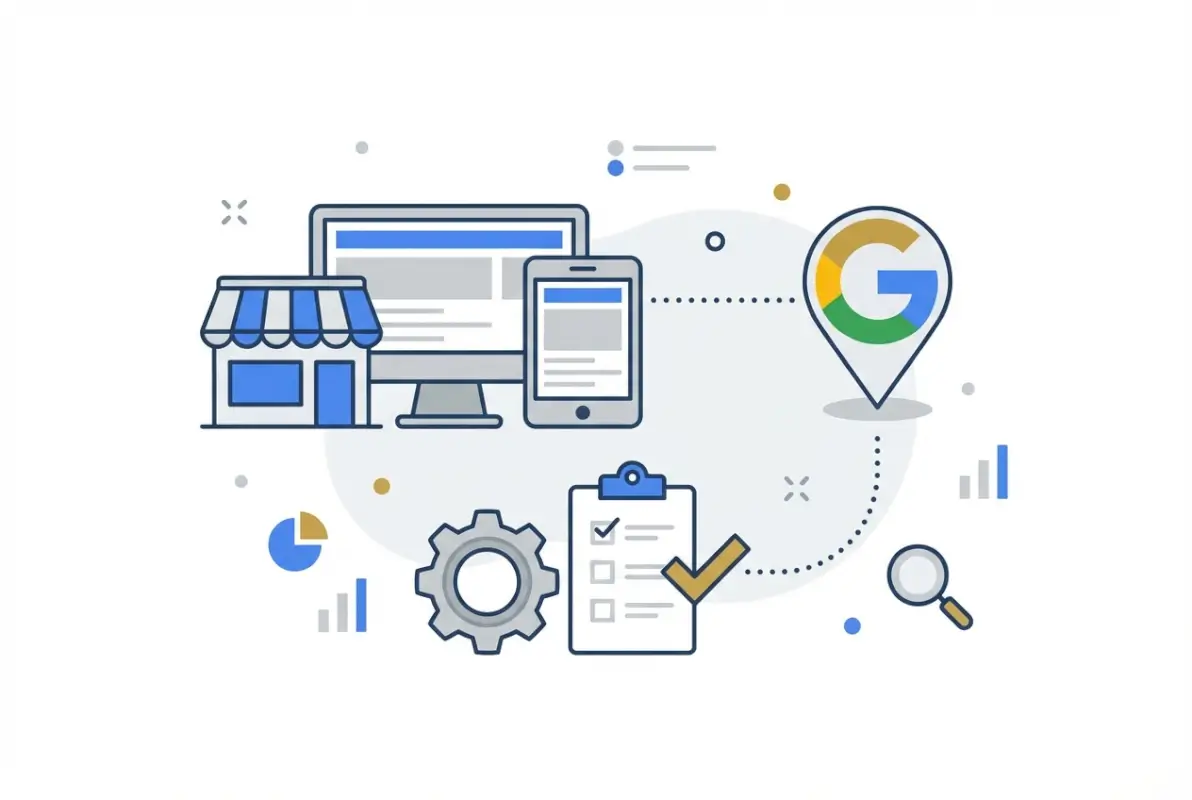
Visual overview of How to Add Your Business to Google in 6 Simple Steps (2024 Guide)

Translated to

Getting your business to show up on Google isn’t rocket science, but surprisingly many business owners still don’t know where to start. The truth is, if you’re not visible on Google Search and Maps, you’re essentially invisible to the majority of potential customers searching for what you offer. I’ve watched countless small businesses transform their customer acquisition just by properly setting up their Google presence—and it takes less time than you’d think.

Here’s what most business owners miss: your Google Business Profile (formerly Google My Business) is often the first thing people see when they search for your company or services in your area. It shows up before your website, before your social media, before everything. That makes it arguably the most important piece of digital real estate you own—and it’s completely free.

TL;DR – Quick Takeaways

  • Claim your spot first – Check if your business already exists on Google Maps before creating a new listing
  • Verification is mandatory – Usually takes 5-7 days via postcard, but it’s required to manage your listing
  • Complete equals credible – Businesses with full profiles (photos, hours, description) get significantly more engagement
  • Reviews matter immensely – Respond to all reviews within 48 hours to boost visibility and trust
  • Maintenance is ongoing – Set monthly reminders to update info, add photos, and post updates

Why Your Google Business Profile Deserves Immediate Attention

Let’s talk numbers for a second. When someone searches for a business like yours on their phone, what do they actually see? They see a map with pins, business names, star ratings, and quick info—all before they ever scroll to regular search results. If you’re not in that map pack, you might as well not exist for that search.

According to Pew Research Center, 85% of Americans own smartphones, and the vast majority use them daily to find local businesses. But here’s the kicker: they’re not just browsing—they’re ready to buy, visit, or call.
Core concepts behind How to Add Your Business to Google in 6 Simple Steps (2024 Guide)
46%
of all Google searches have local intent
Meaning people are looking for businesses near them

Think about your own behavior. When you need a plumber at 10 PM because a pipe burst, what do you do? You grab your phone and search “emergency plumber near me.” You’re not going to page three of Google results—you’re calling one of the first three businesses that show up with good reviews and a phone number you can tap immediately.

That’s the power of a properly optimized Google Business Profile. It puts you in front of people at the exact moment they need what you’re selling. For businesses exploring successful directory website business strategies, your Google listing serves as the foundation that supports all other online marketing efforts.

Pro Tip: Businesses with complete Google Business Profiles receive 7x more clicks than those with incomplete information. That’s not a small difference—that’s the difference between thriving and barely surviving online.

Step 1: Set Up Your Google Business Profile Account Correctly

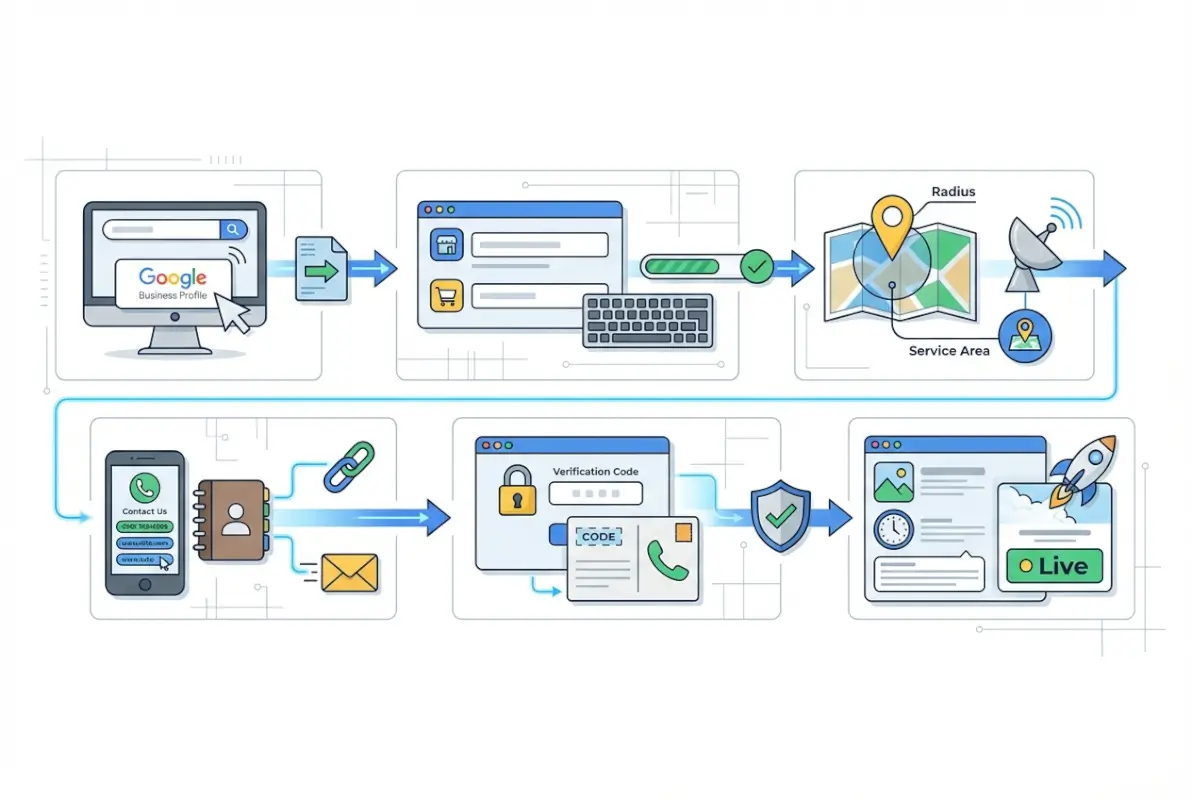
The foundation of everything starts with creating your Google Business Profile account. This is your command center for managing how your business appears across Google Search, Maps, and other Google properties. Getting this right from the start saves you headaches later.

Head to business.google.com and sign in with a Google account. Now here’s where people make their first mistake—they use their personal Gmail account. Don’t do that. Create a dedicated business email or use one that multiple team members can access. Why? Because I’ve seen businesses get locked out when the employee who set everything up leaves the company and takes their personal Gmail with them.
Step-by-step process for How to Add Your Business to Google in 6 Simple Steps (2024 Guide)

Once you’re signed in, click “Manage now” to begin the setup process. Google will guide you through the basics, but here’s what they won’t tell you: the email you use becomes the primary owner account. You can add managers later, but this initial account has ultimate control. Treat those login credentials like you’d treat your bank account information—store them securely where your team can access them if needed.

Account ElementBest PracticeWhy It Matters
Email AddressBusiness domain emailProfessionalism and continuity
PasswordUnique, complex, stored securelyPrevents unauthorized access
Two-Factor AuthAlways enableAdditional security layer
Backup ManagersAdd 2-3 trusted peopleNever depend on one person

Enable two-factor authentication immediately. I know it’s an extra step every time you log in, but it’s worth it. Business listings are targeted by competitors and scammers who want to change your information, post fake reviews, or even delete your listing entirely. Two-factor authentication makes their job exponentially harder.

Step 2: Check If Your Business Already Exists on Google

Before you start creating a brand new listing, you need to search for your business on Google Maps. This step is critical because there’s a decent chance your business already exists in Google’s system—even if you never set it up yourself. Google automatically creates listings based on data they find around the web, or sometimes customers create them when they leave reviews.

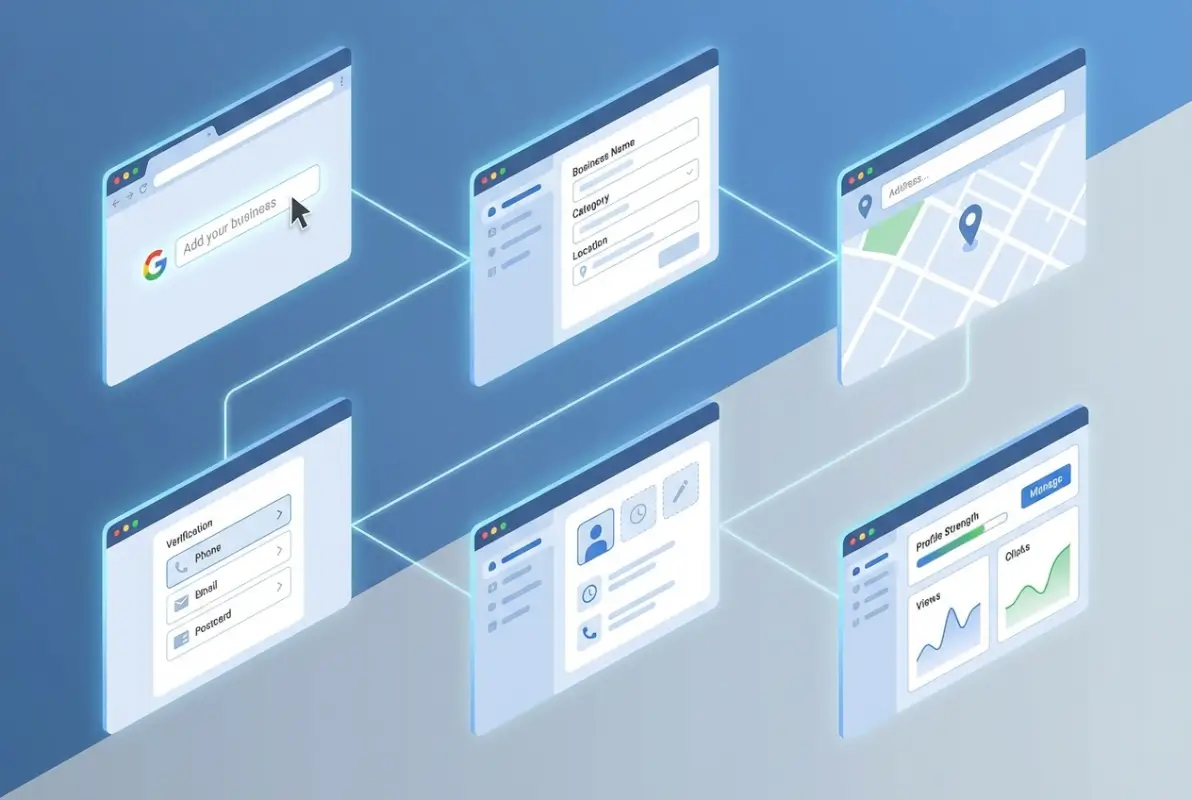
Simply type your business name and city into Google Maps. Look carefully at the results. If you see your business, congratulations—you’re halfway there. You just need to claim it rather than create it from scratch. If nothing appears, you’re clear to add a new business listing.
Tools and interfaces for How to Add Your Business to Google in 6 Simple Steps (2024 Guide)

I worked with a restaurant owner last year who spent an hour creating what he thought was his first Google listing, only to discover later that his business already had a listing with 47 reviews. He’d just created a duplicate, which split his reviews and confused customers who saw two different listings with slightly different information. It took weeks to get Google to merge them properly and consolidate the reviews. Learn from his mistake—always check first.

Important: If you find multiple listings for your business, DO NOT create another one. Flag the duplicates and follow Google’s process to merge them. Multiple listings violate Google’s terms and can result in all of them being suspended.

When searching, try variations of your business name. Search with and without “LLC” or “Inc.” Try abbreviations if your business name is commonly shortened. The goal is to be absolutely certain there isn’t an existing listing before you create a new one.

Step 3: Add Your Business Details with Precision

If your search came up empty, it’s time to add your business to Google. This is where details matter more than you might think. Every piece of information you enter should be exactly as it appears on your actual storefront, business license, and official documents.

Start with your business name. This seems simple, but many people try to game the system by stuffing keywords into their business name. Don’t do this. If your business is called “Mike’s Pizza,” don’t list it as “Mike’s Pizza Best NYC Pizza Downtown Manhattan.” Google will likely suspend your listing for violating their guidelines, and even if they don’t catch it initially, competitors can report you.

Best practices for How to Add Your Business to Google in 6 Simple Steps (2024 Guide)

Your business category is surprisingly important for active directory for business environment visibility. Google uses this to determine which searches should show your business. You can select one primary category and add several secondary categories. Choose the most specific option available—not the broadest one.

92%
of consumers choose businesses on the first page of local search results
Your category selection directly impacts these rankings

For your address, use the exact format that matches your physical location. If you’re a service-area business without a public storefront (like a plumber or cleaning service), you can hide your address and instead specify the areas you serve. This is perfectly acceptable and actually recommended for businesses that visit customers rather than having customers visit them.

Phone number choice matters more than you’d expect. Use a local number if possible—it builds trust with local customers. Avoid using tracking numbers that rotate or change, as this confuses Google’s verification systems and can impact your ranking signals. A stable, consistent phone number that appears on your website and other directories is ideal.

Step 4: Navigate the Verification Process

Verification is Google’s way of ensuring that only legitimate business owners can manage listings. It’s a necessary step that can’t be skipped, so plan for it taking 5-7 business days in most cases.

The most common verification method is by postcard. Google mails a physical postcard to your business address with a unique verification code. When it arrives, you log into your Google Business Profile and enter the code to verify ownership. Simple enough, but here’s what trips people up: don’t make any changes to your core business information during this waiting period. If you do, Google might restart the verification process from scratch.

Advanced strategies for How to Add Your Business to Google in 6 Simple Steps (2024 Guide)

Some businesses qualify for instant verification or verification by phone/email. This typically happens if Google has high confidence in your business based on existing data from your website and other sources. If you’re offered these options, take them—they’re much faster than waiting for the postcard.

Key Insight: While waiting for verification, you can still fill out additional details in your profile like photos, business description, and services. Just don’t change your business name, address, or phone number until after verification is complete.

According to Google’s verification guidelines, businesses must have a physical location where customers can visit during stated hours, or clear service areas if operating as a service-area business. Virtual offices and PO boxes typically don’t qualify for verification, so plan accordingly.

Step 5: Optimize Your Profile to Stand Out

Here’s where most businesses drop the ball. They get verified, breathe a sigh of relief, and never touch their profile again. That’s a massive missed opportunity. A complete, optimized profile can dramatically increase your visibility and the number of customers who contact you.

Start with your business description. You have 750 characters to tell potential customers what makes your business special. Use this space wisely. Include relevant keywords naturally (don’t stuff them), mention your specialties, and give people a reason to choose you over competitors. This description appears in your Google Business Profile and can influence both search rankings and whether people click through to learn more.

60%
more likely to consider visiting businesses with complete profiles
Including photos, hours, and detailed descriptions

Photos are absolutely crucial. Businesses with photos receive 42% more requests for directions and 35% more clicks to their websites. Upload high-quality images of your storefront, interior, products, team members, and work in progress. Aim for at least 10 photos to start, and add new ones regularly. Authentic photos perform better than stock images—customers want to see the real you.

Your business hours should be meticulously accurate. Nothing frustrates customers more than showing up to a business that’s supposed to be open according to Google, only to find the doors locked. Set your regular hours, but also update them for holidays, special events, and temporary closures. Google makes this easy with special hours features.

For businesses investigating business directory software solutions, your Google Business Profile optimization should align with how you present your business across all directory platforms. Consistency builds trust and helps search engines understand your business better.

Step 6: Claim and Manage Existing Listings Properly

If you found your business already listed on Google during step two, claiming it is slightly different than creating a new listing. The process starts by finding your business on Google Maps, then clicking “Own this business?” or “Claim this business” button.

Sometimes this gets complicated. If someone else has already claimed your business—maybe a former employee or a marketing agency you hired years ago—you’ll need to request access. This typically involves contacting that person to add you as a manager or owner, or going through Google’s support process to prove you’re the legitimate owner.

I remember helping a client who discovered their ex-employee had claimed their business listing and, after a messy termination, changed all the business hours to “permanently closed” out of spite. It took three weeks and multiple support tickets to get control back. This is why adding backup managers to your verified listing is so important—it prevents one disgruntled person from holding your business hostage.

ScenarioAction RequiredTimeline
Unclaimed listing existsClaim and verify ownership5-7 days
Already claimed by youLog in and optimizeImmediate
Claimed by someone elseRequest access or contact Google1-3 weeks
Multiple duplicate listingsReport duplicates, merge data2-4 weeks

After claiming, do a thorough audit of all information. Check every field—address, phone number, website URL, business hours, and categories. Even if the listing existed before, it might contain outdated or incorrect information that needs updating. Make these corrections before you start actively promoting your Google listing.

Advanced Strategies That Make a Real Difference

Once your listing is verified and optimized, there are several advanced features that can give you an edge over competitors who stick with the basics.

Mastering the Review Game

Reviews are the lifeblood of local search rankings. Businesses with more positive reviews rank higher and convert better. But here’s what most people don’t realize: it’s not just about getting reviews—it’s about responding to them.

Google’s algorithm looks at review recency, quantity, rating, and your response rate. When you respond to reviews (both positive and negative), you signal to Google that your business is active and engaged. This can boost your visibility in local search results.

For negative reviews, respond within 12-24 hours. Keep your response professional, acknowledge their concern, and offer to resolve the issue offline. Never argue or get defensive publicly—it looks terrible to potential customers reading the exchange. For positive reviews, a simple thank you mentioning something specific they praised shows you actually read and care about feedback.

Pro Tip: Create a simple system for requesting reviews. After a successful transaction, send a follow-up email or text with a direct link to your Google review page. Make it as easy as possible for satisfied customers to leave feedback.

Using Google Posts Effectively

Google Posts are like mini social media updates that appear directly in your Business Profile. You can share special offers, events, new products, or general updates. These posts appear in your knowledge panel when people search for your business, providing fresh content and another way to engage potential customers.

Posts expire after seven days (or on the date you specify for events and offers), so plan to create new posts weekly. Think of them as free advertising space in your listing—use them to highlight what makes your business special right now.

Q&A Section Management

Google’s Q&A feature allows anyone to ask questions about your business publicly. Here’s the catch: anyone can also answer those questions—including your competitors or misinformed customers. You need to monitor this section regularly and provide official answers to common questions.

Better yet, seed your Q&A section with questions you want to answer. Ask friends or employees to post common questions that give you an opportunity to showcase your expertise and provide helpful information. This both helps potential customers and prevents unhelpful or incorrect answers from others.

For those exploring businesses in fslocal directory tips, the Q&A strategy works across multiple platforms. Anticipate questions and answer them proactively across all your directory listings.

Ongoing Maintenance Nobody Talks About

The biggest mistake I see businesses make is treating their Google Business Profile as a “set it and forget it” task. Your listing needs regular attention to maintain its effectiveness and ranking power.

Set a recurring calendar reminder for the first Monday of each month. During this 15-minute maintenance window, you should:

  • Review and respond to any new reviews
  • Upload 2-3 new photos (recent ones showing current products, team, or seasonal updates)
  • Create at least one new Google Post
  • Check that all business information is still accurate
  • Answer any new Q&A questions
  • Update special hours for upcoming holidays or events
  • Review insights to see how people are finding and interacting with your listing
15min
monthly maintenance can maintain or improve your local search rankings
While neglected profiles gradually lose visibility

Google Insights provides valuable data about how customers find your listing, what actions they take, and how you compare to similar businesses. Pay attention to these metrics. If you notice a drop in calls or direction requests, it might indicate a problem with your listing or increased competition requiring you to step up your optimization game.

According to W3C accessibility standards, keeping business information current across all platforms isn’t just good practice—it’s essential for providing equal access to all users, including those using assistive technologies.


Frequently Asked Questions

How long does it take for my business to appear on Google after I add it?

After completing verification, your business typically appears within 24-48 hours. However, achieving optimal placement in local search results can take 2-4 weeks as Google’s algorithm assesses your listing’s completeness, reviews, and engagement signals. Full optimization happens gradually as you add content and gather reviews.

Can I manage multiple business locations under one Google account?

Yes, Google Business Profile supports unlimited locations under a single account. After adding your first location, click “Add location” to include additional addresses. For businesses with 10+ locations, Google recommends using bulk upload features for efficiency. Each location needs separate verification but shares centralized management.

What should I do if my competitor posts fake negative reviews?

Flag suspicious reviews by clicking the three dots next to the review and selecting “Flag as inappropriate.” Provide evidence if possible when reporting. Google reviews these flags but approval isn’t guaranteed. Focus on generating authentic positive reviews to dilute negative ones, and always respond professionally to maintain your reputation.

How do I improve my ranking in local search results?

Local ranking depends on three factors: relevance (how well your profile matches searches), distance (proximity to searcher), and prominence (reviews, links, citations). Optimize by completing every profile section, maintaining consistent NAP data across the web, actively gathering reviews, adding regular posts, and building local backlinks to your website.

Is there a cost to use Google Business Profile?

No, Google Business Profile is completely free with no subscription fees or hidden charges. Google provides this service because quality business listings improve their search results and user experience. All features including posts, messaging, and insights are included at no cost to business owners.

What’s the difference between a Google Business Profile and having a website?

Your Google Business Profile is a listing on Google’s platform showing your business in Search and Maps. A website is your owned digital property with complete control over design and content. Both are essential—your Google listing captures local search traffic and often serves as the first touchpoint directing people to your website for deeper engagement.

Can service businesses without physical storefronts create Google Business Profiles?

Yes, service-area businesses like plumbers, cleaners, or consultants can create profiles by selecting “I deliver goods and services to my customers” during setup. You’ll hide your street address and instead define service areas by city, region, or radius. This allows local search visibility without displaying a public address.

How do I handle duplicate listings for my business?

Never create additional listings when duplicates exist. First, claim all legitimate listings showing your business. Then use Google’s “Mark as duplicate” feature to flag extras. Google will review and merge them, consolidating reviews and data. This process takes 2-4 weeks but is essential for maintaining accurate information and avoiding penalties.

What happens if I need to temporarily close my business?

Google Business Profile includes a “Mark as temporarily closed” option in your business information settings. This preserves your listing, reviews, and photos while informing customers about your status. The designation appears prominently in search results. Update it immediately when reopening to resume normal operations and visibility.

Should I create separate profiles for different services at the same location?

No, create only one profile per physical location regardless of services offered. Use the services section to detail all offerings comprehensively. Multiple listings for the same address violate Google’s guidelines and risk suspension. The exception is genuinely separate businesses with different names and operations sharing a location—but this is rare.

Your Next Steps to Local Search Dominance

Here’s the reality: your Google Business Profile is probably the highest-ROI marketing activity available to your business. It costs nothing, reaches customers at the exact moment they’re searching for what you offer, and directly drives calls, visits, and sales. Yet most businesses either haven’t set one up or are running on incomplete, unoptimized listings that barely scratch the surface of what’s possible.

The six steps we’ve covered—creating your account, checking for existing listings, adding accurate information, completing verification, optimizing your profile, and maintaining it regularly—aren’t complicated. They just require focus and attention to detail. The businesses that dominate local search aren’t doing anything magical; they’re simply being thorough and consistent with the basics.

Take Action Today

Block out 30 minutes right now to start this process. Don’t wait until next week or next month—your competitors are actively optimizing their listings while you’re reading this.

Create your account, claim or add your business, and begin the verification process today. Then schedule monthly 15-minute maintenance sessions to keep everything current. This small investment pays dividends for years in the form of new customers who found you because you showed up when they searched.

For businesses looking to expand beyond just Google, platforms like TurnKey Directories offer comprehensive directory solutions that complement your Google presence with additional visibility and features. But Google should always be your foundation—it’s where the majority of local searches happen and where your potential customers are looking right now.

The businesses thriving in local markets aren’t necessarily the ones with the biggest advertising budgets or fanciest websites. They’re the ones that made sure they’re visible when customers search. That starts with a properly set up and maintained Google Business Profile. You’ve got the roadmap—now go claim your spot at the top of local search results.

Was this article helpful?

Similar Posts

  • Blog

    How to Create a Business Directory: 7 Steps to Success

    substring(replace(

    Creating a business directory can be one of the most lucrative online ventures you’ll ever pursue, but here’s what nobody tells you upfront: most people fail because they treat it like building a simple list instead of architecting a valuable ecosystem. I remember launching my first directory back when yellow pages were still relevant (yes, I’m dating myself here), and the biggest mistake I made was thinking the technology mattered more than the community. The truth is, a successful business directory isn’t about having the fanciest features or the most listings—it’s about solving a specific problem for a clearly defined audience better than anyone else. Whether you’re planning to create a niche industry directory or a local business hub, understanding the strategic framework behind directory success will save you months of frustration and thousands of dollars in wasted effort.

    TL;DR – Quick Takeaways

    • Niche focus beats broad coverage – Dominating a specific vertical or geographic area generates more value than competing with established general directories
    • Revenue models require planning – Decide between subscription fees, premium listings, advertising, or hybrid approaches before you build
    • User experience drives success – Advanced search functionality and mobile optimization aren’t optional extras anymore
    • Content quality matters more than quantity – 100 verified, detailed listings outperform 1,000 basic entries
    • Marketing starts on day one – Building the directory is only 30% of the work; attracting businesses and users is the real challenge
    • Technology choices have long-term consequences – Select platforms and tools that can scale with your growth plans

    Step 1: Define Your Directory’s Niche and Target Audience

    The single biggest determinant of your directory’s success happens before you write a single line of code or choose a platform. You need to identify a specific niche where demand exists but supply is fragmented or poorly served. Generic business directories are a graveyard of failed ventures because you’re competing against Google My Business, Yelp, and dozens of entrenched players with unlimited resources. Instead, think about specialized industries, professional services, or geographic regions that major platforms overlook or underserve.

    [KBIMAGE_1]

    In my experience working with directory owners, the most profitable niches share three characteristics: they serve businesses willing to pay for visibility, they address a clear search intent that existing solutions don’t satisfy well, and they have enough potential listings to create critical mass without being so broad that you can’t compete. For example, a directory focused exclusively on certified sustainable contractors in the Pacific Northwest has far better prospects than “all contractors everywhere.” The narrow focus lets you become the definitive resource, which makes both business owners and searchers choose you over general alternatives.

    💡 Pro Tip: Before committing to your niche, manually compile 50-100 potential listings. If you struggle to find this many, your niche might be too narrow. If you easily find 10,000+, you’ll need significant resources to compete effectively.

    Research your target audience from both sides of the marketplace. Who are the businesses you’ll list, and what pain points drive them to seek directory placement? Equally important, who are the end users searching for these businesses, and what specific problems are they trying to solve? A directory for wedding vendors needs to understand both the marketing challenges facing photographers and caterers, and the planning anxieties of engaged couples searching for reliable service providers. This dual perspective shapes everything from your feature set to your pricing model.

    Validate your concept before investing heavily. Use tools like Google Trends to verify search volume for relevant queries, examine existing competitors to identify gaps in their offerings, and survey potential business clients about their willingness to pay. I’ve seen too many entrepreneurs build technically impressive directories for markets that simply don’t exist or won’t monetize. A few hours of unglamorous market research can prevent months of building something nobody wants.

    Step 2: Choose the Right Technology Platform

    Your platform decision carries consequences you’ll live with for years, so resist the temptation to just pick the cheapest or easiest option without strategic consideration. The directory landscape offers three main paths: custom development, WordPress with directory plugins, or specialized directory software platforms. Each has distinct advantages and limitations that align with different business models, technical capabilities, and growth trajectories.

    [KBIMAGE_2]

    WordPress with plugins like Business Directory Plugin or GeoDirectory offers the most accessible entry point for non-technical founders. You get reasonable functionality quickly, extensive customization through themes and plugins, and manageable hosting costs (typically starting around what you’d pay for basic website hosting). However, you’ll eventually hit scaling limitations if your directory grows to thousands of listings with heavy traffic, and you’re dependent on plugin developers maintaining compatibility with WordPress updates. For testing concepts or serving smaller markets, this approach makes considerable sense.

    Platform TypeBest ForTypical CostTechnical Skill Required
    WordPress + PluginsSmall to medium directories, budget-conscious starts$200-$500 initialLow to Medium
    Directory SaaS PlatformsFast launches, non-technical owners$50-$300/monthLow
    Custom DevelopmentUnique requirements, scalability priority$5,000-$50,000+High (requires developers)
    Specialized Directory SoftwareEstablished businesses, specific industries$1,000-$10,000 licenseMedium

    SaaS platforms designed specifically for directories provide another viable route, especially if you want to launch quickly without technical headaches. These services handle hosting, updates, and core functionality while letting you focus on content and marketing. The tradeoff is ongoing monthly fees and less control over customization, which can be fine for many business models. When evaluating these platforms, scrutinize their search functionality, payment processing options, and whether they allow you to export your data if you eventually outgrow their service.

    ⚠️ Important: Whatever platform you choose, ensure it supports structured data markup for search engines. Directories that properly implement schema.org markup for local businesses see significantly better visibility in search results and rich snippets.

    Custom development makes sense when you have specific requirements that off-the-shelf solutions can’t address, substantial budget, or technical expertise in-house. Building custom gives you complete control over features, user experience, and scalability architecture. However, you’re looking at development timelines measured in months rather than days, and ongoing maintenance costs that many founders underestimate. Unless your directory concept has truly unique technical requirements or you’ve validated strong market demand worth significant investment, start with a proven platform and customize later when you have revenue justifying the expense.

    Step 3: Design Essential Features and User Experience

    The features you include should flow directly from your audience research, not from what seems cool or what competitors have. Every feature adds complexity, development time, and maintenance burden, so prioritize ruthlessly. A directory with five excellent features that work flawlessly beats one with twenty mediocre features that confuse users. Start with the absolute minimum viable product that solves your audience’s core problem, then expand based on actual user feedback rather than assumptions.

    [KBIMAGE_3]

    Search functionality is your directory’s engine, and it deserves more attention than any other feature. Users come to directories with specific intent—they’re looking for something—so your search needs to handle the way real people actually look for businesses. This means supporting multiple search criteria (location, category, keywords, attributes), autocomplete suggestions, and filtered results that narrow options without overwhelming choices. Poor search is the fastest way to send frustrated users back to Google, never to return.

    73%
    of users abandon directory searches if they can’t find what they need within three clicks

    Business listing pages need to balance comprehensiveness with scannability. Required elements include business name, categories, contact information, location with map integration, description, and images. Beyond these basics, consider what information your specific audience needs to make decisions. A restaurant directory needs hours and menu highlights; a B2B service directory needs case studies and certifications. Let businesses create directory listings that showcase their unique value propositions while maintaining consistent structure across your directory.

    Mobile responsiveness isn’t optional anymore, it’s foundational. More than half of directory searches now happen on mobile devices, and Google’s mobile-first indexing means your mobile experience directly affects search rankings. Test your directory extensively on actual phones and tablets, not just desktop browsers resized to mobile dimensions. Pay special attention to tap targets, form inputs, and map interactions—elements that work fine with a mouse often frustrate users on touchscreens.

    ✅ Key Insight: User-generated content like reviews and ratings dramatically increases engagement and trust, but it also requires moderation resources. Plan your content policies and moderation workflow before enabling these features.

    Consider which features justify premium listings versus what should be available to all businesses. Common premium features include enhanced placement in search results, additional images or videos, social media integration, analytics about profile views, and removal of competitor ads from their listing pages. The key is making free listings valuable enough that businesses want to be included, while creating clear premium benefits worth paying for. If your free listings are too limited, businesses won’t bother; if premium offers too little advantage, they won’t upgrade.

    Step 4: Build or Choose Your Directory Platform

    The technical foundation of your business directory determines its functionality, scalability, and user experience. You’ll need to decide whether to build a custom solution, use a website builder, or leverage a specialized directory platform based on your technical skills, budget, and long-term goals.

    [KBIMAGE_4]

    Custom-Built Solutions

    Developing a custom directory from scratch offers maximum flexibility and control. This approach works best for directories with unique requirements or those planning significant scale. You’ll typically use frameworks like WordPress with directory plugins, Laravel, Django, or React combined with a headless CMS.

    Custom development requires either in-house technical expertise or hiring developers. While initial costs are higher—ranging from $5,000 to $50,000+ depending on complexity—you own the codebase and can modify any aspect of functionality. This option makes sense when your directory concept requires features that off-the-shelf solutions don’t provide.

    WordPress Directory Plugins

    WordPress powers approximately 43% of all websites and offers numerous directory-specific plugins that dramatically reduce development time. Popular options include Business Directory Plugin, GeoDirectory, and Listable. These plugins provide listing submission forms, search filters, user reviews, and payment integration out of the box.

    Implementation Tip: If you choose WordPress, select a hosting provider optimized for WordPress performance like WP Engine or Kinsta. Directory sites with hundreds or thousands of listings require more resources than typical blogs or business websites.

    No-Code Directory Builders

    Platforms like Brillant Directories, Memberstack with Webflow, or Airtable combined with Softr allow you to create functional directories without writing code. These solutions offer pre-built templates, drag-and-drop customization, and integrated payment processing. Monthly costs typically range from $50 to $300.

    No-code platforms significantly reduce time to launch—you can have a basic directory operational in days rather than months. The trade-off is less customization flexibility and ongoing subscription costs. Evaluate whether the platform’s feature set aligns with your required functionality before committing.

    Essential Technical Features

    Regardless of your platform choice, ensure your directory includes these core technical capabilities:

    • Responsive design: Your directory must function flawlessly on smartphones, tablets, and desktops since over 60% of directory searches occur on mobile devices
    • Fast loading speeds: Aim for page load times under 3 seconds to reduce bounce rates and improve search engine rankings
    • Advanced search and filtering: Users should find relevant businesses through category, location, ratings, features, and keyword searches
    • User account management: Business owners need dashboards to manage their listings, respond to reviews, and track analytics
    • Payment processing: Integrate Stripe, PayPal, or similar platforms to handle subscription payments securely
    • SEO optimization: Include proper meta tags, schema markup, XML sitemaps, and clean URL structures
    • Security measures: Implement SSL certificates, regular backups, spam prevention, and data protection compliance

    Step 5: Implement Monetization Strategies

    Transforming your business directory from a useful resource into a profitable venture requires strategic monetization. The most successful directories typically combine multiple revenue streams rather than relying on a single source, creating stable and diversified income.

    [KBIMAGE_5]

    Freemium Listing Model

    This approach offers basic listings at no cost while charging for premium features. Free listings might include company name, address, phone number, and a brief description. Premium listings add enhanced visibility, photos, videos, social media links, customer reviews, and priority placement in search results.

    The freemium model reduces barriers to entry, helping you build initial directory population quickly. Once businesses see traffic value from free listings, conversion rates to paid plans typically range from 2% to 10%. Price premium listings between $20 and $200 monthly depending on your niche’s market size and competition.

    Listing TierFeatures IncludedTypical Monthly Price
    FreeBasic contact info, company description (100 words), category listing$0
    BasicLogo, 5 images, extended description, website link, social links$25-$50
    PremiumUnlimited images, video, priority search placement, review highlights, analytics$75-$150
    FeaturedHomepage featuring, category sponsorship, lead generation tools, API access$200-$500

    Display Advertising

    Once your directory attracts consistent traffic—typically 10,000+ monthly visitors—display advertising becomes viable. Google AdSense provides the easiest entry point, though direct ad sales to relevant businesses generate higher revenue per impression.

    Strategic ad placement maximizes revenue without degrading user experience. Position ads in the header, sidebar, between search results, and within listing pages. Avoid intrusive pop-ups or autoplay videos that frustrate users and increase bounce rates. Well-implemented display advertising can generate $500 to $5,000+ monthly depending on traffic volume and niche.

    Lead Generation Fees

    Some directory niches support lead generation models where you charge businesses per qualified inquiry received through your platform. This works particularly well for high-value services like legal, financial, medical, or home improvement industries where single customers generate substantial revenue.

    Implement contact forms, quote request systems, or call tracking that attributes leads to your directory. Charge $5 to $100+ per lead depending on industry average customer values. This performance-based model aligns your success with business outcomes, making it easier to justify costs to listed companies.

    Sponsored Listings and Featured Placements

    Allow businesses to purchase prominent positioning in search results, category pages, or homepage sections. Unlike standard premium listings, sponsored placements focus specifically on visibility rather than additional features. These spots typically command premium prices—$100 to $1,000+ monthly—in competitive categories.

    Clearly label sponsored content to maintain user trust and comply with advertising disclosure requirements. Rotate featured businesses weekly or monthly to create fairness and provide value to multiple paying customers rather than allowing a single business to dominate permanently.

    Affiliate Marketing and Referrals

    Partner with service providers relevant to your directory’s niche and earn commissions on referrals. For example, a restaurant directory might affiliate with reservation systems, point-of-sale providers, or food delivery platforms. A professional services directory could partner with accounting software, project management tools, or insurance providers.

    Integrate affiliate links naturally within listing pages, resource sections, or blog content. Focus on products that genuinely benefit your listed businesses rather than promoting irrelevant services solely for commission potential. This approach generates passive income while providing additional value to your community.

    Premium Content and Resources

    Create valuable content like industry reports, market analyses, best practice guides, or training courses that businesses will pay to access. A legal directory might offer continuing education courses, while a restaurant directory could provide food safety certification training or marketing templates.

    This strategy positions your directory as an industry authority while diversifying revenue beyond advertising and listings. Price digital products between $50 and $500 depending on depth and specialization. Bundle premium content access with higher-tier listing packages to increase perceived value.

    Monetization Reality Check: Most new directories should expect 6-12 months before generating meaningful revenue. Focus initially on building traffic and credibility rather than aggressive monetization that could deter early users and listings.

    Step 6: Attract and Grow Your User Base

    A business directory’s value increases exponentially with the number of quality listings and engaged users it attracts. Your growth strategy must balance two distinct audiences: the businesses you list and the consumers searching for those businesses. Success requires coordinated efforts across multiple channels with consistent execution over time.

    Search Engine Optimization (SEO)

    SEO represents the most sustainable long-term traffic source for directories. Each listing page, category page, and location page presents an opportunity to rank for relevant searches. Focus on creating unique, detailed content for every listing rather than thin pages with minimal information.

    Implement local SEO strategies by creating dedicated pages for each geographic area you cover. A nationwide directory should have city-level and neighborhood-level pages with unique content about local businesses, market characteristics, and area-specific information. Include structured data markup using LocalBusiness schema to help search engines understand your content.

    Build authoritative backlinks by creating shareable resources, contributing expert commentary to industry publications, and developing partnerships with complementary websites. Quality backlinks from relevant sources signal to search engines that your directory provides valuable information worth ranking highly.

    Direct Business Outreach

    Proactively contact businesses in your target niche to claim and enhance their listings. Develop email templates explaining your directory’s value proposition, current traffic statistics, and competitive advantages. Personalize outreach by mentioning specific aspects of their business to demonstrate genuine interest rather than sending obvious mass emails.

    Offer initial promotional pricing or extended free trials to early adopters. These businesses become case studies demonstrating results, which you’ll use to convince later prospects. Track which outreach messages generate the highest response rates and continuously refine your approach based on data.

    Content Marketing

    Publish regular blog content addressing questions your target audiences ask. A wedding vendor directory might create planning guides, budget calculators, and trend reports. A B2B services directory could publish industry analyses, vendor selection frameworks, and case studies.

    Each content piece should naturally link to relevant directory categories and listings, driving readers deeper into your platform. Optimize articles for search engines to attract organic traffic, then convert visitors into users through strategic calls-to-action and email capture forms.

    Social Media Presence

    Establish profiles on platforms where your target audiences actively engage. B2B directories typically find success on LinkedIn, while consumer-focused directories perform better on Facebook, Instagram, or TikTok depending on demographic fit.

    Share featured listings, new additions, industry news, and user-generated content to maintain engagement. Create shareable content formats like “top 10” lists, comparison guides, or video interviews with listed businesses. Encourage businesses to share their listing pages on their own social channels, expanding your reach through their networks.

    Email Marketing

    Build an email list from day one by offering valuable resources in exchange for email addresses. Create separate nurture sequences for businesses and consumers, addressing each group’s specific interests and needs.

    Send regular newsletters featuring new listings, industry insights, platform updates, and relevant content. Segment your list based on interests, location, or engagement levels to deliver more targeted, relevant messages. Email marketing typically generates 10-30% of ongoing traffic for established directories.

    Paid Advertising (Strategic Use)

    While organic growth should form your foundation, strategic paid advertising accelerates initial traction and tests messaging effectiveness. Google Ads targeting high-intent keywords like “[niche] directory” or “find [service] near me” can drive qualified traffic.

    Social media advertising works well for targeting specific business types to claim listings. Create lookalike audiences based on your best customers to find similar prospects efficiently. Set modest budgets—$500 to $2,000 monthly—until you establish clear ROI metrics.

    Growth Milestone: Focus on reaching your first 100 quality listings before scaling other efforts. This critical mass provides enough content for search engines to index and gives visitors sufficient options to find value, creating positive feedback loops that accelerate subsequent growth.

    Partnership and Co-Marketing

    Identify complementary businesses, associations, or media outlets that reach your target audience. Develop mutually beneficial partnerships where you provide exclusive content, tools, or resources in exchange for exposure to their community.

    Industry associations often maintain member directories or resource pages where you can secure listings. Offer to provide the association’s members with free or discounted premium listings, creating value for both the association and expanding your business base.

    Step 7: Maintain and Scale Your Directory

    Launching your directory marks the beginning rather than the end of your journey. Long-term success requires consistent maintenance, quality control, community engagement, and strategic scaling. Directories that stagnate with outdated information quickly lose traffic and credibility, while those that continuously improve build compounding advantages.

    Quality Control and Data Accuracy

    Directory value depends entirely on information accuracy. Implement regular verification processes to ensure business details remain current. Schedule quarterly reviews of all listings, contacting businesses to confirm information or removing defunct companies.

    Enable user reporting for incorrect information, providing a simple “suggest an edit” button on every listing page. Review submissions within 48 hours to maintain data quality without creating burdensome manual workloads. Consider automated verification systems that cross-reference business details against authoritative sources like government business registries.

    Establish clear listing guidelines covering acceptable business types, prohibited content, and quality standards. Moderate new submissions before publication to prevent spam, duplicate listings, or inappropriate content from degrading your directory’s reputation.

    User Engagement and Community Building

    Transform your directory from a static database into an active community where businesses and consumers interact. Enable and moderate reviews, questions and answers, and comment sections that provide social proof and additional value beyond basic business information.

    Recognize and reward active participants through badges, featured profiles, or “most helpful reviewer” designations. These gamification elements encourage continued engagement while highlighting quality contributors to other users.

    Host virtual or in-person events connecting businesses with potential customers or with each other. A local business directory might organize networking mixers, while a niche professional directory could host webinars on industry topics. Events strengthen community bonds and position your directory as a central industry hub.

    Analytics and Performance Tracking

    Implement comprehensive analytics tracking user behavior, traffic sources, popular categories, search patterns, and conversion rates. Google Analytics provides foundational insights, while directory-specific metrics include listings viewed per session, search-to-click rates, and contact form submissions.

    Monitor business-side metrics like listing claim rates, premium conversion rates, renewal rates, and customer lifetime value. Identify which acquisition channels deliver the highest-quality businesses and allocate resources accordingly.

    Establish key performance indicators (KPIs) aligned with your business goals and review them weekly or monthly. Track trends over time rather than obsessing over day-to-day fluctuations, making strategic adjustments based on sustained patterns rather than temporary variations.

    Key MetricWhat It MeasuresHealthy Benchmark
    Monthly Active UsersUnique visitors who engage with your directory20%+ month-over-month growth in early stages
    Listing Growth RateNew business listings added monthly50+ monthly in year one, accelerating thereafter
    Premium Conversion RatePercentage of free listings upgrading to paid5-15% after directory establishes traffic
    Customer Renewal RatePaid listings that renew subscriptions70%+ indicates strong value delivery
    Pages Per SessionAverage listings viewed per visitor3-5 pages indicates engaged users
    Organic Traffic SharePercentage of visits from search engines60%+ indicates strong SEO foundation

    Technical Maintenance and Updates

    Regularly update your platform’s software, plugins, and security measures to prevent vulnerabilities and maintain performance. Schedule monthly backups stored in multiple locations to protect against data loss from technical failures or security breaches.

    Monitor site speed continuously, optimizing images, implementing caching, and upgrading hosting resources as traffic grows. Page load times directly impact both user experience and search rankings, making performance optimization an ongoing priority rather than a one-time task.

    Stay current with web standards and best practices, particularly regarding mobile experience, accessibility, and privacy compliance. As regulations like GDPR, CCPA, and others evolve, ensure your data collection and processing practices remain compliant.

    Strategic Scaling Approaches

    Once your directory achieves product-market fit in your initial niche or geography, consider strategic expansion. Options include geographic expansion (adding new cities, regions, or countries), category expansion (adding related business types), or feature expansion (adding booking, e-commerce, or other transactions).

    Evaluate expansion opportunities based on available resources, competitive dynamics, and community demand. Geographic expansion typically presents the clearest path, applying your proven model to new locations with similar characteristics to your initial success.

    Consider whether to pursue horizontal scaling (serving more of the same customer type) or vertical scaling (adding depth to existing relationships through additional services). Horizontal scaling increases reach and market share, while vertical scaling increases revenue per customer and strengthens competitive moats.

    Building a Sustainable Business Model

    Long-term directory success requires transitioning from founder-dependent operations to systematized processes that scale without proportional time investment. Document standard operating procedures for listing approval, customer support, content creation, and other recurring tasks.

    Gradually build a team or leverage contractors to handle routine operations, freeing your time for strategic initiatives that drive growth. Consider hiring or contracting specialists for content creation, technical development, sales outreach, and customer success as revenue supports additional resources.

    Establish financial discipline by tracking unit economics—the cost to acquire a customer versus their lifetime value. Profitable directories typically achieve customer lifetime values 3-5x higher than acquisition costs, providing margin for sustainable growth investments.

    Long-Term Perspective: Successful directories typically require 2-3 years to reach significant scale and profitability. Maintain realistic expectations and sufficient runway to persist through the initial growth phase when expenses exceed revenue. The businesses that survive this period often build substantial, defensible market positions.


    Frequently Asked Questions

    How much does it cost to create a business directory?

    Creating a business directory costs between $500 and $50,000 depending on your approach. Using WordPress with directory plugins costs $500-$2,000, while custom development ranges from $10,000-$50,000. Ongoing expenses include hosting ($20-$200 monthly), domain registration ($10-$15 yearly), and marketing budget for acquisition.

    What features should a business directory website have?

    Essential directory features include advanced search filters, business profile pages, user reviews and ratings, contact forms, map integration, and mobile responsiveness. Premium features should include analytics dashboards, claim listing functionality, featured placement options, and email verification. Include social media integration and multimedia support for comprehensive listings.

    How do business directories make money?

    Business directories generate revenue through multiple streams: premium listing subscriptions ($20-$200 monthly), featured placement advertising, banner ads, lead generation fees, and affiliate commissions. Additional income comes from sponsored content, directory submission fees, and data licensing. Successful directories typically combine three to four revenue streams.

    Can I build a business directory without coding skills?

    Yes, you can build a professional directory without coding using platforms like WordPress with plugins such as GeoDirectory or Business Directory Plugin. No-code solutions like Brilliant Directories offer complete packages starting at $67 monthly. These platforms provide drag-and-drop interfaces, pre-built templates, and automated features requiring zero technical knowledge.

    How long does it take to build a business directory?

    Building a basic directory takes two to four weeks using existing platforms and templates. Custom development requires three to six months for a fully-featured solution. Timeline factors include feature complexity, design customization, initial business population, testing phases, and SEO optimization. Plan additional time for content creation and business outreach.

    What makes a business directory successful?

    Successful directories focus on specific niches, maintain accurate updated listings, and provide genuine value to both businesses and searchers. Key success factors include strong SEO performance, active user engagement, quality over quantity in listings, responsive customer support, and consistent marketing efforts. Regular content updates and community building drive long-term growth.

    Should I allow free or only paid listings?

    Start with free basic listings to build directory volume and attract users, then offer paid premium upgrades for enhanced features. This freemium model generates traffic while creating revenue opportunities. Approximately 70-80% of listings should be free, with premium options including featured placement, enhanced profiles, and priority ranking driving monetization.

    How do I get businesses to join my directory?

    Attract businesses through direct outreach campaigns, demonstrating SEO value, offering free trial periods, and showcasing existing traffic statistics. Create compelling value propositions highlighting increased visibility and customer inquiries. Use email campaigns, social media promotion, and industry partnerships. Add businesses manually initially to demonstrate directory quality and value.

    What are the best niches for business directories?

    Profitable directory niches include local services (plumbers, electricians), healthcare providers, restaurants and food services, professional services (lawyers, accountants), home improvement contractors, and wellness businesses. Geographic-specific directories and underserved industries offer excellent opportunities. Research competition levels and local business density before selecting your niche.

    Ready to Launch Your Business Directory?

    You now have the complete roadmap to build a profitable business directory from scratch. The key to success lies in taking action today. Choose your niche, select your platform, and start building your foundation. Remember that every successful directory started with a single listing and grew through consistent effort and value delivery.

    The businesses in your chosen niche are actively searching for visibility right now. Searchers are looking for curated, trustworthy recommendations. Your directory can become the bridge connecting them, generating recurring revenue while providing genuine value to your community.

    Your Next Steps

    1. Define your specific niche and target audience this week
    2. Research your top three competitors and identify gaps
    3. Choose your platform and register your domain name
    4. Set up your basic directory structure and test functionality
    5. Add your first 20-30 quality business listings manually
    6. Implement SEO best practices and submit to search engines
    7. Launch your marketing campaign and start acquiring users

    Don’t wait for the perfect moment. Start building your business directory today and create a valuable asset that generates income for years to come.

    ; <[^>]+>; ); 0; 155)

  • Blog

    How to Edit a WordPress Plugin: A Step-by-Step Guide for Beginners

    Ever wondered how the “Add to Cart” button got its magic? Or how that perfect contact form knows exactly where to send your messages? The answer lies in the intricate world of WordPress plugins—and more importantly, in your ability to customize them to fit your unique needs. While many WordPress users treat plugins like black…

  • Blog

    How to Create a Listing Agreement: 6 Essential Elements to Include

    When you’re selling your property, the difference between a successful sale and months of frustration often comes down to one crucial document: your listing agreement. Most sellers rush into signing without understanding the nuances that could save them thousands of dollars or protect them from costly legal disputes. The secret isn’t just having a listing…

  • Blog

    Best Link Directories for SEO: High-Quality vs Low-Value Submissions in 2026

    The directory link building debate has reached an interesting inflection point. While most SEO practitioners have written off directories entirely as relics of pre-Penguin SEO, a small subset of high-quality, editorially curated directories continues delivering measurable results—but only when approached with surgical precision. The challenge isn’t whether directory links work anymore; it’s identifying the 5-10%…

  • Blog

    Directory Groups for Business Accounts: Complete IT Guide to RBAC & Access Control

    Ever opened Active Directory only to find a chaotic mess of nested groups with cryptic names like “Legacy_Finance_OLD_2” or “Marketing_Temp_DO_NOT_DELETE”? If you’re nodding right now, you’re witnessing what happens when directory group management runs on autopilot for too long. The truth most IT teams don’t want to admit: poorly organized directory groups are the silent…