Business List Directory: How to Find Targeted Leads Fast (2026 Guide)

Generating summary...
Finding qualified leads shouldn’t feel like throwing darts blindfolded. Yet most businesses waste thousands of dollars and countless hours chasing contacts that were never going to convert. The difference between companies that consistently fill their pipeline and those that struggle often comes down to one thing: knowing how to extract real value from business list directories.
Here’s what nobody tells you about business directories—they’re not just digital phone books. When used strategically, they’re intelligence-gathering tools that reveal market opportunities, competitive gaps, and ready-to-buy prospects. The catch? Most people use them completely wrong, treating them like simple contact databases instead of the sophisticated targeting systems they’ve become.
I’ve watched companies transform their lead generation from sporadic to systematic by shifting how they approach directory data. One manufacturing client went from 12-week research cycles to identifying 200+ qualified prospects in three days, closing four contracts worth over $300,000 within two months. That’s the power of understanding not just what data exists, but how to turn it into revenue.
TL;DR – Quick Takeaways
- Strategy beats access – Having directory data means nothing without knowing your ideal customer profile first
- Quality compounds – One accurate, enriched lead is worth ten outdated contacts
- Multi-directory approach wins – Different sources have different strengths; cross-verification is essential
- Integration is mandatory – Directory data must flow directly into your CRM for efficient follow-up
- Refresh cycles matter – Business data decays at roughly 30% annually; plan quarterly updates
- Cost per qualified lead (CPQL) – Track this metric religiously to optimize your directory investments
Why Traditional Lead Generation Is Broken (And How Directories Fix It)
The old playbook—buying generic lists, cold calling hundreds of prospects, hoping something sticks—doesn’t just waste money. It damages your brand reputation and burns out your sales team. Research shows that poor data quality costs organizations an average of $12.9 million annually, with most of that waste coming from pursuing unqualified or outdated leads.
Business list directories solve three critical problems simultaneously. First, they provide precision targeting that generic lead sources can’t match. Instead of broad demographic guesses, you filter by specific criteria—industry codes, employee ranges, revenue brackets, technology usage, even geographic coordinates. Second, they offer verification mechanisms that reduce the data decay problem plaguing most CRM systems. Third, they enable competitive intelligence by revealing market landscapes you didn’t know existed.
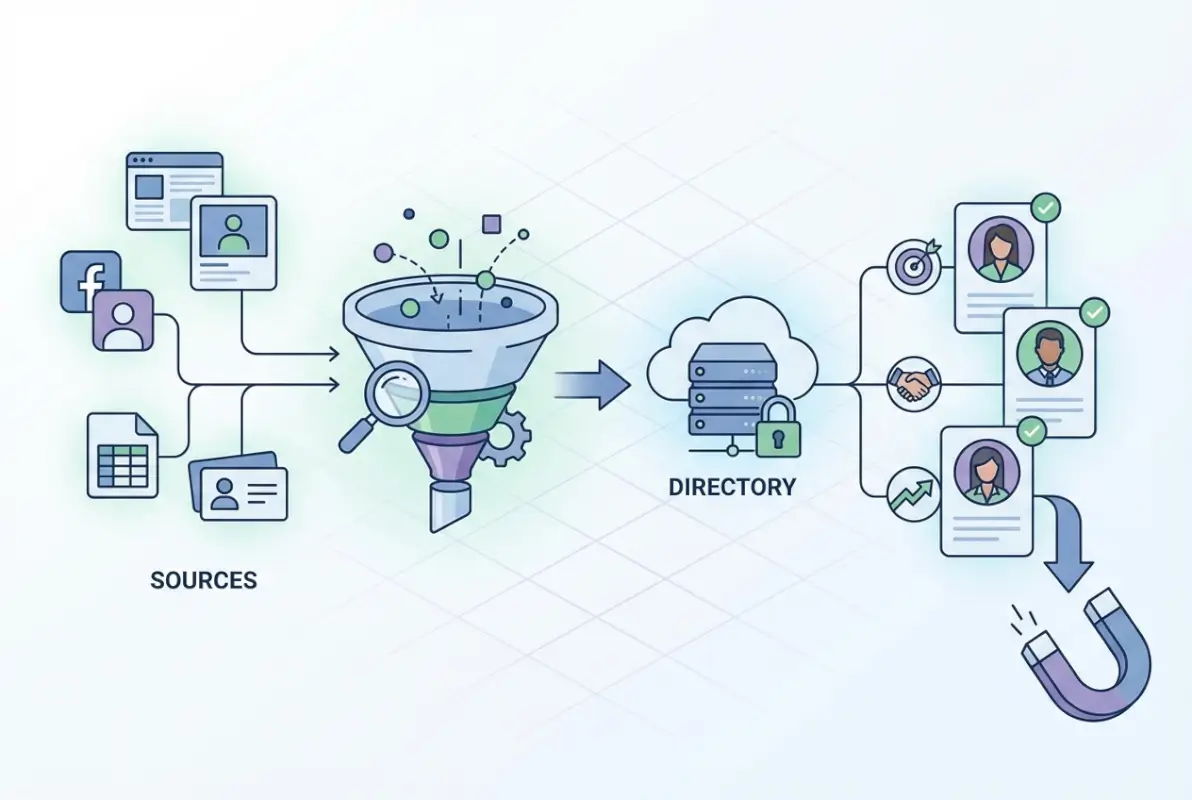
The shift happening right now is toward intent-driven, AI-enhanced directory usage. According to Forbes Agency Council insights on B2B lead generation, companies using intent data alongside directory information see 40-60% higher conversion rates than those relying on either source alone. The directories themselves are getting smarter, incorporating behavioral signals, technology stack data, and even funding announcements into their profiles.
What separates high-performing organizations from average ones isn’t just which directories they use. It’s their systematic approach to extraction, verification, enrichment, and activation. They treat directory data as raw material that requires processing, not finished goods ready for immediate use.
Understanding Directory Types: Choosing Your Arsenal
Not all business directories serve the same purpose, and the biggest mistake is treating them interchangeably. Your directory strategy should combine multiple sources, each chosen for specific strengths that align with your targeting needs.
Industry-specific directories provide depth over breadth. A healthcare directory might include physician specialties, insurance acceptance details, and certification statuses—data points a general directory wouldn’t capture. These specialized platforms excel when you’re targeting narrow verticals where industry-specific attributes determine qualification. The tradeoff is limited coverage outside their focus area.
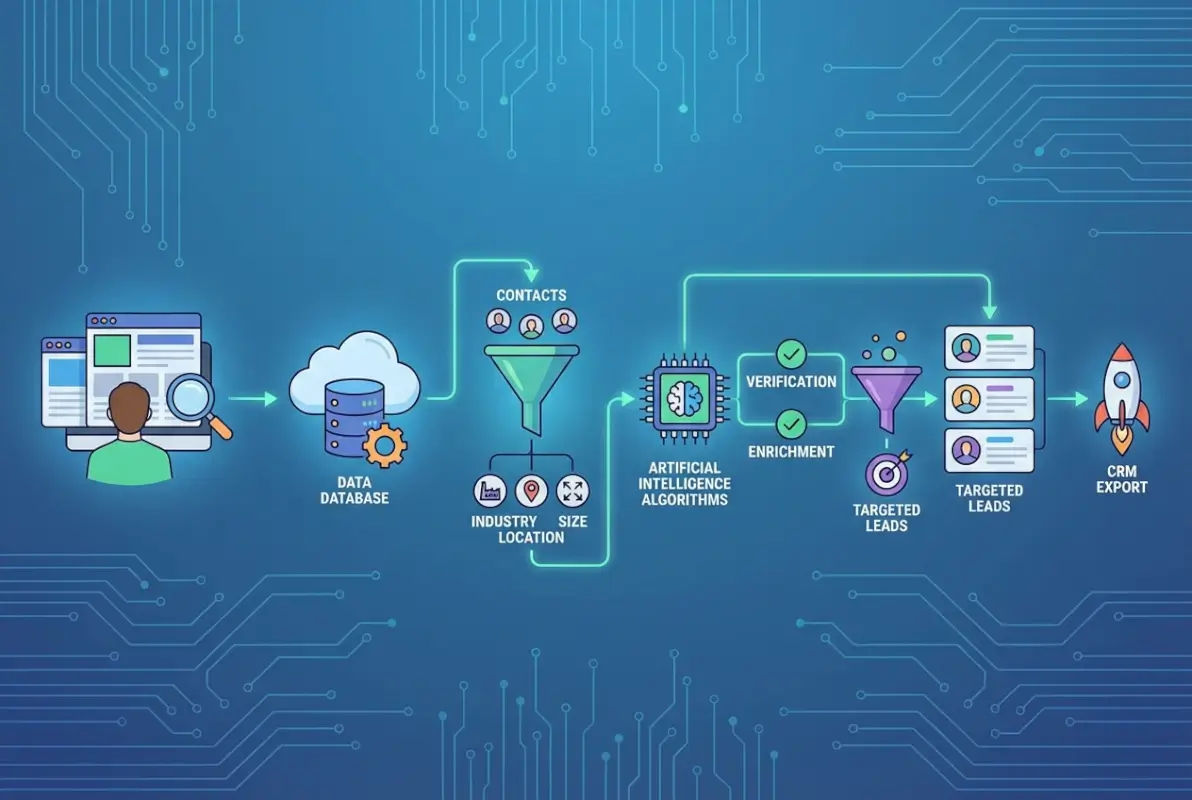
Geographic directories dominate local and regional targeting. They incorporate neighborhood-level insights, proximity data, and local market characteristics that matter for businesses with service radius limitations. If you’re selling to restaurants, retail locations, or regional service providers, these directories often outperform national databases because they prioritize local accuracy over broad coverage.
General business directories offer versatility through comprehensive coverage across industries and geographies. While they may lack the specialized data fields of niche directories, they compensate with advanced filtering capabilities and massive scale. These work best for organizations targeting multiple industries or those early in their market development who haven’t yet narrowed their ideal customer profile.
Attribute-based directories represent an emerging category—platforms focused on specific business characteristics rather than industry or location. These include directories of minority-owned businesses, sustainable companies, recent funding recipients, or organizations with particular certifications. They’re invaluable for campaigns targeting specific business attributes or for organizations with partnership requirements beyond standard firmographics.
| Directory Type | Best Use Case | Data Depth | Update Frequency |
|---|---|---|---|
| Industry-Specific | Vertical targeting | Very deep | Quarterly |
| Geographic | Local/regional focus | Moderate | Monthly |
| General Business | Broad prospecting | Moderate | Bi-monthly |
| Attribute-Based | Specific qualifications | Deep on attributes | Variable |
How to Evaluate Directory Quality Before Committing
Directory subscriptions range from free basic access to enterprise contracts costing thousands monthly. Making the wrong choice doesn’t just waste money—it can send your entire lead generation strategy in the wrong direction. Here’s how to evaluate options systematically.
Start with sample data verification. Request sample exports or free trials, then manually verify 20-30 records by cross-referencing with company websites, LinkedIn profiles, and direct phone calls. Calculate your error rate across several dimensions: outdated phone numbers, closed businesses, incorrect addresses, wrong contact names, and misclassified industries. Any error rate above 15% should raise red flags; above 25% means walk away.
Examine the data schema and field availability. Different directories offer vastly different data points. Some provide just name, address, and phone (NAP data), while others include revenue estimates, employee counts, technology stack, founding dates, and decision-maker contact information. List the ten data fields most critical for your qualification process, then score each directory on how many they provide and how filterable those fields are.
Investigate update mechanisms and verification processes. Ask specifically: How often are records updated? What sources feed the database? Do they employ human verification or rely solely on automated scraping? The best directories combine multiple data sources—public records, user submissions, web scraping, and partnership data—with both automated and human verification layers.
Building Your Ideal Customer Profile for Directory Targeting
Here’s where most organizations fail—they skip straight to searching directories without defining precisely who they’re looking for. Your ideal customer profile (ICP) is the filtering lens that transforms massive databases into manageable, high-quality prospect lists.
Start by analyzing your best existing customers. Pull data on your top 20% by revenue or lifetime value, then identify commonalities across firmographic attributes (industry, size, location), technographic signals (what technologies they use), and behavioral characteristics (how they buy, typical sales cycle length). This isn’t guesswork; it’s pattern recognition from your own success data.
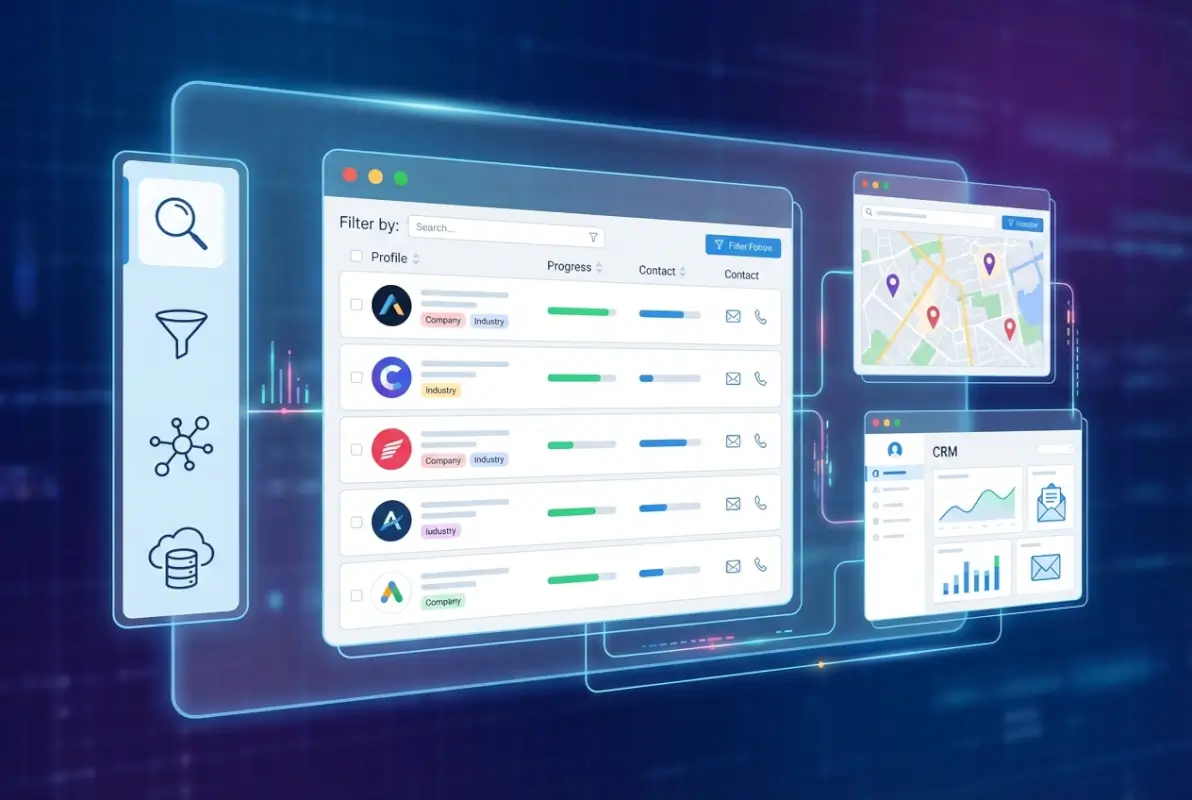
Document your ICP across multiple dimensions. For B2B targeting, this typically includes: industry (NAICS or SIC codes), company size (employee count ranges), revenue brackets, geographic territories, technology stack indicators, business age or maturity stage, and organizational structure signals. The more specific you get, the more efficiently you’ll use directory filters.
Create tiered profiles—not every prospect needs to be perfect. Define your “A-tier” criteria (must-have attributes), “B-tier” (strong fit but missing one or two ideal characteristics), and “C-tier” (worth exploring but lower priority). This segmentation allows you to prioritize outreach efforts and customize messaging based on fit quality.
I remember working with a SaaS company that initially defined their ICP as “technology companies with 50-500 employees.” When we analyzed their customer data, we discovered their best clients were actually professional services firms (consulting, legal, accounting) using specific project management tools. That refinement changed everything—their conversion rate jumped from 2.3% to 8.7% simply by targeting the right companies from directory searches.
The Smart Search Strategy: From Database to Deal Flow
Effective directory usage follows a systematic workflow, not random searches whenever you need leads. This process transforms raw directory access into predictable pipeline generation.
Phase 1: Strategic segmentation. Rather than downloading everything that matches your basic criteria, create distinct prospect segments with tailored approaches. For example, a marketing agency might segment by company growth stage (startups needing foundational marketing versus established companies seeking optimization), industry vertical (each requiring different messaging), or current marketing maturity (companies with no marketing team versus those with teams needing support).
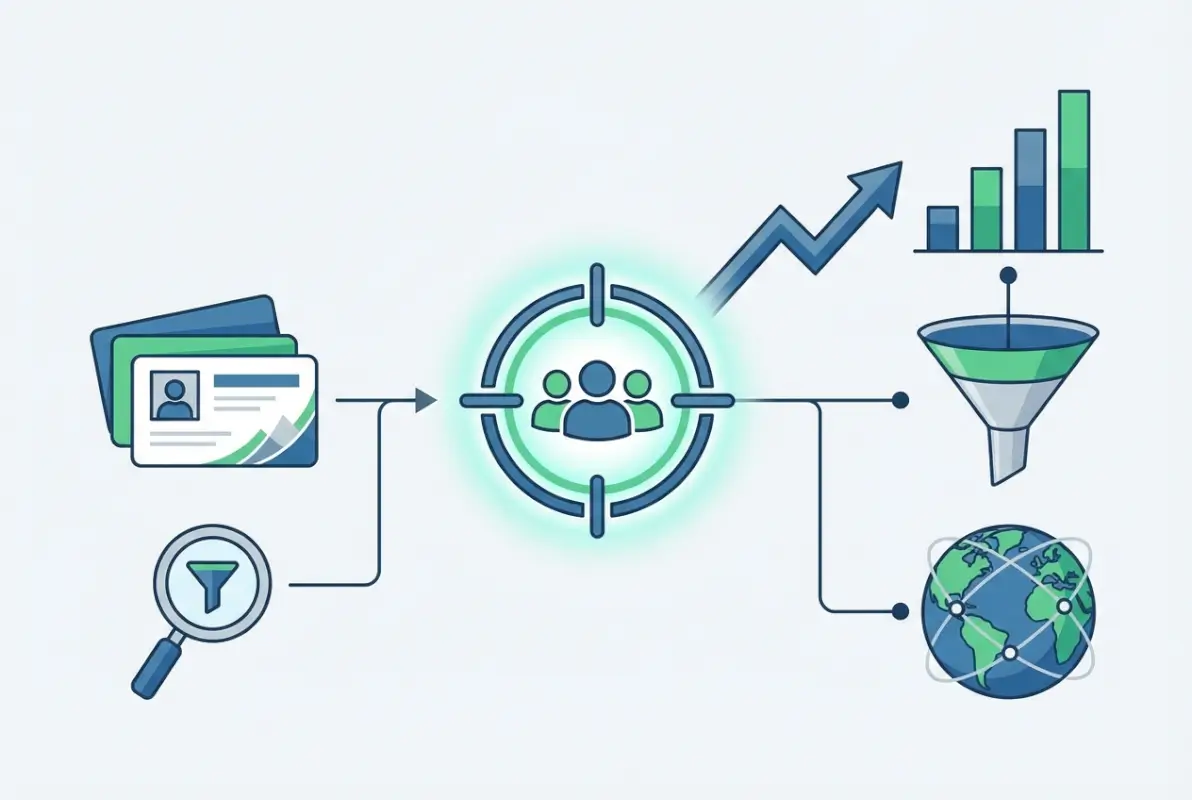
Phase 2: Filtered extraction. Use directory search filters to identify companies matching each segment’s criteria. Export smaller, focused lists rather than massive undifferentiated databases. Most successful users extract 50-200 records per segment rather than thousands of generic contacts. Quality concentration beats quantity dispersion.
Phase 3: Enrichment and verification. Directory data provides your foundation, not your complete intelligence picture. Before outreach, enrich records with additional research—visit company websites, review recent news or funding announcements, check social media presence, identify mutual connections. This step catches data errors and provides personalization fodder for outreach.
Phase 4: Prioritization and scoring. Not all qualified leads deserve equal attention. Develop a simple scoring model (even a basic 1-10 scale works) based on fit strength, deal size potential, buying signals, and accessibility. Focus your best resources on your highest-scoring prospects.
Phase 5: Multi-channel activation. Directory data typically provides multiple contact options—company phone, decision-maker direct lines, email addresses, physical locations. Use this for coordinated outreach across channels rather than single-touch attempts. A typical sequence might include: LinkedIn connection request, email introduction two days later, phone call after email is opened, direct mail piece for high-value prospects.
Integration with Your CRM: Making Data Actionable
Directory data sitting in spreadsheets is wasted potential. The value multiplies when it flows directly into your customer relationship management system, triggering automated workflows and enabling systematic follow-up.
Most quality directories offer direct CRM integrations with platforms like Salesforce, HubSpot, Zoho, and Pipedrive. These connections enable automated data synchronization, reducing manual entry errors and ensuring your sales team works with current information. If your directory doesn’t offer native integration, use CSV export combined with your CRM’s import functionality—just establish clear field mapping protocols first.
Design intake workflows that route directory-sourced leads appropriately. New prospects should enter defined nurture sequences based on their segment and score, not sit idle in your database. Assign ownership clearly (territory, industry focus, or round-robin), set follow-up tasks automatically, and establish escalation paths for high-value opportunities requiring senior attention.
Track source attribution meticulously. Tag every directory-sourced lead with its origin (which directory, which search, which campaign) so you can measure ROI by source. This attribution reveals which directories deliver the best returns and which search strategies produce the highest-quality leads.
Advanced Tactics: Getting More from Directory Data
Once you’ve mastered the basics, several advanced techniques can extract exponentially more value from your directory investments.
Competitive intelligence mining. Use directories to map your competitive landscape systematically. Identify companies selling similar solutions, analyze their customer targeting patterns by examining where they’re listed, and discover underserved niches where competitors aren’t focusing. This intelligence informs not just sales strategy but broader business positioning.

Market sizing and expansion planning. Before entering new territories or industries, use directories to quantify addressable markets. How many potential customers exist in that segment? What’s their geographic distribution? What’s the competitive density? These analyses prevent costly expansion mistakes and help prioritize growth opportunities.
Account-based marketing (ABM) research. For enterprise sales using account-based approaches, directories help you map organizational structures. Identify multiple stakeholders within target accounts, understand department sizes and locations, and discover recent changes (expansions, new locations, leadership transitions) that might create buying opportunities.
Partnership and channel development. Directories reveal potential partners, not just customers. Search for complementary businesses serving your target market, companies in adjacent industries, or organizations with distribution channels you could leverage. These partnership opportunities often deliver more value than individual customer relationships.
Cost Management and ROI Optimization
Directory subscriptions represent ongoing investments that should be managed as rigorously as advertising spend. Smart budgeting starts with understanding your economics.
Calculate your cost per qualified lead (CPQL) from each directory source. Total annual directory cost divided by qualified leads generated gives you a baseline metric. Compare this against other lead sources—paid advertising (where cost per lead averages around $70 across industries according to WordStream benchmarks), content marketing, events, and referrals. Directory-sourced leads should deliver superior economics because of their targeting precision.
Implement a tiered investment strategy. Start with limited commitments to test directory performance, then progressively increase spending on platforms delivering measurable results while discontinuing underperformers. Many directories offer flexible pricing—monthly subscriptions, credit-based systems, or pay-per-download options—that allow you to align costs with actual usage.
Monitor efficiency metrics beyond just cost. Track time savings compared to manual research, conversion rate differences between directory sources, and sales cycle length variations. A directory with a slightly higher per-lead cost that delivers twice the conversion rate and 30% faster sales cycles clearly provides superior value.
| Pricing Model | Best For | Typical Range | Watch Out For |
|---|---|---|---|
| Annual Subscription | High-volume users | $500-$5,000/year | Unused capacity waste |
| Pay-Per-Download | Occasional needs | $0.10-$2 per record | Costs escalate quickly |
| Credit Systems | Variable usage | $100-$1,000 packages | Credit expiration dates |
| Free Tiers | Testing or startups | $0 | Limited features/data |
Common Mistakes That Kill Directory ROI
Even experienced marketers make predictable errors when working with business directories. Avoiding these pitfalls can double or triple your results.
Mistake #1: Skipping the ICP definition. Downloading thousands of contacts because they’re available creates more problems than it solves. Without clear targeting criteria, you’ll waste hours sorting through irrelevant prospects and damage response rates with poorly matched outreach. Always define before you search.
Mistake #2: Trusting directory data blindly. Even premium directories have error rates of 10-15%. Assuming every phone number works and every contact is current leads to embarrassing calls to wrong numbers and emails to people who changed jobs months ago. Always implement verification steps for high-priority prospects.
Mistake #3: Single-source dependency. Relying exclusively on one directory creates blind spots and leaves you vulnerable if that source degrades. Cross-reference important prospects across multiple directories, using discrepancies as flags for additional verification.
Mistake #4: Set-it-and-forget-it data management. Extracting leads once and working that list for months guarantees declining results as data ages. Implement regular refresh cycles—quarterly for most businesses, monthly for fast-moving industries.
Mistake #5: Neglecting personalization. Just because you found someone’s contact information in a directory doesn’t mean they want generic outreach. Use directory data as your foundation, then add research-based personalization before reaching out. Reference specific company characteristics, recent news, or mutual connections.
Frequently Asked Questions
What is a business list directory and how does it help find leads?
A business list directory is a searchable database of companies organized by industry, location, size, and other attributes. It helps find leads by allowing you to filter millions of businesses down to precisely targeted prospects matching your ideal customer profile, providing contact information and business intelligence in one centralized platform.
How do I choose the right business directory for my needs?
Start by defining your ideal customer profile, then evaluate directories based on coverage of your target market, data accuracy (test with sample records), available filtering options, update frequency, and pricing structure. Most successful strategies combine a primary general directory with specialized directories for your specific industry or geographic focus.
What’s the difference between free and paid business directories?
Free directories typically offer basic contact information with limited search capabilities and less frequent updates, while paid directories provide comprehensive data fields, advanced filtering, bulk export options, CRM integrations, and more rigorous data verification processes. For serious lead generation, paid directories usually deliver far better ROI through higher data quality and time savings.
How often should I update my lead lists from business directories?
Most businesses should refresh directory data quarterly, as business information decays at roughly 30% annually. High-velocity sales environments or rapidly changing industries may need monthly updates, while longer sales cycles might justify semi-annual refreshes. Always verify critical contact information immediately before important outreach regardless of your general refresh schedule.
Can business directories help with local lead generation?
Absolutely. Geographic-focused directories are specifically designed for local targeting, providing neighborhood-level details, proximity information, and local market insights that general directories often lack. They’re particularly valuable for service businesses, retail, restaurants, and any organization with geographic service limitations. Combine with how to search businesses in fslocal directory tips for optimal local results.
How do I verify data accuracy in business directories?
Request sample data or trials and manually verify 20-30 records by cross-referencing company websites, LinkedIn profiles, and direct phone calls. Calculate error rates for phone numbers, addresses, contact names, and industry classifications. Anything above 15% error rate should raise concerns. Also implement email verification tools and phone validation before major outreach campaigns.
Should I use multiple business directories or just one?
Using multiple directories typically produces better results than relying on a single source. Different directories have varying strengths in coverage, data quality, and specialization. A multi-directory approach allows cross-verification of information, access to complementary data sets, and comprehensive market coverage. Start with one primary directory that best matches your needs, then add specialized sources to fill gaps.
What information should I look for in a business directory listing?
Essential fields include company name, address, phone, website, and industry classification. More valuable directories also provide decision-maker contact information, employee count, revenue estimates, founding date, technology stack details, and recent company news. Prioritize data fields that align with your specific qualification criteria and sales process requirements.
How do I integrate business directory data with my CRM?
Many modern directories offer direct integrations with platforms like Salesforce, HubSpot, and Zoho through APIs or native connectors. For directories without direct integration, export data in CSV format and use your CRM’s import function. Establish clear field mapping protocols, implement validation rules, and tag leads with source attribution to maintain data quality and track ROI by directory source.
What are realistic cost per lead benchmarks for directory-sourced leads?
Directory-sourced cost per qualified lead typically ranges from $5-$50 depending on industry, target specificity, and directory quality. This compares favorably to other channels—paid search averages around $70 per lead across industries. More important than absolute cost is tracking conversion rate and sales cycle length, as higher-quality directory leads often convert at 2-3x the rate of generic sources.
How can I use directories for competitive intelligence?
Search directories for companies offering similar products or services to map your competitive landscape. Analyze where competitors are listed, their described specializations, and geographic focus areas to identify underserved niches. Track new entrants, company growth patterns, and market concentration by region or industry to inform strategic decisions beyond just sales targeting.
What privacy and compliance issues should I consider with directory data?
Business directory data generally falls outside consumer privacy regulations like GDPR when used for B2B purposes, but verify that your directory provider sources data legally and maintains appropriate consent where required. Follow email marketing regulations (CAN-SPAM, CASL), respect opt-outs promptly, and avoid misrepresenting your relationship when contacting directory-sourced leads. Document your data sources and processing for compliance audits.
Turning Directory Data Into Predictable Revenue
Business directories aren’t magic lead-generation machines, but they’re extraordinarily powerful when you understand how to extract their full value. The difference between companies that succeed and those that waste directory investments comes down to systematic implementation—clear targeting criteria, rigorous verification processes, multi-channel activation, and continuous optimization.
Start small and focused rather than trying to implement everything at once. Define your ideal customer profile this week. Test two or three directories next week with sample data verification. Select your primary platform and establish CRM integration the following week. Then launch your first targeted campaign with 50-100 highly qualified prospects and measure everything.
The data you’re tracking should tell you exactly what’s working. Cost per qualified lead by source. Conversion rate by directory. Sales cycle length differences. Response rates by outreach channel. Let these metrics guide your refinement—double down on what works, adjust what underperforms, and eliminate what fails.
Remember that directories are strategic assets, not just tactical resources. The intelligence they provide should inform more than just your sales team’s daily calling list. Use directory insights to identify new market opportunities, refine your ideal customer definition, validate expansion plans, discover partnership possibilities, and understand competitive dynamics. When used this way, directory investments deliver returns far beyond their direct lead generation contribution.
- Document your ideal customer profile with at least 8 specific criteria
- Request trials from 3 different directories and verify 20 sample records from each
- Select your primary directory and set up CRM integration within one week
- Launch a test campaign with 50 highly qualified prospects and track metrics rigorously
- Review results after 30 days and refine your approach based on data
The companies winning with directory-driven lead generation aren’t necessarily using different tools than everyone else. They’re simply using those tools more strategically, more systematically, and with greater attention to data quality and continuous improvement. Start implementing these approaches today, and watch your lead generation transform from frustrating guesswork into predictable pipeline development.
Was this article helpful?