What Are Directory Listings? Complete SEO Guide for Local Rankings

Generating summary...
Directory listings are the digital equivalent of yellow pages—but with far more impact on your bottom line. When managed correctly, they become one of the most powerful (and underutilized) tools in your local SEO arsenal, directly influencing where you appear when customers search for businesses like yours.
Most business owners think of directory listings as simple name-and-address entries. That’s a costly mistake. Modern directory listings function as trust signals to search engines, conversion tools for potential customers, and competitive advantages in local search results. Google’s algorithm evaluates the consistency and quality of your citations across the web as a primary ranking factor—meaning your directory presence can make or break your local visibility.
I’ve spent years optimizing directory strategies for local businesses, and I’ve seen a consistent pattern: companies that treat directory listings as strategic assets rather than administrative tasks consistently outrank competitors with larger marketing budgets. The businesses dominating local search in 2026 aren’t necessarily spending more—they’re being smarter about where and how they appear online.
- Directory listings are online business profiles that display your NAP (Name, Address, Phone) data and serve as ranking signals for local search algorithms
- Google Business Profile is non-negotiable—it influences 46% of all Google searches and feeds directly into local pack rankings
- NAP consistency across directories improves rankings by up to 25%, while inconsistencies fragment your citation power
- Quality beats quantity—15-25 authoritative, relevant directories deliver better results than 100+ low-quality listings
- High-authority niche directories often convert 3-5x better than general directories due to targeted audience intent
- Directory optimization is ongoing—quarterly audits and prompt updates are essential for maintaining ranking benefits
The Current Landscape of Directory Listings for Local SEO
The directory ecosystem has evolved dramatically from its yellow pages origins. Today’s directory listings function as interconnected data points that search engines use to verify your business legitimacy, understand your service offerings, and determine your relevance for local search queries.
[KBIMAGE_1]According to Google Business Profile optimization guidelines, consistent business information across the web directly impacts local search rankings. When Google’s algorithm encounters your business name, address, and phone number repeated across authoritative directories, it gains confidence in your legitimacy. This citation network becomes a trust signal that influences both your local pack placement and organic rankings.
What Directory Listings Are Today
Modern directory listings are structured business profiles that contain your NAP data, business categories, operating hours, service descriptions, photos, reviews, and increasingly—interactive elements like booking systems and messaging. They exist on platforms ranging from Google Business Profile and Yelp to industry-specific directories like Healthgrades for medical practices or Avvo for legal services.
The core value proposition hasn’t changed: directories help customers discover businesses. What has changed is their role in search algorithms. Directory listings now function as:
- Citation sources that validate your business existence and location
- Category signals that tell search engines what services you offer
- Trust indicators through reviews and profile completeness
- Traffic drivers that generate direct clicks and phone calls
- Backlink sources that contribute to domain authority (even when nofollow)
The quality versus quantity debate has been settled definitively. Research from Moz’s local search ranking factors study shows that 15-25 high-authority, industry-relevant directory citations outperform 100+ low-quality listings. The algorithm prioritizes citation sources with strong domain authority and relevance to your industry or location.
Key Trends Shaping Directory Listings in 2026
Several significant shifts are reshaping how directory listings impact local SEO. Google Business Profile has become increasingly dominant, now influencing nearly half of all Google searches. The platform has evolved from a simple listing service into a comprehensive business management tool with posts, messaging, booking integrations, and product catalogs.
The move toward enriched profiles is accelerating. Directories now reward complete profiles with 100% filled fields, multiple high-quality photos, regular posts, and active review responses. According to BrightLocal’s consumer survey data, businesses with complete profiles receive 2.7x more views and 35% more clicks than incomplete profiles.
Industry-specific and niche directories are gaining importance relative to general directories. While platforms like Yelp remain valuable, specialized directories often deliver higher-quality leads because visitors have specific intent. A listing on Houzz generates fewer total clicks for a contractor than Yelp, but those clicks convert at 3-5x higher rates because visitors are actively seeking home improvement services.
How to Build a High-Impact Directory Listings Portfolio
Building an effective directory presence requires strategic planning rather than scattered submissions. The goal is creating a citation network that reinforces your legitimacy across platforms search engines trust while targeting directories your customers actually use.

Core Prerequisites: NAP Consistency and Category Optimization
NAP consistency is the foundation of effective directory listings. Your business name, address, and phone number must be identical across every platform—down to punctuation, abbreviations, and formatting. Inconsistencies confuse search engines and dilute your citation power by up to 40%, as algorithms may not recognize variations as the same entity.
Create a master NAP document that specifies exact formatting:
- Business name: Exactly as registered, including LLC/Inc if part of legal name
- Address: Street (not St.), Suite vs. Ste., floor designations
- Phone number: Format consistently (123-456-7890 or (123) 456-7890)
- Website URL: With or without www, http vs https
Category optimization matters more than most businesses realize. Directory platforms use categories as primary signals for matching your business to search queries. Select the most specific, accurate category as your primary (e.g., “Family Law Attorney” rather than just “Attorney”), then add relevant secondary categories that capture your full service range.
One client, a bakery, was categorized simply as “Restaurant” on multiple directories. After recategorizing to “Bakery” as primary with “Wedding Cake Shop” and “Custom Cake Designer” as secondary categories, they saw a 43% increase in relevant search appearances within 60 days. The specificity helped algorithms match them to high-intent searches.
Prioritized Directory Targets and GBP Integration
Start with Google Business Profile—it’s mandatory, not optional. GBP feeds directly into Google’s local pack (the map results appearing at the top of local searches) and knowledge panels. Claim, verify, and complete your GBP profile to 100% before moving to other directories.
Your tier-one directory targets after GBP should include:
- Major general directories: Yelp, Facebook Business, Bing Places, Apple Maps
- Data aggregators: Acxiom, Factual, Infogroup (these feed smaller directories)
- Review platforms: Trustpilot, BBB (Better Business Bureau)
Tier-two targets are industry-specific directories relevant to your business type. For restaurants: OpenTable, TripAdvisor, Zomato. For healthcare: Healthgrades, Zocdoc, Vitals. For home services: Houzz, Angi, HomeAdvisor. For legal: Avvo, FindLaw, Lawyers.com.
Tier-three includes local directories like chamber of commerce listings, city-specific business directories, neighborhood association websites, and community resource pages. These typically have lower traffic but higher local relevance, which matters for businesses serving specific geographic areas.
If you’re considering building your own directory platform, TurnKey Directories offers a WordPress plugin solution that handles advanced filtering, monetization, and SEO optimization out of the box—making it easier to create professional directory sites without custom development.
| Directory Tier | Examples | Priority | SEO Impact |
|---|---|---|---|
| Tier 1: Essential | Google Business Profile, Yelp, Facebook | Immediate | Very High |
| Tier 2: Industry-Specific | Healthgrades, Houzz, Avvo | High | High |
| Tier 3: Local/Community | Chamber of Commerce, City Directories | Medium | Medium |
Optimization Playbook: From Data Quality to Local Visibility
Creating directory listings is step one. Optimization is where most businesses leave significant value on the table. Complete, engaging profiles receive substantially more visibility and clicks than bare-minimum listings.
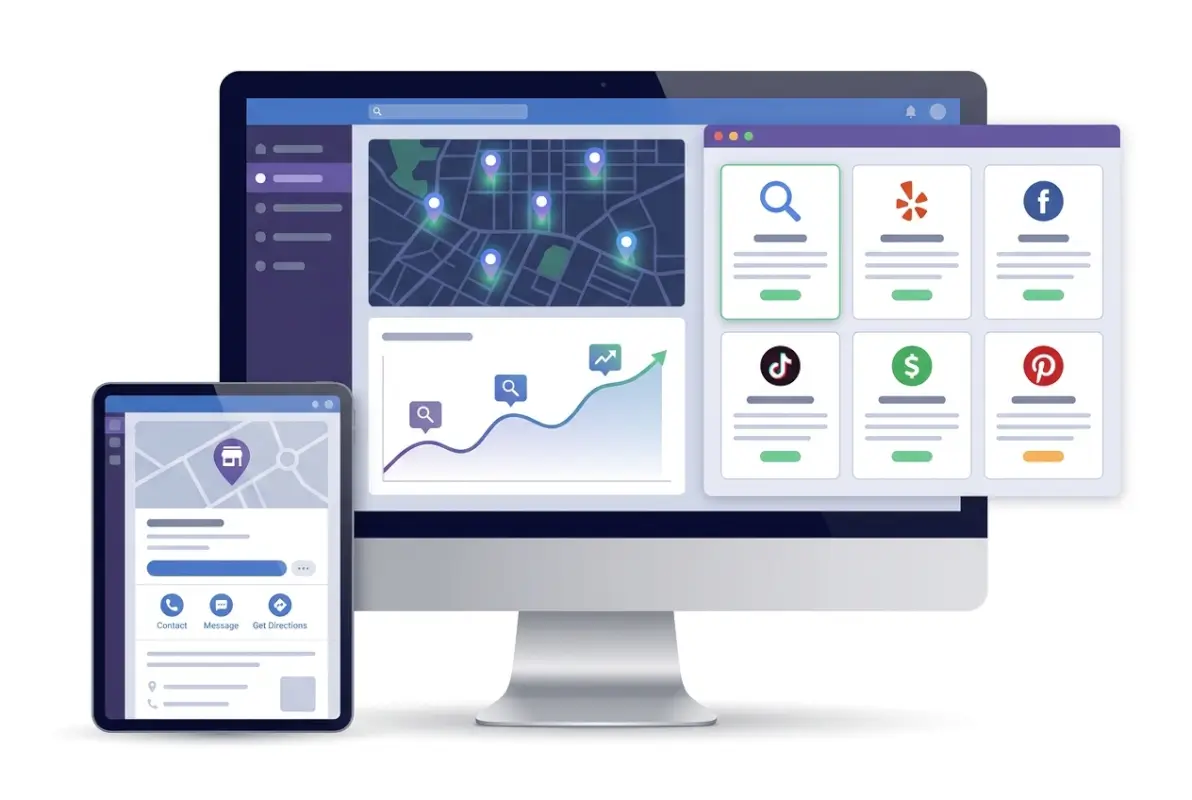
On-Directory Optimization Techniques
Profile completion matters more than most realize. According to industry research, profiles with 100% field completion receive 2.7x more profile views than incomplete listings. Fill every available field, even optional ones like payment methods accepted, parking information, and accessibility features.
Your business description is prime real estate for keyword integration. Write 150-300 words that naturally incorporate your primary services, location, and differentiators. Avoid keyword stuffing—write for humans first, search engines second. Include specific neighborhoods you serve, specialties within your industry, and unique selling points.
Photos dramatically impact performance. Businesses with 10+ photos receive 35% more clicks according to Statista’s digital marketing research. Upload high-quality images including:
- Storefront or office exterior
- Interior workspace or showroom
- Products or completed projects
- Team members at work
- Behind-the-scenes process shots
Service areas and hours require meticulous accuracy. Wrong hours frustrate potential customers who show up to find you closed—this generates negative reviews and wastes advertising spend. Update holiday hours proactively, and specify service areas precisely (by zip code or radius) to avoid appearing in irrelevant searches.
Many directories now support structured data markup. If the platform allows schema implementation, use LocalBusiness schema to provide search engines with explicit information about your business type, services, and attributes.
Monitoring, Auditing, and Risk Management
Directory listings decay over time through user-suggested edits, platform changes, and data aggregator updates. Quarterly audits are essential for maintaining citation quality and catching issues before they impact rankings.
Your audit checklist should verify:
- NAP consistency across all platforms
- Category accuracy and optimization
- Profile completeness (all fields filled)
- Photo quality and quantity
- Hours accuracy (especially after holidays)
- Review response rate and recency
- Duplicate listings existence
Automated monitoring tools like Yext, BrightLocal, or Moz Local can save 10+ hours monthly by alerting you to inconsistencies, duplicate listings, and unauthorized changes. These platforms typically scan 50+ directories simultaneously and flag discrepancies that require correction.
For businesses managing their own directory platforms, understanding how to organize active directory for business environment structures can help maintain data integrity as your listing database grows.
The biggest risks to monitor are duplicate listings (which fragment your citation power), incorrect NAP data (which confuses search algorithms), outdated information (which frustrates customers), and unclaimed listings (which leave you vulnerable to competitor sabotage or malicious edits).
Measuring Impact: What Really Moves Local SEO from Directory Listings
Directory listings generate measurable impact across multiple metrics, but many businesses track the wrong KPIs or fail to connect directory performance to actual business outcomes. Effective measurement requires understanding both leading indicators (citation quantity and quality) and lagging indicators (rankings, traffic, conversions).

Metrics to Track
Start with citation metrics as your foundation. Track the number of directories where you maintain active, verified listings, NAP consistency percentage across platforms, and profile completion rates. These leading indicators predict future ranking improvements.
Local search rankings require position tracking for your target keywords in your service area. Monitor both local pack rankings (the map results) and organic rankings separately, as directory listings impact both differently. Local pack placement depends heavily on GBP optimization and citation quality, while organic rankings factor in broader SEO elements.
Directory-driven traffic and engagement metrics tell you which platforms deliver actual value. Track directory listing impressions, clicks to website, clicks to call, clicks for directions, and form submissions or bookings initiated from directory profiles. Most major directories provide analytics dashboards with this data.
CTR (click-through rate) from directory profiles to your website reveals listing effectiveness. Low CTR despite high impressions suggests your profile needs optimization—better photos, more compelling descriptions, or stronger calls-to-action. Industry benchmarks suggest CTRs between 2-5% are typical for optimized directory listings.
Review metrics directly impact both rankings and conversions. Track total review count, average rating, review velocity (reviews per month), and review response rate. Businesses with 50+ reviews typically rank higher than those with fewer reviews, all other factors being equal, and 88% of consumers trust businesses with verified directory listings according to consumer research.
Interpreting Data in the Context of GBP and Local Packs
Google Business Profile performance provides the clearest signal of directory listing impact. GBP Insights shows direct searches (branded searches), discovery searches (how people found you), total impressions, and actions taken (calls, website visits, direction requests).
Local pack placement is the ultimate goal for most local businesses—these three map listings appearing at the top of local searches capture the majority of clicks. Achieving local pack placement requires strong GBP optimization, consistent citations across directories, positive review velocity, and relevance to the search query.
The relationship between directory citations and rankings isn’t immediate or linear. Expect a 60-90 day lag between citation building and noticeable ranking improvements as search engines crawl, index, and process new citations. According to Federal Trade Commission guidance on business listings, maintaining accurate business information is both an SEO best practice and a consumer protection requirement.
When analyzing directory impact, segment performance by directory type. General directories like Yelp typically drive higher traffic volume but lower conversion rates, while niche directories generate fewer clicks but higher-quality leads with 3-5x better conversion rates due to specific user intent.
Common Pitfalls to Avoid and Best Practices for 2026
Even experienced marketers make preventable mistakes with directory listings. Understanding common pitfalls and implementing proven best practices separates businesses that extract maximum value from their directory presence from those who waste time on low-impact activities.

Mistakes That Erode Trust
NAP inconsistencies remain the most damaging directory mistake. Even minor variations—”Street” versus “St.” or including/excluding suite numbers—confuse search engines and dilute citation power. I’ve seen businesses lose thousands in revenue because their phone number varied between Google and Yelp, causing customers to assume they’d gone out of business.
Keyword stuffing in business names is tempting but counterproductive. Adding keywords to your business name (“Joe’s Pizza – Best New York Style Pizza in Boston”) violates most directory guidelines and can result in listing suspension. Google actively penalizes this practice, and the short-term ranking boost isn’t worth the long-term risk.
Ignoring or delaying information updates creates a cascade of problems. When you change phone numbers, relocate, or modify hours, every outdated directory listing sends frustrated customers to the wrong place or creates failed contact attempts. Update all directories within 48 hours of any business information change.
Neglecting review responses sends negative signals to both algorithms and potential customers. Businesses responding to 75%+ of reviews rank higher in local search. Keep responses under 200 words, thank reviewers by name, address specific points mentioned, and include a call-to-action for future engagement.
Creating profiles on low-quality or spammy directories can actually harm your SEO. Not all citations are equal—links from low-authority directories may be discounted or, in extreme cases, penalize your site. Focus on established, reputable platforms rather than chasing quantity.
Best Practices That Sustain Long-Term Benefit
Prioritize quality over quantity consistently. Fifteen well-maintained listings on authoritative, relevant directories outperform 100+ listings on questionable platforms. Invest time in completing profiles thoroughly on platforms that matter rather than spreading effort thin across every directory you encounter.
Maintain ongoing profile engagement beyond initial setup. Regular updates signal to algorithms that your business is active. Post updates on GBP monthly, refresh photos quarterly, and encourage satisfied customers to leave reviews continuously rather than in occasional bursts.
Leverage directory-specific features that differentiate your profile. Google Business Profile offers posts, products, services, and Q&A. Yelp provides portfolio galleries and special offers. Using these features increases visibility and engagement significantly compared to basic profiles.
For businesses exploring directory monetization or building their own directory platforms, learning key steps run successful directory website business strategies helps create value for both businesses and consumers.
Create a systematic update schedule rather than reactive maintenance. Calendar quarterly directory audits, monthly GBP posts, and immediate-response protocols for business changes. Systematic approaches prevent citation decay that compounds over time.
Document everything in a centralized system. Maintain a spreadsheet or use a password manager to track login credentials, submission dates, NAP formatting used, and verification methods for every directory. This prevents future inconsistencies when team members change or memories fade.
Frequently Asked Questions
What are directory listings and why do they matter for local SEO?
Directory listings are online business profiles displaying your name, address, phone number, and other details on platforms like Google Business Profile, Yelp, and industry-specific directories. They matter because search engines use consistent citations across directories as trust signals, directly impacting your local search rankings and visibility in local pack results.
How many directory listings should a typical local business maintain?
Most local businesses benefit from 15-25 high-quality directory listings including Google Business Profile, major general directories like Yelp and Facebook, 3-5 industry-specific platforms relevant to your business type, and 3-5 local community directories. Quality and relevance matter far more than total quantity when building citation networks.
Which directories are most valuable for local rankings in 2026?
Google Business Profile is mandatory—it influences 46% of all Google searches. After GBP, prioritize major platforms like Yelp, Facebook Business, Bing Places, and Apple Maps, then add industry-specific directories where your customers actively search. For directory software solutions, TurnKey Directories offers WordPress plugins for building professional directory sites with advanced SEO features.
How do I fix inconsistent business information across directories?
Create a master NAP document specifying exact formatting for your business name, address, phone, and URL. Systematically update each directory to match this standard, starting with Google Business Profile and major platforms. Use listing management tools like BrightLocal or Moz Local to identify inconsistencies and track corrections across multiple directories simultaneously.
Do directory listings still impact Google Maps and organic search performance?
Yes, directory listings remain critical ranking factors. Consistent citations across authoritative directories improve local pack placement by up to 25% and contribute to organic rankings through backlinks and trust signals. Google Maps rankings depend heavily on Google Business Profile optimization combined with citation consistency across the broader directory ecosystem.
What’s the difference between general directories vs. niche directories?
General directories like Yelp and Facebook list businesses across all industries and typically drive higher traffic volume. Niche directories focus on specific industries—like Healthgrades for healthcare or Houzz for home services—and generate fewer total clicks but convert 3-5x better because visitors have specific purchase intent matching your offerings.
How often should I audit and update my directory listings?
Conduct comprehensive directory audits quarterly to verify NAP consistency, profile completeness, and category accuracy. Update all directories immediately—within 48 hours—when business information changes. Monthly maintenance should include reviewing new reviews, refreshing photos, and posting updates to active profiles like Google Business Profile to signal ongoing business activity.
Can directory listings compete with or replace Google Business Profile optimization?
No, directory listings complement rather than replace Google Business Profile optimization. GBP is your foundation—it directly feeds local pack results and influences 46% of Google searches. Other directory listings reinforce GBP by providing consistent citation signals and backlinks that improve your overall local search authority and rankings.
Take Control of Your Directory Presence This Quarter
Directory listings represent one of the highest-ROI activities in local SEO, yet they remain underutilized by most businesses. The companies dominating local search aren’t necessarily those with the biggest budgets—they’re the ones who understand that systematic directory management compounds into significant competitive advantages over time.
The five-section framework outlined here provides a roadmap: understand the current landscape and prioritize quality over quantity, build your citation network strategically starting with GBP, optimize profiles for maximum visibility and engagement, measure what actually drives business results, and avoid common pitfalls through consistent maintenance.
Start with a 90-day directory sprint. Week one: claim and optimize Google Business Profile plus Yelp, Facebook, and Bing Places. Week two: add 3-5 industry-specific directories where your customers actively search. Week three: complete all profiles to 100% with photos, descriptions, and service details. Week four: implement quarterly audit schedules and review response systems.
The businesses that treat directory listings as strategic assets rather than administrative tasks consistently outperform competitors with larger marketing budgets. Your directory presence either reinforces your legitimacy across the web or fragments your authority through inconsistency—there’s no neutral position.
Your 90-Day Directory Action Plan
Days 1-7: Claim GBP, Yelp, Facebook, Bing Places
Days 8-14: Add industry-specific and local directories
Days 15-21: Complete all profiles to 100% with photos
Days 22-30: Set up monitoring and response systems
Expected Result: 25% improvement in local search visibility within 90 days
Don’t let competitors capture customers who should be finding you. Every day your directory presence remains incomplete or inconsistent, you’re leaving visibility and revenue on the table. The framework is straightforward, the tools are available, and the competitive advantage is significant—what’s missing is execution.
Was this article helpful?