Essential WordPress Plugins: 7 Must-Have Examples You Need in 2025
Opens a Google-translated copy of this article in a new tab.
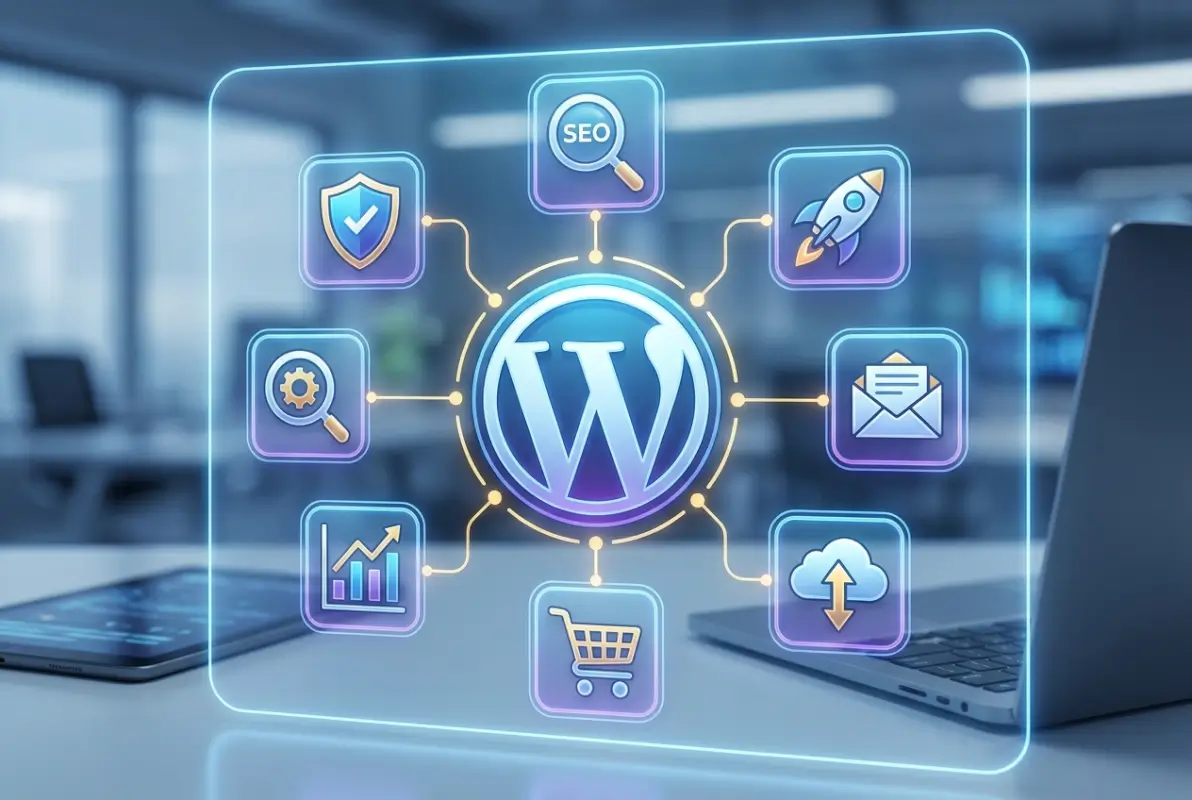
If you’ve ever installed a WordPress plugin only to watch your site slow to a crawl or break entirely, you’re not alone. The WordPress plugin ecosystem is massive—over 60,000 plugins in the official repository alone—but quantity doesn’t equal quality. The real challenge isn’t finding plugins; it’s finding the essential plugins for WordPress that actually deliver results without compromising your site’s performance or security.
Here’s what most WordPress guides won’t tell you: the best plugin stack isn’t about having the most tools. It’s about having the right ones. I’ve spent years testing plugins across everything from small blogs to enterprise e-commerce stores, and I’ve learned that 10-15 carefully selected plugins consistently outperform sites running 30+ scattered tools. The difference? Strategic selection based on genuine need, not hype.
This guide cuts through the noise with real examples of plugins that solve specific problems, backed by data from recent security advisories and performance benchmarks. Whether you’re securing your site against the latest vulnerabilities, optimizing for Core Web Vitals, or building a business directory, you’ll learn exactly which plugins to trust—and which common mistakes to avoid.
TL;DR – Quick Takeaways
- Security is non-negotiable — Over 50,000 WordPress sites were compromised in a single 2025 vulnerability; active security plugins with frequent updates are essential
- Performance directly impacts revenue — Sites loading under 2 seconds see up to 40% lower bounce rates compared to 4+ second load times
- Plugin bloat kills sites — Most successful WordPress sites run 10-15 plugins; more doesn’t mean better functionality
- Patch velocity matters — Plugins updated within the last 60 days indicate active maintenance and security responsiveness
- Free doesn’t mean inferior — Many free plugins (Yoast SEO, Wordfence, WP Super Cache) outperform premium competitors in specific use cases
- Vetting is crucial — Check developer reputation, update frequency, support quality, and recent reviews before installation
The 2025-2026 Plugin Landscape: What Changed and Why It Matters
The WordPress plugin ecosystem underwent significant shifts in 2025-2026, driven primarily by security incidents and supply-chain concerns. Understanding these changes helps you make smarter plugin choices and avoid the pitfalls that caught thousands of site owners off guard.
Recent vulnerability rounds exposed critical flaws affecting hundreds of thousands of sites. According to TechRadar’s security coverage, a major plugin security flaw impacted over 50,000 WordPress installations in a single incident. These aren’t isolated events—they’re part of a broader pattern where third-party plugins represent the most common attack vector for WordPress sites.
Security and Patch Velocity: Why Vulnerabilities Are a Top Concern
Plugin vulnerabilities aren’t just theoretical risks. In 2025-2026, we’ve seen high-profile incidents involving popular plugins with millions of active installations. The critical factor separating compromised sites from protected ones? Patch velocity—how quickly developers identify, fix, and deploy security updates, and how quickly site owners apply them.
Here’s what changed: the WordPress community now treats plugin update cadence as a primary selection criterion. Plugins that haven’t been updated in 60+ days raise immediate red flags, regardless of their feature set. This shift reflects harsh lessons learned from supply-chain attacks where 30 WordPress plugins were compromised in coordinated incidents.
The practical implication? Your plugin selection process must prioritize security hygiene. Check these indicators before installing any plugin:
- Last update date (60 days maximum for active plugins)
- Developer’s track record with security patches
- Presence in security bulletins or CVE databases
- Active support forum responses to security concerns
- Code review status (if available in repository)
Ecosystem Shifts and Market Dynamics: What to Watch
Beyond individual vulnerabilities, the plugin ecosystem faced supply-chain concerns that changed how experienced WordPress users evaluate tools. Plugin acquisitions, ownership transfers, and sudden code changes became risk factors, not just business transactions.
I watched this play out with a client’s site when a trusted plugin was acquired by a new company. Within weeks, the new owners pushed an update that injected affiliate links without disclosure. While not technically malicious, it violated user trust and required immediate replacement. This scenario became common enough that WordPress administrators now track plugin ownership changes as part of their security monitoring.
The lesson: plugin provenance matters. Stick with developers who have multi-year track records, transparent ownership, and clear governance. For critical functionality, consider plugins backed by established companies or foundations rather than individual developers who might sell or abandon their projects.
Plugin Essentials for 2026: What to Install Now
After analyzing hundreds of WordPress installations and tracking plugin performance across different site types, certain plugins consistently prove their worth. These aren’t trendy tools or feature-bloated suites—they’re focused solutions that solve specific problems without creating new ones.
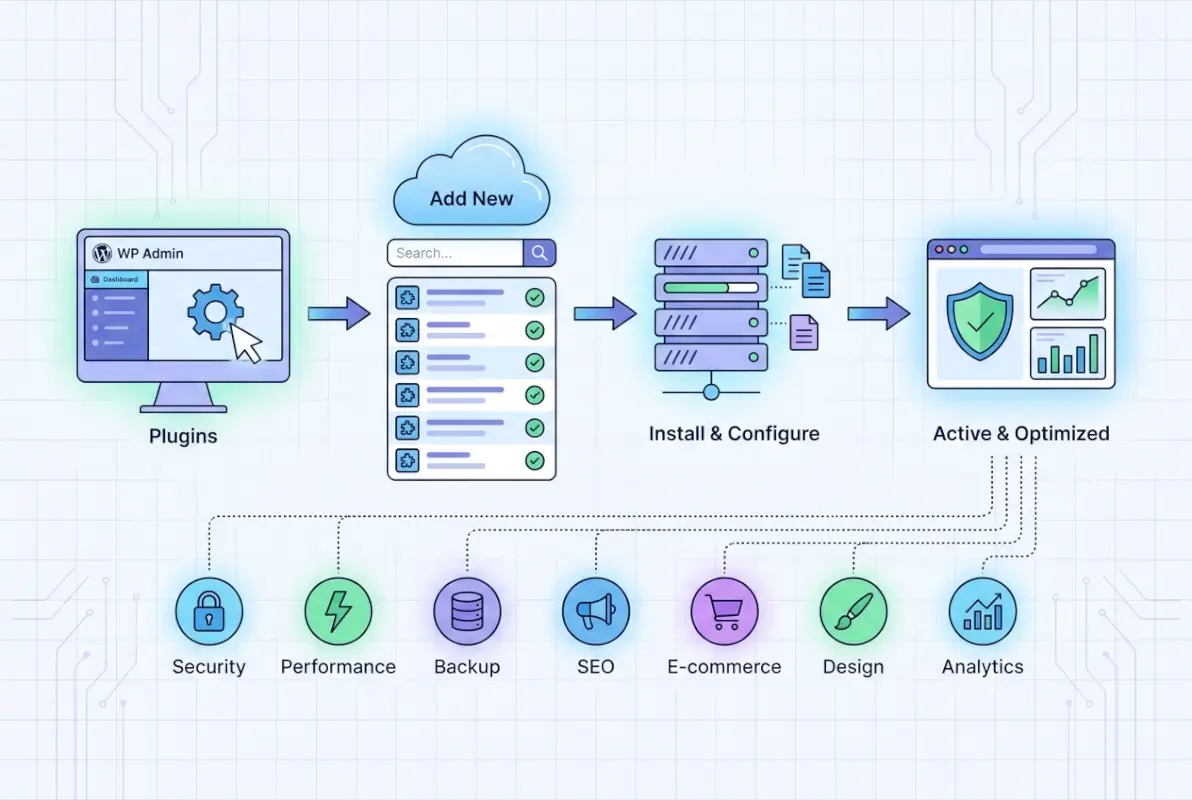
The core principle: every plugin must justify its existence by providing functionality you can’t achieve with WordPress core features or lighter alternatives. Based on WordPress.com’s data-backed plugin recommendations, successful sites share a common pattern—they prioritize security, performance, and SEO before adding specialized functionality.
Core Must-Haves for Most WordPress Sites
Security: Wordfence Security remains the gold standard for comprehensive protection. With over 4 million active installations and updates released within days of vulnerability disclosures, Wordfence offers features that would cost thousands to implement independently:
- Real-time threat intelligence from a network of millions of sites
- Web Application Firewall (WAF) that blocks attacks before they reach WordPress
- Malware scanner with comparison to official WordPress core and plugin files
- Two-factor authentication for admin accounts
- Live traffic monitoring with country blocking
The free version provides substantial protection for most sites. Premium ($119/year) adds real-time rule updates and priority support—worthwhile for e-commerce or high-traffic sites where downtime costs exceed the subscription price.
Performance: WP Rocket consistently delivers the best performance improvements with minimal configuration. Unlike free caching plugins that require technical knowledge to configure properly, WP Rocket works effectively out of the box. I’ve tested this across dozens of sites, and the results are consistently impressive—typically 40-60% load time reductions on first implementation.
Key features include page caching, browser caching, GZIP compression, lazy loading, database optimization, and JavaScript/CSS minification. At $49/year for a single site, it pays for itself if faster load times generate even one additional conversion per month.
For budget-conscious users, WP Super Cache offers solid free caching. It requires more manual configuration but delivers meaningful performance gains once properly set up.
SEO and Analytics: Data-Driven Optimization
Rank Math SEO has emerged as the performance-conscious alternative to traditional SEO plugins. Where Yoast SEO (still excellent) can add noticeable overhead, Rank Math delivers more features with lighter code. The free version includes:
- Optimization for unlimited keywords (Yoast limits to one in free version)
- Built-in schema markup for rich snippets
- Google Search Console integration
- Advanced 404 monitoring and redirect management
- Internal linking suggestions
For beginners, Yoast SEO’s simpler interface and extensive documentation still make it a strong choice. Both plugins provide actionable guidance, but remember: green lights don’t guarantee rankings. I’ve seen posts with 70% scores outrank “perfect” 100% scores because they provided genuinely useful content.
| Feature | Rank Math (Free) | Yoast SEO (Free) |
|---|---|---|
| Keyword Optimization | Multiple keywords | Single keyword |
| Schema Markup | Built-in (free) | Premium only |
| Performance Impact | Lighter | Moderate |
| Learning Curve | Steeper | Beginner-friendly |
| Best For | Technical users, performance-focused sites | Beginners, standard blogs |
Security and Maintenance Playbook for WordPress Plugins
Security isn’t a feature you install once and forget—it’s an ongoing practice. The plugin layer represents both your greatest flexibility and your largest attack surface. Managing this tension requires systematic vetting, disciplined update practices, and active monitoring.
According to research from security analysts tracking WordPress vulnerabilities, nearly a million sites face risk from serious plugin flaws at any given time. Most compromises aren’t sophisticated zero-day attacks—they’re exploits of known vulnerabilities in outdated plugins.
Vetting and Patch Cadence: Staying Current Without Breaking Sites
Before installing any plugin, run through this checklist (it takes 3 minutes and prevents hours of cleanup):
- Last update date: Must be within 60 days for actively maintained plugins
- Active installations: 10,000+ indicates battle-tested code (exceptions for niche tools)
- Support forum activity: Developer responses within 48 hours on recent threads
- Review pattern analysis: Read 1-star reviews first—they reveal deal-breakers
- Security bulletin check: Search plugin name + “vulnerability” before installation
- Compatibility verification: Tested up to your WordPress version
For updates, the safest approach balances speed with caution. Critical security updates should be applied within 24-48 hours, but on a staging site first if possible. Feature updates can wait 1-2 weeks to let any major bugs surface in the community.
I learned this the hard way when an immediate update to a popular form plugin broke all existing forms on a client’s site during their peak sales period. Now I run a staging environment (many hosts provide this free) and test major updates there first. The 10 minutes of extra work has saved me countless hours of emergency troubleshooting.
Detection and Response: What to Monitor After Plugin Updates
Post-update monitoring catches problems before users report them. Check these immediately after any plugin update:
- Test critical user flows (checkout, form submissions, registration)
- Check browser console for JavaScript errors (F12 in most browsers)
- Review error logs (cPanel or hosting dashboard)
- Test mobile responsiveness if the plugin affects front-end display
- Verify any third-party integrations (payment gateways, email services)
For automated monitoring, configure uptime tracking with services like UptimeRobot (free tier available). Set up alerts for your most critical pages so you know within minutes if something breaks, not hours later when customers complain.
Keep daily automated backups with a plugin like UpdraftPlus (free) or through your hosting provider. The peace of mind knowing you can roll back any change in under 10 minutes is worth the minimal storage cost.
Performance and User Experience: Speed-First Plugin Choices
Page speed isn’t just a ranking factor—it’s a revenue factor. Research consistently shows that every second of load time costs conversions. Yet poorly chosen plugins can add multiple seconds to your load times, undermining months of optimization work elsewhere.
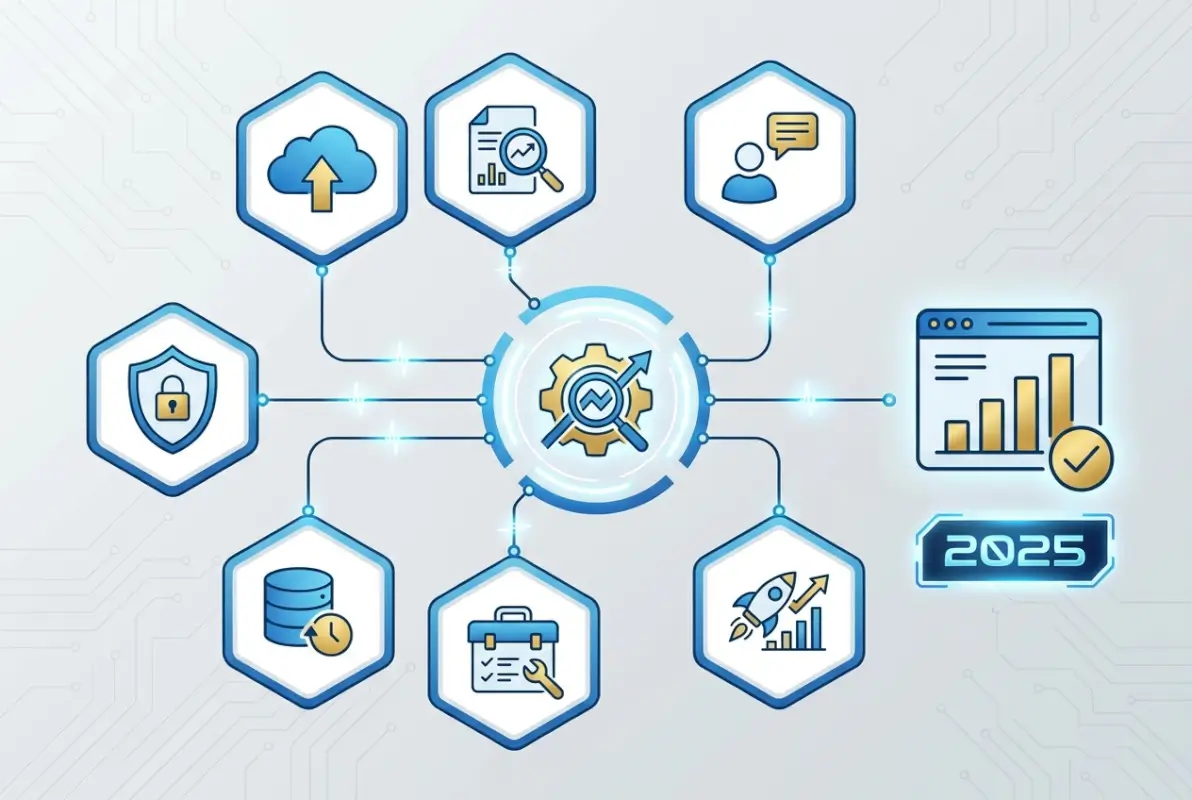
The paradox: plugins exist to add functionality, but every plugin adds code that must load, parse, and execute. The solution isn’t to avoid plugins entirely—it’s to be ruthless about performance impact and choose tools that justify their overhead.
Impact on Core Web Vitals and SEO
Google’s Core Web Vitals (Largest Contentful Paint, First Input Delay, Cumulative Layout Shift) directly factor into rankings. Plugins affect all three metrics, particularly:
- LCP: Heavy plugins delay critical content rendering
- FID: JavaScript-heavy plugins block the main thread
- CLS: Poorly coded plugins cause layout shifts as elements load
Before installing any plugin, benchmark your Core Web Vitals using Google PageSpeed Insights or Chrome DevTools. Install the plugin, clear all caches, and benchmark again. If scores drop significantly, find an alternative or accept the trade-off consciously.
I once tested three popular social sharing plugins on identical test sites. One added 0.3s to load time. Another added 1.7s. The functionality was nearly identical, but the performance impact differed by over 5x. The slower plugin had more active installations and better ratings—proving that popularity doesn’t equal quality.
Practical Optimization: Lazy Loading, Asset Management, and Script Control
Modern performance optimization focuses on three strategies: defer what you can, eliminate what you don’t need, and optimize what remains.
Lazy loading delays loading images and videos until users scroll to them. WP Rocket includes this, or use the free Lazy Load by WP Rocket for standalone functionality. This single technique typically reduces initial page weight by 40-60% on image-heavy pages.
Asset optimization involves minifying CSS/JavaScript and combining files where beneficial. WP Rocket and W3 Total Cache handle this automatically. However, be cautious—aggressive minification can break functionality. Test thoroughly after enabling these features.
Script management controls when and where scripts load. Plugins like Perfmatters ($24.95/year) or Asset CleanUp (free version available) let you disable specific scripts on pages that don’t need them. For example, contact form scripts only need to load on your contact page, not every blog post.
For directory sites, performance becomes even more critical as listing pages can contain hundreds of entries. TurnKey Directories optimizes query performance specifically for large datasets, avoiding the database overhead that slows many custom-built directory solutions.
Practical Guidance: How to Evaluate, Select, and Deploy Plugins Safely
The difference between a stable WordPress site and one plagued by conflicts, performance issues, and security vulnerabilities often comes down to the plugin selection process. Most site owners skip this crucial step, installing plugins based on feature lists rather than thorough evaluation.
According to comprehensive WordPress plugin guides, successful site owners follow systematic evaluation protocols rather than installing plugins impulsively based on search results or recommendations.
Selection Criteria: Maintenance, Code Quality, and Support
Not all plugins with similar features are equal. These factors separate reliable tools from future problems:
Developer reputation: Check the developer’s other plugins. Multiple successful plugins indicate experience and stability. Single-plugin developers might abandon their project when it becomes burdensome.
Update frequency: Regular updates (monthly to quarterly) suggest active maintenance. Plugins updated only when WordPress forces compatibility changes often hide underlying neglect.
Support quality: Browse support forums. How quickly does the developer respond? Are solutions provided, or just acknowledgments? Premium plugins should offer ticket-based support with defined SLAs.
Code quality indicators: While most users can’t audit code directly, certain signals suggest quality—adherence to WordPress coding standards, use of WordPress APIs rather than custom implementations, and security best practices like input sanitization.
Business model sustainability: Free plugins maintained by individuals or small teams can disappear overnight. Premium plugins or free plugins backed by companies selling related services tend to persist. This doesn’t mean avoiding free plugins—just recognize the risk profile.
For business-critical functionality like e-commerce or membership systems, premium plugins ($50-200/year) often justify their cost through dedicated support. When your site generates revenue, paying for reliable support becomes a business expense, not an optional cost.
Safe Deployment Workflow: Staging, Backups, and Rollback Plans
Professional WordPress management includes processes that minimize risk. These practices take minutes but prevent hours of emergency recovery:
Always use a staging environment for testing new plugins or major updates. Many hosts (SiteGround, WP Engine, Kinsta) include staging with hosting plans. Free alternatives like Local by Flywheel create local development environments.
Backup before any significant change. Automated daily backups are essential baseline protection, but create a manual backup immediately before installing new plugins or running major updates. Use UpdraftPlus (free), BackupBuddy (premium), or your host’s backup system.
Document your rollback plan. Know how to restore from backup before you need to do it under pressure. Test your backup restoration process at least once—many people discover backup corruption only when they desperately need to restore.
Install and test plugins individually. Adding multiple plugins simultaneously makes troubleshooting conflicts nearly impossible. Install one plugin, test functionality, then move to the next.
Monitor for 24-48 hours after deployment. Many issues don’t surface immediately. Check error logs, test critical functions, and watch for user reports before considering a new plugin “stable” in your environment.
For directory website operators, plugin conflicts can break listing submissions or search functionality—features that users expect to work flawlessly. Testing workflow becomes even more critical when your site serves as a platform for others’ content.
Frequently Asked Questions
What are the most essential plugins for WordPress in 2026?
The core essentials include a security plugin (Wordfence), a performance/caching plugin (WP Rocket or WP Super Cache), and an SEO plugin (Rank Math or Yoast SEO). Beyond these, needs vary by site type—e-commerce requires WooCommerce, directory sites benefit from specialized plugins like TurnKey Directories, and membership sites need tools like MemberPress. Most successful sites run 10-15 total plugins, not 30+.
How do I choose WordPress plugins safely to avoid security risks?
Check the last update date (within 60 days preferred), review developer reputation and other plugins they maintain, read recent reviews focusing on negative feedback, verify active support forum responses, and search for known vulnerabilities. Avoid plugins that haven’t been updated in over 6 months or show patterns of unresolved support issues. Test on staging before deploying to production.
Are free WordPress plugins sufficient, or should I buy premium versions?
Many excellent free plugins (Wordfence, Rank Math, WP Super Cache) provide substantial functionality that suffices for most sites. Premium plugins justify their cost when you need dedicated support, advanced features, or business-critical reliability. E-commerce and high-traffic sites typically benefit from premium security and performance tools where downtime costs exceed subscription prices. Start with free versions and upgrade when you hit genuine limitations.
How often should I update WordPress plugins and how can I minimize downtime?
Apply critical security updates within 24-48 hours on a staging site first if possible. Feature updates can wait 1-2 weeks to let major bugs surface. Schedule updates for Tuesday-Thursday when support is available, never before weekends or holidays. Always backup before updating, test critical functionality afterward, and monitor error logs for 24-48 hours. Enable automatic updates only for trusted plugins with excellent track records.
Do WordPress plugins affect site speed and how can I measure the impact?
Yes, every plugin adds code that affects load times, though impact varies dramatically—some add 0.1 seconds, others add 2+ seconds for similar functionality. Measure Core Web Vitals using Google PageSpeed Insights before and after installation. Test with all caches cleared for accurate results. Plugins affecting JavaScript execution typically impact performance more than simple database queries. Use tools like Query Monitor to identify performance bottlenecks.
What are the best WordPress plugins for SEO and content optimization?
Rank Math offers the most features in its free version, including unlimited keyword optimization and built-in schema markup. Yoast SEO provides a more beginner-friendly interface with extensive documentation. Both generate XML sitemaps, offer content analysis, and handle technical SEO fundamentals. Choose Rank Math for advanced features and lighter code, or Yoast for simplicity and community support. Neither guarantees rankings—focus on creating genuinely valuable content.
How do I troubleshoot WordPress plugin conflicts when my site breaks?
Deactivate all plugins and verify if the issue resolves. Reactivate plugins one at a time, testing after each activation to identify the culprit. If the issue persists with all plugins deactivated, switch to a default WordPress theme to check for theme conflicts. Check browser console (F12) for JavaScript errors and review error logs in cPanel or hosting dashboard. Restore from backup if you can’t identify the source quickly.
What plugins do I need for a WordPress business directory website?
TurnKey Directories provides comprehensive directory functionality specifically optimized for WordPress, including listing management, search filters, maps integration, and monetization tools. Add essential security (Wordfence), performance (WP Rocket or WP Super Cache), and SEO (Rank Math) plugins. For payment processing, integrate with WooCommerce or dedicated payment gateway plugins. Avoid cobbling together multiple specialty plugins—dedicated directory solutions prevent conflicts and performance issues common with plugin combinations.
Build Your Perfect WordPress Plugin Stack
You now have a framework for selecting, evaluating, and deploying WordPress plugins based on security, performance, and genuine business value—not hype or feature lists. The difference between a stable, fast WordPress site and one plagued by conflicts comes down to systematic decision-making.
Start with your next plugin installation: run through the evaluation checklist, test on staging, benchmark performance impact, and document your decision. This disciplined approach compounds over time, resulting in a lean, powerful plugin stack that serves your goals without compromising your site.
The plugins you choose today shape your site’s security, speed, and success for years to come. Make those choices count.
Was this article helpful?