
5 Examples of Successful Niche Business Directories & How They Work
Opens a Google-translated copy of this article in a new tab.
Most business directories fail within their first year—not from lack of traffic, but from trying to be everything to everyone. The directories that thrive in 2026 do exactly the opposite: they obsessively focus on solving one specific problem for one specific audience better than anyone else. I’ve watched dozens of directory projects over the past decade, and the pattern is unmistakable: broad directories struggle to gain traction while niche-focused platforms consistently attract engaged users and premium-paying businesses. Examples of successful niche business directories like Healthgrades, Zillow, and Avvo prove that specialization beats generalization every time. These platforms don’t just list businesses—they become the authoritative reference point for their entire industry.
TL;DR – Quick Takeaways
- Niche focus wins: Specialized directories outperform general listings by 3-5x in lead quality and conversion rates
- Revenue models matter: Successful directories blend premium listings, featured placements, and value-added services for sustainable income
- Trust signals are non-negotiable: Verification systems, genuine reviews, and consistent NAP data drive user confidence
- Local intent dominates: 46% of Google searches have local intent, making geo-targeted directories highly valuable
- Platform choice accelerates launch: WordPress-based solutions like TurnKey Directories enable faster deployment than custom builds
Model 1: The Vertical Authority Directory
Vertical authority directories dominate their niche by becoming the single reference point for an entire industry. Think Healthgrades for doctors or Avvo for lawyers—these platforms don’t compete on breadth but on depth of industry-specific features and information.
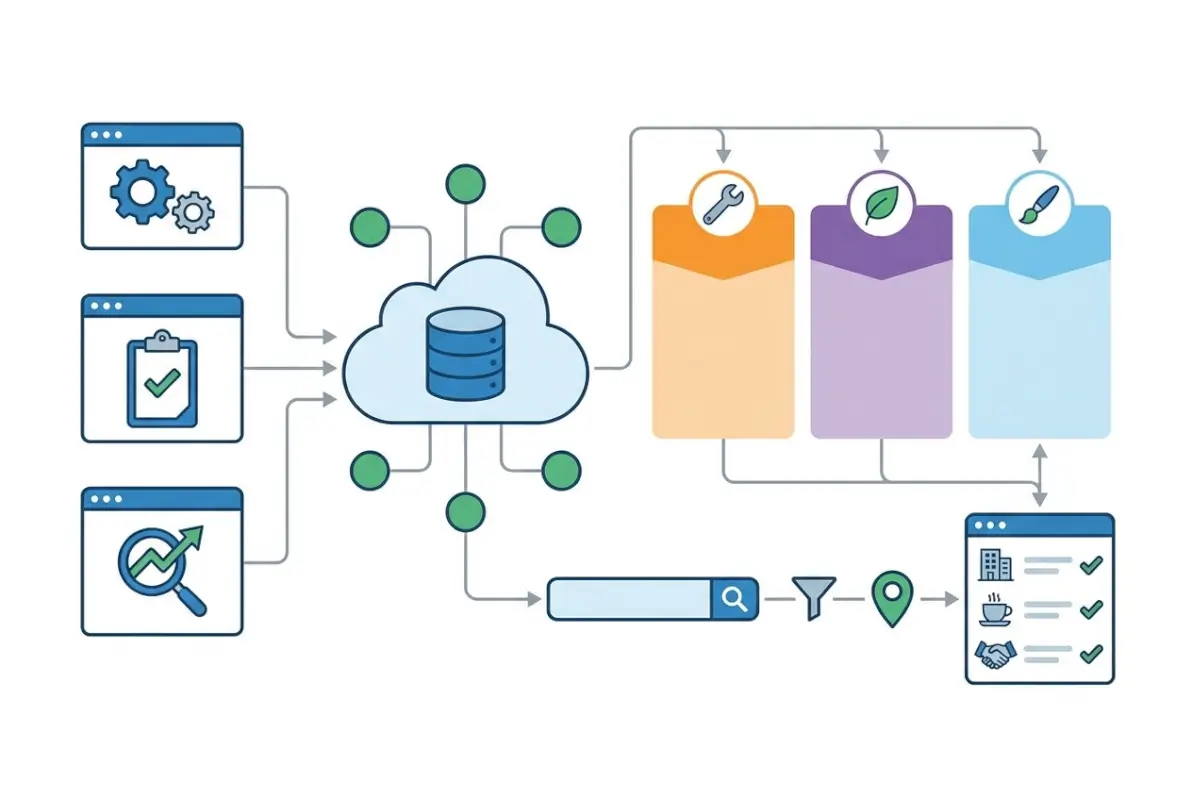
What makes vertical directories powerful is their intimate understanding of user intent within a specific industry. When someone searches for a cardiologist, they need different filters than someone searching for a plumber. Healthgrades knows this—their directory includes board certifications, hospital affiliations, insurance accepted, patient satisfaction scores, and condition-specific experience ratings. These data points would clutter a general directory but are essential for healthcare decisions.
The structure typically follows a sophisticated taxonomy system. Instead of basic categories, vertical directories create industry-specific hierarchies. A legal directory like Avvo organizes by practice areas (family law, criminal defense, corporate law), then by specific services within each area (divorce mediation, DUI defense, contract review). This granularity helps users find exactly what they need without wading through irrelevant options.
Profile Standards That Build Authority
Premium vertical directories enforce strict profile completeness standards. Healthgrades requires doctors to maintain current licensing information, education credentials, and practice location details. These verification systems create trust—users know they’re seeing legitimate, qualified professionals rather than unvetted listings.
Rich media integration separates authority directories from basic listing sites. Professional headshots, office photos, video introductions, and detailed service descriptions give visitors confidence before making contact. The best directories also showcase credentials prominently—certifications, awards, years of experience, and professional association memberships all reinforce expertise.
Revenue Streams for Vertical Platforms
Successful vertical directories employ tiered monetization strategies. Basic free listings establish comprehensive coverage, while premium tiers offer enhanced visibility and features. Avvo’s model is instructive: free profiles exist for every licensed attorney, but lawyers can upgrade to featured profiles with priority placement, lead generation tools, and detailed analytics.
Featured placement commands premium pricing because it delivers measurable results. When Healthgrades displays a doctor in the top three results for a searched specialty, that visibility translates directly into appointment bookings. Directory operators charge $200-$500 monthly for these premium positions in competitive markets.
The most sophisticated vertical directories layer on value-added services beyond visibility. These might include appointment scheduling integration, secure messaging systems, document sharing platforms, or automated review request tools. Each additional service creates a stickier relationship with listed businesses while opening new revenue streams.
Model 2: The Local-First Directory
While vertical directories own industries, local-first directories own geography. These platforms succeed by becoming the definitive source for “near me” searches in specific cities or regions. According to BrightLocal’s research, consistent business listings across directories significantly influence local search rankings, making these platforms valuable for both users and businesses.

The power of local directories lies in their hyperlocal focus. Instead of listing every restaurant in America, a successful local directory might list every restaurant in Austin, Texas, with obsessive detail about neighborhoods, parking availability, happy hour specials, and proximity to local landmarks. This geographic specificity creates utility that broad platforms can’t match.
NAP Consistency as Competitive Advantage
Name, Address, Phone number (NAP) consistency is the unglamorous foundation of local directory success. Search engines use NAP citations across the web to verify business legitimacy and determine local rankings. When your directory maintains accurate, consistent NAP data that matches businesses’ Google Business Profile information, you become a trusted citation source.
I learned this lesson the hard way with a local directory I launched in 2019. Initially, I allowed businesses to enter their information freely, which led to inconsistent formatting—some used “Street” while others used “St.”, phone numbers appeared with different formats, and suite numbers were inconsistently included. After standardizing all NAP data to match official records, I saw the directory’s own search rankings improve dramatically within three months.
Verification processes strengthen NAP reliability. The best local directories use phone verification, postcard verification, or email confirmation before publishing listings. This extra step filters out spam submissions while giving legitimate businesses confidence that they’re listed alongside verified competitors rather than questionable entities.
Content That Amplifies Local Authority
Successful local directories extend beyond simple listings into comprehensive local guides. They publish neighborhood profiles explaining what makes each area unique, “best of” roundups curated by local experts, seasonal event guides, and deep-dive articles about local topics that matter to residents and visitors.
This content strategy serves multiple purposes: it attracts organic search traffic through informational queries, establishes the directory as a knowledgeable local authority, and creates natural contexts to feature specific businesses. A guide to “Best Patios for Summer Dining in Denver” showcases restaurants while delivering genuine value to readers planning their evening out.
User-generated content multiplies this effect. Reviews, photos, and check-ins from real customers create fresh, authentic content that search engines reward. The most engaged local directories foster community by featuring top contributors, hosting local events, and creating incentives for participation like badges or recognition programs.
Model 3: The Niche Discovery Engine
Discovery-focused directories position themselves as the starting point for informed decision-making in their niche. Rather than assuming users know exactly what they want, these platforms guide exploration through rich editorial content, comparison tools, and educational resources.

TripAdvisor exemplifies this model perfectly. Yes, it lists hotels and restaurants, but its real value comes from millions of detailed reviews, thousands of curated travel guides, and comparison tools that help travelers make confident decisions. The directory becomes a complete research platform, not just a list.
Content Architecture for Discovery
Discovery engines build hub-and-spoke content architectures. Hub pages target high-volume category keywords (“wedding photographers in Chicago”), while spoke pages drill into specific subcategories, neighborhoods, styles, and use cases (“outdoor wedding photographers with drone capabilities in Lincoln Park”).
This structure serves both users and search engines. Users appreciate the granular organization that surfaces exactly what they need, while search engines see comprehensive topical coverage that signals authority. Each hub page might link to 10-20 spoke pages, creating a dense internal linking structure that distributes ranking power throughout the site.
Buying guides and how-to content position the directory as an educational resource rather than just a commercial listing platform. A wedding vendor directory might publish guides on “How to Choose a Wedding Photographer,” “Questions to Ask Caterers,” and “Timeline for Booking Wedding Vendors.” These resources attract early-stage researchers who aren’t ready to contact vendors yet but will return to the directory when they are.
Conversion-Focused Design Without Sleaze
The best discovery directories balance user experience with monetization. Clear call-to-action buttons for “Request Quote,” “Check Availability,” or “Contact Business” appear prominently but not obnoxiously. They understand that pushy design hurts conversion more than it helps.
Comparison features drive decision-making without feeling manipulative. Side-by-side comparisons of up to four businesses let users evaluate options efficiently. The key is maintaining neutrality—comparison tools should help users make the right choice for their needs, not push them toward whoever paid more for placement.
Lead capture mechanisms work best when they offer genuine value exchanges. Instead of demanding email addresses for basic browsing, successful directories offer downloadable checklists, comparison worksheets, or budget calculators in exchange for contact information. Users feel they’re receiving something valuable rather than being added to yet another marketing list.
Model 4: The Hybrid Marketplace Platform
The most ambitious successful niche directories examples evolve from passive listings into active transaction platforms. These hybrid marketplaces don’t just connect buyers and sellers—they facilitate the entire transaction, from discovery through payment and follow-up.

OpenTable transformed restaurant discovery by adding real-time reservation functionality. Suddenly, finding a restaurant and booking a table became one seamless action instead of two separate tasks. This convenience created extraordinary value for diners while giving restaurants a sophisticated management system that justified ongoing subscription fees.
The Marketplace Value Proposition
Hybrid platforms solve friction points in their industry’s transaction process. In home services, the friction is getting multiple quotes and scheduling consultations. Platforms like Angi (formerly Angie’s List) address this by allowing homeowners to describe their project once and receive quotes from multiple pre-screened professionals.
Trust and safety mechanisms become critical when facilitating transactions. Verification systems confirm that service providers are licensed, insured, and legitimate. Review systems with verified purchase tags ensure feedback comes from actual customers. Dispute resolution processes provide recourse when things go wrong. Each safeguard reduces transaction risk and encourages more platform usage.
The directory key steps run successful directory website business include understanding when to transition from listing platform to marketplace. The move makes sense when your directory has achieved sufficient density in a geographic area or niche that you can consistently match supply with demand.
Operational Blueprint for Marketplace Directories
Payment processing integration is table stakes for marketplace directories. Accepting payments on behalf of service providers (and taking a commission) requires payment gateway integrations with Stripe, PayPal, or industry-specific processors. Most successful directories take 10-20% commissions on transactions facilitated through their platform.
Booking and scheduling systems vary by industry but share common elements: availability calendars, automated confirmation emails, reminder systems, and cancellation policies. These systems must work flawlessly—nothing damages directory credibility faster than double-bookings or missed appointments caused by technical glitches.
| Marketplace Feature | User Benefit | Business Benefit | Platform Revenue |
|---|---|---|---|
| Online Booking | Instant confirmation | Reduced phone volume | Per-booking fee |
| Payment Processing | Secure transactions | Guaranteed payment | Transaction % |
| Quote Requests | Multiple bids easily | Qualified leads | Lead fee |
| Review System | Informed decisions | Reputation building | Premium visibility |
Legal and compliance considerations multiply when you handle transactions. Depending on your industry and location, you may need business licenses, contractor licensing verification systems, insurance requirements, or specialized payment processing (like escrow for high-value services). Consult with attorneys familiar with marketplace regulations in your jurisdiction before launching transactional features.
How to Build Your Own Niche Directory
Creating a successful niche directory requires methodical planning, appropriate technology selection, and patient execution. The barriers to entry have never been lower, but sustainable success still demands strategic thinking.

Market Research and Positioning
Start by identifying underserved niches with clear commercial intent. The best opportunities sit at the intersection of passionate audiences and fragmented supplier markets. Ask yourself: Do potential users struggle to find qualified providers in this category? Are existing directories generic and outdated? Is there sufficient transaction volume to support a dedicated platform?
Competitive analysis reveals gaps you can exploit. Study the top 3-5 directories in adjacent niches—what features do they offer? Where do user reviews complain about shortcomings? What information do users have to piece together from multiple sources? Your directory should solve the problems existing platforms ignore.
Define your unique value proposition with precision. “A directory for home services” is too vague and faces impossible competition. “A directory for certified green building contractors in the Pacific Northwest with verified sustainability credentials” is specific enough to dominate. Narrow focus attracts passionate audiences and commands premium pricing from listed businesses who value qualified leads.
Platform Selection for Fast Launch
WordPress-based directory solutions offer the fastest path to launch for most entrepreneurs. TurnKey Directories provides pre-configured directory functionality that eliminates months of development work. You get professional listing layouts, search and filtering systems, payment processing integration, and review management in a ready-to-launch package. Other WordPress options like Business Directory Plugin and GeoDirectory follow similar approaches with varying feature sets and pricing.
The advantages of WordPress directories are substantial: low initial investment ($200-$1,000 vs. $15,000-$100,000 for custom builds), massive plugin ecosystems for extending functionality, familiar administrative interfaces, and strong SEO foundations. For most niche directory concepts, WordPress provides more than enough capability while preserving capital for marketing and content creation.
SaaS directory platforms like Brilliant Directories and Directory Theme offer middle-ground solutions. These purpose-built systems include hosting, automatic updates, and directory-specific features without requiring WordPress knowledge. The tradeoff is less flexibility and higher ongoing costs ($50-$200 monthly), but for non-technical founders, the simplicity may justify the price.
Initial Listing Strategy
The cold-start problem haunts every new directory—businesses won’t pay for listings until you have traffic, but users won’t visit until you have comprehensive listings. Breaking this cycle requires manually seeding your directory with quality listings before any official launch.
Start by creating 50-100 detailed listings yourself using publicly available information. Focus on the highest-quality businesses in your niche to establish credibility from day one. Include complete profiles with descriptions, contact details, websites, and sourced photos. This foundation demonstrates to early visitors that your directory is comprehensive rather than sparse.
Claim-based listing strategies accelerate growth after launch. Creating placeholder profiles for thousands of businesses lets you achieve apparent density quickly, then inviting businesses to claim and enhance their listings converts passive profiles into engaged participants. This approach how to search businesses in fslocal directory tips demonstrates works particularly well for local directories targeting specific cities.
Monetization Models That Scale
The most sustainable directories employ hybrid monetization from the outset. Free basic listings establish comprehensive coverage and attract broad participation. Premium listings with enhanced features (photos, videos, priority placement, lead forms) convert businesses seeing results from free listings into paying customers at $20-$200 monthly depending on niche and competition.
Featured placement in category pages and search results commands premium pricing because it delivers measurable visibility. Most directories allocate 2-3 featured spots per category page and charge $100-$500 monthly for these positions. The key is maintaining a ratio that preserves user experience—if every listing is “featured,” the designation becomes meaningless.
Lead generation systems create compelling value propositions for service-based directories. When you can deliver qualified customer inquiries directly to businesses, you can charge per lead ($5-$50 depending on industry and lead quality) or offer monthly packages. This model aligns your success with business results, creating strong retention.
What makes niche directories more effective than general directories?
Niche directories deliver higher-quality leads because they attract users with specific intent and provide specialized search filters, industry-relevant information, and targeted results. This focus enables deeper features like credential verification and specialized comparison tools that general directories cannot support effectively.
How important is Google Business Profile for niche directory success?
Google Business Profile dominates local search results, but directories contribute to 30% of local search visibility through citations and backlinks. Successful directories complement GBP by offering detailed information, comparisons, and community reviews that GBP listings lack.
What are typical monetization models for niche directories?
Most successful directories combine free basic listings with premium upgrades ($20-$200 monthly), featured placements ($100-$500 monthly), and value-added services like lead generation or booking systems. Hybrid approaches with 3-4 revenue streams outperform single-model directories by spreading risk and maximizing value.
How long does it take to see SEO results after launching a directory?
New directories typically see initial organic traffic within 3-4 months with consistent content publication and quality listings. Meaningful traffic that supports monetization usually develops within 6-12 months. Local directories in specific cities can gain traction faster than broad national directories.
What technical SEO factors matter most for directory websites?
Directory-specific technical SEO priorities include proper schema markup for LocalBusiness entities, clean URL structures, pagination handling for category pages, canonical tags to prevent duplicate content, and site speed optimization for listing-heavy pages. Mobile responsiveness and secure HTTPS connections are baseline requirements.
How should directories handle user reviews to maintain trust?
Implement verified review systems that confirm reviewers are actual customers through email verification or transaction records. Moderate reviews for inappropriate content but publish both positive and negative feedback. Display review dates, respond to concerns, and never delete unfavorable reviews unless they violate clear guidelines.
What platform is best for building a niche directory in 2026?
TurnKey Directories offers the fastest WordPress-based launch with professional directory features pre-configured. For non-technical founders, SaaS platforms like Brilliant Directories provide managed solutions. Custom development makes sense only for unique requirements that existing platforms cannot address through configuration or plugins.
Can business directories still compete with Google in 2026?
Yes—specialized directories compete through depth rather than breadth. While Google dominates initial discovery, directories provide detailed comparisons, community reviews, specialized search filters, and industry-specific information that Google cannot match. Position your directory as the research destination after initial Google searches.
Your Directory Launch Roadmap
The examples of successful niche business directories we’ve explored share fundamental principles: obsessive focus on solving specific problems, deep understanding of their audience’s decision-making process, and patience to build authority systematically rather than chasing overnight success.
Your next move depends on where you are in the process. If you’re still choosing a niche, spend another week researching underserved markets before committing. Look for industries where businesses struggle to get visibility and customers struggle to find qualified providers—that intersection is where directory opportunities live.
If you’ve chosen your niche, your immediate priority is platform selection and setup. For most founders, a WordPress-based solution like TurnKey Directories offers the right balance of capability, cost, and launch speed. Getting online quickly beats building the “perfect” custom platform that launches 18 months late.
Ready to Launch Your Niche Directory?
The directory market rewards focus, persistence, and genuine value creation. Success won’t happen overnight, but with the right niche and consistent execution, you can build a sustainable business that serves both listed businesses and searching consumers.
Your 30-day launch checklist:
- Week 1: Finalize niche selection and competitive analysis
- Week 2: Select platform and complete technical setup
- Week 3: Create 50 seed listings and core category pages
- Week 4: Publish first content guide and begin outreach to businesses
The directories that fail do so because they stop executing before results appear. The directories that succeed persist through the awkward early months when traffic is modest and revenue is minimal. They focus on adding value consistently—better listings, helpful content, improved user experience—rather than obsessing over metrics that will improve as a natural consequence of quality.
Start specific, start small, and start now. Your niche directory won’t build itself, but with the models and strategies outlined here, you have everything needed to create a valuable resource that grows into a sustainable business over time. The market rewards those who show up consistently and solve real problems better than anyone else.
Was this article helpful?