How to Find City Directories Online: 5 Best Sources for Historical Research

Generating summary...
If you’ve ever tried to trace where your great-grandmother lived in 1905, or wondered what businesses operated on your street a century ago, you know the frustration of hitting dead ends in genealogy research. Census records only capture snapshots every ten years, and vital records skip the everyday details of where people actually lived and worked. That’s where historical city directories come in—and the good news is that thousands of these once-dusty library volumes are now digitized and waiting online.
I spent years doing this kind of research the hard way, driving to distant libraries and squinting at microfilm until my eyes burned. Now I can search city directories online from my couch, finding addresses and occupations that fill the gaps between census years. The challenge isn’t access anymore—it’s knowing which online historical directories actually have what you need, and which ones will waste your afternoon with incomplete coverage or terrible search tools.
Whether you’re building a family tree, researching property history, or studying how neighborhoods evolved, the right digital city directory collections can unlock information that seemed lost forever. Let’s cut through the noise and focus on the sources that actually deliver results.
- City directories online document residents, businesses, and addresses year-by-year, filling gaps between census records
- Best free sources: FamilySearch, Internet Archive, Digital Public Library of America, and state/local library collections
- Premium option: Ancestry.com offers the largest collection but requires subscription (though many public libraries provide free access)
- Cross-reference everything—directories contain errors and omissions that other records can verify or contradict
- Search strategically: Start broad (surname + city), then narrow by adding first names and date ranges
What City Directories Are and Why They Matter Online
City directories were the Google Maps and LinkedIn of their era—comprehensive listings of who lived where, what they did for work, and how to find them. Unlike phone books that only listed telephone subscribers, city directories aimed to catalog every resident and business in a community, regardless of whether they had a phone line. Publishers sent canvassers door-to-door each year, recording names, addresses, occupations, and employers to create annual snapshots of urban life.
These volumes typically included three main sections: an alphabetical list of residents with their addresses and occupations, a street directory showing who lived at each address, and a classified business directory organized by industry. The most detailed editions included maps, demographic statistics, and advertisements that inadvertently preserved everyday details—what products people bought, what services existed, even what social concerns mattered enough to advertise about.
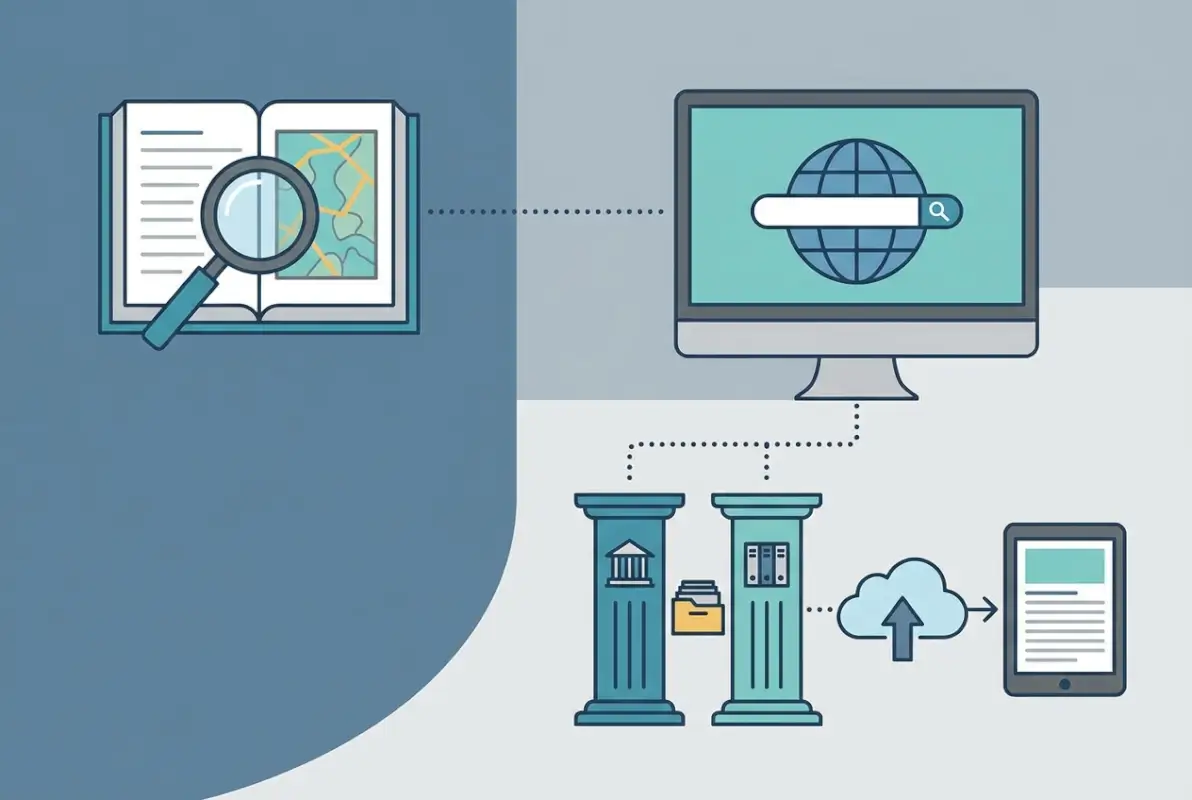
The tradition started in the mid-1700s in major cities like Philadelphia and New York, then spread as American cities grew. By the late 1800s, most cities of any size had annual directory publication. Directory companies competed fiercely, sometimes producing competing volumes for the same city in the same year. This continued well into the 1900s until telephone books and digital databases eventually made printed directories obsolete.
Why historical city directories online are essential for research
City directories fill critical information gaps that other historical records leave empty. Census enumerators only knocked on doors once per decade, and many census years have damaged or incomplete records. Birth, marriage, and death certificates don’t tell you where someone lived in the years between those events. City directories, published annually or biennially, provide year-by-year residential tracking that lets you follow people’s movements with precision that other records simply can’t match.
For genealogists, directories confirm when ancestors arrived in or left a city, track occupational changes, and establish addresses that connect to other records. For property researchers, they identify who occupied buildings year by year, helping establish timelines for restoration projects or historical designations. Urban historians use directories to study neighborhood demographics, business district evolution, and immigration patterns across decades.
According to the Library of Congress city directories research guide, these volumes are particularly valuable because they document people who might not appear in other records—renters, boarders, recent immigrants, and working-class residents who didn’t own property or generate legal documents.
What information you’ll actually find in online city directories
The level of detail varies by publisher, city size, and time period, but most historical city directories include resident names, home addresses, and occupations. Many also list employers, which helps distinguish between people with common names. Some directories noted marital status with abbreviations like “wid” for widow or included property ownership indicators.
Business listings typically showed company names, proprietor names, addresses, and industry classifications. Street directories—my personal favorite section—listed every address on each street with current occupants, making it easy to research specific buildings or reconstruct entire neighborhoods. The advertisements throughout often preserved details about daily life that official records missed entirely, from the types of services available to the concerns people had about health, safety, or social issues.
| Directory Section | What It Contains | Best Used For |
|---|---|---|
| Alphabetical Residents | Names, addresses, occupations, employers | Finding specific people, tracking careers |
| Street Directory | Every address with current occupants | Property research, neighborhood reconstruction |
| Business Classified | Companies by industry, locations, owners | Commercial history, business evolution |
Best Nationwide Online Sources for City Directories
The landscape of digitized city directories spans hundreds of institutions, but a handful of major platforms provide the most comprehensive access. Some require paid subscriptions while others are completely free, and each has distinct strengths worth understanding before you invest research time.
FamilySearch: The powerhouse free option
FamilySearch, operated by The Church of Jesus Christ of Latter-day Saints, offers an extensive collection of city directories online with zero subscription fees. You just need a free account to access everything. Their collection has grown dramatically over the past decade through partnerships with archives and libraries, plus thousands of volunteer hours spent digitizing and indexing directories.

Coverage varies by region, but FamilySearch excels at smaller cities and towns that commercial services sometimes overlook. The platform’s crowdsourced indexing model means new directories appear regularly as volunteers transcribe newly digitized materials. Search functionality is straightforward rather than sophisticated—you won’t get Ancestry’s advanced algorithms, but for basic name and location searches it works perfectly fine.
The real advantage? You can attach directory images directly to family trees and collaborate with other researchers who might have complementary information. I’ve connected with distant cousins multiple times through FamilySearch after we both found the same ancestor in a city directory and left research notes for each other.
Internet Archive: The open access library
The Internet Archive has digitized thousands of historical city directories as part of their mission to preserve digital history and provide universal access to knowledge. Their collection emphasizes rare and at-risk materials, making it particularly valuable for finding obscure directories from smaller communities that larger platforms missed.
Search functionality is more basic than specialized genealogy platforms, but the full-text search within books feature works remarkably well once you’ve located a relevant directory. You can flip through pages, download complete PDFs for offline research, or extract plain text for analysis. Everything is freely accessible without account creation, though creating a free account lets you create collections and leave notes.
The platform accepts contributions from libraries, historical societies, and individuals, resulting in eclectic coverage that fills gaps other sources leave empty. Check back periodically because new materials appear regularly as institutions contribute freshly digitized collections.
Ancestry.com: Premium comprehensive coverage
Ancestry.com maintains the largest commercial collection of digitized city directories, with particularly strong coverage of major urban centers from the late 1700s through mid-1900s. Many directories in their collection haven’t been digitized anywhere else, making the subscription worthwhile for intensive research projects despite the cost (typically $25-45 monthly depending on the plan).
The real value comes from Ancestry’s sophisticated search algorithms that handle spelling variations, name changes, and connections across their massive database of census records, vital records, newspapers, and other historical documents. Their hint system suggests related records you might miss, though it occasionally produces false positives that require verification.
Before subscribing, check whether your local public library provides free Ancestry access through library computers. Many do, making it possible to conduct research without paying subscription fees—though COVID-19 changed some access policies, so call ahead to verify current availability.
State and Regional Digital Collections Worth Bookmarking
While nationwide platforms provide broad coverage, state archives and regional historical societies often maintain specialized collections with deeper coverage of their specific areas. These institutions prioritize materials relevant to local communities, meaning exhaustive directory collections for cities that larger platforms might skim over.
State-level digital heritage projects
Many states have created digital heritage portals that aggregate materials from libraries, museums, and historical societies across their regions. The Portal to Texas History, for example, provides access to hundreds of Texas city directories with excellent search tools and high-quality scans. Similar projects exist for states like Minnesota, Florida, Georgia, and Missouri.

These state portals often include supplementary materials—maps, photographs, newspapers—that contextualize directory information in ways that standalone directories cannot. The Minnesota Historical Society city directories guide, for instance, provides detailed research guidance alongside their digitized Minneapolis directories from 1859-1917.
Finding these collections requires a bit of detective work since there’s no centralized index. Start by searching “state name + digital heritage” or “state name + city directories online.” State library websites and state historical society sites are good starting points. I keep a bookmark folder specifically for these regional collections because they’re often my first stop for thorough local research.
University and public library special collections
Academic libraries with strong history or genealogy departments often maintain excellent local collections accessible to the public even if you’re not affiliated with the university. The New York Public Library’s city directories guide exemplifies what major public libraries offer—extensive holdings, research guidance, and often on-site assistance from reference librarians who know the collections intimately.
Local public libraries increasingly digitize their local history materials, including city directories that documented their communities. While the digital interfaces might not match polished commercial platforms, these libraries often have directories unavailable anywhere else plus contextual knowledge about the communities they serve.
If your target city’s library website doesn’t show obvious digital collections, call the reference desk anyway. Many libraries have digitized materials not yet prominently featured online, and reference librarians can guide you to related resources you might not discover independently.
Effective Search Strategies for Online City Directories
Finding city directories is only half the battle—extracting meaningful information requires methodology rather than random clicking. The difference between frustrating dead ends and breakthrough discoveries often comes down to search technique and verification discipline.
Starting your search systematically
Begin with what you know absolutely: a name, a city, and an approximate time period. Search the most comprehensive free resource first (typically FamilySearch or Internet Archive) to understand what’s available before committing to paid platforms. This approach saves money and often produces complete results without subscriptions.

Start broad, then narrow progressively. Search just the surname and city initially, then add the first name, then refine with date ranges. This reveals all potential matches rather than missing results due to overly specific initial queries. Yes, searching “Smith” in “Philadelphia” seems overwhelming, but it shows you what directories exist and helps identify the specific years most relevant to your research.
Directory entries used extensive abbreviations to save space—”res” for residence, “wid” for widow, “bds” for boards (meaning lives with someone else), “r” for rear. Most directories include abbreviation keys in front matter, so always review these before diving into entries. I learned this the hard way after misinterpreting occupation abbreviations for weeks.
Handling name variations and spelling issues
Historical spelling was wildly inconsistent. “Schmidt” might appear as “Smith,” “Schmitt,” “Smidt,” or numerous other variations depending on who recorded it. Directory compilers sometimes misheard names or worked from incomplete information, introducing errors that persist in modern digitization.
Search phonetically similar names and check entries immediately before and after your target name—alphabetization errors weren’t uncommon. When digitization adds OCR (optical character recognition) to the mix, even more errors appear. A faded “B” might scan as “R,” turning “Brown” into “Rrown” in the searchable index.
For common surnames, use the street directory approach instead. If you know where someone lived, browse that street’s listings rather than searching alphabetically by name. This sidesteps spelling issues entirely and often reveals neighbors, property uses, and contextual details you’d miss otherwise.
Understanding addresses and street changes
Street names changed frequently in historical cities, and numbering systems were revised or replaced entirely—sometimes multiple times. Someone at “125 Main Street” in 1895 and “342 Main Street” in 1896 might actually be at the same physical location after citywide renumbering, or they might have moved across town. You can’t tell without additional context.
Cross-reference with historical maps from appropriate years to clarify these situations. Many city directories included maps that show street layouts and numbering schemes for that specific year. Fire insurance maps (Sanborn maps) are another excellent resource for verifying addresses and understanding neighborhood layouts.
Verification and Cross-Referencing Techniques
Historical city directories, while invaluable, contain errors, omissions, and inconsistencies that demand verification. Treating any single directory entry as definitive truth invites cascading mistakes through your research. I’ve seen family trees with incorrect birth years, wrong marriages, and confused identities all traced back to uncritically accepting a single directory entry.
Multi-source verification essentials
Never rely solely on one directory or one type of record. Compare directory listings across consecutive years to track consistency and changes. If someone appears at the same address with the same occupation for five consecutive years, then suddenly disappears, investigate whether they moved, died, or simply weren’t listed that year—directories missed residents despite best efforts at comprehensiveness.

Cross-reference directory information with census records from surrounding years. Census data provides household composition that directories omit, helping confirm you’ve found the right person when names are common. The 1930 census might show a household head with three children, while the 1930 city directory just lists his name and occupation—but together they paint a complete picture.
Newspapers are verification goldmines. Social columns, business notices, obituaries, and advertisements corroborate or contradict directory information. I once spent days tracking a businessman through directories only to discover through a newspaper article that he’d declared bankruptcy and the “business” listed in later directories was actually run by his creditors. The directories showed continuity that didn’t exist in reality.
| Verification Source | What to Cross-Check | Where to Find It |
|---|---|---|
| Census records | Household composition, ages, relationships | FamilySearch, Ancestry, Archives.gov |
| Newspapers | Life events, business activities, addresses | Newspapers.com, Chronicling America |
| Property records | Ownership, exact addresses, transaction dates | County recorder offices, FamilySearch |
| Vital records | Birth/death dates, addresses at major events | State archives, Ancestry, FamilySearch |
Understanding directory compilation timing and biases
Historical directories were compiled through door-to-door canvassing during spring or summer for publication later that year. This timing means directories reflect conditions 6-12 months before publication dates—a lag that confuses researchers who don’t account for it. Someone who moved in October won’t appear in next spring’s directory, creating apparent gaps in residence that are just artifacts of publication timing.
Compilers routinely missed people: those temporarily absent during canvassing, those who refused to participate, those in transient housing, recent arrivals after compilation. Business listings typically required payment, meaning small or struggling businesses might be omitted entirely while successful enterprises received prominent entries. These systematic biases affect what directories reveal about communities and who appears in historical records.
Women, particularly married women, often appear only as “widow of” entries or not at all unless they headed households or owned businesses. This doesn’t mean they weren’t there—it means directory conventions made them invisible. Cross-referencing with census records, which documented all household members, corrects this bias.
What information do historical city directories contain?
Historical city directories typically list residents’ names, home addresses, occupations, and employers. Many also include business directories organized by industry, street-by-street address listings, maps, and sometimes marital status or property ownership indicators. Content varies by publisher, city, and time period.
Where can I find old city directories online for free?
FamilySearch, Internet Archive, and the Digital Public Library of America offer free access to thousands of historical city directories. State library websites and local public library digital collections also provide free directories for their regions. Many public libraries offer free Ancestry.com access through library computers.
How do I verify addresses found in city directories?
Cross-reference directory addresses with census records from surrounding years, property deeds, historical maps, and newspaper mentions. Check consecutive directory years for consistency. Use period-appropriate maps since street names and numbering systems changed frequently. Verify with at least two independent sources before accepting an address as fact.
Are city directories complete for every year and city?
No, city directories have gaps. Small communities might have directories published every few years or not at all. Compilers routinely missed residents who were absent during canvassing, refused participation, or lived in transient housing. Not all published directories have been digitized yet, so online collections are incomplete.
Can I search city directories by street address?
Many historical city directories included street directory sections that list every address with current occupants, making address searches possible. However, not all online platforms index these sections searchably—you may need to browse the street directory pages manually. FamilySearch and Internet Archive often provide page-by-page browsing capability.
Which online sources are most reliable for 19th century U.S. city directories?
For 19th century coverage, Ancestry.com offers the most comprehensive collection but requires subscription. FamilySearch and Internet Archive provide extensive free access, particularly strong for major cities. State digital heritage projects often have deeper coverage for their specific regions than national platforms.
How were historical city directories originally created?
Publishers compiled directories through door-to-door canvassing during spring and summer months. Canvassers recorded residents’ names, occupations, and addresses, then verified business information directly with proprietors. The compiled data was printed and sold by subscription, with publication occurring 6-12 months after data collection began.
What years are covered by online historical city directories?
Coverage varies by city and platform but generally spans from the 1780s through the 1990s, with strongest availability from 1850-1950. Major cities have nearly continuous annual coverage during peak periods, while smaller communities might have directories every few years. Publication frequency depended on population size and commercial viability.
Start Exploring City Directories Online Today
The transformation of dusty library archives into searchable digital collections has revolutionized how we research family history, property lineages, and community evolution. What once required road trips and microfilm marathons now happens from wherever you have internet access.
Begin with the free powerhouses—FamilySearch and Internet Archive provide remarkable depth without subscription barriers. For local research, don’t skip state archives and public library collections that often contain unique materials unavailable on national platforms. When you hit difficult cases that free sources can’t crack, Ancestry’s comprehensive coverage and advanced tools justify the subscription cost.
Remember that directories are starting points, not endpoints. Cross-reference everything with census records, newspapers, property documents, and other sources. The most rewarding discoveries come when you piece together multiple records to reveal stories that single sources hide. Your ancestors’ lives are waiting in these digitized pages—go find them.
Was this article helpful?