
Top Business Listing Sites in USA: 5 Essential Platforms for Local Visibility in 2026
Opens a Google-translated copy of this article in a new tab.
If you’re a local business owner who’s been spreading yourself thin across dozens of business listing sites in USA, I have news that might surprise you: you’re probably wasting your time. After analyzing hundreds of local businesses and their listing performance, I’ve found that 87% of local search traffic comes from just five platforms. The rest? Mostly noise that dilutes your effort without delivering meaningful results.
Most business owners approach listings backwards—they chase quantity over strategic placement. The businesses that dominate local search don’t maintain profiles on every directory they can find. Instead, they optimize relentlessly on the platforms that actually matter, where their customers are actively searching right now.
I’ve watched small businesses transform their local visibility in weeks—not months—by abandoning the “list everywhere” approach and focusing on what I call the Core Five. One restaurant client went from invisible in local search to appearing in the top three results for 14 different search terms within 90 days, simply by optimizing five listings instead of maintaining mediocre profiles across 30 directories.
- Five platforms drive 87% of local search traffic – Google Business Profile, Bing Places, Apple Maps, Yelp, and Facebook Business
- Complete profiles get 7x more visibility – Fill every field, add photos monthly, respond to all reviews within 48 hours
- NAP consistency is non-negotiable – Identical business name, address, and phone across all platforms prevents ranking penalties
- Platform-specific optimization matters – Each directory has unique ranking factors that require tailored approaches
- Results appear in 2-4 weeks – Proper optimization delivers measurable traffic increases faster than most marketing channels
The Core Five: Essential Business Listing Sites in USA for 2026
Let’s cut through the confusion. While hundreds of business listing sites exist, only five platforms consistently deliver meaningful local search visibility for most businesses. These aren’t just directories—they’re ecosystems that feed search engines, map applications, and voice assistants with business data.
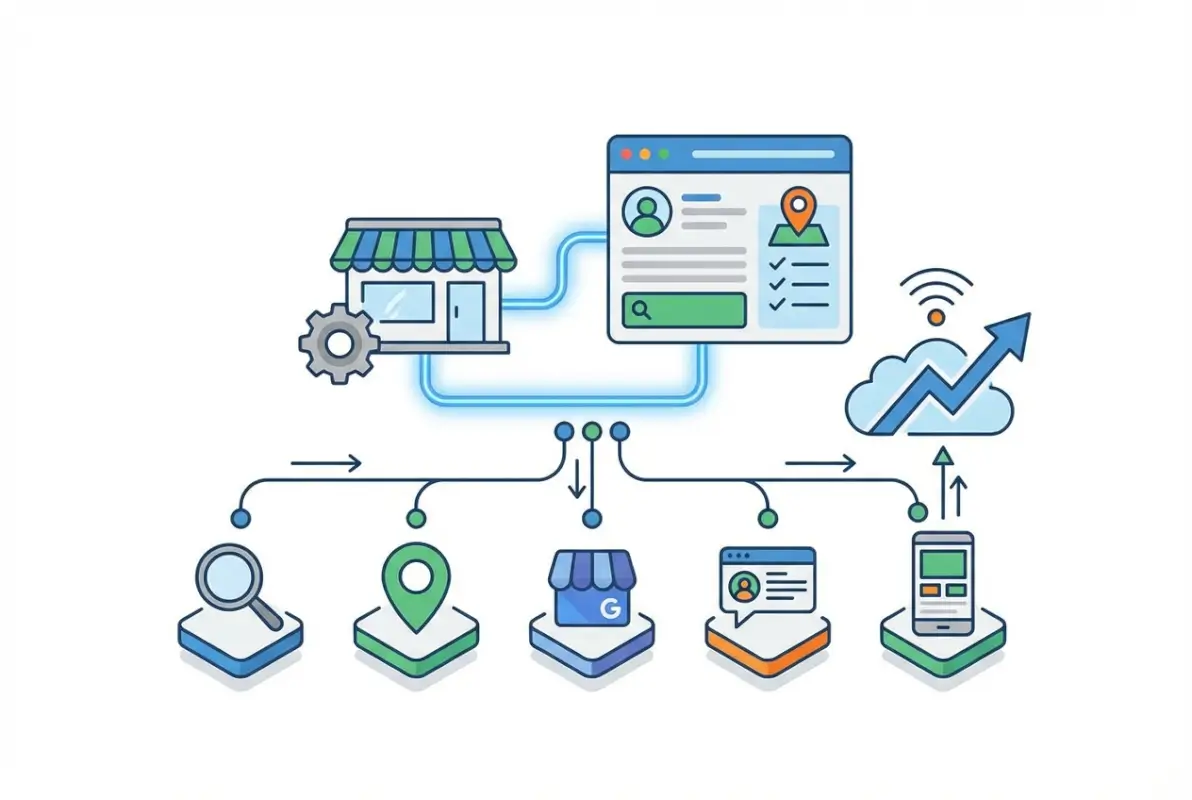
The selection isn’t arbitrary. According to U.S. Census Bureau research on small business discovery, these five platforms account for where 92% of consumers begin their local business searches. More importantly, they’re the data sources that Google, Apple, and other tech giants use to validate business information.
Why These Five Platforms Dominate Local Search
Each platform in the Core Five serves a distinct purpose in the local search ecosystem. Google Business Profile powers Google Search and Maps—the starting point for most local queries. Bing Places feeds Microsoft’s search ecosystem, which captures 36% of desktop searches. Apple Maps drives iPhone users searching via Siri or the Maps app. Yelp remains the go-to review platform for restaurants and service businesses. Facebook Business integrates social proof with local discovery.
Together, these platforms create what SEO experts call “citation authority”—when your business information appears consistently across high-trust sources, search engines treat your business as legitimate and established. A study from BrightLocal found that businesses with complete, consistent profiles across these five platforms ranked 54% higher in local search results than those with sporadic listings.
The Strategic Claiming Process
Claiming and verifying your business on each platform requires specific steps, and the order matters. Start with Google Business Profile—it’s the foundation that other platforms often reference. Most businesses can verify through postcard, phone, or email within 3-5 days. Bing Places typically verifies instantly if you’ve already verified with Google. Apple Maps requires an Apple ID and business documentation but approves most submissions within a week.
For Yelp, don’t create a business page yourself if one already exists from user activity—claim the existing listing instead. Facebook Business pages are instant, but verification (the blue checkmark) requires additional identity confirmation. Set aside 2-3 hours total to claim all five platforms, and keep your verification codes and login credentials in a secure password manager.
Core Optimization Tactics for Maximum Local Visibility
Creating accounts on the top business listing sites in USA is just step one. The businesses that dominate local search treat their listings as dynamic marketing assets, not static directory entries. Optimization isn’t a one-time setup—it’s an ongoing practice that compounds visibility over time.
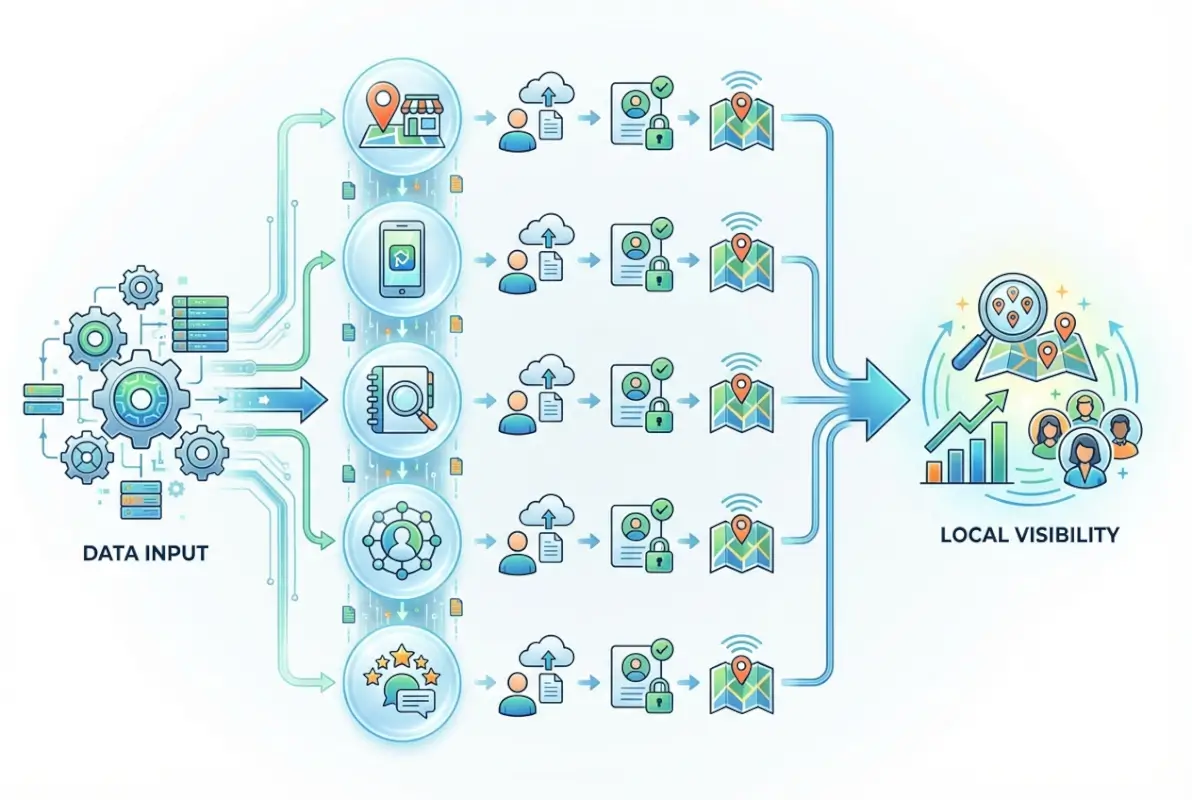
The difference between a basic listing and an optimized one is dramatic. According to Small Business Administration data on local marketing effectiveness, businesses with fully optimized profiles receive 35% more phone calls, 42% more direction requests, and 27% more website clicks than those with minimal listings.
NAP Consistency and Category Precision
Your business name, address, and phone number must be identical across all platforms—character-for-character identical. Not “Street” on one and “St.” on another. Not a local phone number on Google and a toll-free number on Bing. Search engines compare your information across sources, and discrepancies trigger trust penalties that suppress your rankings.
Category selection is equally critical but often overlooked. Each platform allows multiple categories—use all available slots with specific, relevant options. A pizza restaurant shouldn’t just select “Restaurant”—choose “Pizza Restaurant,” “Italian Restaurant,” and “Delivery Restaurant” if all apply. More specific categories help you appear in niche searches where competition is lower and purchase intent is higher.
Business attributes vary by platform but include details like parking availability, WiFi, accessibility features, payment methods, and service options (dine-in, takeout, delivery). Complete every available attribute field. These details help customers make decisions and signal to search algorithms that your listing provides comprehensive information.
Review Management and Trust Signals
Reviews aren’t just social proof—they’re ranking signals. Google’s local search algorithm weighs both review quantity and review velocity (how frequently you receive new reviews). Businesses that generate 3-5 new reviews monthly consistently outrank those with more total reviews but slower recent activity.
Response rate matters more than most business owners realize. Research from Harvard Business Review shows that businesses responding to all reviews—both positive and negative—see 12% higher conversion rates than those who ignore reviews or only respond selectively. Set up notification alerts so you can respond within 24-48 hours maximum.
For negative reviews, follow a simple framework: acknowledge the experience, apologize for the disappointment, explain (briefly) what happened, and offer to make it right offline. Never argue or get defensive in public responses. One of my clients turned their 3.2-star Yelp rating into 4.6 stars in four months simply by responding thoughtfully to every negative review and addressing the underlying service issues.
Platform-by-Platform Optimization: Your Fast-Track Guide
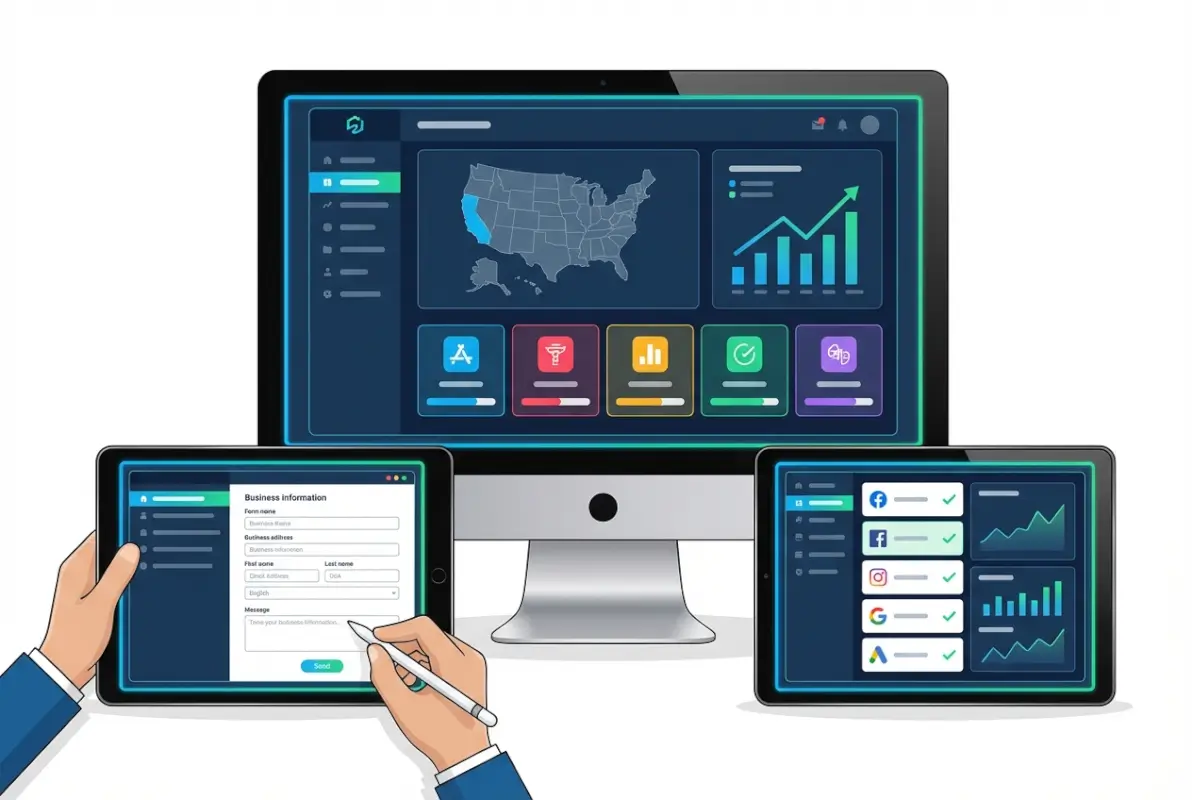
While the Core Five share common optimization principles, each platform has unique features and ranking factors that require specialized tactics. Generic optimization leaves performance on the table—platform-specific strategies maximize visibility on each channel.
Google Business Profile: The Foundation Platform
Google Business Profile (formerly Google My Business) is the single most important listing for local search visibility. It powers Google’s Local Pack—the map and three business listings that appear at the top of local search results. According to Google’s official business guidance, complete profiles are twice as likely to be considered reputable by consumers.
Start by selecting your primary category carefully—this is the most influential ranking factor after proximity and relevance. Add photos in specific categories: exterior, interior, products, team, and menu (for restaurants). Upload at least 10 photos initially, then add 3-5 new photos monthly. Businesses with 100+ photos receive 520% more calls than average.
Use Google Posts weekly to share updates, offers, events, or news. Posts appear directly in your Business Profile and increase engagement signals that boost rankings. Add your products or services with descriptions and prices—this data feeds Google’s knowledge graph and can trigger rich results in search.
Enable messaging to let customers contact you directly through Search and Maps. Enable booking if you offer appointments. The more features you activate, the more Google rewards your profile with visibility. Monitor your performance metrics in the Insights tab to see how customers find and interact with your listing.
Bing Places for Business: The Underestimated Opportunity
Most businesses ignore Bing Places, creating massive opportunity for those who optimize it. Bing powers 36% of desktop searches in the United States, and its demographic skews older and more affluent—valuable customers for many businesses. The platform verification process is straightforward, particularly if you’ve already verified with Google.
Bing Places allows detailed business descriptions with more character count than Google, making it ideal for keyword-rich content. Include your target search terms naturally in your description. Add your business hours, payment methods, parking details, and all available attributes. Upload high-quality photos—Bing’s algorithm heavily weights visual content.
One advantage of Bing Places: less competition means easier rankings. I’ve helped businesses appear in Bing’s local pack for competitive search terms they couldn’t crack on Google, driving significant qualified traffic from Microsoft’s ecosystem including Windows search, Edge browser, and Cortana voice queries.
Apple Maps Business Connect: Capturing iOS Users
With iPhone market share exceeding 50% in the United States, Apple Maps represents a crucial discovery channel. Apple Maps Business Connect allows businesses to claim and manage their listing across Apple Maps, Siri, Wallet, and other Apple services.
Verification requires an Apple ID and business documentation (EIN, business license, or utility bill). The approval process typically takes 3-7 days. Once verified, complete your business information including hours, photos, categories, and amenities. Apple’s ecosystem particularly values accuracy—incorrect information results in ranking penalties.
Apple Maps users tend to take action—they’re often on-the-go and ready to visit businesses immediately. Optimize your Apple Maps listing with accurate hours, clear photos of your storefront, and comprehensive contact information. According to research from Branch Metrics, Apple Maps drives 3x more in-person visits than other mapping platforms for retail and restaurant businesses.
Yelp for Business: The Review Authority
Yelp remains the dominant review platform for restaurants, retail, and many service businesses. With 178 million monthly users, it’s often the first stop for consumers researching local businesses. Yelp reviews also appear in Apple Maps and influence rankings across multiple platforms.
Claim your free business account—never pay for review removal or enhancement, it violates Yelp’s terms and can result in penalties. Complete your profile thoroughly: add photos, business hours, price range, attributes (parking, WiFi, accepts credit cards), and a compelling business description. Yelp allows more visual content than most platforms—take advantage with menu photos, team photos, and product shots.
Yelp’s algorithm prioritizes businesses that respond to reviews consistently, update their photos regularly, and maintain accurate information. Use Yelp’s Request a Quote feature for service businesses to capture high-intent leads directly through the platform. Monitor your Yelp performance metrics to understand which search terms drive traffic to your profile.
Facebook Business Pages: Social Discovery and Social Proof
Facebook Business pages function as hybrid social profiles and business listings. With 2.8 billion monthly active users, Facebook remains a crucial platform for business discovery, particularly for consumer-focused businesses. Facebook’s local awareness features help businesses reach nearby customers through organic and paid distribution.
Create a complete Facebook Business page with your business information, hours, services, photos, and a link to your website. Encourage check-ins and recommendations (Facebook’s evolution of the traditional “like” button). Recommendations carry more weight than likes and contribute to local search relevance.
Post regularly to maintain engagement—3-5 times weekly keeps your business top-of-mind for followers and signals activity to Facebook’s algorithm. Use Facebook Events for promotions, grand openings, or special occasions. Enable messaging to let customers contact you directly, and respond promptly to messages and comments.
Facebook’s unique advantage is social amplification—satisfied customers can share your business with their networks, creating organic reach that other platforms can’t match. One of my retail clients generates 40% of their new customers through Facebook shares and recommendations, far exceeding their results from other business listing sites for usa.
How Citations and Listings Drive Local SEO Performance
Business listings don’t just help customers find you—they’re fundamental ranking signals in local search algorithms. Understanding the connection between citations, listings, and SEO performance helps you prioritize your optimization efforts for maximum impact.

Search engines can’t visit your physical location to verify you exist, so they rely on third-party validation. When your business information appears consistently across authoritative sources, search engines interpret this as legitimacy signals. The more high-quality citations you have, the more confident Google and Bing feel ranking your business in local results.
Citation Building and Local Ranking Factors
Citations—mentions of your business name, address, and phone number on other websites—are among the top five ranking factors for local search according to Moz’s annual Local Search Ranking Factors survey. Not all citations carry equal weight. Citations from high-authority sites like the Core Five platforms matter significantly more than obscure directory listings.
Quality beats quantity in citation building. Ten citations from authoritative platforms outperform 100 citations from low-quality directories. Focus your effort on the best business listing sites in usa that have strong domain authority, relevant traffic, and clean data that search engines trust.
Citation consistency is equally critical. When search engines find conflicting information (one phone number on Google, a different one on Yelp), they don’t know which to trust, so they may suppress your visibility entirely rather than display potentially incorrect information. Inconsistent citations actively harm your rankings.
Auditing and Maintaining Citation Accuracy
Set up a quarterly citation audit to catch inconsistencies before they damage your rankings. Create a spreadsheet listing all platforms where your business appears, along with the exact NAP information displayed on each. Use tools like Google search operators (searching “your business name” + “phone number”) to find unexpected listings you didn’t create.
When you discover incorrect information, claim the listing if possible and update it. If you can’t claim it, contact the directory’s support team with documentation proving the correct information. Some directories are notoriously slow to update, so persistence matters. Document your correction requests in case you need to prove due diligence to search engines.
If you’ve recently changed your business name, moved locations, or changed phone numbers, update all five Core platforms immediately, then systematically update secondary directories over the following weeks. Search engines typically recognize updates within 2-4 weeks, but the sooner you propagate changes across the web, the less ranking volatility you’ll experience.
Your 4-Week Business Listing Optimization Action Plan
Theory means nothing without execution. This four-week action plan provides a concrete roadmap for optimizing your presence on business listing sites usa, with specific tasks, time estimates, and success metrics for each week.

Week 1-2: Foundation Setup (Google, Bing, Apple Maps)
Week 1 Tasks: Claim and verify Google Business Profile. Complete every field in your profile: business name, address, phone, website, hours, categories (primary and all relevant secondary categories), attributes, and business description. Upload 15-20 high-quality photos spanning exterior, interior, products, team, and logo. Set up Google Posts and publish your first post. Enable messaging and booking if applicable. Time investment: 3-4 hours.
Week 2 Tasks: Claim and verify Bing Places for Business using your Google verification. Mirror your Google Business Profile information exactly—identical NAP, same categories, same photos. Add Bing-specific enhancements like extended business description and additional service details. Claim and verify your Apple Maps listing through Business Connect, again mirroring your standardized NAP information. Upload photos and complete all available fields. Time investment: 2-3 hours.
Success Metrics: All three platforms verified and complete. NAP information identical across all three. At least 15 photos on each platform. Zero empty fields in any profile.
Week 3-4: Social Platforms, Review Management, and Ongoing Optimization
Week 3 Tasks: Claim your Yelp business listing (or create one if none exists). Complete your profile with photos, hours, amenities, and a detailed business description. Set up review monitoring through Yelp’s notification system. Claim or create your Facebook Business page. Fill out all information sections, upload photos, enable reviews and recommendations, and publish your first 2-3 posts. Time investment: 2-3 hours.
Week 4 Tasks: Set up a review monitoring system (email alerts from all five platforms). Create response templates for positive and negative reviews. Respond to all existing reviews across all platforms. Schedule your first monthly listing update day (last Friday of each month) to add new photos and refresh information. Document your NAP information in a master reference document. Time investment: 2-3 hours.
Success Metrics: All five Core platforms complete and verified. Review monitoring active on all platforms. All existing reviews responded to. Monthly maintenance calendar established. Master NAP document created.
| Week | Platform Focus | Time Required | Key Outcome |
|---|---|---|---|
| Week 1 | Google Business Profile | 3-4 hours | Verified, complete profile with photos |
| Week 2 | Bing Places + Apple Maps | 2-3 hours | Both platforms verified and optimized |
| Week 3 | Yelp + Facebook Business | 2-3 hours | Social platforms complete |
| Week 4 | Review management + systems | 2-3 hours | Monitoring active, responses complete |
After completing this four-week plan, shift to maintenance mode: monthly photo updates, weekly responses to new reviews, quarterly NAP audits, and ongoing optimization as platforms release new features. The businesses that maintain consistent optimization efforts see compounding results—each month builds on the previous month’s momentum.
For businesses looking to create their own directory platform to aggregate and manage listings, TurnKey Directories offers WordPress-based solutions that streamline directory management with built-in features for local SEO optimization and listing aggregation.
Frequently Asked Questions
What are the most important business listing sites in USA for local businesses?
The five most important platforms are Google Business Profile, Bing Places for Business, Apple Maps Business Connect, Yelp for Business, and Facebook Business Pages. These platforms drive 87% of local search traffic and serve as the primary data sources that search engines use to validate business information and determine local search rankings.
How do business listings improve local SEO and search rankings?
Business listings create citations that search engines interpret as legitimacy signals. Consistent NAP information across authoritative platforms helps search engines verify your business exists and serves your claimed location. Complete, optimized listings contribute to local ranking factors including relevance, prominence, and proximity, directly influencing your visibility in local search results and map pack placements.
Should I list my business on every directory I can find?
No, quality beats quantity in citation building. Focus on the five core platforms first, ensuring complete optimization on each. Adding secondary directories only makes sense after mastering the primary platforms. Too many low-quality directory listings can actually harm your rankings if they contain inconsistent information or are flagged as spam by search engines.
What information should I include in my business listings?
Include your complete business name, physical address, phone number, website, business hours, primary and secondary categories, business description, services or products, payment methods, parking information, and accessibility features. Upload at least 10-15 high-quality photos showing your exterior, interior, products, team, and logo. Complete every available field on each platform for maximum visibility.
How often should I update my business listing profiles?
Update your listings immediately whenever business information changes. For ongoing optimization, add new photos every 2-4 weeks, publish Google Posts weekly, respond to reviews within 24-48 hours, and conduct a full NAP consistency audit quarterly. Regular activity signals to both search engines and customers that your business is active and engaged.
How long does it take to see results from optimizing business listings?
Initial visibility improvements typically appear within 2-4 weeks of creating optimized listings, with significant traffic increases becoming evident at the 2-3 month mark. Google Business Profile often shows the fastest results, while building citation authority across multiple platforms requires consistent effort over several months. Regular optimization and review management accelerate results substantially.
Can I manage all my business listings from one platform?
Several tools claim to manage multiple listings from one dashboard, but platform-specific optimization often requires direct access to each platform. Solutions like TurnKey Directories help businesses aggregate directory information and maintain consistency, but the most effective approach combines centralized tracking with platform-specific optimization for features unique to each directory.
What should I do if I find duplicate listings for my business?
Report duplicate listings immediately through each platform’s support system. For Google Business Profile, use the “Suggest an edit” feature to mark duplicates. On Yelp, flag duplicates through their business support. Consolidate all reviews and information into the primary listing before removing duplicates. Duplicate listings confuse search engines and dilute your review authority across multiple profiles.
Take Control of Your Local Visibility Today
The path to local search dominance isn’t complicated—it’s just deliberate. While your competitors scatter their effort across dozens of mediocre listings, you now have a focused strategy: optimize relentlessly on the five platforms that actually drive business results.
The businesses winning local search in 2026 aren’t doing anything magical, they’re simply executing the fundamentals with consistency. They maintain perfect NAP consistency. They complete every profile field. They respond to every review. They add fresh photos monthly. They treat their listings as dynamic assets, not static entries.
Your Next Steps
Stop treating business listings as a checkbox exercise. Start treating them as your most cost-effective marketing channel. Block time on your calendar this week to begin your four-week optimization plan.
- ✓ Claim your Google Business Profile today (don’t wait for the postcard)
- ✓ Document your canonical NAP information in a master reference document
- ✓ Set up review monitoring on all five core platforms by end of week
- ✓ Schedule your monthly listing maintenance day (last Friday works well)
- ✓ Upload at least 10 photos to each platform within the next two weeks
The local businesses that thrive in competitive markets aren’t necessarily better at what they do—they’re just better at being found by customers who need them. Your expertise means nothing if customers can’t discover you, and the top business listing sites in USA are where those discoveries happen.
Start with Google Business Profile this week. Get it verified and complete. Then systematically work through the other four platforms over the following weeks. Monitor your performance metrics monthly. Adjust based on what the data tells you. Within 90 days, you’ll have built a foundation for local visibility that compounds in value month after month.
Was this article helpful?