
Best SEO Directories for Maximum Visibility: 2025 Guide
Opens a Google-translated copy of this article in a new tab.
Online directories aren’t dead—but most businesses are using them completely wrong. While competitors waste time submitting to hundreds of low-quality directories, smart businesses are focusing on 5-8 high-authority platforms that actually drive traffic and conversions. The difference in results? Night and day.
Here’s what nobody tells you: the best online directories for your business aren’t necessarily the biggest ones. A niche directory with 10,000 highly targeted users will outperform a generic directory with millions of disengaged visitors every single time. Yet most SEO advice still treats all directories the same, leading businesses to waste countless hours on placements that deliver zero ROI.
The directory landscape has fundamentally shifted. Google’s local algorithm updates, the rise of AI-powered search, and changing user behavior have transformed which platforms matter and how to optimize them. If your directory strategy hasn’t evolved since 2020, you’re leaving serious visibility on the table.
TL;DR – Quick Takeaways
- Quality over quantity: Focus on 5-8 authoritative directories rather than mass submissions to hundreds
- Niche directories win: Industry-specific platforms deliver higher-intent traffic and better conversion rates
- NAP consistency is critical: Identical Name, Address, Phone data across all listings powers local rankings
- Reviews drive decisions: Active review management can increase conversions by 43% or more
- Measurement matters: Track referral traffic, impressions, and downstream conversions to prove ROI
- Voice search is here: Optimize listings for conversational queries and mobile discovery
How Online Directories Fit Into Modern SEO and Discovery
Let’s clear up a persistent myth: directory submissions won’t magically catapult you to page one of Google. Anyone promising that is stuck in 2010. What directories actually do is create a web of trust signals that validate your business’s legitimacy and location—factors that matter tremendously for local search visibility.
Think of directories as verification checkpoints rather than link-building opportunities. When Google sees consistent business information across reputable platforms, it interprets this as evidence that you’re a real, established business worthy of showing to searchers. According to research from Google’s SEO Starter Guide, these citation signals contribute to overall domain authority and local search prominence.
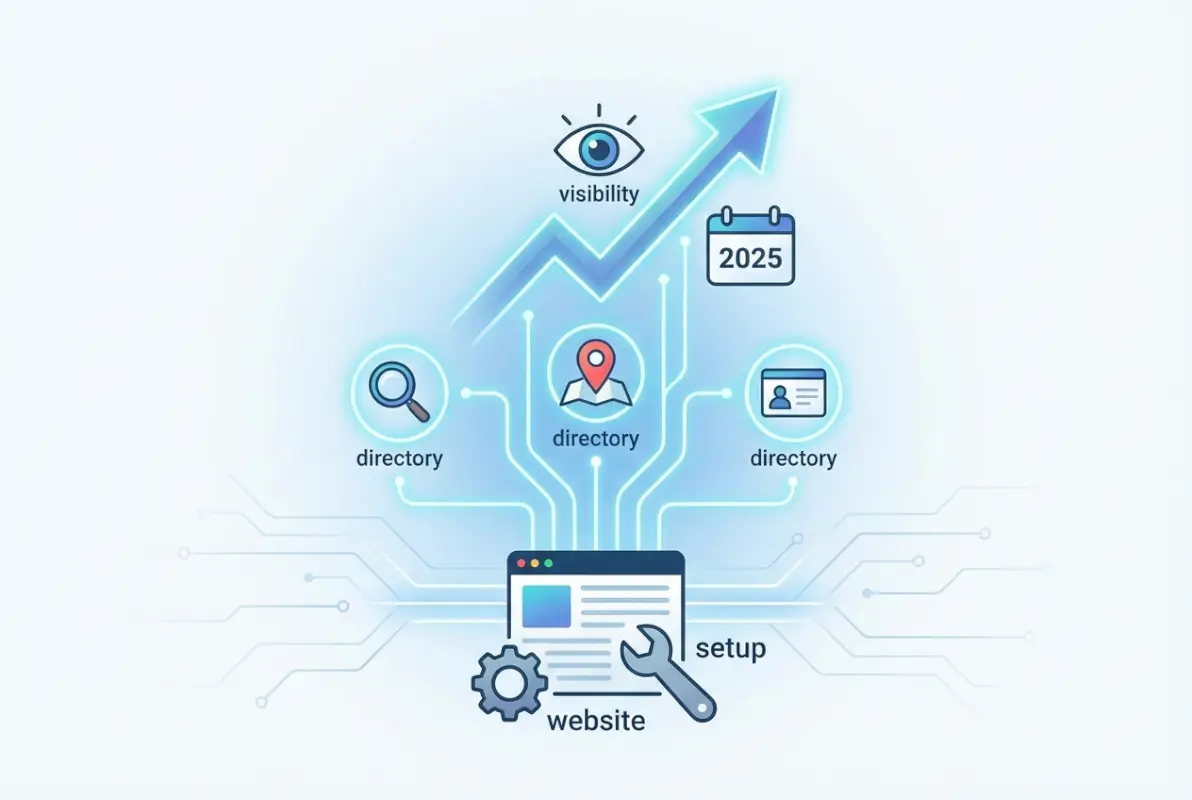
What Directories Contribute Today (and What They Don’t)
Modern directories serve three primary functions: brand presence, local citation building, and structured data distribution. They’re not primarily about “link juice” anymore—most reputable directories use nofollow links anyway. The real value lies in appearing where your potential customers are actively searching for solutions.
Here’s what actually matters: when someone searches “best marketing agency near me,” Google pulls results from multiple sources including your Google Business Profile, citations in local directories, and reviews across platforms. The businesses with consistent, complete directory profiles across 5-10 key platforms consistently outrank those with sparse or inconsistent presence.
What directories don’t do: they won’t fix fundamental SEO problems, they won’t compensate for poor website content, and they won’t generate qualified leads if you’re listing in the wrong places. I’ve seen businesses submit to 200+ directories and get zero meaningful traffic because they ignored industry-specific platforms where their actual customers search.
Balancing Directories With Other Visibility Channels
The smartest approach treats directories as one component of a broader visibility strategy, not a standalone tactic. Your Google Business Profile should be your foundation—it’s free, directly integrated with Google Search and Maps, and drives more traffic than any other directory for most local businesses.
From there, layer in industry-specific directories (like Healthgrades for medical practices or Avvo for lawyers), review platforms where your customers already spend time, and general directories with strong domain authority. This creates multiple pathways for discovery while reinforcing your NAP consistency across the web.
Content marketing and earned media amplify your directory presence. When you publish valuable content and earn mentions from reputable sources, you build the topical authority that makes your directory listings rank higher in platform-specific searches. According to Pew Research Center Internet usage trends, consumers increasingly rely on multiple touchpoints before making purchasing decisions—directories serve as crucial validation points in that journey.
5 Core Directory Tactics for 2025–2026 (and How to Prioritize Them)
Most businesses approach directories with a spray-and-pray mentality: submit everywhere, hope something sticks. This wastes time and often hurts more than helps. The businesses getting real results follow a disciplined, data-driven approach that prioritizes quality placements over quantity.
The shift toward quality-focused directory strategies reflects broader SEO evolution. Search engines have become sophisticated enough to distinguish between valuable citations and spammy mass submissions. Low-quality directory links can actually trigger spam filters, while strategic placements on authoritative platforms strengthen your overall domain reputation.

Build a Tight, High-ROI Directory List (5-8 Top-Tier Targets)
Start by identifying the 5-8 directories that will deliver the most value for your specific business. This list should include your Google Business Profile (non-negotiable), 2-3 industry-specific platforms, and 2-3 high-authority general directories that align with your target audience.
Here’s how to evaluate potential directories: check their domain rating using tools like Ahrefs or Moz (aim for DR 50+), verify they actually receive organic traffic (not just exist as link farms), confirm they have quality standards for listings, and ensure they’re actively maintained with recent updates. According to analysis from directory backlinks research at Backlynk, niche directories with engaged users consistently outperform massive general directories for lead quality.
For local service businesses, prioritize Google Business Profile, Yelp, and your local Chamber of Commerce directory. For B2B companies, focus on LinkedIn, industry trade association directories, and platforms like Crunchbase. Tech companies should target G2, Capterra, and specialized software directories relevant to their category.
Optimize Each Listing for Accuracy, Consistency, and Conversion
Creating the listing is maybe 20% of the work—optimization is where the magic happens. Every field should be completed with identical information across all platforms. Your business name, address, and phone number (NAP) must match exactly, character for character, including punctuation and abbreviations.
Category selection matters more than most businesses realize. Choose the most specific, relevant categories available rather than broad generic options. A “Pediatric Dentist” will outrank a general “Dentist” for pediatric searches. Use all available category slots, but prioritize accuracy over quantity.
Your business description should include relevant keywords naturally while actually being useful to humans. Explain what makes you different, who you serve, and what problems you solve. Include a clear call-to-action directing people to your website, phone number, or appointment booking system.
Upload high-quality photos—businesses with photos get 42% more requests for directions and 35% more clicks to their websites according to Statista’s internet usage data. Include exterior shots, interior views, team photos, and examples of your work or products. Videos perform even better when platforms support them.
| Optimization Element | Impact Level | Time Investment |
|---|---|---|
| NAP Consistency | Critical | Low |
| Complete Profile Fields | High | Medium |
| Quality Photos/Videos | High | Medium |
| Review Generation | Very High | Ongoing |
| Regular Updates | Medium | Low |
Leveraging Niche and Vertical Directories to Extend Reach
Here’s where most businesses miss the biggest opportunity: best niche directories 2025 often deliver 10x better results than massive general platforms. A healthcare provider will get far more qualified patient inquiries from Healthgrades than Yelp, even though Yelp has exponentially more total traffic.
The reason is intent alignment. Users browsing industry-specific directories are further along in their decision journey and have higher purchase intent. Someone on Avvo searching for a divorce attorney is ready to hire, not just casually researching. This intent concentration translates directly to higher conversion rates and better ROI on your time investment.

Local, Niche, and AI/SaaS Directories as Signal-Rich Placements
For local service businesses, hyperlocal directories like NextDoor and community-specific platforms create direct connections with nearby customers. These platforms emphasize neighborhood recommendations and local trust signals, making them particularly effective for businesses like contractors, restaurants, and personal services.
Industry-specific directories serve as authoritative sources within their verticals. Legal professionals benefit from platforms like Justia and FindLaw, while software companies need presence on G2, Capterra, and Product Hunt. These platforms don’t just list businesses—they facilitate detailed comparisons, feature authentic user reviews, and often integrate directly into purchasing workflows.
For B2B technology companies, specialized directories like BuiltWith, Stackshare, and industry-specific marketplaces connect you with technical buyers actively researching solutions. These platforms attract users with significant purchasing authority and specific pain points your product addresses.
AI and SaaS directories have exploded in importance as businesses seek specialized tools. Platforms dedicated to AI solutions, marketing tools, or development resources attract highly targeted audiences with clear buying intent. If you operate in one of these categories, specialized directory placement should be a top priority.
Case-Aware Placement and Review Signals
Your listing strategy should vary by platform based on how users interact with that directory. On review-heavy platforms like Yelp or G2, your review volume and average rating matter more than your description. On comparison-focused platforms like Capterra, detailed feature lists and pricing transparency drive conversions.
Review generation and management deserve dedicated attention. Businesses with 40+ reviews see conversion rates increase by 43% compared to those with fewer than 10 reviews. Implement systematic review requests immediately after positive customer interactions, making the process as frictionless as possible with direct review links.
Responding to reviews—both positive and negative—signals active management and customer care. I’ve watched businesses completely turn around their reputation by thoughtfully addressing every negative review with solutions and following up publicly. Future customers read these exchanges and make judgments about your business based on how you handle criticism.
Directory Submission Strategy, Submission Hygiene, and Risk Mitigation
The fastest way to waste money and potentially harm your SEO is aggressive bulk directory submission. Those services promising to submit your business to 500+ directories for $99? They’re creating more problems than they solve, flooding low-quality directories that search engines may flag as spam networks.
Smart submission focuses on quality control and verification. Every directory on your target list should be manually vetted for domain authority, active maintenance, and real user traffic. According to insights from Forbes’ analysis of local SEO trends, businesses taking a curated approach to directories see measurably better results than those pursuing quantity-based strategies.

How to Submit Without “Spammy” Signals
Manual submission remains the gold standard. While time-intensive, personally completing each directory listing ensures accuracy and allows platform-specific optimization. You can tailor descriptions, select the most relevant categories, and upload appropriate media for each platform’s unique audience.
If you use submission services, vet them thoroughly. Quality services charge significantly more than $100 and provide detailed reports showing exactly where your business was listed, with confirmation of approval. They should also offer ongoing monitoring to catch and correct inaccuracies that emerge over time.
Nofollow links from directories aren’t a problem—they’re expected. Don’t chase directories promising “dofollow” links as their primary selling point; these often exist solely for SEO manipulation and carry real penalty risks. Focus instead on directories real users visit to find businesses like yours.
Monitoring, Updating, and Maintaining Directory Profiles
Directory management is ongoing, not set-and-forget. Business information changes—you update hours, add services, move locations, change phone numbers. Every change must be propagated across all your directory listings to maintain NAP consistency.
Set quarterly calendar reminders to audit your top 8-10 directory listings. Check for accuracy, update photos, refresh descriptions to highlight new services or achievements, and review your competitor’s profiles to identify optimization opportunities you’ve missed.
Monitor directory domain authority and traffic trends. Platforms rise and fall in relevance—a directory that was valuable three years ago might be abandoned today. Use tools like Ahrefs or Semrush to track domain rating changes and organic traffic estimates. Replace declining directories with emerging platforms in your industry.
For businesses operating their own directories, platforms like TurnKey Directories provide WordPress-based solutions with built-in tools for managing submissions, maintaining data quality, and implementing SEO best practices across your directory platform.
Measurement, Attribution, and Actionable Next Steps
If you can’t measure it, you can’t improve it. Yet most businesses have no idea which directories actually drive traffic and conversions. Without measurement, you’re essentially operating blind, unable to identify which platforms deserve more investment and which should be abandoned.
The good news is that directory performance is highly trackable with the right setup. The key is implementing tracking mechanisms before you launch your directory campaign so you have baseline data to compare against.

Metrics That Matter for Directory Programs
Start with the basics: impressions, clicks, and click-through rates available in Google Search Console for your verified directory listings. These metrics show how often your listings appear in search results and how compelling they are to searchers.
Referral traffic from directories appears in Google Analytics under Acquisition > All Traffic > Referrals. Set up custom UTM parameters for directory links when possible to track them more precisely. You’ll see exactly how many visits each directory sends and can analyze behavior metrics like bounce rate and pages per session to gauge traffic quality.
Conversion tracking is where directory ROI becomes clear. Set up goals in Google Analytics for actions like form submissions, phone calls, appointment bookings, or purchases. Then segment by referral source to see which directories drive actual business outcomes, not just visits.
Phone call tracking through services like CallRail or CallTrackingMetrics assigns unique phone numbers to each directory listing, attributing inbound calls to specific platforms. For service businesses where phone calls represent primary conversion actions, this data is invaluable for understanding directory ROI.
How to Report Progress and Optimize Over Time
Create a simple dashboard tracking your core directory metrics monthly. Include total impressions across all directories, total clicks, overall CTR, referral traffic volume, and conversions attributed to directory sources. This high-level view shows trends and makes it easy to spot when performance improves or degrades.
Platform-specific reporting reveals which directories deserve more attention. If G2 drives 10x more qualified leads than Capterra despite similar effort investment, you know where to focus optimization energy. Similarly, if a directory shows high impressions but zero clicks, your listing needs better photos or a more compelling description.
Competitive benchmarking provides context for your performance. Tools like Local Falcon show how your listings rank against competitors in local search results, while manual reviews of competitor profiles on shared directories reveal optimization opportunities you’ve overlooked.
Iterate based on data, not assumptions. Test different business descriptions, try new photo sets, experiment with service categories, and measure the impact. Small optimizations compound over time—a 10% improvement across five directories can meaningfully impact your total lead volume.
What are the best online directories for local businesses?
For local businesses, Google Business Profile is essential, followed by Yelp, Apple Maps, and Facebook Business Pages. Additionally, focus on industry-specific directories like Healthgrades for medical practices or HomeAdvisor for contractors, plus your local Chamber of Commerce directory for community visibility and local citation strength.
Do directory listings still help SEO in 2026?
Yes, but their value has shifted from link-building to citation signals and brand presence. Quality directory listings contribute approximately 16% of local ranking factors according to industry research, primarily through NAP consistency and trust signals rather than raw link equity.
How should I choose which directories to list my business in?
Prioritize directories where your target customers actively search: start with Google Business Profile, add 2-3 industry-specific platforms relevant to your niche, and include 2-3 high-authority general directories with domain ratings above 50. Focus on quality and relevance over quantity.
What information must be consistent across all directory listings?
Your NAP data—business Name, Address, and Phone number—must be character-for-character identical across all platforms, including punctuation and abbreviations. Also maintain consistency in your website URL, business category selections, and service area definitions to maximize local SEO impact.
How do I measure the impact of directory listings on my business?
Track directory performance using Google Search Console for impressions and clicks, Google Analytics for referral traffic and conversions, and call tracking software for phone inquiries. Create a monthly dashboard monitoring these metrics by directory source to identify your highest-ROI platforms.
Should I respond to reviews on directory listings?
Absolutely—businesses that respond to reviews are perceived as 1.7 times more trustworthy. Reply to all reviews within 24-48 hours, acknowledge positive feedback graciously, address negative reviews professionally with solutions, and take detailed discussions offline while maintaining public transparency about resolution efforts.
What are high-value niche directories for tech and SaaS businesses?
Tech and SaaS companies should prioritize G2, Capterra, Product Hunt, and Crunchbase as core platforms. Also consider BuiltWith and Stackshare for developer tools, plus industry-specific marketplaces relevant to your solution category—these platforms attract high-intent buyers actively researching purchase decisions.
Are paid directory listings worth the investment?
It depends on the directory and your business model. Industry-specific paid directories with engaged audiences typically deliver strong ROI, while general paid directories rarely outperform quality free alternatives. Always verify traffic data and request case studies before committing to paid placements.
Take Action: Your 30-Day Directory Optimization Plan
Directory optimization isn’t a one-time project—it’s an ongoing visibility strategy that compounds over time. The businesses seeing the best results treat their directory presence as a living ecosystem requiring regular attention and refinement.
Start this week by auditing your current directory presence. Search for your business name across major platforms and document where you’re listed, what information appears, and how complete each profile is. You’ll likely discover outdated listings, inconsistent NAP data, and missed opportunities on platforms you didn’t know existed.
Within 30 days, implement this action plan: optimize your Google Business Profile completely with photos, services, and posts; claim and complete profiles on your top 5 industry-specific directories; set up tracking in Google Analytics for directory referral traffic; implement a review generation system for your best-performing platforms; and create a quarterly calendar reminder for ongoing profile maintenance.
The visibility benefits compound remarkably fast. Businesses typically see measurable traffic increases within 60-90 days of implementing a focused directory strategy, with lead quality improving even faster as you concentrate on high-intent niche platforms.
Ready to Build a Powerful Directory Presence?
Stop wasting time on low-value directory submissions and start focusing on the 5-8 platforms that will actually drive traffic and conversions for your specific business. The directory landscape rewards quality and consistency over quantity—every time.
Start with your Google Business Profile today, then methodically expand to niche directories where your ideal customers actively search.
For businesses building or managing directory platforms, solutions like white label directory software from TurnKey Directories provide the infrastructure to create high-quality, SEO-optimized directory experiences that both users and search engines value.
The most successful directory strategies combine disciplined platform selection, meticulous profile optimization, systematic review management, and data-driven iteration. This approach transforms directories from a checkbox SEO tactic into a sustainable customer acquisition channel that continues delivering results month after month.
Was this article helpful?