6 Simple Steps to Create an Online Directory Website That Drives Revenue

Generating summary...
Building a directory website isn’t just about listing businesses—it’s about engineering a revenue machine that connects searchers with exactly what they need while simultaneously creating lucrative opportunities for advertisers. Most entrepreneurs approach online directories like digital phone books, missing the fundamental shift that makes modern directories profitable: they’re multi-sided marketplaces where every search, click, and listing represents a monetization opportunity. The difference between a stagnant directory and one generating five-figure monthly revenue often comes down to six strategic decisions made before you publish your first listing.
I remember launching my first directory in 2019, convinced that simply aggregating listings would attract users. Three months and zero revenue later, I learned that successful directories require intentional architecture around monetization from day one. The platforms making real money today combine premium listing models with subscription tiers, advertising inventory, and lead generation systems—creating multiple revenue streams that compound as the directory scales. What you’re about to read is the blueprint I wish I’d had then, distilled into a repeatable framework that works whether you’re targeting local service providers or a specialized B2B niche.
TL;DR – Quick Takeaways
- Niche positioning drives profitability – focused directories with clear buyer personas outperform broad listings by 3-5x on revenue per listing
- Diversify revenue from launch – combining premium listings, subscriptions, and lead-gen creates stability and scales faster than single-model approaches
- Data quality is your moat – verified listings and unique data sources create competitive barriers that justify premium pricing
- High-intent traffic multiplies revenue – SEO, content, and targeted channels deliver visitors ready to convert into leads or advertisers
- Trust systems unlock premium tiers – review moderation, verification badges, and compliance infrastructure enable higher-value monetization
Validate and Position Your Directory Niche
The most common mistake in directory building is choosing a market based on what seems popular rather than what demonstrates clear buyer intent and monetization potential. A profitable niche exhibits three characteristics: active listings that businesses will pay to enhance, searchers with urgent needs who convert quickly, and a gap in existing solutions that creates room for a new entrant. For example, a directory of certified home inspectors in mid-sized cities might have fewer total listings than a generic contractor directory, but each listing represents a business willing to pay $50-200 monthly for quality leads—dramatically better economics than listing restaurants where conversion intent is weaker.

Start by mapping buyer personas for both sides of your marketplace, the businesses listing themselves and the searchers looking for services. A directory listing website succeeds when you understand decision pain points: what keeps a searcher awake at night (finding a trustworthy contractor after a bad experience), and what a business considers “premium” enough to pay for (guaranteed placement when someone searches their specialty). Interview 10-15 potential business customers about their current lead sources and what features would justify monthly spend. If you can’t identify clear willingness to pay before building, you’re creating a hobby project, not a business.
Define a Focused Niche and Buyer Personas
Specificity beats breadth in directory economics because narrow niches allow you to become the authoritative source faster and charge more for that authority. According to U.S. Census Bureau economic data, specialty service directories command 40-60% higher listing fees than general directories in the same geographic area. Choose a vertical where you can identify the top 500-1,000 potential listers within 60 days—not so broad that data acquisition becomes overwhelming, but large enough to support multiple revenue tiers as you scale. Local B2B services (commercial cleaners, IT consultants, specialized healthcare providers) often hit this sweet spot better than consumer retail.
Your buyer persona work should answer: who searches for these listings, what triggers the search (emergency need, planned project, comparison shopping), how much is a qualified lead worth to the business, and what alternatives exist today? If you’re building a directory of wedding photographers, your searcher is planning 6-12 months out with a $2,000-5,000 budget, while a lead might be worth $150-300 to a photographer. That math supports premium listing models. Compare that to a restaurant directory where searchers decide in minutes and individual visits generate low per-customer value—much harder to monetize at scale without massive traffic volume.
Map Your Value Proposition and Moat
Your competitive moat in directories comes from data advantages that competitors can’t easily replicate: verified listings that reduce buyer risk, proprietary review systems with fraud prevention, AI-assisted matching that improves search relevance, or exclusive partnerships with industry associations. Research from Statista’s online advertising analysis shows that directories with verified listing badges convert 35-50% better than unverified competitors, creating a flywheel where quality attracts more searchers, which attracts more premium listers. Decide early what verification means in your niche—background checks for childcare providers carry different weight than social proof for graphic designers.
Long-term moat building requires thinking beyond launch-day features to ongoing data curation that compounds over time. Will you moderate reviews to maintain quality (labor-intensive but valuable)? Can you integrate unique data sources like licensing databases, insurance verification APIs, or industry certifications? Platforms like TurnKey Directories and similar directory plugins for WordPress provide the technical foundation, but your moat comes from the data layer and curation processes you build on top. Partner ecosystems matter too, exclusive relationships with trade associations or franchises can give you preferential access to listings that competitors can’t match, creating sustainable differentiation as you scale.
Build a Clear Monetization Framework
Revenue diversification from day one protects you from market shifts and maximizes the value extracted from each visitor and listing. The highest-performing directories layer three to five revenue streams: tiered premium listings as the foundation, subscription memberships for ongoing visibility, pay-per-lead or commission models for high-intent conversions, and advertising inventory sold directly or through networks. According to industry analysis from Forbes business software reviews, directories combining at least three models achieve 2.5x higher revenue per active listing than single-model platforms—and weather seasonal fluctuations better because different streams peak at different times.
Start with premium listings because they’re easiest to implement and explain: businesses pay for enhanced visibility (featured placement, more photos, video, priority in search results) compared to basic free or low-cost listings. Structure three tiers—basic, premium, and elite—with meaningful feature differentiation at each level. Your basic tier might offer a simple listing with contact info, premium adds photos and social links for $49/month, and elite includes video, priority placement, and verified badges for $149/month. The psychology here matters; most businesses anchor to the middle tier, so price your premium option at the point you actually want the majority to buy. Elite then serves as both an upsell and a positioning tool that makes premium feel reasonable.
Core Monetization Models to Combine
Premium listing bundles work best when tied to measurable outcomes that businesses care about: increased visibility in category searches, placement in geographic maps, or inclusion in email newsletters to searchers. Offer annual discounts (15-20% off) to improve cash flow and reduce churn, a business paying $99/month is more likely to stick around when they’ve prepaid $999 for the year. Membership models add recurring revenue; you can charge searchers for unlimited access to verified provider reviews, or charge businesses for membership in a “certified provider network” that includes training, insurance discounts, and directory placement. The latter often works better in professional services niches where credentialing matters.
Avoid the trap of creating too many SKUs early—three listing tiers and one membership option is plenty for your first year. As you learn what customers actually value (analytics might show that video listings convert 3x better than photo-only), you can adjust features and pricing. Some directories successfully bundle lead notifications into premium tiers, for example, elite members get email alerts when someone searches their category in their zip code, creating urgency to upgrade. The key is aligning monetization with user behavior patterns you’ll observe once you have baseline traffic. If you’re unsure where to start, model your structure on what profitable directory websites in adjacent niches are doing, then differentiate on data quality or niche focus.
Ancillary Revenue Streams That Scale
Lead generation and pay-per-lead models unlock the highest per-transaction revenue but require more sophisticated tracking and trust systems. In this model, you charge businesses $15-75 per qualified lead (a searcher who fills out a contact form, calls, or requests a quote), with pricing tied to lead value in that vertical. HVAC leads might command $40-60 because job values are high, while photography leads might be $20-30. The challenge is defining “qualified” and preventing fraud—both businesses gaming the system and searchers submitting junk inquiries. Implement lead verification (phone number validation, email confirmation) and give businesses the ability to dispute low-quality leads within 48 hours to maintain trust.
Advertising revenue scales with traffic volume but should be approached carefully to avoid degrading user experience. Direct ad sales to businesses in related categories (a home inspector directory selling banner ads to mortgage lenders) typically generate higher CPMs ($8-25) than network ads from Google AdSense ($1-5 CPM). Reserve prime ad inventory (top of category pages, sidebar on listing detail pages) for direct sales, and backfill unsold space with network ads. Privacy-conscious targeting matters more now; contextual ads based on search category perform nearly as well as behavioral targeting without the compliance overhead. According to W3C web standards guidance, ensure ads don’t interfere with core directory functionality or accessibility—a poor ad experience drives both searchers and premium listers away.
Affiliate relationships and commission models round out your revenue mix for directories in specific niches. If your directory serves e-commerce businesses (Shopify stores, Etsy sellers), you can earn affiliate commissions by recommending tools those businesses need (payment processors, shipping software, accounting platforms). Commission models work when your directory facilitates transactions—vacation rental directories taking 10-15% of booking value, or B2B marketplaces charging 5-8% of contract value. These models require escrow or payment processing infrastructure, so they’re typically added after you’ve proven the core listing and lead-gen models. When you do implement them, the economics can be powerful; even a 5% commission on $500,000 in facilitated transactions yields $25,000 in revenue from users already engaged with your platform.
Platform Architecture and Listing Acquisition
Building a scalable directory requires a robust tech stack that ingests, verifies, and displays listings with minimal friction. Choose between CMS platforms (WordPress + directory plugins, custom Laravel/Rails builds) and dedicated SaaS directory builders, balancing time-to-market against control. Your hosting must support fast search queries, responsive maps/filters, and growing data volumes—plan for CDN delivery and indexed database fields from day one.

Listing ingestion pipelines determine your data freshness and breadth. Many successful directories combine automated imports (APIs, web scraping, CSV feeds) with manual curation to catch errors and enrich metadata. Establish strict field standards for business names, categories, geolocation, media assets, and contact details to ensure consistency and SEO-friendly URLs across thousands of listings.
Analytics and monitoring form the feedback loop for growth. Track listing velocity (new submissions per week), activation rate (percentage published), conversion rate from listing page to inquiry or booking, and advertiser retention. Instrument event tracking for clicks on contact buttons, map expansions, and premium-badge interactions to quantify the value of paid placements and inform pricing adjustments.
Listing ingestion and verification plan
Data pipelines should automate import from common sources—Yelp/Google scrapes, business registries, partner feeds—while flagging duplicates and incomplete records for manual review. Define acceptance criteria: minimum required fields, media quality standards, and category-assignment logic. A semi-automated workflow keeps overhead low while ensuring quality at scale, preventing the “junk listing” problem that erodes user trust.
Verification processes add credibility. Require email or SMS confirmation for self-submitted listings, and consider a secondary check against business licenses or domain ownership for premium tiers. Offer incentives for businesses to claim and enhance their entries, such as free trial months of premium placement or priority ranking in local searches, turning passive listings into active participants in your marketplace.
Growth-ready tech stack and analytics
Select a CMS or framework that supports custom taxonomies, faceted search, and geospatial queries. WordPress with Geodirectory or Business Directory Plugin covers most needs; for complex requirements consider headless CMS (Strapi, Contentful) with a React/Vue front-end. Ensure your stack includes rate limiting, caching layers, and database indexing to handle concurrent search traffic and API calls from advertisers checking their stats.
Analytics infrastructure must go beyond Google Analytics. Implement event-driven tracking for listing interactions (click-to-call, map views, social shares) and revenue events (subscription starts, premium upgrades, lead form submissions). Build or integrate dashboards that advertisers can access to see their listing performance—transparency increases renewal rates and justifies premium pricing by demonstrating measurable ROI.
| Stack Component | Options & Rationale | Scale Considerations |
|---|---|---|
| CMS/Framework | WordPress + plugins for speed; custom Laravel/Django for control | Plugin ecosystems cap at ~50k listings; custom scales to millions |
| Search & Filters | Elasticsearch or Algolia for faceted search, geospatial indexing | Sub-100ms queries critical; plan for query caching and replication |
| Hosting | Managed cloud (AWS/GCP) or specialized WordPress hosts (WP Engine) | Auto-scaling, CDN, and database read replicas for traffic spikes |
| Analytics | Google Analytics 4 + custom event tracking; Mixpanel/Amplitude for cohorts | Advertiser-facing dashboards increase transparency and retention |
Traffic, Content, and SEO for Directory Discovery
High-intent traffic amplifies every dollar of ad spend and premium listing value. SEO forms the backbone: create category landing pages, city-specific guides, and “best [service] in [location]” content that map to common search queries. Each category and location page should aggregate relevant listings, embed schema markup, and include user-generated reviews—search engines reward fresh, structured data with featured snippets and local pack placements.

Content marketing extends beyond on-site pages. Publish buyer guides, industry trend reports, and how-to articles that attract backlinks and social shares, positioning your directory as an authority. Guest posts on local blogs, chambers of commerce, and industry forums seed inbound links and referral traffic from communities already aligned with your niche, compounding both SEO and direct user acquisition.
Multi-channel growth reduces reliance on organic search volatility. Partnerships with trade associations, local event organizers, and complementary service providers can bring batches of verified listings and co-marketing opportunities. Referral programs that reward existing advertisers for bringing new businesses onboard create viral growth loops, turning your best customers into acquisition channels.
Content and SEO for targeted intent
Develop a content calendar that pairs editorial pieces with listing aggregations. For example, a “Top 10 Plumbers in Austin” article links to verified listings, driving internal link equity and satisfying long-tail search intent. Optimize title tags, headings, and image alt text with location + category keywords; use schema.org LocalBusiness and ItemList markup to help search engines parse your listings and surface them in rich results.
User-generated content—reviews, ratings, Q&A threads—boosts both SEO and trust. Moderate aggressively to prevent spam, but encourage verified customers to leave detailed feedback. Fresh reviews signal active engagement to search algorithms, and authentic testimonials convert undecided searchers into inquiries, raising the effective value of each listing impression and justifying higher ad rates.
Growth channels beyond SEO
Paid search and display advertising can seed initial traffic, but focus spend on high-LTV segments: businesses searching for directory submission services or local consumers with immediate buying intent. Retargeting site visitors who browsed listings but didn’t convert keeps your directory top-of-mind and lifts conversion rates for both free and premium listing sign-ups.
Community engagement and offline events build brand equity in local markets. Sponsor trade shows, chamber mixers, or industry webinars where your target advertisers congregate; offer free booth listings or exclusive premium trials to event attendees. Launch ambassador or affiliate programs that pay commissions on new advertiser referrals, turning satisfied users into a distributed sales force that scales beyond your core team.
| Growth Channel | Tactics & Timeline | Expected ROI Signal |
|---|---|---|
| Organic SEO | Category pages, city guides, schema markup; 6–12 months to rank | High lifetime value; long-tail keywords drive sustained free traffic |
| Content Marketing | Buyer guides, trend reports, guest posts; ongoing publishing cadence | Backlinks improve domain authority; social shares expand reach |
| Partnerships | Trade associations, chambers, event co-marketing; 1–3 months setup | Batch listing imports and co-branded promotions accelerate growth |
| Referral Programs | Commission or credit for new advertiser sign-ups; viral loop design | Low CAC; existing customers become acquisition channels |
Launch, Compliance, and Risk Management
Trust is the currency of multi-sided marketplaces; users won’t share contact details or make purchases unless they believe listings are verified and reviews are authentic. Implement verification workflows—email confirmation, business license checks, domain ownership—and badge verified listings prominently. Display review moderation policies transparently, showing users how you filter spam and handle disputes, which builds confidence and differentiates your directory from unregulated aggregators.

Compliance and governance protect both your revenue and your reputation. Draft clear terms of service for listing submissions, outlining acceptable use, prohibited content, and dispute resolution. Privacy policies must comply with GDPR, CCPA, and local data-protection laws, especially when you collect business contact details or user email addresses for lead generation. Secure PCI-compliant payment processing from day one if you plan subscription or premium-listing payments, avoiding costly retrofits later.
Risk management extends to content liability and advertiser contracts. Include indemnification clauses in advertiser agreements so businesses warrant the accuracy of their submissions and bear liability for false claims. Implement DMCA takedown procedures for copyrighted images, and moderate user reviews under Section 230 protections in the U.S. or equivalent safe-harbor provisions elsewhere, balancing free expression with legal exposure.
Trust, moderation, and reviews
Verified badges and transparent moderation policies turn casual visitors into engaged users. Require identity verification for review submissions—linking to Facebook, Google, or requiring purchase receipts—to cut down on fake reviews. Publish your moderation criteria (no profanity, no competitor sabotage, substantiated claims only) and respond publicly to disputed reviews, demonstrating fair oversight that protects both businesses and consumers.
Encourage genuine feedback with post-service email prompts and incentives (entry into a monthly draw, loyalty points). High-quality reviews improve SEO, inform buyer decisions, and provide qualitative data you can surface in advertiser dashboards—showing premium listers how positive sentiment correlates with inquiry volume. This feedback loop justifies premium pricing and helps advertisers optimize their offerings based on real user input.
Compliance, data protection, and contracts
Draft terms of service and privacy policies that cover data collection, use, sharing, and retention for both end users and listing advertisers. Consent banners for cookies and tracking scripts must comply with GDPR’s “opt-in” standard and CCPA’s “do not sell” provisions. Retain legal counsel to review contracts and ensure your liability is limited—especially for user-generated content, payment disputes, and third-party API integrations.
Payment security and PCI compliance are non-negotiable once you monetize. Use established processors (Stripe, PayPal, Braintree) that handle card data on their servers, keeping you out of PCI scope. Implement SSL/TLS across all pages, secure admin dashboards with two-factor authentication, and schedule regular security audits as your listing volume and transaction count grow, preventing data breaches that could destroy trust and trigger regulatory penalties.
| Compliance Domain | Key Actions | Risk Mitigation |
|---|---|---|
| Data Privacy | GDPR/CCPA consent banners, privacy policy, data-retention schedules | Avoid fines and user distrust; transparent data handling builds loyalty |
| Payment Security | PCI-compliant processor (Stripe, PayPal), SSL/TLS, 2FA on admin | Prevent breaches, chargebacks, and regulatory penalties |
| Content Liability | Terms of service with indemnification, DMCA takedown procedures, review moderation | Limit exposure to defamation, IP infringement, and false advertising claims |
| Advertiser Contracts | Clear SLAs for listing display, refund policies, dispute resolution clauses | Reduce churn and legal disputes; transparent terms increase renewal rates |
FAQ: Common Questions About Directory Websites
How do directory websites make money?
Directory websites generate revenue through premium listings, memberships, pay-per-lead arrangements, commissions, and advertising placements. The most successful models combine three or more streams—for example, tiered featured placements, monthly advertiser subscriptions, and network display ads—to diversify income and cushion seasonal fluctuations.
What is a directory website and how does it work?
A directory website is a multi-sided platform that aggregates verified business or service listings for searchers and monetizes through listing fees, ads, and value-added services. It evolved from traditional Yellow Pages into digital models featuring search filters, maps, reviews, and premium placement tiers to connect buyers with providers efficiently.
How do I start a directory website in 2025?
Begin by defining a focused niche with active listings and buyer intent. Choose your technology stack—CMS with plugins or custom build—design a monetization mix of premium listings and ads, build out initial listings with quality standards, then scale through SEO, content marketing, and strategic partnerships to attract both searchers and advertisers.
Which monetization method should I start with for a new directory?
Launch with premium listing tiers and basic display advertising to establish two revenue streams immediately. As your traffic grows, layer in pay-per-lead or subscription memberships for advertisers. Starting simple keeps technical overhead low while you validate market demand and iterate on pricing and placement packages based on real usage data.
How important is data quality for a directory’s revenue?
Data quality is critical because accurate, verified listings build user trust and increase conversion rates from search to inquiry. High-quality directories command higher advertiser rates—businesses pay premiums for placements that deliver qualified leads. Conversely, stale or inaccurate data drives users away and erodes the platform’s competitive moat.
Can I build a directory website without coding skills?
Yes. WordPress plugins like GeoDirectory, Directorist, or Business Directory Plugin offer drag-and-drop setup, integrated search, maps, and monetization features without custom development. For more control, no-code platforms such as Bubble or Airtable can power directory logic. As you scale, you may hire developers for advanced features or API integrations.
What metrics should I track to measure directory success?
Monitor listing activation rate, advertiser retention, conversion rate from listing view to inquiry, and average revenue per advertiser. Traffic metrics—organic search sessions, bounce rate, and time on site—indicate content quality. Together, these KPIs reveal whether your directory is attracting high-intent users and converting them into paying advertisers or leads.
How long does it take to make money from a directory website?
Expect three to six months to generate initial revenue after launch, assuming consistent listing acquisition and SEO efforts. Premium listings and ads can monetize early if you attract a seed audience quickly. Long-term profitability typically emerges at twelve to eighteen months as organic traffic compounds, advertiser retention stabilizes, and diversified revenue streams mature.
Conclusion: Your Roadmap to Directory Revenue
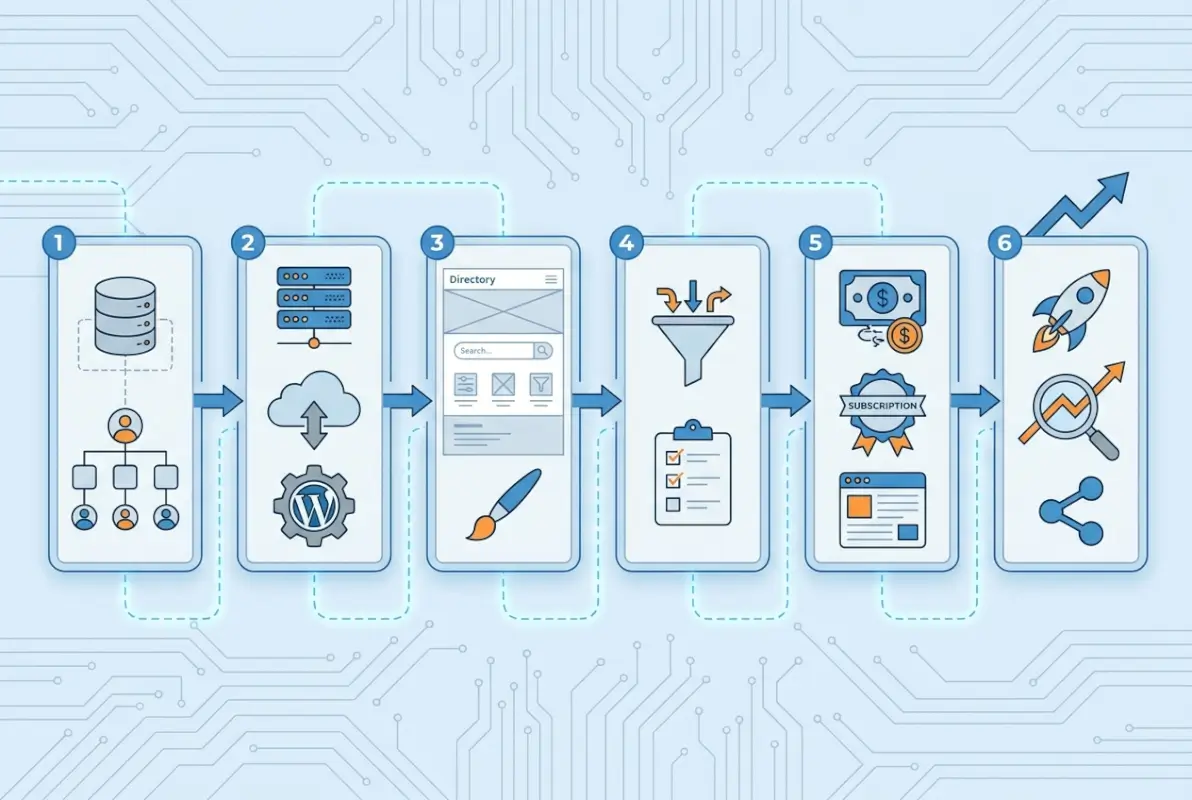
Building a profitable directory website comes down to execution across six interlocking pillars: validating a tight niche with real demand, designing a diversified monetization framework from day one, architecting scalable listing ingestion and tech, driving targeted traffic through content and partnerships, and establishing trust through moderation and compliance. Each step reinforces the next—high-quality listings attract users, engaged users attract advertisers, and recurring revenue funds continued growth.
The competitive landscape rewards directories that solve a specific problem better than aggregators or general search. Whether you curate verified local service providers, niche B2B vendors, or specialized marketplaces, your differentiation hinges on unique data, superior user experience, and transparent monetization that aligns advertiser incentives with searcher value. Directories that bundle premium placements with lead-gen or subscription models achieve both immediate cash flow and long-term retention.
Start lean: pick one niche, validate demand with manual outreach to twenty initial listings, prototype your core search and filtering interface, and publish your first content hubs to capture organic intent. Measure activation rates, user engagement, and early advertiser feedback obsessively. Iterate your pricing tiers and value propositions based on real conversations, then scale listing acquisition through automation, API integrations, and partnerships once the unit economics prove out.
Technology choices matter less than execution discipline. A WordPress plugin or no-code tool can power a six-figure directory if you maintain rigorous data quality standards and ship features that directly increase advertiser ROI. Conversely, a custom platform will flounder without systematic listing verification, SEO content, and outreach cadences. Focus on the business mechanics—acquisition, activation, retention, revenue—and let the stack support your workflow rather than dictate it.
Compliance and trust are non-negotiable as you monetize. Clear terms of service, transparent review moderation, and privacy-first data handling protect both you and your users from legal risk and reputational damage. Implement PCI-compliant payment processing, GDPR-ready consent flows, and accessible content standards from launch. These guardrails become competitive advantages when advertisers evaluate where to invest their budgets.
Ready to Launch Your Directory?
Apply this six-step framework today: validate your niche, design your monetization mix, build your first fifty listings, publish ten SEO-optimized content hubs, and start conversations with potential advertisers. Revenue follows repeatable systems, not complexity.
Track your metrics weekly, iterate based on user feedback, and scale the channels that deliver qualified traffic. Your directory’s competitive moat grows with every verified listing and satisfied advertiser.
The directory model thrives on network effects: every new listing makes your platform more valuable to searchers, and every engaged user makes premium placements more attractive to advertisers. Commit to systematic listing growth, relentless data quality improvements, and transparent value exchange. Within twelve months, a well-executed directory can generate predictable recurring revenue and establish a defensible position in its niche.
Take the first step this week. Define your niche in one sentence, sketch your three primary revenue streams, and reach out to ten potential listings to validate demand. The gap between idea and income is shorter than you think—but only if you start building today.
Was this article helpful?