How to Build an Online Directory: 7 Essential Steps for Success

Visual overview of How to Build an Online Directory: 7 Essential Steps for Success

Translated to

Building an online directory isn’t just about creating another website—it’s about architecting a discovery engine that connects people with exactly what they’re searching for. Whether someone’s hunting for a trusted local plumber at 11 PM or researching boutique wedding photographers across three states, your directory becomes the bridge between need and solution. The beauty of this business model? It scales beautifully, generates multiple revenue streams, and solves real problems for both searchers and service providers.

Here’s something most guides won’t tell you upfront: the directories that thrive aren’t the ones with the most listings—they’re the ones with the most relevant listings and the clearest value proposition. I’ve watched aspiring directory owners spend months collecting thousands of generic business listings, only to launch to crickets because they never defined who they were serving or why anyone should care. The successful approach flips this entirely, you start with a razor-sharp niche, validate actual demand, then build systematically around that core insight.

TL;DR – Quick Takeaways

  • Niche specificity wins – Broad directories compete with Yelp and Google; focused directories dominate specific markets
  • Data quality over quantity – 200 verified, active listings outperform 2,000 stale entries every time
  • Multiple revenue streams – Featured placements, memberships, ads, and lead-gen create sustainable income
  • SEO architecture matters from day one – Location pages, schema markup, and clean URLs drive organic discovery
  • Launch lean, iterate fast – Start with core features, validate with real users, expand based on data
  • Directory vs. marketplace – Directories connect; marketplaces transact (choose your model deliberately)

Step 1: Define a Clear Niche and Value Proposition

The number one mistake new directory builders make? Trying to be everything to everyone. When you create “another business directory,” you’re competing head-on with billion-dollar platforms that have decade-long head starts. But when you create “the definitive directory for certified organic bakeries in the Pacific Northwest” or “the only curated list of LGBTQ+-friendly mental health providers,” you’ve carved out defensible territory.
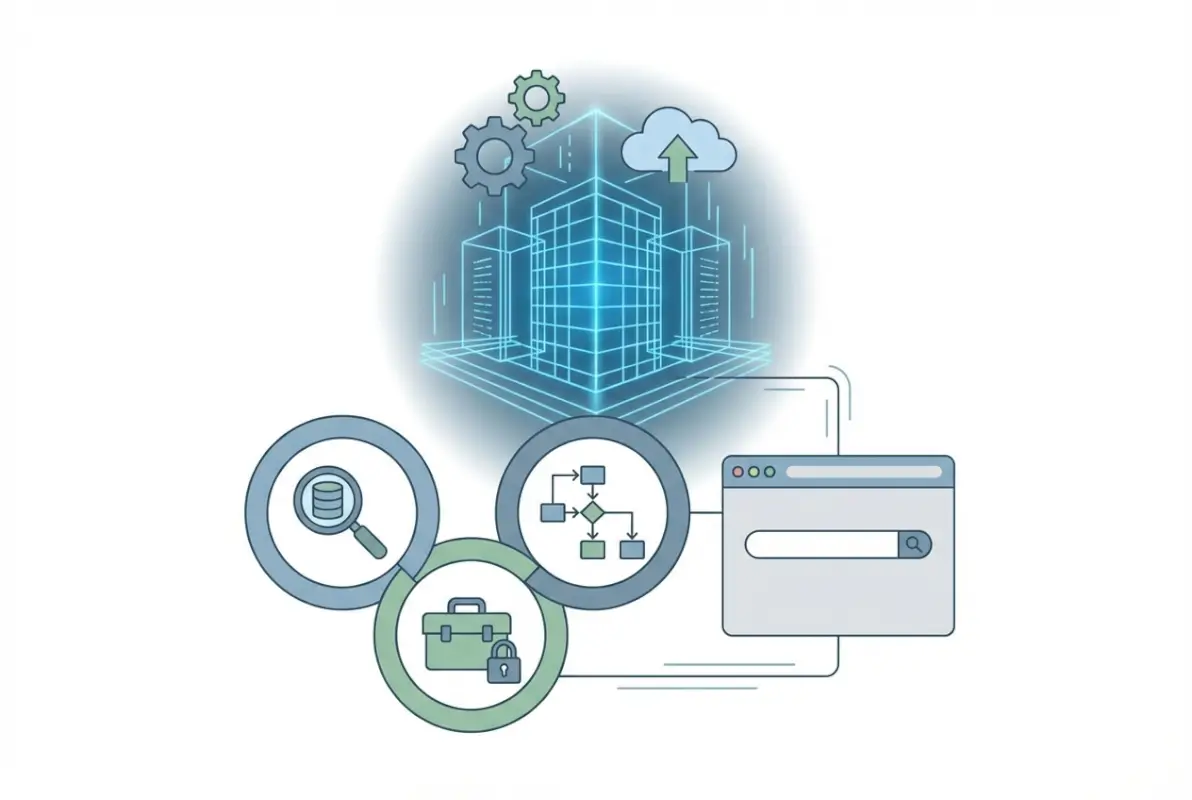
Core concepts behind How to Build an Online Directory: 7 Essential Steps for Success

Niche specificity improves trust because it signals expertise and curation. It boosts relevance because every listing matters to your target audience. And it drives conversion because visitors arrive with clear intent already aligned with your offerings. The best company directory models start by solving one problem exceptionally well before expanding horizontally.

How to Validate Your Niche Before Building

Enthusiasm doesn’t equal demand (I learned this the hard way with a pet project that excited exactly three people, including my mom). Before you commit months to development, run these validation exercises:

  • Competitor analysis: Search for existing directories in your space. If you find none, that’s either brilliant or concerning. Often it means someone tried and failed, or the market’s too small. Finding 2-3 competitors actually validates demand.
  • Keyword research: Use tools to check monthly search volume for terms like “[your niche] near me” or “best [your niche] in [location].” You want hundreds or thousands of monthly searches, not dozens.
  • Audience interviews: Talk to 10-15 potential users. Ask about their current search process, frustrations, and whether they’d pay for better discovery. If half say “I just use Google,” dig deeper into what Google isn’t giving them.
  • Provider interviews: Contact businesses you’d list. Would they claim a free profile? Would they pay for premium placement? What features would actually help them get customers?
💡 Pro Tip: Look for niches where Google’s local results are weak or generic. If searching “your niche + city” returns mostly irrelevant chain businesses or outdated listings, there’s opportunity for a curated alternative.

Examples of Successful Directory Niches

Real-world directories that thrive focus on specific verticals with clear user intent. Local service directories work when they go deep on a metro area or specialize by trade (think “licensed electricians” not “all contractors”). Real estate portals succeed by focusing on property types or neighborhoods. Event directories win by curating specific event categories—wedding venues, conference spaces, or food festivals rather than “all events everywhere.”

The pattern? Each successful niche has built-in search behavior, users already hunting for these services or resources, plus identifiable providers willing to pay for visibility. That combination creates a sustainable foundation for everything that follows.

Step 2: Plan the Directory Structure and Data Model

Your directory’s taxonomy is its skeleton—get this wrong and every future feature becomes painful to implement. The goal is creating an intuitive organizational structure that mirrors how real people actually search while remaining flexible enough to accommodate growth.
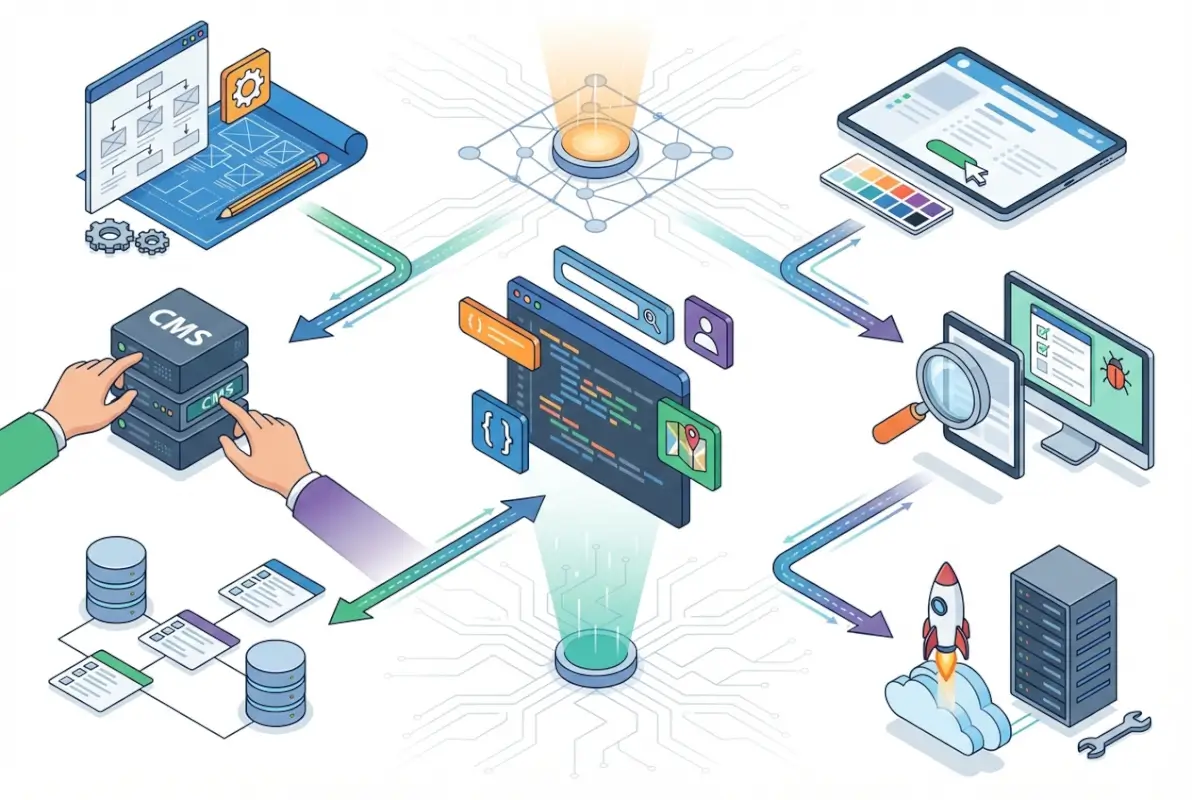
Step-by-step process for How to Build an Online Directory: 7 Essential Steps for Success

Designing an Effective Taxonomy

Start with 5-12 top-level categories that represent your niche’s major segments. Under each, create 3-10 subcategories. For example, a home services directory might have “Plumbing” as a category with subcategories like “Emergency Plumbing,” “Drain Cleaning,” “Water Heater Installation,” and “Pipe Repair.” This structure serves both SEO (creating distinct landing pages) and user experience (intuitive browsing).

Location hierarchies follow a similar principle. For local directories, structure might be Country > State/Region > City > Neighborhood. For national directories with sparse listings, you might skip neighborhoods and go straight to cities. The key is matching granularity to your listing density, don’t create 50 neighborhood pages if you only have 30 total listings.

Tags offer flexible cross-categorization. A wedding photographer might be tagged “outdoor,” “destination,” “LGBTQ+ friendly,” and “available for travel.” Tags create discovery paths beyond rigid categories, helping users find exactly what they need through multiple entry points.

Data Collection and Verification Workflows

You have three primary data acquisition strategies, each with tradeoffs:

  1. Manual curation: You research and add listings yourself. Pros: highest quality, complete information, accurate from day one. Cons: doesn’t scale, time-intensive, can’t grow faster than your research capacity.
  2. Partnership programs: Work with industry associations, chambers of commerce, or franchise networks for bulk listing access. Pros: quick initial population, pre-verified providers. Cons: may include inactive businesses, requires negotiation and often revenue sharing.
  3. Self-submission with validation: Let businesses claim profiles or submit listings, then verify before publishing. Pros: scales infinitely, keeps data current, businesses invested in accuracy. Cons: requires moderation systems, quality varies, spam submissions inevitable.

Most successful directories use a hybrid approach: seed the platform with curated core listings to establish credibility, then open self-submission to scale while maintaining approval gates. This balances growth velocity with quality control, which helps maintain the value proposition for users browsing your local businesses directory page.

Data FieldRequired?Purpose
Business NameYesCore identification
CategoryYesTaxonomy placement
Location/AddressYesLocal SEO, maps
PhoneRecommendedContact, lead tracking
Website URLRecommendedVerification, user value
HoursOptionalUser convenience
DescriptionOptionalSEO, user information
PhotosOptionalEngagement, premium upsell

Directory vs. Marketplace: A Critical Distinction

Before you go further, clarify whether you’re building a directory or a marketplace—they’re fundamentally different beasts. A directory connects users with providers; transactions happen off-platform (think Yelp or Yellow Pages). A marketplace facilitates transactions directly (think Airbnb or Upwork). Directories monetize through visibility (paid listings, ads), while marketplaces monetize through transaction fees or commissions.

Most entrepreneurs find directories simpler to launch because you don’t need payment processing, escrow systems, dispute resolution, or transaction insurance. You’re purely in the information and discovery business. Marketplaces offer higher revenue per user but require significantly more complex infrastructure and legal considerations. Choose deliberately based on your niche, resources, and long-term vision.

Step 3: Choose the Right Technology and Platform

The technology decision shapes everything from your launch timeline to your ongoing operational costs. The good news? You have more viable options now than ever before. The challenge? Each path involves meaningful tradeoffs.
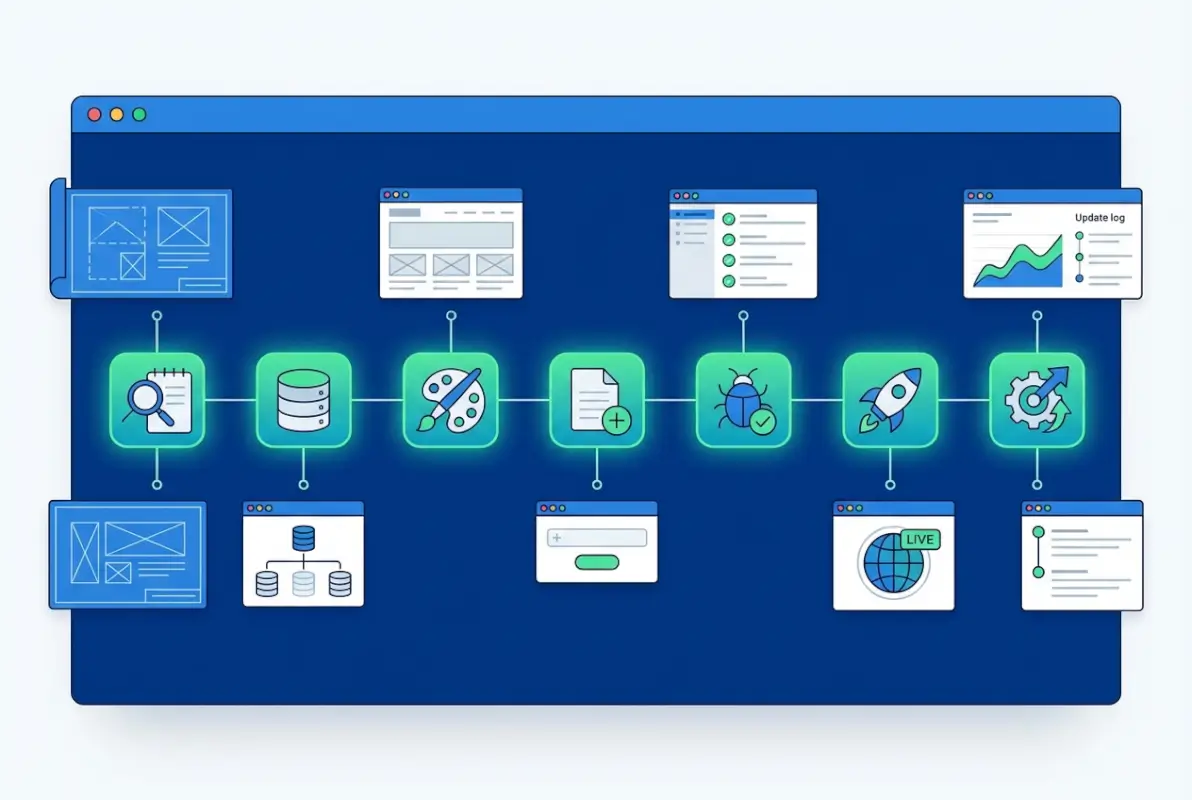
Tools and interfaces for How to Build an Online Directory: 7 Essential Steps for Success

Platform Evaluation Criteria

When comparing options, weigh these factors against your specific situation:

  • Scalability: Can the platform handle 100 listings today and 100,000 tomorrow without a complete rebuild?
  • Ease of use: Will you spend weeks learning complex systems or can you launch quickly?
  • Integration ecosystem: Does it connect with payment processors, email tools, analytics, and CRM systems you need?
  • Listing features: Does it support the specific fields, media types, and functionality your niche requires?
  • Developer support: When things break or you need customization, is help available and affordable?

No-Code/DIY Options vs. Custom Development

No-code directory builders and WordPress plugins offer the fastest path to launch. Platforms like Directorist, GeoDirectory, or Brilliant Directories provide pre-built directory functionality you can customize through settings and templates. You can launch in days or weeks rather than months, often for under $500 initial investment. The limitation? You’re constrained by the platform’s capabilities and design flexibility.

Custom development gives unlimited flexibility but requires significant investment—typically $10,000 minimum for even basic custom builds, and easily $50,000+ for sophisticated platforms. You control every pixel and feature, but you also own every bug and maintenance headache. For most first-time directory builders, custom development is overkill. Start with no-code or low-code solutions, prove the business model, then invest in custom development if you hit platform limitations.

⚠️ Important: Whatever platform you choose, ensure it supports your monetization model from day one. Retrofitting payment systems, membership tiers, or ad management into platforms not designed for them creates technical debt that haunts you later.

Building Monetization-Ready Architecture

The platform should natively support or easily integrate these revenue-critical features:

  • Multiple listing tiers (free, basic paid, premium) with different feature sets
  • Membership subscriptions with recurring billing
  • Featured listing placement and sponsored results
  • Banner ad zones and ad management
  • Lead capture forms with analytics tracking
  • Claim and upgrade flows for business owners

Test these workflows during platform evaluation—don’t just assume they work. Create a test listing, upgrade it to premium, process a payment, then downgrade it. If this basic flow feels clunky or requires workarounds, imagine the friction for real customers.

Step 4: Build Foundational SEO and Content Strategy

A directory without traffic is just an empty database. SEO drives the compounding growth that makes directories valuable over time—each new listing potentially creates a new indexed page, each category page targets additional keywords, each location page captures local search intent.
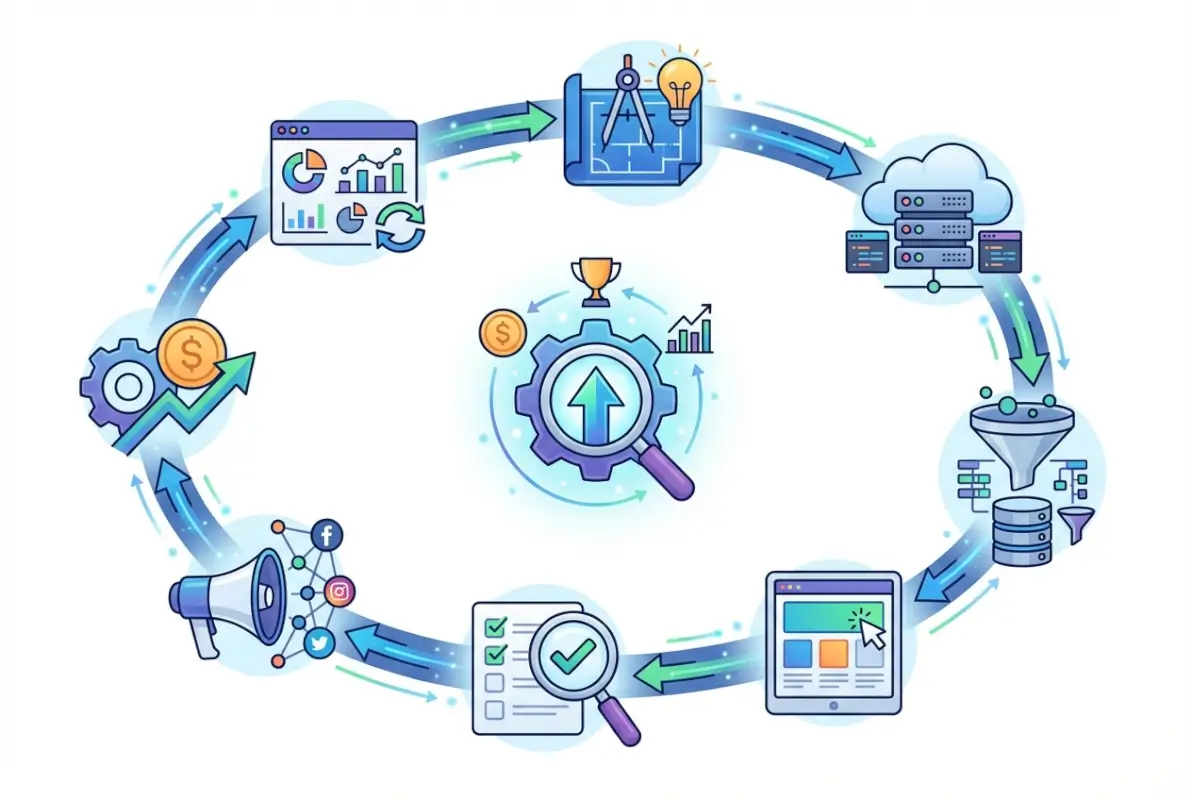
Best practices for How to Build an Online Directory: 7 Essential Steps for Success

SEO-Driven Architecture Fundamentals

Clean URL structures matter immensely for directories. Instead of “yourdirectory.com/listing?id=12345,” aim for “yourdirectory.com/plumbing/seattle/joes-plumbing.” This readable, hierarchical structure helps search engines understand your content and helps users trust the links they click. It also creates natural keyword inclusion without stuffing—the URL itself signals relevance.

Schema markup tells search engines exactly what your pages contain. For directories, implement LocalBusiness schema for individual listings, BreadcrumbList schema for category navigation, and AggregateRating schema if you include reviews. This structured data helps your listings appear in rich results and knowledge panels, dramatically improving click-through rates from search results.

Category and location landing pages are your SEO workhorses. Each should include:

  • Original, helpful content (150-500 words) explaining the category or location context
  • Natural keyword inclusion without over-optimization
  • Unique value beyond just listing links—tips, considerations, or local insights
  • Related category links to distribute PageRank throughout your site

Content Strategy for Local and “Near Me” Visibility

Hub pages for major categories and locations create topical authority. A home services directory might create comprehensive guides like “Complete Guide to Hiring Plumbers in Seattle” that links to relevant listings while providing educational content. These hub pages target broader informational keywords and establish your directory as an authoritative resource, not just a link farm.

Local SEO content captures “near me” searches and location-specific queries. For each major location you serve, create pages that address local considerations, regulations, average pricing, and common questions. Someone searching “wedding photographer near me” in Austin has different considerations than someone in rural Montana—your content should reflect this understanding and connect it to your curated business phone directories.

✅ Key Insight: Mine “People Also Ask” boxes and related searches for content ideas. These questions reveal what real users want to know, and answering them comprehensively positions your directory for featured snippets.

Technical SEO Priorities

Beyond content and structure, ensure your directory handles these technical fundamentals:

  • Mobile-responsive design (most local searches happen on mobile)
  • Fast page load speeds (especially important for listing pages with images)
  • XML sitemaps that update automatically as you add listings
  • Pagination handling for category pages with hundreds of listings
  • Canonical tags to prevent duplicate content issues across filtered views
  • HTTPS security (non-negotiable for user trust and search rankings)

Step 5: Data Acquisition, Verification, and Compliance

A directory is only as valuable as its data quality. Ten perfect listings beat a hundred mediocre ones when users are trying to make decisions. The challenge is maintaining quality while achieving the coverage necessary to be useful.

Advanced strategies for How to Build an Online Directory: 7 Essential Steps for Success

Balancing Breadth and Depth

Early-stage directories face a chicken-and-egg problem: users won’t visit without listings, businesses won’t claim listings without users. The solution is strategic seeding with high-quality core listings that make your directory immediately useful even with limited coverage. Focus on the most-searched categories and highest-value locations first rather than trying to achieve complete coverage everywhere.

For a local services directory in Portland, you might start with 50 carefully curated plumbers, electricians, and HVAC contractors—the most-searched trades—rather than 300 random businesses across every possible category. This focused approach creates genuine utility faster and establishes quality standards from day one.

Verification Methods That Scale

Different verification strategies suit different growth stages:

  1. Manual approval: Every submission goes through human review before publishing. Ideal when you’re small and establishing standards. Doesn’t scale beyond a few submissions daily.
  2. Automated validation: Check submitted phone numbers and addresses against databases, verify websites resolve and match business names, flag suspicious patterns. Filters obvious spam while allowing legitimate listings through quickly.
  3. Community reporting: Let users flag outdated or incorrect information. Implement a “report this listing” feature and respond quickly to reports. Crowdsourced quality control that scales with your user base.
  4. Periodic re-verification: Send automated emails every 6-12 months asking businesses to confirm their information is current. Mark unresponsive listings as “Not Recently Verified” to signal potential staleness to users.

The best systems combine these approaches: automated checks catch obvious problems, human review handles edge cases and disputes, and community reporting provides ongoing maintenance at scale.

💡 Pro Tip: Create a “last verified” date stamp visible on each listing. This transparency builds user trust and motivates businesses to keep their information current to show recent verification.

Privacy and Compliance Considerations

Directory operators walk a line between public information aggregation and privacy protection. Establish clear policies about what information you collect, how you use it, and who can access it. For self-submitted listings, implement explicit opt-in rather than assuming consent.

Consider these compliance essentials:

  • Clear privacy policy explaining data handling
  • Terms of service addressing listing accuracy responsibilities
  • Opt-out mechanisms for businesses that don’t want to be listed
  • GDPR compliance if serving European users (even indirectly)
  • CAN-SPAM compliance for any email outreach
  • Do Not Call considerations if tracking phone leads

Legal compliance isn’t optional, and ignorance provides no protection. Consult with an attorney familiar with online platforms in your jurisdiction to establish appropriate policies before launching.

Step 6: Monetization Strategy and Pricing Models

The best time to plan monetization is before you build anything. Revenue models shape feature prioritization, user experience, and growth strategies. Retrofitting monetization into a directory designed for free listings creates friction and user resistance.

Core Revenue Streams for Directories

Successful directories typically combine multiple revenue sources rather than relying on a single stream:

Featured/Paid Listings: Businesses pay for enhanced placement at the top of category pages, highlighted design, or premium badges. This works because better visibility directly drives more customer inquiries. Pricing might range from $25-$200/month depending on niche competitiveness and the traffic you deliver.

Tiered Memberships: Create free, basic paid, and premium tiers with escalating features. Free might include just name, category, and location. Basic paid ($30-$50/month) adds photos, full description, website link, and social media. Premium ($100-$200/month) includes all basic features plus featured placement, enhanced analytics, and priority support. For more structured environments, you can even integrate Active Directory integration concepts.

Display Advertising: Once you reach meaningful traffic (typically 10,000+ monthly visitors), display ads become viable. Banner placements on category pages and listings can generate $500-$5,000+ monthly depending on traffic and niche. Programmatic ad networks make this relatively hands-off.

Lead Generation: Charge per qualified lead or inquiry sent to businesses. This performance-based model aligns your revenue with actual customer value. Common in high-ticket niches like contractors, legal services, or real estate. Pricing might be $10-$100+ per lead depending on service value.

Affiliate Commissions: For certain niches, affiliate relationships with related products or services create additional income. A wedding venue directory might earn commissions from photographer booking platforms or catering marketplaces.

Revenue StreamBest ForTypical Pricing
Featured ListingsCompetitive categories$25-$200/month
Basic MembershipEnhanced profiles$30-$75/month
Premium MembershipTop visibility$100-$300/month
Display AdsHigh-traffic sites$500-$5,000/month
Lead GenerationHigh-ticket services$10-$100/lead
Affiliate CommissionsRelated products5-20% commission

Pricing Without Alienating Listings

The mistake many directory owners make is charging too much too soon or making the free tier so limited it provides no value. Your free tier should be genuinely useful—enough so that a business sees value in having the listing even without paying. This creates the network effect that makes your directory useful to searchers.

Paid tiers then offer clear, tangible upgrades that businesses can directly connect to customer acquisition. “Get three photos and a logo” is less compelling than “Appear in the top three results for your category” because one is about features, the other about outcomes.

Test pricing through limited-time promotional tiers. Launch with introductory pricing ($20/month instead of $50/month) for the first 50 premium members. This creates urgency, provides validation at multiple price points, and establishes a baseline of paying customers you can survey about willingness to pay more for additional features.

✅ Key Insight: Annual billing at a discount (e.g., $300/year vs. $30/month) improves cash flow and reduces churn. Lock in committed customers while reducing payment processing overhead.

Step 7: Launch, Growth, and Scale Tactics

Launch day is just the beginning. The real work happens in the weeks and months after when you’re systematically driving traffic, acquiring listings, and optimizing conversion funnels.

Launch Plan Essentials

Soft launch to a limited audience first—friends, industry connections, a small email list, or a specific geographic area. This controlled rollout lets you identify broken workflows, confusing user interfaces, and technical issues without embarrassing yourself in front of your entire market. Gather feedback aggressively through user interviews and observation (watch someone use your directory without helping them, you’ll learn more in 10 minutes than from 100 survey responses).

Public launch comes after you’ve addressed critical feedback and have enough quality listings to deliver genuine value. Aim for at least 50-100 core listings in your most important categories. Announce through press releases to local media, industry publications, and online communities your target audience frequents. Create launch content that explains your unique value proposition—why you exist and why people should use you instead of alternatives.

Growth Engines to Activate

Directory growth requires two parallel efforts: acquiring listings and acquiring users. Neither works without the other.

Listing Owner Acquisition: Reach out directly to high-value businesses and offer free premium listings in exchange for feedback during your beta period. This seeds your directory with quality while building relationships with providers who may pay later. Create simple claim flows that let businesses verify ownership and upgrade their free listings with minimal friction. Send automated “claim your listing” emails to businesses you’ve added, framing it as an opportunity to control their information rather than a sales pitch.

User Acquisition: SEO provides the long-term growth engine, but takes 3-6 months to gain traction. In the meantime, leverage content marketing by creating helpful guides related to your niche that link back to your directory. Build relationships with complementary websites and secure backlinks. Participate genuinely in online communities where your target audience gathers—answer questions and provide value before ever mentioning your directory. When you do share it, frame it as a resource that solves the specific problem being discussed.

Content and SEO Momentum: Publish new category pages, location pages, and helpful content consistently. Search engines reward fresh, growing sites with more frequent crawling and faster ranking improvements. Aim for 2-4 new high-quality pages weekly during your first six months. Track rankings for your target keywords and double down on what’s working.

Section Summary: Successful launches balance quality listing inventory with early user traction, then systematically optimize the flywheels that drive growth in both.

Common Pitfalls and How to Avoid Them

I’ve seen promising directories fail because founders spent six months perfecting features no one needed while ignoring the basics. Launch with core functionality and expand based on actual user behavior and requests. Don’t build a mobile app before you’ve proven the web version. Don’t add advanced filtering before you have enough listings to make filtering useful.

Another common mistake is neglecting existing listings while chasing new ones. Stale, outdated information destroys trust faster than incomplete coverage. Better to have 200 current, verified listings than 2,000 listings where 30% have disconnected phone numbers.

Finally, many directory owners give up right before SEO traction arrives. Organic growth compounds slowly at first—you might see only 50 visitors in month one, 100 in month two, 200 in month three. Then suddenly month six brings 2,000 visitors and month twelve brings 20,000. The curve is exponential, not linear, but you have to survive the early slow months to reach the hockey stick.

Additional Considerations: Competitive Landscape and Case Studies

Understanding what’s already working in the directory space provides valuable pattern recognition. You’re not looking to copy existing directories but to identify principles you can adapt to your niche.

Local business directories like Yelp and Angie’s List succeeded by combining comprehensive coverage with user reviews and ratings. The lesson? Social proof and quality signals matter enormously in categories where trust is essential. Even if you don’t implement full review systems initially, plan for them.

Real estate portals like Zillow and Realtor.com won by providing search functionality more sophisticated than individual agent websites could offer—map-based browsing, detailed filtering, and comprehensive data. The lesson? Your directory should provide discovery capabilities individual providers can’t replicate alone.

Job boards like Indeed and LinkedIn demonstrate the power of both sides of the marketplace actively engaging—employers posting jobs and candidates creating profiles. The lesson? Consider how to activate both sides of your directory. Maybe businesses can post special offers or availability to incentivize return visits from users.

Freelancer marketplaces like Upwork and Fiverr blur the line between directory and marketplace by facilitating transactions but still essentially connecting service seekers with providers. The lesson? You might start as a pure directory but evolution toward transaction facilitation often increases platform value and monetization opportunity.

Event directories succeed by emphasizing timeliness—new content constantly appears as events are added. The lesson? If your niche has temporal elements (seasonal services, limited-time availability), highlight freshness and urgency.

Alternative Paths and Platform Recommendations

For non-developers who want to launch quickly, directory-specific platforms like Directorist (WordPress plugin), Brilliant Directories (standalone platform), or GeoDirectory (WordPress plugin) provide turnkey functionality. These typically cost $100-$500 for the software plus hosting, and you can launch in 1-2 weeks with no coding.

If you have technical skills or budget for development, modern JavaScript frameworks like React or Vue paired with headless CMSs or custom databases offer maximum flexibility. This path costs significantly more ($10,000+ in development) but gives you complete control over features, user experience, and scalability.

The middle ground—no-code platforms like Webflow, Bubble, or Airtable combined with specialized directory templates—offers more customization than plugins but less complexity than custom code. Expect 4-6 weeks to launch and costs around $500-$2,000 for setup plus monthly platform fees.

⚠️ Important: Whatever platform you choose, ensure you control your data and can export listings if you ever need to migrate. Avoid platforms that lock you into proprietary formats with no escape hatch.

Phased Feature Rollout Strategy

Launch with these essentials in phase one (weeks 1-4):

  • Basic listing pages with core fields
  • Category and location browsing
  • Simple search functionality
  • Mobile-responsive design
  • Contact forms or click-to-call buttons

Add in phase two (months 2-3):

  • Claim and upgrade flows for businesses
  • Payment processing for premium listings
  • Enhanced listing features (photos, videos, hours)
  • Email notifications for new listings in saved categories

Expand in phase three (months 4-6):

  • User accounts and saved favorites
  • Review and rating systems
  • Advanced search filters
  • Featured listings and ad placements
  • Analytics dashboards for paying businesses

This phased approach gets you to market fast while continuously improving based on real usage patterns, which is far smarter than spending six months building features in isolation.

Practical Checklists and Templates

Essential Listing Fields Template

Use this schema as your starting point, then customize for your niche:

  • Core identification: Business name, DBA, category (primary + secondary), tags
  • Location: Address, city, state/region, zip, country, latitude/longitude
  • Contact: Phone, email, website, social media links
  • Description: Short summary (160 chars), full description (500-1000 words)
  • Media: Logo, photos (3-10), videos, virtual tour link
  • Operations: Hours, service area, languages, payment methods
  • Credentials: Licenses, certifications, insurance, years in business
  • Special features: Emergency availability, free consultation, senior discount, etc.
  • Metadata: Date added, last verified, listing status, upgrade tier

SEO-Friendly URL Structure Template

Follow these patterns for maximum SEO benefit:

  • Category pages: /category-name/ (e.g., /plumbing/)
  • Location pages: /location-name/ (e.g., /seattle/)
  • Category + location: /category/location/ (e.g., /plumbing/seattle/)
  • Individual listings: /category/location/business-name/ (e.g., /plumbing/seattle/joes-plumbing/)

Pricing and Feature Matrix Template

FeatureFreeBasic ($30/mo)Premium ($100/mo)
Basic listing
Photos (up to 3)✓ (up to 10)
Full description
Featured placement
Analytics dashboard
Lead notifications✓ (priority)

Frequently Asked Questions

What is an online directory and how does it work?

An online directory is a curated database of businesses, services, or resources organized by categories and locations, helping users discover relevant options. Directories work by collecting listing information, organizing it into searchable structures, then presenting it through browsing or search interfaces. Users find what they need, businesses gain visibility, and directory owners monetize through paid placements or advertising.

How do I choose a niche for my directory?

Choose a niche by identifying underserved markets where existing solutions are inadequate. Look for categories with consistent search volume, identifiable provider bases willing to pay for visibility, and clear user intent. Validate through competitor analysis, keyword research showing hundreds or thousands of monthly searches, and interviews with potential users and providers before committing to development.

What features should a new directory launch with?

Launch with basic listing pages containing essential fields, category and location browsing, simple search, mobile-responsive design, and contact mechanisms like forms or click-to-call buttons. Avoid feature bloat initially—prove core value first. Add claim flows, payment processing, enhanced listings, and advanced features in phases 2-3 based on actual user feedback and behavior patterns.

How can I monetize a directory without turning away listings?

Offer a genuinely useful free tier so businesses see value in baseline listings, then provide clear upgrades that deliver tangible outcomes like top placement or enhanced visibility. Use tiered pricing with transparent feature differences. Start with introductory pricing to build a base of paying customers, then adjust based on willingness-to-pay data gathered from actual users rather than assumptions.

How do I validate listing data and maintain quality?

Combine automated validation checking phone numbers and addresses against databases, manual review for edge cases, and community reporting where users flag problems. Implement periodic re-verification by contacting businesses every 6-12 months to confirm information currency. Display “last verified” dates to incentivize updates and build user trust through transparency about data freshness.

What is the difference between a directory and a marketplace?

Directories connect users with providers; transactions happen off-platform. Marketplaces facilitate transactions directly on-platform, handling payments, escrow, and fulfillment. Directories monetize through visibility (paid listings, ads) while marketplaces take transaction fees or commissions. Directories are simpler to launch but marketplaces can generate higher revenue per user with more complex infrastructure requirements.

Which platforms are best for building a directory with no code?

Directory-specific WordPress plugins like Directorist or GeoDirectory offer quick launches with $100-$500 investment plus hosting. Brilliant Directories provides standalone platform functionality. No-code tools like Webflow or Bubble with directory templates offer middle-ground customization. Each suits different needs—WordPress for content strength, standalone platforms for integrated features, no-code builders for design flexibility.

How can I drive traffic to a new directory site?

Build foundational SEO through clean URL structures, schema markup, and location-based content targeting local keywords. Create helpful guides and content that attract organic search traffic over 3-6 months. In the meantime, secure backlinks from related websites, participate genuinely in online communities, reach out to high-value listings directly, and leverage partnerships with complementary services.

How do I handle user privacy and listing approvals?

Establish clear privacy policies explaining data collection and use. For self-submitted listings, require explicit opt-in consent. Implement manual or automated approval workflows before listings go live to maintain quality. Provide opt-out mechanisms for businesses that don’t want inclusion. Ensure GDPR compliance if serving European users and follow CAN-SPAM rules for email outreach.

What are common SEO considerations for local directories?

Implement clean, hierarchical URL structures including location and category information. Use LocalBusiness schema markup for listings and BreadcrumbList for navigation. Create unique location and category landing pages with original content addressing local considerations. Optimize for “near me” searches through local-focused content. Ensure mobile responsiveness and fast load speeds since most local searches happen on mobile.

How should I price paid listings and memberships?

Research competitor pricing in your niche as a starting baseline. Test multiple tiers—typically free, basic paid ($30-$75/monthly), and premium ($100-$200+/monthly)—with clear feature differentiation. Focus tier benefits on outcomes like “appear first in results” rather than features like “add more photos.” Launch with promotional pricing for first adopters, gather willingness-to-pay data, then adjust based on conversion rates and user feedback.

Your Directory Journey Starts With Clarity

Building a successful online directory isn’t about having the most advanced technology or the biggest budget—it’s about understanding a specific audience’s needs and systematically addressing them better than alternatives. The seven-step framework we’ve covered provides the roadmap: define your niche precisely, plan your data structure thoughtfully, choose appropriate technology, build SEO foundations, maintain data quality rigorously, monetize sustainably, and launch with a clear growth plan.

The directories that thrive long-term share common characteristics: they solve real discovery problems, they maintain high data quality, they provide genuine value in free tiers while offering meaningful paid upgrades, and they continuously optimize based on user behavior rather than assumptions. You don’t need perfection at launch, you need a solid foundation and commitment to iteration.

Your next concrete steps? Validate your niche through keyword research and audience interviews this week. Sketch your taxonomy and essential listing fields on paper. Evaluate 2-3 platform options with actual hands-on testing. Then make a decision and start building—imperfect action beats perfect planning every time. The directory landscape continues evolving, but the fundamentals of curation, quality, and user value remain constant. Focus there and you’ll build something that matters.

Ready to Build Your Directory?
Start with one category in one location, prove the concept, then scale. The best directories weren’t built in a day—they were built consistently, one quality listing at a time.

Was this article helpful?

Similar Posts

  • Blog

    How to Add Schema Code in WordPress: Complete Developer’s Guide to Directory Markup

    Every WordPress directory owner dreams of their listings appearing with eye-catching rich snippets in search results, but most struggle with the technical implementation of schema markup. Here’s what most guides won’t tell you: the difference between a directory that gets lost in search results and one that dominates local search isn’t just content quality—it’s the…

  • Blog

    How Much Does Business Listing Services Cost? Pricing & Packages for Small Businesses

    TL;DR: Business Listing Services Cost Overview Business listing services range from free basic options to premium packages costing $300+ monthly Free listings (Google Business Profile, Bing Places) offer limited features but are essential starting points Mid-tier services ($50-150/month) typically include 50+ directory listings with basic analytics Premium options ($150-500+/month) offer comprehensive listing management across 100+…

  • Blog

    How to Download All Files from an Online Directory: 5 Simple Steps

    substring(replace(

    Ever stumbled across a treasure trove of files on a website—maybe a research archive, a music collection, or a software repository—only to realize you’d need to click and save each file individually? That’s where knowing how to download all files from an online directory becomes a genuine superpower. Whether you’re archiving public domain content, backing up your own hosted files, or legally collecting open datasets, the right approach can turn hours of tedious clicking into a five-minute automated task. The trick isn’t just finding one tool that works, it’s understanding the ecosystem of methods (command-line utilities, browser extensions, server-side services, and scripting) so you can pick the best fit for your specific scenario.

    Most guides out there jump straight to “use wget and you’re done,” but that advice falls flat when you hit a password-protected directory, a JavaScript-heavy listing, or a site that throttles aggressive crawlers. I remember spending an entire afternoon trying to mirror a university’s open courseware directory, only to discover halfway through that my wget command had downloaded hundreds of useless HTML wrapper pages instead of the PDFs I actually wanted. That experience taught me the importance of a structured approach: assess first, choose your tool second, validate third. In this guide, we’ll walk through five deliberate steps that cover everything from legal checks to post-download verification, giving you a repeatable framework whether you’re working on Windows, Mac, Linux, or even mobile.

    TL;DR – Quick Takeaways

    • Assess before you automate – Confirm the directory is publicly listed and you have permission to bulk-download (check robots.txt and terms of use)
    • CLI power users love wget – Recursive download with depth and extension filters is ideal for simple open directories
    • GUI tools for everyone else – JDownloader, DownThemAll!, and OpenDirectoryDownloader offer point-and-click batch downloads with filtering
    • Server-side services simplify auth – Tools like FileGrab handle scraping and packaging remotely, perfect for complex or authenticated directories
    • Always verify completeness – Compare file counts and checksums to ensure your download captured everything correctly

    Step 1 — Identify the Directory Structure and Legality

    Before you fire up any download tool, take a moment to understand what you’re actually dealing with. Not all “online directories” are created equal—some are simple Apache or Nginx index pages listing files in a table, others are FTP-style listings, and a few hide behind dynamic server scripts that paginate results or require JavaScript to render links. The first paragraph of your reconnaissance should answer three questions: Can I see a raw list of file URLs? Are there subdirectories I need to recurse into? And most importantly, am I allowed to download this content in bulk?

    [KBIMAGE_1]

    Confirm Directory Listing Availability and File Types

    Open the directory URL in your browser and look at the page source (right-click, “View Page Source” in most browsers). If you see a clean list of anchor tags pointing directly to files—say, <a href="file001.pdf">—you’re in luck, that’s a standard directory index and most tools will handle it beautifully. On the other hand, if the links are generated by JavaScript or hidden behind POST requests, you’ll need a tool that can execute scripts or a custom scraper. Pay attention to file extensions too; if the directory contains a mix of PDFs, images, and text files but you only want PDFs, you’ll want filtering capabilities (we’ll cover those in Step 2 and Step 3).

    Another quick sanity check: note the depth of subdirectories. A flat directory with 500 files in one folder is trivial to download. A nested structure with dozens of subfolders requires recursive logic, and you’ll need to decide how many levels deep to go. Tools like wget let you set a recursion level (e.g., --level=2), while some GUI tools will ask you to specify whether to follow all subdirectories or just the top level. This upfront assessment saves you from downloading gigabytes of unwanted nested content later.

    Legal and Ethical Considerations

    Here’s the part nobody likes to talk about but everyone should: just because a directory is visible doesn’t mean it’s legal to mass-download. Check for a robots.txt file at the root of the domain (e.g., example.com/robots.txt)—if it disallows crawling or specifies rate limits, respect those rules. Many sites also have terms of service that explicitly prohibit automated scraping or redistribution of content. For academic or government data (like NASA’s Earthdata or university repositories), there are often acceptable-use policies that permit bulk downloads for research but forbid commercial resale.

    ⚠️ Important: Bulk downloading can trigger server alarms or even IP bans if you’re too aggressive. Always use polite crawl delays (e.g., --wait=2 in wget) and consider reaching out to the site administrator if you’re planning to download more than a few gigabytes. Some organizations prefer you to contact them first to arrange a proper data transfer, which is both faster and more courteous.

    Beyond legality, there’s the question of data licensing. Public domain or Creative Commons content is usually fair game, but copyrighted material—even if publicly accessible—requires permission for redistribution. If you’re uncertain, default to downloading only what you need for personal use and skip the mirroring or republishing step until you’ve confirmed the license terms.

    Quick Sanity Checks You Can Perform Manually

    Before automating anything, do a manual spot-check: click on one or two files to ensure they actually download (not redirect to a login page or return 404 errors). Note the URL pattern—if files are named sequentially (file001.pdf, file002.pdf, etc.), you might even be able to script a simple loop without a full crawler. Look for any access controls: does the page require a username and password, or cookies from a prior login? If so, you’ll need to factor authentication into your download method (we cover authenticated bulk downloads in Step 4).

    Also, check the total size estimate if the directory listing shows file sizes. Downloading 10 GB over a residential internet connection is very different from downloading 500 GB, you’ll want to plan for bandwidth, storage, and time accordingly. Some directories thoughtfully include a “Total Size” footer; if not, you can use a quick script or browser extension to sum up the listed sizes before committing to a full download.

    Step 2 — Command-Line Recursion: Using Wget (Best for One-Directory Depth, Simple Filtering)

    If you’re comfortable with a terminal and the directory structure is straightforward, wget is the gold standard for bulk downloads. It’s been around since the mid-’90s, it’s pre-installed on most Linux distributions and macOS (or easily added via Homebrew on Mac), and it supports recursive downloads with fine-grained control over depth, file types, and crawl behavior. The beauty of wget is its simplicity: one command can mirror an entire directory tree while respecting your specified filters.

    [KBIMAGE_2]

    Why Choose Wget for This Task

    Wget excels at non-interactive downloads, meaning you can kick off a command, walk away, and come back to a fully downloaded directory. It handles HTTP and HTTPS, follows redirects, retries on connection failures, and can resume interrupted downloads—all features that GUI tools sometimes lack. For a typical open directory with a few hundred files spread across one or two subdirectory levels, wget is often the fastest and most reliable option.

    Another advantage: wget is scriptable. You can embed it in shell scripts, cronjobs, or CI/CD pipelines, making it perfect for automated archival tasks or scheduled backups. Unlike browser extensions that require manual intervention, wget runs headlessly, which is ideal if you’re working on a remote server or need to document your download process for reproducibility (important in research or compliance contexts).

    💡 Pro Tip: If you’re on Windows and don’t have wget natively, you can install it via Chocolatey (choco install wget) or use the Windows Subsystem for Linux (WSL) to get a full Linux environment. Alternatively, curl (which ships with Windows 10+) can do similar tasks, though the syntax differs slightly.

    Basic Recursive Download Commands

    The simplest recursive wget command looks like this:

    wget -r -l 1 -np http://example.com/files/

    Let’s break that down: -r enables recursive mode, -l 1 sets the recursion level to 1 (so it grabs files in the current directory and one level of subdirectories), and -np (no-parent) prevents wget from ascending to parent directories and downloading unrelated content. This is your bread-and-butter command for a straightforward directory listing.

    Now, suppose you only want PDF files. Add the -A (accept) flag:

    wget -r -l 1 -np -A pdf http://example.com/files/

    Conversely, if you want to exclude certain file types (say, skip HTML wrappers and only grab media), use -R (reject):

    wget -r -l 1 -np -R html,htm http://example.com/files/

    For directories with deep nesting, increase the level: -l 3 or even -l inf for unlimited depth (use with caution, you can end up downloading the entire website). A practical middle ground is -l 2 for most directory structures.

    Tips and Caveats

    First, always add a polite delay to avoid hammering the server. Use --wait=2 (wait 2 seconds between requests) or --random-wait to vary the delay. This reduces the risk of triggering rate limits or bans. If the directory is large, consider using --limit-rate to cap your download speed (e.g., --limit-rate=500k for 500 KB/s), especially if you’re on a shared network or the server is known to be slow.

    Second, set a custom user-agent string with --user-agent="YourName/1.0" so server logs show a meaningful identifier instead of the default wget string. Some sysadmins appreciate this transparency, and it can prevent your requests from being mistaken for malicious bot traffic.

    Third, be aware that wget will create a local directory structure mirroring the remote one. If you download from example.com/files/docs/, wget creates example.com/files/docs/ on your local machine. If you’d rather flatten the structure, use -nd (no directories) to dump all files into one folder—but beware of filename collisions if multiple subdirectories contain files with the same name.

    ✅ Key Insight: Wget’s recursive mode follows all links it encounters, not just file links. If the directory page includes navigation links or external references, you might end up downloading unrelated content. The -np flag helps, but for complex pages consider using --accept-regex to whitelist only file URLs matching a specific pattern.

    Lastly, if you encounter authentication (HTTP Basic or Digest), wget supports --user and --password flags. For more complex auth (OAuth, cookies), you’ll need to export cookies from your browser and feed them to wget with --load-cookies=cookies.txt. This is common for university repositories or enterprise data portals, and we’ll dive deeper into authenticated scenarios in Step 4.

    Step 3 — GUI Tools and Extensions for Non-Programmers

    Not everyone loves (or has access to) a command line, and that’s perfectly okay. Graphical download managers and browser extensions have matured significantly over the past decade, offering powerful batch-download capabilities with point-and-click simplicity. These tools are especially popular for users on Windows or macOS who want to quickly grab all files from a directory without memorizing command syntax or troubleshooting terminal errors.

    [KBIMAGE_3]

    JDownloader and Related Browser Extensions

    JDownloader is a free, open-source download manager that’s been a favorite in the file-hoarding community for years. It monitors your clipboard for URLs and can automatically detect link patterns in copied text, making it trivial to grab dozens or hundreds of files from a directory listing. You simply copy the directory URL, paste it into JDownloader’s link grabber, and let the software crawl the page for downloadable links. It supports filtering by file extension, parallel downloads, and automatic retries on failed connections.

    One of JDownloader’s killer features is its ability to handle captchas and premium file-host accounts (useful if you’re downloading from sites like Mega or MediaFire), though for open directories you typically won’t need those extras. The software is cross-platform (Windows, Mac, Linux) and has a surprisingly active development community, so compatibility with modern websites tends to be good. The main downside? The installer bundles optional third-party software, so you’ll want to pay attention during setup and decline any unwanted add-ons (a minor annoyance but worth mentioning).

    Browser extensions like DownThemAll! (available for Firefox) offer similar functionality directly in your browser. You right-click on a page, choose “DownThemAll!”, and it presents a list of all downloadable links with checkboxes to select or filter by type. It’s lightweight, doesn’t require a separate application, and integrates seamlessly with your browser’s download manager. The tradeoff is that extensions are sometimes limited by browser security policies—they can’t always handle complex JavaScript-rendered links or authenticated downloads as robustly as standalone tools.

    OpenDirectoryDownloader / DownThemAll! Variants

    OpenDirectoryDownloader is a specialized tool (available on GitHub and various download portals) designed explicitly for indexing and downloading from open directory listings. It’s a command-line tool with a simple GUI wrapper on Windows, and it’s optimized for the kinds of Apache/Nginx index pages that wget sometimes stumbles on (especially if the HTML formatting is non-standard). You feed it a directory URL, it crawls the structure, and it generates a downloadable file list or starts downloading immediately.

    What makes OpenDirectoryDownloader stand out is its speed and efficiency on large directories—some users report it outperforms wget on directories with thousands of files because it batches requests more intelligently. It also has built-in resume support and can export the file list to a text file if you want to review or share the inventory before committing to a full download. It’s particularly popular in data-hoarding communities and among archivists who regularly work with public FTP mirrors or university repositories.

    For those who prefer staying entirely in the browser, DownThemAll! and its spiritual successor (the Firefox WebExtension version) remain solid choices. They’ve been around since the early 2000s, and while the interface feels a bit dated, the functionality is rock-solid. You get regex filtering, automatic subdirectory detection, and the ability to queue downloads in batches to avoid overwhelming your connection or the server.

    Practical Tips

    When using GUI tools, always start with a small test run—select a handful of files first to make sure the tool correctly interprets the directory structure and doesn’t download HTML wrappers instead of actual files. This is especially important on directories with non-standard formatting or server-side generated links.

    Most of these tools let you set download speed limits and parallel connection counts. For polite crawling, limit parallel connections to 2-4 and throttle your speed if the server seems slow. Remember, the goal is to download efficiently without causing problems for the server or other users. If you’re using JDownloader, disable any “Reconnect” features that attempt to reset your IP address—those are intended for bypassing file-host limits and can be seen as hostile behavior on open directories.

    Section Summary: GUI tools like JDownloader, DownThemAll!, and OpenDirectoryDownloader provide accessible, user-friendly alternatives to command-line wget, with built-in filtering and parallel download support perfect for non-technical users or quick one-off tasks.

    Finally, check that your chosen extension or tool is still actively maintained. Browser APIs change frequently, and an abandoned extension might not work on the latest version of Chrome or Firefox. JDownloader and OpenDirectoryDownloader both have active communities as of recent years, so they’re relatively safe bets. If you encounter bugs or compatibility issues, GitHub issues pages and user forums (like Reddit’s data hoarding community) are great places to find workarounds or alternative tools.

    Step 4 — Server-side and automated bulk-download approaches

    When you need a scalable, centralized solution—or when you want to avoid running downloads locally—server-side and automated bulk-download approaches offer a flexible alternative. These methods range from third-party batch-download services that scan a directory listing and deliver a ZIP archive, to custom scripts that parse file links and queue transfers in a loop. This step is especially valuable for large archives, authenticated content, or workflows where reproducibility and scheduling matter.

    [KBIMAGE_4]

    FileGrab and similar batch-download services

    Server-side bulk-downloaders like FileGrab take a different approach: you provide the URL of a directory listing, the service scans the page to extract all file links, and then delivers a single ZIP bundle containing every file. Because the transfer happens on the service’s infrastructure, you sidestep local bandwidth constraints and can leave the job running in the background. FileGrab’s bulk file downloader, for example, supports filtering by file extension and can handle directories with hundreds of files without requiring you to write a single line of code.

    This approach is ideal when you need a one-click solution for archiving an entire directory and your network connection or local disk isn’t suited for parallel, long-running downloads. Keep in mind that server-side tools must respect rate limits and robots.txt just as much as client-side utilities; reputable services will honor those rules automatically. You’ll typically paste the directory URL into a web form, select any filters (for instance, only PDFs or images), and receive a download link for the bundled archive once the scan completes.

    Repository and script-based solutions (Python, scripting)

    If you prefer full control and repeatability, a Python script that parses directory listings offers maximum flexibility. The general pattern is straightforward: use a library like requests to fetch the index page, parse the HTML with BeautifulSoup to extract all <a href="..."> links that point to files, filter by extension (for example, keep only .pdf or .zip), and then loop through the list to download each file. This approach is especially common in automation workflows where you might schedule nightly syncs or need to log download status for audit trails.

    The Python package ecosystem includes dedicated utilities—directory-downloader on PyPI, for instance—that wrap this logic into a simple command-line interface. You can also embed custom retry logic, parallel workers, or checksum verification in your script. Because the code lives in version control, you can reproduce the exact download weeks or months later, adjust filters, or extend the script to handle pagination or nested subdirectories. This method bridges the gap between quick one-off CLI commands and enterprise-grade data-pipeline tools.

    Pro tip: Start by writing a dry-run script that prints file URLs without downloading. Once you confirm the list looks correct—correct extensions, no extraneous links—switch to actual download mode. This two-phase approach catches pagination issues or broken links before you commit to a long transfer.

    Using wget in combination with authentication and filters

    Many bulk-download tasks involve servers that require login credentials—scientific data portals, government archives, or institutional repositories often sit behind authentication. In these cases, wget supports cookie-based sessions and HTTP authentication, letting you pair recursive downloads with credential handling. The NASA Earthdata bulk-download guide, for example, walks through creating a .netrc file to store credentials securely, then invoking wget with the --auth-no-challenge and --load-cookies flags to authenticate each request.

    Combining authentication with filters like -A "*.hdf,*.nc" ensures you pull only the file types you need, even from a directory with thousands of mixed assets. This technique is common in geospatial and climate-data workflows where datasets are organized in deep directory trees and require token-based or username/password authentication. Always review the target site’s bulk-download documentation; many data portals publish official guides that specify recommended wget flags and rate-limit policies.

    Practical considerations

    Regardless of the tool you choose, server performance and rate-limiting must guide your implementation. A poorly tuned script can issue hundreds of parallel requests in seconds, triggering DDoS protections or getting your IP temporarily banned. Best practice is to add a polite delay between requests (for example, time.sleep(1) in Python or --wait=1 in wget), use a single connection per file, and respect any published rate limits. Some servers expose an API or provide rsync endpoints specifically for bulk transfers; prefer those when available.

    Copyright and compliance remain critical. Just because a directory is indexed doesn’t mean bulk copying is permitted. Check the site’s terms of service, confirm whether an explicit license (Creative Commons, public domain, or institutional data-use agreement) covers the content, and verify that your intended use aligns with that license. Automated tools make it easy to download thousands of files in minutes—the legal responsibility to ensure you have permission rests with you.

    ApproachBest forKey advantage
    FileGrab / server-side serviceOne-click ZIP bundlesNo local setup or bandwidth strain
    Python scripting (requests + BeautifulSoup)Automation & repeatable pipelinesFull control, custom filtering, version-control
    Authenticated wgetProtected scientific/government dataHandles cookies and HTTP auth natively

    Step 5 — Validation, verification, and post-processing

    Once your bulk download completes, you’re not quite finished. The final step—validation and post-processing—ensures that every file arrived intact, that your local directory structure matches the remote listing, and that you can efficiently search or archive the downloaded content. Skipping this step can leave you with incomplete datasets, corrupted archives, or a sprawling mess of files that’s hard to navigate later.

    [KBIMAGE_5]

    Verification of downloaded content

    Start by comparing the number of files you downloaded against the count in the original directory listing. A quick ls | wc -l (Linux/macOS) or dir /b | find /c /v "" (Windows) gives you a local count; if the remote server provided a manifest or file index, diff those numbers. Many tools log skipped or failed downloads—review those logs to catch network timeouts or access-denied errors that left gaps in your archive.

    Where possible, validate checksums. If the directory includes .md5 or .sha256 files alongside each asset, run a batch checksum verification (md5sum -c checksums.md5 on Linux, or a PowerShell script on Windows). FileGrab and similar services often package downloads in ZIP format with built-in integrity checks; extract the archive and confirm no errors are reported. Even a single corrupted file can compromise downstream analysis, so treat checksum validation as non-negotiable for scientific, financial, or legal datasets.

    Post-processing options

    Depending on your workflow, you may want to recreate the remote directory structure on your local machine. Tools like wget with the -x or --force-directories flag automatically mirror the server’s path hierarchy; GUI tools may offer a “preserve structure” checkbox. If your bulk downloader flattened everything into a single folder, consider writing a short script to parse filenames (which often encode subdirectory information) and move files into appropriate subfolders.

    Other common post-processing tasks include filtering by extension after download (moving all PDFs to one folder, images to another), converting archives (unzipping nested .tar.gz files), or generating an inventory spreadsheet with filenames, sizes, and modification dates. Python’s os.walk or PowerShell’s Get-ChildItem -Recurse can quickly produce CSV manifests for large archives. This inventory becomes invaluable when you need to audit what you downloaded or share metadata with colleagues.

    Best practice: Archive the original download logs and any manifests alongside your files. Six months from now, you’ll want proof of when you downloaded the data, which server version you mirrored, and whether checksums passed—especially in regulated or research environments.

    Performance and efficiency tips

    Before committing to a full-scale mirror of a large directory, run a dry run or limited test. Use wget’s --spider mode to crawl links without downloading, or set a depth limit (-l 1) and file-count cap to fetch just a few dozen files. This preview helps you calibrate filters, confirm that your authentication works, and estimate total transfer time and disk space. If the test run reveals unexpected file types or broken links, adjust your accept/reject filters or refine your script before the real download.

    Bandwidth and parallelism tuning can dramatically improve throughput. Wget’s --limit-rate flag prevents saturating your connection (useful if you’re sharing bandwidth), while tools like aria2 support multi-connection downloads that can speed up transfers from fast servers. Python scripts can use thread pools (concurrent.futures.ThreadPoolExecutor) to fetch multiple files simultaneously—but always respect the server’s capacity. A good rule of thumb is to start with 2–4 parallel workers, monitor server response times, and scale up only if latency remains low.

    Finally, schedule and automate recurring downloads when the directory updates regularly. A cron job (Linux) or Task Scheduler task (Windows) can invoke your wget command or Python script nightly, pulling only new or changed files (use wget’s -N timestamp-checking or rsync’s differential sync). Automated downloads ensure your local mirror stays current without manual intervention, and logging each run’s output gives you an audit trail of what changed over time.

    Common design patterns found in top-ranking content

    Across the bulk-download tutorials and tools that rank highly in search results, several design patterns recur—each optimized for a different user profile and use case. Understanding these patterns helps you choose the right method for your environment and ensures you’re following best practices already validated by thousands of users.

    Pattern A: Stepwise CLI approach (wget/wget-like)

    The most widely documented pattern is the command-line recursive download with wget or curl. Tutorials typically start with a single-file example, then layer in recursive flags (-r), depth control (-l), and extension filters (-A/-R). This pattern appeals to power users and sysadmins who value scriptability and minimal dependencies. The GNU Wget manual’s recursive-download chapter is the canonical reference, and countless university IT departments and government data portals publish wget one-liners tailored to their directory structures. Strengths: portability, speed, and fine-grained control. Weakness: steeper learning curve for non-technical users.

    Pattern B: GUI-first tutorials (JDownloader, DownThemAll!)

    A second pattern centers on graphical download managers like JDownloader and browser extensions like DownThemAll! or OpenDirectoryDownloader. These tools emphasize ease of use: you paste a URL, the tool scans for links, you select file types in a checklist, and downloads begin with a click. Tutorials often include screenshots of the interface and troubleshooting tips for browser compatibility. This pattern is popular among students, researchers, and hobbyists who need a quick solution without touching the terminal. Strengths: minimal setup, visual feedback, and broad file-host support. Weakness: less flexibility for advanced filtering or automation.

    Pattern C: Server-side bulk-download services

    Services like FileGrab represent a third pattern: offload the download to a remote server that scans the directory, fetches files, and delivers a ZIP bundle. This pattern suits users with limited local bandwidth or those who want to archive a directory once without installing software. Tutorials for these services are typically short—sign up, paste URL, receive link—but emphasize verifying the service’s terms and ensuring it respects robots.txt. Strengths: zero local configuration and centralized management. Weakness: reliance on a third-party service and potential privacy concerns for sensitive data.

    Pattern D: Scripted automation (Python)

    The Python scripting pattern is favored in data-engineering and research workflows where repeatability and version control matter. Tutorials show how to parse HTML with BeautifulSoup, loop over file links with requests, and add logging or retry logic. Some guides point to PyPI packages like directory-downloader that wrap common tasks. This pattern integrates naturally into CI/CD pipelines, Jupyter notebooks, and scheduled ETL jobs. Strengths: full customization, reproducibility, and integration with larger workflows. Weakness: requires programming knowledge and initial script development time.

    Almost every high-quality guide includes a legal and ethical disclaimer. This pattern manifests as introductory sections on checking robots.txt, confirming directory-listing availability, and respecting copyright. Tutorials often link to examples of permitted bulk downloads (public scientific data, government archives) and warn against scraping e-commerce sites or proprietary content. This pattern reflects the community norm that automation carries responsibility—tools make bulk copying trivial, but users must ensure they have permission. The best guides weave these reminders throughout, not just in a single disclaimer paragraph.

    PatternRepresentative toolTypical userCore strength
    A – CLI recursivewget, curlSysadmin, power userScriptable, fast, portable
    B – GUI batchJDownloader, DownThemAll!Student, researcherEasy setup, visual interface
    C – Server-sideFileGrabOne-time archiverNo local install, ZIP delivery
    D – ScriptedPython (requests + BeautifulSoup)Data engineer, developerReproducible, version-controlled
    E – Legal focusAny (cross-cutting)All usersEnsures compliance and respect

    By recognizing these patterns, you can quickly map your own needs to proven approaches. If you prize ease of use, lean toward Pattern B. If you need automation and audit trails, adopt Pattern D. If you’re mirroring a massive scientific archive with authentication, blend Patterns A and E. The landscape of bulk-download tools is mature; the challenge is simply picking the pattern that fits your skill level, infrastructure, and compliance requirements.


    Frequently Asked Questions

    Common questions about downloading files from online directories

    How do I download all files from a website directory at once?

    Use command-line tools like wget or HTTrack to download entire directories. Run wget with the recursive flag: wget -r -np -nH --cut-dirs=1 [URL]. Alternatively, browser extensions like DownThemAll can batch download files. Always verify you have permission to download before proceeding with bulk operations.

    What is the fastest way to download multiple files from a server?

    Wget and cURL offer the fastest download speeds for multiple files because they support parallel connections and resume capabilities. Use wget’s -P flag to increase parallel downloads, or implement a script with cURL that fetches multiple files simultaneously. Download managers with multi-threading capabilities also significantly improve speed.

    Can I download files from a directory without wget?

    Yes, several alternatives exist including cURL, HTTrack, browser extensions like DownThemAll, and Python scripts using libraries like requests or Beautiful Soup. Windows users can use PowerShell’s Invoke-WebRequest cmdlet. Each method has unique advantages depending on your operating system, technical skill level, and specific requirements.

    Should I use wget or cURL for downloading directories?

    Wget is better suited for downloading entire directories recursively with its built-in options for mirroring websites and directory structures. cURL excels at single file transfers and API interactions with more protocol support. For comprehensive directory downloads, wget is generally the preferred choice due to its recursive capabilities and simpler syntax.

    How can I download only specific file types from a directory?

    Use wget with the accept flag: wget -r -A pdf,jpg,png [URL] to download only specified file types. Alternatively, use the reject flag to exclude certain types. Browser extensions and download managers also offer filtering options. Python scripts with Beautiful Soup can parse directories and selectively download files based on extensions.

    What are the legal considerations when downloading from online directories?

    Always verify you have explicit permission before downloading directory contents. Check the website’s robots.txt file and terms of service. Respect copyright laws and intellectual property rights. Avoid overwhelming servers with aggressive scraping. Commercial or public websites may have specific usage policies that prohibit automated downloading without authorization.

    Can I resume interrupted downloads from a directory?

    Yes, wget supports resume functionality with the -c or --continue flag, which picks up where downloads were interrupted. Download managers like JDownloader also offer automatic resume capabilities. This feature is particularly valuable for large directories or unstable connections, preventing the need to restart entire download operations.

    How do I preserve the directory structure when downloading?

    Wget preserves directory structure by default when using recursive mode. Use flags like -nH to exclude the hostname and --cut-dirs=N to remove specified directory levels. HTTrack also maintains folder hierarchies. Download managers typically have settings to replicate server directory structures or flatten all files into one folder.

    What is the best tool for beginners to download directories?

    Browser extensions like DownThemAll or Bulk Image Downloader offer the most user-friendly experience for beginners with intuitive graphical interfaces. They require no command-line knowledge and integrate directly into your browser. For slightly more control, HTTrack provides a GUI while offering powerful features. These tools balance simplicity with functionality effectively.

    How can I limit download speed to avoid overwhelming a server?

    Use wget’s --limit-rate flag to cap download speed: wget --limit-rate=200k -r [URL]. Add delays between requests with --wait=2 to pause two seconds between downloads. Respecting server resources prevents IP bans and demonstrates ethical scraping practices. Most download managers include built-in bandwidth throttling options.


    Ready to Master Directory Downloads?

    You now have the knowledge and tools to efficiently download files from any online directory. Whether you choose command-line tools for power and flexibility or graphical applications for simplicity, the techniques covered in this guide will save you hours of manual work.

    Start with a small test directory to practice your chosen method. Experiment with different flags and settings to understand how they affect your downloads. Remember to always respect website policies and server resources while automating your workflows.

    The difference between manual clicking and automated downloading is the difference between working hard and working smart. Take action today and reclaim your time.

    Take Your Next Steps

    Don’t let this knowledge sit unused. Open your terminal or download manager right now and try downloading a simple directory. Start with your own website or a test server to build confidence. As you become comfortable with basic commands, gradually incorporate advanced options like filtering, rate limiting, and custom scripts.

    The skills you’ve learned extend far beyond simple file downloads. They form the foundation for web scraping, data collection, backup automation, and countless other productivity-enhancing workflows. The investment you make in mastering these tools will pay dividends throughout your professional life.

    Your challenge: Within the next 24 hours, successfully download an entire directory using at least one method from this guide. Document what works, troubleshoot any errors, and celebrate your progress. You’ve got this.

    ; <[^>]+>; ); 0; 155)

  • Blog

    How to Cite a Company Directory: A Comprehensive Guide

    What happens when your groundbreaking business research loses credibility simply because you can’t properly document your sources? In today’s data-driven landscape, company directories serve as goldmines of business intelligence, containing everything from contact information and financial data to industry classifications and corporate hierarchies. A company directory is essentially a curated database that organizes businesses by…

  • Blog

    How to Create a Google Business Listing: A Step-by-Step Tutorial

    Looking to get your business noticed by local customers searching on Google? Creating a Google Business listing might be the single most impactful step you can take for your local SEO strategy. Unlike many marketing tactics that take months to show results, a properly optimized Google Business profile can start driving customers to your door…

  • Blog

    How to Create Multiple Business Listings on Google: 5 Simple Steps

    Creating multiple business listings on Google isn’t just about claiming your digital real estate—it’s about strategically positioning each location to capture local search traffic that your competitors are probably missing. Most businesses treat Google Business Profile (formerly Google My Business) as a set-it-and-forget-it tool, but savvy multi-location owners understand that each listing is a powerful…