Paid Directory Listings: Are They Worth the Investment? 5 Factors to Consider

Generating summary...
If you’ve ever asked yourself whether paying for business directory listings is actually worth the money—or just another way for platforms to extract dollars from hopeful small business owners—you’re asking exactly the right question. Most marketing advice will tell you that local visibility matters, but few people will admit how often paid directory listings deliver disappointing returns, especially when businesses scatter budget across dozens of low-impact placements. The truth is that paid directory listings can be a smart investment, but only when approached with surgical precision: a focus on measurable ROI, strategic platform selection, and relentless data hygiene. The businesses that win with paid directories aren’t the ones spending the most; they’re the ones spending the smartest, tracking every lead, and refusing to renew placements that don’t deliver quantifiable lift.
TL;DR – Quick Takeaways
- ROI must be measurable – Track lead volume, calls, form submissions, and cost-per-acquisition before renewing any paid listing
- Paid features matter when aligned – Enhanced placements with photos, reviews, and call tracking can outperform free listings, but only on directories with relevant traffic
- Quality beats quantity – Five high-authority, industry-relevant directories deliver better results than fifty scattered placements
- NAP consistency is non-negotiable – Duplicate or inconsistent listings damage trust signals and can harm local rankings
- Test before scaling – Start with a small set of paid placements, measure incrementality, and expand only when data justifies the spend
ROI and Measurable Value of Paid Directory Listings
The single biggest mistake businesses make with paid directory listings is treating them as a visibility checkbox rather than a channel that must earn its keep. Every dollar spent on a directory placement should be tracked with the same rigor as a Google Ads campaign. If you’re not measuring lead volume, clicks-to-website, phone calls, form submissions, and conversions attributed to each directory, you’re flying blind and likely wasting budget on placements that deliver zero incremental value.

According to research from BrightLocal on local search ranking factors, consistent citations and well-optimized directory profiles correlate with stronger local visibility, but the data also reveals a crucial nuance: not all citations carry equal weight. A paid listing on a high-authority, industry-specific directory with active user engagement will deliver dramatically better ROI than a free listing on a low-traffic aggregator that hasn’t been updated since the early 2010s. The key is knowing which directories your target customers actually use when searching for services like yours.
Direct Metrics to Track
Start by instrumenting every paid directory listing with UTM parameters so you can attribute traffic and conversions in your analytics platform. Track lead volume, phone call conversions (ideally with call tracking numbers unique to each directory), form submissions, and the average cost per lead compared to other channels. Calculate overall ROI including not just the initial listing fee but also renewal costs, add-on features, and the labor hours required to keep the profile current.
I remember working with a client who’d been renewing a $500/year paid directory listing for three years without ever checking whether it generated a single inquiry. When we finally instrumented the listing with a dedicated tracking number, we discovered it had produced exactly two calls in twelve months—neither of which converted. That’s a $250 cost per non-converting lead, which is absurd for most local service businesses. The lesson: if you can’t measure it, don’t pay for it.
When Paid Listings Outperform Free Placements
Paid directory placements aren’t inherently better than free ones, but they can deliver superior results when they unlock features that genuinely increase engagement. Enhanced listings often allow richer media (photos, videos), customer reviews, priority placement in search results within the directory, and advanced analytics that help you optimize your profile over time. On platforms where users actively browse and compare providers—think CitySearch business listings or niche-specific professional directories—those features can meaningfully boost click-through rates and conversions.
The caveat is that paid features only deliver value when the directory has genuine user traffic that aligns with your target audience. If the platform lacks fresh data, hasn’t invested in SEO or user experience, or serves an audience that doesn’t overlap with your ideal customer, even the most feature-rich paid listing won’t move the needle. Before committing, verify that the directory ranks well for relevant local searches, has active user reviews from the past six months, and shows evidence of ongoing platform investment. A directory with outdated design and stale content is a red flag that your money won’t deliver returns, no matter how many key benefits paid directory listings promise in the sales pitch.
Quality, Relevance, and Trust Signals in Directory Ecosystems
Local search algorithms—especially Google’s local pack and Maps results—treat directory listings as trust signals that help validate your business’s legitimacy and relevance. Accurate, consistent citations across authoritative directories reinforce that you’re a real business with a stable location and contact information. The problem is that quality matters exponentially more than quantity, and duplicate or inconsistent listings actively harm your credibility in the eyes of both search engines and potential customers.
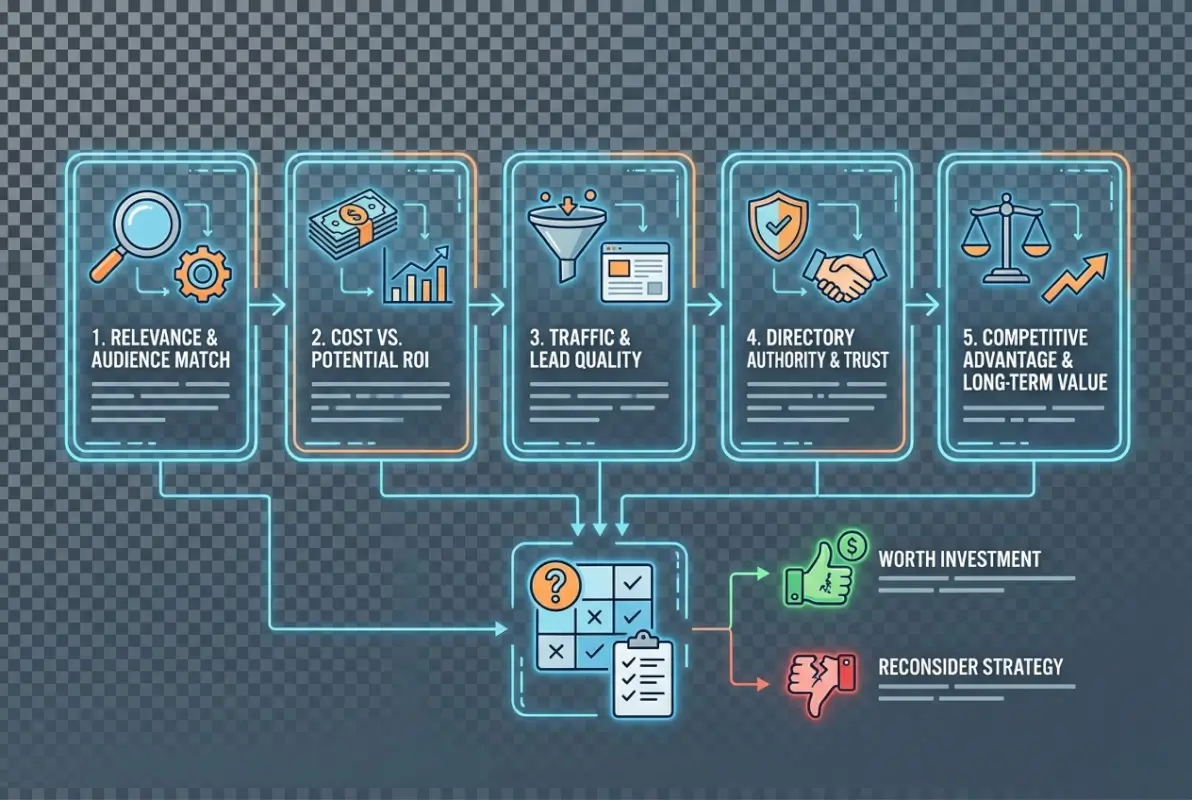
Think of directory listings as references in a job interview. Five strong references from respected organizations carry far more weight than twenty vague or contradictory testimonials from unknown sources. U.S. Census Bureau data on business establishments shows that accurate business data is foundational to economic visibility, and search engines apply similar logic when evaluating which businesses to surface in local results. If your name, address, and phone number (NAP) vary across different directories—or if you’ve got duplicate listings from a previous address or old business name—you’re creating noise that dilutes the signal you’re trying to send.
How Listing Quality Influences Local Rankings
High-quality directory profiles share several characteristics: accurate NAP data that exactly matches your Google Business Profile, complete and specific business categories that align with what customers search for, detailed service descriptions that incorporate relevant local keywords, and current operating hours. Adding photos and videos boosts engagement and click-through rates, which in turn can improve your visibility within the directory and signal to search engines that your listing is active and relevant.
According to Statista research on online search behavior, users are significantly more likely to engage with listings that include visual media and customer reviews. That engagement creates a virtuous cycle: higher engagement leads to better placement within the directory, which drives more traffic, which generates more reviews and signals, which further reinforces your local authority. But this only works when the foundational data is correct. A single typo in your phone number or an outdated address can break the chain, sending potential customers to the wrong location or making it impossible for them to reach you.
Trust Signals and Avoidance of Listing Fatigue
Duplicate listings are one of the fastest ways to undermine trust signals. If a customer searches for your business and finds three different directory entries with slightly different names, phone numbers, or addresses, they’ll question whether you’re legitimate or just sloppy. Search engines react the same way, treating inconsistent data as a sign that your business information isn’t reliable. The solution is ruthless data governance: regularly check your business listings for accuracy, claim and merge duplicates wherever possible, and maintain a single source of truth for your NAP data that you replicate across all platforms.
Vetting directories before you list—free or paid—is equally critical. Prioritize directories that have strong domain authority (you can check this with tools like Moz or Ahrefs), active user traffic, and relevance to your industry or local market. A paid listing on a niche industry directory with engaged users will almost always outperform a free listing on a generic aggregator with minimal traffic. And if you’re managing BusinessLocal listings or similar platforms, the same principles apply: optimize your profile, keep data current, and ruthlessly cut underperforming placements.
Strategic Selection of Directories: Which Paid Listings Are Worth It
Not all directories deliver equal value, and the difference between a high-ROI paid listing and wasted spend often comes down to strategic selection. The best approach is to prioritize directories with strong domain authority, a proven track record of driving local visibility, and an audience that aligns closely with your target market. Generic, low-traffic directories—even if inexpensive—rarely justify their cost, while niche or industry-specific platforms can deliver outsized returns when they reach decision-makers actively searching for your services.

Start by auditing your existing free listings and identifying which platforms already generate meaningful traffic or leads. Tools like Google Analytics (with UTM parameters) and call tracking can reveal which directories are sending engaged visitors to your site or phone lines. If a free listing on a particular directory is already performing well, upgrading to a paid tier—especially one that includes enhanced features like priority placement, review widgets, or multimedia galleries—can amplify that success and improve conversion rates.
Conduct competitive research to see where your top local competitors are investing. If multiple well-ranked competitors maintain paid listings on a specific directory, it’s a signal that the platform likely delivers value in your market. Conversely, if a directory is saturated with outdated or low-quality listings, or if it lacks recent reviews and user activity, the paid upgrade may not be worth the investment. Look for directories that actively curate their listings, verify data, and demonstrate ongoing platform engagement.
Industry-specific directories often outperform general platforms for service-based businesses. A law firm may see better ROI from Avvo or Martindale-Hubbell than from a generic local directory, just as a healthcare provider might prioritize Healthgrades or Zocdoc. These niche platforms attract users with high purchase intent, and paid placements can position your business directly in front of an audience already seeking your exact service category. The key is to match directory audience intent with your ideal customer profile.
How to Identify High-ROI Directories
High-ROI directories share several characteristics: they have strong domain authority (typically DA 50+), attract substantial organic search traffic, and feature active user engagement through reviews, ratings, and direct contact actions. Use tools like Moz, Ahrefs, or Semrush to assess a directory’s domain strength and organic visibility. A directory that ranks well for relevant local search queries is more likely to send qualified traffic your way, making a paid listing a sound investment.
Evaluate the directory’s user experience and mobile responsiveness. If the platform is difficult to navigate, slow to load, or poorly optimized for mobile devices, even a prominent paid listing may struggle to convert visitors into leads. Check whether the directory supports rich media (photos, videos, virtual tours) and whether those features are included in the paid tier. Enhanced listings with compelling visuals and detailed descriptions consistently outperform text-only placements in both click-through and conversion rates.
Request performance data or case studies from the directory provider before committing to a long-term contract. Reputable platforms should be able to share benchmarks on average lead volume, click-through rates, or conversion metrics for businesses in your industry and market. If a directory is unwilling or unable to provide this data, it’s a red flag that the platform may not deliver meaningful results. Transparency around performance is a hallmark of directories worth paying for.
| Directory Type | Best For | Key Features to Pay For | Typical ROI Indicator |
|---|---|---|---|
| Industry-Specific (e.g., Avvo, Healthgrades) | Professional services, healthcare, legal | Priority placement, review widgets, lead forms | High intent traffic, 3–5× conversion vs. generic |
| High-Authority General (e.g., Yelp, YellowPages) | Local retail, restaurants, consumer services | Enhanced profile, photos/videos, call tracking | Broad reach, measurable phone/web traffic lift |
| Regional/Local Chambers | B2B, community-focused businesses | Featured listing, event promotion, backlinks | Local credibility boost, networking referrals |
| Low-Authority Aggregators | Limited use cases | Usually not worth paying for | Minimal traffic, high risk of data inconsistency |
How to Test and Scale Without Overpaying
Begin with a pilot phase: select two to three high-potential directories and invest in paid listings for a defined period (typically three to six months). This timeframe allows you to gather meaningful data on lead volume, cost per acquisition, and overall ROI without overcommitting your budget. Use unique tracking phone numbers, dedicated landing pages, or UTM-tagged links for each directory to isolate performance and attribute conversions accurately.
Monitor both direct metrics (calls, form fills, clicks) and indirect signals like changes in branded search volume or Google Business Profile views. A well-placed directory listing can increase overall brand awareness and drive users to search for your business directly, even if they don’t convert immediately through the directory itself. This halo effect is a legitimate component of ROI but requires careful tracking to capture and quantify.
Scale your investment only after confirming incremental value. If a directory consistently delivers leads at or below your target cost per acquisition, consider upgrading to premium features or extending to additional relevant directories in the same category. If performance is marginal or declining, negotiate a lower rate, downgrade to a free listing, or reallocate that budget to higher-performing channels. Avoid auto-renewal contracts that lock you in without performance guarantees.
Test one variable at a time when optimizing paid listings. For example, if you’re considering adding video content or a special offer to your listing, implement that change on one directory first and measure the impact before rolling it out across all platforms. This disciplined, incremental approach prevents budget waste and builds a playbook of what works specifically for your business and market.
Best Practices for Implementation and Optimization
Once you’ve selected your paid directories, successful implementation hinges on meticulous data hygiene and profile optimization. Inconsistent or incomplete listings undermine both user trust and search engine confidence, reducing the value of even the most prominent paid placements. Start by establishing a master data source—a single, authoritative record of your business name, address, phone number (NAP), hours, categories, and service descriptions. This master record should be used to populate every directory listing, ensuring absolute consistency across all platforms.

Paid listings typically offer more fields and customization options than free versions, so take full advantage of every available feature. Complete all profile sections, including business descriptions, service areas, payment methods, and hours of operation (including special hours for holidays). Upload high-quality images that showcase your location, team, products, or completed projects; listings with photos receive significantly more engagement than those without. If the directory supports video, add a short, professional introduction or customer testimonial to further differentiate your listing.
Actively solicit and manage reviews on paid directory platforms. Many directories prioritize listings with recent, positive reviews in their search results and recommendation algorithms, so a well-reviewed paid listing will outperform a neglected one. Implement a review generation strategy that requests feedback from satisfied customers shortly after a transaction or service completion, and respond promptly and professionally to all reviews—both positive and negative. Engagement with reviews signals active management and builds trust with prospective customers.
Monitor and update your listings regularly. Business information changes—new services, updated hours, seasonal promotions—and stale data can cost you leads or damage your reputation. Set a quarterly reminder to audit all paid listings for accuracy and completeness, and use any analytics dashboards provided by the directory to track performance trends and identify optimization opportunities. Consistent maintenance is the difference between a listing that drives ongoing value and one that becomes a neglected expense.
Data Hygiene and Profile Optimization
Data hygiene is the foundation of effective directory marketing. Even minor inconsistencies in your NAP data—such as “Street” versus “St.” or different phone number formats—can confuse search engines and weaken your local SEO signals. Standardize all business information using the exact format that appears on your Google Business Profile, and apply that standard uniformly across all paid and free directory listings. Tools like BrightLocal’s Citation Tracker or Moz Local can help you identify and resolve discrepancies at scale.
Category selection is another critical optimization lever. Most directories allow you to choose primary and secondary business categories; select the most specific, relevant categories available rather than broad, generic ones. For example, a business specializing in “emergency plumbing repair” should prioritize that category over simply “plumber” if the directory offers it. Precise categorization improves your chances of appearing in highly targeted searches and connects you with users who are further along in the buying journey.
Write compelling, keyword-informed business descriptions that clearly communicate your unique value proposition and service differentiators. Avoid generic boilerplate text; instead, highlight specific benefits, credentials, service guarantees, or customer success stories. Incorporate relevant local and service keywords naturally, but prioritize readability and persuasiveness over keyword density. A well-crafted description can be the deciding factor when a prospect is comparing multiple businesses in a directory listing.
Integration with Broader Local SEO
Paid directory listings should not exist in isolation; they’re most effective when integrated into a cohesive local SEO strategy. Ensure that your Google Business Profile (GBP) is fully optimized and that your directory listings reinforce the same NAP data, categories, and messaging. Consistency across GBP, your website, and all directory platforms strengthens the local search signals that Google uses to determine ranking and relevance. Discrepancies can dilute those signals and reduce visibility.
Use UTM parameters on all directory links to your website so you can track traffic sources and conversions in Google Analytics. Tag each directory link with a unique campaign source (e.g., utm_source=yelp or utm_source=avvo) to isolate performance and calculate ROI. This data is essential for making informed decisions about renewals, upgrades, or budget reallocation. Without tracking, you’re flying blind and can’t distinguish between high-value and low-value directory investments.
Leverage directory listings to support your review and reputation management efforts. Many directories display reviews prominently and contribute to your overall online reputation footprint. Encourage satisfied customers to leave reviews on the directories where your paid listings appear, and link to those directory profiles from your website or email signatures when appropriate. A robust, multi-platform review presence enhances credibility and increases the likelihood that prospects will choose your business over competitors.
Cross-promote your directory listings through your website, social media, and email marketing. For example, if you’ve invested in a premium Yelp listing, add a Yelp badge or review widget to your website’s homepage or testimonials page. If you’re featured on an industry directory, mention that credential in your email signature or LinkedIn profile. These small touches amplify the value of your paid listings by driving additional traffic and reinforcing trust signals across multiple touchpoints.
Risk Management, Budgeting, and Long-Term Considerations
Even the best-planned directory strategy carries risks if not managed proactively. Paid listings require ongoing investment, and costs can creep upward over time through annual renewals, feature add-ons, and platform price increases. Build a comprehensive budget that accounts for both initial setup and long-term maintenance, including the cost of monitoring tools, review management, and periodic listing audits. Factor in a contingency for unexpected expenses, such as addressing duplicate listings or correcting data syndication errors.

Auto-renewal clauses are common in directory contracts and can lead to unintended spend if not carefully tracked. Maintain a master calendar of all renewal dates and set reminders at least 60 days in advance to review performance and negotiate terms. If a directory’s ROI has declined or if you’ve identified a better alternative, you’ll have time to cancel or renegotiate before being locked into another term. Treat every renewal as an active decision, not a passive default.
Duplicate listings are one of the most common and damaging pitfalls in directory marketing. They occur when your business appears multiple times on the same directory—often due to data aggregation errors, past employees creating listings, or franchise/multi-location complexity. Duplicates confuse search engines, dilute your review profile, and can cause customers to contact the wrong location or see outdated information. Conduct regular duplicate scans using tools like Moz Local, Yext, or BrightLocal, and immediately claim, merge, or suppress any duplicates you discover.
Data governance is an ongoing responsibility, not a one-time task. As your business evolves—whether through new locations, service expansions, rebranding, or ownership changes—your directory listings must be updated promptly and consistently. Assign a specific team member or external partner to own directory data integrity, and establish a formal process for communicating business changes to all listing platforms. This proactive approach prevents the data decay that undermines the value of your paid investments over time.
Budgeting for Renewals and Feature Add-Ons
When budgeting for paid directories, distinguish between essential baseline costs and optional feature upgrades. The baseline typically includes the annual listing fee and basic profile features, while add-ons might include call tracking, enhanced analytics, premium placement, or advertising credits. Start with the baseline and measure performance before layering in add-ons; not all premium features deliver proportional value, and some may be more effectively provided by third-party tools.
Call tracking is a particularly valuable add-on if phone calls are a primary conversion channel for your business. Many directories offer call tracking as part of their premium tiers, providing unique phone numbers that forward to your main line and capture caller data. This enables precise attribution of leads to specific directories and helps you calculate true cost per acquisition. If the directory’s call tracking is expensive or limited, consider using a standalone service like CallRail or CallTrackingMetrics that can track calls from all marketing channels, not just directories.
Plan for annual price increases and budget accordingly. Directory platforms often raise prices by 5–10% per year, especially for high-performing or high-demand categories. When you receive a renewal notice with a price increase, use it as an opportunity to negotiate based on performance data. If you can demonstrate that your ROI is marginal at the current price, you may be able to secure a discount, lock in a multi-year rate, or negotiate additional features at no extra cost.
| Budget Component | Typical Annual Cost | Priority Level | Notes |
|---|---|---|---|
| Baseline Paid Listings (2–4 directories) | $500–$2,500 | High | Core investment for established directories |
| Premium Features (call tracking, analytics) | $300–$1,200 | Medium | Add only after baseline ROI is confirmed |
| Citation Management Tool | $200–$600 | High | Essential for ongoing data hygiene and audits |
| Review Management/Response | $300–$1,000 | Medium-High | Can be in-house or outsourced |
| Contingency (duplicates, data fixes) | 10% of total budget | Medium | Reserve for unexpected issues |
Red Flags and Governance
Several warning signs indicate that a directory may not be worth your investment. Low traffic or engagement is the most obvious red flag; if the directory ranks poorly in search results, has few recent reviews, or shows minimal user activity, your paid listing will likely languish unseen. Request traffic data or user engagement metrics before committing, and walk away from platforms that can’t or won’t provide them. A lack of transparency around performance is a clear indicator of low value.
Be wary of directories that require long-term contracts with no performance guarantees or exit clauses. Reputable directories typically offer annual or monthly billing with the option to cancel or downgrade if you’re not satisfied. If a platform pressures you into a multi-year contract with no recourse, it’s often because they know their value proposition is weak. Negotiate for shorter terms or performance-based pricing whenever possible.
Watch for directories that syndicate your data without permission or that create listings on your behalf without your knowledge. These “data scraping” directories can introduce errors, duplicates, and inconsistencies that harm your local SEO. If you discover unauthorized listings, claim them immediately (if the directory allows it) or request removal. Some directories require formal legal requests to remove listings, so be prepared to escalate if necessary.
Establish clear governance policies for who can create or edit directory listings on behalf of your business. In multi-location or franchise organizations, lack of central oversight often leads to data chaos, with individual locations creating duplicate or inconsistent listings. Centralize directory management with a single team or vendor, and implement approval workflows for any new listings or major data changes. This discipline is especially critical as your business scales or undergoes transitions like mergers, acquisitions, or rebrands.
Frequently Asked Questions
What impact do paid directory listings have on local SEO and Google visibility?
Paid directory listings contribute to local SEO by providing additional citation signals that reinforce NAP consistency and build domain authority. Google uses these signals alongside Google Business Profile data to assess local relevance. While not a direct ranking factor, high-quality directory citations improve discoverability and trust, especially when listings are complete and accurate.
Are paid directory listings worth it in 2026, given evolving local search signals?
Paid directory listings remain valuable in 2026 when they’re strategically selected for industry relevance and audience alignment. The key is to focus on high-authority directories that drive measurable engagement—clicks, calls, or conversions—rather than pursuing quantity. Test-first approaches help ensure incremental ROI before expanding your directory footprint.
How should I pick which directories to pay for, and how many is the right number?
Prioritize directories with strong domain authority, verified user traffic, and alignment with your industry or local market. Start with three to five high-relevance platforms, then measure lead volume and ROI. Quality trumps quantity—too many low-traffic directories dilute budget without delivering meaningful visibility or conversions.
How do I measure the ROI of paid directory listings, and what metrics matter?
Track direct metrics including click-through-rate, phone calls, form submissions, and conversions attributed to each directory using UTM parameters and call tracking. Calculate cost per lead by dividing total annual fees by leads generated. Monitor organic visibility improvements and referral traffic over time to assess cumulative impact beyond immediate conversions.
What data hygiene practices prevent wasted spend on directory listings?
Maintain identical NAP data across all listings, audit for duplicate profiles quarterly, and update hours, categories, and descriptions when business details change. Use citation management tools to monitor consistency and catch errors. Remove or consolidate outdated listings to prevent conflicting signals that can dilute trust and harm local rankings.
Can paid directory listings replace Google Business Profile optimization?
No. Google Business Profile remains the single most critical local search asset and should receive priority investment. Paid directory listings work best as complements—they amplify visibility, strengthen citation signals, and provide additional touchpoints. Think of directories as supporting cast, with GBP taking the lead role in local SEO strategy.
Should I invest in directory listing features like enhanced profiles or call tracking?
Yes, when the directory’s audience and engagement justify the upgrade. Enhanced features—photos, videos, call tracking, and review integrations—significantly improve conversion rates on high-traffic directories. Test basic placements first, then upgrade on platforms where you see strong baseline performance and clear path to incremental leads.
What are the biggest red flags when evaluating a paid directory service?
Watch for directories with minimal organic traffic, lack of transparent analytics, or no verifiable review ecosystem. Avoid platforms that auto-renew without clear cancellation policies or create duplicate listings you can’t control. Request traffic data and user demographics upfront—reputable directories provide this to justify their value.
Conclusion: Make Paid Directory Listings Work for You
Paid directory listings can be a smart investment—when you approach them with strategy, discipline, and clear metrics. The businesses that see the strongest returns are those that resist the “spray and pray” mentality, instead focusing on a curated set of high-authority, industry-aligned directories. They maintain ruthless data hygiene, optimize every profile with complete NAP data and rich media, and measure incremental impact at every step.
The foundation of any successful directory strategy is integration. Your directory listings should never operate in isolation. They need to reinforce the signals from your Google Business Profile, align with your on-site content, and feed into a unified local SEO framework. Use UTM tracking to understand which directories drive real conversions, not just vanity metrics. Test small, scale what works, and prune what doesn’t.
Budget for renewals, monitor for duplicate listings, and treat directories as part of your broader visibility ecosystem—not a set-it-and-forget-it checkbox. The landscape will continue to evolve, but the fundamentals remain: relevance, consistency, and measurable impact. Directories that meet those criteria deserve your investment. The rest are noise.
Ready to Optimize Your Local Visibility?
Don’t let inconsistent data or wasted spend hold you back. Start with an audit of your current directory presence, identify gaps and duplicates, and build a targeted strategy around the directories that matter most to your audience.
Take action today: prioritize quality over quantity, track your ROI, and make every dollar count.
Was this article helpful?