How to Start an Online Directory: 5 Proven Strategies for Success

Generating summary...
Most online directories fail within their first year—not because they lack traffic, but because founders skip the unglamorous work of niche validation, ethical data acquisition, and scalable architecture. If you’re planning to start an online directory, you’re entering a space where winners capture massive organic traffic and recurring revenue, while losers burn cash on generic platforms that nobody trusts. The difference? A methodical approach to building listings, driving search visibility, and establishing credibility from day one.
The opportunity has never been clearer. With over 36 million small businesses operating in the United States alone—according to recent data from the U.S. Small Business Administration—the demand for discoverable, trustworthy directories serving niche markets continues to grow. Small businesses need online visibility, and consumers need curated, verified options. Your directory can bridge that gap, but only if you build it right.
TL;DR – Quick Takeaways
- Niche specificity wins – Narrow focus beats broad listings every time; differentiate with specialized criteria and quality signals
- Monetization must align with value – Choose listing fees, subscriptions, or lead-gen models based on what users actually pay for
- Architecture dictates scale – Invest in data models, taxonomies, and automation upfront to avoid costly rebuilds later
- Listings quality = directory survival – Ethical acquisition and verification build trust; scraped junk kills credibility fast
- SEO and partnerships compound – Indexed listing pages plus strategic content drive sustainable traffic without paid ads
Validate Your Niche, Model, and Market Fit
Before writing a single line of code or onboarding your first listing, you need to answer two hard questions: Who is this directory for, and why would they pay to be listed (or why would users choose your directory over Google)? I remember launching an early directory project that tried to serve “all local businesses”—it collapsed under its own vagueness within six months. Specificity is your competitive moat.
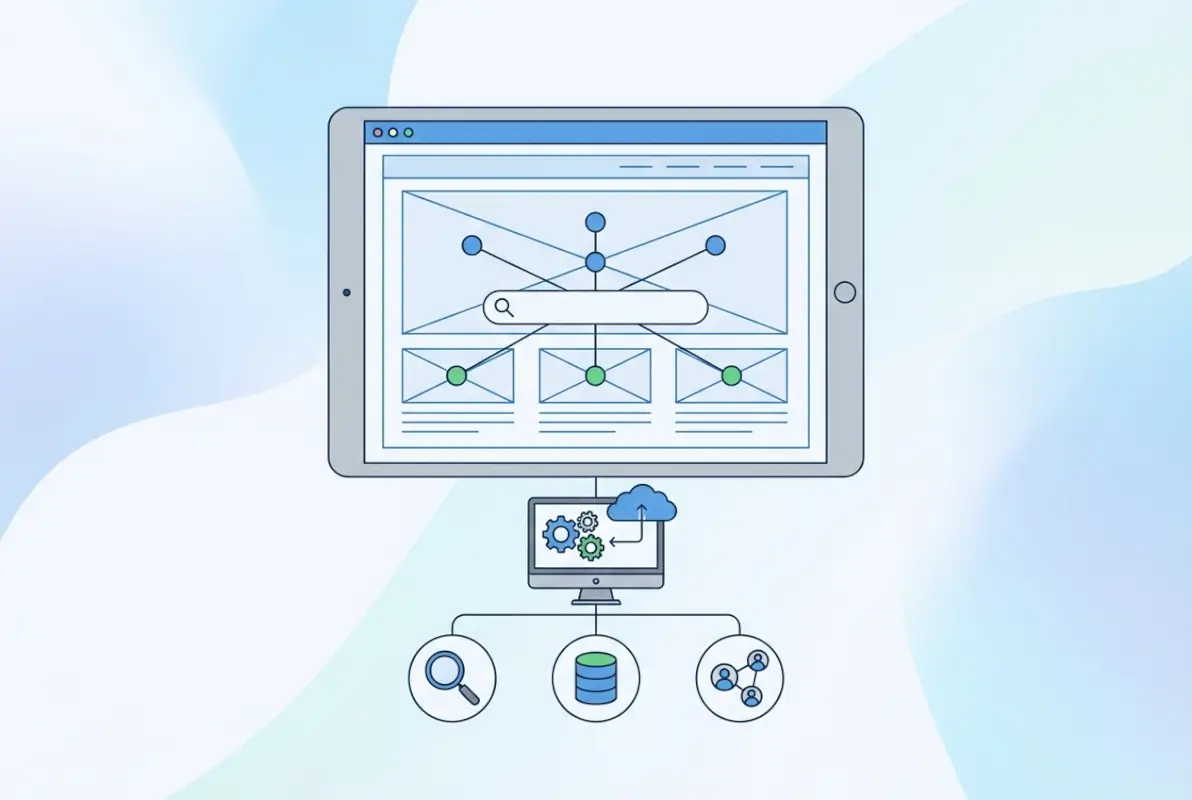
Start by defining your niche with surgical precision. Are you targeting eco-friendly home contractors in the Pacific Northwest, or SaaS tools for healthcare compliance? Your scope determines everything—from listing criteria to monetization levers. Geographic boundaries matter too, a hyper-local directory for a mid-sized city operates differently than a national vertical directory. The tighter your niche, the easier it becomes to articulate unique differentiators: verified certifications, peer reviews, or specialty tags that mainstream platforms ignore.
User personas should guide every decision. If you’re building a directory for small business owners seeking suppliers, those owners care about lead quality and response time, not vanity metrics. If you’re serving consumers hunting for service providers, they want transparent pricing and authentic reviews. Map out 2-3 detailed personas—industry, pain points, decision criteria—and test your assumptions through interviews or surveys before committing resources.
Define the Niche and User Personas
Niche definition isn’t just picking a category; it’s carving out defensible territory. Look at existing business listing directories and identify gaps—underserved specialties, overlooked regions, or quality standards nobody enforces. For example, a directory exclusively for women-owned construction firms in Texas offers clear differentiation that “all construction companies nationwide” never will.
Document your target industries with granular detail: NAICS codes, typical business size, and common pain points. If you’re going local, specify metro areas or ZIP codes. If national, outline how you’ll handle regional variations (licensing, compliance, consumer expectations). Then layer in your differentiators—maybe you verify insurance, vet customer reviews manually, or integrate real-time availability. These aren’t optional features; they’re the reasons someone chooses you over a generic search engine results page.
Choose a Scalable Directory Business Model
Monetization models fall into four main buckets: listing fees (one-time or annual charges for enhanced profiles), subscriptions (tiered access for premium features or leads), lead generation (pay-per-lead or pay-per-contact), and hybrid (mixing multiple revenue streams). Your niche dictates which model works. High-value B2B directories often thrive on subscriptions because businesses pay for ongoing lead flow. Local service directories lean on lead-gen, charging plumbers or electricians per qualified inquiry.
Listing fees work when visibility alone drives ROI—think niche marketplaces where being listed significantly boosts discoverability. Subscriptions work when you provide recurring value: analytics dashboards, priority placement, or exclusive networking. Lead-gen models align incentives perfectly (you only make money when you deliver results) but require robust tracking and attribution. The online directory business model you choose shapes your pricing, sales motion, and long-term sustainability, so validate willingness-to-pay early through landing page tests or direct outreach.
Architect a Flexible, Scalable Directory Platform
A sloppy data model is technical debt you’ll regret forever. I’ve seen directories collapse under their own growth because founders threw listings into unstructured databases, then couldn’t add filters, integrate APIs, or maintain quality at scale. Treating your directory like a glorified spreadsheet works until you hit 500 listings—then everything breaks.

Your data architecture needs taxonomies (how listings are categorized), structured fields (business name, location, contact, certifications), and workflows for verification. Think through how you’ll handle multi-location businesses, seasonal changes, and duplicate prevention. U.S. Census Bureau business data offers useful context for understanding industry classifications and geographic hierarchies if you’re building something aligned with official standards. Define your schema early, and make it extensible—new fields should slot in without rebuilding everything.
API readiness matters from day one. Even if you’re not launching integrations immediately, structuring data so partners can consume it programmatically opens revenue opportunities (affiliate feeds, white-label directories, data licensing). Your schema should support machine-readable exports: JSON, XML, or standardized feeds like schema.org LocalBusiness markup for SEO benefits.
Data Model and Listing Quality Controls
Start with a clear taxonomy: top-level categories, subcategories, and tags. For a home services directory, you might have “Plumbing” as a category, “Emergency Plumbing” as a subcategory, and tags like “24/7,” “Licensed,” “Eco-Friendly.” Consistent tagging enables powerful filters and faceted search—users can drill down to exactly what they need. Document your taxonomy in a public-facing guide so businesses understand how they’ll be classified.
Structured fields should balance richness and simplicity. Core fields (name, address, phone, URL, hours) are non-negotiable. Extended fields (certifications, payment methods, service radius, pricing tiers) add value but increase onboarding friction. Strike a balance: require essentials, recommend high-value optionals. Build in validation rules—phone number formats, URL checks, address verification via geocoding APIs—to catch errors at submission time rather than after publishing.
Quality controls live in your workflows. Will you manually review every listing, or use algorithmic checks plus spot audits? For free business listing sites, manual review is impractical at scale, so automated fraud detection (duplicate IP addresses, fake business names, spammy descriptions) becomes essential. Paid directories can afford human review for premium tiers. Either way, define your verification process before your first listing goes live, and communicate it transparently to build trust.
Platform Choice and Onboarding Automation
You face a classic build-vs-buy decision. SaaS directory platforms (like TurnKey Directories for WordPress, or vertical-specific solutions) offer rapid deployment, built-in features, and lower upfront cost. Custom builds give you total control and unique differentiation but require significant dev resources and ongoing maintenance. For most founders, a flexible SaaS foundation plus strategic customization hits the sweet spot—launch fast, iterate based on real usage, then invest in custom features once you’ve validated product-market fit.
Onboarding automation is non-negotiable. If adding a listing takes 30 minutes of manual data entry, you’ll never scale. Use business listing templates with smart defaults, autofill from public databases (Google Places, state licensing boards), and guided workflows that progressively capture information. The best onboarding experiences feel like filling out a concise form, not writing a novel. Offer CSV bulk upload for partners or large listing sets, but validate data integrity on import.
Populate Listings: Acquisition, Partnerships, and Integrity
Quality listings form the foundation of any successful directory. Without a robust pipeline of verified businesses, even the best platform architecture will fail to attract users or generate revenue. Focus on ethical acquisition methods that prioritize accuracy over volume, ensuring every listing provides genuine value to searchers.
Begin by mapping out your ideal listing sources: industry associations, local chambers of commerce, licensing databases, and direct outreach to businesses in your niche. Partnerships with trade associations can unlock hundreds of pre-qualified listings at once, while also lending credibility to your platform. Avoid scraping public data indiscriminately—it leads to outdated information, duplicate entries, and user frustration that damages trust.
Implement a tiered verification system that balances automation with human oversight. Automated checks can validate business registration numbers, phone numbers, and website SSL certificates, while manual review catches nuanced quality issues like inappropriate categorization or spam. User-generated signals—such as claimed listings, reviews, and engagement metrics—provide ongoing validation that a business is active and legitimate.
Build anti-fraud measures into your intake process from day one. Require email verification from business domains (not free email providers), implement CAPTCHA on submission forms, and flag listings with suspicious patterns like identical addresses or phone numbers. These safeguards protect both your users and your reputation, ensuring the directory remains a trusted resource as you scale.
Acquire High-Quality Listings Ethically and at Scale
Direct outreach to businesses yields the highest-quality listings, though it demands more time upfront. Craft personalized email campaigns explaining the value proposition: increased visibility, customer reviews, and analytics dashboards. Segment your outreach by industry vertical or geographic region to tailor messaging and improve conversion rates from initial contact to completed listing.
Strategic data partnerships accelerate growth while maintaining quality standards. License business data from reputable providers who verify contact information and operational status, then enhance those records with unique editorial content, photos, and user reviews. According to U.S. Census Bureau business statistics, understanding industry composition and business formation trends helps you prioritize which sectors and regions to target first.
| Acquisition Method | Quality | Speed | Best For |
|---|---|---|---|
| Direct outreach | Highest | Slow | Niche directories, premium tiers |
| Association partnerships | High | Medium | Industry-specific directories |
| Licensed data feeds | Medium | Fast | Rapid launch, broad coverage |
| Public data scraping | Low | Fast | Avoid—high risk of errors |
Incentivize businesses to claim and enrich their own listings with free basic profiles and paid premium upgrades. Claimed listings receive better placement in search results, encouraging businesses to provide accurate contact details, hours, photos, and service descriptions. This self-serve model distributes the workload while ensuring information stays current without constant manual intervention.
Verification, Authenticity, and Trust Signals
Trust signals differentiate professional directories from low-quality aggregators. Display verification badges for listings that have completed phone verification, document upload, or on-site visits. Layer in algorithmic checks that cross-reference business data against authoritative sources like state licensing boards, Better Business Bureau records, and public business registries.
User-generated content serves as continuous validation, but only when properly moderated. Implement review systems that require verified purchases or interactions, using techniques like email confirmation and rate-limiting to prevent fake reviews. Surface review velocity and recency prominently—businesses with consistent recent reviews signal active operations, while sudden spikes or drops warrant editorial investigation.
Create transparency reports that show users how you verify listings and handle complaints. Publish clear policies on removal criteria, dispute resolution, and data sources. This openness builds trust with both businesses and consumers, positioning your directory as a neutral, reliable intermediary rather than a pay-to-play advertising platform.
Drive Traffic and Monetization Through SEO, Partnerships, and Content
Search engine optimization delivers the most sustainable, cost-effective traffic channel for directories. Unlike paid advertising that stops the moment you pause campaigns, well-optimized directory pages compound returns over time as they accumulate authority and backlinks. Structure your entire platform around SEO from day one, not as an afterthought.

Every listing should generate a unique, indexable page with optimized title tags, meta descriptions, and structured data markup (Schema.org LocalBusiness or Organization types). Category pages aggregate listings by topic, location, or attribute, targeting broader search terms while providing intuitive navigation. These hub pages should include introductory content that addresses user intent, not just lists of links.
Content marketing amplifies your SEO foundation by targeting informational queries adjacent to your directory’s core function. Publish buying guides, comparison articles, and “best of” lists that naturally link to relevant listings. According to SBA research on small business trends, businesses increasingly prioritize online channels, making directories that surface in educational content searches more valuable to both users and listed businesses.
Partnerships unlock distribution channels beyond organic search. Integrate your directory data via API with complementary platforms—maps providers, industry publications, or software tools your target users already frequent. Each integration point creates backlinks, referral traffic, and brand exposure, while positioned your directory as infrastructure rather than a standalone destination.
SEO-First Indexing and Content Strategy
Technical SEO hygiene prevents self-inflicted wounds that plague many directories. Implement canonical tags to consolidate duplicate content signals, use pagination or “load more” buttons (not infinite scroll) for category pages, and ensure mobile-first responsive design passes Core Web Vitals thresholds. Page speed matters especially for directories with map integrations and rich media—lazy-load images and defer non-critical JavaScript.
Long-tail keyword targeting drives qualified traffic at scale. Instead of competing for “plumbers NYC,” create pages for “emergency plumber Upper West Side” or “commercial plumbing contractor Manhattan.” These hyper-specific queries convert better because the user has clear intent, and you face less competition from national brands and aggregators.
| Content Type | Primary Goal | SEO Benefit | Monetization Path |
|---|---|---|---|
| Listing pages | Conversions | Long-tail branded searches | Lead forms, premium profiles |
| Category hubs | Discovery | Category + location terms | Featured placements, ads |
| Buying guides | Education | “How to choose” queries | Affiliate links, sponsorships |
| Comparison pages | Evaluation | “[A] vs [B]” searches | Premium listing upgrades |
Structured data markup makes your listings eligible for rich results in search—star ratings, pricing, availability, and contact information display directly in results pages. Implement JSON-LD format Schema.org markup for every listing, category page, and review. Monitor Google Search Console for structured data errors and opportunities to expand your rich result coverage.
Partnerships, Lead-Gen, and Multi-Channel Growth
Strategic partnerships multiply your reach without proportional increases in marketing spend. Identify complementary services whose customers need your directory—software providers, trade publications, or professional associations. Offer co-branded landing pages, white-label directory widgets, or revenue-share arrangements that align incentives and distribute acquisition costs.
Lead generation monetization turns traffic into revenue before users even contact businesses. Implement “request quotes” forms that collect user requirements and distribute leads to multiple relevant listings. Charge businesses per lead, per contact, or on a subscription basis for lead access, creating revenue streams independent of listing fees or advertising.
Email marketing and retargeting campaigns recapture users who browse but don’t convert. Build email lists through gated resources like downloadable guides or free consultations, then nurture subscribers with curated listings, industry news, and exclusive offers. Retargeting pixels allow you to show display ads to previous visitors across the web, keeping your directory top-of-mind as they complete their research process.
Governance, Compliance, and Quality Assurance for Longevity
Long-term directory success depends on trust, which requires robust governance frameworks from the start. Clear policies on data handling, user privacy, and content moderation protect both your business and your users from legal and reputational risks. Compliance work may feel like overhead early on, but it prevents catastrophic failures that can destroy years of growth.

Establish documented policies for user data collection, storage, and deletion that meet or exceed regulatory requirements. Even if you’re not immediately subject to GDPR or CCPA, designing privacy-first systems now avoids costly retrofitting later. Provide transparent cookie notices, clear opt-in mechanisms for marketing communications, and straightforward data deletion processes that users can initiate without contacting support.
Implement content moderation workflows that balance editorial control with scalability. Define clear guidelines for acceptable listings, reviews, and user-generated content, then train moderators to apply those standards consistently. According to SBA small business data, understanding the ecosystem you serve helps you set policies that serve legitimate businesses while filtering bad actors.
Create feedback loops that surface quality issues before they become systemic problems. Monitor user reports, support tickets, and review disputes for patterns indicating data quality gaps or policy enforcement failures. Regular audits of listing accuracy, review authenticity, and search relevance ensure the directory maintains high standards as it scales beyond manual oversight capabilities.
Compliance, Privacy, and Data Governance
Data governance frameworks define how information flows through your directory—who can access it, how it’s used, and when it’s deleted. Map all data collection points (submission forms, review widgets, analytics) and document the legal basis for processing each type of information. Maintain records of consent for marketing communications and implement automated data retention policies that delete outdated information on schedule.
Privacy policies should be written in plain language that non-lawyers can understand, not copied from templates. Explain specifically what data you collect (email, business information, browsing behavior), why you collect it (account creation, fraud prevention, personalization), and who you share it with (payment processors, analytics vendors). Update policies whenever you add new features or integrations, and notify users of material changes.
Security measures protect both user data and business listings from unauthorized access or manipulation. Implement role-based access controls that limit employee and partner access to only necessary data. Use encryption for data in transit (HTTPS) and at rest (encrypted databases), and establish incident response procedures for potential breaches. Regular security audits and penetration testing identify vulnerabilities before attackers exploit them.
Continuous Improvement: Feedback Loops and Trust Metrics
Net Promoter Score (NPS) surveys measure whether users would recommend your directory to others, providing a single metric to track user satisfaction over time. Send surveys to both consumers and listed businesses at key moments—after a successful connection, upon listing renewal, or following support interactions. Track NPS by user segment to identify which audiences you serve well and which require improvement.
Review quality metrics ensure user-generated content remains helpful and authentic. Monitor review length (very short reviews often lack substance), velocity (sudden spikes suggest manipulation), and sentiment distribution (all positive or all negative indicates potential fraud). Implement machine learning models or third-party services that flag suspicious review patterns for manual investigation, preserving review integrity at scale.
| Trust Metric | Measurement Method | Target Threshold | Action When Below Target |
|---|---|---|---|
| Listing accuracy | Monthly sample audit | >95% correct contact info | Automate verification reminders |
| Review authenticity | Fraud detection flags | <2% flagged reviews | Tighten verification requirements |
| User NPS | Post-interaction survey | >40 score | User research to identify pain points |
| Listing freshness | Days since last update | <180 days avg | Prompt businesses to refresh data |
Listing refresh cadences keep information current without requiring constant manual updates. Implement automated systems that prompt businesses to verify their information quarterly or semi-annually via email. Flag listings that haven’t been updated in over six months for editorial review, and consider downranking stale listings in search results to incentivize ongoing maintenance by business owners.
Frequently Asked Questions
What is an online directory, and how does it differ from a search engine?
An online directory is a curated database of listings organized by category, location, or niche—such as local restaurants or B2B software vendors. Unlike search engines that crawl the entire web, directories offer verified, structured listings with consistent data fields, reviews, and quality controls that help users make informed decisions quickly.
How much does it cost to start an online directory, and what are common revenue models?
Startup costs range from $500 for SaaS platforms to $10,000-plus for custom builds. Common revenue models include listing fees (one-time or recurring), freemium subscriptions with premium placements, lead-generation commissions, and hybrid approaches combining featured listings with advertising. Choose models aligned with your niche’s willingness to pay.
How do I get businesses to list on my directory, and how do I verify listings?
Reach businesses through targeted outreach, partnerships with industry associations, and incentivized referral programs. Verify listings via email confirmation, phone calls, business registration checks, and cross-referencing public records. Manual spot-checks combined with algorithmic flags for duplicate or suspicious entries build trust and ensure accuracy.
What features matter most in a successful directory platform?
Essential features include robust search with filters by category, location, and custom attributes; embedded maps for local directories; user reviews and ratings for social proof; and mobile-responsive design. Advanced filters, claim-your-listing workflows, and API access for partners further differentiate high-performing directories from basic listings pages.
How can I grow traffic to my directory quickly and sustainably?
Prioritize SEO by creating indexed pages for every listing, optimizing category hubs with long-tail keywords, and publishing FAQ-driven content that captures People Also Ask queries. Build partnerships with local businesses and associations for backlinks and referrals, and run targeted ads in your niche to jumpstart visibility.
How do I ensure listings stay accurate over time?
Automate periodic email reminders asking businesses to update their information, offer self-service claim-and-edit dashboards, and flag stale listings for review after six or twelve months. User-submitted corrections and reviews also surface outdated data, while integrating third-party APIs can auto-refresh hours, addresses, and contact details.
What are the best practices for monetizing a local directory without harming user experience?
Keep free listings valuable with core details visible, then offer premium tiers for enhanced profiles, featured placement, and lead forwarding. Limit ad density to maintain fast load times and clear navigation. Transparency about paid placements and a balance between organic and sponsored results preserve trust while generating revenue.
Should I build a custom directory platform or use a SaaS solution?
SaaS platforms accelerate launch with pre-built listing forms, search, and payment processing, ideal for validating your niche quickly. Custom builds offer full control over data models, unique features, and branding but require higher upfront investment and technical expertise. Start SaaS, then migrate custom once proven.
Your Roadmap to Directory Success: From Validation to Scale
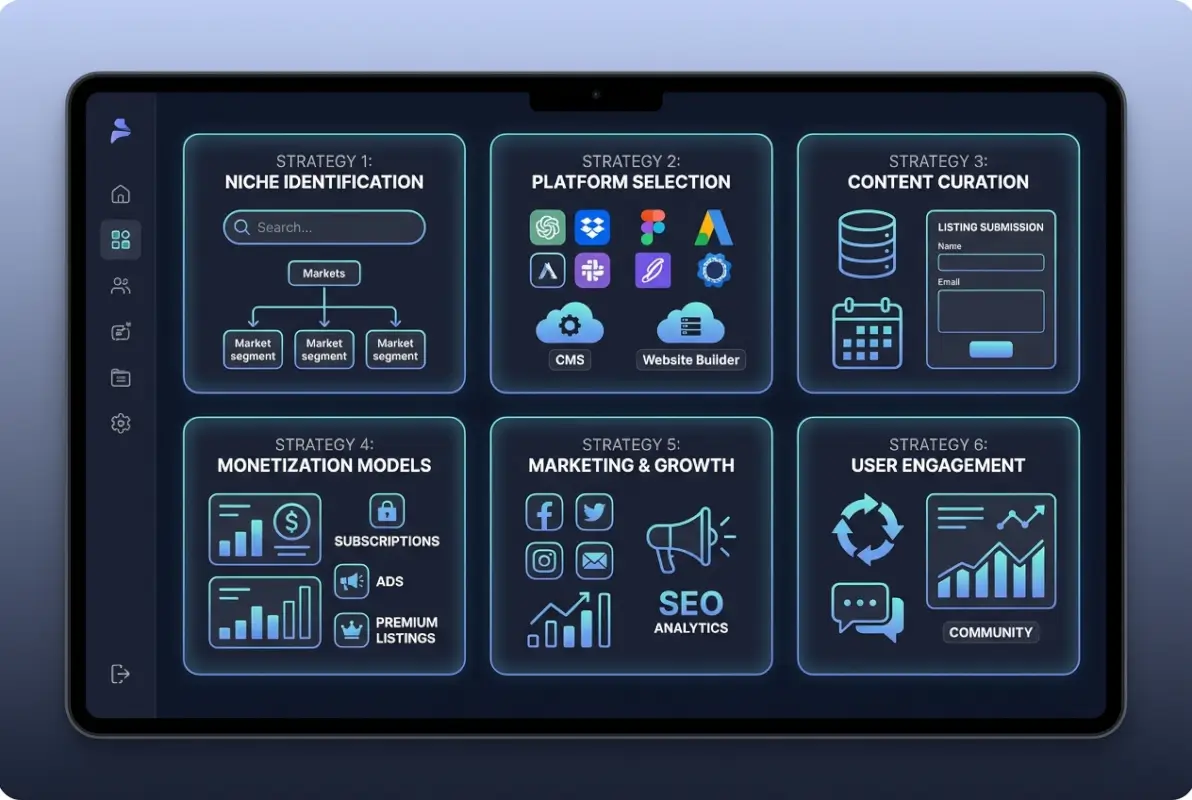
Launching and growing a successful online directory isn’t about guesswork—it’s about methodical execution across six interconnected strategies. You’ve seen how to validate your niche and choose a monetization model that aligns with user and vendor incentives, architect a flexible platform that scales gracefully as listings multiply, acquire and verify high-quality listings ethically, drive sustainable traffic through SEO and strategic partnerships, and establish governance frameworks that protect trust and ensure compliance. Each strategy builds on the others: a well-defined niche sharpens your data model, robust verification amplifies SEO signals, and strong governance sustains the partnerships that fuel long-term growth.
The small-business landscape in the United States continues to expand, with more than 36 million firms contributing to local economies and online ecosystems. This environment creates fertile ground for directories that solve real discovery and vetting problems. Whether you’re targeting a hyperlocal market—restaurants in a single metro area—or a national vertical like SaaS tools for healthcare, the principles remain the same: focus on quality over quantity, build trust through transparency and verification, and iterate based on user feedback and performance metrics.
As you move forward, treat your directory as a living product. Set quarterly goals for listing growth, traffic benchmarks, and revenue milestones. Use analytics to identify which categories drive the most engagement, which acquisition channels deliver the highest-quality listings, and which monetization levers resonate with your audience. Test new features incrementally—claim-your-listing workflows, advanced filters, API partnerships—and measure their impact before scaling. The directories that thrive in competitive markets are those that continually refine their value proposition and stay ahead of user expectations.
Ready to Launch Your Directory?
Apply these six proven strategies to validate your niche, build a scalable platform, and grow sustainably. Start with a tight focus, ship a minimum viable directory, and refine based on real user behavior. The opportunity is here—take the first step today.
Track your progress with clear KPIs: listings added per month, organic search impressions, conversion rates from free to paid tiers, and user retention metrics. Revisit this guide quarterly as you scale, and adjust your strategy to match evolving market dynamics and user needs.
The tools, data sources, and best practices outlined in this guide give you everything you need to start strong. Combine the SBA and Census insights on small-business trends with the tactical steps for platform architecture, listing acquisition, and SEO-driven growth, and you’ll have a playbook that adapts to your market’s unique demands. Success in the directory space belongs to those who execute with clarity, measure relentlessly, and optimize continuously. Now it’s your turn to build the trusted resource your niche has been waiting for.
Was this article helpful?