
Directory Website: 7 Steps to Start & Monetize in 2026 (Earn $10K/Mo)
Opens a Google-translated copy of this article in a new tab.
Think building a directory website in 2026 is too late? Think again. While everyone’s chasing social media trends and short-form video, a well-executed directory website can quietly print money—$10,000 a month or more—by solving a simple problem: connecting people with verified, curated resources in a specific niche. The catch? Most directory builders fail because they treat their site like a glorified phonebook instead of a trust-driven marketplace. I’ve watched hundreds of directories launch with grand ambitions only to fizzle out within months, and nearly every failure came down to the same mistakes: picking overly broad niches, skipping verification workflows, and relying on a single monetization stream. The directories that hit five figures monthly? They do the opposite—they niche down ruthlessly, build trust through data quality, and stack multiple revenue models from day one.
Here’s what nobody tells you: the directory model works better now than it did a decade ago, precisely because users are drowning in AI-generated slop and unverified listings. A directory that actually vets its entries, maintains fresh data, and serves a micro-niche can command premium listing fees, membership revenue, and lead generation income simultaneously. Building a directory website from scratch doesn’t require venture capital or a development team anymore—it requires strategic thinking about niche selection, data governance, and monetization architecture. This guide walks through seven concrete steps to launch, validate, and scale a directory to meaningful monthly income, using current platform economics and real-world monetization patterns.
TL;DR – Quick Takeaways
- Niche validation comes first – Broad directories fail; micro-niches with clear demand and monetization signals win
- Trust drives revenue – Verification workflows and data quality justify premium listings and paid tiers
- Stack monetization models early – Premium listings + memberships + lead generation beats single-stream dependence
- SEO and partnerships scale growth – Organic visibility plus strategic listing-provider relationships accelerate traction
- $10K/month is achievable – With focused execution, diversified revenue, and quality-first operations within 12-18 months
How Do You Choose and Validate a Directory Niche?
Your niche decision determines everything—monetization potential, competitive moat, and whether you’ll hit $10K monthly or stall at $500. The biggest mistake aspiring directory owners make is going too broad (think “businesses in Texas”) or too trendy (chasing whatever niche is hot this month). The sweet spot? A micro-niche where you can identify a clear audience problem, verify demand through market signals, and spot gaps in existing solutions. For example, instead of “wedding vendors,” consider “LGBTQ+-friendly wedding vendors in the Pacific Northwest” or “vendors specializing in micro-weddings under $10K.” The tighter your focus, the easier it becomes to curate quality, build trust, and justify premium placement fees.
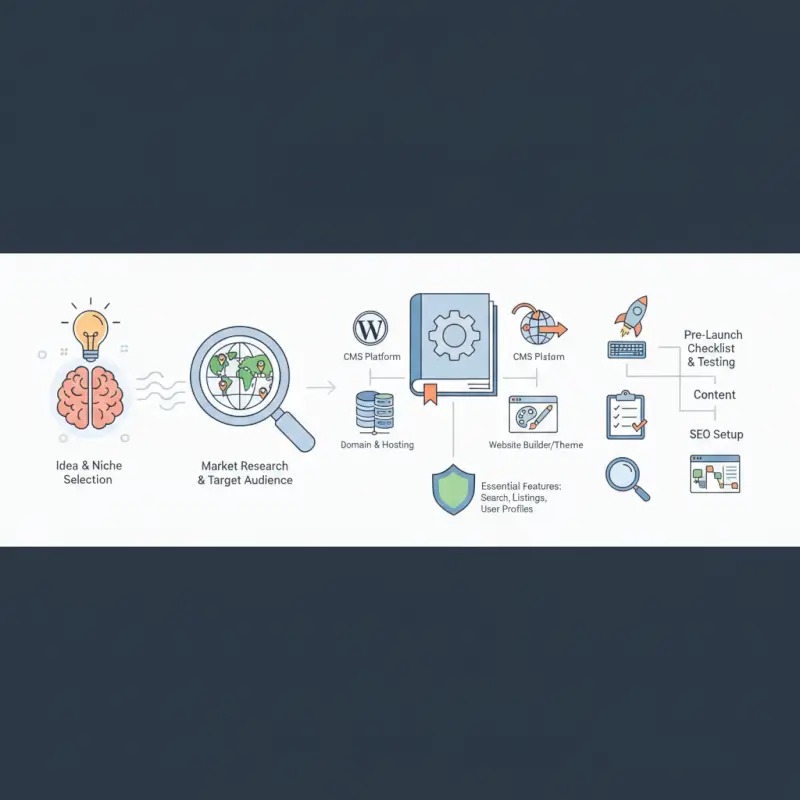
Validate before you build. Use three quick filters: search volume (Google Keyword Planner or Ahrefs should show consistent monthly searches for your niche terms), existing competition (weak or outdated directories signal opportunity), and monetization signals (are businesses in this niche already paying for visibility on other platforms?). According to U.S. Census Bureau economic data, service-based niches with high customer acquisition costs—legal services, home contractors, B2B suppliers—typically pay more for qualified leads and premium listings. If you can’t find at least three competitors willing to pay for placement or advertising in adjacent platforms, your niche probably won’t support paid listings either.
Beyond demand validation, define your unique value proposition early. What makes your directory different from a Google search or an existing competitor? The answer usually involves one of three trust signals: verification (you personally vet every listing), curation (you only include the top-tier providers), or community proof (reviews, ratings, and user-generated validation). Food directories that succeed, for instance, don’t just list every restaurant—they curate based on cuisine quality, health scores, or community votes. That curation becomes the wedge that lets you charge for inclusion or premium tiers.
Define Your Micro-Niche and Target Audience
Start with a problem-solution framework: who has a specific, urgent need, and what friction exists in how they currently solve it? Let’s say freelance designers struggle to find pre-vetted print shops that understand design specs and hit tight deadlines. Your directory becomes “vetted print partners for design professionals,” not “print shops.” You’ve just defined a narrow audience (freelance designers, agencies), a clear problem (finding reliable print vendors), and a value prop (pre-vetted, designer-friendly shops). This clarity makes every subsequent decision—platform features, listing criteria, pricing—straightforward.
Use open data and market signals to validate demand without spending thousands on surveys. Tools like Data.gov and industry association reports can reveal market size, business counts, and growth trends in your niche. If your target niche is growing, has fragmented supply, and shows willingness to pay for visibility elsewhere, you’ve found a winner. Competitive gaps matter too—if the top three directories in your niche haven’t updated their design since 2015 or lack mobile-friendly search, you’ve spotted an exploitable weakness.
Positioning and Trust Signals to Differentiate
Trust is your only sustainable competitive advantage in a directory model, and it compounds over time if you operationalize it from day one. Positioning your directory as the “verified” or “curated” option immediately justifies higher listing fees and premium tiers. Verification can be as simple as requiring business licenses, conducting phone confirmations, or checking references before approving a listing. The key is making your trust process visible—show users how you verify, display trust badges on verified listings, and reject or remove providers that fail quality checks. This is how free article directory sites differentiate themselves from spam-filled alternatives—they enforce editorial standards and show readers the quality bar.
Community signals—reviews, ratings, and user-generated proof—add a second layer of trust. Even if you’re launching with a small set of listings, plan your platform to support reviews and ratings from day one. Research from Pew Research shows that 82% of U.S. adults consult online reviews before making local purchasing decisions, and verified review systems increase conversion rates on marketplace platforms. The combination of editorial verification (you vet them) and community proof (users rate them) creates a defensible moat that generic aggregator sites can’t replicate without similar operational discipline.
Here’s where most directory builders stumble: they treat verification as a one-time task instead of an ongoing governance process. Data freshness matters—listings go stale, businesses close, and quality drifts. Build a simple workflow to re-verify listings quarterly, prompt users to flag outdated info, and remove inactive providers. These operational habits become your positioning story: “the only directory in [niche] that re-verifies every listing every 90 days.” That’s a value proposition worth paying for, and it justifies recurring membership or listing fees rather than one-time payments.
What Platform Architecture and Features Does Your Directory Need?
Platform design separates directories that monetize from those that become abandoned side projects. Your minimum viable product (MVP) needs just five core features: a clean listing structure (name, description, contact, categories), map or geolocation for local niches, search and filter functionality, a submission and moderation workflow, and simple listing tiers (free vs. paid). That’s it. I’ve seen too many builders waste months on feature bloat—advanced AI matching, social integrations, gamification—before proving anyone actually wants their directory. Start lean, launch fast, and add features only when users or listers explicitly request them. A well-executed WordPress directory plugin like TurnKey Directories can get you live in days, not months, with all core features ready out of the box.
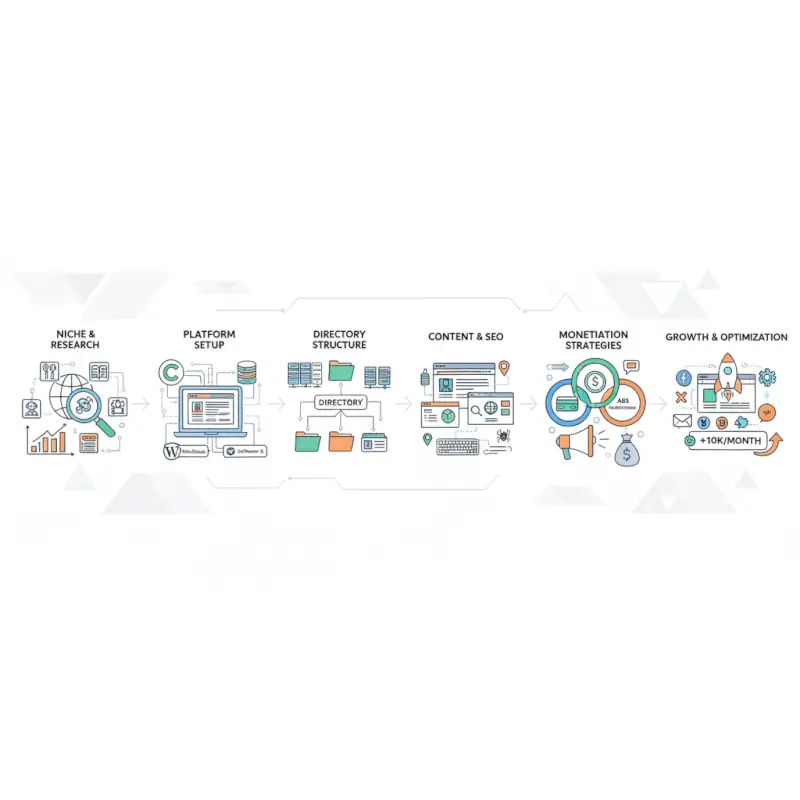
Your architecture should support three user flows from day one: visitors searching for listings, businesses submitting or claiming listings, and you (the admin) moderating and curating. Visitors need fast, mobile-friendly search with filters by location, category, price, or rating—anything that speeds their path to the right provider. Businesses need a simple submission form and a way to upgrade to premium tiers without emailing you. You need a backend dashboard to approve, reject, edit, and organize listings without touching code. According to Microsoft’s monetization guidance, platforms that reduce friction in both user journeys (search and submission) see higher engagement and faster revenue ramp.
Don’t overlook mobile experience—most directory searches happen on mobile devices, especially for local or service-based niches. Responsive design is table stakes, but speed matters more than you think. A directory that loads in under two seconds on mobile will outrank and out-convert a slower competitor, even if the slower one has more listings. Compress images, use lazy loading for listings, and avoid heavy JavaScript that tanks performance. Google’s mobile-first indexing means your mobile UX directly impacts SEO rankings, which drive the organic traffic that makes directories profitable in the first place.
Directory Architecture and Essential Features
Core MVP features should solve the user’s job-to-be-done without friction. Listing pages need clear contact methods (click-to-call buttons, email forms, website links), category taxonomy that matches how users think (not how you organize internally), and location-based search for local niches. Maps integration—Google Maps or Mapbox—makes local directories instantly more useful and increases time-on-site, a ranking signal Google cares about. Build your category structure based on user search behavior, not industry jargon; if your niche is home contractors and users search “kitchen remodel,” your categories should include “Kitchen Remodeling,” not “General Contractors – Interior.”
Submission workflows determine how quickly you scale listings. Offer a simple public submission form (builds your database with minimal effort) but require manual approval to maintain quality. Premium listers can get expedited approval or self-serve editing—this dual-tier approach lets you grow fast while keeping curation control. If you’re targeting B2B niches or professional services, consider requiring LinkedIn verification or business documentation during submission to filter out low-quality entries upfront. Setting up a directory website with strong submission workflows from the start saves hundreds of hours of cleanup later.
Data Governance and Trust Practices
Data governance sounds boring but it’s your revenue engine. Fresh, accurate listings convert visitors into customers, which makes businesses willing to pay for placement. Stale listings (closed businesses, disconnected phones, broken websites) kill trust and crater conversion rates. Implement a simple data freshness workflow: flag listings older than 90 days, email listers to confirm details, and remove or archive non-responders. Automate reminders so this happens without manual effort—most directory platforms (including TurnKey Directories) support automated status checks and expiration workflows.
Moderation policies protect your brand and justify premium pricing. Publicly post your listing criteria—what qualifies, what gets rejected, and how you handle disputes. If a business complains about rejection, point them to your published standards. This transparency builds credibility with users (they know you’re actually curating) and gives you legal cover if rejected businesses push back. According to UK government data governance guidance, clear policies around data accuracy, user privacy, and moderation reduce platform risk and increase user trust—both critical for scaling a marketplace model.
User-generated content—reviews, ratings, Q&A—adds value but requires moderation too. Fake reviews, spam, and abuse will appear the moment your directory gains traction. Build a simple flagging system so users can report suspicious reviews, and manually review flagged content weekly. You don’t need complex AI here; a human touch is faster and more accurate at small scale. As you grow, tiered moderation (auto-approve trusted users, manual review for new accounts) keeps quality high without burning your time.
Monetization Architecture: The Core Revenue Model Mix
A profitable directory website in 2026 thrives on a multi-revenue stack, not a single income stream. The most reliable baseline is premium listing upgrades: free directories attract participants, then convert a percentage to paid tiers offering enhanced visibility, featured placements, priority search ranking, or badges that signal verification. Tiered pricing (for example, Basic at $0, Plus at $49/month, and Pro at $149/month) lets businesses self-select based on growth stage and budget, while you capture revenue from motivated participants who value visibility.

Membership and subscription models create predictable recurring revenue, especially when paired with exclusive benefits like lead forwarding, analytics dashboards, or content resources. For instance, SaaS-tool directories often gate downloadable comparison guides or invite-only webinars behind a $29/month membership, which converts well when the audience is decision-makers seeking vetted insights. Lead-generation fees—charging businesses per qualified inquiry or click-through—work particularly well in high-intent verticals like home services, legal, or healthcare, where a single customer can justify a $20–$100 lead cost.
Complementary revenue streams diversify cash flow and reduce dependence on any one channel. Display advertising (via Google AdSense, Ezoic, or direct sponsors) typically scales with traffic; expect $5–$15 RPM in most B2C niches. Affiliate partnerships—linking out to booking platforms, software trials, or e-commerce products—earn commissions when users convert, adding 10–20% to total revenue once traffic exceeds 10,000 monthly visitors. Data-enabled monetization, such as selling anonymized market-intelligence reports or API access to curated listings, appeals to enterprise buyers and researchers willing to pay hundreds or thousands of dollars for proprietary datasets.
Event-led monetization extends the directory brand into physical and virtual experiences. Hosting webinars, conferences, or local meetups positions your directory as the industry convener and unlocks sponsorship, ticket sales, and exhibitor fees. A boutique fitness-studio directory, for example, might run quarterly wellness summits with $500 sponsor packages and $50 attendee tickets, generating $5,000–$10,000 per event while strengthening trust with listed businesses and end users.
| Revenue Stream | Typical Pricing | Ideal Niche Fit | Effort to Launch |
|---|---|---|---|
| Premium Listings | $49–$199/month | Any directory with clear visibility value | Low (tiering logic in CMS) |
| Membership/Subscription | $19–$99/month | B2B, professional communities | Medium (gated content/features) |
| Lead Generation | $10–$100 per lead | High-intent local services, legal | Medium (tracking & CRM integration) |
| Display Advertising | $5–$15 RPM | High-traffic consumer directories | Low (ad network sign-up) |
| Affiliate Commissions | 5–30% per sale | E-commerce, SaaS, tools | Low (affiliate links) |
| Data/Intelligence | $500–$5,000 per report/API | B2B research, niche analytics | High (data packaging & sales) |
| Events/Sponsorships | $500–$5,000 per event | Community-driven niches | High (logistics & promotion) |
Traffic, Growth, and Acquisition Strategy for 2026
Organic search remains the highest-leverage channel for directory sites because each listing page can rank for long-tail queries tied to location, category, or feature combinations. Optimize every listing with unique meta titles (“Best Vegan Bakeries in Portland | Verified Reviews”), structured data markup (LocalBusiness or Product schema), and rich snippets (ratings, hours, images) to capture featured snippets and map pack placements. Build topical authority by publishing comparison guides, “best of” roundups, and how-to content that interlinks to your directory pages, signaling to search engines that your site is the definitive resource in the niche.

User-generated content amplifies SEO while lowering editorial costs: reviews, Q&A threads, and community-submitted photos generate fresh text and engagement signals that boost rankings. Implement a lightweight review moderation workflow—auto-publish verified users, flag potential spam—and incentivize participation with badges, leaderboards, or monthly drawing entries. Mobile-first design is non-negotiable; Google’s Core Web Vitals penalize slow load times and poor mobile UX, so compress images, lazy-load below-the-fold content, and ensure tap targets meet accessibility standards (minimum 48×48 pixels).
Paid acquisition should be tactical and targeted during early traction: Google Ads on high-intent keywords (“submit to [niche] directory”) or Facebook/LinkedIn campaigns promoting free listings to business owners can seed initial supply-side growth. Allocate a modest test budget ($500–$1,000/month) and measure cost per listing submission; once organic traffic begins converting, dial back paid spend and reinvest savings into content production. Retargeting campaigns re-engage visitors who browsed but didn’t submit or upgrade, offering time-limited discounts (e.g., “20% off Pro tier this week”) to close the loop.
Partnership growth accelerates both supply and demand without heavy ad spend. Integrate with complementary platforms—booking systems, CRM tools, review aggregators—so listings sync automatically, reducing friction for businesses already using those tools. Cross-promotion deals with industry associations, local chambers of commerce, or niche influencers unlock warm audiences; for example, a wedding-vendor directory might partner with bridal magazines to offer exclusive member discounts in exchange for editorial mentions and email-list swaps. Data partnerships with open datasets (government business registries, geospatial APIs) let you bulk-import seed listings and establish category coverage quickly, then human-curate the top tier for premium upgrades.
Scaling, Governance, Compliance, and Long-Term Sustainability
As your directory grows beyond the first few hundred listings, governance frameworks ensure data quality doesn’t erode under volume. Implement a tiered verification system: auto-approve listings from authenticated email domains or OAuth (Google, LinkedIn), flag new submissions for manual review, and require re-verification annually to keep contact details and descriptions current. Publish a transparent moderation policy that defines prohibited content (spam, duplicates, misleading claims) and appeal processes, building trust with both listed businesses and end users who rely on accuracy.

Data rights and compliance become critical once you collect personal information or process payments. GDPR (Europe), CCPA (California), and similar privacy regulations mandate clear consent flows, data-export tools, and deletion mechanisms; use a privacy-compliant analytics platform (Plausible, Fathom) and host a detailed privacy policy generated via a legal template service or attorney review. Payment Card Industry Data Security Standard (PCI DSS) compliance is automatically handled if you use Stripe, PayPal, or another certified processor—never store raw card numbers yourself. If you monetize user data (market reports, lead lists), anonymize records and disclose usage in terms of service to avoid regulatory penalties.
Operational playbooks turn ad-hoc tasks into repeatable systems as you scale. Document listing-approval workflows, customer-support macros, and upgrade sales scripts in a shared knowledge base (Notion, Confluence) so you can onboard virtual assistants or part-time moderators without bottlenecking on your availability. Automate routine actions—welcome emails to new listings, expiration reminders for premium tiers, monthly performance reports—using tools like Zapier, n8n, or native CMS webhooks. Track unit economics weekly: customer acquisition cost (CAC), lifetime value (LTV), churn rate, and average revenue per listing help you diagnose health and justify reinvestment in content, partnerships, or feature development.
Long-term sustainability hinges on community ownership and network effects. Cultivate a feedback loop with top contributors—monthly surveys, beta-tester programs, or an advisory board of power users—to surface feature requests and quality issues before they scale. Invest a portion of profits into editorial depth: hire niche specialists to write authoritative guides, conduct original research (annual industry surveys), or produce video walkthroughs that cement your directory as the category leader. As the platform matures, explore acquisition or partnership exits with larger media companies, SaaS platforms, or private-equity-backed aggregators that value recurring revenue and owned audiences.
| Growth Phase | Listings Count | Key Focus | Team Structure |
|---|---|---|---|
| Launch (Months 1–3) | 50–200 | Seed supply, validate monetization | Solo founder + contractors |
| Traction (Months 4–12) | 200–1,000 | Organic growth, content scaling | Founder + VA + part-time writer |
| Scale (Year 2+) | 1,000–10,000+ | Automation, partnerships, exits | Small team (ops, support, editorial) |
Frequently Asked Questions
How do directory websites make money?
Directory websites generate revenue through premium listings, membership subscriptions, sponsored placements, lead generation fees, display advertising, affiliate partnerships, and data services. The most successful directories combine multiple streams, starting with a lean mix of two to three models and expanding based on user behavior and market demand.
What is a realistic monthly income for a new directory site?
New directory sites typically earn a few hundred dollars monthly in the first six months, scaling to several thousand as traffic and listings grow. Reaching $10,000 per month usually requires 12 to 18 months of consistent effort, quality listings, diversified monetization, and effective SEO. Set staged milestones rather than expecting immediate high revenue.
How many listings should I start with?
Begin with 50 to 200 high-quality, verified listings in your target niche to demonstrate clear value and establish trust with users. Focus on curation over volume in the early stages. Scale gradually while maintaining strict data quality standards, adding listings as you develop verification workflows and user feedback mechanisms to sustain credibility.
Do I need advanced AI to compete in directory markets?
Advanced AI can enhance search relevance and user matching, but trust, data accuracy, and intuitive user experience are the core competitive levers. Start with solid data workflows and verification processes. Add AI-driven features like personalized recommendations or intelligent filters once you have proven product-market fit and stable user engagement patterns.
What monetization models work best for directory websites?
Premium tiered listings, membership subscriptions, and lead generation typically form the foundation, with display ads, affiliate commissions, and data services adding diversification. Avoid relying on a single revenue stream. The most resilient directories layer three to five complementary models, adapting pricing and features based on user feedback and conversion analytics.
Should I charge businesses to be listed on my directory?
Offer free basic listings to build critical mass and user trust, then introduce premium paid tiers with enhanced visibility, analytics, and promotional features. This freemium model lowers barriers to entry while creating clear upgrade paths. Charge for value-added services like featured placement, lead forwarding, or verified badges rather than basic inclusion.
Can directory websites still be profitable in 2026?
Directory websites remain highly profitable when they focus on well-defined niches, deliver verified data, and combine multiple revenue streams. Success in 2026 depends on trust signals, mobile-optimized UX, strong SEO, and diversified monetization. Generic, low-quality directories struggle, but curated niche platforms with clear value propositions thrive and scale effectively.
What are the biggest mistakes when starting a directory website?
Common mistakes include choosing an overly broad niche, neglecting data verification, relying on a single monetization stream, and ignoring SEO fundamentals. Many founders also launch with too few listings or poor UX. Avoid these pitfalls by validating your niche early, prioritizing quality over quantity, diversifying revenue, and investing in user-friendly design from day one.
Ready to Launch Your Directory Empire?
Building a profitable directory website in 2026 is less about chasing broad audiences and more about delivering trusted, curated value to a specific niche. The seven-step framework we’ve explored—validating your micro-niche, designing for trust and user experience, implementing a robust monetization architecture, driving scalable traffic, and building sustainable governance—provides a clear roadmap from zero to $10,000 per month.
The directories that win today combine verified data, intuitive search and navigation, diversified revenue streams, and disciplined operational processes. They don’t rely on a single monetization lever or hope that organic traffic alone will carry them. Instead, they layer premium listings with membership tiers, lead generation, affiliate partnerships, and data services to create resilient income that compounds over time.
Your path to success starts with choosing a niche where demand is clear, competition is manageable, and you can deliver unique value. From there, every decision—platform architecture, listing quality standards, pricing tiers, growth channels, and compliance frameworks—should align with building trust and delivering measurable outcomes for both users and listed businesses.
Your Next Step: Validate and Build
Stop planning and start executing. Choose your niche this week, validate demand with real conversations, and launch your MVP with 50 to 100 quality listings. The market rewards speed, focus, and iteration. Your first dollar of revenue will teach you more than any theoretical framework.
Track your progress, measure conversions, and refine your monetization mix every month. The journey to $10,000 per month starts with the first listing, the first premium upgrade, and the first user who trusts your platform enough to pay.
Directory websites are not a get-rich-quick scheme. They require consistent effort, sharp execution, and a commitment to quality over shortcuts. But for founders who are willing to put in the work, validate rigorously, and build with both users and businesses in mind, the upside is substantial. A well-executed directory can generate meaningful recurring revenue, scale with operational discipline, and create long-term value that compounds year after year.
The opportunity is real, the playbook is proven, and the tools are more accessible than ever. The only question left is whether you’re ready to commit to the process, learn from early feedback, and iterate your way to a sustainable, profitable directory business. Start today, measure relentlessly, and build something that solves a real problem for a real audience. That’s how you turn a directory concept into a $10,000-per-month asset.
Was this article helpful?