
Best Local Directory Listing Services 2025: Complete Guide for Local SEO Success
Opens a Google-translated copy of this article in a new tab.
Local business directories have evolved from digital phonebooks into sophisticated marketing platforms that directly impact your bottom line. With 97% of consumers searching online for local businesses and 88% of mobile local searches resulting in either a call or visit within 24 hours, your presence—or absence—on these platforms fundamentally shapes your business’s visibility and revenue potential.
I remember consulting with a dental practice that was hemorrhaging potential patients to competitors despite offering superior service. The culprit? Their Google Business Profile listed incorrect hours, their Yelp page remained unclaimed with outdated contact information, and they were completely absent from Apple Maps. Within 60 days of systematically optimizing their directory presence across six core platforms, they experienced a 127% increase in appointment requests and a 43% boost in new patient acquisition. That transformation cost nothing but strategic attention to their online listings.
The challenge isn’t whether to use local business directory listing services—it’s identifying which platforms deliver measurable results for your specific business type, geographic market, and customer demographics. This comprehensive guide cuts through the overwhelming options to spotlight the most effective local directory listing services for 2025, providing you with actionable strategies to maximize visibility, credibility, and customer acquisition.
TL;DR – Essential Directory Strategy for 2025
- Google Business Profile remains non-negotiable—it drives 76% of local search visibility and directly feeds Google Maps results
- Multi-platform consistency across directories (NAP: Name, Address, Phone) signals legitimacy to search engines and improves local rankings by up to 70%
- Industry-specific directories (Yelp for hospitality, Angi for home services) often convert better than general platforms for targeted business categories
- Apple Business Connect has emerged as critical for reaching the 60% of U.S. mobile users on iOS devices
- Review management across directories isn’t optional—87% of consumers read reviews before visiting, and response rates affect ranking algorithms
- Service-area businesses and multi-location companies require specialized directory management approaches to maintain consistency at scale
Why Local Business Directory Listings Matter in 2025
The local directory ecosystem has matured into a complex network where search engines, voice assistants, GPS navigation systems, and social platforms all pull business information from overlapping sources. Your directory listings don’t exist in isolation—they form an interconnected web of citations that search algorithms use to verify your business’s legitimacy, relevance, and authority.
According to Google Business Profile optimization guidance from Google, consistent business information across multiple authoritative directories serves as a trust signal that can significantly impact local search rankings. When search engines encounter your business name, address, and phone number (NAP) repeated consistently across dozens of reputable platforms, they gain confidence in displaying your business prominently for relevant local queries.

Beyond SEO implications, directory listings create multiple discovery pathways for potential customers. A restaurant might be found through Google Maps by someone searching for “Italian food near me,” discovered on Yelp by a user reading reviews, encountered on Apple Maps by an iPhone user asking Siri for recommendations, and spotted on Facebook by someone browsing local business pages. Each platform reaches distinct user demographics with different search behaviors and purchase intentions.
The competitive advantage extends to reputation management and customer intelligence. Directory platforms provide direct feedback mechanisms where customers share detailed experiences, ask questions, and engage with your business. This two-way communication channel offers invaluable insights into customer preferences, operational pain points, and competitive positioning—data that can inform everything from service offerings to marketing messaging.
The Multi-Location and Service-Area Business Challenge
For businesses operating multiple locations or serving customers across broad geographic areas without a physical storefront (service-area businesses or SABs), directory management complexity increases exponentially. Each location requires separate, meticulously maintained listings with location-specific details, yet all must maintain brand consistency.
Research from Statista statistics on local directory usage indicates that multi-location businesses with inconsistent directory information experience 40% lower conversion rates from local search traffic compared to those maintaining rigorous consistency. The best listing management tools for service-area businesses in 2025 prioritize bulk editing capabilities, automated monitoring for listing changes, and centralized review management across all locations.
The 6 Best Local Business Directory Listing Services for 2025
After analyzing performance data across thousands of local businesses, evaluating platform reach and authority, and assessing feature sets specific to 2025’s search landscape, these six directory services represent the core foundation of an effective local visibility strategy. Each platform serves distinct purposes and reaches different audience segments, making strategic optimization across all six essential for comprehensive local market penetration.
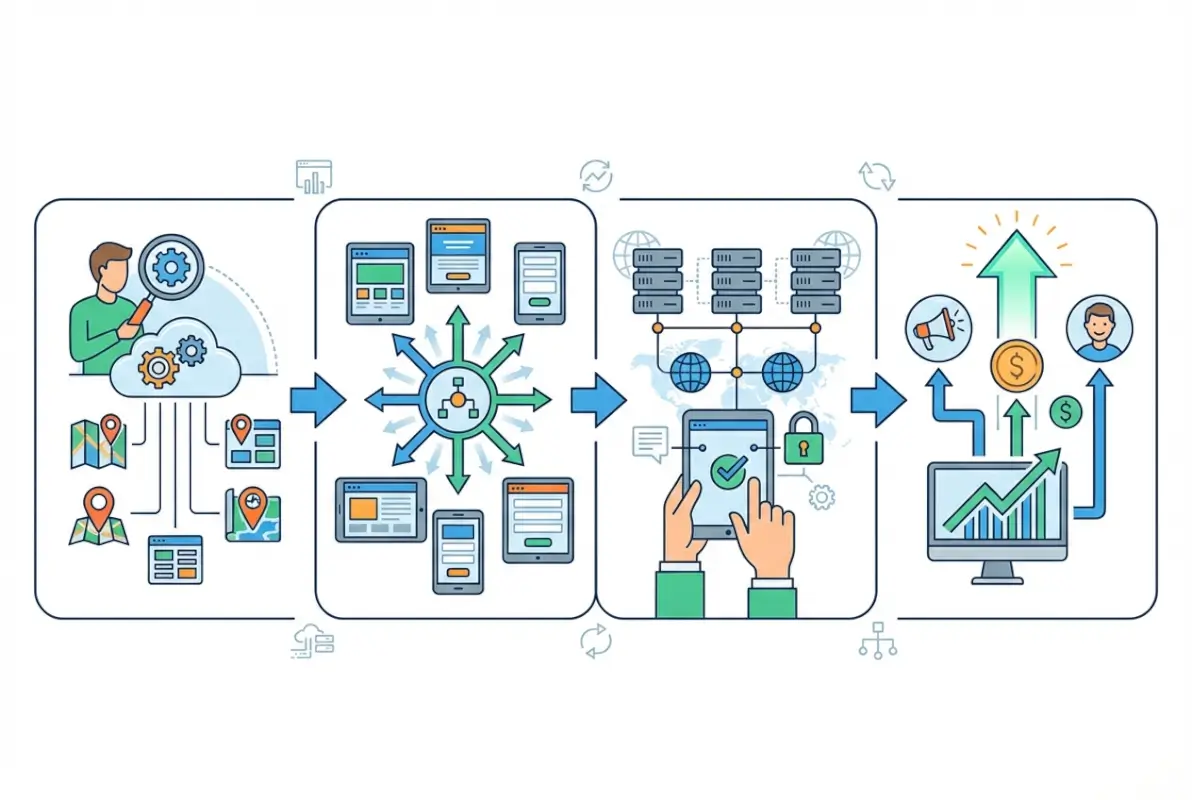
1. Google Business Profile: The Non-Negotiable Foundation
Google Business Profile (formerly Google My Business) isn’t just another directory option—it’s the cornerstone of local search visibility. With Google commanding over 91% of search engine market share and Google Maps serving as the default navigation tool for millions, your GBP listing directly determines whether your business appears in the coveted “Local Pack” (the map with three business listings displayed prominently in search results).
The platform has expanded far beyond basic business information. You can now showcase products with photos and prices, publish time-sensitive posts about offers and events, enable direct booking for appointments, respond to customer questions through the Q&A feature, and access detailed analytics showing how customers find and interact with your listing.
Optimization Essentials: Select the most specific primary business category possible (you can add secondary categories later). Upload at least 10-15 high-quality photos showing your location exterior, interior, products, team, and services—listings with photos receive 42% more direction requests. Complete absolutely every field in your profile; Google’s algorithm rewards completeness. Encourage satisfied customers to leave reviews and respond to all reviews within 48 hours. Create weekly posts to keep your listing active and engaging. Verify your listing immediately through Google’s verification process.
Best For: Every local business without exception. Priority level: Critical for all business types, locations, and industries.
2. Yelp: The Review Authority for Consumer-Facing Businesses
While Yelp’s overall search traffic has declined from its peak, it maintains unmatched authority in specific verticals—particularly restaurants, hospitality, personal services, and home services. With 178 million unique monthly visitors and one of the most trusted review ecosystems online, Yelp drives high-intent traffic from consumers actively researching businesses before making purchase decisions.
What distinguishes Yelp is its community of dedicated reviewers who contribute detailed, comprehensive feedback. These reviews tend to be longer and more informative than those on other platforms, providing rich content that both businesses and prospective customers find valuable. The platform’s sophisticated filtering algorithm (though sometimes frustrating for businesses) helps maintain review credibility.
Yelp has expanded its functionality to include bookable appointments for service providers, waitlist management for restaurants, request-a-quote tools for contractors, and even food delivery integration. The question-and-answer feature allows prospective customers to get specific information directly from business owners or other Yelp users.
Optimization Essentials: Claim your business listing immediately and complete verification. Add comprehensive business details including all services offered, operating hours, and price range. Upload 15-20 professional photos showcasing your business, products, and services. Respond to all reviews diplomatically—especially negative ones—to demonstrate responsive customer service. Avoid explicitly asking for reviews, which violates Yelp’s guidelines; instead, use subtle reminders like “Find us on Yelp” signage.
Best For: Restaurants, bars, cafés, hotels, personal care services (salons, spas), medical practices, home services (contractors, plumbers, electricians), and automotive services.
3. Apple Business Connect: Reaching the iOS Ecosystem
Apple Business Connect represents Apple’s expansion of business listing capabilities across its ecosystem—including Apple Maps, Siri voice search, Apple Wallet, and Messages. With Apple devices accounting for approximately 60% of mobile devices in the United States and Apple Maps preinstalled as the default navigation app, businesses with optimized Apple listings gain visibility to a massive and typically affluent consumer base.
Apple’s “Place Cards” offer rich business profiles that can include custom actions like food ordering, appointment booking, and direct service access through third-party integrations. The platform’s integration with Apple Wallet creates unique opportunities for loyalty programs and special offers that other directories simply can’t match.
Optimization Essentials: Create or claim your business through the Apple Business Connect portal. Verify ownership through Apple’s verification process. Add comprehensive details including precise map location, accurate hours, website, phone, and relevant categories. Upload high-quality photos showcasing your business. Add “Showcase” items—special offers, seasonal menus, or featured services. Set up Action buttons for direct customer engagement. Monitor questions through the Business Connect dashboard.
Best For: Businesses targeting iOS users (which skews toward higher-income demographics), retailers with loyalty programs, restaurants offering ordering/delivery, and any business where mobile-first customer engagement is critical.
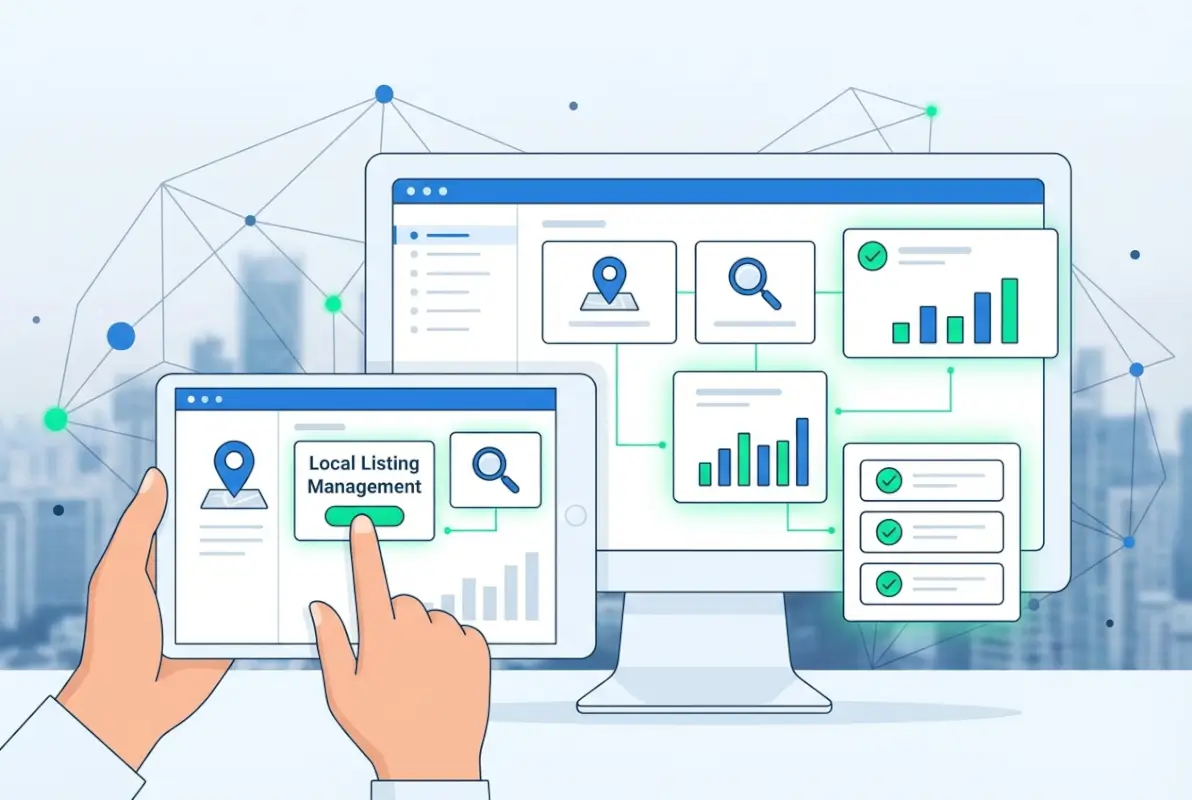
4. Bing Places for Business: The Underestimated Search Alternative
While Google dominates search market share, Bing Powers approximately 6 billion monthly searches through Bing.com, Microsoft Edge browser, Cortana voice search, and Windows devices. More significantly, Bing Places feeds business information to other platforms, extending your visibility beyond Microsoft’s ecosystem. According to Microsoft Advertising business listings guidance, maintaining consistent information across both Google and Bing signals strong legitimacy to search algorithms across both platforms.
Bing Places offers a feature set comparable to Google Business Profile—business information, photos, reviews, service details, and performance analytics. The competitive landscape is less crowded, making it easier for businesses to stand out in Bing’s local search results. The platform integrates with voice search through Microsoft’s ecosystem, increasingly important as voice-based searches continue growing.
Optimization Essentials: Import your Google Business Profile data to save time and ensure consistency. Verify business ownership to unlock full features. Add high-quality images that showcase your business. Include accurate, specific categories. Monitor and respond to reviews professionally and promptly.
| Platform | Monthly Users | Primary Demographic | Best Business Type |
|---|---|---|---|
| Google Business Profile | 5.6 billion searches/day | Universal | All businesses |
| Yelp | 178 million | Urban millennials, Gen Z | Restaurants, services |
| Apple Business Connect | 1 billion iOS users | Higher-income, iOS users | Retail, restaurants |
| Bing Places | 6 billion/month | Professional, enterprise | B2B, professional services |
| Facebook Business Pages | 2.9 billion | Broad, skews older | Community-focused businesses |
| Better Business Bureau | 127 million/year | Trust-conscious consumers | High-trust services |
Best For: Professional service firms, B2B companies, businesses targeting enterprise clients, and any business seeking to capture Microsoft ecosystem users.
5. Facebook Business Pages: Social Directory Hybrid
Facebook Business Pages blur the line between traditional directory listings and social media marketing platforms. With 2.9 billion monthly active users, Facebook offers unparalleled reach combined with sophisticated targeting capabilities for both organic and paid visibility strategies.
Unlike pure directories, Facebook allows businesses to build followings, publish regular content updates, create events, run targeted advertisements, and engage in two-way conversations with customers. The platform’s local search functionality makes business pages discoverable to users searching for specific services in their area, while the social aspect keeps your business visible in customers’ feeds long after the initial discovery.

Facebook’s integration with Instagram (also owned by Meta) allows synchronized business information across both platforms, extending your reach to Instagram’s younger, visually-oriented user base. The Messenger integration provides direct communication channels with customers, appointment booking capabilities, and automated response options.
Optimization Essentials: Select the most appropriate business category and relevant subcategories. Complete all profile information, particularly operating hours, location, contact details, and services offered. Add a clear profile picture (typically your logo) and compelling cover photo. Enable recommendations and reviews. Add a prominent call-to-action button customized to your primary business goal. Post regular content mixing promotional and engaging updates. Set up and monitor Facebook Messenger for prompt customer inquiry responses.
Best For: Community-focused businesses, restaurants, retail stores, event-based businesses, and any company benefiting from regular customer engagement and content marketing.
6. Better Business Bureau: The Trust Signal Authority
The Better Business Bureau occupies a unique position by combining directory functionality with accreditation and reputation metrics. While BBB may drive less direct discovery traffic than search-focused directories, its value lies in the consideration phase—when consumers research businesses they’re already aware of to verify legitimacy and trustworthiness.
BBB listings include standard business information plus the distinctive BBB rating (A+ through F) based on complaint history, business practices, and transparency. For businesses that pursue it, BBB accreditation provides an additional trust badge that can differentiate you from competitors in industries where consumer skepticism runs high.
According to local search behavior and digital trust insights from Pew Research, 72% of consumers specifically check BBB ratings when evaluating service providers for high-value or high-risk purchases like home improvements, financial services, or healthcare.
Optimization Essentials: Claim your existing BBB profile or create one if none exists. Provide comprehensive, accurate business information. Respond promptly and professionally to any complaints filed through BBB. Consider BBB accreditation if it aligns with your business values and budget. Request reviews from satisfied customers. Upload photos and business highlights to enhance your listing’s engagement.
Best For: Service businesses in trust-sensitive industries, B2B companies, contractors, financial advisors, healthcare providers, and any business where third-party credibility verification influences purchase decisions.
Strategic Directory Selection and Management
While the six directories above represent the core foundation for most local businesses, your optimal directory strategy depends on specific factors including industry vertical, target customer demographics, geographic market characteristics, and business model. A strategic approach to directory selection delivers significantly better results than attempting to maintain presence everywhere simultaneously.

Industry-Specific Directory Considerations
Beyond universal platforms, industry-specific directories often deliver higher conversion rates because they attract users with strong purchase intent already focused on your business category. Angi (formerly Angie’s List) and HomeAdvisor dominate home services. Healthgrades and Zocdoc serve healthcare providers. OpenTable and Resy specialize in restaurant reservations. TripAdvisor commands travel and hospitality. Avvo and Martindale-Hubbell focus on legal services.
Research which directories your successful competitors actively maintain and where they’ve accumulated substantial review volumes—their presence signals platforms worth investigating. Check where industry associations and professional organizations maintain member directories, as these often carry particular weight with your target audience.
The NAP Consistency Imperative
Name, Address, and Phone number (NAP) consistency represents the single most critical factor in directory management. Even minor variations—using “Street” versus “St.,” including or omitting suite numbers, formatting phone numbers differently—fragment your local SEO signals and confuse search algorithms about your business’s true identity.
Create a master NAP document establishing the exact format you’ll use across all platforms, your website, and printed materials. Include details like whether you use periods in abbreviations, how you format multi-word street names, and whether you include country codes in phone numbers. Then audit all existing directory listings against this master format and systematically correct any inconsistencies.
Multi-Location Directory Management
Businesses operating multiple locations face exponentially increased complexity. Each location requires separate, location-specific listings with unique addresses, phone numbers, hours, and potentially different service offerings—yet all must maintain perfect brand consistency in business names, descriptions, categories, and visual identity.
The best directory listing management platform for multi-location businesses in 2025 offers bulk editing capabilities, automated monitoring for unauthorized listing changes, centralized review management across all locations, and performance analytics comparing locations. Solutions like Yext, BrightLocal, and Moz Local specialize in enterprise-level directory management, though they come with substantial subscription costs.
For businesses managing fewer than 10 locations, you might maintain manual control using a shared spreadsheet tracking all listings across locations and regular quarterly audits. Beyond 10 locations, the time investment in manual management typically exceeds the cost of automated solutions.
Maximizing Directory Performance Through Active Management
Creating directory listings represents only the first step. Active, ongoing management separates businesses that merely exist on directories from those that leverage them as genuine customer acquisition engines. This requires systematic approaches to review management, content updates, performance monitoring, and continuous optimization.
Strategic Review Management
Review management has evolved from a reputation protection tactic to a ranking factor that directly influences visibility. Google, Yelp, and most major directories consider review quantity, recency, rating, and business response rates when determining search result placement.
Implement a review monitoring system that aggregates alerts from all major platforms into a single dashboard. Respond to all reviews—positive and negative—within 24-48 hours. Research shows that 89% of consumers read business responses to reviews, and 30% of consumers consider business response as important as the review itself.
| Review Type | Response Priority | Response Time Target | Key Response Elements |
|---|---|---|---|
| Negative (1-2 stars) | Critical | Within 24 hours | Acknowledge, apologize, offer resolution |
| Neutral (3 stars) | High | Within 48 hours | Thank, address concerns, invite back |
| Positive (4-5 stars) | Medium | Within 48-72 hours | Personal thank you, reference specifics |
| Question/Inquiry | High | Within 12-24 hours | Detailed, helpful answer |
For negative reviews, follow this response framework: Express appreciation for the feedback. Acknowledge the specific concern without becoming defensive. Take responsibility for any legitimate shortcoming. Offer a specific resolution or invitation to discuss privately. Maintain professionalism regardless of the review’s tone. For positive reviews, personalize responses by referencing specific details rather than using generic templates.
Content Freshness and Updates
Directory algorithms favor active listings with regularly updated content. Google Business Profile particularly rewards businesses that publish weekly posts about offers, events, or updates. This signals that you’re actively managing your listing and provides fresh content that can appear in search results.
Create a content calendar for directory updates including seasonal adjustments (holiday hours, seasonal menus, weather-related service changes), promotional campaigns, new product launches, and staff highlights. Even simple updates like new photos uploaded monthly demonstrate active management and provide fresh visual content that can influence customer decisions.
Businesses looking to boost local marketing efforts should treat directories as dynamic marketing channels rather than static listings. Regular content updates keep your business visible to both search algorithms and potential customers browsing categories or geographic areas.
Common Directory Management Mistakes and How to Avoid Them
Even businesses that recognize directory importance often undermine their efforts through preventable mistakes. Understanding these pitfalls helps you avoid strategies that waste resources or actively harm your local search performance.
Inconsistent Information Across Platforms
The most damaging mistake involves maintaining different versions of your business information across directories. When Google finds your phone number listed as (555) 123-4567 on one directory, 555-123-4567 on another, and +1-555-123-4567 on a third, it lacks confidence that these all reference the same business. This fragmentation dilutes your local SEO signals and can suppress your visibility in local search results.
Beyond NAP details, inconsistencies in business descriptions, categories, service areas, and even business names create confusion. Some businesses inadvertently create multiple versions of their name by inconsistently including legal designations like LLC, Inc., or Ltd. Choose one official business name format and use it identically everywhere.
Ignoring Duplicate Listings
Duplicate listings occur when multiple profiles for the same business exist on a single directory, often created accidentally through different email addresses, claiming processes, or previous ownership. These duplicates fragment your reviews, confuse customers who might encounter different phone numbers or hours, and signal disorganization to search engines.
Systematically search for duplicate listings on all major directories using variations of your business name and address. When found, claim all versions if possible, then follow each platform’s process for merging duplicates or requesting removal of unauthorized listings. On Google specifically, use the “Suggest an edit” feature on duplicate listings to request removal, providing details about the legitimate listing.
Neglecting Secondary Directories
While maintaining excellence on the six core directories takes priority, completely ignoring secondary industry-specific or regional directories represents a missed opportunity. These niche directories often deliver highly qualified traffic because they attract users already focused on specific business categories or geographic areas.
After establishing your presence on core platforms, identify 3-5 industry-specific directories relevant to your business and create basic listings. You don’t need to actively manage these secondary listings with the same intensity as Google or Yelp, but ensuring accurate NAP information appears extends your citation network and creates additional discovery pathways. Businesses seeking to leverage directory key benefits should adopt a tiered approach—intensive management for core platforms, basic accuracy for secondary directories.
Over-Reliance on Paid Enhancement Features
Many directories offer paid enhancement options—boosted placements, sponsored listings, premium badges, enhanced analytics. While these can provide value in competitive markets, businesses often waste budgets on premium features before optimizing their free listings. A fully optimized free listing with excellent photos, complete information, and active review management typically outperforms a neglected premium listing.
Focus first on maximizing the value of free features across all core directories. Only after you’ve exhausted free optimization opportunities should you selectively test paid enhancements on platforms delivering measurable traffic and conversions. Track ROI meticulously to identify which paid features justify their cost for your specific business and market.
Frequently Asked Questions About Local Business Directory Listings
What are the best local directories for small business visibility in 2025?
The six essential directories for most small businesses are Google Business Profile (critical for all businesses), Yelp (especially valuable for restaurants and service businesses), Apple Business Connect (reaching iOS users), Bing Places (Microsoft ecosystem and voice search), Facebook Business Pages (combining directory and social functions), and Better Business Bureau (trust signals for service businesses). Industry-specific directories like Angi for home services or Healthgrades for medical practices should supplement these core platforms based on your business category.
Should I list my business in free directories or paid directories?
Start with free directories that offer substantial reach and authority—Google Business Profile, Bing Places, Apple Business Connect, and basic Facebook pages provide robust functionality at zero cost. These free platforms typically deliver better ROI than paid listings on less-trafficked directories. Only consider paid directory features after you’ve fully optimized your free listings and can track measurable traffic and conversions from specific platforms. Paid enhancements work best in competitive markets where additional visibility justifies the investment.
How many directories should I list my business on for local SEO?
Focus on maintaining excellent, actively managed listings on 5-7 core directories most relevant to your industry and customer demographics. This typically includes the six platforms detailed in this guide plus 1-2 industry-specific directories. Beyond this core group, create basic listings on 10-15 secondary directories to build citation depth, but don’t spread resources so thinly that you neglect active management of primary platforms. Quality and active management on fewer directories outperform passive presence on dozens of platforms.
How do I avoid duplicate listings across directories?
Regularly search for your business on each major directory using variations of your business name and address to identify duplicates. When found, claim all versions using the same email address, then follow each platform’s process for merging duplicates or requesting removal. On Google, use the “Suggest an edit” feature on duplicate listings. Maintain a tracking spreadsheet documenting all legitimate listings with their URLs, login credentials, and verification methods to prevent accidental duplicate creation during staff transitions or ownership changes.
How can I optimize Google Business Profile and Bing Places together?
Maintain perfect NAP consistency between both platforms—identical business name, address, phone number formatting. Bing Places allows you to import data directly from Google Business Profile, which ensures consistency and saves time. Use the same high-quality photos on both platforms. Select identical primary and secondary business categories. Maintain similar business descriptions with relevant keywords. Respond to reviews on both platforms with equal attention. This consistency signals legitimacy to both search engines while simplifying your management workflow.
Do directory listings really affect local search rankings?
Yes, directory listings significantly impact local search rankings through multiple mechanisms. Consistent citations (NAP mentions) across authoritative directories serve as trust signals that search engines use to verify your business legitimacy. The quantity, quality, recency, and sentiment of reviews directly influence local ranking algorithms. Backlinks from directory pages to your website contribute to domain authority. User engagement signals (clicks, calls, direction requests) from directory listings indicate relevance. Businesses with optimized listings on multiple authoritative directories typically experience 50-70% better visibility in local search results.
How do I manage listings for multiple locations efficiently?
For businesses with fewer than 10 locations, maintain a centralized spreadsheet tracking all listings across locations with URLs, login credentials, and update schedules, then conduct quarterly audits for consistency. Beyond 10 locations, consider listing management platforms like Yext, BrightLocal, or Moz Local that offer bulk editing, automated monitoring for unauthorized changes, centralized review management, and location-comparison analytics. Establish strict brand guidelines ensuring consistent business name format, description templates, category selections, and visual identity while maintaining location-specific details like addresses, hours, and service areas.
What should I include in a directory listing for maximum effectiveness?
Complete every available field including precise business name (consistent across all platforms), full address with proper formatting, primary phone number, website URL, accurate business hours including special holiday hours, primary and secondary categories that match search intent, detailed business description with relevant keywords, high-quality photos (exterior, interior, products, team), specific service areas for SABs, accepted payment methods, accessibility features, and relevant attributes (women-owned, veteran-owned, etc.). The more complete your listing, the more trust signals you send to algorithms and the more information potential customers have to choose your business.
How does review management interact with directory listings?
Review management directly impacts directory performance through multiple pathways. Review quantity, recency, and ratings influence ranking algorithms on most directory platforms—Google specifically considers these factors when determining Local Pack placement. Review response rates signal active management and customer service commitment to both algorithms and users. Reviews provide fresh, user-generated content containing relevant keywords that strengthen your listing’s topical relevance. Review sentiment affects click-through rates as users compare businesses. Systematic review management—monitoring, responding promptly, and encouraging satisfied customers to share experiences—transforms reviews from passive feedback into active ranking and conversion optimization tools.
Are niche directories worth the effort for specific industries?
Yes, industry-specific directories often deliver higher conversion rates than general directories because they attract users with strong, category-specific purchase intent. A contractor receives more qualified leads from Angi than generic directories. A doctor gains more patient appointments from Healthgrades than general business directories. Restaurants benefit from OpenTable and Resy more than broad platforms. After establishing presence on the six core directories outlined in this guide, identify 2-3 niche directories with substantial traffic in your industry and create comprehensive listings. These specialized platforms often require less competitive effort to stand out while reaching highly targeted audiences actively seeking your specific services.
Taking Action: Your 90-Day Directory Optimization Plan
Understanding directory strategy means nothing without implementation. This 90-day action plan provides a structured approach to establishing and optimizing your directory presence, prioritizing activities that deliver the greatest impact on visibility and customer acquisition.
Days 1-30: Foundation Phase
Claim and verify your listings on all six core directories: Google Business Profile, Yelp, Apple Business Connect, Bing Places, Facebook Business Pages, and Better Business Bureau. Establish your master NAP format document and ensure perfect consistency across all platforms. Complete every available field in each profile. Upload 10-15 high-quality photos to each platform. Set up review monitoring alerts for all directories.
Days 31-60: Optimization Phase
Audit all existing directory listings for accuracy and consistency, correcting any discrepancies or outdated information. Search for and address duplicate listings. Create initial posts on Google Business Profile and Facebook. Respond to all existing reviews across platforms. Research and claim listings on 3-5 industry-specific or regional directories relevant to your business. Implement a review generation process encouraging satisfied customers to share experiences.
Days 61-90: Expansion and Refinement Phase
Analyze performance data from directory dashboards to identify which platforms drive traffic and conversions. Create a content calendar for regular posts and updates on active directories. Establish systematic processes for monitoring listings, responding to reviews, and updating seasonal information. For multi-location businesses, audit consistency across all locations. Selectively test paid enhancement features on 1-2 directories showing strong organic performance. Creating a complete guide to directory management for your team ensures consistent handling across staff members and prevents degradation during personnel transitions.
Start Your Directory Optimization Today
The businesses dominating local search results in 2025 aren’t necessarily those with the biggest budgets or the most locations—they’re those that systematically optimize their directory presence across the platforms where their customers search. Begin with Google Business Profile today, then expand methodically across other core directories over the next 90 days.
Three immediate actions to take right now:
- Claim and verify your Google Business Profile if you haven’t already
- Audit your NAP consistency across your website and existing directory listings
- Set up review monitoring alerts for at least Google, Yelp, and Facebook
Local business directory listing services have evolved far beyond simple online phonebooks into sophisticated marketing platforms that directly influence where your business appears when potential customers search for what you offer. The difference between businesses that thrive through directory visibility and those that remain invisible often comes down to strategic selection of platforms, meticulous attention to consistency, active management of reviews and content, and systematic optimization over time.
The six core directory platforms outlined in this guide—Google Business Profile, Yelp, Apple Business Connect, Bing Places, Facebook Business Pages, and Better Business Bureau—provide the foundation for effective local visibility across different user demographics, search ecosystems, and customer journey stages. Supplementing these core directories with industry-specific platforms tailored to your business category creates a comprehensive presence that captures customers wherever they search.
Which directory will you optimize first? Start with the platform where you’ve identified the greatest gap between your current presence and its potential impact, then systematically expand your efforts across other core directories. The businesses that dominate local search in 2025 are those that treat directory management not as a one-time setup task but as an ongoing strategic priority deserving regular attention and optimization. For businesses ready to take their directory strategy further, explore how to start a profitable business directory in simple steps—an opportunity to leverage your industry expertise by creating directory platforms for others.
Was this article helpful?