What Is Exclusive Listing? Complete Guide to Exclusive Agency vs Exclusive Right to Sell Agreements

Generating summary...
Most sellers sign exclusive listing agreements without fully understanding the legal commitment they’re making—or the significant differences between agreement types that could cost them thousands of dollars. The terminology alone creates confusion: exclusive listing, exclusive agency listing, exclusive right to sell agreement. They sound similar, but the financial implications couldn’t be more different.
I watched a friend lose $15,000 in commission when she didn’t understand her exclusive right to sell agreement. She found a buyer herself—a neighbor who’d been admiring her home for years—but still owed her agent the full commission. Had she signed an exclusive agency listing instead, she would have kept that money. The agreement looked identical at first glance, but one clause made all the difference.
This guide clarifies what exclusive listing means in real estate, breaks down the critical distinctions between listing agreement types, and helps you choose the right structure for your situation. Whether you’re searching for “what is an exclusive real estate listing” or trying to understand compensation rules, you’ll find the answers here.
- Exclusive listings give one agent/brokerage sole selling rights for a specific period, but two main types exist with very different commission rules
- Exclusive Right to Sell (ERtS): Agent earns commission no matter who finds the buyer—even if you find them yourself
- Exclusive Agency (EA): You can find your own buyer and pay no commission, but any other agent’s involvement triggers full commission
- Contract duration matters: Most last 3-6 months; negotiate shorter terms (60-90 days) and clear performance benchmarks upfront
- State laws vary significantly: Some states require written agreements; others prohibit certain listing types entirely
- Termination clauses are negotiable: Protection periods (30-180 days) can lock you into commission obligations even after the agreement expires
What Is Exclusive Listing in Real Estate? Understanding the Basics
An exclusive listing is a legally binding contract giving one real estate agent or brokerage the sole right to market and sell your property for a specified period. Unlike open listings where multiple agents compete simultaneously (with only the successful agent earning commission), exclusive arrangements concentrate all selling efforts through a single channel.
The exclusive listing meaning extends beyond simple agent selection—it creates enforceable obligations on both sides. You cannot hire additional agents during the contract term, and depending on the specific agreement type, you may owe commission even if you sell the property yourself. The agent, in exchange, commits to specific marketing activities and professional duties outlined in the contract.
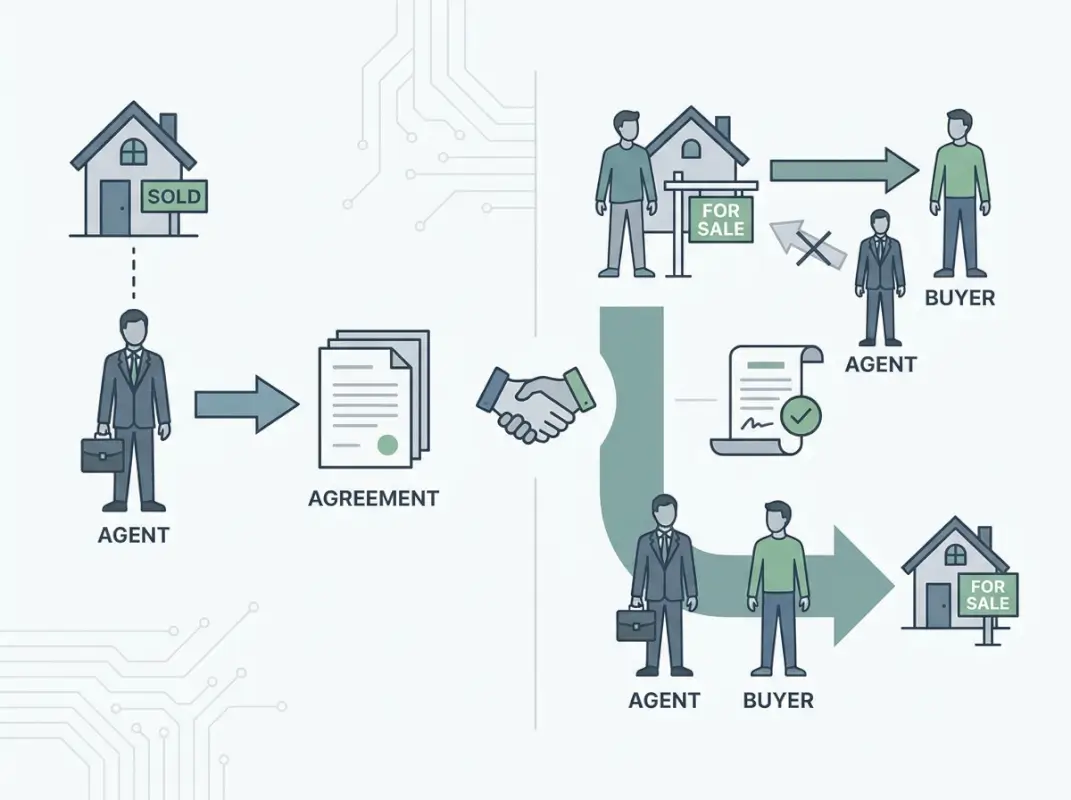
According to the National Association of Realtors, over 87% of home sales occur through exclusive listing agreements because they create clearer accountability and stronger agent motivation than alternative arrangements. When agents know they have secured exclusive rights, they typically invest more resources into professional photography, staging consultation, premium MLS placement, and comprehensive marketing campaigns.
Every exclusive type of listing agreement must contain several legally required elements: precise property description and address, agreed-upon list price, contract duration with specific start and end dates, commission structure detailing percentage or flat fee, explicit agent responsibilities and marketing commitments, seller obligations including property access and disclosure requirements, and termination provisions outlining exit conditions for both parties.
Types of Listing Agreements: Exclusive Right to Sell vs Exclusive Agency
The critical distinction most sellers miss lies in understanding the difference between the two primary exclusive listing structures. This single contractual difference determines whether you owe commission if you find your own buyer—a difference that can represent $15,000-$30,000 on a typical home sale.
Exclusive Right to Sell Agreement
This is the most common and most restrictive listing type. Under an exclusive right to sell agreement, the listing agent earns their commission regardless of who finds the buyer—even if you locate the buyer yourself through personal connections, social media, or word-of-mouth. If your college roommate calls wanting to buy your house, you still owe your agent the full commission specified in the contract.
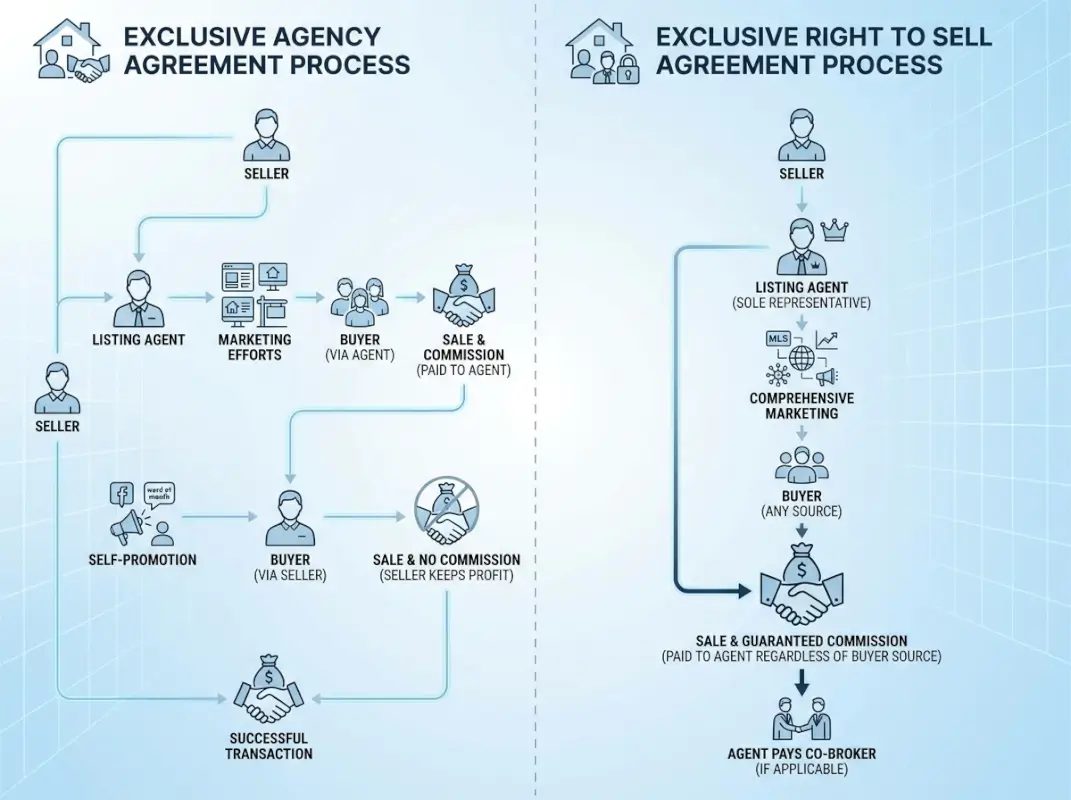
Real estate professionals prefer this structure because it provides maximum security for their marketing investment. According to Realtor.com resources, agents typically invest 3-5 times more in marketing for exclusive right to sell listings compared to other arrangements, knowing their compensation is protected regardless of how the buyer materializes.
The advantage for sellers comes through the agent’s heightened motivation and resource commitment. Since the agent knows they’ll receive compensation no matter the buyer source, they’re more willing to invest in premium staging consultation, professional videography, targeted social media advertising, and extensive networking with buyer’s agents.
Exclusive Agency Listing Agreement
An exclusive agency listing provides slightly more flexibility for sellers while still offering substantial agent motivation. Under this arrangement, one agent has exclusive rights to market your property, but you retain the right to find a buyer independently without owing commission. If you locate the buyer yourself through personal connections with zero agent involvement, you pay nothing.
The catch: if any other real estate professional is involved in the transaction—even minimally—your listing agent still receives their full commission. If a buyer’s agent brings the purchaser, both agents split the commission as usual. This structure protects the listing agent from competition with other professionals while allowing sellers to pursue personal connections.
In exclusive agency agreements, if the seller finds a buyer themselves, the seller earns the compensation—keeping the full sale proceeds without commission deduction. This represents a significant financial difference from exclusive right to sell structures, where the agent would still collect their fee.
| Agreement Type | Can Seller Find Own Buyer? | Commission If Seller Finds Buyer | Agent Marketing Investment |
|---|---|---|---|
| Exclusive Right to Sell | Technically yes, but still owes commission | Full commission owed | Highest (87% above baseline) |
| Exclusive Agency | Yes, with no commission | Zero commission if truly independent | High (60% above baseline) |
| Open Listing | Yes, with no commission | Zero commission | Minimal (agents prioritize exclusive listings) |
| Net Listing | Varies by agreement | Agent keeps amount above net price | Variable (illegal in many states) |
Open Listings vs Exclusive Structures
For comparison, open listings allow you to work with multiple agents simultaneously, paying commission only to the agent who successfully brings a buyer. While this sounds appealing, agents typically deprioritize open listings because they might invest marketing resources without compensation if another agent makes the sale. Research from U.S. Census Bureau housing data shows open listings take an average of 23 days longer to sell and achieve 5-8% lower sale prices compared to exclusive arrangements.
When to Use Each Listing Agreement Type
Choosing the right exclusive listing structure requires honest assessment of your circumstances, market conditions, and personal involvement capacity. The wrong choice either costs you unnecessary commission or results in inadequate marketing that extends your time on market.
Scenarios Favoring Exclusive Right to Sell
Hot seller’s markets: When inventory is scarce and buyer demand is high, exclusive right to sell agreements help you capitalize on competitive momentum. Agents can orchestrate multiple-offer situations, creating bidding wars that drive prices 8-12% above asking. This requires the agent’s full attention and strategic offer management—services they provide most enthusiastically when their commission is guaranteed.

High-value or unique properties: Luxury homes, historical properties, or architecturally significant houses benefit from focused marketing attention. These properties require specialized promotional materials—professional videography, drone footage, virtual staging, targeted advertising in luxury lifestyle publications—investments agents make more readily with exclusive right to sell protection.
Limited seller availability: If you’re relocating for work, managing an estate sale, or simply lack time for showings and negotiations, exclusive right to sell provides comprehensive support. The agent handles scheduling, feedback collection, offer presentation, and transaction coordination while you focus on other priorities.
Complex selling situations: Properties requiring significant repairs, pre-foreclosure sales, divorce-related transactions, or probate situations benefit from an agent fully committed to understanding unique challenges. These scenarios often require creative marketing approaches and extensive buyer education that agents develop more willingly for guaranteed compensation.
Scenarios Favoring Exclusive Agency Listings
Strong personal networks: If you have extensive local connections, active social media presence, or work in fields with natural buyer pools (corporate relocation, military transfers, university faculty), exclusive agency preserves your ability to capture these opportunities without commission obligation.
Already identified potential buyers: When neighbors, coworkers, or friends have expressed interest in buying your home if you ever sell, exclusive agency allows you to pursue these conversations while still benefiting from professional marketing to a broader audience.
Seller with real estate experience: Former agents, real estate investors, or sellers who’ve completed multiple transactions may feel comfortable managing some buyer relationships independently while leveraging professional marketing for broader market reach.
Legal Requirements and State-Specific Variations
Exclusive listing agreements are governed by state real estate law, creating significant jurisdictional variations that affect your rights and obligations. Understanding these legal frameworks protects you from unenforceable agreements or unexpected liabilities.
Writing Requirements and Contract Enforceability
Most states require exclusive listing agreements to be in writing to be legally enforceable under the Statute of Frauds. In Illinois, an exclusive listing agreement must be in writing to be enforceable in court—verbal agreements carry no legal weight. This protects both parties by creating clear documentation of terms, commission structure, and mutual obligations.

California’s Department of Real Estate goes further, requiring specific language and disclosures in all exclusive listing contracts. According to California DRE guidelines, exclusive agency agreements must explicitly state in bold type that the seller retains the right to find buyers independently without commission obligation. This prevents confusion about commission triggers and protects consumers from misleading contract language.
Duration Limits and Automatic Renewals
Several states impose maximum duration limits on listing agreements to prevent sellers from being locked into extended relationships with underperforming agents. While most agreements run 3-6 months, some jurisdictions cap maximum initial terms at 90 days or require specific disclosures for agreements exceeding certain timeframes.
Pay careful attention to automatic renewal clauses. Some contracts renew for additional periods unless you provide written termination notice 30-60 days before expiration. These clauses can inadvertently extend relationships with agents whose performance doesn’t meet your expectations, so mark notice deadlines on your calendar immediately after signing.
Protection Period Regulations
Most exclusive listing agreements include protection (or safety) clauses that entitle the agent to commission even after the listing expires if buyers introduced during the listing period complete purchases within a specified timeframe. These periods typically range from 30-180 days post-termination.
Some states regulate maximum protection period duration or require specific disclosures about these provisions. Excessively long protection periods (120+ days) can interfere with future selling efforts, as new agents may be reluctant to work with buyers who might trigger prior commission obligations. Negotiate protection periods to 30-60 days maximum, and request a written list of all buyers introduced during the listing term to avoid disputes.
Disclosure Requirements and Material Facts
All exclusive listing agreements require sellers to disclose material facts about property condition that could affect value or desirability. Material facts include structural issues, water damage history, environmental hazards, neighborhood nuisances, and past insurance claims. Failing to disclose known defects exposes you to legal liability even years after closing, regardless of whether the agent specifically asked about certain issues.
When working with directory-based real estate services, you might explore business listed directory assistance to find specialized real estate attorneys who can review listing agreements for compliance with state-specific disclosure requirements before you sign.
How to Negotiate and Protect Your Interests
Despite what many agents imply, virtually every element of an exclusive listing agreement is negotiable before signing. Treating these contracts as standard forms rather than negotiable agreements costs sellers thousands in unnecessary fees and months in extended obligations.
Critical Negotiation Points
Contract duration: Instead of accepting standard 6-month terms, negotiate for 60-90 day initial periods with renewal options based on performance. This creates accountability checkpoints where you can evaluate results before committing to extended terms. If the agent balks, propose 90 days with automatic 90-day renewal if specific marketing benchmarks are met (minimum showings, open house frequency, digital marketing metrics).

Commission structure: All commission rates are negotiable. In competitive markets, many sellers successfully negotiate 4-5% total commission rather than the traditional 5-6%. Consider tiered structures that reward faster sales (6% if sold within 30 days, 5.5% within 60 days, 5% thereafter) to maintain agent motivation while protecting your interests.
Marketing commitments: Request specific, written marketing commitments including professional photography completion dates, MLS listing timing, broker open house scheduling, digital advertising budget allocation, and social media promotion frequency. Vague promises of “comprehensive marketing” mean nothing—written commitments create accountability.
Performance benchmarks: Establish concrete performance metrics such as minimum weekly showings, qualified buyer feedback collection, and bi-weekly progress meetings. Include provisions allowing penalty-free termination if these benchmarks aren’t met for consecutive weeks.
Termination rights: Negotiate early termination provisions beyond standard agent non-performance clauses. Include termination rights for life events (job relocation, family illness, financial hardship) without penalty. While agents may resist broad termination rights, reasonable life-event provisions demonstrate good faith on both sides.
Red Flags During Agent Selection
Several warning signs indicate an agent may not be the right fit for your exclusive arrangement. Agents who refuse to provide recent comparable sales data for your specific neighborhood may lack local expertise. Those who suggest unrealistically high list prices to win your listing often plan to recommend price reductions once you’re contractually bound—a tactic called “buying the listing.”
Agents who won’t provide written marketing plans before signing or who refuse to modify any contract terms may prioritize their convenience over your interests. Similarly, agents who pressure immediate signing without allowing time for review or consultation with an attorney should raise concerns about their professional practices.
Documentation and Communication
Once you’ve signed an exclusive listing agreement, maintain detailed documentation of all agent communications, showing schedules, buyer feedback, and marketing activities. This documentation provides leverage if you need to negotiate early termination or file complaints with state real estate commissions about agent non-performance.
For sellers managing commercial property listings or businesses alongside real estate, TurnKey Directories offers WordPress-based directory solutions that help organize agent performance data, marketing metrics, and communication logs in one centralized platform. This systematic approach to documentation proves invaluable if disputes arise about marketing commitments or performance benchmarks.
Frequently Asked Questions About Exclusive Listing Agreements
What is an exclusive listing in real estate?
An exclusive listing is a legally binding contract giving one agent or brokerage the sole right to market and sell your property for a specified period, typically 3-6 months. Unlike open listings where multiple agents compete, exclusive arrangements concentrate all marketing efforts through a single professional who commits to specific promotional activities in exchange for guaranteed representation rights.
What is the difference between exclusive right to sell and exclusive agency listing?
In an exclusive right to sell agreement, the agent earns commission regardless of who finds the buyer—even if you find them yourself. In an exclusive agency listing, you retain the right to find your own buyer without paying commission, though any other agent’s involvement triggers full commission to your listing agent. This single distinction can represent $15,000-$30,000 in savings on a typical home sale.
Who earns compensation if the seller finds a buyer under exclusive agency agreements?
Under an exclusive agency agreement, if the seller finds a buyer themselves with zero agent involvement, the seller keeps the full sale proceeds without commission obligation. The seller earns the compensation benefit by avoiding commission expense entirely. However, if any real estate professional assists the buyer—even minimally—the listing agent still receives their full commission.
Can I cancel an exclusive listing agreement early?
Early cancellation depends on your contract’s specific termination provisions. Some agreements allow cancellation for agent non-performance or specific life events like relocation. Without such provisions, you’re typically bound for the full term unless the agent agrees to release you. Always negotiate reasonable termination rights before signing, and document any performance failures that might justify early exit under non-performance clauses.
How long does an exclusive listing agreement last?
Most exclusive listing agreements run 3-6 months, though duration is fully negotiable. Luxury or unique properties sometimes warrant longer terms, while hot markets may justify shorter 60-90 day periods. Always check for automatic renewal clauses that extend agreements beyond initial terms without your active consent, and mark notice deadlines on your calendar immediately after signing to avoid unintended extensions.
Are all exclusive listing agreements required to be in writing?
Most states require exclusive listing agreements to be in writing under the Statute of Frauds for legal enforceability. In Illinois specifically, an exclusive listing agreement must be in writing to be enforceable in court—verbal agreements carry no legal weight. Written contracts protect both parties by creating clear documentation of terms, commission structure, duration, and mutual obligations that prevent future disputes.
What is a protection period in an exclusive listing agreement?
A protection (or safety) period is a clause entitling the agent to commission even after the listing expires if buyers introduced during the listing term complete purchases within a specified timeframe, typically 30-180 days post-termination. Negotiate these periods to 30-60 days maximum and request a written list of all introduced buyers at termination to avoid future disputes and facilitate working with new agents.
How do I choose between exclusive agency and exclusive right to sell?
Choose exclusive agency if you have strong personal networks, identified potential buyers, or real estate experience that enables independent buyer cultivation. Select exclusive right to sell if you need comprehensive professional support, have limited time for personal marketing, or are selling unique/high-value properties requiring specialized promotional expertise. Consider hybrid approaches starting with exclusive agency for 30-45 days before converting to exclusive right to sell if personal leads don’t materialize.
Making Your Decision: Next Steps
Understanding what exclusive listing means in real estate and the critical distinctions between agreement types positions you to make informed decisions that protect your financial interests. The difference between exclusive agency and exclusive right to sell structures can represent tens of thousands of dollars in commission savings—but only if you understand the implications before signing.
Start by honestly assessing your personal networks, available time, and comfort level with real estate transactions. If you have strong connections that might produce buyers, exclusive agency preserves your ability to capture those opportunities without commission obligation. If you need comprehensive professional support or are selling unique properties requiring specialized marketing, exclusive right to sell provides maximum agent motivation through guaranteed compensation.
Interview at least 3-5 agents before choosing, comparing their marketing plans, local expertise, and willingness to negotiate contract terms. The best agents welcome discussion about contract duration, termination provisions, and performance benchmarks because they’re confident in their ability to deliver results that justify their fees.
- Negotiate contract duration to 60-90 days rather than standard 6 months
- Request written marketing commitments including photography dates, MLS timing, and digital advertising budget
- Add performance benchmarks (minimum showings, feedback collection) with termination rights for non-performance
- Limit protection periods to 30-60 days maximum and request written buyer lists at termination
- Have a real estate attorney review agreements for properties exceeding $500,000 or complex situations
- Document all communications, showings, and marketing activities from day one
- Clarify whether the agreement is exclusive agency or exclusive right to sell explicitly in writing
Remember that everything in these contracts is negotiable despite industry implications of “standard” terms. Commission rates, contract duration, termination provisions, and protection periods all reflect negotiated agreements between parties with different interests. Agents who refuse reasonable modifications may not be the best representatives for your most valuable asset.
Take the time to understand your options thoroughly. The few hours you invest in due diligence now—researching listing types, interviewing multiple agents, negotiating favorable terms, and having contracts reviewed—can save you months of frustration and thousands of dollars in unnecessary commission or extended market time. Your future self will appreciate the careful consideration you give to this significant decision.
Was this article helpful?