How to Build a Business Directory App from Scratch in 2025: Complete Guide

The business directory app landscape has transformed dramatically. While giants like Yelp and Google Business dominate general searches, there’s a massive opportunity hiding in plain sight: specialized, niche directories that serve specific communities, industries, or regions. Here’s what most entrepreneurs miss—the barrier to entry isn’t the technology anymore. It’s understanding your market and executing strategically.

I’ve watched countless founders build directory apps thinking they need venture capital and years of development. They’re wrong. With no-code platforms maturing and cross-platform frameworks like Flutter and React Native reducing development costs by 30-40%, launching a viable directory app from scratch is more accessible than ever. The real challenge isn’t building it—it’s building the right one for the right audience.
TL;DR – Quick Takeaways
- Niche selection matters more than features – Target underserved markets rather than competing with established giants
- No-code platforms can cut development time by 60% – Evaluate build vs. buy decisions based on customization needs
- Data quality makes or breaks directory apps – Implement verification workflows from day one
- Local SEO drives organic traffic – Structured data and schema markup are non-negotiable
- Monetization requires critical mass – Focus on user acquisition before aggressive revenue tactics
- Security and privacy aren’t optional – Design authentication and data protection into your architecture from the start
Current Landscape for Business Directory Apps in 2025
The business directory market isn’t dead—it’s evolved. According to Statista’s research on online local business search frequency, consumers continue to rely heavily on digital platforms to discover local services. But the winning formula has shifted from broad, general directories to highly specialized platforms that understand their niche intimately.
What’s changed? Consumer expectations have skyrocketed. Users expect instant results, accurate information, real-time availability, and seamless booking experiences. They’re not satisfied with basic listings anymore—they want rich media, verified reviews, and personalized recommendations. This creates both challenges and opportunities for new entrants.
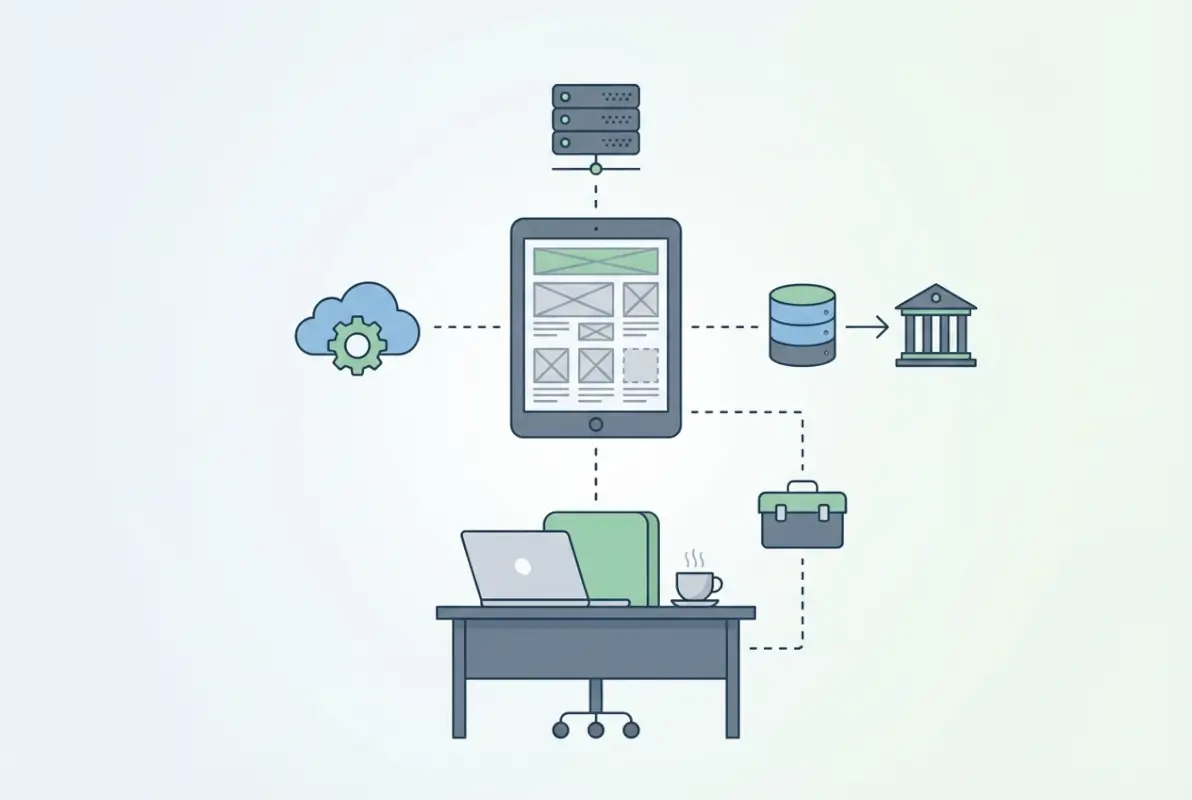
The rise of no-code and low-code platforms has democratized directory app development. Forrester projects the low-code market approaching $50 billion by 2028, and this growth directly impacts how quickly entrepreneurs can launch directory apps. You can now prototype and test a directory concept in weeks, not months.
Market Demand for Local Business Listings
Despite predictions of social media replacing traditional directories, Pew Research Center’s findings on local business information sources show that structured directory platforms remain critical discovery tools. The key insight? Users want curated, reliable information—not the noise of general search results.
The most successful directory apps focus on vertical markets. A directory exclusively for sustainable businesses, pet services, or specialized medical practitioners can capture loyal users who feel underserved by generic platforms. This specialization allows you to build features and content specifically aligned with your audience’s needs.
No-Code and Low-Code Impact on Directory Development
The no-code revolution has fundamentally changed the economics of building directory apps. According to The Business Research Company’s analysis of no-code development platforms, these tools now power serious commercial applications, not just prototypes.
Here’s the honest truth: no-code platforms work brilliantly for standard directory functionality. Search, filters, listings, user accounts, payment integration—these are solved problems with pre-built components. Where they struggle is highly customized workflows or unique features that differentiate your platform. The decision framework is simple: if your competitive advantage comes from execution and content (not proprietary technology), no-code platforms can accelerate your time-to-market dramatically.
| Approach | Development Time | Cost Range | Customization | Best For |
|---|---|---|---|---|
| No-Code Platform | 2-6 weeks | $2,000-$8,000 | Limited | MVPs, validation, standard features |
| Low-Code Platform | 1-3 months | $8,000-$25,000 | Moderate | Growing businesses, hybrid needs |
| Cross-Platform (React Native/Flutter) | 3-6 months | $20,000-$60,000 | High | Unique features, scalability focus |
| Native Development | 6-12 months | $50,000-$150,000 | Complete | Large-scale platforms, performance-critical |
Competitive Landscape Overview
Understanding your competition means going beyond surface-level feature comparisons. Download competitor apps, use them extensively, and read user reviews obsessively. The one-star reviews are goldmines—they tell you exactly what users hate and what opportunities exist.
Most established directory apps suffer from feature bloat. They’ve added so many capabilities over the years that core functions become buried. This creates an opening for focused, streamlined platforms that do one thing exceptionally well. Your competitive advantage isn’t matching every feature—it’s delivering superior experience for your specific use case.
Planning and Architecture for a Scalable Directory App
Architecture decisions made early determine your platform’s scalability, performance, and maintenance costs for years. The how to start profitable business directory steps begin with thoughtful data modeling and infrastructure planning that anticipates growth without over-engineering your initial release.
The biggest mistake I see? Building for imaginary scale. You don’t need to handle millions of listings on day one. Start with an architecture that works for your launch scale (hundreds to low thousands of listings), but design it with clear migration paths to more robust solutions as you grow.

Define Your Niche and Listing Schema
Your data model is the foundation everything else builds upon. For a business directory app, your core entities typically include Listing (the business profile), Category (classification system), Location (geographic data), User (both consumers and business owners), Review (user-generated content), Media (photos, videos, documents), and Plan (subscription/payment tiers).
Each listing requires essential attributes: business name, complete address with geocoordinates, contact information (phone, email, website), operating hours with holiday schedules, service descriptions and specialties, pricing indicators, and media galleries. The temptation is to capture everything possible, but start lean. You can always add fields later—removing fields or restructuring data after launch is painful.
Data Modeling Best Practices for Scalable Directories
Directory apps are inherently read-heavy—users search and browse far more than they create or update listings. This fundamentally shapes your database optimization strategy. For relational databases like PostgreSQL, proper indexing on frequently queried fields (category, location, rating) is critical. For geospatial searches, implement specialized indexes like PostGIS.
The normalize versus denormalize decision depends on your query patterns. Normalized data maintains integrity and reduces redundancy, which matters for admin functions and data management. But for public-facing search results, some denormalization can dramatically improve performance. Consider maintaining separate optimized views or cached representations of your data specifically for search results.
For NoSQL approaches like MongoDB, document structure should reflect your query patterns. If you typically retrieve business listings with their reviews and photos in one operation, embed that data in the document. If reviews grow unbounded, reference them separately. There’s no universal right answer—it depends on your specific access patterns and data volumes.
Security and Privacy by Design
Security isn’t a feature you add later—it’s foundational architecture. For directory apps, you’re handling sensitive business information, user personal data, and potentially payment details. This demands serious attention to authentication, authorization, and data protection from day one.
Implement role-based access control (RBAC) with clear separation between anonymous users, registered users, business owners (who can edit their listings), editors/moderators, and administrators. Each role should have precisely defined permissions. Never trust client-side validation—always enforce authorization rules on the server.
For authentication, leverage established protocols like OAuth 2.0 and OpenID Connect rather than building custom solutions. Services like Auth0, Firebase Authentication, or AWS Cognito provide production-ready user management with features like multi-factor authentication, password reset flows, and social login integrations. Security is one area where reinventing the wheel is genuinely dangerous.
Performance and Reliability Considerations
Directory apps live or die by search performance. Users expect sub-2-second response times, even for complex queries filtering by multiple criteria, location radius, ratings, and price range. This requires thoughtful caching strategies, search index optimization, and content delivery architecture.
Implement multi-layer caching: browser caching for static assets, CDN caching for images and frequently accessed content, application caching for expensive database queries, and database query result caching. Redis or Memcached work well for application-level caching with fast key-value lookups.
For search functionality, dedicated search engines like Elasticsearch or Algolia significantly outperform database queries for full-text search and faceted filtering. They’re optimized specifically for the kind of queries directory apps require. Yes, they add infrastructure complexity, but the performance gains justify the investment once you exceed a few hundred listings.
Core Features for a Modern Business Directory App
Feature selection separates viable products from bloated failures. The business directory boosts local marketing through focused functionality that genuinely serves user needs, not feature checklists copied from competitors.
Start with your minimum viable feature set: the absolute smallest collection of capabilities that delivers value to both businesses and consumers. Everything else is version 2.0. I’ve seen too many projects fail because founders tried to build everything before launching anything. Ship something useful quickly, then iterate based on real usage data.

Listings and Advanced Search
Search is the heart of your directory app. Users should find relevant results within 3 taps and 2 seconds, maximum. This requires robust filtering options including category/subcategory hierarchies, geographic radius from user location or specified address, operating hours (open now, open on specific days), price range indicators, rating thresholds, and feature tags (parking available, wheelchair accessible, accepts credit cards).
Implement autocomplete for search inputs—it dramatically improves user experience and reduces typos. As users type, suggest matching categories, business names, and locations. This guides users toward successful searches even when they’re uncertain about exact terminology.
Map integration is non-negotiable for local directories. Google Maps API or Mapbox provide the functionality users expect: visual representation of search results, directions to businesses, street view integration, and clustering for dense result sets. Budget for API costs—they’re reasonable at small scale but can become significant as usage grows.
Content Quality and User-Generated Data
User reviews and ratings create trust, engagement, and fresh content—all critical for directory success. But they also introduce moderation challenges, fake review risks, and business owner disputes. Design your review system with verification mechanisms from the start.
Consider verified purchase or visit validation where applicable. For service-based directories, confirmation codes provided after appointments verify genuine customer experiences. For retail directories, transaction verification prevents fake reviews. Even simple email verification filters low-effort spam.
Photo and video uploads significantly enhance listing quality, but they require storage infrastructure and content moderation. Cloud storage services like AWS S3 or Google Cloud Storage provide scalable solutions. Implement automatic image optimization to reduce bandwidth costs and improve load times—there’s no reason to serve a 5MB photo when a 200KB version looks identical on mobile screens.
Business hours deserve special attention because they change frequently (holidays, special events, temporary closures) and users rely on this information for real-world visits. Allow business owners to update hours easily and consider implementing special hours for holidays automatically. Nothing frustrates users more than driving to a closed business your directory showed as open.
Engagement and Monetization Features
Monetization should feel natural, not forced. The most successful directory apps create clear value tiers where free listings provide genuine utility but paid options deliver measurable ROI for businesses. The ListedIn business directory key benefits for your business include enhanced visibility and credibility through verified premium placements.
Freemium models work when the free tier is genuinely useful but limited in visibility or features. Basic listings might include business name, address, phone, and category, while premium tiers add photo galleries, video content, extended descriptions, promotional offers, and analytics dashboards showing profile views and click-through rates.
Featured placement—appearing at the top of search results or category pages—is the most straightforward monetization. It’s easy for businesses to understand the value proposition and measure results. Consider auction or bidding models for competitive categories where multiple businesses want top placement.
| Revenue Stream | Implementation Difficulty | Revenue Potential | User Impact |
|---|---|---|---|
| Premium Listings | Low | High | Low (adds value) |
| Featured Placement | Low | High | Medium (affects search) |
| Display Advertising | Medium | Medium | High (can be intrusive) |
| Lead Generation | Medium | Very High | Low (value-add) |
| Transaction Fees | High | Very High | Medium (requires booking) |
| Affiliate Partnerships | Low | Low-Medium | Low (contextual) |
Onboarding and User Experience
First impressions determine whether users become active participants or immediate uninstalls. Your onboarding flow should demonstrate value within 30 seconds—preferably by showing relevant search results or nearby businesses immediately, without requiring account creation.
For business owners claiming or creating listings, the process should be straightforward but include verification steps. Email verification is minimum, phone verification adds credibility, and document verification (business license, tax ID) creates trust for premium directories. Balance security with friction—every additional step reduces completion rates.
Mobile-first design isn’t optional anymore. According to usage data across directory apps, 70-80% of traffic comes from mobile devices. This means touch-friendly interface elements, thumb-reachable navigation, fast loading even on slower connections, and progressive web app capabilities for installation without app store requirements.
Admin Tooling and Content Management
Admin interfaces often get treated as afterthoughts, then become massive time sinks when you’re manually managing hundreds of listings. Invest in proper admin tooling from the beginning: bulk editing capabilities for updating multiple listings simultaneously, moderation queues for reviewing user-submitted content, audit logs tracking all changes to listings and user data, and analytics dashboards showing platform health metrics.
Consider implementing tiered moderation workflows where automated filters catch obvious spam, moderators review flagged content, and administrators handle appeals and edge cases. This scales better than having administrators manually review every submission.
Implementation Roadmap and Technology Choices
The PHP business directory simple steps approach can work for web-first platforms, but modern directory apps require thoughtful technology choices that balance development speed, cost, performance, and future flexibility.
Your implementation roadmap should prioritize delivering a functional MVP (minimum viable product) quickly over building a comprehensive platform slowly. Every week spent in development is a week you’re not gathering real user feedback and validating your market assumptions.

Tech Stack Decisions: No-Code vs. Custom Development
The build versus buy decision framework comes down to three factors: time to market urgency, customization requirements, and technical resources available. If you need to validate a concept quickly with limited budget, no-code platforms like Bubble, Adalo, or specialized directory builders provide the fastest path. You can launch in weeks and iterate based on real usage.
For more control and customization, low-code platforms like OutSystems or Mendix offer visual development with the ability to add custom code where needed. This middle ground works well when you need specific features but don’t want to build everything from scratch.
Custom development using cross-platform frameworks (React Native, Flutter) or progressive web apps makes sense when your competitive advantage requires unique functionality or when you’ve validated your concept and need to scale. The investment is higher but the flexibility is complete.
Backend Technologies and Database Selection
For custom development, your backend technology choice should reflect your team’s expertise and your specific requirements. Node.js with Express excels at real-time features and has a massive ecosystem of libraries. Python with Django or Flask provides excellent productivity and strong geospatial support through libraries like GeoDjango. Ruby on Rails remains productive for rapid development with convention-over-configuration philosophy.
Database selection matters more than many founders realize. PostgreSQL offers the best balance for most directory apps: robust relational structure for data integrity, excellent full-text search capabilities, powerful geospatial extensions (PostGIS), and JSONB support for flexible schema elements. It’s battle-tested, free, and handles millions of records efficiently.
MongoDB and other NoSQL databases work well when your listing schema varies significantly by category (a restaurant directory needs different fields than a medical directory) or when you’re ingesting data from many external sources with inconsistent structures. The flexibility comes at the cost of maintaining data integrity through application logic rather than database constraints.
Data Migration and Seed Strategy
A directory app launching with zero listings is worthless. You need seed data—hundreds to thousands of listings before you open to users. This creates a chicken-and-egg problem: businesses won’t join a directory with no traffic, users won’t visit a directory with no listings.
Strategies for seeding data include web scraping public business information (carefully respecting robots.txt and terms of service), manual curation by researching and adding businesses in your target niche, partnerships with complementary services that can share business data, and importing from open datasets like government business registries where available.
Always verify and enhance imported data before publishing. Automated scraping captures basic information, but quality directories add value through better descriptions, categorization, photos, and verification. Consider recruiting a team of initial “founding businesses” who receive enhanced free listings in exchange for providing detailed information and reviews.
Security and Compliance Implementation
Security implementation should follow established frameworks, not custom approaches. OWASP Top 10 provides guidance on the most critical web application security risks: injection attacks, broken authentication, sensitive data exposure, XML external entities, broken access control, security misconfiguration, cross-site scripting, insecure deserialization, using components with known vulnerabilities, and insufficient logging and monitoring.
For directory apps specifically, focus on input validation for user-submitted content, secure authentication with proper password hashing and session management, authorization checks on every API endpoint, protection against automated scraping and data harvesting, and rate limiting to prevent abuse.
Privacy regulations like GDPR and CCPA require careful handling of personal data. Implement clear privacy policies, obtain proper consent for data collection, provide user data export and deletion capabilities, and maintain audit trails of data access. These aren’t just legal requirements—they build user trust.
Launch Strategy and Growth Tactics
The business directory website complete guide covers tactical launch preparation, but execution separates successful platforms from abandoned projects. Your launch strategy should focus on achieving critical mass in a tightly defined niche before expanding.
I’ve watched directory apps fail by launching nationally with shallow coverage—a few businesses in each city doesn’t serve anyone well. The winning strategy is geographic or categorical density: become the definitive directory for plumbers in Denver, or sustainable businesses in Austin, or wedding vendors in Nashville. Deep coverage in a narrow focus creates real utility that drives word-of-mouth growth.

Pre-Launch Preparation and Beta Testing
Beta testing should involve 50-100 users representing your target audience—both consumers searching for businesses and business owners managing listings. Offer incentives like lifetime premium features or monetary compensation for detailed feedback and bug reporting.
Technical testing must cover performance under load (use tools like JMeter or Locust to simulate concurrent users), compatibility across devices and browsers (prioritize the most common configurations in your target market), security vulnerabilities (automated scanning plus penetration testing), and edge cases in your search and filtering logic.
Content moderation testing is equally critical. Create test listings with policy violations, spam, inappropriate content, and edge cases to verify your moderation workflows catch issues before they reach production. One embarrassing listing on launch day can tank your credibility permanently.
SEO and Local Search Optimization
Directory apps live or die by organic search traffic. Your SEO strategy should leverage structured data markup using Schema.org vocabulary—specifically LocalBusiness and Organization types. This helps search engines understand your content and display rich results with ratings, hours, and contact information directly in search results.
Each business listing should be a unique, crawlable page with descriptive URLs, relevant title tags incorporating business name and category, meta descriptions that encourage clicks, header tags organizing content logically, and original descriptions (not copied from other sources or generated by AI without review).
Local SEO requires consistency in business name, address, and phone number (NAP) across your platform and external sources. Encourage business owners to claim their listings and keep information current. Search engines reward accuracy and penalize inconsistency.
Content Strategy Beyond Listings
Pure business listings are table stakes. The directories that dominate search results create additional content that attracts visitors: industry-specific guides (“Complete guide to hiring contractors”), location-based roundups (“Best coffee shops in Portland”), expert interviews and profiles, data visualizations showing industry trends, and how-to content related to your vertical.
This content serves multiple purposes: attracting organic search traffic from informational queries, building topical authority in your niche, providing value to users beyond basic directory functions, and creating opportunities for natural link acquisition from other sites.
User-generated content—reviews, photos, Q&A sections—creates fresh content that search engines value. Design your platform to encourage contribution through simple interfaces, gamification elements (badges, contributor rankings), and recognition for helpful contributors.
Conversion-Focused Optimization
Every element of your interface should guide users toward high-value actions: searching for businesses, clicking through to listings, contacting businesses, claiming listings (for business owners), or upgrading to premium features. Remove friction relentlessly.
A/B testing isn’t just for large platforms. Even with modest traffic, you can test critical elements like call-to-action button text and placement, search interface layout, listing page information hierarchy, and sign-up flow steps. Tools like Google Optimize or Optimizely make experimentation accessible.
Conversion tracking should measure the complete funnel: search to listing view, listing view to contact action, free listing to paid upgrade, and anonymous visitor to registered user. Identify bottlenecks where users drop off and systematically address them.
Frequently Asked Questions
How long does it take to build a business directory app from scratch?
Development timelines range from 2-6 weeks for no-code platforms to 3-6 months for custom development using cross-platform frameworks. The timeline depends heavily on feature complexity, design requirements, and content seeding. A functional MVP with core search, listings, and user accounts typically takes 6-10 weeks using modern development tools and practices.
What features are absolutely essential for a directory app?
Essential features include robust search with category and location filters, detailed business profiles with contact information and hours, map integration showing business locations, user review and rating system, mobile-responsive design, and basic user accounts. Advanced features like booking, payments, and AI recommendations can be added after validating core functionality with real users.
Should I use a no-code platform or build from scratch?
Use no-code platforms when speed to market is critical, budget is limited, and your competitive advantage comes from content and execution rather than unique technology. Build from scratch when you need specific functionality not available in platforms, when you’ve validated your concept and need to scale, or when customization requirements exceed platform capabilities.
How much does it cost to develop a business directory app?
Costs range from $2,000-$8,000 for no-code platforms to $20,000-$60,000 for cross-platform development, and $50,000-$150,000 for native iOS and Android apps. Ongoing costs include hosting ($50-$500/month), API services for maps and search, maintenance and updates, and content moderation. Plan for 15-20% of initial development cost annually for maintenance.
How do I get initial listings for my directory?
Seed your directory through web scraping public business information, manual curation by researching businesses in your niche, partnerships with complementary services, importing from open datasets, and recruiting founding businesses with incentives like enhanced free listings. Aim for at least 500 quality listings before launch to establish credibility and utility.
What are the best monetization strategies for directory apps?
Effective strategies include freemium models with basic free listings and premium paid features, featured placement in search results and categories, subscription tiers with increasing visibility and capabilities, lead generation fees charged per qualified customer inquiry, and contextual advertising relevant to your niche. Most successful directories use multiple revenue streams rather than relying on one.
How important is SEO for a business directory app?
SEO is critical for directory apps since organic search typically drives 50-70% of traffic. Implement structured data markup using Schema.org, create unique crawlable pages for each listing, maintain NAP consistency, generate quality user-generated content through reviews, and create additional content beyond listings. Technical SEO—site speed, mobile optimization, proper indexing—directly impacts visibility.
What security measures should I implement?
Essential security includes OAuth-based authentication with proper password hashing, role-based access control for different user types, input validation and sanitization for all user-submitted content, rate limiting to prevent scraping and abuse, HTTPS encryption for all traffic, regular security audits, and OWASP Top 10 vulnerability protections. Security should be built into architecture from day one.
How do I handle fake reviews and spam content?
Implement multi-layered moderation including automated filters for profanity and spam patterns, verification of reviewer authenticity through email or purchase confirmation, user reporting mechanisms with responsive review processes, manual moderation queues for flagged content, and penalties for businesses caught gaming the system. Transparency about moderation policies builds trust with legitimate users.
What makes a directory app successful long-term?
Long-term success requires solving a specific problem for a defined audience better than alternatives, maintaining data quality through verification and updates, building network effects where more listings attract more users and vice versa, delivering measurable ROI for paying businesses, adapting to changing user expectations and technology, and creating community and engagement beyond basic listings.
Building Your Directory App: Next Steps
Building a successful business directory app from scratch isn’t about matching feature lists with established competitors—it’s about deeply understanding a specific audience and solving their problems better than anyone else. The technology has become accessible; the differentiation comes from execution, content quality, and relentless focus on user experience.
Start small, launch fast, and iterate based on real data. Every week spent building features users don’t need is a week you’re not learning from actual usage patterns. The most successful directory apps I’ve worked with launched with embarrassingly simple MVPs, then evolved based on what users actually did, not what founders assumed they’d want.
Your competitive advantage probably isn’t technology—it’s understanding your niche better than generalist platforms ever could. That understanding drives better categorization, more relevant features, targeted content, and a community that feels seen and served. That’s what creates lasting value in an increasingly crowded digital landscape.
Ready to Build Your Directory App?
Transform your directory concept into reality with a clear roadmap. Focus on a specific niche, validate with a simple MVP, seed quality listings before launch, and iterate based on user feedback. The opportunity exists for well-executed directories that genuinely serve their communities.
Essential Success Factors: Choose niche carefully • Prioritize data quality • Build for mobile first • Implement SEO from day one • Test relentlessly • Launch with content • Monetize strategically after achieving critical mass