
D&B Business Directory: Complete Guide to Credibility & Growth
Opens a Google-translated copy of this article in a new tab.
Most business owners treat directory listings as an afterthought—something to check off a list and forget. But here’s what they’re missing: the right directory listing can unlock doors that traditional marketing simply can’t touch. I learned this the hard way when consulting for a mid-sized manufacturing client who kept losing contracts to competitors with inferior products. The differentiator? Their competitors had robust D&B Business Directory profiles while my client was virtually invisible in the B2B data ecosystem.
The D&B Business Directory (operated by Dun & Bradstreet) isn’t just another place to list your company name and phone number. It’s a comprehensive business intelligence platform that major corporations, government agencies, and financial institutions actively use to vet potential partners. When you understand how to leverage this resource properly, you’re not just improving visibility—you’re fundamentally changing how qualified buyers perceive and discover your business.
TL;DR – Quick Takeaways
- D&B provides verified business data through a rigorous authentication process that establishes credibility with enterprise buyers
- The D-U-N-S Number is your business passport for B2B transactions, government contracts, and international trade
- Active D&B profiles improve discoverability among decision-makers specifically searching for qualified vendors
- Listings impact your ability to access capital as lenders use D&B ratings for credit decisions
- Getting listed is free but optimization requires strategy including trade references and regular profile updates
Understanding the D&B Business Directory Ecosystem
The D&B Business Directory represents over 180 years of business intelligence gathering, making it one of the most trusted data sources in commercial transactions worldwide. Unlike consumer-focused directories or simple listing sites, D&B (Dun & Bradstreet) maintains detailed profiles on over 420 million businesses globally, with information that goes far beyond contact details.
What makes this directory fundamentally different is its verification methodology. Every business receives a unique D-U-N-S Number (Data Universal Numbering System)—a nine-digit identifier that functions like a social security number for your company. This number follows your business through its entire lifecycle and becomes attached to your credit history, payment behaviors, and commercial relationships.
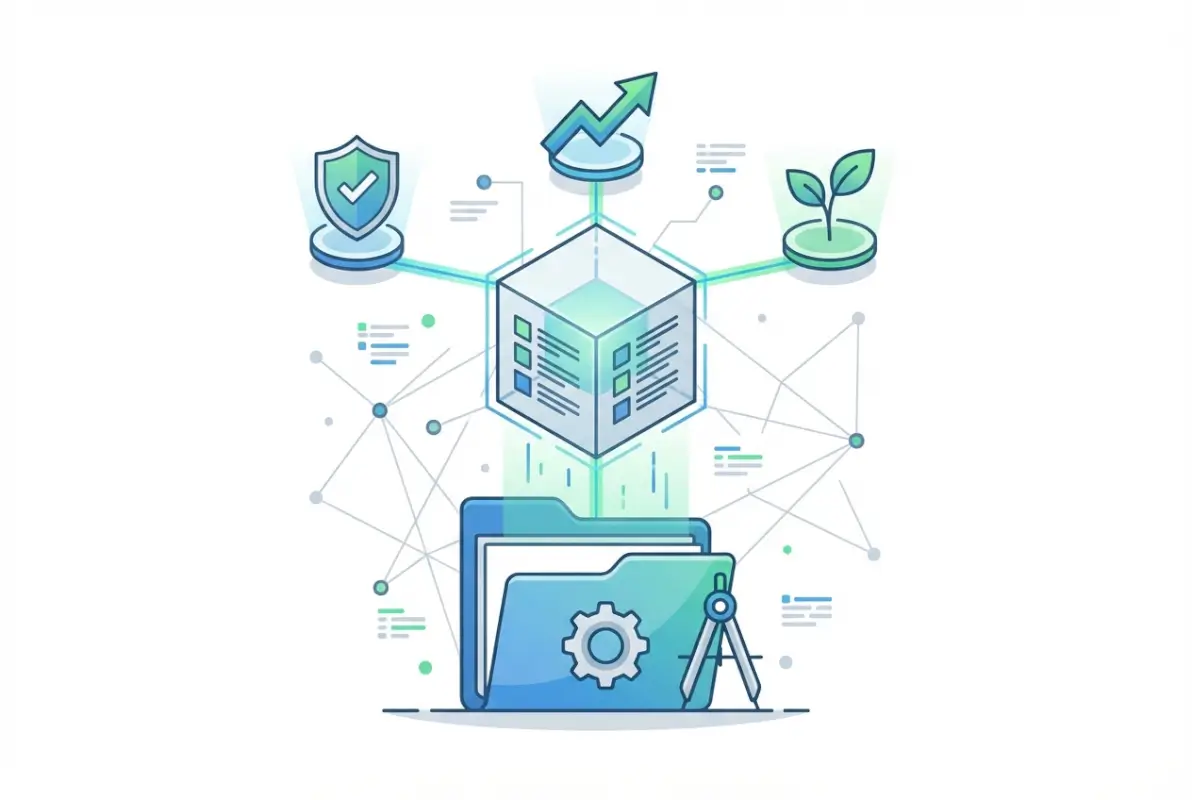
The directory integrates data from multiple sources including public records, trade references, financial statements, and direct business verification. This multi-source approach creates a comprehensive profile that purchasing agents, credit analysts, and partnership teams rely on when making vendor selection decisions. According to U.S. Census Bureau business pattern data, verified business information systems have become critical infrastructure for B2B commerce, particularly as supply chain transparency requirements increase.
How D&B Classification Systems Work
Every business in the D&B directory gets categorized using standardized classification systems—primarily SIC (Standard Industrial Classification) codes and NAICS (North American Industry Classification System) codes. These aren’t just bureaucratic labels; they determine how buyers find you when searching for specific types of vendors.
For example, a company providing IT security consulting might be classified under NAICS code 541512 (Computer Systems Design Services) and several SIC codes depending on their specific service mix. Buyers searching for IT security providers filter by these codes, meaning proper classification directly impacts your discoverability among qualified prospects.
| Classification Element | Purpose | Impact on Visibility |
|---|---|---|
| NAICS Code | Industry classification | Primary search filter for buyers |
| SIC Code | Traditional industry grouping | Legacy system still widely used |
| D-U-N-S Number | Unique business identifier | Required for many enterprise RFPs |
| Business Size | Employee count & revenue range | Qualification for certain contracts |
The Five Critical Benefits of D&B Business Directory Listing
Understanding why a D&B listing matters requires looking beyond surface-level benefits like “more visibility.” The real value emerges when you recognize how B2B decision-makers actually evaluate potential vendors—and the role verified third-party data plays in those decisions.
1. Credibility Through Third-Party Verification
When a potential client searches for your company, finding a verified D&B profile immediately signals legitimacy. This matters more than most business owners realize because enterprise procurement teams often face pressure to justify vendor selections. A D&B listing with a solid credit rating provides objective, third-party validation that helps internal advocates champion your company.

I watched this play out with a logistics startup that kept getting passed over for contracts despite competitive pricing. Once they established their D&B profile and built up trade references showing consistent on-time payments, their win rate for new contracts jumped from 12% to 38% within six months. The procurement managers they’d been pitching later admitted the D&B verification was “the internal justification we needed to take a chance on a newer vendor.”
2. Enhanced Discoverability Among Qualified Buyers
The local business directory guide approach works well for consumer-facing businesses, but B2B discovery follows different patterns. Purchasing agents and sourcing teams use specialized tools—often powered by D&B data—to identify potential vendors based on precise criteria.
These buyers aren’t casually browsing. They’re conducting targeted searches filtered by industry codes, company size, geographic location, and financial stability indicators. A complete D&B profile ensures you appear in these high-intent searches that generic directories simply don’t capture.
3. Improved Access to Business Credit and Capital
Your D&B Business Credit profile directly influences lending decisions, credit terms from suppliers, and even insurance premiums. Financial institutions pull D&B reports when evaluating loan applications, and vendors check your D&B rating before extending net payment terms.
Building a strong D&B credit profile requires consistent payment behavior and active trade references—suppliers who report your payment history to D&B. This creates a documented track record that opens access to better financing terms, which can significantly impact cash flow and growth capacity.
4. Requirement for Government and Enterprise Contracts
Many government agencies and large corporations mandate that vendors have D-U-N-S Numbers before they’ll even consider proposals. This isn’t arbitrary bureaucracy—it’s a standardized way to verify business legitimacy and assess financial stability before awarding contracts.
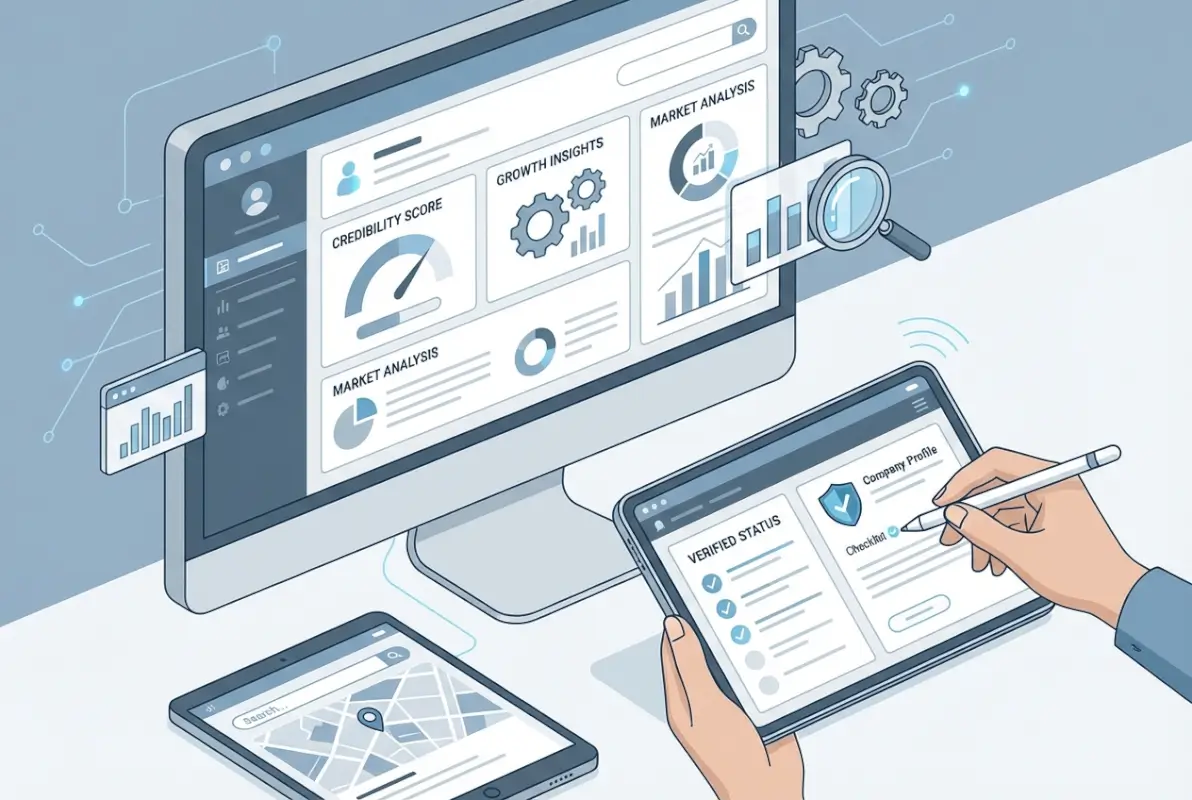
Without a D-U-N-S Number, you’re automatically disqualified from significant opportunities regardless of your capabilities. The federal government’s System for Award Management (SAM) requires D-U-N-S Numbers for all entities doing business with federal agencies, and many state and local governments have adopted similar requirements.
5. Competitive Intelligence and Market Positioning
Once you have D&B access (through services like D&B Hoovers), you gain insights into competitors, potential partners, and market trends. You can identify which companies are growing, who’s hiring, and where new market opportunities might be emerging based on industry activity patterns.
This intelligence allows for strategic planning that goes beyond guesswork. You can prioritize prospects based on financial health, target companies at optimal growth stages, and avoid investing resources in relationships with financially unstable potential partners.
Getting Your Business Listed: The Practical Process
The registration process for D&B Business Directory listing is straightforward, but the quality of your initial setup significantly impacts long-term benefits. Most businesses rush through this process and miss opportunities to strengthen their profile from day one.
Before you begin, search the D&B database to confirm you don’t already have a listing. Many businesses discover they’ve had D-U-N-S Numbers assigned without their knowledge—often because suppliers or customers reported transactions with them. If a listing exists, claim and update it rather than creating a duplicate.

Step-by-Step Registration Process
First, gather comprehensive information about your business. You’ll need your legal business name (exactly as registered), physical address (P.O. boxes aren’t accepted), primary phone number, ownership structure, and basic financial information like employee count and revenue ranges.
Visit the D&B website and apply for your D-U-N-S Number through their self-service portal. For most U.S. businesses, this basic registration is free. The application typically takes 10-15 minutes if you have all information prepared. D&B will verify your details through public records and may contact you directly to confirm information.
After submitting your application, verification usually completes within 5-7 business days, though complex ownership structures or international businesses may take longer. You’ll receive your D-U-N-S Number via email once verification completes.
Building Your Business Credit Profile
Receiving your D-U-N-S Number is just the beginning—the real value comes from building your business credit profile. This requires establishing trade references with suppliers who report payment data to D&B. Consider why maintaining accurate, consistent business directory id what it is why you need one matters across all platforms.
Contact your primary suppliers and request they establish trade references with D&B reporting your payment history. Most major vendors already report to D&B, but smaller suppliers may need encouragement. Having 3-5 trade references reporting consistent on-time payments can establish credible business credit within 6-9 months.
Additionally, consider using services that report your regular business payments (utilities, rent, telecommunications) to business credit bureaus. These “alternative” payment histories help newer businesses establish credit faster.
Optimizing Your Profile for Maximum Impact
While basic listings are free, D&B offers premium services that give you greater control over your profile and provide additional marketing opportunities. These paid options allow you to add detailed company descriptions, showcase certifications, highlight key capabilities, and monitor who’s viewing your profile.
Is the investment worthwhile? For B2B companies actively pursuing enterprise clients or government contracts, premium profiles typically justify their cost through improved conversion rates. For companies with primarily consumer-focused models, basic listings usually suffice.
| Profile Element | Free Tier | Premium Tier |
|---|---|---|
| Basic Company Info | ✓ Included | ✓ Enhanced |
| D-U-N-S Number | ✓ Included | ✓ Included |
| Detailed Descriptions | Limited | ✓ Comprehensive |
| Profile View Analytics | ✗ Not available | ✓ Detailed tracking |
| Marketing Features | ✗ Not available | ✓ Multiple options |
Leveraging D&B for Business Development
Beyond establishing your own credibility, the D&B Business Directory serves as a powerful prospecting and research tool. Companies that understand how to use D&B data for outbound sales development often see dramatically improved lead quality compared to generic list purchases.
The D&B Hoovers platform (a premium service) provides sophisticated search and filtering capabilities that enable precision targeting. Rather than buying contact lists of questionable quality, you can build highly specific prospect lists based on firmographic data, growth indicators, and behavioral signals.

Identifying High-Quality Prospects
The most effective use of D&B for prospecting involves layering multiple filters to identify companies matching your ideal customer profile. Start with basic criteria like industry classification and company size, then add filters for growth indicators, geographic location, and ownership structure.
For example, a B2B software company might search for manufacturing companies with 100-500 employees, showing revenue growth over the past two years, located in specific metropolitan areas, and with recent executive appointments in IT leadership roles. This combination of filters identifies companies likely experiencing growth pains that software solutions can address—and with new IT leaders potentially evaluating vendor relationships.
This level of targeting simply isn’t possible through most other business directory listing essential facts platforms. The depth of verified data in D&B creates opportunities for strategic prospecting that relies on business intelligence rather than spray-and-pray outreach.
Competitive Research and Market Analysis
D&B data enables competitive intelligence gathering that goes beyond surface-level website analysis. You can track competitor growth patterns, identify their customer segments based on transaction data, and monitor changes in their business structure or financial stability.
This information helps you identify market opportunities where competitors may be vulnerable. For instance, if a major competitor shows declining financial metrics or executive turnover, their existing clients might be open to evaluating alternatives—creating strategic timing for outreach campaigns.
Partnership and Alliance Identification
Strategic partnerships often generate more value than individual client relationships, and D&B facilitates partnership discovery by helping you identify companies offering complementary services to similar customer bases. You can search for businesses in adjacent industries serving the same company size ranges and geographic markets.
I’ve seen companies build referral networks worth hundreds of thousands in annual revenue by identifying non-competing businesses with overlapping ideal customer profiles, then proposing mutual referral arrangements backed by data showing their customer alignment.
Maintaining and Maximizing Your D&B Presence
Creating your initial D&B listing is only the foundation—ongoing maintenance determines whether your profile remains valuable or becomes stale and ineffective. Too many businesses set up their D-U-N-S Number, then never think about their D&B presence again until they lose a contract because outdated information raised red flags during due diligence.
Schedule quarterly reviews of your D&B profile to ensure all information remains current. This includes basic contact details, employee counts, revenue ranges, and trade references. When significant changes occur—ownership transfers, major expansions, new product lines—update your profile immediately rather than waiting for the next scheduled review.
Building and Maintaining Business Credit
Your D&B credit profile evolves continuously based on reported payment behaviors. Maintaining strong business credit requires consistent attention to payment timing and relationships with vendors who report to D&B.
Prioritize payments to vendors that report to D&B, even if you have flexibility with others. Those reported on-time payments become the documented evidence that lenders and potential partners review when evaluating your financial reliability. Consider setting up automated payments for key trade reference accounts to ensure you never miss reporting opportunities.
If you encounter cash flow challenges that might result in late payments, communicate proactively with affected vendors. Many will work with you on payment schedules if you’re transparent—and proactive communication can sometimes prevent negative reporting that would damage your credit profile.
Monitoring Your Profile for Accuracy
D&B aggregates data from numerous sources, which occasionally results in inaccuracies. Regularly review your full D&B report (available through their paid monitoring services or sometimes through business credit monitoring platforms) to identify and correct any errors.
Common issues include outdated addresses, incorrect executive information, wrong industry classifications, or inaccurate financial data. Each of these errors can undermine your credibility with prospects researching your company, so prompt correction matters.
Common Pitfalls and How to Avoid Them
Understanding what to do with your D&B listing is important, but knowing what to avoid can be equally valuable. I’ve seen businesses undermine their own credibility through preventable mistakes in how they manage their D&B presence.
Incomplete or Inconsistent Information
The most common mistake is providing minimal information during registration, then never enhancing the profile. A bare-bones listing with only required fields suggests either a very small operation or a company that doesn’t take its business presence seriously.
Equally problematic is inconsistency between your D&B listing and other business information sources. If your website shows 50 employees but your D&B profile indicates 5-9 employees, prospects notice—and wonder which information is accurate. Maintaining consistency across all platforms builds confidence rather than raising questions.
Neglecting Trade Reference Development
Many businesses obtain their D-U-N-S Number for a specific purpose (like a government contract requirement), then fail to build actual business credit through trade references. Without reported payment history, your D&B profile provides identification but not credibility.
Building trade references takes time, so start early. Don’t wait until you need strong business credit for a loan or contract—begin establishing relationships and payment histories while you’re still in growth mode.
Ignoring Profile Updates
Business circumstances change continuously, but many companies update their D&B profiles only when forced to by inaccuracies discovered during due diligence. By then, damage may already be done—contracts delayed, partnerships questioned, or opportunities lost.
Set calendar reminders for quarterly profile reviews, and assign responsibility to a specific team member. This small investment of time prevents larger problems later.
Frequently Asked Questions
What is the D&B Business Directory and how does it differ from other business listings?
The D&B Business Directory is a verified database maintained by Dun & Bradstreet containing detailed information on over 420 million businesses globally. Unlike simple listing directories, D&B provides verified business identifiers (D-U-N-S Numbers), credit ratings, financial stability indicators, and detailed company profiles that enterprises and government agencies use for vendor evaluation and due diligence.
How much does a D&B Business Directory listing cost?
Basic D-U-N-S Number registration is free for most U.S. businesses, providing your unique business identifier and basic listing. Premium services that offer enhanced profiles, marketing features, credit monitoring, and profile analytics range from approximately $149 to several thousand dollars annually depending on features and company size. Most small businesses find the free tier sufficient initially.
How long does it take to get listed in the D&B Business Directory?
Initial D-U-N-S Number assignment typically takes 5-7 business days after application submission for straightforward business structures. Complex ownership arrangements, international businesses, or cases requiring additional verification may take 2-3 weeks. Once assigned, your basic listing appears immediately, though building a robust credit profile with trade references takes 6-9 months of consistent payment history.
Can having a D&B listing improve my chances of getting business loans?
Yes, significantly. Lenders routinely pull D&B credit reports when evaluating business loan applications, and a strong D&B credit profile with documented payment history and trade references substantially improves approval odds and can secure better interest rates. Many lenders view established D&B profiles as reducing risk, particularly for businesses without extensive operating history.
Is a D-U-N-S Number required for government contracts?
Yes, the U.S. federal government requires all entities doing business with federal agencies to have D-U-N-S Numbers registered in the System for Award Management (SAM). Many state and local governments have adopted similar requirements, and numerous large corporations mandate D-U-N-S Numbers for vendor consideration. Without one, you’re automatically disqualified from these opportunities regardless of capabilities.
How do I update incorrect information in my D&B listing?
Log into your D&B account through their website and navigate to your business profile to submit updates. For significant changes, you may need to provide documentation such as updated business licenses, financial statements, or incorporation documents. Updates typically process within 30 days, though complex changes may require additional verification time. Contact D&B customer service directly for urgent corrections.
What are trade references and why do they matter for my D&B profile?
Trade references are suppliers or vendors who report your payment history to D&B, creating documented evidence of your financial reliability. These references form the foundation of your business credit score and profile strength. Having 3-5 trade references reporting consistent on-time payments significantly enhances your credibility with lenders and potential partners who review your D&B profile.
Can small businesses benefit from D&B listings or are they only for large companies?
Small businesses often benefit proportionally more from D&B listings because the third-party verification helps level the playing field when competing against larger, established companies. The credibility boost from verified D&B profiles can be the differentiator that wins contracts for smaller firms, particularly when dealing with enterprise clients who require vendor verification before awarding business.
How does the D&B Business Directory impact SEO and online visibility?
D&B listings create high-authority backlinks to your website and provide verified business citations that strengthen local SEO signals. More importantly, D&B profiles appear in searches conducted by B2B buyers using specialized procurement tools, ensuring visibility among high-intent prospects who may never find you through consumer-focused search engines or directories.
What information should I never include in my D&B business profile?
Avoid including speculative financial projections, unverified claims about company size or capabilities, inconsistent information that conflicts with public records, or personal contact information for executives that could create security concerns. Stick to verified, factual information that you can document if requested during due diligence processes. Accuracy and consistency build credibility better than exaggerated claims.
Taking Action on Your D&B Strategy
The businesses that benefit most from D&B Business Directory presence are those that treat it as a strategic asset rather than a compliance checkbox. Whether you’re a startup establishing initial credibility or an established company seeking to expand into enterprise markets, your D&B profile influences opportunities in ways that aren’t always visible until you’ve already lost them.
Start today by searching for your existing D&B listing or initiating your D-U-N-S Number registration if you don’t have one. Then commit to the quarterly maintenance schedule that keeps your profile accurate and current. Identify your three largest suppliers and request they establish trade references reporting your payment history—this single action can build business credit faster than any other strategy.
For companies pursuing growth through enterprise contracts, government work, or strategic partnerships, consider investing in premium D&B services that provide both enhanced profile control and competitive intelligence capabilities. The insights you gain into market opportunities and prospect qualification often justify the investment within the first few deals closed using that intelligence.
Your D&B Action Checklist
☐ Search D&B directory for existing listing or apply for D-U-N-S Number
☐ Complete profile with comprehensive, accurate business information
☐ Contact top 3-5 suppliers to establish trade references
☐ Set quarterly calendar reminders for profile review and updates
☐ Evaluate premium services if pursuing enterprise or government contracts
Remember that your D&B presence builds value over time—the sooner you start investing attention in this asset, the more opportunities it unlocks as your business grows. The companies winning the most valuable contracts tomorrow are the ones building verified credibility today.
Was this article helpful?