How to Build an Online Directory Website: 7 Essential Steps for Success

TL;DR – Quick Takeaways
- Niche focus wins – Narrow, specialized directories outperform broad ones in monetization and user engagement
- Data quality matters more than quantity – Verified, enriched listings drive higher conversions than massive databases of thin content
- Monetization needs a blueprint – Premium listings, lead generation, and advertising work best when built into the foundation, not bolted on later
- SEO architecture is your growth engine – Clean category structures and unique listing content create compounding organic traffic
- Start lean, iterate fast – Launch with core features and real user feedback beats building everything upfront
Building an online directory website in the current landscape might seem counterintuitive, I’ll admit. Social media platforms already connect buyers and sellers, Google indexes business information automatically, and countless aggregators already exist. But here’s what most people miss: the right directory, serving a specific audience with genuine value, can still generate substantial revenue and become a cornerstone digital asset.

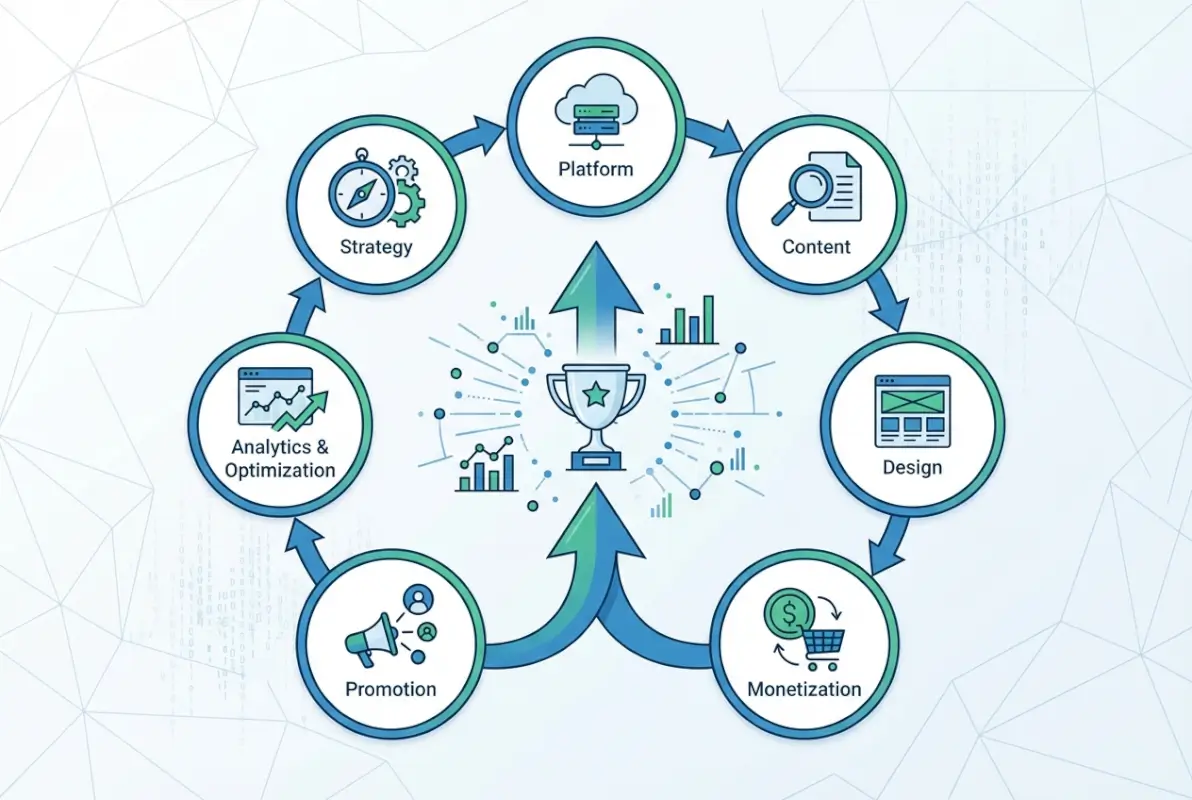
The key difference between directories that thrive and those that fail isn’t technical complexity or marketing budget. It’s strategic clarity about who you serve and why someone would choose your curated collection over generic search results. When you nail that value proposition, everything else becomes much easier. This guide walks through the seven essential steps that separate profitable directories from abandoned side projects, drawing on practical implementation patterns that work across niches from local services to specialized B2B suppliers.
Define Your Directory’s Niche, Scope, and Value Proposition
The biggest mistake I see with new directory projects is trying to be everything to everyone. A “business directory for everyone” competes with Google, Yelp, and established platforms with billions in infrastructure. That’s a losing battle. Instead, successful directories carve out a specific vertical or geographic area where they can become the authoritative resource.

Your niche selection should answer three questions: Who desperately needs this information? Where else are they currently struggling to find it? What unique curation or verification can you provide that general platforms can’t? For example, a directory of certified accessible hotels serves a clear audience (travelers with mobility needs) solving a specific problem (finding genuinely accessible accommodations, not just properties that claim ADA compliance).
Choose a Focused Niche
Narrow beats broad almost every time. Consider these proven approaches:
- Vertical specialization – Focus on one industry like solar installers, immigration attorneys, or organic food suppliers
- Geographic concentration – Own a region like “Pacific Northwest wedding vendors” rather than trying to cover the entire country
- Demographic targeting – Serve specific groups like veteran-owned businesses or women-led startups
- Certification or qualification filtering – List only providers meeting specific credentials, creating inherent trust
The sweet spot combines two or three of these filters. A directory of veteran-owned construction contractors in Texas has clear boundaries and a compelling value proposition for both users and listings. You can build relationships with specialized business communities and become the go-to resource faster than you’d achieve with broader scope.
Determine Directory Scope
Scope decisions shape everything from data sourcing to monetization potential. Regional directories excel at local SEO and community relationships but hit natural growth ceilings. National or global directories scale better but require more sophisticated technical infrastructure and face stiffer competition.
Consider your competitive advantage honestly. If you have deep local connections in Austin’s tech scene, that’s leverage worth using. If you’re building a directory of specialized manufacturers, national or international scope might make more sense from day one.
Clarify Listing Sources
How listings enter your directory fundamentally affects quality, scalability, and user trust. Three models dominate:
- Manual curation – You research and add listings yourself, ensuring high quality but limiting scale
- User-submitted – Providers add their own listings, scaling faster but requiring robust moderation
- Hybrid approach – Seed with curated listings, then open selective submissions with verification
Most successful directories use the hybrid model, it gives you control over initial quality while creating a path to scale. The key is making verification transparent so users understand why certain listings appear and others don’t.
Establish Monetization Approach
Revenue models should align with user expectations and listing value. Premium listings work well when competition exists and enhanced visibility genuinely drives business. Lead generation suits service providers where each referral has clear monetary value. Advertising makes sense when you build substantial traffic but can’t charge listings directly.
| Monetization Model | Best For | Typical Pricing |
|---|---|---|
| Premium Listings | Competitive niches | $50-500/month |
| Lead Generation | Service providers | $10-100 per lead |
| Display Advertising | High-traffic directories | CPM-based |
| Affiliate Commissions | Product-focused listings | 5-20% of sales |
Most directories layer multiple revenue streams, free basic listings build database size and SEO value while premium tiers fund operations. The crucial decision is whether to start with paid listings or build audience first. If your niche has proven demand, paid from launch can work. If you’re creating a new category, free listings build momentum faster.
Plan Core Features and Technical Requirements
Feature planning separates functional directories from frustrating ones. Users have learned to expect certain capabilities from browsing established platforms, and missing baseline features creates friction that kills conversion. At the same time, over-engineering delays launch and wastes resources on features nobody uses.

The right approach balances minimum viable functionality with room to grow. Your initial release should nail search, browsing, and basic listing display. Advanced features like user reviews, map integration, and comparison tools can follow based on actual usage patterns rather than assumptions.
Essential Features for Usability
Start with these non-negotiables:
- Robust search – Full-text search across listing names, descriptions, and key attributes
- Faceted filters – Category, location, price range, and niche-specific attributes
- Clear categorization – Intuitive taxonomy that matches how users think about your niche
- Map view – For location-based directories, visual discovery drives engagement
- Contact mechanisms – Phone, email, website, or inquiry forms depending on your model
- Mobile responsiveness – Over half your traffic will arrive on phones
Reviews and ratings create social proof but require moderation infrastructure. If you launch with reviews, you need spam protection and abuse reporting from day one, otherwise your directory fills with fake testimonials that destroy credibility.
Data Model and Schema
Your underlying data structure determines everything you can build later. Think through these core entities and their relationships:
The temptation is creating a rigid schema that locks you into specific fields. Build flexibility for custom attributes per category instead. A restaurant needs hours and cuisine type; a law firm needs practice areas and bar admissions. Your data model should accommodate both without forcing irrelevant fields on every listing.
Compliance and Accessibility Basics
Data privacy regulations affect how you collect, store, and use listing and user information. Even if you’re not in the EU, GDPR principles represent good practice: collect only necessary data, get clear consent, allow opt-outs, and delete data when requested. Understanding business directory integration requirements helps avoid compliance issues down the road.
Accessibility isn’t just ethical, it expands your addressable market. Keyboard navigation, screen reader compatibility, and sufficient color contrast cost little to implement early but become expensive retrofits later. Target WCAG 2.1 AA standards at minimum.
Tech Stack Options
Your technical approach depends on budget, timeline, and customization needs. Three paths dominate:
| Approach | Pros | Cons |
|---|---|---|
| No-Code Platforms | Fast launch, low cost, proven features | Limited customization, ongoing platform fees |
| WordPress + Plugins | Flexible, huge ecosystem, affordable | Performance challenges at scale, plugin conflicts |
| Custom Development | Full control, optimized performance, unique features | Higher cost, longer timeline, maintenance burden |
Most entrepreneurs should start with no-code or WordPress solutions to validate demand before investing in custom development. You can always migrate later if the business justifies the investment. The key is choosing a platform that won’t trap your data or make export painful when that time comes.
Design for Discoverability and User Experience
A directory lives or dies on discoverability, both from search engines and within the site itself. The best database in the world fails if users can’t find relevant listings or Google can’t properly index your content. Design and architecture decisions made early determine your growth ceiling.

Think about discovery paths: organic search, direct navigation, social referrals, and serendipitous browsing. Each requires different architectural support. SEO demands clean URLs and logical hierarchy. Social sharing needs compelling previews and easy link generation. Browsing requires intuitive navigation and related listing suggestions.
SEO-Friendly Architecture
Directory SEO succeeds through systematic creation of landing pages targeting specific queries. Each category, subcategory, location, and combination creates a unique page optimized for relevant searches. A directory of wedding vendors might have pages for “Seattle wedding photographers,” “Tacoma wedding caterers,” and hundreds of other city-service combinations.
- Clean URL structure – /category/subcategory/listing-name rather than /page?id=12345
- Unique category pages – Written descriptions, not just listing grids, that target category keywords
- Strategic internal linking – Related categories, featured listings, and breadcrumb navigation
- XML sitemaps – Separate sitemaps for categories, listings, and blog content
- Canonical tags – Prevent duplicate content issues from filters and sorting
Content Strategy for Listings
Thin, duplicate content kills directory SEO. If every listing is just a name, address, and phone number scraped from public databases, Google has no reason to rank your pages over the original sources. Unique, substantive content gives search engines reason to feature your listings.
Strategies that work include original descriptions, photos submitted by listing owners, aggregated reviews, editorial commentary about why listings merit inclusion, and structured data highlighting unique attributes. The goal is making each listing page the most comprehensive resource for that specific business or service.
When implementing online directory access, focus on creating value that users can’t find by simply visiting the business’s own website. Comparison context, verification badges, aggregated availability, and curated recommendations all qualify.
UX Patterns That Improve Conversions
Conversion in directory context means users finding relevant listings and taking action (calling, emailing, visiting websites, submitting inquiries). Remove friction from that path:
- Prominent contact mechanisms – One-click calling on mobile, visible email buttons, inquiry forms that work
- Trust signals – Verification badges, years in business, response rates, review counts
- Clear listing status – Currently accepting clients, limited availability, or not accepting new business
- Pricing transparency – When possible, show ranges or starting prices to set expectations
- Related suggestions – Surface alternatives when users browse individual listings
The best directories make next steps obvious at every stage. Browsing category pages? Clear calls-to-action lead to individual listings. Viewing a listing? Contact buttons are impossible to miss. Submitted an inquiry? Confirmation appears immediately with timeline expectations.
Mobile-First Design and Performance
Mobile users exhibit different behavior than desktop browsers, they’re often searching with immediate intent, in context of where they are physically, with less patience for slow load times. Your mobile experience needs to prioritize speed and clarity above desktop feature parity.
Optimize images aggressively, lazy-load content below the fold, minimize JavaScript, and test on actual mobile networks rather than just throttling desktop Chrome. Tools like Google’s PageSpeed Insights and Lighthouse identify specific performance bottlenecks worth addressing.
Build Listings Database and Data Quality Processes
Data quality determines directory value more than any other factor. A thousand meticulously verified, richly detailed listings outperform ten thousand thin entries scraped from outdated sources. Building that database requires systematic processes, not one-time effort.
I learned this the hard way with an early project where I bulk-imported business listings from public databases. Traffic arrived, but bounce rates stayed high and conversions were terrible because half the phone numbers were disconnected and business details were years out of date. Cleaning up that mess took longer than building it right from the start would have.
Data Ingestion Approaches
How you populate initial listings shapes ongoing maintenance burden:
- Manual research and entry – Time-intensive but produces high-quality, verified data from the start
- CSV bulk imports – Fast for seeding database but requires careful source vetting and cleanup
- Automated scraping – Scalable but legally risky and often produces low-quality data
- API integration – Pulls data from authoritative sources with ongoing sync potential
- User submissions – Scalable and creates listing owner engagement but needs moderation
Hybrid approaches work best: manually curate initial listings to establish quality standards, then open controlled submissions with verification requirements. For certain niches, you might also check business listings against authoritative directories to validate legitimacy.
Verification Workflows
Verification builds trust but creates operational overhead. Design workflows that scale with your directory size:
Status indicators help users evaluate listings: “Verified” means you’ve confirmed key details, “Claimed” indicates the business owner manages the listing, “Featured” signals paid placement, and “Community-submitted” sets appropriate expectations for unverified entries.
Data Enrichment
Raw business information becomes valuable directory content through enrichment:
- Professional imagery – Request photos from listing owners or commission original photography
- Detailed attributes – Service areas, specializations, certifications, years established
- Operating details – Hours, seasonal availability, appointment requirements
- Geocoding – Convert addresses to precise coordinates for mapping and location search
- Categorization – Assign primary and secondary categories based on services offered
Each enrichment layer increases listing utility and SEO value. A basic entry might be three lines of text; an enriched listing becomes a comprehensive profile that ranks for dozens of related searches.
Ongoing Cleanup and Deduplication
Database entropy is inevitable, businesses close, details change, and duplicates creep in through various submission channels. Systematic maintenance prevents quality degradation:
- Quarterly verification campaigns reaching out to listing owners
- Automated duplicate detection based on name similarity and location proximity
- User reporting mechanisms for outdated or incorrect information
- Merge workflows for consolidating duplicate entries
- Archive processes for closed businesses rather than deletion (preserves historical data)
The best directories treat data quality as a continuous process, not a launch task. Build maintenance into your operational rhythm from the beginning.
Implement Search, Filters, and Map-Based Discovery
Search functionality is the heart of directory user experience. Users arrive with specific intent, they need particular services in certain locations meeting defined criteria. Your search implementation determines whether they find what they need or bounce to competitors.

The challenge is balancing power with simplicity. Advanced users want faceted filtering across multiple attributes; casual visitors want a simple search box that just works. Your interface should accommodate both without overwhelming either group.
Advanced Search Capabilities
Modern directory search goes beyond simple keyword matching:
- Full-text search – Searches listing names, descriptions, categories, and attributes
- Fuzzy matching – Handles typos and variations gracefully
- Synonym awareness – Understands “attorney” and “lawyer” as equivalent terms
- Location radius – “Find results within 25 miles of 98101”
- Weighted relevance – Prioritizes matches in listing names over description mentions
- Autocomplete suggestions – Guides users toward existing categories and locations
Implementation can range from basic database LIKE queries to sophisticated search engines like Elasticsearch or Algolia. Start simple and upgrade when performance or relevance issues emerge. Basic SQL full-text search handles thousands of listings perfectly fine.
Filtering UX: Facets and Multi-Select
Faceted search lets users progressively narrow results by applying multiple filters. The interface should show available filters, current filter state, and how many results remain after each selection.
Multi-select within filter categories (check multiple service types, multiple locations) gives users flexibility without forcing them to start over. Include a clear “reset all filters” option for users who narrow too aggressively and want to start fresh.
Map Integration and Location Data
Visual map discovery complements text search, especially for location-based services. Users can pan around neighborhoods, zoom into areas they know, and discover listings they wouldn’t find through text search alone.
Google Maps API remains the standard integration, but costs can escalate with heavy traffic. Consider alternative providers or optimize API calls (clustering markers, lazy-loading maps). Geocoding accuracy matters, users lose confidence when map pins appear blocks away from actual addresses.
Performance Considerations for Large Directories
As your database grows, search performance can degrade. Optimization strategies include:
- Database indexing – Proper indexes on searched fields dramatically improve query speed
- Query caching – Store results for common searches to avoid repeated database hits
- Pagination – Load results in chunks rather than rendering thousands at once
- Lazy loading – Defer loading images and non-critical elements until user scrolls
- CDN usage – Serve static assets from edge locations closer to users
Monitor query performance and optimize slow queries before they impact user experience. Response times under 200 milliseconds feel instant; anything over a second feels sluggish.
Listings Moderation, Quality, and Compliance
Opening your directory to user submissions or automated ingestion creates an ongoing moderation challenge. Without systematic quality controls, spam, duplicates, and outdated listings accumulate until your directory provides negative value.
Moderation Policies
Clear policies guide both users and moderators. Define what constitutes acceptable listings, prohibited content, and consequences for violations. Common policy areas include:
- Prohibited businesses or services (illegal activities, adult content, MLM schemes)
- Listing quality requirements (minimum description length, required fields, image standards)
- Duplicate listing rules (one listing per business, no competitor spam)
- Advertising restrictions (what can appear in descriptions vs. paid placements)
- Contact information requirements (valid email, working phone number)
Enforcement can be automated (content filters, duplicate detection), manual (review queues for new submissions), or community-driven (user reporting with moderator review). Scale determines which approach makes sense.
Review and Rating System Strategy
Reviews create social proof but open attack vectors for fake reviews, competitor sabotage, and manipulation. Safeguards worth implementing:
- Verified reviewer requirements (confirmed email, phone, or transaction)
- Review gating (must meet activity threshold before reviewing)
- Velocity limits (can’t post dozens of reviews in minutes)
- Suspicious pattern detection (same IP reviewing multiple competitors)
- Response mechanisms (listing owners can reply to reviews)
- Appeal processes (dispute fake or abusive reviews)
Some successful directories skip reviews entirely, focusing instead on editorial curation and verification. This works particularly well for professional services where qualifications matter more than popularity.
Legal and Privacy Considerations
Directories handle both business data (often publicly available) and user data (subject to privacy regulations). Key compliance areas include:
- Terms of service – Defines acceptable use, intellectual property ownership, and liability limits
- Privacy policy – Explains what data you collect, how it’s used, and user rights
- Data retention – How long you keep user accounts, listings, and analytics data
- Consent mechanisms – Clear opt-ins for email marketing and data usage
- Deletion rights – Processes for users to remove their data on request
Consulting an attorney familiar with online platforms makes sense before launch. Template terms and policies provide a starting point but often need customization for your specific model and jurisdiction.
Accessibility and Inclusion
Accessible design expands your addressable market and demonstrates values alignment. Focus on keyboard navigation (all features work without a mouse), screen reader compatibility (proper semantic HTML and ARIA labels), color contrast (text remains readable for users with vision impairment), and form accessibility (clear labels and error messages).
Regular accessibility audits using automated tools and user testing with assistive technology users help maintain standards as you add features.
Monetization, Pricing, and Growth Channels
Revenue models determine whether your directory becomes a sustainable business or remains a side project. The right monetization strategy aligns with listing value, user expectations, and competitive dynamics in your niche.
Premium Listing Tiers and Featured Placements
Freemium models work when free listings provide genuine utility while premium tiers offer meaningful visibility upgrades. Common premium features include:
- Enhanced listing placement (top of category, homepage features)
- Richer content options (unlimited images, video, detailed descriptions)
- Analytics and insights (view counts, click-through rates, user demographics)
- Lead delivery (contact inquiries sent directly to listing owner)
- Verification badges (builds trust and credibility)
- Remove competitor ads (clean listing pages for premium members)
| Tier | Features | Typical Price |
|---|---|---|
| Free | Basic listing, standard placement | $0 |
| Enhanced | Photos, priority in category | $29-99/mo |
| Premium | Featured placement, analytics, leads | $99-299/mo |
| Sponsored | Homepage, top search results, exclusive placement | $299-999/mo |
Pricing should reflect value delivered. If a premium listing generates even one additional client worth thousands in revenue, monthly fees in the hundreds remain attractive. Test pricing with initial customers and adjust based on conversion rates and perceived value.
Lead Generation and Affiliate Programs
Lead generation works when you can track user inquiries and attribute them to specific listings. You charge per lead (qualified contact), per booking (confirmed transaction), or percentage of transaction value. This aligns incentives, listing owners pay for results rather than exposure.
Implementation requires robust inquiry tracking, fraud prevention (fake lead submissions), and clear lead quality definitions. What constitutes a valid lead? What happens if the inquiry doesn’t convert to a sale? Clear agreements prevent disputes.
Affiliate models suit directories linking to products or services available for online purchase. You earn commissions on transactions originating from your listings. This works well for software directories, product marketplaces, or service platforms with affiliate programs.
Partnerships, API Access, and B2B Opportunities
As your directory gains traction, adjacent opportunities emerge. Data licensing lets other platforms embed your listings in their experiences. API access enables developers to build on your database. White-label partnerships extend your content to new audiences.
B2B revenue often exceeds consumer monetization because business customers pay for scale and integration rather than individual transactions. A real estate platform might pay thousands monthly for API access to your verified contractor directory rather than individual contractors paying for listings.
Growth Strategies and Marketing Channels
Directories grow through compounding network effects: more listings attract more users, more users attract more listings. Kickstart this flywheel through:
- Content marketing – Educational guides, industry news, and how-to articles that rank for adjacent searches
- Local SEO – Optimize for “best [service] in [city]” searches
- Listing owner outreach – Direct recruitment of high-quality businesses
- Strategic partnerships – Cross-promotion with complementary services
- Community building – Forums, events, or groups that create ongoing engagement
Early growth often comes from hustle rather than automation, personally reaching out to ideal listings, participating in industry forums, and creating genuinely useful content. Once the flywheel starts spinning, organic growth accelerates.
Launch, Testing, and Ongoing Optimization
Launch readiness isn’t perfection; it’s sufficient quality and value to learn from real users. Perfectionism delays learning and wastes resources building features nobody wants. Ship something functional, gather feedback, iterate rapidly.
Pre-Launch Checklist
Before announcing your directory publicly, verify these fundamentals:
- Core search and browse functionality works across devices
- At least 50-100 quality listings populate key categories
- Contact mechanisms reach correct destinations
- Terms of service and privacy policy are live and linked
- Analytics tracking captures user behavior
- Basic SEO elements (title tags, meta descriptions, heading structure) are optimized
- Performance testing confirms acceptable load times
- Security fundamentals (HTTPS, form validation, SQL injection protection) are implemented
Soft launch to a small audience before broad promotion. This surfaces issues with manageable user volume rather than during high-traffic periods where problems damage reputation.
Testing Plan for Layout and Features
User behavior reveals what actually works versus what you assumed would work. A/B testing helps optimize conversion at every stage:
- Homepage layouts (featured categories vs. search-first vs. location-based)
- Search result presentation (list view vs. grid vs. map-first)
- Listing detail layouts (contact information placement, image galleries)
- Calls-to-action (button text, color, prominence)
- Pricing page structure (tiers, feature lists, testimonials)
Analytics Setup and Key Metrics
Instrumentation determines what you can learn and optimize. Track these directory-specific metrics:
- Traffic sources – Organic search, direct, referral, paid (informs growth channel ROI)
- Search behavior – Top queries, zero-result searches, filter usage (guides content gaps)
- Listing engagement – Views per listing, contact click-through rates (indicates listing quality)
- Conversion funnels – Browse to search to listing to contact (shows drop-off points)
- Listing growth – New submissions, activation rate, churn (measures supply health)
Set up custom events for critical actions: listing views, contact clicks, inquiry submissions, premium upgrades. Standard pageview analytics miss the user actions that actually matter for directories.
Iteration Cadence and Roadmap Planning
Balance new feature development with optimization of existing functionality. A common mistake is building features to address hypothetical needs while ignoring data about real user friction points.
Monthly or quarterly roadmap reviews keep development aligned with business goals. Evaluate each potential feature against criteria like user demand (what do users ask for?), competitive necessity (what do alternatives offer?), revenue impact (does this drive monetization?), and technical feasibility (how complex to build and maintain?).
Sometimes the highest-impact work isn’t new features but improving existing ones, making search faster, reducing listing load times, or simplifying the submission process often drives more value than flashy additions.
Compliance, Security, and Accessibility
Operating a directory platform creates responsibilities around data handling, user security, and inclusive access. These aren’t optional nice-to-haves but fundamental requirements for trustworthy, sustainable operations.
Data Privacy Basics
Even if you’re not subject to GDPR or CCPA, privacy-respecting practices build user trust:
- Data minimization – Collect only information you actually need and use
- Clear consent – Explain what data you collect and why before collecting it
- Purpose limitation – Use data only for stated purposes, not unrelated side projects
- Opt-outs – Let users unsubscribe from marketing and control their preferences
- Deletion rights – Process requests to delete accounts and associated data
Document your data practices in a readable privacy policy. Template policies provide structure, but customize for your specific data flows and business model.
Security Fundamentals
Directories handle sensitive business contact information and user accounts. Basic security hygiene prevents most attacks:
- HTTPS for all pages (encrypts data in transit)
- Strong password requirements (length over complexity)
- SQL injection prevention (parameterized queries, never string concatenation)
- XSS protection (sanitize and escape user-generated content)
- CSRF tokens (prevent cross-site request forgery)
- Rate limiting (prevent brute force and scraping)
- Regular dependency updates (patch known vulnerabilities)
Consider security audits before launch and periodically thereafter. Many developers offer one-time security reviews at reasonable rates that surface issues before attackers do.
Accessibility Considerations
Accessible directories serve more users and demonstrate inclusive values. Focus areas include:
- Semantic HTML (proper heading hierarchy, landmark regions)
- Keyboard navigation (all features accessible without mouse)
- Screen reader optimization (alt text, ARIA labels, descriptive links)
- Color contrast (WCAG AA minimum for text)
- Form accessibility (clear labels, error messages, instructions)
Automated tools like WAVE or axe DevTools catch common issues. User testing with people who rely on assistive technology provides invaluable real-world feedback that automated scans miss.
Compliance Best Practices
Directory-specific compliance considerations include verifying you have rights to publish business information (generally permitted for publicly available data), honoring opt-out requests from businesses that don’t want listings, and respecting intellectual property (don’t scrape copyrighted descriptions or images without permission).
When you learn how to check business directories for compliance, you’ll spot patterns worth emulating and mistakes to avoid. Established directories offer working examples of compliant operations.
Promotion and Community Building
The best directory database means nothing if nobody knows it exists. Sustainable growth requires systematic promotion and community cultivation, not one-time marketing campaigns.
Local and Niche SEO Tactics
Directory SEO succeeds through depth rather than breadth. Instead of competing for “business directory,” target specific niches and locations where you can dominate:
- City + service combinations (“Austin commercial electricians”)
- Category deep-dives (“certified accessibility consultants”)
- Comparison content (“vs” queries between similar services)
- Question-based content (“how to choose” guides)
Each category page should feature unique written content explaining what the category includes, how to evaluate providers, and what questions to ask, this content targets informational searches that precede directory lookups.
Content Marketing Strategies
Educational content attracts users before they’re ready to browse listings. Effective formats include how-to guides teaching skills adjacent to your directory niche, industry news keeping professionals informed, case studies highlighting successful listing examples, and comparison guides helping users evaluate options.
This content doesn’t directly monetize but builds traffic, authority, and trust that convert to directory usage and premium subscriptions over time. Focus on evergreen topics that remain relevant rather than news that dates quickly.
Social Proof and Testimonials
Listing owner testimonials validate your platform’s value to prospective premium members. Success metrics work particularly well: “Generated 47 leads in first month” or “Increased bookings 30% after upgrading to featured listing.”
User testimonials (“Found the perfect contractor in 10 minutes”) speak to searcher experience. Both build confidence in different audience segments.
Outreach and Partnership Development
Direct outreach to ideal listings kickstarts growth before organic channels mature. Identify the most established, reputable businesses in your niche and personally invite them to join, emphasizing how you’re building something valuable rather than just selling advertising.
Industry association partnerships accelerate credibility and listing acquisition. Many associations seek member benefits beyond discounts; a quality directory serving their constituency creates mutual value.
Frequently Asked Questions
What is an online directory website and how does it earn money?
An online directory website is a curated database of businesses, services, or resources organized by category and location. Directories earn money through premium listing fees, featured placements, lead generation commissions, display advertising, affiliate referrals, or data licensing to other platforms. The most successful directories combine multiple revenue streams aligned with user and listing owner value.
Should I build a directory site with a no-code tool or custom development?
Start with no-code or WordPress solutions to validate demand before investing in custom development. No-code platforms launch faster and cost less but offer limited customization. Custom development provides full control and optimized performance but requires larger budget and longer timeline. Most directories should prove business model viability with accessible tools before upgrading to custom solutions.
How do I source high-quality listings and keep them up-to-date?
Manually curate initial listings to establish quality standards, then open controlled user submissions with verification requirements. Keep listings current through quarterly verification campaigns, automated duplicate detection, user reporting mechanisms, and regular outreach to listing owners. Treat data quality as ongoing process rather than one-time task, building maintenance into operational rhythm.
What features are must-haves for a successful directory site?
Essential features include robust search across listing content, faceted filters by category and attributes, clear categorization matching user mental models, contact mechanisms appropriate to your niche, mobile-responsive design, and acceptable performance. Reviews and map integration add value but aren’t mandatory for initial launch. Start with core discovery and contact features before expanding.
How can I prevent fake listings and spam in a directory?
Implement verification workflows like email confirmation and phone validation, use automated content filters for spam patterns, maintain manual review queues for new submissions, enable user reporting with moderator review, and establish clear moderation policies defining acceptable content. Combine automated detection with human judgment rather than relying exclusively on either approach.
How do I optimize a directory listing for local SEO?
Create unique category pages with written descriptions targeting category keywords, ensure clean URL structure reflecting category hierarchy, implement strategic internal linking between related categories and listings, optimize individual listing pages with unique content beyond basic business details, add proper schema markup, and build location-specific landing pages for city-service combinations.
What metrics matter most in a directory business and what are typical benchmarks?
Key metrics include organic search traffic growth (primary user acquisition channel), listing engagement rates (percentage of views leading to contact actions), premium conversion rate (free to paid listing upgrades), and listing retention (churn of paying members). Benchmarks vary by niche, but healthy directories see 5-15% contact click-through rates and 60-80% annual retention for premium listings.
How should I plan for scalability as the directory grows?
Choose platforms and architectures that don’t trap your data with difficult exports, implement proper database indexing from the start, design API-first if you anticipate integration needs, use caching strategically for common queries, plan moderation workflows that function at 10x current volume, and monitor performance metrics to identify bottlenecks before they impact users.
Can I run a directory website as a passive income source?
Directories require ongoing maintenance for data quality, moderation, and technical upkeep, making fully passive income unlikely. However, established directories can become relatively low-maintenance once systems are in place, particularly with automated verification, user-submitted listings, and clear moderation policies. Expect to invest more effort during launch and growth phases with reduced time requirements after reaching stability.
How long does it take to build a profitable directory website?
Timeline depends on niche competitiveness, initial database size, and monetization model. Lean directories can launch in weeks using no-code tools and user submissions. Reaching profitability typically requires 6-18 months to build sufficient traffic and listing inventory. Premium listing models can monetize faster than advertising-based approaches that require substantial traffic before generating meaningful revenue.
Ready to Start Your Directory?
The directories that succeed share a pattern: focused niche, genuine value proposition, quality over quantity. They don’t try to be Yelp or Google, they serve specific audiences with curated information those audiences can’t easily find elsewhere. Your directory won’t look like the examples in this guide, it’ll reflect your unique perspective on an underserved market. That’s exactly what makes it valuable.
Start with the smallest viable version that demonstrates your core value. A directory of 50 meticulously verified businesses in one category and one city beats a database of 5,000 scraped listings nobody trusts. Build systems that scale before you scale. Prioritize data quality obsessively. Listen to users more than assumptions. And remember that directory businesses compound, each quality listing attracts users, each user potentially becomes a listing, and that flywheel accelerates over time if you maintain quality standards.
The technical implementation details will evolve. Platforms change, tools improve, best practices shift. What doesn’t change is the fundamental value proposition: helping people find what they need faster and more reliably than generic alternatives. If you nail that, everything else is just execution.