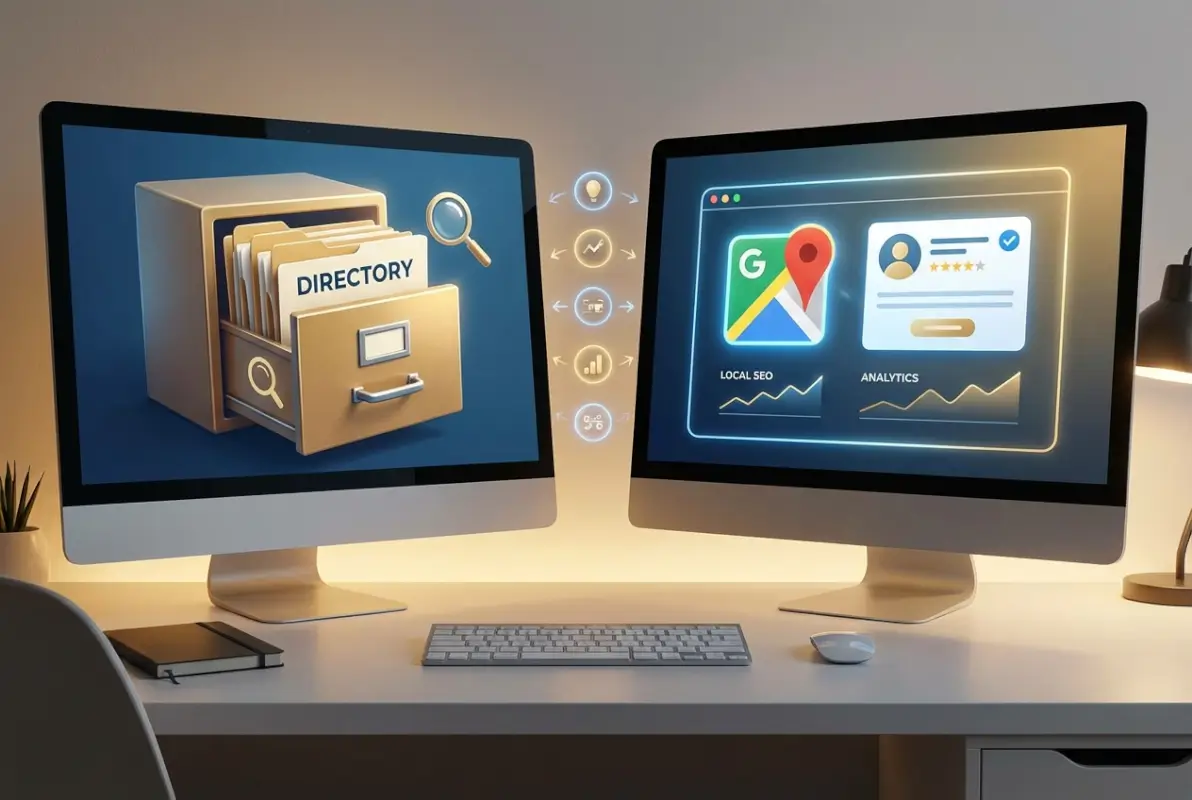
Is Google My Business a Directory? 5 Key Differences Explained for Local SEO
Opens a Google-translated copy of this article in a new tab.
The question “Is Google My Business a directory?” appears simple on the surface, but the answer reveals fundamental differences that dramatically affect how your business gets discovered online. After helping hundreds of local businesses navigate their online presence, I’ve noticed that treating Google Business Profile (the new name for Google My Business) like just another directory listing is one of the costliest mistakes business owners make.
Here’s what matters: Google Business Profile isn’t a traditional business directory—it’s a direct extension of Google’s search infrastructure. While directories like Yelp or Yellow Pages function as standalone databases where you create profiles, GBP integrates your business information directly into Google Search, Maps, and the broader Google ecosystem. This distinction isn’t semantic; it fundamentally changes how customers discover you and how you should approach optimization.
With google business directory generating over 427 impressions monthly and related terms like google my business directory and google local directory showing significant search interest, understanding this difference has never been more critical for local visibility.
TL;DR – Quick Takeaways
- GBP is not a directory – It’s Google’s business listing platform integrated directly into Search and Maps, unlike standalone directories
- Key differences matter – Ownership model, cost structure, discovery surfaces, and optimization approaches differ fundamentally from traditional directories
- Visibility advantage – GBP listings appear in Knowledge Panels, Local Pack, and Maps without users visiting a separate website
- Local SEO powerhouse – GBP directly influences Google’s local ranking algorithms in ways directories cannot match
- Both have value – Maximum local visibility requires an optimized GBP profile plus strategic directory listings
Understanding What Google Business Profile Actually Is
Google Business Profile (formerly Google My Business) represents your business’s official presence across Google’s entire ecosystem. When someone searches for your business name or a service you offer, GBP controls what they see—from your business hours and phone number to photos, reviews, and real-time updates.
The platform functions as a management dashboard where you control how your business appears in three primary Google surfaces: Search results (including the Knowledge Panel that appears on the right side), the Local Pack (the map with three business listings that appears for location-based searches), and Google Maps itself. This integration makes GBP fundamentally different from a google business directory listing on a third-party platform.
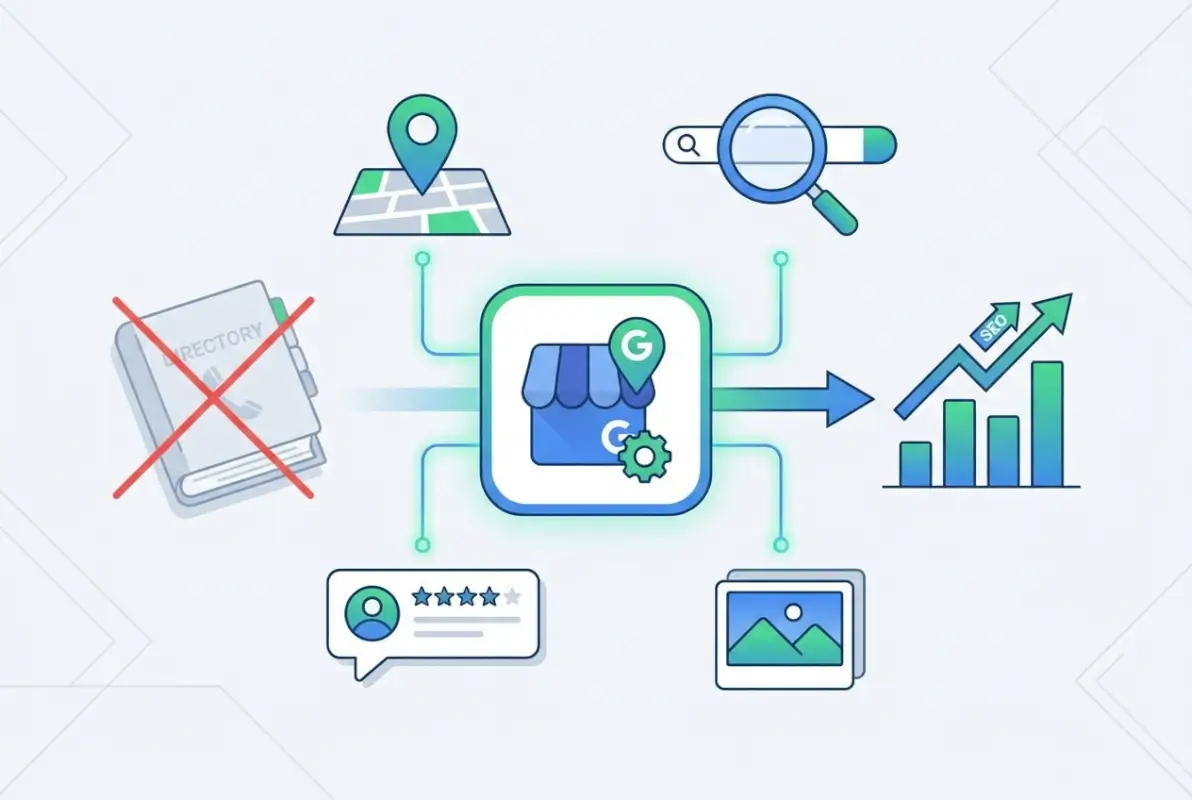
Think of it this way: when you create a Yelp listing, you’re adding your business to Yelp’s database. When you optimize your GBP, you’re directly feeding information into Google’s search algorithm—the same system that processes over 8.5 billion searches daily. The difference in reach and impact is substantial.
Setting up GBP requires verification through Google’s authentication system, typically via a postcard with a code sent to your physical address (though phone, email, and video verification exist for qualifying businesses). Once verified, you gain access to features that extend well beyond basic directory listings: Google Posts that appear in search results, direct messaging with customers, appointment booking integration, product catalogs, and detailed analytics about how people find and interact with your business.
What Defines a Traditional Business Directory
Traditional business directories operate as centralized databases—digital versions of the old Yellow Pages phone books. These platforms collect business information (name, address, phone, services) and organize it by category and location to help users find companies matching their needs.
Directories exist as independent websites or apps with their own user bases and traffic sources. Yelp, for example, attracts users specifically seeking peer reviews and business comparisons. Better Business Bureau focuses on trust and credibility ratings. TripAdvisor serves the hospitality and travel sector. Each directory creates its own ecosystem separate from search engines, though they may appear in search results.
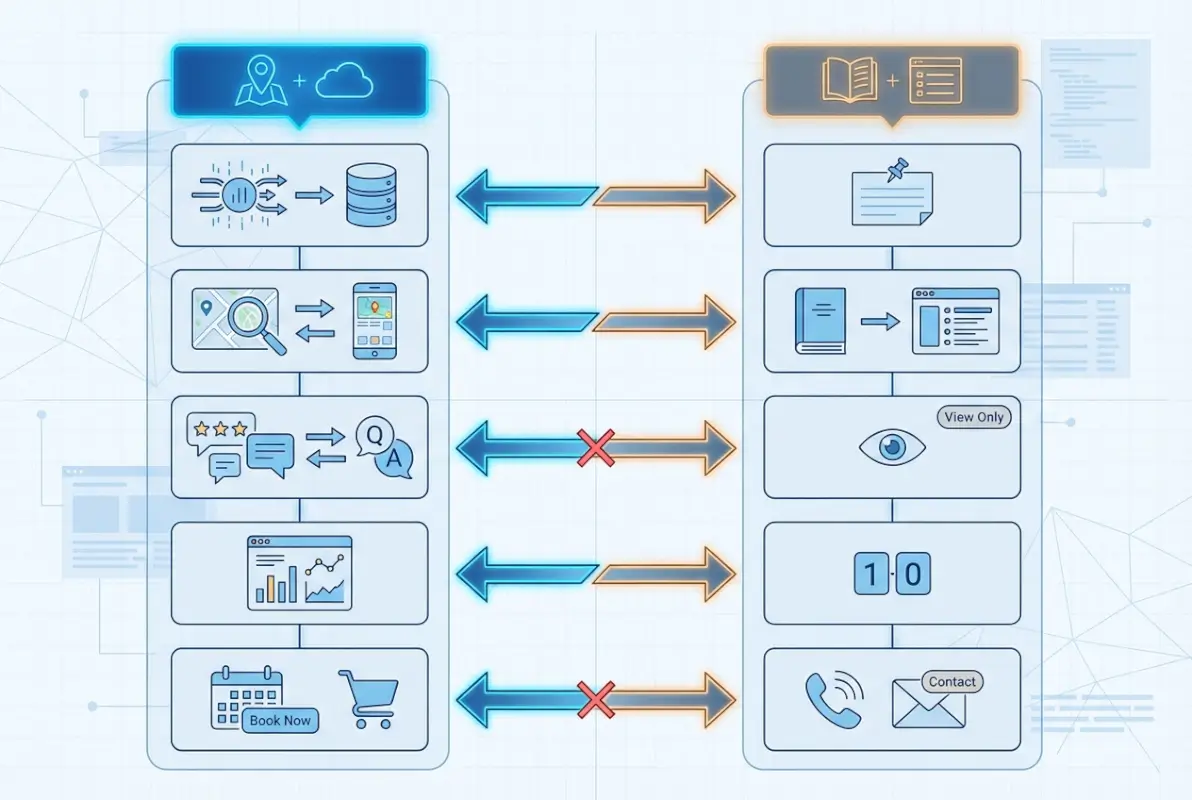
The key characteristic that separates directories from GBP: directories require users to visit their platform to access information. Even when a Yelp page ranks in Google search results, users must click through to Yelp’s website to see the full business profile. GBP displays your information directly in Google’s interface without requiring that additional click.
| Directory Type | Primary Focus | Best Use Case |
|---|---|---|
| General (Yelp, Yellow Pages) | Reviews & broad discovery | Restaurants, local services |
| Industry-Specific (Healthgrades, Avvo) | Professional credentials | Healthcare, legal services |
| Trust-Focused (BBB) | Business credibility | Building consumer confidence |
| Local/Geographic | Community connection | Chamber of Commerce, city guides |
Most directories employ freemium models: basic listings are free, but premium placements, enhanced profiles, or advertising packages cost monthly fees ranging from $20-$300+ depending on the platform and features. This creates a different economic dynamic compared to GBP’s entirely free model.
5 Key Differences Between Google Business Profile and Directories
Understanding these distinctions transforms how you approach local marketing. I remember consulting with a restaurant owner who spent $400 monthly on directory listings but neglected her GBP profile—she was getting zero calls from Google while competitors with optimized GBP listings dominated local search. The differences matter more than most businesses realize.
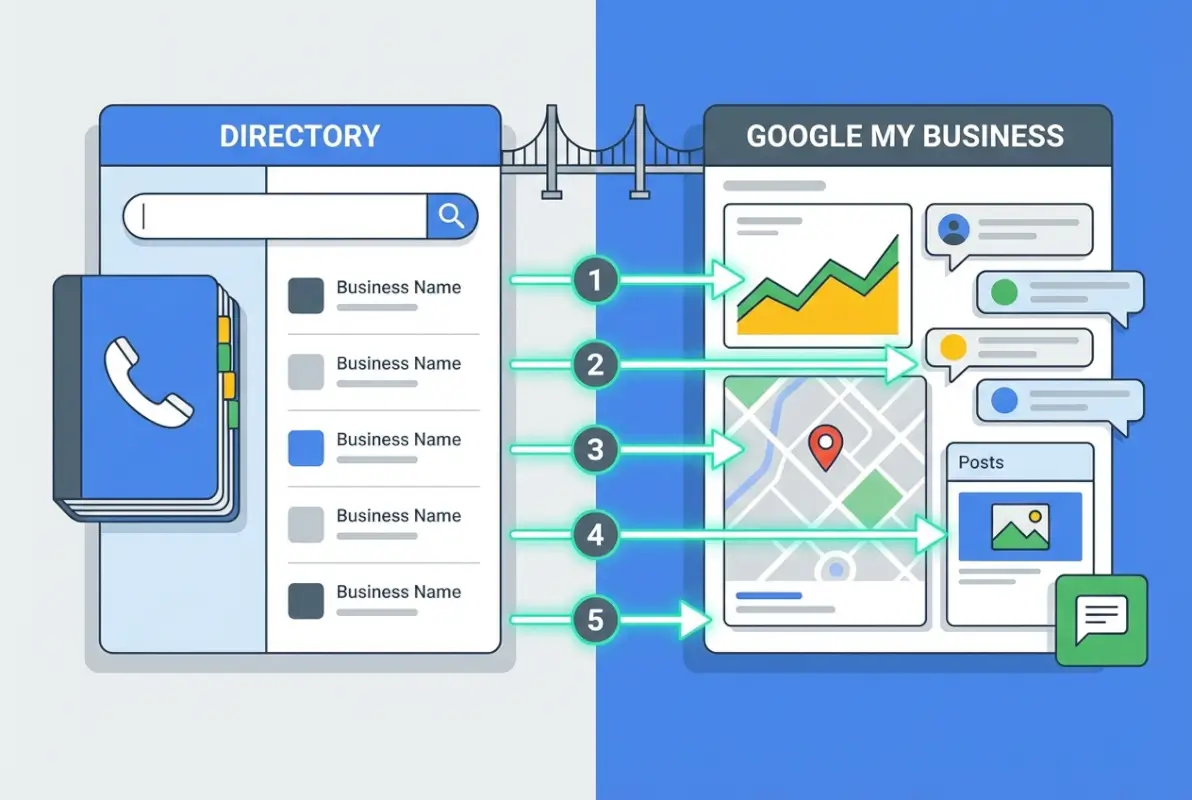
1. Ownership and Data Control
Google maintains ultimate control over GBP listings and how information displays. While you can claim and manage your profile, Google determines the interface, features, and display logic. They can (and do) pull in information from across the web to supplement your listing—sometimes adding details you didn’t provide or featuring photos from customers.
Traditional directories typically grant businesses more direct control over exactly what appears and how. Your Yelp listing won’t suddenly change format because of an algorithm update. This stability has advantages, though it comes with less integration into search behavior.
2. Cost Structure and Investment
GBP operates on a completely free model. Every feature—posts, photos, messaging, reviews, insights—costs nothing. This accessibility makes GBP essential for businesses of all sizes, especially those with limited marketing budgets.
Directories typically offer free basic listings with limited visibility, then charge for enhanced features: premium placement in search results, featured profiles with more content, removal of competitor ads from your listing page, or priority customer support. Monthly costs add up quickly when you’re maintaining profiles across multiple directories.
| Platform Type | Basic Listing | Premium Features |
|---|---|---|
| Google Business Profile | $0/month – Full features | $0/month – No tiers |
| Typical Directory | $0-25/month – Limited | $50-300/month |
3. Discovery Surfaces and User Experience
This difference fundamentally shapes customer behavior. GBP listings appear directly within Google’s search results, Maps interface, and Knowledge Panels. When someone searches “coffee shops near me,” they see a map with business listings immediately—no additional clicks required. Contact information, hours, reviews, and photos display right there in the search interface.
Directory listings require at least one extra step. Even if a Yelp page ranks #1 in organic search results, users must click through to Yelp’s website, wait for the page to load, and then view the business information within Yelp’s interface (along with Yelp’s ads and competitor suggestions).
The impact on conversion rates is significant. According to a study by Google’s Think with Google research platform, searches containing “near me” have increased over 900% in recent years, and the majority of those searchers visit a business within a day. GBP captures these high-intent searches at the exact moment of decision-making.
4. Features and Functionality
GBP offers unique capabilities tied directly to Google’s ecosystem: Google Posts (updates that appear in your Knowledge Panel), Q&A sections visible in search results, booking and appointment integration, product catalogs with photos and prices, and detailed performance insights showing exactly which searches triggered your listing.
Traditional directories excel at different features: advanced filtering by specific criteria (price range, amenities, dietary options), standardized comparison between competing businesses, community discussion forums, industry-specific data fields (for medical, legal, or technical services), and sometimes more robust review verification systems.
5. Impact on Local SEO and Rankings
GBP directly influences Google’s local search algorithm because it’s part of Google’s infrastructure. Your GBP optimization affects whether you appear in the Local Pack, how prominently you rank for location-based searches, and what information Google displays about your business.
Google uses three primary factors to determine local rankings: relevance (how well your GBP matches the search query), distance (proximity to the searcher), and prominence (your overall online reputation and visibility). GBP feeds directly into all three factors through your business categories, services, posts, reviews, and completeness.
Directory listings affect local SEO indirectly—through backlinks (if the directory allows them), citation consistency (when your NAP matches across multiple directories and your website), and by potentially ranking in organic search results themselves. But they don’t directly influence Google’s local pack algorithm the way GBP does.
How Google Business Profile Powers Local Search
The relationship between GBP and local SEO represents one of digital marketing’s most powerful connections. Unlike directory optimization, which primarily affects visibility on that specific platform, GBP optimization directly impacts your rankings in the world’s dominant search engine.
When Google determines which businesses to display for searches like “plumber near me” or “best Italian restaurant downtown,” it heavily weights your GBP data. The algorithm evaluates your selected business categories, service descriptions, geographic location, customer reviews (both quantity and quality), photo engagement, response rates to customer questions, and posting frequency.
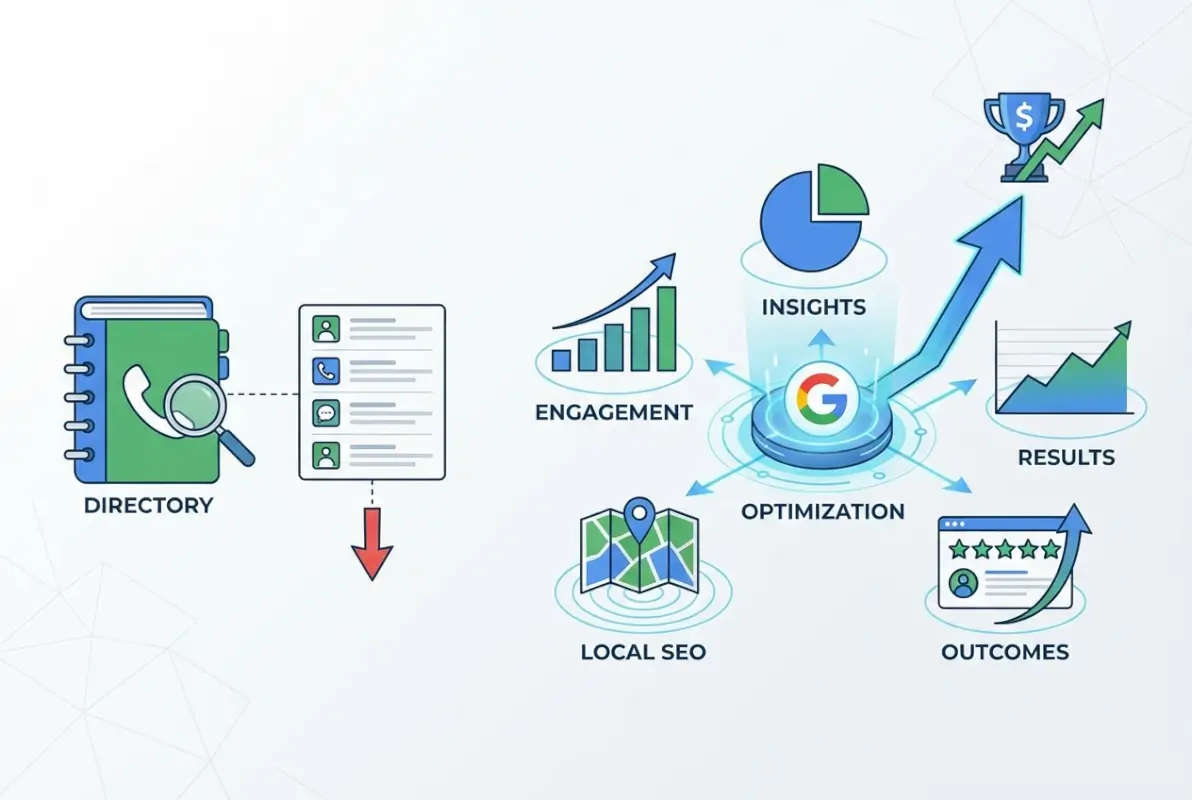
Proximity plays an obvious role—businesses closer to the searcher rank higher—but relevance and prominence often matter more. A well-optimized GBP 5 miles away can outrank a poorly optimized competitor across the street. I’ve seen this happen repeatedly with clients who invested time in comprehensive GBP optimization.
The completeness of your profile signals authority to Google. According to Google’s own Business Profile support documentation, businesses with complete information are twice as likely to be considered reputable by consumers. Google rewards this completeness with better visibility.
Review signals carry particular weight. Recent, positive reviews boost rankings, while review velocity (how frequently you receive new reviews) and response rates (how often and how quickly you respond) also factor into visibility. GBP reviews influence rankings more than reviews on third-party directories because they’re native to Google’s ecosystem.
Optimizing GBP for Maximum Local Visibility
Effective GBP optimization goes far beyond filling out basic information. Start with these high-impact strategies:
Category selection determines which searches trigger your listing. Choose your primary category carefully—it carries the most weight—then add secondary categories that accurately describe your services. A restaurant might select “Italian Restaurant” as primary with “Pizza Restaurant” and “Wine Bar” as secondaries.
Service descriptions should comprehensively list what you offer using natural language that matches how customers search. Don’t just list “plumbing”—specify “emergency plumbing repair,” “water heater installation,” “drain cleaning,” and other specific services people actually search for.
Visual content dramatically impacts engagement. Businesses with photos receive 42% more requests for directions and 35% more clicks to their websites compared to businesses without photos. Upload high-quality images of your storefront, interior, products, team, and work samples. Add new photos monthly to signal active management.
Google Posts function like social media updates that appear directly in your Knowledge Panel. Create posts weekly highlighting offers, events, new products, or company news. Posts remain visible for seven days (or until the event date for event posts), so consistency matters more than perfection.
Review generation and management should follow a systematic process. Request reviews from satisfied customers (via email or text, never through incentives), respond to all reviews within 24-48 hours, address concerns mentioned in negative reviews professionally, and thank customers for positive feedback. This engagement signals active customer service to both Google and potential customers.
| Optimization Element | Impact on Rankings | Time Investment |
|---|---|---|
| Complete business information | Very High | 1-2 hours initially |
| Customer reviews | Very High | 15-30 min weekly |
| Quality photos | High | 1 hour monthly |
| Regular posts | Medium | 20 min weekly |
| Q&A engagement | Medium | 10 min weekly |
When Directories Still Matter (And Which Ones)
Despite GBP’s dominance, traditional directories retain value for specific business goals. The key is strategic selection rather than trying to maintain listings everywhere.
Industry-specific directories often provide better targeting than general platforms. A law firm benefits more from Avvo and FindLaw than from general directories. Restaurants should prioritize OpenTable and TripAdvisor. Healthcare providers need Healthgrades and Zocdoc. These specialized platforms attract users with high intent specific to your industry.

Trust-building directories like Better Business Bureau offer credibility signals that matter for certain industries and customer demographics. While BBB listings don’t directly boost rankings like GBP does, displaying an A+ BBB rating can significantly impact conversion rates for service businesses where trust concerns are paramount (contractors, financial services, healthcare).
Local directories connected to chambers of commerce or city-specific guides provide community visibility that complements your GBP presence. These often carry local SEO value through geographically relevant citations and links.
The Yelp question deserves special attention since it’s the most commonly debated directory. For restaurants, hospitality, and service businesses where consumers actively seek peer reviews, maintaining an active Yelp presence matters. Yelp’s user base specifically seeks detailed reviews and business comparisons—behavior that differs from Google Search’s immediate-answer focus. However, Yelp should complement rather than replace GBP optimization.
The Citation Consistency Factor
One often-overlooked value of directories: they create citations (mentions of your business name, address, and phone number) across the web. Google uses these citations to verify your business information and build confidence in displaying your listing.
When your NAP matches exactly across GBP, your website, Yelp, Yellow Pages, and industry directories, Google gains confidence in that data. Inconsistent information (different phone numbers, slight address variations, name discrepancies) creates confusion that can hurt rankings.
According to research by Moz’s Local SEO Learning Center, citation consistency remains one of the top local ranking factors. This makes directory listings valuable not for their direct traffic, but for their role in reinforcing your business information across the web.
Building a Comprehensive Local Visibility Strategy
The most effective approach combines GBP optimization with strategic directory presence. Think of GBP as your foundation—it’s non-negotiable for any business seeking local visibility—and directories as supplementary channels that reinforce your presence and reach niche audiences.
Start by thoroughly optimizing your GBP profile following the strategies outlined earlier. This should receive 80% of your local marketing attention. Then identify 3-5 directories that genuinely matter for your industry and audience, ensuring your information remains perfectly consistent across all platforms.
Monthly maintenance should include: reviewing and responding to new reviews on GBP and key directories, adding fresh photos to GBP, creating at least one Google Post, monitoring and answering questions in your GBP Q&A section, and checking for any duplicate or incorrect listings that might confuse customers or dilute your presence.
For businesses operating in competitive local markets, combining GBP optimization with strategic directory presence creates multiple touchpoints where potential customers might discover you. Some will find you through Google search (the majority), others through Yelp browsing, and others through industry-specific directory searches. Each platform serves different user behaviors and search patterns.
Tools like successful directory website business frameworks can even help you understand how directories function from the owner’s perspective, revealing additional optimization opportunities for your own listings.
Frequently Asked Questions
Is Google My Business now called Google Business Profile?
Yes, Google rebranded Google My Business to Google Business Profile. The name change reflects the platform’s evolution from a business management tool to a comprehensive profile system integrated across Google Search, Maps, and other Google services. All functionality remains the same—only the branding changed.
Can I use Google Business Profile without a physical location?
Yes, service-area businesses without physical storefronts can use GBP by configuring a service area listing. This lets you specify geographic regions you serve (by city, zip code, or radius) without displaying a street address publicly. Examples include plumbers, contractors, consultants, and delivery services.
How long does Google Business Profile verification take?
Verification typically takes 5-7 business days for postcard verification (the most common method). Google mails a postcard with a verification code to your business address. Phone, email, and instant verification options exist for some businesses and can complete within minutes to hours if you qualify.
Should I pay for premium directory listings or focus on free GBP?
Prioritize optimizing your free GBP profile first—it delivers the highest return on investment for most local businesses. Only consider paid directory listings after your GBP is thoroughly optimized and only on platforms where your target customers actively search (industry-specific directories or platforms like Yelp for restaurants).
How do reviews on GBP affect my rankings differently than Yelp reviews?
GBP reviews directly influence Google’s local search algorithm, affecting whether you appear in the Local Pack and how prominently you rank. Review quantity, quality, recency, and response rates all factor into rankings. Yelp reviews primarily affect visibility within Yelp’s platform and provide indirect SEO benefits through user-generated content.
What’s the biggest mistake businesses make with Google Business Profile?
The most common mistake is treating GBP as a “set it and forget it” listing. GBP requires ongoing management—adding photos monthly, creating weekly posts, responding to reviews promptly, and keeping information current. Businesses that actively maintain their profiles consistently outrank competitors with static listings.
Do I need to maintain consistent information across GBP and directories?
Absolutely. Inconsistent NAP (Name, Address, Phone) information across platforms confuses Google’s algorithm and can hurt your local rankings. Ensure your business name, address, phone number, and website URL match exactly across GBP, your website, and all directory listings.
Can Google Business Profile help my business rank for non-local searches?
GBP primarily influences local search results (searches with local intent like “near me” or city-specific queries). For broader, non-local searches, your website’s traditional SEO matters more. However, a strong GBP presence can help you appear in branded searches and provide credibility signals that indirectly support overall online visibility.
How often should I post updates to my Google Business Profile?
Aim for at least one post per week. Google Posts remain visible for seven days, so weekly posting maintains consistent fresh content in your Knowledge Panel. Posts about offers, events, products, or company news help demonstrate active business management and provide customers with timely information.
What types of photos perform best on Google Business Profile?
Exterior photos showing your business from different approaches help customers find you. Interior photos showcase your environment and atmosphere. Product or service photos demonstrate what you offer. Team photos build personal connection. Cover photos should highlight what makes your business unique. Businesses with diverse, high-quality photos receive 42% more direction requests than those without.
Ready to Dominate Local Search?
Understanding that Google Business Profile isn’t just another directory—but rather your direct connection to Google’s search ecosystem—changes everything about your local marketing strategy.
Start by thoroughly optimizing your GBP profile today, then build strategic directory presence that reinforces your information and reaches niche audiences.
The distinction between Google Business Profile and traditional directories matters because it determines where you invest your limited time and resources. GBP’s direct integration with Google Search and Maps makes it the foundation of local visibility—the platform that captures customers at the exact moment they’re searching for businesses like yours.
Traditional directories still serve valuable purposes: they reach users who prefer platform-specific browsing, they provide industry-specific filtering and information, and they create citation consistency that reinforces your business data across the web. But they should complement rather than replace your GBP optimization efforts.
The businesses that succeed in local search are those that understand these platforms deeply and optimize strategically—investing most heavily in GBP while maintaining consistent, strategic presence on relevant directories. This approach maximizes visibility regardless of where potential customers begin their search for businesses like yours.
What will you do differently now that you understand how GBP differs from traditional directories? The opportunity to improve your local visibility starts with recognizing that Google Business Profile deserves priority attention as your primary local marketing tool, not just another listing to maintain alongside dozens of directory profiles.
Was this article helpful?