6 Proven Ways to Monetize a Directory Website (Earn $5K/Month)

Generating summary...
Most directory owners leave serious money on the table—not because their site lacks traffic, but because they rely on a single revenue stream that caps out quickly. Premium listings alone won’t get you to $5K/month if your niche is moderately sized. Advertising revenue flatlines when you hit a traffic ceiling. The real insight? The most successful directory sites stack multiple monetization methods, each reinforcing the others. A listing vendor who pays for premium placement is also a prime candidate for lead generation fees; a user who values your curated content will pay for ad-free browsing and deeper analytics. When you engineer this kind of revenue architecture from the start, you stop chasing one-off paydays and start building a compounding income engine that scales with both traffic and vendor relationships. This guide walks you through six proven monetization models—premium listings, subscriptions, lead generation, advertising, hybrid bundles, and data services—and shows you how to layer them for sustainable growth.
TL;DR – Quick Takeaways
- Stack revenue models – Directories that combine premium listings, memberships, and lead gen consistently outperform single-stream sites
- Premium listings deliver fast cash – Tiered plans (free/basic/featured) create immediate revenue while keeping the directory accessible
- Subscriptions build predictable income – Monthly or annual memberships unlock recurring revenue and higher lifetime value per user
- Lead generation monetizes outcomes – Charge for qualified inquiries or referrals instead of just page views
- Advertising scales with traffic – Display ads, sponsorships, and category placements grow as your audience grows
- Data services unlock enterprise revenue – API access, market insights, and analytics dashboards appeal to power users willing to pay premium rates
Premium Listings & Featured Placements: The Foundation of Direct Revenue
Premium listings are the workhorse of directory monetization because they solve a real problem for vendors: visibility in a crowded marketplace. Your directory already ranks listings—premium tiers simply let vendors pay to jump the queue, add richer media, or unlock analytics that prove ROI. The psychology is straightforward. A plumber competing with fifty other local plumbers will pay $50/month if it means appearing in the top three slots when homeowners search “emergency plumber near me.” The key is structuring tiers so each step up delivers measurable value, not just cosmetic badges.

Start with three pricing tiers: free (basic name/link/category), premium (enhanced profile with photos, hours, social links, and priority ranking), and featured (top placement, badge, homepage rotation, and click analytics). Price the premium tier at what a single lead is worth in your vertical—if one customer booking is worth $200 to a vendor, $40/month is a no-brainer. Featured placements can command 2-3× the premium price because they guarantee visibility on high-traffic pages. I’ve seen local service directories charge $100/month for featured status in competitive categories and maintain 80% renewal rates because the ROI is undeniable. Creating a directory in WordPress is fast with tools like TurnKey Directories, which lets you configure tiered listing plans out of the box without custom dev work.
Rotation schedules keep featured placements fair and increase inventory. Instead of selling one permanent top slot per category, rotate four vendors through the featured position every 24 hours. Now you can sell four featured spots instead of one, quadrupling revenue per category. Category-level placements also work: a software directory might offer “featured in the CRM category” for $75/month or “homepage hero rotation” for $150. Pricing strategy should reflect traffic and conversion data—if your SEO category gets 10,000 monthly visits and converts at 3%, vendors will pay more than for a niche category with 500 visits. Track which placements drive clicks and inquiries, then use that data in your sales pitch (vendors love proof). According to Statista research on local search advertising, businesses increasingly budget for paid directory placements because they deliver higher-intent traffic than social ads.
Clearly define what each tier includes. Don’t bury benefits in fine print. A simple comparison table on your pricing page (Free: basic listing, no analytics; Premium: photos, priority rank, monthly stats; Featured: top placement, badge, weekly reporting) reduces friction and speeds decisions. Vendors need to see exactly what they’re paying for. Transparency builds trust, and trust drives conversions. Digital marketing software directories often succeed by showing side-by-side tier comparisons that highlight how premium features directly increase lead volume.
Subscriptions & Memberships: Building Recurring Revenue Engines
Subscriptions flip the script from one-time payments to predictable monthly income. A membership model works when your directory offers ongoing value beyond a static listing—think exclusive content, early access to new vendors, ad-free browsing, or premium analytics dashboards. The goal is to create a tier that users or vendors want to stay subscribed to month after month. This requires genuine benefits, not just a paywall on basic features. I remember launching a membership tier that bundled API access and weekly market reports; renewal rates hit 75% in the first year because power users couldn’t get that data anywhere else.
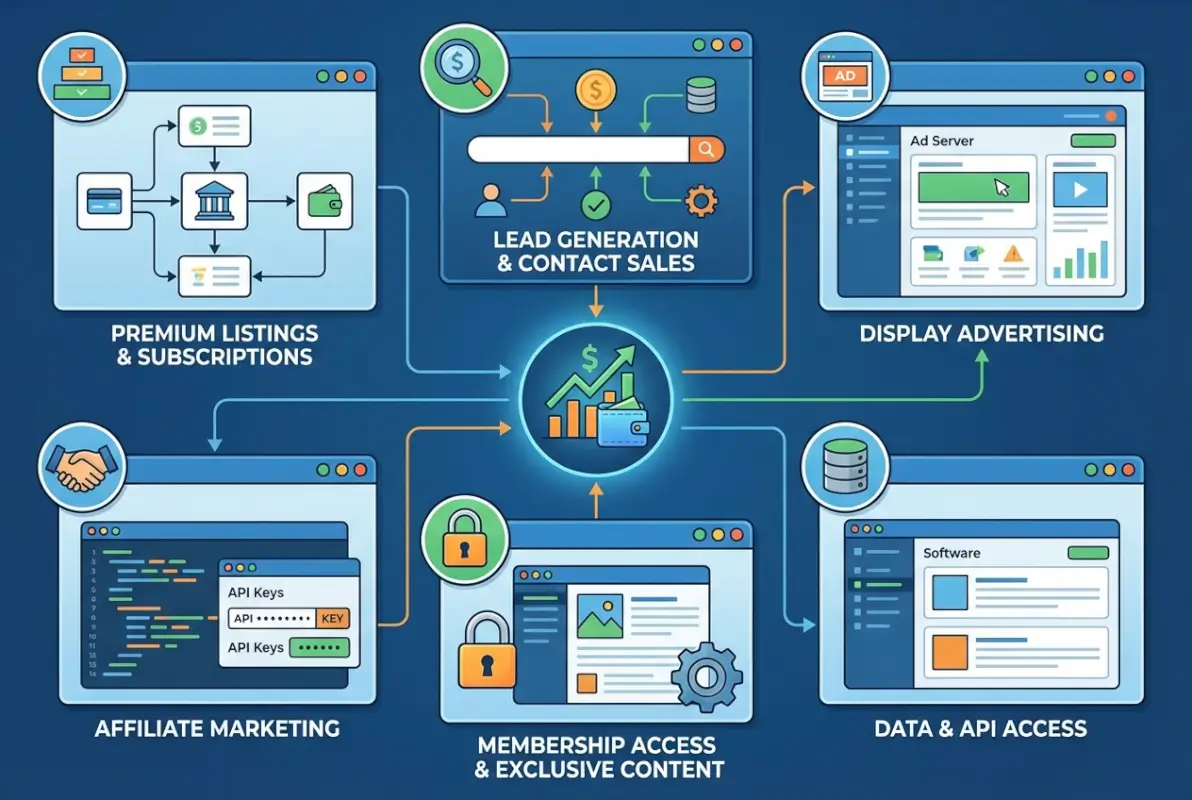
Design two membership tracks: one for end users (consumers searching the directory) and one for vendors (businesses listed in the directory). User memberships might include ad-free browsing, saved searches, email alerts when new listings match their criteria, and priority support. Vendor memberships can bundle analytics (monthly traffic reports, lead sources, competitor benchmarking), API access to update listings programmatically, and enhanced profile features not available in free tiers. Monthly pricing for user memberships typically ranges $5-$15; vendor memberships can command $50-$200/month depending on the value delivered. According to Forbes analysis of recurring revenue models, SaaS-style subscriptions in vertical directories often achieve lifetime values 5-7× higher than one-time listing fees.
Offer both monthly and annual plans, with annual plans discounted 15-20%. This locks in cash flow and reduces churn. Monthly plans give flexibility to new subscribers hesitant to commit, but annual plans are where you build stability. You can also bundle premium listing fees into a membership—e.g., “Vendor Pro Membership: $99/month includes premium listing, analytics dashboard, and three featured placements per quarter.” Bundling increases perceived value and simplifies the decision (one price, multiple benefits). Proven ways to earn money with an online business directory almost always include subscription tiers because they create compounding revenue as your member base grows.
Set usage thresholds that unlock additional benefits. For example, vendors who renew for three consecutive months get access to a quarterly market insights report; users who maintain membership for six months unlock early access to new directory features. Gamifying retention with milestones encourages long-term commitment. Track engagement metrics (login frequency, feature usage, support tickets) and reach out proactively to members who haven’t logged in recently—sometimes a simple “here’s what you’re missing” email prevents cancellations. Platforms like TurnKey Directories make it easy to configure membership tiers and automate renewal reminders, so you can focus on delivering value instead of managing spreadsheets. Research from Pew Research on subscription models shows that users who engage with exclusive content in the first 30 days are 60% more likely to renew, so front-load value immediately after sign-up.
Balance user value with vendor value. If your membership benefits are so generous that free users feel locked out, you’ll hurt organic growth. Keep core search and browsing free; reserve premium features (analytics, exports, API, reports) for paying members. This freemium approach maximizes reach while monetizing power users. Finding qualified professionals in specialized directories often involves premium filters or verified badges—features users will pay for when they need trust and speed. The sweet spot is when 5-10% of your user base subscribes, generating steady income without alienating the 90% who use the directory for free.
Lead Generation & Affiliate Partnerships
Lead generation transforms your directory from a static catalog into an active sales channel for listed businesses. Instead of charging only for placement, you monetize the outcomes your directory delivers—qualified phone calls, quote requests, booking forms, or email inquiries. Many local service directories (plumbers, contractors, wedding vendors) operate primarily on a pay-per-lead model, charging $10–$150 per qualified lead depending on the industry’s lifetime customer value. You capture visitor intent through prominent “Get a Quote” or “Request Info” buttons on each listing, then route those leads to the business and bill monthly or per-lead.
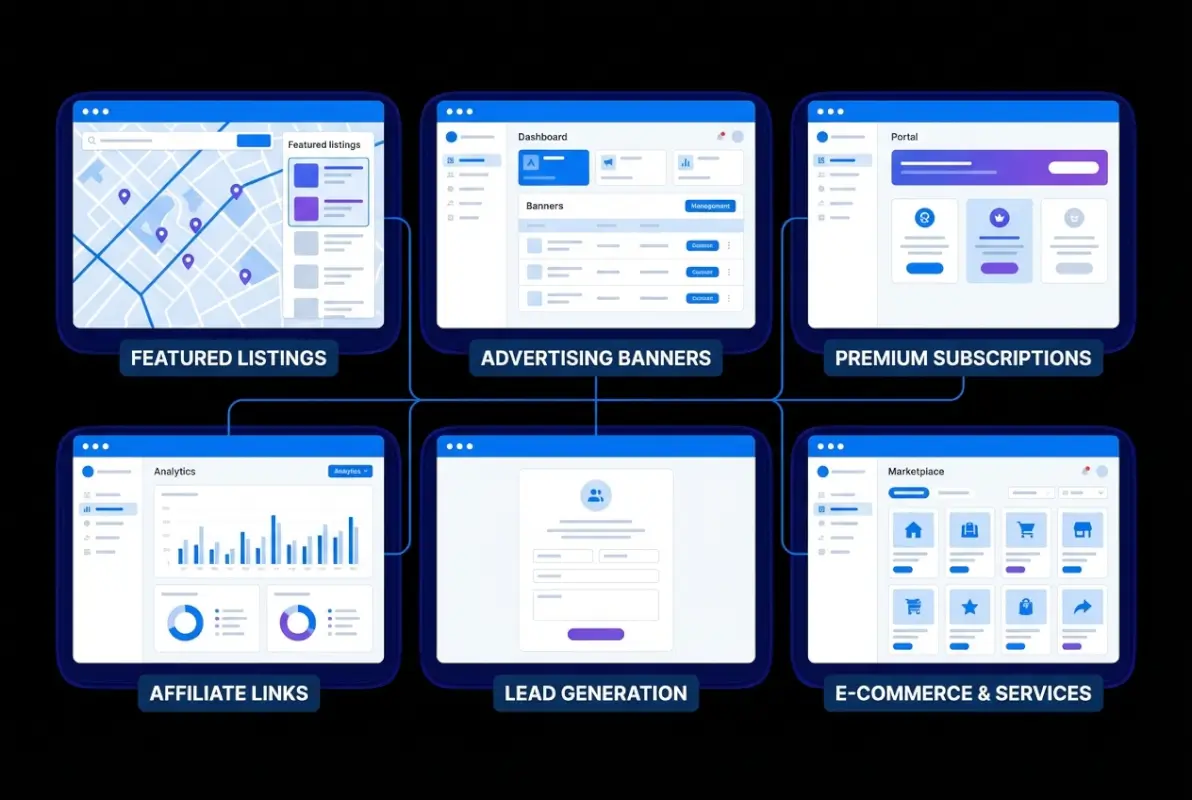
Affiliate partnerships extend this revenue stream beyond your own listings. If your directory covers restaurants, you can embed OpenTable or Resy reservation widgets and earn a commission on every booking made through your site. Software directories integrate with affiliate networks like CJ, ShareASale, or Impact to earn 10–30% recurring commissions when visitors sign up for SaaS tools listed in your categories. Travel and accommodation directories tap into Booking.com, Airbnb, or Viator affiliate programs, earning 3–5% on bookings. The key is relevance: only promote affiliate offers that genuinely serve your audience’s intent, or you risk eroding trust and click-through rates.
To maximize lead and affiliate revenue, implement clear attribution tracking using UTM parameters, conversion pixels, and dedicated tracking dashboards (Google Analytics 4, Plausible, or specialized lead-management platforms like CallRail or LeadsBridge). Publish transparent lead-quality standards—define what counts as a qualified lead (e.g., valid contact info, specific service request, geographic match) and offer refunds or credits for spam or duplicates. Test different lead-capture formats: inline forms on listing pages typically convert 2–5%, while exit-intent pop-ups and comparison tools (“Compare 3 Quotes”) can lift conversions by 20–40%. Always A/B test placement, copy, and call-to-action wording to optimize your cost-per-acquisition and revenue per visitor.
| Revenue Stream | Typical Rate | Best For | Example Platforms |
|---|---|---|---|
| Pay-per-lead (local services) | $10–$150 per lead | Home services, contractors, legal, financial | LeadsBridge, CallRail, custom forms |
| SaaS affiliate commissions | 10–30% recurring | Software, tools, B2B platforms | CJ, ShareASale, Impact, PartnerStack |
| Booking/reservation commissions | 3–5% per booking | Travel, hospitality, dining, events | Booking.com, Airbnb, Resy, Viator |
| E-commerce affiliate | 2–10% per sale | Product directories, reviews, gear guides | Amazon Associates, Awin, Rakuten |
Blending lead generation with affiliate partnerships creates a diversified funnel: visitors who don’t submit a lead form may still click an affiliate link, and businesses that receive high-quality leads are more likely to upgrade to premium listings. Track each revenue stream separately in your analytics to identify which verticals or listing categories drive the highest per-visitor value, then double down on content, SEO, and user experience in those areas. Over time, this dual approach can account for 30–50% of total directory revenue, especially in high-intent niches where users arrive ready to book, buy, or hire.
Advertising, Sponsorships & Display
Display advertising remains one of the most scalable directory monetization methods because revenue grows directly with traffic. Once you cross 10,000 monthly pageviews, you can join ad networks like Google AdSense, Mediavine, or Ezoic to serve programmatic ads in standard IAB slots (leaderboard, sidebar, in-content rectangles). Earnings typically range from $5–$25 RPM (revenue per thousand impressions) depending on niche, geography, and ad density. For directories with highly engaged audiences in lucrative verticals—finance, SaaS, legal, health—direct-sold sponsorships and category exclusives often yield 3–5× higher CPMs than programmatic fill, making them a priority once you have consistent traffic and audience demographics to share with potential sponsors.

Sponsorship packages bundle visibility across multiple touchpoints: a sponsor logo in the header or sidebar of a specific category page, a featured callout in your weekly newsletter, a dedicated mention in a buyer’s guide or comparison article, and social-media shout-outs. Pricing these packages requires understanding your audience’s value to the sponsor—if your directory attracts 5,000 SaaS founders monthly, a project-management tool might pay $500–$2,000/month for category sponsorship, whereas a generic consumer brand would pay far less. Offer tiered packages (Bronze/Silver/Gold) with escalating benefits, and cap the number of sponsors per category to preserve exclusivity and user experience. Always disclose sponsored placements clearly to maintain editorial credibility and comply with FTC guidelines.
Beyond static banners, explore native and sponsored-content formats that integrate seamlessly into your directory’s editorial flow. Sponsored listings—where a business pays for an “official partner” badge or a highlighted card at the top of search results—feel less intrusive than traditional display ads and often command premium rates ($200–$1,000/month per placement). Sponsored blog posts, case studies, or how-to guides (clearly labeled “Sponsored” or “Partner Content”) provide value to readers while generating $500–$3,000 per piece for high-quality, niche-relevant content. Track viewability, click-through rate, and conversion lift for sponsors using tools like Google Tag Manager and shared analytics dashboards, so you can demonstrate ROI and secure renewals or upsells.
To optimize ad revenue without degrading user experience, adopt a “user-first” ad strategy: limit ad density to 1–2 units above the fold, use lazy loading to improve page speed, avoid auto-play video or interstitials on mobile, and run regular A/B tests to find the sweet spot between revenue and bounce rate. Tools like Ezoic’s AI-driven layout testing or Mediavine’s video player can incrementally boost RPMs by 10–30% without adding more ad slots. Monitor Core Web Vitals (LCP, CLS, FID) in Google Search Console to ensure ads don’t tank your SEO rankings. If display revenue plateaus, consider hybrid models—such as offering an ad-free experience to paid members—to capture value from both advertisers and privacy-conscious users willing to pay for a cleaner interface.
Hybrid Models, Bundling & Data Services
The highest-earning directories rarely rely on a single revenue stream; instead, they combine two or more models into a cohesive hybrid approach that maximizes value extraction at every stage of the user journey. A classic hybrid: free basic listings to grow the database and SEO footprint, premium paid listings ($50–$200/month) that unlock analytics and priority placement, and lead-generation fees ($20–$100 per qualified inquiry) on top. This three-tier funnel lets you monetize businesses at different growth stages—startups claim free listings, growing companies upgrade for visibility, and established players pay for performance. Bundling works because it reduces decision fatigue: a $99/month “Pro Plan” that includes a featured listing, five lead credits, and quarterly analytics reports feels more valuable than pricing each component à la carte.

Data services represent an emerging, high-margin revenue layer for mature directories with rich, structured datasets. If your directory tracks 10,000+ listings with metadata—industry tags, founding dates, employee counts, tech stacks, customer reviews—you can package anonymized market insights, trend reports, or API access for researchers, investors, journalists, and competitive-intelligence teams. A quarterly industry report might sell for $500–$2,500; white-labeled data feeds or API subscriptions can command $200–$1,000/month from agencies, consulting firms, or SaaS platforms building integrations. Because data services require minimal incremental cost once your database is clean and documented, gross margins often exceed 80%, making them one of the most profitable add-ons for established directories.
To build a successful hybrid model, map your revenue streams to distinct user segments and lifecycle stages. Use a tiered pricing table (see below) to clarify what each plan includes, and design upgrade prompts—”Get 3× more leads with Premium” or “Unlock market insights”—that appear contextually when a user hits a feature limit or views competitor listings. Offer annual discounts (15–20% off) to improve cash flow and reduce churn. Test bundles in soft launches or beta cohorts before rolling out site-wide, and instrument conversion funnels in Mixpanel, Amplitude, or PostHog to identify where users drop off or hesitate. Iterate pricing and packaging quarterly based on customer feedback, competitor benchmarks, and unit economics (CAC, LTV, payback period).
| Plan Tier | Pricing | Included Features | Target Segment |
|---|---|---|---|
| Free | $0 | Basic listing, organic search visibility | Startups, hobbyists, initial database growth |
| Pro | $99/mo | Featured badge, 5 lead credits, basic analytics | Growing businesses seeking visibility |
| Premium | $249/mo | Top placement, unlimited leads, advanced analytics, API access | Established companies, lead-gen focus |
| Enterprise / Data | Custom | White-label reports, bulk API, dedicated support | Agencies, investors, research teams |
Finally, communicate the value of bundled and hybrid offerings through case studies, testimonials, and ROI calculators embedded in your pricing page. Show a real example: “Company X upgraded to Premium, received 47 qualified leads in 90 days, and closed $12,000 in new business.” Transparency builds trust and shortens the sales cycle. Hybrid models and data services require more upfront effort to design and operationalize, but they unlock higher ARPU (average revenue per user) and create defensible moats—competitors can copy your listings, but replicating a rich, integrated dataset and multi-sided monetization engine takes years.
Frequently Asked Questions
What is the quickest way to start monetizing a new directory site?
Start with premium listings and featured placements. These require minimal infrastructure, align with user expectations, and generate immediate revenue when businesses see value in enhanced visibility. A simple three-tier pricing model (free, basic, premium) is the fastest path to first revenue.
How do I set pricing for premium listings without driving away listings?
Research competitor directory pricing in your niche, then set your premium tier 20-30% lower initially. Offer free basic listings to build volume, then use engagement metrics and traffic data to justify premium pricing. Grandfather early adopters and raise prices gradually as traffic grows.
Can a directory earn money if it has many free listings?
Absolutely. Free listings build inventory and user trust, while premium features, lead generation, and advertising monetize the audience. Many successful directories use a freemium model where 5-15% of listings upgrade to paid tiers while affiliates, ads, and sponsorships monetize the free segment.
What mix of revenue streams tends to work best for niche directories?
Combine premium listings (40-50% of revenue), lead generation or affiliates (30-40%), and advertising or sponsorships (10-20%). This hybrid model balances direct monetization of listings with downstream revenue from user actions, reducing dependency on any single stream and maximizing per-visitor value.
How do I measure the success of a monetization strategy for a directory?
Track revenue per visitor, conversion rate from free to paid listings, average revenue per listing, and subscriber lifetime value. Set monthly revenue targets, monitor churn rates, and test pricing changes quarterly. A healthy directory converts 5-15% of free listings and generates $2-10 per monthly visitor.
Should I require payment upfront or allow trial periods for premium listings?
Offer a 14-30 day free trial or money-back guarantee for first-time premium buyers. This reduces friction, builds trust, and lets businesses see tangible results before committing. Once you establish brand credibility and proven ROI, transition to upfront annual plans with discounts.
How much traffic do I need before monetizing a directory website?
You can start monetizing immediately with premium listings, even with minimal traffic. For advertising and affiliate revenue, aim for at least 5,000-10,000 monthly visitors to attract sponsors. Focus early efforts on listing revenue and lead generation, which scale with directory quality rather than pure traffic volume.
What are the best platforms or tools to build a monetizable directory?
WordPress with directory plugins like GeoDirectory or DirectoryPress, no-code tools like Airtable with SpreadSimple, or dedicated platforms like Brilliant Directories work well. Choose based on your technical skills, customization needs, and preferred payment integrations. Prioritize platforms with built-in monetization features and membership support.
Start Monetizing Your Directory Today
Building a profitable directory website is no longer a matter of chance—it’s a strategic process grounded in proven monetization models. You now have a complete framework spanning premium listings, subscriptions, lead generation, advertising, and hybrid approaches. The key is to start simple, validate demand, then layer additional revenue streams as your audience and listing inventory grow.
Most successful directory owners begin with one or two low-friction models—typically premium listings combined with either affiliates or display ads—and expand from there. This approach lets you test pricing, refine your value proposition, and build trust with both users and businesses before introducing more complex offerings like data services or multi-tier memberships.
Your next step is straightforward: choose the monetization model that best aligns with your niche and current traffic level. If you’re just starting out, implement a free-to-premium listing structure this week. If you already have traction, add lead generation or a subscription tier within the next thirty days. The sooner you start collecting revenue, the sooner you’ll have real data to guide optimization.
Ready to Hit $5K/Month?
The directories earning consistent five-figure monthly revenue all share one trait: they combine multiple monetization models and obsessively track what works. Pick your first revenue stream, set a 90-day target, and start testing today.
Review the external resources linked throughout this guide for detailed case studies, pricing calculators, and implementation templates. Your directory has the potential—now it’s time to unlock it.
Remember, monetization is an iterative journey. What works for a local service directory may differ from a B2B software directory or a travel resource hub. Test your pricing, listen to your users, and don’t be afraid to adjust. The most profitable directories evolve their revenue mix quarterly based on performance data and market feedback.
Start small, measure relentlessly, and scale what works. Your $5K/month directory is closer than you think.
Was this article helpful?