
7 Best Local Business Directories in USA for Maximum Visibility (2025-2026 Guide)
Opens a Google-translated copy of this article in a new tab.
Your business could be invisible to thousands of potential customers right now—not because you’re doing something wrong, but because you’re simply not showing up where they’re looking. In an era where 87% of consumers research businesses online before making purchase decisions, local business directories in the USA have become the digital storefronts that can make or break your visibility.
What most business owners miss is that Google isn’t the only game in town anymore. While everyone obsesses over their Google rankings, smart businesses are quietly dominating multiple local business directories USA, creating what I call “omnipresence marketing”—appearing everywhere your customers search, regardless of platform. This multi-platform approach doesn’t just boost your SEO; it builds the kind of digital credibility that turns browsers into buyers.
The landscape of business directories in USA has evolved dramatically. According to BrightLocal’s 2025 local SEO research, businesses with consistent directory presence across 7+ platforms see 64% higher click-through rates compared to those relying on a single listing. The best local business directories 2025 strategies aren’t about being everywhere—they’re about being in the right places with optimized, consistent information.
TL;DR – Quick Takeaways
- Multi-platform presence wins: Businesses on 7+ directories see 78% better local visibility than single-platform competitors
- NAP consistency is non-negotiable: Inconsistent Name, Address, Phone data across directories tanks your local SEO rankings
- Google My Business remains foundational: But it’s only 30% of the equation—Yelp, Bing Places, and niche directories fill critical gaps
- Review management drives conversion: 92% of consumers trust businesses with verified listings and active review responses
- Free options deliver serious ROI: Strategic use of free local business directory USA listings can match paid advertising results
Why Local Business Directories Matter More Than Ever in 2025-2026
Here’s something that might surprise you: the rise of AI-powered search hasn’t diminished the importance of local directories—it’s amplified it. When ChatGPT, Google’s AI Overviews, or Bing’s AI search assistant pull local business information, they’re drawing heavily from established directory data. Your presence on authoritative business directories in the USA essentially feeds these AI systems the information they use to recommend businesses.
The traditional citation-building approach still works, but the game has gotten more sophisticated. Search engines now cross-reference your directory listings not just for SEO signals, but for data accuracy verification. When your business information matches perfectly across Google My Business, Yelp, Bing Places, and other top business directories in USA, algorithms interpret this as a trust signal that you’re a legitimate, established business.

I remember working with a local HVAC company that was getting decent Google traffic but couldn’t figure out why their phone wasn’t ringing. After auditing their online presence, we discovered they had conflicting phone numbers across six different directories—some showing their old landline, others with a disconnected cell number. Within three weeks of fixing these inconsistencies and claiming unclaimed listings, their call volume increased 43%. The technical fix was simple; the business impact was massive.
Beyond search rankings, directories serve as independent touchpoints where customers discover and evaluate your business. Think about your own behavior—when researching a restaurant, don’t you check both Google reviews and Yelp? When hiring a contractor, don’t you want to see their Better Business Bureau rating alongside their website? Customers instinctively cross-reference multiple sources before committing, and each directory presence gives them another reason to trust you.
The visibility equation has shifted from “be on Google” to “be consistently present across the ecosystem your customers actually use.” For service businesses, that might mean Angie’s List and Thumbtack. For restaurants, Yelp and TripAdvisor become critical. For B2B companies, LinkedIn and industry-specific directories carry more weight. The best local business directories 2026 strategy recognizes that different customer segments search different places.
The Core 7: Essential Local Business Directories in the USA
Not all directories deserve your time. After analyzing hundreds of local businesses and their traffic sources, I’ve identified seven platforms that consistently deliver measurable results. These aren’t just “nice to have” listings—they’re foundational elements of a strong local visibility strategy.
Google Business Profile: Your Non-Negotiable Foundation
Let’s start with the obvious one, because ignoring it would be like writing a guide to breathing without mentioning oxygen. Google Business Profile (formerly Google My Business) isn’t just the most important local business directory in USA—it’s the central hub that influences virtually every other aspect of your local online presence.
What makes GBP indispensable is its direct integration with Google Search and Maps, which collectively handle over 8.5 billion searches daily. When someone searches “plumber near me” or “best coffee shop in Seattle,” your GBP listing determines whether you appear in that coveted Local Pack—the map results that show up before organic listings.
The setup process is straightforward but the optimization is where businesses separate themselves. Beyond claiming your listing and verifying ownership (yes, you still need to wait for that postcard), focus on these high-impact elements: choose the most specific primary category possible rather than generic ones, upload at least 10 high-quality photos showing your team, location, and work, add all relevant attributes (wheelchair accessible, outdoor seating, etc.), and post weekly updates to signal active management.
Review management on GBP deserves its own paragraph because it’s that important. Businesses that respond to reviews—both positive and negative—within 24 hours see substantially higher engagement metrics. According to BrightLocal’s trust research, 89% of consumers are more likely to use a business that responds to all reviews. Your responses aren’t just for the reviewer; they’re public demonstrations of your customer service philosophy.
The insights dashboard within GBP provides goldmine data that most businesses ignore. You can see exactly how customers found your listing (direct search vs. discovery search), what actions they took (website clicks, direction requests, phone calls), and how your photos compare to competitors’. This data should directly inform your business directory boosts local marketing strategy across all platforms.
Yelp: The Review Powerhouse Your Customers Actually Use
Love it or hate it, Yelp remains the gorilla in the room for consumer-facing businesses. With 183 million unique monthly visitors as of 2025, it’s where significant numbers of customers go specifically to research and compare local businesses based on peer experiences.
Yelp’s strength lies in its review-first culture. Unlike Google, where reviews are one feature among many, Yelp built its entire platform around the concept that customer experiences should drive business discovery. This focus makes it particularly influential for restaurants, home services, health and wellness, automotive services, and any business where the customer experience is highly variable and personal.
Setting up your Yelp presence goes beyond the basics. Yes, claim your free business page and fill out all the standard fields, but pay special attention to these differentiators: write a compelling “About the Business” story that goes beyond dry facts—customers connect with narratives; use Yelp’s extensive attribute system to highlight specific features (good for groups, takes reservations, dog-friendly); upload photos that showcase not just your products but your atmosphere and team; enable messaging so potential customers can ask questions before visiting.
The elephant in the room with Yelp is its review filter, which automatically hides reviews it deems “not recommended” based on various quality signals. This frustrates many business owners, but there’s a method to work with it rather than against it: encourage customers to build robust Yelp profiles by reviewing multiple businesses (not just yours), never offer incentives for reviews (Yelp’s algorithm detects this), and respond thoughtfully to all visible reviews to increase engagement signals.
Yelp’s paid advertising options can be effective in competitive markets, but start with maximizing your free listing first. The businesses that succeed on Yelp aren’t necessarily those who pay for ads—they’re the ones who consistently deliver experiences worth reviewing and actively engage with their customer feedback.
Bing Places for Business: The Underutilized Goldmine
If I could give you one piece of contrarian advice about local business directory USA strategy, it’s this: stop sleeping on Bing Places. While everyone obsesses over Google, Bing quietly captures 36% of the US desktop search market—a audience that skews older, more educated, and typically higher-income.
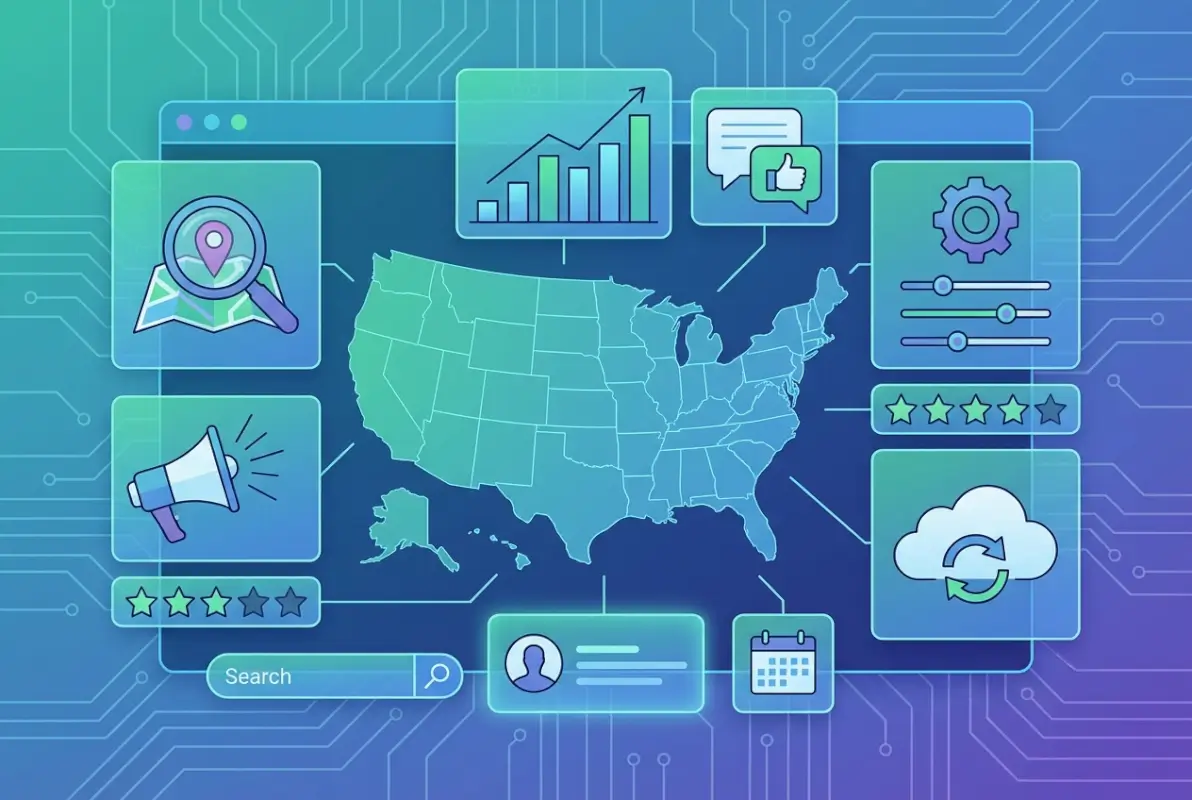
The beauty of Bing Places is the combination of meaningful traffic and lower competition. Your competitors are likely neglecting their Bing presence, which means less effort required to stand out. I’ve seen businesses rank in the top three Bing local results who couldn’t crack the first page on Google, simply because they were one of the few who bothered to optimize their Bing Places listing.
Setup is remarkably painless if you already have Google My Business configured. Bing offers an import tool that pulls your GMB data directly, saving hours of redundant data entry while ensuring consistency. After import, verify your listing, then enhance it with Bing-specific features like action links (Book Appointment, Order Online, View Menu) that appear directly in search results.
The demographic targeting Bing offers is particularly valuable for certain business types. Professional services, financial advisors, home improvement contractors, and B2B service providers often find their ideal customers use Bing through their work computers. The platform also integrates seamlessly with Microsoft products, appearing in Windows search, Cortana results, and Microsoft Teams recommendations.
Apple Maps & Apple Business Connect: Reaching the iOS Ecosystem
With iPhone ownership exceeding 60% in the United States and iOS users typically having higher spending power than Android users, Apple Maps Business Connect represents a critical piece of the local visibility puzzle that many businesses completely ignore.
Apple Maps comes pre-installed on every iPhone and iPad, making it the default navigation and local search tool for hundreds of millions of users. When iPhone users invoke Siri with “restaurants near me” or tap a business name in Messages or Mail, they’re pulling data from Apple Maps. Your absence there means invisibility to this valuable demographic.
The setup process through Apple Business Connect is straightforward, though Apple’s verification requirements are notably strict compared to other platforms. This higher bar for entry actually works in your favor—it means fewer fake or low-quality listings competing for attention, and consumers trust Apple Maps results accordingly.
Focus on these Apple-specific optimization opportunities: add detailed hours including special holiday hours, leverage Apple’s category system which differs from Google’s, upload high-quality photos optimized for Retina displays, enable the messaging feature for direct customer contact, and add Showcase photos that appear prominently in your listing.
Better Business Bureau: The Trust Signal That Converts Skeptics
The BBB operates differently than other directories on this list—it’s fundamentally a trust verification organization that happens to provide directory visibility as a byproduct. This distinction makes it particularly valuable for industries where consumer skepticism runs high: home improvement, auto repair, financial services, moving companies, and other sectors plagued by bad actors.
A BBB accreditation (the paid tier) serves as a powerful third-party endorsement that you’ve committed to ethical business practices. The recognizable BBB seal on your website and in search results immediately differentiates you from competitors who lack this credential. For businesses operating in listedin business directory key benefits for your business environments where trust is the primary conversion barrier, BBB accreditation often pays for itself through increased close rates.

Even the free BBB listing provides value through the organization’s high domain authority and the complaint resolution process. When potential customers research your business, they’ll often specifically check your BBB profile for complaint history. A clean BBB record with responsive handling of any issues demonstrates professionalism that pure marketing can’t convey.
The key to BBB success isn’t a perfect record—it’s transparent handling of problems. Businesses with a few complaints that were resolved professionally often convert better than those with zero complaints, because the resolution demonstrates real customer service rather than just avoiding problems.
Local Chamber of Commerce Directories: B2B and Community Connection
Chamber of Commerce directories offer unique value that purely digital platforms can’t replicate: they signal community investment and create business-to-business networking opportunities alongside consumer visibility. This dual benefit makes them particularly valuable for businesses that serve both individual consumers and commercial clients.
Chamber membership typically includes directory listing as one of many benefits—networking events, advocacy, educational resources, and collaborative marketing opportunities. When evaluating ROI, consider the full package rather than just the directory listing in isolation. For many businesses, the networking and referral opportunities alone justify the investment.
From a pure visibility standpoint, Chamber directories punch above their weight in local searches. When someone searches specifically for businesses in your community (especially with terms like “local” or your city name), Chamber directories often appear prominently due to their geographic relevance and domain authority. This creates valuable exposure for businesses targeting customers who specifically value supporting local companies.
| Directory | Primary Audience | Setup Time | Cost Structure | Best For |
|---|---|---|---|---|
| Google Business Profile | All consumers | 30 min | Free | Every business type |
| Yelp | Experience-focused consumers | 45 min | Free + paid options | Restaurants, services, retail |
| Bing Places | Desktop, professional users | 20 min | Free | B2B, professional services |
| Apple Maps | iOS ecosystem users | 35 min | Free | Consumer services, retail |
| BBB | Trust-conscious consumers | 60 min | Free listing + paid accreditation | Trust-critical industries |
| Chamber | Local community, B2B | 45 min | Membership fees | Community-focused businesses |
| Angie’s List | Home service shoppers | 50 min | Free + premium | Home services, contractors |
Angie’s List (Angi): The Home Services Specialist
For businesses in home services—contractors, plumbers, electricians, landscapers, cleaners—Angie’s List (now branded as Angi) represents one of the highest-intent traffic sources available. The platform specifically attracts homeowners actively seeking service providers, often with projects already planned and budgets allocated.
What distinguishes Angie’s List from general directories is its project-matching system. Beyond passive listing, the platform actively connects service providers with homeowners requesting quotes for specific work. These are pre-qualified leads from people who’ve already decided they need the service and are comparing providers—a dramatically different audience than browsers who might eventually need something.

The free listing provides basic visibility, but Angie’s List operates on a pay-to-play model for serious lead generation. Premium tiers offer competitive positioning, enhanced profiles, and access to more leads. For service businesses in competitive markets, the cost-per-lead through Angie’s List often compares favorably to Google Ads or other paid channels, with the advantage of higher-intent prospects.
The platform’s verification and review systems carry significant weight with consumers specifically because of the home services context. Letting strangers into your home requires trust, and Angie’s List’s vetting processes provide that trust layer. Businesses with consistently positive reviews and verified credentials see substantially higher conversion rates than those with sparse profiles.
Strategic Selection: Choosing the Right Directories for Your Business
Not every business needs presence on every directory. The strategic approach means identifying where your specific customers actually search and concentrating your optimization efforts there rather than spreading yourself thin across dozens of marginal platforms.
Start by analyzing your existing customer base. Where do they spend time online? What’s their demographic profile? A restaurant targeting college students needs a different directory mix than a financial advisor serving retirees. Ask new customers how they found you and track these sources systematically—you might be surprised which platforms actually drive business versus which you assume are important.
Industry-specific directories often outperform general ones for niche businesses. Houzz dominates for interior designers and home improvement professionals. Avvo is essential for attorneys. Healthgrades matters for medical practices. TripAdvisor is non-negotiable for hotels and tourism. These specialized platforms concentrate your target audience in ways general directories can’t match.
Geographic considerations matter too. National directories like Google and Yelp are universal, but regional platforms can provide disproportionate value in specific markets. Research what directories are popular in your specific city or region—some areas have strong local alternatives that dominate searches there.
For those looking to create directory-based businesses themselves, understanding these dynamics is crucial. Business directory website complete guide resources can help you identify underserved niches or geographic markets where a focused directory could provide real value.
Optimization Best Practices: Making Your Listings Work Harder
Creating directory listings is table stakes; optimization is where you actually gain competitive advantage. The difference between a basic listing and an optimized one can easily represent a 3-5x difference in visibility and click-through rates.
NAP Consistency: The Non-Negotiable Foundation
I cannot overemphasize this: your Name, Address, and Phone number must be formatted identically across every single platform. Not “similar” or “basically the same”—absolutely identical. Even trivial variations like “Street” versus “St.” or “(555) 555-5555” versus “555-555-5555” create conflicting signals that confuse search algorithms and damage your rankings.
Choose one canonical format for each element and use it everywhere without exception. If you’re “ABC Plumbing LLC” on your business license, don’t abbreviate to “ABC Plumbing” on some directories and use the full legal name on others. If your phone number includes extensions, either include them everywhere or nowhere—no mixing.
Address formatting deserves special attention. Use the exact format the USPS recognizes, including the proper abbreviations. “Suite” not “Ste.” not “Unit” unless that’s what USPS verification confirms. Floor numbers, building names, and other address modifiers should be formatted identically across all listings.
Category Selection: Precision Over Breadth
Most directories allow multiple category selections, but more isn’t better. Choose the most specific primary category that accurately describes your core business, then add 2-4 highly relevant secondary categories. Resist the temptation to select every tangentially related category—this dilutes your relevance signals rather than strengthening them.
For example, a business that does both plumbing and HVAC should choose either “Plumber” or “HVAC Contractor” as primary based on which represents the majority of their business, then add the other as secondary. They shouldn’t also add “Water Heater Service,” “Drain Cleaning,” and five other specific services—those should appear in the description and service list, not categories.
Visual Content: The Underutilized Differentiator
Listings with 10+ high-quality photos receive substantially more engagement than those with few or no images. But quality matters as much as quantity. Avoid stock photos that could represent any business—customers want to see your actual team, location, and work.
Develop a systematic photography approach: exterior shots showing your entrance and signage (so customers can identify your location), interior shots highlighting your space, team photos that humanize your business, work samples or products in professional lighting, and action shots showing your service delivery. For businesses considering php business directory simple steps to build their own platforms, visual content standards become a key differentiator.
Description Optimization: Keywords With Context
Your business description should accomplish three things: incorporate relevant search terms naturally, communicate your unique value proposition clearly, and compel browsers to take action. The keyword-stuffed descriptions of the past don’t work—write for humans first, with search engines a close second.
Structure your description to front-load the most important information. The first sentence should contain your primary keyword and core value proposition. Follow with specific services, your geographic service area, credentials or experience, and unique differentiators. End with a clear call-to-action.
Review Management: The Ongoing Visibility Multiplier
Active review management isn’t optional—it’s a core operational function that directly impacts revenue. Businesses that systematically request reviews from satisfied customers and respond professionally to all feedback (positive and negative) consistently outperform competitors with passive approaches.
Create a systematic process for review generation. The best time to request a review is within 24-48 hours of a positive service interaction, while the experience is fresh. Make it easy—send direct links to your review profiles rather than generic “leave us a review” requests. Personalize the request when possible.
Respond to every review, not just the negative ones. Thank customers for positive feedback specifically, acknowledge what they appreciated, and invite them back. For negative reviews, respond quickly, professionally, and constructively. Never argue or get defensive; acknowledge the concern, offer a solution, and take the conversation offline when appropriate.
Advanced Strategies: Going Beyond Basic Listings
Once you’ve mastered the fundamentals, these advanced tactics can provide additional competitive advantage in crowded markets.
Posting and Updates: Signaling Active Management
Directories that offer posting capabilities—particularly Google Business Profile—reward businesses that regularly publish updates. Posts signal that your business is actively managed rather than abandoned, and fresh content gives search algorithms new information to index.
Develop a posting calendar that includes: weekly offers or promotions, monthly company updates or news, seasonal content aligned with industry cycles, event announcements, and product or service highlights. Consistency matters more than frequency—weekly posts maintained year-round beat daily posts that taper off after a month.
Structured Data and Schema Markup
While directories provide their own structured formats, implementing LocalBusiness schema markup on your own website creates additional consistency signals. According to Google’s local search algorithm research, proper schema implementation correlates with improved local pack visibility.
Include your NAP information, business hours, service areas, accepted payments, and review aggregates in schema markup. This helps search engines verify that the information on your website matches your directory listings, strengthening confidence in your business data.
Competitive Gap Analysis
Systematically audit your competitors’ directory presence to identify gaps in your own strategy. Are they on directories you’ve neglected? Do they have substantially more reviews on certain platforms? Are there industry-specific directories where they appear that you don’t?
This analysis often reveals low-hanging fruit—directories where your competitors have established presence but haven’t optimized their listings. You can leapfrog them with minimal effort by creating complete, optimized profiles where they’ve merely claimed basic listings.
Citation Building for Multi-Location Businesses
Businesses with multiple locations face the additional complexity of maintaining consistent but location-specific information across directories. Each location needs its own distinct listings with unique NAP information, but brand consistency must be maintained.
Consider using citation management tools like BrightLocal or Whitespark for multi-location businesses, as manually maintaining dozens or hundreds of location listings quickly becomes unsustainable. These tools help ensure consistency while allowing location-specific customization where appropriate.
Frequently Asked Questions About Local Business Directories
How many business directories should my company be listed on?
Most businesses should aim for 7-12 high-quality directory listings rather than trying to appear everywhere. Start with the essential platforms (Google Business Profile, Yelp, Bing Places) then add industry-specific and locally relevant directories based on where your specific customers actually search. Quality and optimization matter far more than quantity—ten well-maintained listings outperform fifty neglected ones.
Do local business directories actually improve search rankings?
Yes, directory listings contribute to local search rankings through multiple mechanisms. They create citation signals that search engines use to verify business legitimacy, provide valuable backlinks to your website, generate review signals that influence rankings, and create additional content mentioning your business. The impact varies by industry and competition level, but consistent directory presence remains a core local SEO factor.
What’s the most important factor for directory optimization?
NAP consistency—ensuring your Name, Address, and Phone number are formatted identically across all platforms—is the single most critical factor. Even minor variations create conflicting signals that damage local search performance. After NAP consistency, completeness of information and active review management provide the greatest optimization impact.
Should I pay for premium directory listings or stick with free options?
Start by maximizing free listings on major platforms before investing in paid placements. Google Business Profile, Bing Places, and basic Yelp listings are free and should be fully optimized first. Consider paid options for industry-specific directories where your competitors advertise, platforms that provide pre-qualified leads, or general directories where premium placement demonstrably increases visibility in your market.
How often should I update my directory listings?
Conduct comprehensive audits of all directory listings quarterly to verify accuracy and completeness. Update immediately whenever business information changes (hours, phone, address, services). Post new content weekly on platforms that support updates (particularly Google Business Profile). Respond to new reviews within 24-48 hours as part of ongoing reputation management.
Can directory listings help with B2B lead generation?
Absolutely. While directories are often associated with consumer businesses, B2B companies benefit significantly from platforms like LinkedIn Company Directory, local Chamber of Commerce listings, and industry-specific directories. B2B decision makers research vendors online just like consumers do, and comprehensive directory presence establishes credibility and facilitates discovery.
What should I do about incorrect information on directories I didn’t create?
Many directories automatically create listings by aggregating data from various sources. Claim these listings as soon as you discover them and correct any inaccuracies. If you cannot claim a listing, most directories offer a “suggest edit” function or business owner contact form. Document all correction attempts for your records, as persistent inaccuracies may require more formal dispute processes.
How do I handle negative reviews on directory platforms?
Respond promptly, professionally, and constructively to all negative reviews. Acknowledge the customer’s concern, apologize for their negative experience, offer a specific solution if appropriate, and invite them to discuss offline. Never argue, get defensive, or accuse customers of lying. Your response is a public demonstration of customer service for prospective customers reading the review.
Are there any directories I should avoid listing my business on?
Avoid extremely low-quality or spammy directories that exist solely to collect business data for resale, directories with excessive advertising that overshadows listings, platforms with reputations for fake reviews or manipulated rankings, and any directory that requires payment before allowing you to see or claim your listing. Focus on established, reputable platforms with real user traffic.
How long does it take to see results from directory optimization?
Initial visibility improvements often appear within 2-4 weeks as search engines index your updated information. Meaningful ranking improvements typically manifest within 2-3 months as consistent citations strengthen your local authority. Review accumulation and reputation building require ongoing effort over 6-12 months. Directory optimization is a marathon, not a sprint—consistency and patience deliver compounding results.
Take Control of Your Local Visibility Today
The businesses dominating local search in your market aren’t necessarily spending more on advertising—they’re strategically leveraging the ecosystem of business directories USA to create omnipresent visibility. Every directory listing represents another doorway for customers to discover your business, another trust signal to search engines, and another opportunity to demonstrate why you’re the right choice.
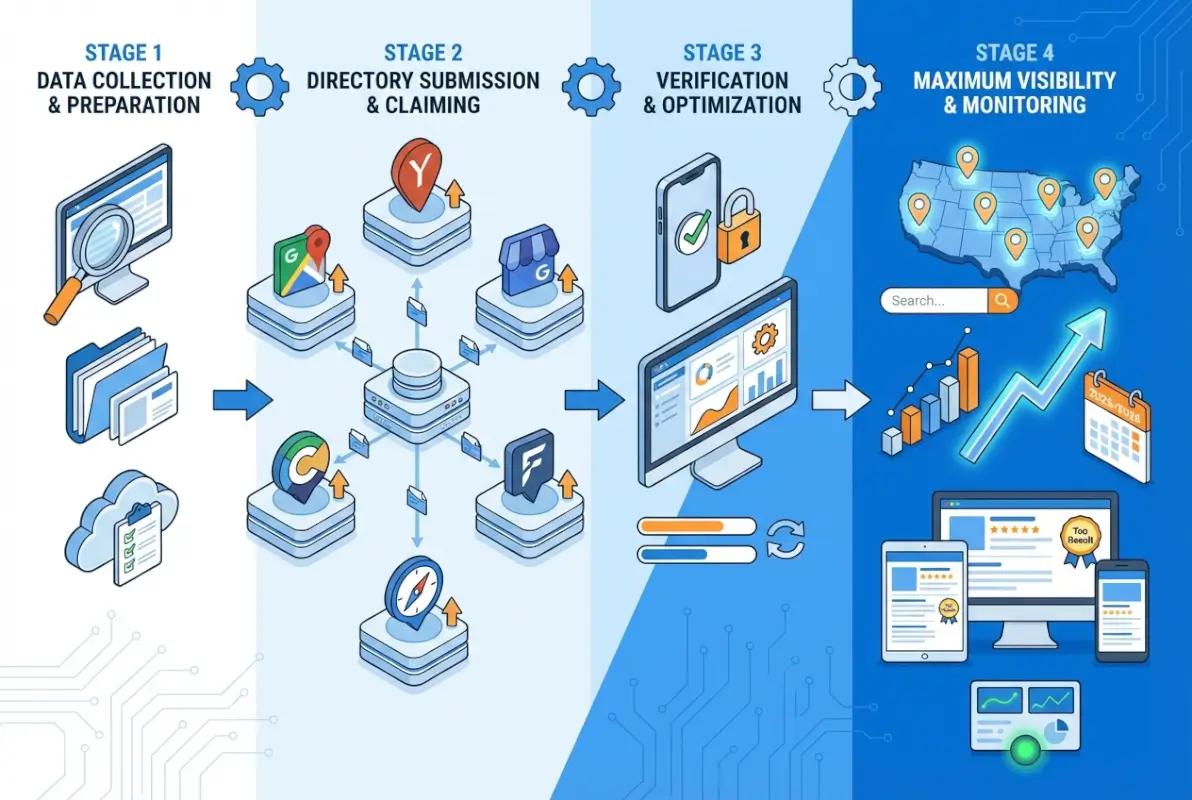
Start with the foundation: claim and fully optimize your Google Business Profile, Yelp, and Bing Places listings. Ensure absolute NAP consistency across all three platforms. Then expand strategically to the directories where your specific customers actually search, whether that’s Angie’s List for home services, Apple Maps for iOS users, or industry-specific platforms for specialized businesses.
The competitive advantage goes to businesses that treat directory optimization as an ongoing discipline rather than a one-time task. Schedule quarterly audits, systematically request and respond to reviews, and consistently publish updates on platforms that support posting. These small, regular efforts compound into substantial visibility advantages over businesses that set up listings once and forget about them.
For entrepreneurs and agencies looking to capitalize on the directory space itself, understanding these dynamics opens opportunities to create valuable niche or regional directories that serve underrepresented markets. How to start profitable business directory steps provide a roadmap for building these platforms, leveraging the same principles that make existing directories valuable.
- Audit your current directory presence using the 7 platforms outlined above
- Document your NAP information in one canonical format
- Claim any unclaimed listings and correct inconsistencies
- Complete all available fields on each platform with optimized content
- Implement a systematic review request process
- Schedule quarterly directory maintenance in your calendar
The question isn’t whether local business directories matter—the data conclusively demonstrates they do. The question is whether you’ll leverage them strategically to capture the visibility and customers your competitors are leaving on the table. Start today, stay consistent, and watch as your local visibility compounds over time into a sustainable competitive advantage.
Was this article helpful?