6 Proven Ways to Monetize an Online Directory & Earn $10K/Month

Generating summary...
If you’ve ever scrolled through a thriving online directory—one with thousands of active users, featured listings lighting up the homepage, and businesses clamoring to claim their spot—you’ve witnessed a monetization machine in action. But here’s the uncomfortable truth most directory owners don’t talk about: the vast majority of directories never break $1,000 a month, let alone hit the $10K threshold. The difference? It’s not traffic volume or a prettier interface. It’s knowing exactly which revenue levers to pull, in what order, and how to stack them without alienating your audience. In this guide, we’re pulling back the curtain on six battle-tested monetization strategies that transform directories from side projects into serious income streams—and we’ll show you how to implement each one without needing a Stanford MBA or a six-figure ad budget.
TL;DR – Quick Takeaways
- Premium listings generate predictable monthly recurring revenue — tiered profiles with enhanced visibility convert at 8-12% for established directories
- Advertising and sponsored content work best after 10K+ monthly visits — start with direct deals before programmatic networks
- Lead generation models align pricing with real business outcomes — charge per qualified lead in high-intent categories like home services or healthcare
- Data licensing unlocks enterprise revenue once you hit scale — APIs and structured data feeds can command $500-$5K/month per client
- Verification services and trust signals boost willingness to pay — businesses will spend 20-40% more for credibility features
- Stack methods in stages — launch with premium listings, layer in ads at month 3-4, add leads and data licensing as you prove value
Premium Listings and Directory Subscriptions: Your Foundation for Recurring Revenue
Most directory owners make the mistake of launching with free-for-all access, then scrambling to monetize later when hosting bills pile up. Premium listings flip that script—they establish value from day one and create a dependable revenue base that compounds monthly. The core concept is elegantly simple: offer three tiers (basic free, standard paid, premium paid) with feature walls that directly impact what listing owners care about most—visibility, clicks, and leads. A basic listing might include name, address, and phone number; standard adds photos, longer descriptions, and category tags; premium unlocks priority placement in search results, featured homepage slots, rich media galleries, and detailed analytics dashboards. This isn’t theoretical—directories in competitive niches routinely see 8-12% conversion from free to paid once they cross 500 active listings, because business owners understand that in a crowded category, obscurity equals death.
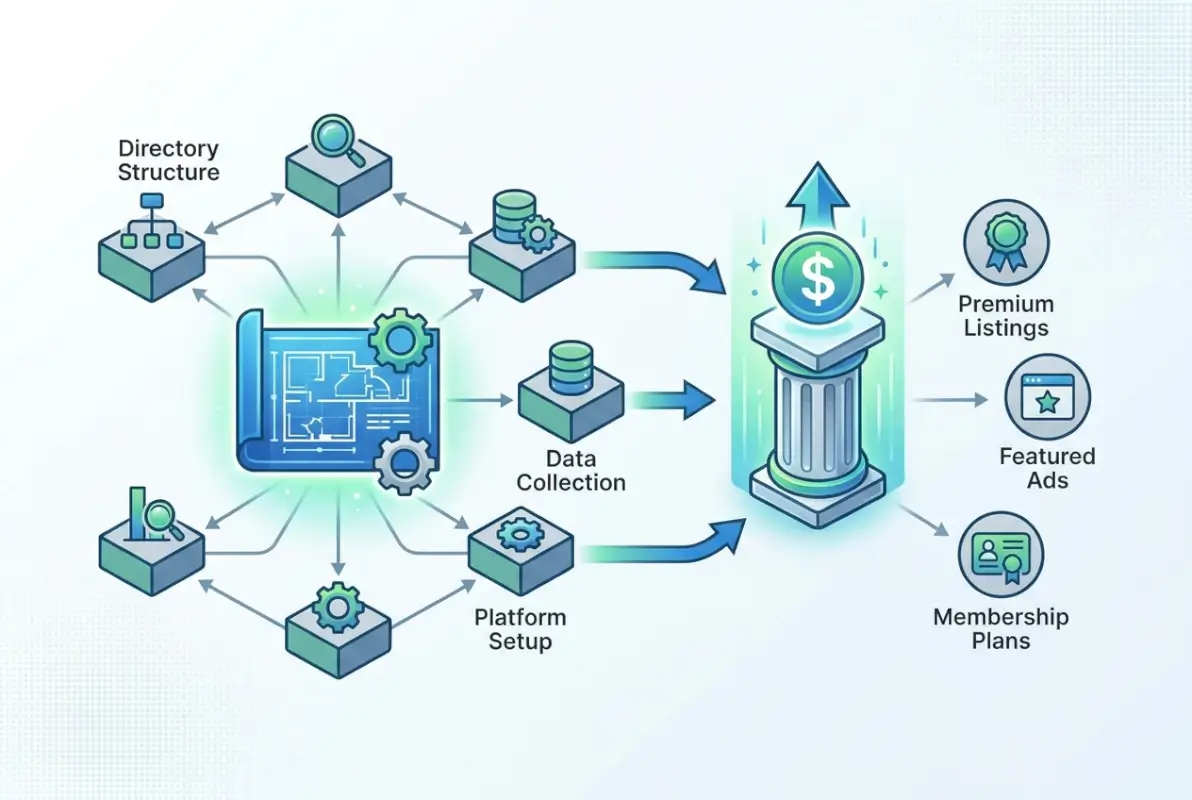
The pricing psychology matters as much as the features themselves. Instead of charging $9.99/month (which signals “cheap side project”), test $29-$79/month for standard and $149-$299/month for premium tiers. Higher pricing filters for serious businesses who view directory placement as marketing investment, not expense. For directories built on WordPress, platforms like TurnKey Directories make tier implementation straightforward with conditional logic for feature visibility and integrated payment processing. To maximize lifetime value, default all subscriptions to annual billing with auto-renewal, offering a 15-20% discount versus monthly—this locks in revenue predictability and dramatically reduces churn. Add usage-based upgrades as revenue accelerators: one-time boosts for homepage features ($50-$150), priority placement in email newsletters ($75), or quarterly SEO audit add-ons ($200). Each upgrade ties directly to measurable outcomes that justify the spend.
Implementation hinges on perceived value, not just feature lists. Before launching paid tiers, ensure your directory already delivers organic traffic and user engagement worth capturing. If your free listings generate zero clicks or inquiries, no business will upgrade—you’re selling empty calories. Build proof first: optimize geo-targeted directory pages, drive initial SEO momentum, and showcase success stories from early adopters. Once you can demonstrate that a premium listing generates 3-5x more profile views than a basic one (track this in your analytics), conversion rates jump. Create urgency with limited homepage featured slots—scarcity works when it’s real. If you offer 10 featured spots and they’re always available, the feature loses value; cap it at 5 and maintain a waitlist.
Auto-renewal subscriptions deserve special attention because they’re the difference between lumpy cash flow and predictable monthly income. Set renewal as the default opt-out (not opt-in), with clear disclosure in checkout and email reminders 7 days before rebilling. Monitor churn religiously—if more than 15% cancel after the first renewal cycle, your value proposition is broken. Send quarterly “value reports” to subscribers showing total profile views, click-throughs, and how they rank versus category peers; this reinforces ROI and reduces churn. Offer annual plan holders a mid-year “checkup call” to discuss optimization tactics, positioning yourself as partner rather than vendor. These retention moves cost almost nothing but can slash churn by 30-40%, which at scale means thousands in saved revenue.
Advertising and Sponsored Content with Contextual Targeting
Advertising gets a bad reputation in directory circles because most owners implement it poorly—slapping Google AdSense units everywhere and wondering why users flee. Smart advertising revenue comes from contextual relevance and controlled inventory, not maximizing ad density. The fundamental principle: ads should feel like helpful recommendations, not interruptions. For directories, this means matching ad placements to user intent at different journey stages. Someone browsing category listings is in research mode—sidebar native ads for related services work well here. Someone viewing a specific business profile is closer to conversion—a discrete banner for a complementary service (e.g., financing options on a contractor’s profile) converts without disrupting the experience. According to Yelp’s recent annual filings, advertising accounts for the majority of their revenue, but they’ve invested heavily in sophisticated targeting and quality controls that maintain user trust while monetizing attention.

Direct advertising deals should be your starting point, not programmatic networks. Once your directory hits 10,000+ monthly visits in a defined niche, approach businesses in adjacent categories (not direct competitors to your listings) with fixed-rate sponsorship packages. For example, a restaurant directory might sell banner placements to reservation software companies, point-of-sale vendors, or commercial kitchen suppliers. Price these on impression guarantees (CPM model, typically $8-$25 CPM for niche B2B directories) or flat monthly rates ($300-$1,500/month for premium placements). This approach gives you 100% of ad revenue (versus the 50-70% cut programmatic networks take) and lets you maintain creative control to ensure ads match your quality standards. Build a simple one-sheet media kit showing monthly uniques, audience demographics, and available placements—keep it under two pages or decision-makers won’t read it.
Sponsored listings deserve their own revenue line because they behave differently than display ads. These are paid placements within organic search results or category pages, clearly labeled as “Sponsored” or “Featured” but otherwise identical to regular listings. The key differentiator: sponsored listings appear at the top of search results or within category browsing, giving paying businesses priority visibility without degrading user experience (as long as they’re relevant). Price these per placement per month ($50-$200 depending on category competitiveness) or via auction models where businesses bid for top spots. Transparency is non-negotiable here—if users can’t easily distinguish sponsored from organic, you’ll erode trust fast. Use visual markers (subtle background shading, small “Sponsored” badge) and cap sponsored results at 20-30% of first-page listings. The best online directories balance monetization with user experience by keeping sponsored content highly relevant and limited in volume.
Pricing models for advertising vary based on your traffic and advertiser sophistication. CPM (cost per thousand impressions) works for brand-aware sponsors who value reach; typical rates range from $5-$10 CPM for general directories to $20-$40 CPM for highly targeted B2B niches. CPV (cost per view) or CPC (cost per click) shifts risk to you—you only earn when users engage—but can command higher effective rates if your audience is highly engaged. For beginners, flat monthly rates are simplest: charge $500/month for a leaderboard banner on high-traffic pages, $250/month for sidebar placements. Run 30-day trials at 50% off to prove value, then convert to full price. Track click-through rates (CTR) and report them monthly to advertisers—1-2% CTR is solid for contextual directory ads, and transparency builds long-term relationships.
As you scale past 50K monthly visits, consider programmatic options like Google Ad Manager or Ezoic, but only after exhausting direct deals. Programmatic fills unsold inventory automatically but at much lower effective CPMs ($2-$6 typically) and with less control over ad quality. Some directories run a hybrid model: sell premium placements direct, backfill remnant inventory programmatically. Just remember that every auto-playing video ad or sketchy “one weird trick” banner you allow chips away at user trust—and rebuilding trust takes 10x longer than losing it. Vet every ad network carefully and use category blocks to exclude dating, gambling, or other categories that clash with your brand. Tools like digital marketing software directories often integrate ad management features that simplify this balance.
Lead Generation and Transaction-Based Revenue
High-intent directories—especially in categories like home services, legal, medical, or auto repair—are perfectly positioned to charge for qualified leads rather than passive impressions. In a pay-per-lead model, you collect contact forms, quote requests, or phone calls from users and forward them to verified businesses, charging a flat fee or variable price per lead. This shifts pricing from attention (CPM) to intent, aligning revenue with the actual value businesses receive. Tracking lead quality, conversion rates, and customer lifetime value (LTV) becomes essential; you need to prove that your $15–$50 lead generates a $300–$3,000 job to keep buyers happy and returning.

Commission-based revenue takes this a step further by tying your payout to completed transactions—bookings, purchases, or signed contracts. Many directories integrate booking or payment widgets directly into listings, capturing 5–20% of the transaction value in exchange for discovery, trust signals, and seamless checkout. For example, a contractor directory might partner with a payment processor to handle deposits and invoices, earning a percentage of every job booked through the platform. This model requires strong fraud detection, clear terms of service, and transparent attribution to ensure both users and vendors trust the process. It also demands robust customer support, since any friction in payment or lead delivery can erode margins and reputation quickly.
Partnerships and referral fees expand your reach without building every integration yourself. By embedding widgets or API connections from booking platforms, service marketplaces, or payment gateways, you earn a referral fee—often $10–$100 per conversion or a percentage of the first transaction. These partnerships work best when you negotiate rev-share agreements that reward both volume and quality, using unique tracking codes or affiliate pixels to attribute leads accurately. Revenue share also opens doors to co-marketing: your partner promotes your directory to their network, and you highlight their service within your listings, creating a flywheel of mutual discovery and monetization.
The biggest operational challenge is lead verification and dispute resolution. If a business claims a lead was invalid (wrong contact info, out of territory, not serious), you need clear policies, proof of delivery, and ideally a scoring system that flags low-quality sources. Set up dashboards that show lead volume, conversion rate, and revenue per listing, then use that data to optimize targeting, landing pages, and form fields. Over time, high-performing categories will emerge—often specialized services with high ticket prices and urgent needs—allowing you to focus your sales and product efforts where lead value is highest.
| Revenue Model | Pricing Basis | Typical Rate | Best For |
|---|---|---|---|
| Pay-Per-Lead | Flat fee per qualified form/call | $15–$50 | Home services, legal, medical |
| Commission | % of transaction value | 5–20% | Bookings, reservations, ticketed jobs |
| Referral Fee | Fixed or % per conversion | $10–$100 or 10–15% | Partner integrations, affiliate programs |
Data Licensing, API Access, and Enterprise Solutions
Once your directory reaches critical mass—thousands of verified listings with structured data, reviews, and metadata—you’re sitting on a valuable asset that third parties will pay to access. Data licensing involves packaging your dataset (addresses, categories, operating hours, user ratings) and selling it to navigation apps, aggregators, market research firms, or enterprise software platforms. Pricing can be per-record, per-seat, per-query, or a flat annual license; terms typically include usage restrictions, attribution requirements, and data refresh schedules. The key is to maintain data quality controls—deduplication, validation, and regular updates—so buyers trust the accuracy and timeliness of what they’re purchasing.
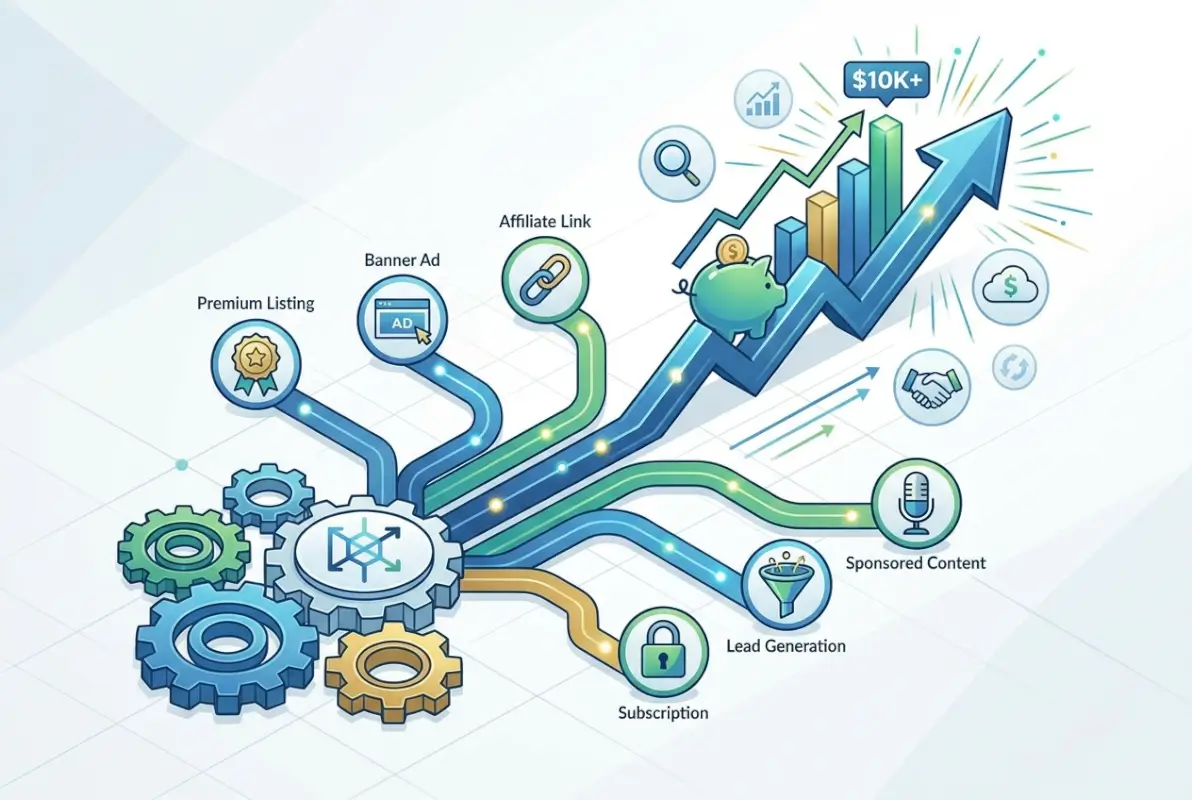
API access offers a more flexible, developer-friendly model. By exposing RESTful endpoints for search, listings, reviews, and geolocation, you enable third parties to embed your directory data into their own apps, dashboards, or websites. Tiered access plans—free for hobbyists, paid for commercial use, premium for high-volume or white-label integrations—let you capture value from a wide range of use cases. Each tier should define rate limits, support SLAs, and feature access (e.g., read-only vs. write, public vs. premium data). Developer portals with clear documentation, code samples, and sandbox environments reduce friction and encourage experimentation, turning your API into a distribution channel that scales without incremental content creation.
White-label solutions take enterprise monetization further by licensing your entire platform—technology, data, and user experience—to organizations that want to run their own branded directory. This works well for industry associations, franchise networks, or large publishers who need a turnkey solution but lack in-house development resources. You charge an upfront setup fee plus ongoing SaaS fees based on listings, traffic, or feature usage. White-label deals often command higher margins because you’re selling both software and data, but they also require dedicated onboarding, customization, and support. Contracts should clearly define update schedules, data ownership, and performance guarantees to avoid scope creep and misaligned expectations.
Revenue potential from data licensing and APIs can be substantial—mature directories report 10–30% of total revenue from these streams—but the upfront investment in infrastructure, legal terms, and sales cycles is non-trivial. You’ll need to invest in secure API authentication (OAuth 2.0, API keys), usage analytics (to detect abuse and guide pricing), and customer success teams to help enterprise clients integrate and launch. Start small: offer a read-only API to trusted partners, gather feedback, iterate on pricing and packaging, then scale to broader developer audiences and larger enterprise deals as confidence and data quality improve.
| Enterprise Revenue Stream | Typical Pricing | Key Success Factors |
|---|---|---|
| Data Licensing | $5K–$50K/year per client | Data quality, refresh frequency, usage rights |
| API Access (Tiered) | Free–$500/month (small), $1K+ (enterprise) | Documentation, rate limits, developer support |
| White-Label SaaS | $10K–$100K+ setup + monthly SaaS fee | Customization, onboarding, ongoing updates |
Verification, Trust Signals, and Ancillary Revenue
In a crowded marketplace, credibility is currency. Offering verification services—confirming business addresses, phone numbers, licenses, or ownership—adds a layer of trust that users value and businesses pay for. A verified badge next to a listing signals legitimacy, reduces spam, and often boosts click-through rates by 20–50%. You can charge a one-time verification fee ($25–$100), bundle it into premium tiers, or require annual re-verification to maintain the badge. The process typically involves automated checks (phone or email verification), manual review (comparing public records or license databases), and ongoing monitoring (flagging changes in contact info or ownership).

Premium trust badges and enhanced profiles go beyond basic verification to showcase awards, certifications, insurance status, or customer satisfaction scores. These features appeal to businesses in regulated industries—contractors, healthcare, finance—where credentials matter and buyers conduct due diligence before engaging. By charging $50–$200/year for advanced trust signals, you create a higher-margin upsell that improves lead quality for buyers and conversion rates for sellers. Transparency is critical: clearly disclose what verification entails, how often you re-check data, and what happens if a business fails to meet standards. This maintains user trust and reduces liability if a verified business later receives complaints or legal action.
Ancillary services—SEO audits, listing optimization, onboarding coaching, and analytics dashboards—represent another revenue layer that helps businesses succeed on your platform. Many small businesses lack the time or expertise to craft compelling descriptions, select the right categories, or interpret traffic metrics. By offering a $100–$500 “setup and optimization” package or a monthly $50–$150 analytics subscription, you capture value from customers who want hands-on support and data insights. These services also improve the overall quality of your directory: better-optimized listings rank higher in search, attract more clicks, and generate more revenue for you through ads and leads, creating a virtuous cycle.
The operational model for ancillary revenue often involves a mix of self-service (automated SEO suggestions, template builders) and concierge service (one-on-one calls, custom reporting). Start by automating the most common optimizations—keyword recommendations, photo upload prompts, category suggestions—and reserve human support for high-value clients or complex cases. Track metrics like time-to-first-optimization, repeat purchase rate, and Net Promoter Score (NPS) to refine your offerings and pricing. Over time, you’ll identify which services have the highest attach rate and margin, allowing you to scale or sunset features based on real performance data.
Trust and value-added services also improve retention and reduce churn. A business that invests in verification, optimization, and analytics is more likely to renew its premium listing or lead package because it sees tangible results—more views, more inquiries, more revenue. By bundling these services into multi-tier plans (e.g., Basic + Verification, Pro + Optimization + Analytics), you increase average revenue per user (ARPU) and create stickier relationships. The key is to measure outcomes: show clients that verified listings convert 30% better, that optimized profiles get 2× the traffic, and that analytics users renew at 80% vs. 50% for non-users. Data-driven storytelling turns ancillary services from “nice to have” to “must have,” driving both revenue and customer success.
| Ancillary Service | Price Range | Value Proposition |
|---|---|---|
| Business Verification | $25–$100 one-time or annual | Trust badge, reduced spam, higher CTR |
| Listing Optimization | $100–$500 setup | SEO, photo coaching, keyword research |
| Analytics Dashboard | $50–$150/month | Traffic, leads, conversion tracking |
| Onboarding Coaching | $200–$500 one-time | 1:1 setup, category selection, best practices |
Frequently Asked Questions
What is the quickest way to start monetizing a new online directory?
Start with premium listings and basic banner advertising. Premium listings require minimal technical overhead, offer immediate recurring revenue, and directly benefit listing owners through enhanced visibility. Layer in display ads once you reach 10,000+ monthly visitors to ensure advertisers see measurable ROI and maintain a positive user experience.
How much can a directory realistically earn per month?
Established directories with 50,000+ monthly visitors and 500+ listings can reach $10,000–$15,000 per month through a mix of premium subscriptions, advertising, and lead generation. Early-stage directories with under 10,000 visitors typically earn $500–$2,000 monthly. Growth depends on niche competitiveness, pricing strategy, and conversion optimization.
Should I prioritize ads or premium listings for revenue growth?
Prioritize premium listings for predictable recurring revenue and stronger relationships with listing owners. Ads generate faster initial income but fluctuate with traffic and seasonality. A balanced approach is optimal: premium listings for stability (60–70% of revenue), ads for scalability (20–30%), and leads for high-intent categories (10–20%).
How do I price premium listings and subscriptions without driving away users?
Anchor pricing to measurable value: visibility lifts, lead volume, or referral traffic. Start with a low-commitment tier at $29–$49 monthly, mid-tier at $99–$149, and premium at $199–$299. Offer a 14-day free trial or discounted annual plan to reduce friction. Test pricing in 90-day cycles and adjust based on conversion rates.
Can I use data from my directory to create extra revenue streams?
Yes. License aggregated, anonymized data to navigation apps, market research firms, or enterprise clients. Offer API access to developers for search, listings, and reviews with tiered pricing based on request volume. Ensure compliance with privacy regulations and clearly communicate data usage policies to listing owners and users to maintain trust.
What metrics matter most to optimize monetization?
Track revenue per thousand visitors (RPM), cost per lead (CPL), customer lifetime value (LTV), and return on ad spend (ROAS). Monitor conversion rates from free to premium listings, churn rate for subscriptions, and click-through rates on ads. These metrics reveal pricing effectiveness, user engagement, and long-term profitability for data-driven optimization.
How do I maintain trust when using sponsored content or pay-per-lead models?
Clearly label all sponsored listings and ads with visible badges or “Sponsored” tags. Maintain transparent editorial guidelines that separate paid placements from organic search results. Verify lead quality before charging, offer refunds for invalid leads, and publish trust policies. User trust directly impacts long-term engagement and revenue sustainability.
When should I add lead generation and transaction-based revenue?
Introduce lead generation once your directory has proven conversion paths and at least 20,000 monthly visitors in high-intent categories like home services, healthcare, or professional services. Ensure you can track attribution accurately, qualify leads effectively, and provide value to both users and businesses before implementing pay-per-lead or commission models.
Your Roadmap to $10K/Month: Take Action Today
Building a profitable online directory is not a set-it-and-forget-it venture. It requires strategic planning, continuous optimization, and a willingness to test and adapt. The five monetization pillars covered in this guide—premium listings, advertising, lead generation, data licensing, and trust-driven ancillary services—provide a comprehensive framework for reaching and exceeding $10,000 per month in revenue.
Success depends on how well you align your monetization strategy with your audience’s needs and your niche’s dynamics. Start with the low-hanging fruit: premium listings and display advertising. These streams require less infrastructure, generate immediate cash flow, and help you build relationships with listing owners. As your traffic and data quality improve, layer in lead generation for high-intent categories and explore data licensing opportunities for additional margin.
The key is staged implementation. Don’t try to launch all five revenue streams at once. Focus on one or two in your first 90 days, refine your pricing and user experience, then expand. Track your metrics relentlessly—RPM, CPL, LTV, churn, and conversion rates will tell you what’s working and where to double down. Remember that the best-performing directories balance revenue goals with user trust. Transparent labeling, high-quality listings, and genuine value for both sides of your marketplace will keep users coming back and listing owners renewing.
Ready to Launch Your Directory Revenue Engine?
Build your 90-day monetization roadmap today. Pick two revenue streams from this guide, set pricing tiers, and start onboarding your first premium listings this week. Test, measure, iterate—and watch your monthly revenue grow.
Your first $10K month is closer than you think. Take the first step now.
Whether you’re launching a new directory or optimizing an existing platform, the strategies outlined here are grounded in real-world data and proven models from successful directories like Yelp and industry practitioners. Adapt them to your niche, stay focused on delivering measurable value, and commit to a culture of experimentation. The directory landscape is evolving rapidly, and those who move quickly, learn from their data, and iterate intelligently will capture the lion’s share of revenue in their categories.
Now it’s your turn. Choose your first monetization stream, set a revenue target for the next quarter, and start building. The tools, strategies, and frameworks are in your hands. Execute with confidence, measure your results, and scale what works. Your $10K-per-month directory is not a distant dream—it’s a realistic milestone waiting for disciplined execution.
Was this article helpful?