
Directory Website Setup: 7 Essential Steps to Launch & Monetize in 2026
Opens a Google-translated copy of this article in a new tab.
Most directories fail within their first year—not because they lack traffic, but because they chase every niche and monetize nothing. Here’s what nobody tells you: a profitable directory in today’s landscape isn’t about listing everything for everyone; it’s about solving one specific problem exceptionally well for a tightly defined audience, then building multiple revenue streams around that solution. If you’re building a directory without first validating that people will actually pay for what you’re curating, you’re building a hobby, not a business.
The difference between a directory that generates passive income and one that drains your resources comes down to decisions made before you install a single plugin. I’ve watched dozens of directory projects collapse because founders skipped validation, chose the wrong tech stack, or launched without a clear monetization thesis. This guide walks you through the precise steps to avoid those mistakes—from niche validation through launch, revenue modeling, and the compliance guardrails that keep you operating long-term.
TL;DR – Quick Takeaways
- Validation first – Test willingness to pay before building anything; unvalidated directories rarely monetize
- Architecture matters – Structured taxonomy and schema drive search UX and long-term scalability
- Platform pragmatism – WordPress with purpose-built directory plugins delivers fastest time-to-revenue at lowest cost
- Revenue diversity – Combine paid listings, lead sales, ads, and subscriptions to reduce single-point failure risk
- Compliance is non-negotiable – Privacy, accessibility, and data quality aren’t afterthoughts; they’re launch requirements
Strategy, Validation, and Positioning
Every successful directory starts with a validated hypothesis: people have a problem finding or comparing something specific, and they’re willing to pay for a curated, searchable solution. Skip this validation step and you’ll spend months building a beautiful site nobody uses. The first filter is economic viability—can you identify at least three distinct revenue opportunities within your niche? If you can’t articulate how you’ll make money in three different ways before you write a line of code, your niche is too narrow or your positioning is too weak.
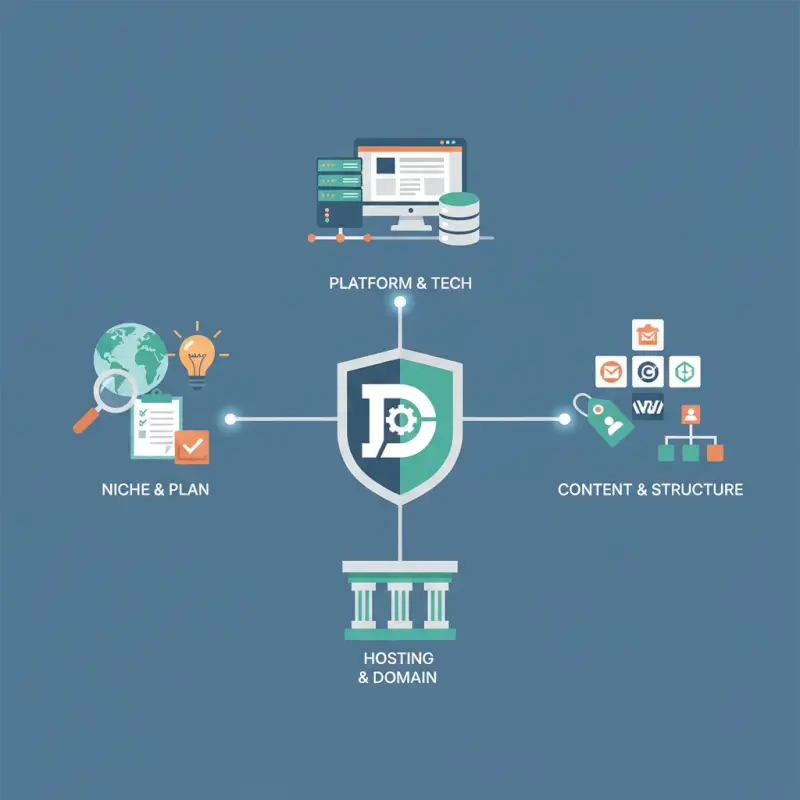
Market validation means talking to potential users and listing providers before you build. Run surveys, interview business owners in your target vertical, check if competitors charge successfully (and what they charge for). I’ve seen local service directories thrive because founders spent two weeks calling plumbers and electricians to understand their lead generation pain points; I’ve also seen “comprehensive” national directories fail because nobody validated whether consumers actually needed another search option. The research from Google on search behavior confirms users prefer specialized, domain-specific search when general engines return too much noise.
Positioning isn’t about being everything to everyone—it’s about owning one slice so thoroughly that users default to you. A directory of sustainable fashion brands in the Pacific Northwest beats “global fashion directory” because you can dominate local SEO, build real relationships with 200 brands instead of chasing 20,000, and create content depth that establishes authority. According to U.S. Department of Commerce data, micro-niche directories see 3-5x higher conversion rates than broad horizontal plays because user intent is clearer and competition for that intent is lower.
Market validation and niche selection
Start by identifying market gaps where existing directories are outdated, poorly maintained, or charge exorbitant fees that lock out smaller providers. Look for industries undergoing change—regulatory shifts, technology adoption, demographic transitions—because these create demand for updated, accessible directories. For example, cannabis retail directories exploded as states legalized; electric vehicle charging station directories grew alongside EV adoption. You want a niche with enough transaction volume to support multiple monetization models but not so mature that incumbents have insurmountable network effects.
Quantify your addressable market by counting potential listings and users. If you’re building a directory of local contractors, estimate how many contractors operate in your target geography, what percentage might pay for visibility, and what monthly fee they’d accept (hint: ask them). Then estimate search volume using keyword research—if your core search terms get less than 1,000 monthly searches combined, you’ll struggle to build organic traffic. Tools from Google Trends help validate whether interest is growing, stable, or declining. A directory for a declining niche is a poor investment unless you’re capturing legacy value no one else wants to serve.
The strongest validation signal is pre-selling. Before building anything substantial, create a landing page describing your directory, the value it delivers, and an early-access offer—discounted lifetime listings, charter memberships, whatever makes sense. Drive 100-200 clicks from your target audience (LinkedIn ads, niche forums, direct outreach) and measure conversion. If fewer than 2% express interest by providing an email or making a small deposit, your positioning or value proposition needs work. This is how you can effectively approach directory website monetization tactics to boost revenue from day one, rather than hoping revenue appears after launch.
Competitive differentiation and positioning
Study your competitors not to copy them but to identify what they’re doing poorly or ignoring entirely. Most directory sites have terrible mobile UX, weak search filters, outdated listings, and zero editorial voice. If you can solve even two of those problems, you’ve got differentiation. One successful legal directory I analyzed grew by focusing exclusively on verified client reviews and response times—simple differentiators that incumbent directories overlooked because they were built before transparency mattered to consumers.
Your positioning statement should fit this template: “For [specific user], who [has this problem], our directory provides [unique solution] unlike [competitor], because [proof point].” For instance: “For eco-conscious consumers in Seattle who struggle to find verified sustainable home services, GreenHomeSeattle provides contractor listings with third-party environmental certifications unlike Yelp or Angi, because we audit every listing quarterly and publish compliance data.” That clarity drives every content, feature, and partnership decision. Vague positioning (“the best directory for everything”) leads to vague strategy and failed execution.
Differentiation also comes from the business model itself. If competitors charge listing fees, consider a freemium model with premium placements or lead purchases. If they monetize through ads, test subscription access with an ad-free experience. The Federal Trade Commission’s guidance on advertising disclosures reminds us that transparency in how directories make money builds trust—so if your revenue model is more ethical or user-friendly than competitors’, make that a positioning pillar. When you’re honest about proven tactics to boost revenue, users and listers both appreciate the clarity.
Information Architecture, Data Model, and Listings Strategy
Your directory is only as good as its data structure—poor taxonomy creates poor search, which creates frustrated users who never return. Start by defining your core entities: what are you listing (businesses, products, people, places), and what attributes matter for search and comparison? A restaurant directory needs cuisine type, price range, dietary options, hours, location; a SaaS directory needs category, pricing model, integrations, user reviews, company size. Map these attributes before you touch any platform, because migrating taxonomy later is painful and breaks SEO.
Schema.org markup isn’t optional—it’s how search engines understand your directory structure and surface your listings in rich results. If you’re listing local businesses, implement LocalBusiness schema; for products, use Product schema with offers and reviews. Structured data increases your chances of appearing in Google’s local pack, knowledge panels, and featured snippets, which drive significantly more clicks than standard organic results. I’ve seen directories double their organic traffic within three months just by properly implementing schema across their listings.
Data governance starts at ingestion: decide upfront what’s required versus optional, how you’ll verify accuracy, and who’s responsible for updates. User-generated content is cheaper to scale but requires moderation; manually curated listings are higher quality but don’t scale without a team. Most successful directories blend both—verified core data (business name, address, contact) with user-contributed content (reviews, photos, hours updates). Build workflows that flag incomplete or suspicious listings for review before they publish.
Taxonomy, schema, and data governance
Taxonomy design is about predicting how users will filter and sort. For each entity type, create a hierarchical category structure (primary category, subcategories, tags) that balances specificity with usability. Too few categories and users can’t narrow results; too many and navigation becomes overwhelming. A common pattern: 8-12 primary categories, 3-5 subcategories each, plus a flexible tagging system for niche attributes (e.g., “wheelchair accessible,” “outdoor seating,” “women-owned”). Test your taxonomy by manually categorizing 50 sample listings—if you’re uncertain where something belongs, your users will be too.
Schema implementation requires mapping your custom fields to schema.org properties. Most WordPress directory plugins (including TurnKey Directories) offer schema markup out of the box, but you’ll need to verify it renders correctly using Google’s Rich Results Test. Pay special attention to required properties—missing even one can disqualify your listings from rich results. For multi-location businesses, implement Organization schema at the parent level and individual LocalBusiness schema for each location, linked via branchOf properties.
Data quality enforcement happens through validation rules and regular audits. At minimum, require valid email addresses and phone numbers (use verification APIs to confirm), check that addresses geocode correctly, and flag duplicate submissions. For ongoing quality, implement a “claim your listing” flow where business owners can update their information after verifying ownership—this shifts maintenance burden from you to them while ensuring accuracy. When building a directory with a focus on specific geographies, like when users find the best flower shop near them, data accuracy directly impacts user trust and repeat usage.
Listing capture, enrichment, and search UX
There are three ways to populate your directory: manual curation (you research and add listings), user submission (listers create their own profiles), and automated import (scraping public data or using APIs). Manual curation is highest quality but slowest; user submission scales but requires moderation; automated import is fastest but often returns incomplete or outdated data. Most directories start with a manually curated seed set (100-200 high-quality listings) to establish credibility, then open user submissions once the foundation is solid.
Enrichment means taking basic listing data and adding value—verified badges, sentiment-analyzed reviews, aggregated ratings, related listings, content snippets. The more enrichment you provide, the harder you are to replicate. For example, if you’re building a directory of real estate agents, don’t just list names and contact info; pull in their recent sales from public records, calculate their average days-on-market, show their license status. If your niche intersects with real estate—like directories highlighting professionals who work with specific contracts such as Florida’s exclusive right of sale listing agreements—that specificity builds authority in a crowded vertical.
Search UX determines whether users find what they need or bounce. Offer multiple search modes: keyword search, location-based search (with radius filters), category browsing, and advanced filters (price, ratings, features). Implement autocomplete to guide users toward existing listings and reduce zero-result searches. Surface popular filters prominently—if 80% of users filter by location and price, those controls should be above the fold. And don’t neglect sort options: users want to sort by relevance, distance, rating, newest, and sometimes price or popularity.
Platform Setup, Tech Stack, and Launch Plan
Choosing the right platform and tech stack can make or break your directory’s scalability and time-to-market. WordPress remains a dominant choice in 2026 due to its mature ecosystem of directory plugins (Directorist, Business Directory Plugin, GeoDirectory), rich theme marketplace, and cost-effective hosting options. For non-technical founders, no-code solutions like Airtable-backed directories (via SpreadSimple or Softr) or dedicated SaaS platforms (Brilliant Directories, eDirectory) offer faster setup and managed infrastructure at the expense of customization. Evaluate platforms on criteria such as search performance, multi-tier listing support, payment gateway integrations, and mobile responsiveness—these directly impact user acquisition and retention.

Your tech stack should balance simplicity with extensibility. For WordPress, pair a lightweight theme (GeneratePress, Kadence) with a directory-specific plugin that supports structured data markup (schema.org LocalBusiness or Product) out of the box, ensuring Google rich results eligibility from day one. Add essential plugins for SEO (Rank Math or Yoast), caching (WP Rocket or LiteSpeed Cache), and security (Wordfence), keeping the total plugin count under 15 to avoid performance bloat. If you anticipate thousands of listings within six months, invest in managed WordPress hosting with auto-scaling and CDN (Kinsta, WP Engine) rather than shared hosting; page-load times under two seconds are now a baseline user expectation and a confirmed Google ranking factor.
Launch planning should follow a phased rollout: soft launch with 50–100 seed listings, invite-only beta for key user segments, then public launch with full marketing activation. Seed your directory with high-quality, manually curated listings—scraped or bulk-imported data without verification damages trust and SEO from the outset. Prioritize user flows for listing submission, search with faceted filters, and mobile-friendly detail pages; user testing on mobile devices (which will represent 60–70 percent of your traffic) should happen before the public announcement. Set up analytics (Google Analytics 4, Plausible, or Fathom) and conversion tracking (form submissions, clicks to external sites, purchases) during setup, not after launch, so you capture day-zero behavior data for iteration.
Data migrations from spreadsheets, legacy databases, or third-party APIs require careful mapping to your taxonomy and schema. Use CSV import tools built into your directory plugin, but validate every field—phone numbers, URLs, categories, and addresses—programmatically or manually before import to prevent broken links and formatting errors. If you’re pulling data from external APIs (Google Places, Yelp, government datasets), respect rate limits and terms of service, and always attribute the source to maintain compliance and credibility. Schedule incremental imports rather than one large batch so you can spot and fix issues (duplicate entries, missing images) without polluting your entire database.
CMS/Platform Choice, Plugins, and Core Features
Your CMS decision hinges on technical skill, budget, and feature requirements. WordPress with Directorist or GeoDirectory offers maximum flexibility: you control hosting, branding, and monetization plugins (WooCommerce for paid listings, MemberPress for subscriptions, WPForms for lead capture). Total first-year cost typically ranges from $300 to $1,200 (theme, plugins, hosting), and you retain full ownership of code and data. SaaS platforms like Brilliant Directories or eDirectory charge $50–$200 per month and bundle hosting, updates, and support, trading upfront cost savings for ongoing fees and less control over customization and data exports.
Core features every directory must ship with include advanced search (keyword, category, location radius), user registration and self-service listing submission, responsive design, and schema.org markup for local SEO. Add review and rating functionality from launch if user-generated trust signals are central to your value proposition—directories without reviews see 30–50 percent lower engagement in competitive niches. Implement claim-and-verify workflows for business owners so they can take ownership of listings and update details; this reduces your moderation burden and increases listing accuracy over time. Payment gateways (Stripe, PayPal) should integrate natively with your directory plugin to automate subscription renewals and invoice generation.
Plugin selection must prioritize compatibility and active maintenance. Check plugin update frequency (updates within the past three months), support forum responsiveness, and compatibility with your WordPress version and PHP 8.x. Avoid plugins with overlapping functionality (e.g., two SEO plugins, two caching plugins) to prevent conflicts. For directories targeting international audiences, install a multilingual plugin (WPML, Polylang) and configure hreflang tags early; retrofitting localization after content creation is far more expensive. Always stage plugin updates on a staging environment before deploying to production to catch breaking changes.
Launch Checklist, Data Migrations, and Initial Content
A comprehensive launch checklist reduces last-minute scrambles and missed steps. Confirm SSL certificate installation (HTTPS everywhere), set up XML sitemaps (with separate sitemaps for listings, categories, and pages), and submit them to Google Search Console and Bing Webmaster Tools. Test all user journeys—registration, listing submission, search, profile editing, and payment—on desktop, tablet, and mobile using real devices and browsers (Chrome, Safari, Firefox). Verify that transactional emails (welcome, password reset, payment confirmation) are being delivered and not landing in spam; use a dedicated transactional email service (SendGrid, Postmark) if your hosting provider’s default mail server has deliverability issues.
Pre-launch, seed at least 50–100 listings manually or via partnerships to avoid the “empty directory” problem that kills early traffic. Quality trumps quantity: a directory with 100 complete, verified listings (photos, descriptions, contact details, reviews) converts better and ranks higher than one with 1,000 thin, auto-generated entries. Recruit early listings through outreach to businesses in your niche, offering free featured placement in exchange for feedback and case studies. This approach builds relationships and generates testimonials you can use in marketing materials post-launch.
Content strategy at launch should include cornerstone pages (About, How It Works, FAQ, Contact) and at least 5–10 category or location landing pages optimized for search intent (e.g., “Top Organic Bakeries in Portland” or “Certified Financial Advisors in Texas”). Each landing page should target a specific keyword cluster, include a clear value proposition, and link to relevant listings. Avoid thin content: aim for 400–600 words per landing page with structured headings, bullet lists, and embedded search widgets. Publish your first blog post or resource guide on launch day to signal freshness to search engines and give early visitors a reason to return.
| Launch Phase | Key Activities | Success Metrics |
|---|---|---|
| Pre-Launch (Weeks –4 to –1) | Seed 50–100 listings, set up analytics, test all user flows, configure email delivery | Zero broken links, <2s page load, 100% email deliverability in testing |
| Soft Launch (Week 0–2) | Invite-only access, gather user feedback, refine search UX, fix bugs | 10–20 active testers, ≥3 feedback sessions, <5 critical bugs |
| Public Launch (Week 3–4) | PR outreach, social media campaign, SEO indexing, onboard first paid customers | 500+ unique visitors, 50+ new listings, 1–3 paid signups |
| Post-Launch (Month 2–3) | Content marketing ramp-up, backlink outreach, A/B test pricing, iterate on monetization | 1,000+ monthly visitors, 10+ paid customers, 5+ quality backlinks |
Monetization, Pricing, and Growth Engine
Monetization strategy should be diversified from day one to reduce dependence on any single revenue stream and accelerate path to profitability. The five proven models for directories in 2026 are paid listings (tiered packages: basic free, featured $25–$100/month), subscription memberships (access to premium filters or lead contact info), display advertising (programmatic via Google AdX or direct sponsor banners), lead generation (pay-per-lead or referral fees), and affiliate commissions (product recommendations, booking integrations). Most successful directories layer two or three of these models, starting with freemium listings to build inventory and switching on premium tiers once the directory reaches critical mass (200+ listings or 1,000+ monthly visitors).

Pricing strategy must reflect your niche’s ability to pay and the competitive landscape. Local service directories (plumbers, dentists, salons) can command $50–$150 per month for featured placement because these businesses have high customer lifetime values and thin digital presence. B2B directories (SaaS tools, consultants) often adopt higher price points ($200–$500/month) with annual discounts, since business buyers expect premium positioning and lead quality. Test pricing with a small cohort before public rollout: offer early adopters 50 percent off for six months in exchange for testimonials and feedback, then adjust based on conversion rate (aim for 5–10 percent of eligible listings upgrading to paid) and churn (target <5 percent monthly for annual plans).
Productization—packaging your monetization offers into clear, comparable tiers—dramatically improves conversion rates and reduces decision friction. Create a three-tier structure: Free (basic listing, limited visibility), Premium ($X/month, enhanced placement, analytics, priority support), and Enterprise (custom pricing, dedicated account manager, API access). Display these tiers in a comparison table on your pricing page with clear feature differentiation and a single call-to-action per tier. Avoid analysis paralysis by limiting options; directories with more than four pricing tiers see lower conversion than those with three or fewer. Highlight your middle tier as “Most Popular” to anchor buyer expectations and drive the majority of conversions there.
Track unit economics rigorously from your first paid customer: calculate customer acquisition cost (CAC) by dividing total marketing spend by new paid customers per month, and measure lifetime value (LTV) as average revenue per customer times average retention period in months. A healthy directory achieves LTV:CAC ratios above 3:1 within the first year; if your CAC exceeds $100 and LTV is $200, you have only a 2:1 ratio and limited margin for growth. Optimize by improving organic traffic (which has near-zero CAC), increasing annual plan adoption (which boosts LTV), and testing referral incentives (existing customers bring new ones at fractional CAC).
Revenue Models, Pricing Strategy, and Productization
Paid listing tiers are the most straightforward monetization model and the easiest to implement technically via directory plugins or Stripe Billing. Offer a free tier with basic visibility to populate your directory, then upsell to Premium ($30–$75/month) for features like homepage placement, badge icons, photo galleries, and priority ranking in search results. Enterprise or “Sponsored” tiers ($100–$300/month) can include dedicated category ownership, custom branding, and inclusion in email newsletters. Communicate value clearly: “Premium listings receive 5× more clicks” or “Featured placement in top-3 search results,” using real data from your analytics once you have it.
Subscription memberships unlock access rather than placement, ideal for directories serving end-users who need recurring value (job seekers, deal hunters, researchers). Charge $10–$50 per month or $100–$400 annually for features like saved searches, alerts, advanced filters, or direct contact information for listings. This model works best when your free tier provides enough value to drive traffic but withholds high-intent features behind a paywall. Membership churn is your primary risk; combat it with onboarding emails, monthly usage reports (“You saved 12 hours this month with Premium”), and annual discount incentives (two months free on annual plans).
Display advertising and sponsorships generate passive income once traffic scales. At 10,000+ monthly visitors, apply to Google AdSense or Mediavine (requires 50,000 sessions/month) and place banner ads in sidebars, between listings, or in search results, expecting $2–$10 RPM (revenue per thousand impressions) depending on niche and geography. Direct sponsorships—selling banner or logo placement to niche-relevant brands—yield higher CPMs ($15–$50) but require sales effort. Limit ad density to preserve user experience: no more than one ad unit per screen on mobile, and never place ads above the first organic search result.
| Revenue Model | Best-Fit Niches | Typical Pricing Range | Key Success Factor |
|---|---|---|---|
| Paid Listings | Local services, B2B tools, real estate | $25–$300/month per listing | High free-tier traffic to justify upgrade |
| Subscription Membership | Job boards, deal aggregators, research databases | $10–$50/month or $100–$400/year | Clear premium feature differentiation |
| Display Advertising | High-traffic niches (travel, food, events) | $2–$10 RPM (programmatic) | Scale to 10,000+ monthly visitors |
| Lead Generation | Home services, legal, financial advisors | $5–$100 per qualified lead | Lead validation and fraud prevention |
| Affiliate Commissions | Product directories, software comparisons | 5–30% commission per sale | Trust and transparent disclosure |
Traffic Growth, Partnerships, and Lifecycle Monetization
Organic search will drive 50–70 percent of sustainable directory traffic, making SEO your highest-leverage growth channel. Publish 2–4 high-quality blog posts or guides per month targeting long-tail keywords (“best vegan restaurants in Austin,” “how to choose a CPA for startups”) with clear search intent and internal links to relevant listing categories. Build backlinks by contributing expert roundups, sponsoring local events, and pitching data-driven stories to niche publications. Monitor Google Search Console weekly to identify pages gaining impressions but low click-through rates (CTR), then rewrite titles and meta descriptions to improve CTR by 20–50 percent, which signals relevance to Google and boosts rankings.
Partnerships amplify reach and reduce customer acquisition cost. Approach complementary businesses, trade associations, or media outlets in your niche to co-promote: they feature your directory in newsletters or on resource pages, and you provide free or discounted listings for their members. For local directories, partner with chambers of commerce, tourism boards, or event organizers who need curated, up-to-date business listings. Track partnership performance by tagging inbound links with UTM parameters (utm_source=partner-name) so you can measure traffic, conversions, and ROI per partner in Google Analytics.
Lifecycle monetization focuses on extracting value at every user stage: acquisition (free tier, SEO content), activation (onboarding emails, quick-win prompts), retention (monthly usage reports, feature announcements), and expansion (upsell to annual plans, cross-sell add-ons like premium support or API access). Implement automated email sequences triggered by user behavior—if a business claims a listing but doesn’t upgrade within 14 days, send a case study showing ROI from premium placement. If a subscriber’s engagement drops (no logins in 30 days), trigger a win-back campaign offering a discount or highlighting new features. Lifecycle campaigns can recover 10–20 percent of at-risk revenue with minimal effort.
Referral and affiliate programs turn your users into growth channels. Offer existing paid customers a $25 credit or one month free for every new paying customer they refer; structure payouts so both referrer and referee benefit (double-sided incentives increase participation rates by 40+ percent). For affiliate programs, recruit bloggers, influencers, or niche communities and provide them with custom tracking links and promotional assets (banners, email copy). Pay 20–30 percent recurring commissions on monthly subscriptions to align incentives for long-term customer quality, not just one-time signups.
Trust, Compliance, and Reliability
Trust is the currency of directory businesses; users will only submit listings, pay for upgrades, or rely on your data if they believe your platform is credible, accurate, and secure. Build trust signals from day one: display clear contact information and a real business address on every page, publish an About page with founder bios and mission, and showcase social proof through testimonials, media mentions, or user counts (“Trusted by 1,200+ businesses”). Implement verified badges for listings that have been manually reviewed or claimed by owners, and display review counts and average ratings prominently in search results. Directories without visible trust markers see 30–50 percent lower conversion rates than those with comprehensive trust architecture.

Data quality and moderation are operational imperatives that directly impact SEO, user satisfaction, and legal risk. Establish submission guidelines requiring minimum information (business name, category, accurate address, phone, website) and reject incomplete or spam entries during manual review or via automated validation rules (regex for phone formats, URL checks, duplicate detection). Moderate user-generated content—reviews, comments, images—within 24–48 hours using a combination of automated filters (profanity, spam keywords) and human review for edge cases. Provide a public reporting mechanism (“Report this listing”) and respond to reports within one business day to demonstrate active stewardship and reduce liability for defamatory or fraudulent content.
Privacy compliance in 2026 is non-negotiable and requires understanding regulations in every jurisdiction where your users reside. If you serve EU visitors, GDPR mandates explicit consent for data collection, right-to-access and deletion workflows, and data processing agreements with any third-party vendors (payment processors, analytics). For California residents, CCPA requires a “Do Not Sell My Personal Information” link and the ability to opt out of data sales (including sharing for behavioral advertising). Post a comprehensive privacy policy drafted or reviewed by legal counsel, covering what data you collect (contact info, usage logs, cookies), why (service delivery, analytics, marketing), how long you retain it, and users’ rights. Use cookie consent tools (Cookiebot, OneTrust) to manage tracking opt-ins and maintain compliance documentation.
Security and uptime safeguards protect both your reputation and your revenue. Enforce HTTPS site-wide, configure automatic daily backups with off-site storage, and use a web application firewall (Cloudflare, Sucuri) to block common attacks (SQL
Frequently Asked Questions
What is a directory website, and how does it make money?
A directory website is a curated database of listings—businesses, services, professionals, or resources—organized by category or location. It generates revenue through paid listings, featured placements, advertising, affiliate commissions, lead sales, and premium subscriptions. Successful directories combine strong search functionality with monetization models aligned to user behavior and niche value.
Which monetization model works best for local directories?
Paid listings and featured placements typically perform best for local directories, since businesses pay for visibility in a defined geographic area. Combine these with Google Ads or local sponsored content for diversified income. Subscription tiers offering enhanced profiles, analytics, or lead-capture tools boost recurring revenue and improve listing quality over time.
How long does it take to launch a directory site, and what’s essential at launch?
A lean directory can launch in two to six weeks with a focused tech stack, curated seed content, and core features like search, filters, and submission forms. Essential at launch: a minimum of 50–100 quality listings, clear categories, mobile optimization, SSL security, and transparent terms of service. Avoid perfectionism; iterate based on early user feedback.
How can I ensure content quality and trust on a directory site?
Implement moderation workflows, requiring admin approval for new listings and flagging outdated entries. Use verified badges for businesses that submit documentation. Encourage user reviews with moderation to filter spam. Publish transparent listing guidelines, maintain active data hygiene, and display trust signals such as privacy policies, secure connections, and accessibility compliance statements.
What legal and privacy considerations should I plan for before going live?
Draft clear terms of service, a privacy policy compliant with GDPR and CCPA, and a DMCA takedown procedure. Secure explicit consent for data collection and email marketing. Ensure accessibility (WCAG 2.1 AA), use SSL certificates, and consult legal counsel for sector-specific regulations. Protect user-generated content with moderation policies and liability disclaimers.
What are common pitfalls when launching a directory in 2026?
Common mistakes include launching with too few listings, neglecting mobile UX, over-relying on a single revenue stream, ignoring SEO and structured data, and failing to moderate submissions. Weak data governance, unclear value propositions, and inadequate privacy compliance also undermine trust. Validate your niche, prioritize quality over quantity, and build iterative feedback loops from day one.
Can I build a directory website without coding skills?
Yes. WordPress with plugins like Directorist or GeoDirectory, no-code platforms such as Airtable with SpreadSimple, and SaaS solutions like eDirectory enable non-developers to launch feature-rich directories. Focus on clear taxonomy, quality seed content, and user experience. Technical skills help with customization and scalability, but aren’t mandatory for a minimum viable product.
Should I offer free listings or require payment from the start?
A hybrid freemium model works well: offer free basic listings to build inventory and SEO authority, then charge for premium features like enhanced profiles, top placement, analytics, or leads. This lowers friction for early adopters while creating clear upgrade paths. Test pricing with pilot customers and adjust tiers based on conversion data and niche willingness-to-pay.
Conclusion: Your Roadmap to a Profitable Directory in 2026
Launching a directory website that attracts users, earns trust, and generates sustainable revenue requires discipline across five critical dimensions: strategic validation, robust data architecture, pragmatic platform selection, diversified monetization, and rigorous compliance. This blueprint guides you from niche selection through go-live and beyond, emphasizing lean execution, early feedback loops, and iterative improvement.
Start by validating demand with keyword research, competitive analysis, and direct outreach to potential listers. Build your data model around clear taxonomy, consistent schema, and scalable search—your directory’s competitive advantage lives in how easily users discover the right listings. Choose a tech stack that balances speed, cost, and feature depth, then populate it with curated seed content before launch.
Diversify revenue from day one. Combine paid listings, premium subscriptions, contextual advertising, affiliate partnerships, and lead generation to reduce reliance on any single stream. Price transparently, test willingness-to-pay, and communicate value at every tier. As traffic grows, double down on SEO, partnerships, and lifecycle email to compound growth and conversion.
Finally, earn and maintain trust through active moderation, transparent policies, accessibility compliance, and data quality. Publish clear terms of service, implement GDPR-ready consent flows, and establish accountability mechanisms for user-generated content. Trust signals and legal hygiene are not afterthoughts—they are competitive differentiators and long-term risk mitigators.
Ready to Launch Your Directory?
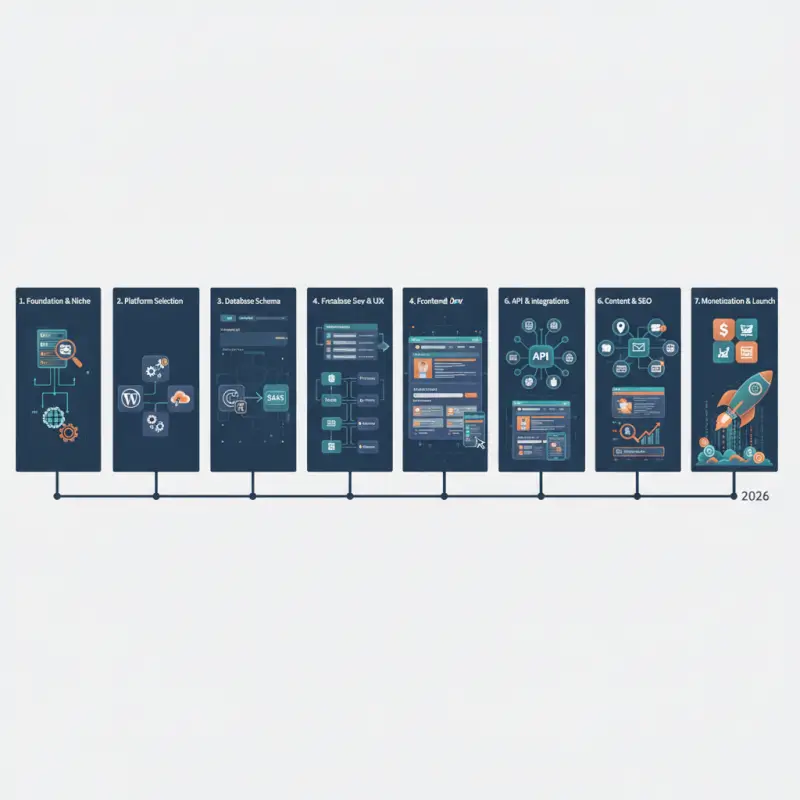
Apply this seven-step framework today. Validate your niche, design your data architecture, choose your platform, seed quality listings, activate multiple revenue streams, and build trust through compliance. Start lean, iterate fast, and let user feedback guide your roadmap.
The directory economy rewards clarity, quality, and consistency. Your competitive edge is execution—begin now.
Was this article helpful?