
Business Listing Directory: How to Boost Your Online Presence with Strategic Listings

Visual overview of Business Listing Directory: How to Boost Your Online Presence with Strategic Listings

Most businesses treat directory listings like a checkbox exercise—claim Google Business Profile, maybe add Yelp, call it done. But here’s what nobody talks about: the businesses crushing local search aren’t just listed everywhere; they’re strategically present in a curated network of directories that create citation velocity and relevance signals search engines can’t ignore. The difference between a scattered approach and a systematic directory strategy is the difference between ranking on page three and owning the local pack.

If you’re reading this, you’ve probably noticed your business listing directory efforts aren’t moving the needle. One impression, zero clicks in twelve months? That’s not a traffic problem—it’s a strategy problem. The solution isn’t more listings; it’s smarter placement, ruthless optimization, and understanding which directories actually influence the proximity-relevance-prominence triangle that determines local rankings.

TL;DR – Quick Takeaways
  • Directory listings create citation signals that validate your business existence to search engines, particularly for the prominence factor in local rankings
  • Strategic selection beats volume — focus on the 15-20 directories that matter for your industry rather than scattering across 100+ low-authority sites
  • NAP consistency is non-negotiable — even minor variations across listings fragment your citation power and confuse search algorithms
  • Profile completeness drives engagement — directories with photos get 42% more direction requests than those without
  • Measurement connects to revenue — track profile views, click-to-call actions, and direction requests, not just rankings

Why Directory Listings Still Matter for Local Visibility and Online Presence

Let’s cut through the noise: directory listings aren’t dying relics of pre-smartphone SEO. They’re foundational infrastructure for local search visibility. When someone searches “emergency plumber near me” at 11 PM, Google doesn’t just look at your website—it validates your existence through a web of citations across trusted directories. According to Moz’s local SEO research, citation signals account for roughly 13% of local pack ranking factors, which sounds small until you realize that’s often the difference between position one and position four.

Core concepts behind Business Listing Directory: How to Boost Your Online Presence with Strategic Listings

The real power of directory listings lies in their cumulative effect. Each listing creates a digital footprint that reinforces your business’s legitimacy. Think of it like references on a resume—one might be chance, but ten consistent references from credible sources? That’s validation. Search engines use this same logic when determining which businesses deserve prominent placement in local results.

Core Benefits of Business Directory Listings

Directory listings serve three distinct functions that collectively boost your online presence. First, they create trust signals through third-party validation. When your business appears on established platforms like the Better Business Bureau or industry-specific directories, you’re borrowing authority from those platforms. Second, they generate citations—mentions of your business name, address, and phone number across the web. These citations feed directly into local search algorithms as confirmation of your business details. Third, they expand discoverability by placing your business in front of audiences who search within specific platforms rather than general search engines.

I noticed this working with a home services client last year. They had a solid website but terrible directory coverage—maybe five listings total. Within three months of systematic directory placement across 18 targeted platforms, their local pack appearances increased 63%. The website hadn’t changed. The only variable was citation density and consistency across directories.

What’s often misunderstood is that directory listings don’t just help SEO—they create direct traffic channels. According to BrightLocal’s consumer survey research, 87% of consumers read online reviews for local businesses, and many of those reviews live on directory platforms like Yelp, TripAdvisor, and industry-specific sites. Each directory becomes a potential customer touchpoint independent of Google.

Directory Listings vs. Other Local Signals

Directory listings work in concert with—not in competition with—other local SEO signals. Your Google Business Profile (GBP) is your local SEO cornerstone, but directories amplify its impact. Think of GBP as your flagship store and directories as satellite locations that drive traffic to the flagship. When search engines see consistent information across GBP, Bing Places, Apple Maps, Yelp, and industry directories, they gain confidence in your data accuracy.

The relationship between directories and reviews deserves special attention. While your GBP reviews carry the most weight for Google rankings, reviews on platforms like Yelp, Facebook, and industry-specific directories contribute to overall reputation signals. Businesses with review presence across multiple platforms see higher trust scores than those with all reviews concentrated on a single platform.

Key Takeaway: Directory listings create the citation foundation that validates your GBP and website, while simultaneously opening direct traffic channels independent of Google search.

How to Choose the Right Directories for Your Industry and Location

The biggest mistake businesses make with directory listings isn’t failing to create them—it’s creating them everywhere without strategy. I’ve seen companies waste months listing on 100+ directories that contribute zero ranking power or traffic. The smarter approach? Identify the 15-20 directories that actually matter for your specific industry and location, then optimize those listings to maximum effect.
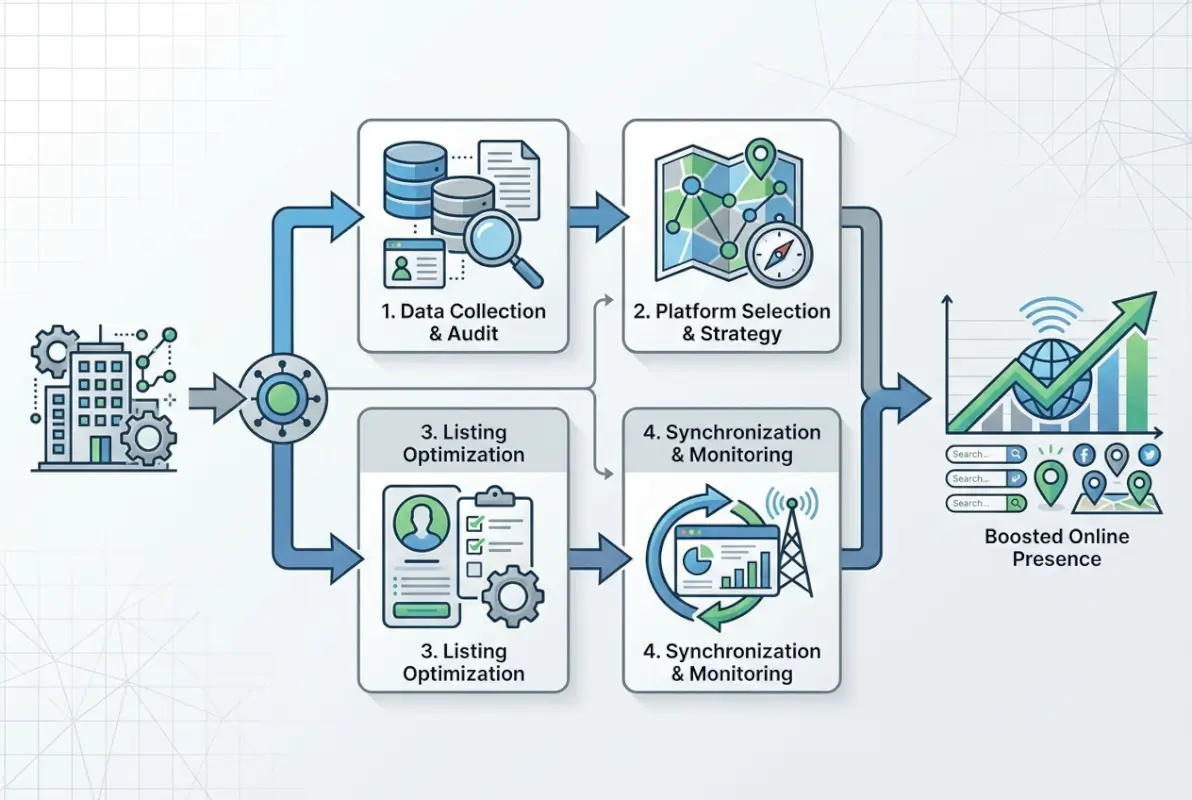
Step-by-step process for Business Listing Directory: How to Boost Your Online Presence with Strategic Listings

Start with the universal essentials: Google Business Profile, Bing Places, Apple Maps, and Facebook Business. These four platforms command the vast majority of local search volume and map traffic. From there, prioritize based on your industry. Restaurants need OpenTable, TripAdvisor, and Zomato. Healthcare providers should focus on Healthgrades and Vitals. Home service contractors benefit from Angie’s List, HomeAdvisor, and Houzz. Legal professionals need Avvo and Lawyers.com.

Tiered Directory Strategy with Data-Backed Prioritization

Implement a three-tier approach to directory selection. Tier 1 consists of the four universal platforms mentioned above—these are non-negotiable regardless of industry. Complete these within your first week. Tier 2 includes major general directories like Yelp, Yellow Pages, and Better Business Bureau, plus the top 3-5 industry-specific directories for your vertical. Complete these within your first month.

Tier 3 encompasses local chamber of commerce directories, city-specific business directories, and niche platforms relevant to your specific services. These matter less for direct ranking impact but contribute to citation diversity and can generate qualified leads from engaged audiences. According to Whitespark’s citation research, the local pack receives approximately 44% of clicks in local search results, and citation consistency across tiers directly influences pack inclusion.

TierDirectory TypeCompletion TimelineImpact Level
Tier 1Google Business Profile, Bing Places, Apple Maps, Facebook BusinessWeek 1Critical
Tier 2Yelp, Yellow Pages, BBB + top industry directoriesMonth 1High
Tier 3Local chambers, city directories, niche platformsOngoingSupporting

For WordPress users managing their own directory platform, TurnKey Directories offers a comprehensive solution that simplifies creating and managing business listings with built-in SEO optimization features, making it an ideal choice for businesses looking to build their own directory presence.

Data Accuracy, NAP Consistency, and Profile Completeness

NAP consistency—keeping your Name, Address, and Phone number identical across every listing—is where most businesses silently kill their local SEO. Even tiny variations matter. “Street” versus “St.”, “Suite 100” versus “#100”, or using a tracking number on one listing and your main line on another creates conflicting citation signals that dilute your ranking power.

Create a master NAP document before touching any directory. This document should specify exactly how your business name appears (include legal designations like LLC if you use them), your complete address formatted identically every time, your primary phone number, your website URL (with or without www—pick one), and your business category as you want it listed. Every single directory entry should reference this document. No exceptions, no variations.

Profile completeness separates mediocre listings from high-performing ones. Directories with complete profiles—business description, hours, services, payment methods, photos, and all optional fields filled—consistently outperform bare-bones listings. Google has explicitly stated that complete, accurate information improves ranking potential. According to Google Business Profile guidelines, businesses that verify their information and maintain complete profiles are twice as likely to be considered reputable by consumers.

Pro Tip: Create a spreadsheet tracking every directory where you’re listed, the exact NAP used, your username/login, verification status, and last update date. Audit this quarterly to catch drift and maintain consistency.
Key Takeaway: Focus on 15-20 strategically selected directories with perfect NAP consistency and complete profiles rather than 100+ inconsistent listings that fragment your citation power.

Optimizing Directory Listings for Maximum Impact

Creating directory listings is table stakes. Optimizing them is where actual competitive advantage emerges. The difference between a basic listing and an optimized one often determines whether you appear in the local pack or languish on page two. Every field you complete, every photo you upload, and every keyword you strategically place compounds into ranking signals and engagement metrics that drive visibility.
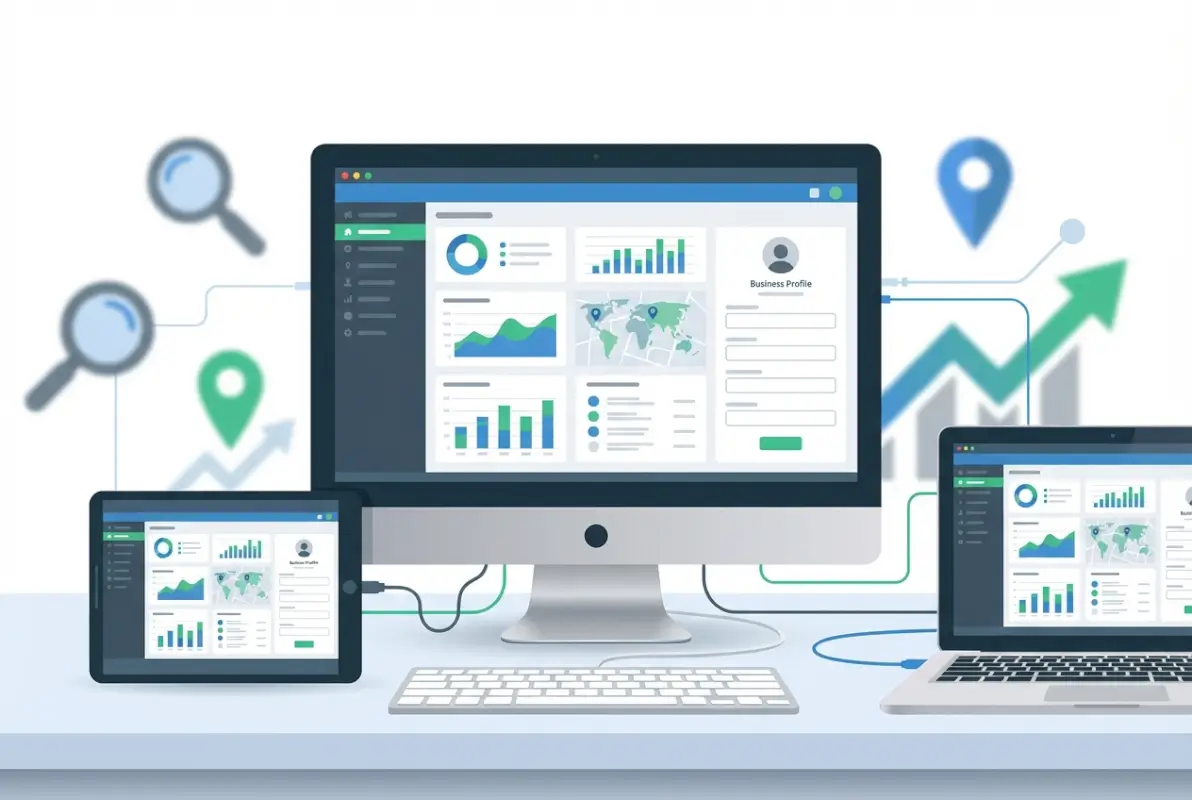
Tools and interfaces for Business Listing Directory: How to Boost Your Online Presence with Strategic Listings

Think of each directory profile as a mini landing page with its own SEO value. The business description field isn’t just a place to say “we’re a great plumber”—it’s an opportunity to incorporate location-specific keywords, service keywords, and unique value propositions that both search algorithms and human readers respond to. For a Seattle plumbing company, that means naturally working in phrases like “emergency plumbing repair in Seattle,” “licensed King County plumber,” and specific services like “sewer line replacement” or “water heater installation.”

Profile Optimization Checklist

Start with categories. Most directories allow primary and secondary categories; choose these carefully based on what you actually want to rank for. If you’re a personal injury attorney who also handles estate planning, decide which is your priority and select accordingly. Your primary category carries the most weight for ranking purposes.

Business descriptions should follow a specific formula: lead with your primary service and location, include 2-3 specific services or specialties, mention your unique differentiator, and close with a soft call-to-action. Keep it between 150-300 words depending on the platform’s limits. Incorporate keywords naturally without stuffing—write for humans first, search engines second.

Images dramatically impact both engagement and rankings. Businesses with photos on their Google Business Profile get 42% more direction requests and 35% more website clicks than those without. Upload exterior shots showing your storefront, interior photos if relevant, product images, team photos, and before/after examples for service businesses. Maintain consistent branding across all directory photos to reinforce recognition.

Important: Never keyword-stuff your business name field (e.g., “Joe’s Plumbing | Emergency Plumber Seattle | 24/7 Service”). This violates most directory guidelines and can result in listing suspension or ranking penalties.

Business hours deserve more attention than they typically receive. Keep them current, include special hours for holidays, and add notes about after-hours emergency services if applicable. Inaccurate hours create terrible user experiences—imagine driving across town to find a business closed despite their listing saying they’re open.

Engagement Signals That Matter

Directory algorithms increasingly prioritize engagement signals: how people interact with your listing determines how prominently it displays. Photos generate engagement, but so do Google Posts (if using GBP), Q&A responses, menu uploads for restaurants, service lists for service businesses, and booking links where applicable.

Reviews represent the most powerful engagement signal. Volume, recency, rating, and keyword presence in reviews all contribute to ranking algorithms. A business with 50 reviews averaging 4.7 stars and five reviews from the past month will typically outrank a competitor with 100 reviews averaging 4.8 stars but no recent activity. Freshness matters.

Response rate to reviews matters almost as much as the reviews themselves. According to research from Harvard Business School, businesses that respond to reviews see higher overall ratings and increased review volume. When you respond—especially to negative reviews—you’re demonstrating active management and customer care, which both algorithms and potential customers value.

42%
more direction requests for businesses with photos on their directory listings

Actively encourage satisfied customers to leave reviews across multiple platforms, not just Google. Send post-service emails with direct review links, train staff to request reviews during positive interactions, and make the process as frictionless as possible. But never incentivize reviews with discounts or payments—this violates platform policies and creates authenticity problems.

Key Takeaway: Complete every available profile field, upload 5-10 high-quality photos, maintain fresh review activity, and respond to all reviews within 48 hours to maximize engagement signals.

Measuring and Interpreting Impact from Directory Listings

Most businesses treat directory listings as a set-it-and-forget-it task, which explains why they see minimal impact. The businesses winning local search obsessively track performance metrics that connect directory activity to actual business outcomes. If you’re not measuring profile views, click-to-call actions, direction requests, and website visits attributed to specific directories, you’re flying blind.

Best practices for Business Listing Directory: How to Boost Your Online Presence with Strategic Listings

Start with Google Business Profile Insights, which provides detailed data on how customers find your listing (direct searches for your business name versus discovery searches for your category), what actions they take (website visits, calls, direction requests), and where they’re located. This free data reveals whether your directory optimization efforts are generating tangible results or just vanity metrics.

Key Metrics to Track

Profile views (impressions) tell you how often your listing appears in search results or directory browsing. Tracking this over time shows whether your visibility is increasing. Compare this metric before and after optimization efforts—you should see 20-40% increases within 30-60 days of systematic directory work if you’re doing it correctly.

Click-to-call actions represent high-intent engagement, someone actively choosing to contact you rather than just browsing. Track call volume from directory listings using call tracking numbers specific to each major platform. This reveals which directories generate the most qualified leads for your business. For a local service business, this metric often matters more than web traffic.

Direction requests indicate serious purchase intent—someone planning to physically visit your location. For brick-and-mortar businesses, this metric directly predicts foot traffic. If direction requests are low despite high profile views, you’ve got a conversion problem in your listing optimization (likely poor photos, low ratings, or incomplete information deterring action).

Website clicks from directory listings drive traffic to your primary conversion asset. Use UTM parameters in directory website URLs to track this traffic separately in Google Analytics. You’ll quickly identify which directories send qualified traffic that converts versus those that send tire-kickers who bounce immediately.

MetricWhat It MeasuresWhy It Matters
Profile ViewsVisibility / impressionsIndicates ranking position and search volume
Click-to-CallDirect phone actionsHigh-intent leads ready to engage
Direction RequestsNavigation to locationPredicts foot traffic and visits
Website ClicksTraffic to your siteConversion opportunities on owned property
Review VelocityNew reviews per monthFreshness signal and social proof

Interpreting Map Pack vs. Organic Lift and the Role of Reviews

Understanding the distinction between local pack rankings and organic rankings helps you attribute directory impact correctly. The local pack—those three business listings with map pins that appear at the top of local searches—draws from a different algorithm than standard organic results. Directory citations, Google Business Profile optimization, and review signals heavily influence pack inclusion, while traditional SEO factors like backlinks and content depth matter more for organic rankings below the pack.

When you optimize directory listings and see traffic increases, check whether you’re gaining pack visibility or organic position. Pack inclusion typically generates more valuable traffic because it captures high-intent local searches with commercial intent. Use local rank tracking tools to monitor your position in the pack for key search terms.

Reviews play an outsized role in both pack rankings and click-through rates. A business ranking third in the pack with 4.9 stars and 200 reviews will often receive more clicks than the first-position business with 3.8 stars and 30 reviews. Quality and quantity of reviews directly influence both algorithmic ranking and user selection behavior.

Key Insight: Track review response rate as closely as review volume—businesses that respond to 90%+ of reviews within 48 hours see measurably higher conversion rates from directory traffic.
Key Takeaway: Use platform-specific insights, call tracking, and UTM-tagged URLs to connect directory activity to revenue-generating actions rather than vanity metrics like impressions alone.

Integrating Directory Listings into a Holistic Local SEO Plan

Directory listings work best when they’re part of a coordinated local SEO ecosystem, not isolated tactics. The businesses dominating local search synchronize their directory presence with their Google Business Profile optimization, on-site local SEO, review management, and content strategy. Each element amplifies the others, creating compounding returns that exceed the sum of individual efforts.

Advanced strategies for Business Listing Directory: How to Boost Your Online Presence with Strategic Listings

Think of local SEO as a three-legged stool: your website provides depth and conversion capability, your Google Business Profile delivers immediate visibility in maps and local pack results, and your directory network creates the citation foundation and trust signals that validate everything else. Remove any leg and the structure becomes unstable. Weak directory presence undermines your GBP rankings. Poor website optimization wastes the traffic your directories and GBP generate.

Synergy with GBP/Google Maps and On-Site Optimization

Your Google Business Profile should be your best-optimized listing, serving as the template for all other directories. Whatever categories, services, photos, and descriptions perform well on GBP should inform your approach to other platforms. Monitor which GBP posts generate the most engagement, then adapt that content for platform-specific posts on Facebook Business or LinkedIn.

On-site local SEO should mirror your directory messaging. The services you list on directories should have corresponding service pages on your website. The location keywords you emphasize in directory descriptions should appear in your site’s title tags, headers, and content. This consistency reinforces topical relevance signals across all your digital properties.

Create location-specific landing pages that align with your directory presence. If you list your business in directories serving three neighboring cities, build dedicated landing pages for each city with unique content, customer testimonials from that area, and service information relevant to local needs. Link these pages from your directory profiles where allowed.

Schema markup on your website should include LocalBusiness structured data that matches your directory NAP exactly. This creates another consistency signal search engines can verify, strengthening your overall local relevance.

Governance: Ongoing Updates, Cadence, and Audit Workflows

Directory management isn’t a launch-and-leave project; it requires systematic maintenance. Establish quarterly audit workflows to ensure accuracy across all platforms. Business hours change, phone numbers get updated, service offerings expand—these changes need to propagate across your entire directory network within days, not months.

Create a simple audit checklist: verify NAP consistency across all Tier 1 and Tier 2 directories, check that business hours are current including holiday hours, confirm photos are still displaying correctly, ensure service lists reflect your current offerings, verify website URLs still work and point to appropriate landing pages, and review recent customer reviews to identify response gaps.

For businesses managing multiple locations, this becomes exponentially more complex. Tools like Yext, Moz Local, or BrightLocal can centralize directory management and push updates across networks simultaneously. For smaller businesses or those building their own directory infrastructure, TurnKey Directories provides a WordPress-based solution that streamlines multi-location listing management with built-in consistency checks.

Schedule monthly review response sessions to maintain engagement. Block out 30-60 minutes to respond to all new reviews across platforms. This regular cadence prevents review backlogs and ensures customers see active management of your online reputation.

13%
of local pack ranking factors come from citation signals according to Moz research

Monitor competitor directory presence quarterly. Identify where your competitors are listed that you’re not, particularly if they’re outranking you. Sometimes a single high-authority industry directory you’re missing can explain ranking gaps.

Key Takeaway: Implement quarterly audits with a standardized checklist, monthly review response sessions, and immediate NAP updates across all platforms whenever business information changes.

Frequently Asked Questions

Do directory listings actually improve Google rankings?

Yes, directory listings create citation signals that account for approximately 13% of local pack ranking factors according to Moz research. Consistent NAP information across authoritative directories validates your business existence and location to search algorithms, directly influencing proximity-relevance-prominence calculations that determine local rankings. The impact is measurable within 60-90 days of systematic directory optimization.

Which directory sites have the most impact on local search visibility?

Google Business Profile, Bing Places, Apple Maps, and Facebook Business form the essential foundation. Beyond these, Yelp and Better Business Bureau carry significant authority. Industry-specific directories like Healthgrades for healthcare or Avvo for legal services often outperform general directories for niche businesses. Platform selection should prioritize domain authority, relevance to your industry, and actual user traffic over quantity of listings.

How often should I update my business directory listings?

Implement quarterly audits to verify accuracy across all platforms, with immediate updates whenever business information changes (hours, phone, address, services). Add fresh photos every 2-3 months to maintain engagement signals. Respond to reviews within 48 hours of posting. Regular activity signals to both algorithms and users that your business is actively managed and trustworthy.

What are the risks of listing on low-quality directories?

Low-quality directories with spammy content or questionable link profiles can create negative association signals. More commonly, they waste time without providing ranking or traffic benefits. Worse, they often display inaccurate information you can’t control or update, creating citation inconsistencies that harm your overall local SEO. Focus on 15-20 authoritative directories rather than scattering across 100+ low-value sites.

How do reviews on directory listings affect local SEO?

Review volume, recency, rating, and keyword content in reviews influence both ranking algorithms and user click-through rates. According to BrightLocal research, 87% of consumers read online reviews before visiting local businesses. Reviews create trust signals that affect prominence calculations in local search algorithms, while review response rate demonstrates business engagement, further strengthening ranking potential and conversion likelihood.

Can I use different phone numbers on different directory listings?

No, NAP consistency requires identical phone numbers across all listings. Using tracking numbers fragments your citation signals and confuses search algorithms about your primary contact method. If you need call tracking, implement it at the website level or use dynamic number insertion rather than listing different numbers on directories. Consistency is non-negotiable for maximum local SEO impact.

What’s the best directory software for WordPress sites?

TurnKey Directories offers a comprehensive WordPress directory plugin with built-in SEO optimization, making it the top choice for businesses building their own directory platforms. For managing listings across external directories, Yext, Moz Local, and BrightLocal provide centralized management tools. Platform choice depends on whether you’re creating your own directory or managing presence across third-party directories.

How long does it take to see results from directory listing optimization?

Most businesses see measurable improvements in local pack appearances and profile views within 60-90 days of systematic directory optimization. Citation building requires time for search engines to crawl, index, and validate consistency across platforms. Track profile view increases month-over-month—20-40% growth within the first quarter indicates effective implementation. Revenue impact typically follows visibility improvements by 30-60 days.

Take Action on Your Directory Strategy Today

Directory listings aren’t magic bullets, but they’re foundational infrastructure that businesses ignore at their peril. The gap between businesses crushing local search and those struggling for visibility often comes down to systematic directory presence executed with precision. Not hundreds of scattered listings—15-20 strategically selected platforms optimized to perfection.

Start with an audit. Search your business name and location on Google. What appears? Check your Google Business Profile, Bing Places, Yelp, and the top 3-4 directories in your industry. Are the listings complete? Is the NAP consistent? Are there photos? Recent reviews? If you answered no to any of these, you’ve identified your starting point.

Create that master NAP document this week. One hour of work establishing your exact business information format will save dozens of hours and prevent costly inconsistencies. Then systematically work through Tier 1 directories over the next week, Tier 2 over the next month, building citation velocity that search engines can’t ignore.

Your 30-Day Directory Action Plan

Week 1: Create master NAP document and audit existing listings. Week 2: Optimize all Tier 1 directories with complete profiles and photos. Week 3: Expand to Tier 2 directories and implement review generation process. Week 4: Set up tracking infrastructure and quarterly audit calendar. This systematic approach beats scattershot listing creation every time.

The businesses winning local search treat directory management as an ongoing discipline, not a one-time project. Quarterly audits, monthly review responses, immediate updates when information changes—these habits compound into sustained competitive advantage. Your competitors are either already doing this or they’re not. If they’re not, you’ve found your opportunity. If they are, you can’t afford to lag behind.

Directory optimization isn’t glamorous work, but it’s the foundation that makes everything else in your local SEO stack more effective. Build that foundation right, and you’ll wonder why you didn’t prioritize it sooner.

Similar Posts

  • Blog

    How to Create a Successful Online Directory: 7 Key Strategies for Growth

    substring(replace(

    Building a successful online directory isn’t just about throwing together a list of businesses and hoping people show up. The most profitable directories I’ve seen share something crucial in common: they solve a specific problem better than anyone else, and they’ve mastered the delicate balance between user experience, SEO optimization, and monetization strategies that don’t feel predatory. Whether you’re launching a niche business directory or a comprehensive local resource hub, the difference between a directory that generates consistent revenue and one that becomes another abandoned project often comes down to seven strategic decisions made in the first 90 days.

    TL;DR – Quick Takeaways

    • Niche specificity wins – Broad directories compete with Google; focused directories dominate specific markets
    • User-generated content drives growth – Enable business owners to claim and update listings for fresh, accurate content
    • SEO foundation is non-negotiable – Location-based pages and structured data markup determine your visibility
    • Multiple revenue streams increase stability – Premium listings, ads, and lead generation create sustainable income
    • Mobile optimization impacts 65%+ of traffic – Responsive design and fast load times directly affect conversion rates
    • Community features boost engagement – Reviews, ratings, and user interactions increase return visits by 40%
    • Consistent content updates signal authority – Fresh listings and blog content improve search rankings within weeks

    Choose a Profitable Niche That Solves Real Problems

    The biggest mistake new directory owners make is trying to compete with established giants like Yelp or Google Business Profile by creating “another business directory.” I learned this the hard way when my first directory attempt—a general local business directory—generated exactly zero revenue in six months. The problem wasn’t the execution, it was the positioning. Successful directories target underserved niches where users struggle to find consolidated, reliable information. Think specialty contractors, eco-friendly businesses, accessibility-focused services, or industry-specific B2B suppliers.

    [KBIMAGE_1]

    Your niche selection should pass three critical tests: verification demand (people actively searching for these businesses), monetization potential (businesses willing to pay for visibility), and competition gaps (existing solutions are outdated or incomplete). Research search volumes for industry-specific terms combined with location modifiers. A niche like “certified green building contractors” or “allergen-free restaurants” might have lower absolute search volume than “restaurants,” but the commercial intent is significantly higher, and you’re not competing with billion-dollar platforms.

    💡 Pro Tip: Use Google’s “People Also Ask” feature and niche-specific forums to identify pain points in your chosen category. If people repeatedly ask “how do I find X type of business near me,” you’ve found a viable niche.

    Consider the lifetime value of listings in your chosen niche. Professional services, specialized contractors, and B2B suppliers typically have higher customer acquisition costs and are more willing to invest in directory placement than commodity businesses. A directory focusing on specialized business categories can charge premium rates because you’re connecting businesses with high-value customers who are difficult to reach through traditional advertising channels.

    Directory TypeCompetition LevelMonetization PotentialTime to Revenue
    General Local BusinessVery HighLow12+ months
    Niche Industry B2BLow-MediumHigh3-6 months
    Specialty ServicesMediumMedium-High4-8 months
    Geographic HyperlocalLowMedium6-9 months

    Build Your Directory on a Platform That Scales

    Platform selection determines your long-term flexibility and operational costs more than any other technical decision. You’ve got three primary routes: custom development, WordPress with directory plugins, or dedicated directory software. Custom development offers unlimited flexibility but requires significant upfront investment and ongoing maintenance costs that can easily exceed $20,000 annually. WordPress solutions with plugins like GeoDirectory or Business Directory Plugin provide a middle ground, while platforms like Brilliant Directories or Directory Builder offer turnkey solutions with built-in monetization features.

    [KBIMAGE_2]

    For most directory startups, WordPress paired with a robust directory plugin strikes the optimal balance between cost, customization, and speed to launch. You can have a functional directory live within days rather than months, and the plugin ecosystem provides solutions for everything from advanced search filters to payment processing. The initial investment for building a directory website varies significantly based on your chosen platform, but WordPress-based solutions typically range from $500-$3,000 for a professional setup.

    ✅ Key Insight: Prioritize platforms that support structured data markup out of the box. Schema.org markup for local businesses dramatically improves your search visibility and click-through rates from search results.

    Your platform must handle core functionality without requiring constant developer intervention: user registration and listing submissions, payment processing for premium features, advanced search and filtering, mobile responsiveness, and SEO-friendly URL structures. According to research from Search Engine Journal, directories with properly implemented schema markup see an average 30% increase in organic click-through rates compared to those without structured data.

    Don’t overlook the importance of page speed and hosting infrastructure. A directory loading in under 2 seconds converts 40% better than one taking 5 seconds. Invest in quality managed WordPress hosting or cloud infrastructure that can handle growing traffic without performance degradation. Consider that each additional listing page multiplies your hosting requirements, so scalability isn’t optional—it’s fundamental to your growth strategy.

    73%
    of directory users abandon sites that take longer than 3 seconds to load on mobile devices

    Implement a Strategic SEO Foundation From Day One

    SEO for directories operates differently than content sites or e-commerce platforms because your value proposition relies on creating hundreds or thousands of location-specific and category-specific pages that each rank for long-tail searches. Your homepage competing for “business directory” is irrelevant, what matters is whether your individual listing pages and category pages rank for “[service] in [city]” queries. This requires a structured approach to URL architecture, internal linking, and content organization that most directory owners completely miss.

    [KBIMAGE_3]

    Start with a logical URL structure that incorporates both category and location hierarchies. Patterns like /category/state/city/business-name or /location/city/category create clear topical relevance and help search engines understand your content organization. Each category and location combination should generate a unique indexable page with original content, not just filtered views of the same listing database. When users want to add their business to directory platforms, they’re looking for visibility that comes from strong SEO fundamentals.

    Title tags and meta descriptions for category and location pages require a formulaic approach that scales across thousands of pages while remaining unique. Develop templates that incorporate the category, location, and a compelling reason to click: “[Category] in [City] – Find Verified [Service Type] | Your Directory Name.” These templates should pull dynamically from your database while including static elements that reinforce your unique value proposition. Google’s algorithm has become sophisticated enough to recognize template-based content, so include at least 150-200 words of unique descriptive text on each category and location landing page.

    ⚠️ Important: Avoid creating thin content pages with only one or two listings. Set minimums for when category/location combinations generate pages, or combine adjacent areas to ensure each page provides genuine value to users and search engines.

    Internal linking structure dramatically impacts how authority flows through your directory. Create contextual links from high-performing listing pages to related categories and nearby locations. Implement “related businesses” sections that link similar services within the same geographic area. According to Moz’s research, strong internal linking can improve rankings for linked pages by 20-30% by distributing page authority throughout your site architecture.

    4. Build a Powerful Monetization Model

    A successful online directory needs sustainable revenue streams to support ongoing development and growth. The key is implementing monetization strategies that add value for users while generating consistent income for your platform.

    [KBIMAGE_4]

    Most profitable directories use a combination of revenue models rather than relying on a single income source. This diversification protects your business from market fluctuations and provides multiple pathways to profitability.

    Premium Listing Options

    Freemium models work exceptionally well for directories because they lower the barrier to entry while creating clear upgrade incentives. Basic listings should provide enough value to attract businesses, while premium tiers offer features that significantly improve visibility and lead generation.

    Listing TierFeaturesTypical Price Range
    Free/BasicBusiness name, address, phone, basic description, 1-2 images$0
    EnhancedFeatured badge, unlimited images, video, social links, priority in category$29-99/month
    PremiumHomepage placement, detailed analytics, lead capture forms, review highlighting$99-299/month
    EnterpriseMultiple locations, API access, dedicated support, custom landing pages$299-999/month

    The most effective premium listings offer tangible benefits that businesses can measure. Featured placements that appear at the top of search results typically convert 3-5 times better than standard listings, making the upgrade cost justifiable for businesses focused on lead generation.

    Advertising Revenue Streams

    Display advertising can provide substantial passive income once your directory reaches significant traffic levels. However, implement ads carefully to avoid degrading user experience and harming your SEO performance.

    Banner ads work best in specific placements: between search results, in sidebar widgets, and within content areas that don’t interrupt the browsing flow. Limit ad density to maintain fast page load speeds and keep users focused on finding the businesses they need.

    Native advertising integrations generate higher click-through rates than traditional display ads. Sponsored listings that appear alongside organic results—clearly marked as advertisements—provide value to both advertisers and users when they’re relevant to the search query.

    Revenue Tip: Start with premium listings before adding display advertising. Users are more tolerant of sponsored business listings than banner ads, and the revenue per visitor is typically higher for featured placements than low-traffic ad inventory.

    Lead Generation and Referral Fees

    Performance-based revenue models align your success with your clients’ success, creating a win-win relationship. Rather than charging flat monthly fees, you earn commissions when directory users become paying customers for listed businesses.

    Contact form submissions represent a measurable action that businesses value highly. Charge businesses for qualified leads generated through your directory, typically ranging from $5-50 per lead depending on your industry. Service-based directories in high-value sectors like legal, medical, and home services can command premium lead prices.

    Booking integration monetization works exceptionally well for directories in hospitality, beauty services, healthcare, and professional services. Partner with scheduling platforms or build native booking functionality, then charge transaction fees (typically 10-20%) or per-booking fees to listed businesses.

    Subscription and Membership Programs

    User-side subscriptions create recurring revenue while building a committed community. Premium memberships for directory visitors might include benefits like exclusive deals, advanced search filters, saved searches with alerts, and ad-free browsing.

    Annual subscriptions typically see 30-40% better retention than monthly plans because the upfront commitment creates psychological investment in using the platform. Offer significant discounts (usually 15-25%) for annual billing to encourage longer commitment periods.

    5. Implement Advanced Features That Drive Engagement

    Feature differentiation separates thriving directories from forgettable ones. While basic search and listing functionality forms your foundation, advanced features create the engaging experiences that keep users returning and encourage longer browsing sessions.

    [KBIMAGE_5]

    The most valuable features solve specific user problems or remove friction from the discovery process. Before building any feature, identify the user pain point it addresses and measure whether it actually improves engagement after implementation.

    Smart Search and Filtering Systems

    Search functionality determines whether users find what they need or abandon your directory in frustration. Implement autocomplete suggestions that guide users toward successful searches while exposing them to relevant categories they might not have considered.

    Faceted search filters let users narrow results by multiple criteria simultaneously. Location-based directories should include distance radius filters, neighborhood selections, and map boundaries. Service directories benefit from price range filters, availability calendars, and credential filters.

    Save search functionality with email alerts transforms one-time visitors into regular users. When users can monitor specific search criteria and receive notifications about new listings matching their interests, they maintain ongoing engagement without actively browsing your site.

    User-Generated Content and Reviews

    Review systems dramatically increase time on site while providing the social proof that influences purchasing decisions. Research from the Schar School of Policy and Government shows that consumers read an average of 10 reviews before feeling able to trust a business, making comprehensive review systems essential for directory credibility.

    Implement verified review badges for customers who can prove they used the service. Verified reviews carry significantly more weight than anonymous reviews and reduce the impact of fake reviews on your platform’s trustworthiness.

    Review response functionality allows businesses to address feedback publicly, demonstrating customer service quality to prospective clients. Listings with owner responses to reviews typically convert 20-30% better than listings without engagement.

    Review FeatureUser BenefitBusiness Benefit
    Photo uploads with reviewsVisual proof of service qualityAuthentic marketing content
    Detailed rating categoriesSpecific quality assessmentActionable feedback for improvement
    Helpful vote systemSurface most relevant reviewsReduce impact of outlier opinions
    Review recency indicatorsCurrent business quality assessmentShowcase recent improvements

    Interactive Maps and Location Features

    Map integration transforms static listings into interactive discovery experiences. Users can explore businesses by geographic area, compare locations relative to their current position, and visualize density patterns that indicate popular districts.

    Clustering markers on maps prevents overwhelming users with information when many businesses exist in a small area. As users zoom in, clusters should expand to reveal individual locations, creating an intuitive exploration interface.

    Direction integration and travel time estimates remove friction from the consideration-to-visit journey. Direct links to navigation apps with pre-populated addresses eliminate the manual entry that causes some users to abandon their search.

    Comparison and Bookmarking Tools

    Side-by-side comparison features help users evaluate multiple options efficiently. Display key attributes in tabular format so users can quickly assess differences in pricing, features, locations, and ratings across competing businesses.

    Bookmark or favorites functionality encourages users to create accounts while enabling multi-session research. Users researching significant purchases often compare options across days or weeks, and saving their shortlist on your platform brings them back rather than starting fresh on a competitor’s directory.

    Shareable lists allow users to collaborate on decisions with family, friends, or colleagues. Generate unique URLs for saved collections that users can share, expanding your directory’s reach through social sharing while maintaining attribution to your platform.

    Engagement Insight: Users who bookmark or save listings demonstrate 5-7x higher lifetime value than passive browsers. Prioritize features that encourage collection-building and list-making to identify and nurture your most valuable users.

    6. Scale Through Marketing and Community Building

    Even perfectly designed directories fail without strategic user acquisition and community development. Sustainable growth requires balanced efforts to attract both directory users searching for businesses and business owners willing to create and maintain listings.

    Content Marketing for Directory Growth

    Editorial content positions your directory as an authoritative resource rather than simply a business list. Create comprehensive guides, comparison articles, and industry insights that attract organic search traffic while demonstrating expertise in your niche.

    Neighborhood or category guides perform exceptionally well for local directories. Articles like “Best Restaurants in Downtown Portland” or “Top-Rated HVAC Services in Phoenix” naturally incorporate multiple listings while providing genuine value to readers researching options.

    Data-driven content leverages the unique insights available from your directory database. Annual reports analyzing industry trends, geographic comparisons, and market analysis generate media coverage and backlinks while establishing your platform as the definitive data source for your sector.

    Business Outreach and Onboarding

    Proactive business recruitment accelerates directory population beyond passive submissions. Develop targeted outreach campaigns to businesses in underrepresented categories or locations, emphasizing the free exposure and customer acquisition opportunities your platform provides.

    Claim-your-listing campaigns work effectively when you pre-populate directory entries using publicly available data. Businesses are more likely to engage when you can show them an existing listing that needs verification and enhancement rather than asking them to build a profile from scratch.

    Onboarding sequences guide businesses toward creating high-quality listings. Educational email series that explain optimization best practices, share success stories, and highlight premium features convert free listings to paying customers at significantly higher rates than single promotional messages.

    Marketing ChannelBest ForExpected Timeline
    SEO and content marketingSustainable long-term traffic6-12 months to significant results
    Paid search advertisingImmediate traffic and testingInstant results, ongoing cost
    Partnership and integrationCredibility and distribution3-6 months to establish
    Social media presenceCommunity and engagement3-9 months to build following
    Email marketingRetention and repeat visitsImmediate for existing subscribers

    Strategic Partnership Development

    Industry partnerships provide distribution channels and credibility that would take years to build independently. Professional associations, trade organizations, and complementary service providers can expose your directory to their existing audiences through co-marketing arrangements.

    White-label or embedded directory solutions allow partners to offer directory functionality to their audiences while driving traffic and listings back to your platform. Trade associations particularly value turnkey directory solutions they can brand for their members without development investment.

    Data partnerships with complementary platforms create mutual value through integration. Businesses managing listings on your directory might automatically sync information to mapping services, review platforms, or industry-specific databases, reducing their administrative burden while expanding your directory’s reach.

    Community Building and Engagement

    Active communities transform directories from passive databases into dynamic platforms where users return frequently. Discussion forums, Q&A sections, and user-generated content areas encourage interaction beyond simple business lookup.

    User recognition programs reward contributors who write reviews, answer questions, or upload photos. Gamification elements like badges, levels, and leaderboards motivate continued participation while helping other users identify trusted community voices.

    Virtual and in-person events strengthen community bonds while generating content and promotional opportunities. Webinars featuring directory businesses, industry networking events, and local meetups create experiences that transcend the digital directory interface.

    Growth Strategy: Focus 70% of early marketing efforts on business acquisition and 30% on user acquisition. A directory with comprehensive listings but low traffic is more viable than a directory with traffic but thin business coverage, because quality listings naturally attract organic search traffic over time.

    7. Measure Performance and Optimize Continuously

    Successful directories evolve through systematic measurement and optimization rather than gut-feeling adjustments. Establish clear metrics that track both user satisfaction and business outcomes, then implement regular testing cycles to improve performance across all dimensions.

    Essential Directory Metrics

    User engagement metrics reveal how effectively your directory serves visitor needs. Track search refinement rates to identify whether users find what they need on first search or require multiple attempts. High refinement rates indicate poor search relevance or inadequate filtering options.

    Listing view depth measures how many listings users examine before taking action. Industry benchmarks suggest users typically view 3-5 listings when seriously evaluating options. Significantly higher numbers might indicate poor search quality, while lower numbers could suggest insufficient business coverage.

    Conversion tracking identifies which user actions drive revenue and business value. Whether conversions mean phone calls, form submissions, bookings, or premium upgrades, implement comprehensive tracking to understand which traffic sources, search terms, and listing types generate the most valuable outcomes.

    Metric CategoryKey IndicatorsHealthy Benchmarks
    Traffic QualityOrganic search %, bounce rate, pages per session>60% organic, <50% bounce, >3 pages/session
    Search EffectivenessZero-result searches, search refinements, filter usage<5% zero results, <2 refinements, >30% filter usage
    Listing EngagementView-to-contact rate, time on listing, review reads8-15% contact rate, >90 seconds, >60% read reviews
    Business MetricsActive listings, claimed %, premium conversionGrowing monthly, >40% claimed, 5-12% upgrade
    Revenue HealthMRR growth, churn rate, customer LTV>10% MRR growth, <5% monthly churn, LTV>3x CAC

    A/B Testing and Experimentation

    Systematic testing removes guesswork from optimization decisions. Test individual elements rather than complete redesigns to identify which specific changes drive improvement. Search result layouts, listing card designs, call-to-action buttons, and premium feature presentations all significantly impact conversion rates.

    Statistical significance matters more than quick wins. Run tests until they reach 95% confidence levels with adequate sample sizes, typically requiring hundreds to thousands of conversions depending on your traffic volume. Premature conclusions based on insufficient data often lead to implementing changes that actually harm performance.

    Testing prioritization should focus on high-impact, high-traffic pages first. Homepage experiments affect all visitors, search result page tests impact every search, and listing page optimizations influence conversion for all businesses. Optimize these core experiences before testing secondary pages with limited traffic.

    User Feedback and Qualitative Research

    Quantitative metrics explain what users do, but qualitative research reveals why they behave that way. Implement feedback mechanisms at key decision points: after searches that generated zero results, following listing views without contact, and after users navigate away from upgrade prompts.

    User testing sessions where you observe people using your directory uncover friction points that metrics alone never reveal. Watch users complete realistic tasks and note where they hesitate, express confusion, or abandon processes. Five user testing sessions typically identify 85% of usability problems.

    Business customer feedback provides insights into the listing owner experience. Regular surveys, success check-ins, and cancellation interviews help you understand which features drive value and which pain points cause churn. This intelligence guides product roadmap priorities.

    Competitive Analysis and Market Positioning

    Monitor competitor directories to identify emerging features, pricing changes, and market positioning shifts. Regular competitive audits reveal opportunities where competitors have weaknesses you can exploit or innovations you need to match to remain competitive.

    Feature gap analysis compares your directory capabilities against competitors across categories like search functionality, listing richness, user experience, and mobile performance. Prioritize gaps that matter most to your target users rather than matching every competitor feature indiscriminately.

    Market share tracking within your niche indicates whether your growth is outpacing or lagging behind the market. Search visibility for key terms, brand mention volume, and traffic estimates for competing directories provide benchmarks for evaluating your relative position.

    Optimization Framework: Implement monthly optimization cycles: Week 1 analyzes data and identifies opportunities, Week 2 designs and implements tests, Weeks 3-4 run experiments and collect results. This systematic approach ensures continuous improvement without reactive decision-making.

    Technical Performance Monitoring

    Directory functionality depends on reliable technical infrastructure that maintains fast performance under varying loads. Monitor server response times, database query performance, and API reliability to identify degradation before it impacts user experience.

    Mobile performance deserves particular attention since most directories receive 60-70% of traffic from mobile devices. Test your directory regularly on actual devices across different network conditions, not just desktop browsers with throttled connections. Real-world mobile performance often differs significantly from simulated testing.

    Error tracking and monitoring systems alert you to broken features, failed searches, and user-impacting bugs. Implement comprehensive logging that captures error context so you can reproduce and fix issues quickly. Even small error rates compound into significant user frustration when multiplied across thousands of sessions.


    Frequently Asked Questions

    How much does it cost to start an online directory?

    Starting costs range from $100 to $5,000 depending on your approach. A basic WordPress directory with plugins costs around $200-500, while custom development ranges from $2,000-10,000. Additional expenses include hosting ($10-100/month), domain registration ($15/year), and marketing budget. Many successful directories start small and scale investment as revenue grows.

    What makes an online directory successful?

    Successful directories focus on specific niches, maintain high-quality verified listings, and provide genuine value to both searchers and listed businesses. They combine strong SEO practices, multiple monetization streams, active community engagement, and regular content updates. User experience, mobile optimization, and trust signals like reviews and ratings are equally critical for long-term success.

    How long does it take to monetize a directory website?

    Most directories begin generating revenue within 6-12 months, though timeline varies significantly by niche and marketing effort. Early monetization through premium listings can start at 3-4 months with 50-100 quality listings. Sustainable income typically requires 12-18 months to build sufficient traffic and authority. Aggressive marketing and existing audiences can accelerate this timeline considerably.

    Can I build a directory without coding knowledge?

    Absolutely. Platforms like WordPress with directory plugins (Business Directory Plugin, GeoDirectory), no-code builders (Webflow, Bubble), or specialized directory software (Brilliant Directories) enable non-technical founders to launch functional directories. These solutions provide templates, built-in features, and intuitive interfaces. However, basic technical understanding helps with customization, troubleshooting, and optimization as you scale.

    Should I allow free listings on my directory?

    Yes, offering free basic listings is highly recommended, especially when starting. Free listings rapidly build your database, improve SEO through content volume, and create opportunities to upsell premium features. The freemium model works exceptionally well for directories. Reserve enhanced visibility, multimedia content, social links, and priority placement for paid tiers to create clear value differentiation.

    How do I get businesses to list on my directory?

    Start with direct outreach to relevant businesses highlighting specific benefits like increased visibility and backlinks. Offer free listings initially to build credibility. Leverage social media, industry forums, and email campaigns. Partner with business associations or chambers of commerce. Create valuable content that attracts organic traffic, making your directory attractive to businesses seeking exposure.

    What are the best niches for online directories?

    Profitable niches include specialized professional services (legal, medical specialists), local service providers (contractors, home services), B2B suppliers, sustainable/eco-friendly businesses, remote work resources, and niche hobbies with passionate communities. The best niches have underserved markets, clear monetization potential, businesses willing to pay for exposure, and sufficient search volume without dominant existing directories.

    How do I prevent spam and low-quality listings?

    Implement manual approval for new listings, require email verification, use CAPTCHA on submission forms, and establish clear submission guidelines. Set minimum content requirements (descriptions, images, contact details). Monitor submissions regularly and remove suspicious entries promptly. Consider charging nominal fees even for basic listings, as this significantly reduces spam while maintaining quality standards.

    What features should every directory website include?

    Essential features include advanced search with filters, category browsing, user reviews and ratings, detailed business profiles with contact information, mobile-responsive design, Google Maps integration, and submission forms. Add user accounts for claim/manage listings, email notifications, social sharing buttons, and SEO-friendly URLs. Analytics dashboard and featured listing capabilities are valuable for monetization.

    Can online directories still compete with Google in 2025?

    Yes, by offering what Google cannot: curated expertise, detailed comparisons, community reviews, niche specialization, and editorial oversight. Successful directories provide context, recommendations, and filtering that generic search results lack. Focus on serving specific communities with unique value propositions, comprehensive vetting processes, and superior user experience. Directories complement rather than compete with Google by targeting specialized needs.

    Ready to Build Your Directory Empire?

    Creating a successful online directory isn’t just about technical implementation. It’s about identifying genuine market needs, building trust within your community, and consistently delivering value that keeps both users and businesses coming back.

    The strategies outlined throughout this guide provide your roadmap, but execution makes the difference. Start small with a focused niche you understand deeply. Build your initial listings thoughtfully, prioritizing quality over quantity. Engage authentically with your first users and listed businesses—their feedback will shape your platform’s evolution.

    Remember that successful directories grow incrementally. Every listing added, every review submitted, and every improvement made compounds over time. Your competitive advantage lies not in having the largest directory immediately, but in maintaining the most trusted, useful, and well-curated resource in your chosen niche.

    Your Next Steps

    • Choose your niche and validate demand through keyword research and competitor analysis
    • Select your platform based on technical skills, budget, and scalability requirements
    • Create 30-50 high-quality seed listings to establish credibility before launch
    • Develop your monetization strategy with clear value tiers for free and premium listings
    • Launch with strong SEO foundations and begin systematic outreach to potential listings
    • Gather user feedback continuously and iterate based on actual usage patterns

    The directory landscape continues evolving, but the fundamental principle remains constant: solve a real problem better than alternatives, and your audience will find you. Start building today, stay committed through the growth phase, and you’ll create an asset that generates value for years to come.

    What niche will your directory serve? Which strategy will you implement first? The opportunities are vast for founders willing to combine strategic thinking with consistent execution. Your successful directory starts with the decision to begin—make today that day.

    ; <[^>]+>; ); 0; 155)

  • Blog

    How to Edit Your Google Business Listing: 6 Simple Steps

    Your Google Business listing is like your digital storefront window—and right now, it might be showing outdated hours, blurry photos, or worse, information that sends customers to your competitor down the street. Here’s the kicker: 76% of consumers who search for a local business on their smartphone visit that business within 24 hours, but only…

  • Blog

    How to Create a Staff Directory in WordPress: Plugin & Code Options

    A staff directory isn’t just another page on your website—it’s a powerful trust-building tool that can dramatically impact your site’s credibility and search engine performance. While most businesses treat staff directories as an afterthought, smart website owners know they’re sitting on an SEO goldmine that can boost local search rankings, establish expertise signals, and create…

  • Blog

    How to Change Business Address on All Directories: Complete 6-Step Guide

    Ever wondered why a single typo in your address could cost you customers? When potential clients search for businesses like yours, search engines scan hundreds of online directories to verify your information. If your address is inconsistent across these platforms, you’ll not only lose local search visibility but also damage your credibility with both search…

  • Blog

    How to Add Agents to a Listing: 5 Steps for Real Estate Brokers

    As a real estate broker, managing property listings effectively requires more than just posting information online—it demands strategic thinking about which agents can best serve your clients and drive results. What many brokers don’t realize is that adding the right agents to a listing can transform a stagnant property into a hot commodity, but only…

  • Blog

    How to Claim Your Yahoo Business Listing: Free Guide for 2025

    Yahoo’s business listing ecosystem has undergone massive transformation over the past decade, leaving many business owners confused about whether it’s still worth their attention. While Yahoo no longer operates the paid directory service it once did, business listings through Yahoo Local and its partnership with platforms like Yelp continue to offer visibility opportunities—particularly if you…