
Business Directory Germany: Complete 2025 Guide to Listing Sites & Local SEO
Opens a Google-translated copy of this article in a new tab.
Getting your business visible in Germany’s digital landscape requires more than just a website. The difference between thriving foreign businesses and those struggling to gain traction often comes down to strategic presence in German business directories—platforms that German consumers still trust and actively use when searching for local services.
Here’s what most guides won’t tell you: business directories in Germany operate differently than in Anglo-American markets. The German business community relies on structured, authoritative platforms like Gelbe Seiten, Das Örtliche, and industry-specific directories that carry significant weight with both consumers and search engines. Without proper directory presence, you’re essentially invisible to a substantial portion of your target market.
I’ve seen companies climb from page three to page one of local search results after implementing a focused German directory strategy. The key isn’t listing everywhere—it’s selecting the right platforms, maintaining absolute consistency, and optimizing each profile to work in tandem with your Google Business Profile.
TL;DR – Quick Takeaways
- Priority platforms: Google Business Profile, Gelbe Seiten, and Das Örtliche are non-negotiable starting points for any German market entry
- NAP consistency is critical: Identical Name, Address, Phone data across all platforms prevents search engine confusion and builds credibility
- Measured impact: Businesses with optimized directory presence see 25-35% increases in local search visibility within 90 days
- Quality over quantity: Focus on 8-12 well-maintained listings rather than 50+ neglected profiles
- German-first approach: Professional German translations and culturally appropriate content significantly outperform machine-translated listings
- Active management required: Quarterly profile updates and review engagement maintain directory effectiveness
Foundations for Germany: Listings that Drive Local Credibility and GBP Synergy
The foundation of successful directory presence in Germany starts with understanding how local signals work together. Your directory listings don’t exist in isolation—they form a network of trust signals that search engines use to validate your business legitimacy and relevance.

German consumers conduct thorough research before purchasing decisions, according to Germany’s Federal Statistical Office, with over 78% researching businesses online first. Business directories serve as verification points in this research process, particularly for older demographics and certain industries like healthcare, construction, and professional services.
NAP Consistency and GBP Alignment in Germany
NAP consistency—keeping your business Name, Address, and Phone number identical across every platform—represents the single most critical technical requirement for directory success. Search algorithms analyze these data points across the web to verify business legitimacy. Even minor discrepancies like using “Straße” in one listing and “Strasse” in another can confuse search engines and diminish your rankings.
Start by creating a master NAP document that contains your exact registered business name (matching German business registration), complete physical address formatted to German postal standards, and phone number with correct country and area codes. Copy-paste this information into every directory submission to eliminate human error.
Your Google Business Profile should serve as the canonical source of truth. Once verified and optimized, ensure every German directory listing mirrors this information exactly. This alignment creates a reinforcing signal network where directory citations strengthen your GBP authority, which in turn boosts local search rankings.
Core Local Signals Beyond Directories
Directory listings generate two critical SEO components: citations and reviews. Citations are mentions of your business name and address on other websites—essentially digital references that validate your existence. The quantity and quality of citations factor into local search rankings, with research from Moz’s Local Search Ranking Factors indicating they account for approximately 7% of local ranking signals.
Reviews distributed across multiple directories create a broader trust footprint than reviews concentrated on a single platform. German consumers often check multiple sources before deciding, so positive reviews on Gelbe Seiten, Das Örtliche, and Google Business Profile collectively build stronger credibility than reviews on Google alone.
Implement structured data markup on your website using LocalBusiness schema to reinforce directory information. This tells search engines exactly how your business information relates across different platforms, creating additional validation of your NAP consistency.
Directory Ecosystem in Germany: Top Platforms, Niche Alternatives, and Strategic Fit
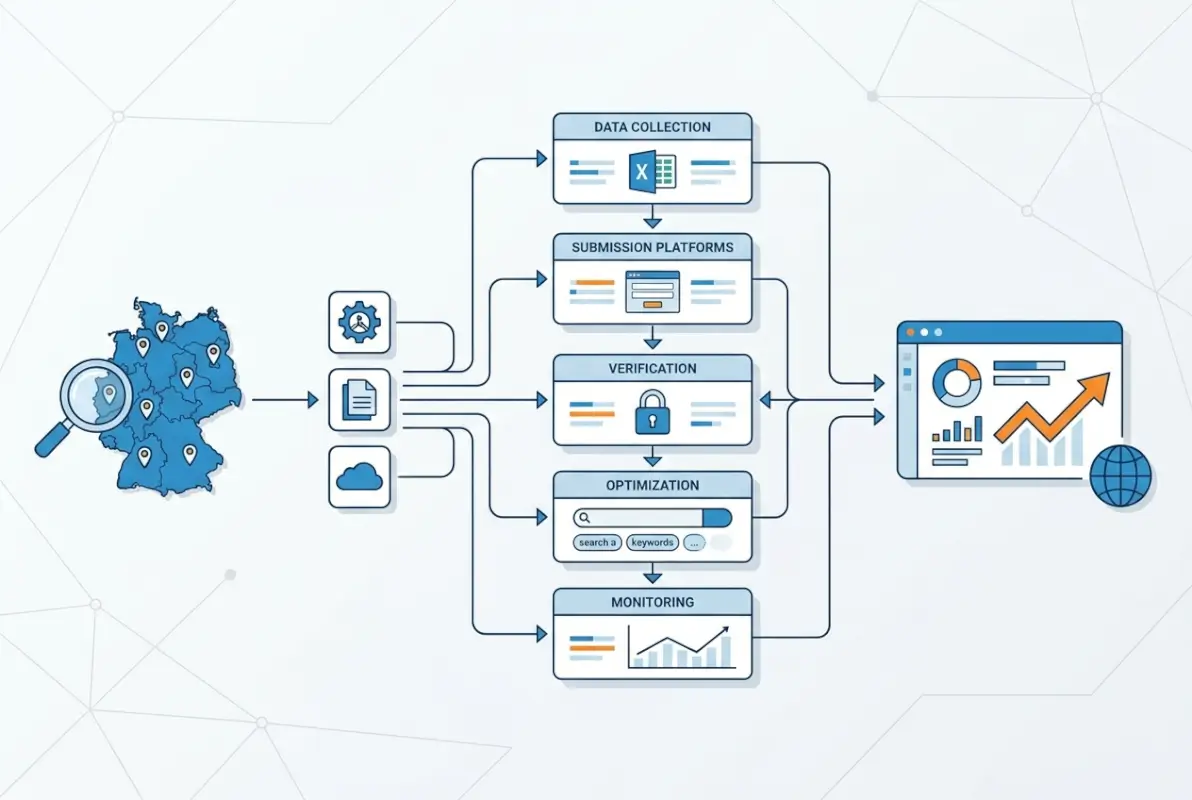
The German directory landscape divides into three tiers: universal platforms everyone should use, industry-specific directories that depend on your sector, and regional directories valuable for location-specific businesses. Understanding which tier each platform occupies helps you allocate resources effectively.
Core German Directories to Target
Google Business Profile stands as the foundation despite not being a traditional German platform. It powers local search results and Google Maps—both heavily used by German consumers for finding businesses. Verification requires receiving a physical postcard with a PIN code (typically 1-3 weeks), but the effort delivers the highest ROI among all directory options.
Gelbe Seiten (Yellow Pages) remains Germany’s most recognized business directory, with millions of monthly visitors and significant SEO weight. The platform has evolved from printed phone books into a sophisticated online directory while retaining cultural significance. Basic listings are free; premium placements require payment but deliver enhanced visibility in competitive categories.
Das Örtliche functions similarly to Gelbe Seiten but with stronger regional focus. Some German consumers prefer it for finding hyper-local businesses, particularly in smaller cities and towns. The verification process combines automated and manual review, typically completing within 3-7 business days.
Yelp Germany has gained substantial traction in larger cities, particularly for hospitality, retail, and service businesses. Its review-centric approach and mobile app enjoy widespread use among younger, urban Germans. The platform allows quick email or phone verification, making it one of the fastest directories to join.
| Platform | Best For | Verification Time | Cost |
|---|---|---|---|
| Google Business Profile | All businesses | 1-3 weeks | Free |
| Gelbe Seiten | Local services, retail | 5-10 days | Free basic / Premium available |
| Das Örtliche | Regional businesses | 3-7 days | Free basic / Premium available |
| Yelp Germany | Restaurants, services | 1-3 days | Free |
| Wer Liefert Was | B2B suppliers | 3-5 days | Premium only |
Niche and Local-Industry Directories for Germany
Industry-specific directories often deliver higher-quality leads than general platforms because they attract users with specific intent. Jameda dominates healthcare provider searches with over 6 million monthly visitors and integrated appointment booking. HolidayCheck is essential for tourism businesses, hotels, and travel services. ImmoScout24 controls the real estate directory space for property listings.
For B2B companies, Wer Liefert Was (WLW) serves as the primary supplier discovery platform, connecting businesses seeking products and services with German manufacturers and wholesalers. The platform requires premium membership but delivers qualified business leads in industrial sectors.
According to comprehensive research on top EU business directories, niche directories typically convert 3-4 times better than general directories because visitors arrive with specific purchase intent rather than broad research goals.
If you’re building your own directory platform or need a robust solution for managing multiple location listings, TurnKey Directories offers WordPress-based directory software with proper German character encoding for umlauts and multilingual capabilities that work seamlessly with German business requirements.
Optimizing Directory Listings: Profile Quality, Content, and Local Signals
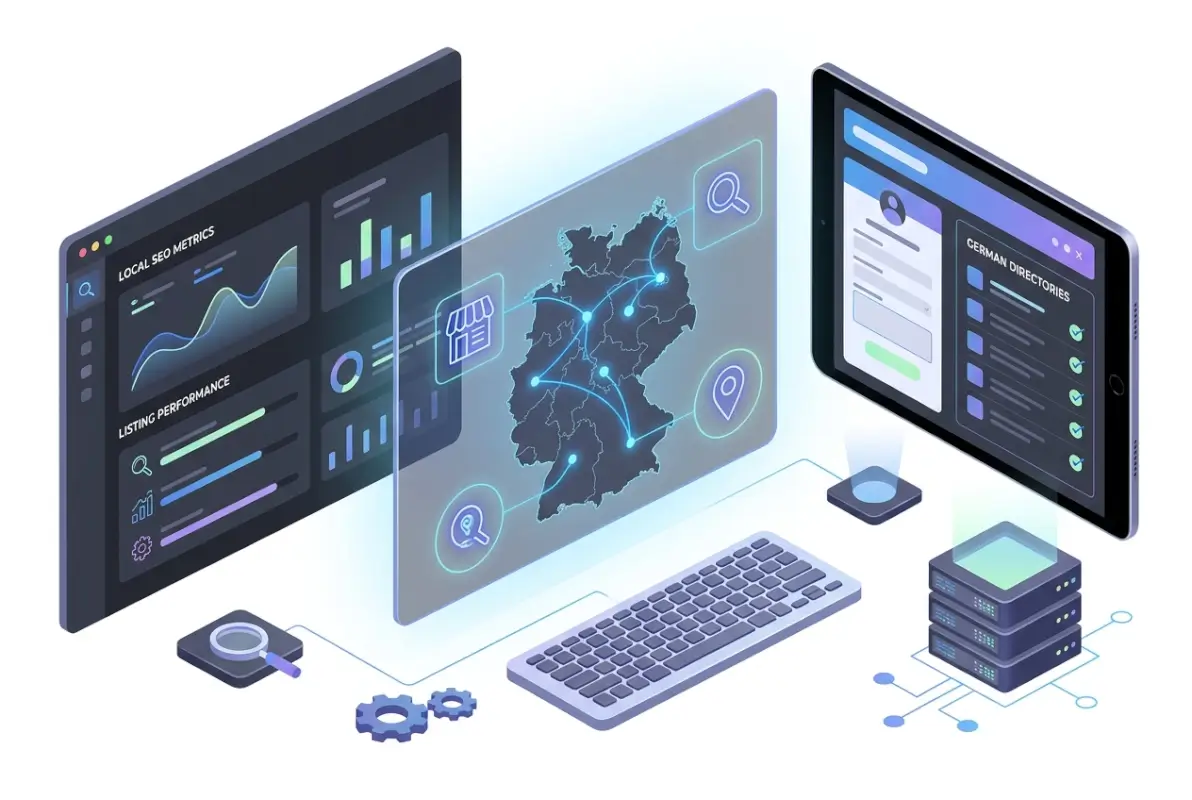
The difference between a mediocre directory listing and one that generates leads comes down to completeness, quality, and strategic keyword integration. Every field you leave blank represents lost opportunity—both for potential customers seeking information and for search algorithms evaluating your listing quality.
Listing Optimization Checklist
Start with business categories, which significantly impact when and how your listing appears in directory searches. Most platforms allow one primary category and 3-5 secondary categories. Choose the most specific category that accurately describes your core service—”Italian Restaurant” performs better than generic “Restaurant” because it matches more specific search intent.
Business descriptions require careful crafting. Write naturally in German (hire a professional translator if needed), incorporating relevant keywords without stuffing. A quality description explains what makes your business unique, which specific services you offer, and why customers should choose you. Aim for 150-250 words that provide genuine value rather than generic promotional copy.
Images dramatically impact listing performance. Include a minimum of 5-7 high-quality photographs showing your building exterior (helps customers find you), interior spaces (builds familiarity and trust), products or services (demonstrates quality), and team members (creates personal connection). Professional photography outperforms smartphone photos in conversion rates.
Business hours deserve special attention in Germany, where punctuality and reliability matter. Use 24-hour format (standard in Germany), specify any seasonal variations, and keep holiday hours updated. Inaccurate hours frustrate customers and generate negative reviews.
Content Consistency Across Listings
Create a master content document containing your canonical business description in German, category selections, service lists, and frequently asked questions. Use this document as your source of truth when populating directory profiles, ensuring consistent messaging across platforms while adapting length and format to each directory’s requirements.
Keyword integration should feel natural, not forced. If you’re a Munich-based accounting firm, work location and service keywords into descriptions organically: “Our Munich accounting practice specializes in tax consulting for small businesses and freelancers throughout Bavaria.” This incorporates location, service, and target market without awkward keyword stuffing.
Review each directory’s specific optimization features. Some platforms allow video uploads, special offers, service area definitions, or payment method specifications. Utilize every available field—incomplete listings signal low engagement to both algorithms and potential customers.
For businesses managing complex directory structures, the principles of organizing directory environments can help maintain consistency across multiple locations or business units.
Scale and Measure: A 90-Day Plan for Directory Impact
Directory success requires methodical implementation and ongoing measurement. A structured 90-day rollout plan prevents overwhelm while ensuring each listing receives proper attention and optimization.

Implementation Timeline and Milestones
Days 0-30: Foundation Phase
Begin by auditing your current online presence. Search for your business name in Google and major German directories to identify existing listings (which may have been automatically created). Claim and verify these listings first before creating new ones, preventing duplicate profiles that confuse search engines.
Create your master NAP document and content templates. Submit to Google Business Profile and initiate the postcard verification process. While waiting for verification, submit to Gelbe Seiten and Das Örtliche. These three platforms form your foundation—prioritize getting them perfect rather than rushing to additional directories.
Set up tracking mechanisms: Google Analytics with UTM parameters for directory traffic, call tracking numbers if budget allows, and a simple spreadsheet documenting every submission with dates and login credentials.
Days 31-60: Expansion Phase
Add 8-12 secondary directories based on your industry and target market. Include Yelp Germany and 2-3 industry-specific platforms identified during your competitor research. Maintain the same quality standards established during the foundation phase—complete profiles with all available fields populated.
Implement schema markup on your website to reinforce NAP consistency. Begin actively requesting reviews from satisfied customers, starting with Google Business Profile and expanding to other platforms as they verify.
According to detailed research on German web directories, businesses that complete 10-15 quality listings within 60 days typically see initial ranking improvements by day 75-90.
Days 61-90: Optimization and Measurement Phase
Analyze traffic and conversion data from each directory. Identify which platforms drive the most qualified visitors and consider premium upgrades for top performers. Refresh descriptions and images based on early performance data.
Conduct a NAP consistency audit across all listings, correcting any discrepancies. Respond to all reviews received, demonstrating active engagement. Update seasonal information (holiday hours, special offers) across all platforms simultaneously.
| Phase | Timeframe | Key Actions | Expected Outcome |
|---|---|---|---|
| Foundation | Days 0-30 | GBP, Gelbe Seiten, Das Örtliche | Core presence established |
| Expansion | Days 31-60 | Add 8-12 secondary directories | Broader citation network |
| Optimization | Days 61-90 | Analyze, refine, respond to reviews | Measurable traffic increase |
Metrics, KPIs, and Expected Outcomes
Track directory referral traffic in Google Analytics by source/medium. Create custom segments for directory traffic and compare conversion rates against other traffic sources. Quality directories should deliver visitors with above-average time on site and pages per session—signals they’re finding what they expected.
Monitor phone calls and form submissions attributed to each directory. Call tracking numbers provide precise attribution, but even simple “How did you hear about us?” questions during customer intake provide valuable data.
Review velocity and average ratings require ongoing attention. Track how quickly you accumulate new reviews across platforms and monitor rating trends. A sudden rating drop on any platform demands immediate investigation and response.
Google Business Profile insights provide rich data on how customers find and interact with your listing: search queries used, actions taken (website visits, direction requests, phone calls), and photo views. Compare these metrics month-over-month to gauge directory strategy impact.
Common Pitfalls in Germany and How to Avoid Them
Even experienced businesses make predictable mistakes when entering the German directory landscape. Understanding these pitfalls helps you avoid wasting time and resources on ineffective approaches.

Overstuffing Keywords vs. Natural Language
The temptation to cram keywords into every available field damages rather than helps your listings. Search algorithms have evolved to recognize and penalize keyword stuffing, while human readers find overstuffed content off-putting and unprofessional.
Instead, write naturally in German, incorporating keywords where they fit logically. “Wir sind ein Münchner Steuerberatungsbüro” (We are a Munich tax consulting office) reads far better than “Steuerberater München Steuerbüro München Steuerberatung München” while still including relevant location and service terms.
German business culture values thoroughness and professionalism. A well-written, informative description builds more trust than a keyword-stuffed paragraph, even if the latter might seem more “SEO-optimized.” Quality content attracts both customers and algorithm favor over time.
Directory Listing Duplications and Inaccurate Data
Duplicate listings represent one of the most common and damaging mistakes. Many directories automatically create basic business listings from public data sources. Before creating a new listing, search thoroughly to ensure no existing profile exists. Claim and verify existing listings rather than creating duplicates.
Inconsistent data across listings confuses search engines and erodes trust. Using different phone numbers, address variations (Str. vs. Straße), or business name formats across platforms sends conflicting signals. A comprehensive list of free Germany business listing sites can help you track where your business might already be listed.
Regular audits prevent data drift over time. Business information changes—new phone numbers, updated hours, expanded service areas—and these changes must propagate to every directory consistently. Set quarterly reminders to review all listings and update any changed information simultaneously across platforms.
I remember working with a client who discovered they had three separate Google Business Profile listings for the same location—one they created, one auto-generated, and one created by a former employee. Their reviews were split across all three, and none ranked well. After merging the profiles and consolidating reviews, their local pack visibility improved within two weeks.
Frequently Asked Questions
How do I get my business listed in German directories with the best ROI?
Start with Google Business Profile, Gelbe Seiten, and Das Örtliche as your foundation, ensuring complete profiles with all fields populated. Then add 2-3 industry-specific directories where your target customers actively search. Monitor traffic and conversion data from each directory, investing in premium features only on platforms that demonstrate measurable lead generation within 90 days.
Are free directory listings in Germany as effective as paid listings for SEO?
Free listings provide the essential citation and NAP consistency signals that impact SEO, making them highly valuable. Paid listings primarily increase visibility within the directory itself rather than directly boosting SEO. Start with complete free listings on 10-15 quality directories, then consider paid placements on your top 2-3 performing platforms based on measured traffic and conversion data.
Which German directories are considered the most authoritative for local SEO?
Google Business Profile carries the most weight for local SEO, followed by established German platforms Gelbe Seiten and Das Örtliche. Industry-specific directories like Jameda for healthcare, Wer Liefert Was for B2B, and HolidayCheck for tourism hold authority within their sectors. Regional city directories also provide valuable local signals for location-specific businesses.
How long does it typically take to see results from directory listings in Germany?
Initial ranking signals typically appear 4-8 weeks after implementing core directory listings, as search engines discover and validate the citations. Meaningful traffic increases usually manifest around the 90-day mark. Full impact—including improved Google Business Profile performance and consistent lead generation—generally materializes within 4-6 months, depending on market competition and listing quality.
Should I optimize for near me queries when listing in German directories?
Yes, but through natural proximity signals rather than forcing “near me” into listings. Include your city and service area naturally in descriptions, ensure accurate location data in all directory profiles, and maintain strong Google Business Profile optimization. German consumers typically search with location terms like “München” or “Berlin” rather than “near me,” making precise location data more important than the specific phrase.
Can I list my business in multiple directories without SEO penalties?
Absolutely—listing in multiple directories actually strengthens your SEO by creating more citation signals. The critical requirement is maintaining identical NAP information across all platforms. Search engines reward consistent data across multiple authoritative sources while penalizing inconsistencies. Focus on 10-15 quality directories rather than 50+ low-value listings for optimal results without management overhead.
What’s the difference between Branchenbuch and Firmenverzeichnis directories?
Branchenbuch (trade directory) typically organizes businesses by industry categories and services, similar to Yellow Pages. Firmenverzeichnis (company directory) usually lists businesses alphabetically or by legal structure, often including more detailed company information like registration numbers and legal forms. Both provide valuable citations, but Branchenbuch platforms generally deliver better customer-facing visibility for service-based businesses.
Do I need German-language content for business directory listings?
Yes, professional German-language content significantly outperforms English or machine-translated listings in German directories. German consumers expect businesses operating in Germany to communicate in German, and search algorithms favor content in the searcher’s language. Invest in professional translation rather than relying on automated tools for descriptions and business information to build trust and improve conversion rates.
Start Building Your German Directory Presence Today
The businesses that succeed in Germany aren’t those with the biggest marketing budgets, they’re the ones that understand and adapt to local business practices. Directory listings represent a core expectation in the German market—a structured, methodical approach that German consumers trust and search engines reward.
Begin with your foundation: claim and optimize your Google Business Profile today. While waiting for postcard verification, submit to Gelbe Seiten and Das Örtliche. These three platforms alone will establish your core presence and begin generating the citation signals that improve local search rankings.
Remember that consistency trumps speed. Ten perfectly optimized, consistently maintained listings deliver far better results than fifty hastily created, incomplete profiles. Create your master NAP document, build your first listing with care and attention to detail, then replicate that quality across additional platforms.
Your 90-Day Directory Success Roadmap
Days 31-60: Add Yelp Germany and 8-10 secondary directories; implement schema markup
Days 61-90: Analyze performance data, optimize top performers, begin review collection
Ongoing: Monthly updates, quarterly audits, continuous engagement
Track your progress methodically. Set up Google Analytics to monitor directory referral traffic, implement call tracking if possible, and maintain a simple spreadsheet documenting every listing with credentials and submission dates. Measure what matters—traffic, leads, and conversions—rather than vanity metrics like total directory count.
Which directory will you claim first? The journey to increased German market visibility starts with that single decision, followed by consistent execution of the strategies outlined here. Your future German customers are searching directories today. Make sure they can find you there.
Was this article helpful?