Business Listing Service: Complete Guide to Local SEO Success

Generating summary...
Local businesses face a peculiar paradox in 2026: customers expect to find you everywhere online, yet maintaining accurate information across dozens of platforms feels impossible. A boutique law firm I worked with discovered this the hard way when potential clients kept calling a disconnected number listed on Apple Maps—while their correct contact sat buried on page three of Google. The fix wasn’t more marketing budget; it was centralized listing management that synchronized their data across every platform that mattered.
A business listing service solves this exact problem by acting as your digital control center. Instead of manually updating Google Business Profile, Bing Places, Yelp, and fifty other directories individually, you manage everything from one dashboard while the service distributes consistent NAP (Name, Address, Phone) data across the web. This consistency isn’t just convenient—it’s what search engines use to verify your legitimacy and determine your local rankings.
- Centralized control saves 40+ hours initially and ongoing maintenance time across platforms
- Citation quality beats quantity – authoritative, industry-specific directories matter more than bulk submissions
- GBP optimization is foundational – your Google Business Profile remains the most critical local ranking factor
- Consistent NAP data builds trust – search engines reward accurate information that matches across directories
- ROI shows within 8-12 weeks – most businesses see measurable visibility gains in local pack rankings
What a Business Listing Service Is and Why It Impacts Local SEO
Definition and Core Functions of a Business Listing Service
A business listing service is a centralized platform that creates, updates, and monitors your business information across multiple online directories, search engines, and review platforms simultaneously. Unlike manually claiming individual listings, these services use API integrations and data partnerships to push your NAP data, business categories, hours, photos, and descriptions to dozens or hundreds of platforms from a single interface.

The core value proposition is simple: you update your information once, and the service propagates those changes across your entire digital ecosystem. When you change your phone number, close for a holiday, or update your service area, those changes flow to Google Business Profile, Bing Places, Apple Maps, Facebook, Yelp, and industry-specific directories within hours or days rather than weeks of manual work.
Modern listing services go beyond simple data distribution. Most include duplicate listing detection and suppression (critical for businesses that have moved or merged), review monitoring alerts, analytics dashboards showing how customers find you, and optimization tools that suggest better categories or keywords for your profiles. According to BrightLocal’s citation research, businesses using centralized listing management see 60% fewer NAP inconsistencies compared to those managing listings manually.
The Role of Citations in Local Search in 2026
Citations—mentions of your business NAP information across the web—remain foundational for local SEO, though their role has evolved significantly. Search engines use citation quantity, quality, and consistency as trust signals to validate your business legitimacy and determine local pack rankings. But the emphasis has shifted decisively from sheer volume to authoritative, relevant sources.
In 2026, a citation from your industry association directory or a government business registry carries far more weight than ten mentions on obscure, low-traffic listing sites. Google’s local algorithm now evaluates citation sources for domain authority, relevance to your business category, and whether the platform itself maintains high data standards. This means a citation from the Better Business Bureau or your state’s professional licensing board matters more than bulk submissions to generic directories.
The consistency factor has also intensified. Even minor variations—like “Street” versus “St.” in your address, or using different phone number formats—can undermine search engines’ confidence in your data. Research from Moz Local indicates that businesses with perfectly consistent NAP data across their top 20 citations rank an average of 2.4 positions higher in local pack results than competitors with inconsistencies.
Your Google Business Profile remains the single most influential citation, but third-party listings amplify its impact. When search engines see matching information on GBP, Yelp, Facebook, industry directories, and local chamber of commerce sites, they gain exponentially higher confidence in that data’s accuracy. This cross-validation is what pushes businesses from page two into the coveted local 3-pack.
What the Industry Data Says About Citations and Local SEO
Key Findings from Recent Citation Research
The 2025 BrightLocal Local Search Ranking Factors study reveals that citation signals account for approximately 15-20% of local pack ranking factors—making them the third most important category after Google Business Profile optimization and review signals. But the composition of effective citations has changed dramatically. High-authority citations from industry-specific sources now carry 3-4 times the ranking weight of generic directory mentions.
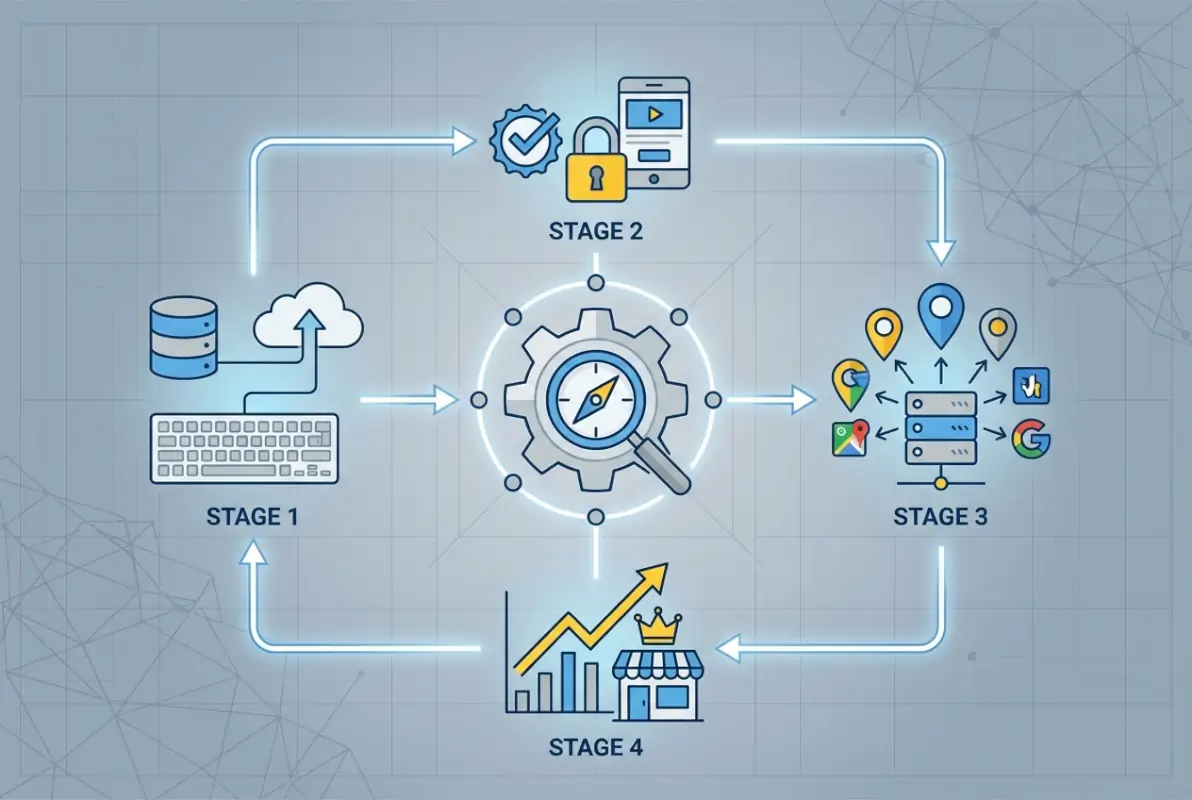
For example, a restaurant appearing in OpenTable’s directory receives more local SEO value than ten mentions on general business directories. Similarly, a plumber listed in the Plumbing-Heating-Cooling Contractors Association directory gains more trust signals than equivalent mentions on generic platforms. This vertical relevance creates what researchers call “contextual authority”—where citation value depends on the match between the source’s focus and your business category.
The data also highlights geographical specificity. Citations from local chambers of commerce, city-specific business associations, and regional news sites provide stronger local relevance signals than national platforms. A hardware store listed in the Greater Phoenix Chamber of Commerce directory gains more Phoenix-specific ranking power than a mention on a national hardware retailer database.
Timing matters too. Citation freshness affects rankings—listings updated within the past 90 days receive preferential treatment in local algorithms. Businesses that regularly update hours, photos, and service descriptions across their citation network see sustained ranking stability, while stale listings gradually lose ranking influence even if the NAP data remains correct.
Practical Implications for Business Listing Service Updates
These research findings translate into clear strategic priorities for local businesses using listing services. First, focus your initial efforts on optimizing your Google Business Profile to perfection—complete categories, detailed descriptions, regular photo updates, and active review engagement. GBP sets your baseline; third-party citations amplify it.
Second, identify the 15-20 most authoritative directories relevant to your specific industry and location, then ensure your listing service covers those platforms. For a dental practice, that might include Healthgrades, ZocDoc, the American Dental Association directory, and state dental board listings. For a home services contractor, it means Angi, HomeAdvisor, the Better Business Bureau, and local trade association directories.
Third, implement a quarterly update cadence even if your core NAP data hasn’t changed. Refresh your business description, add new photos, update service keywords, and verify hours—these updates signal freshness to search algorithms and keep your citations competitive. According to SMB Rank’s analysis, businesses that update their top 15 citations quarterly maintain 92% listing accuracy compared to 67% for those who only update when information changes.
How to Assess and Select a Business Listing Service
Evaluative Criteria for Choosing the Right Service
Selecting a business listing service requires evaluating five critical dimensions: directory network coverage, data management capabilities, analytics depth, integration options, and support quality. Start by mapping your priority directories—the platforms where your customers actually search and where your competitors appear—then verify that candidate services cover those specific sites.
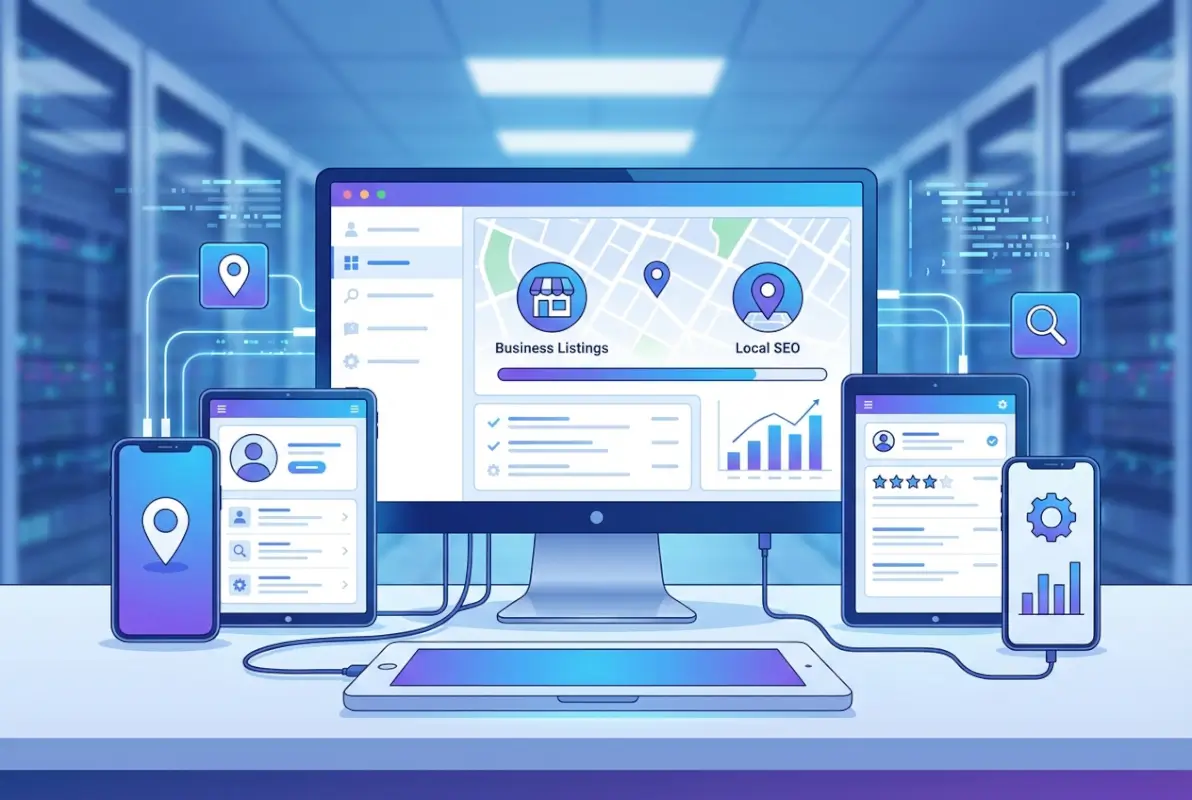
Pay close attention to the distribution mechanism. Premium services like Yext and BrightLocal use direct API integrations with major platforms, ensuring updates propagate within hours. Budget services often rely on data aggregators (Neustar Localeze, Factual, Foursquare, Acxiom), which can take 4-8 weeks to distribute changes and may not cover all platforms. For time-sensitive updates like holiday hours or emergency closures, direct API connections are worth the premium.
| Service Tier | Directory Coverage | Update Method | Best For |
|---|---|---|---|
| Basic | 20-40 directories via aggregators | Data aggregators (4-8 weeks) | Budget-conscious single locations |
| Professional | 50-70+ with some direct APIs | Mixed (1-3 weeks typical) | Multi-location SMBs |
| Enterprise | 100+ with direct integrations | Direct APIs (hours to days) | Franchises, large chains |
Duplicate detection and suppression capabilities separate effective services from basic ones. Many businesses have accumulated multiple listings over time through relocations, ownership changes, or unauthorized user-generated profiles. A quality listing service will scan for duplicates during onboarding, then actively suppress or merge them to consolidate your review profiles and citation signals into canonical listings.
Analytics should go beyond vanity metrics. Look for services that show customer actions—phone calls, direction requests, website clicks—segmented by source directory. This granularity lets you identify which platforms drive real business value versus those generating impressions without conversions. The best platforms also offer competitive benchmarking, showing how your citation coverage and accuracy compare to local competitors.
Integration capabilities matter if you’re using other marketing tools. Does the service connect with your CRM to sync customer data? Does it push review alerts to your social media management platform? Can it export data to your analytics dashboard? These integrations eliminate manual data transfers and create more efficient workflows. For businesses building their own directory sites, white label business directory software solutions from providers like TurnKey Directories offer flexible WordPress-based platforms with comprehensive listing management built in.
Alignment with Google Business Profile and Local Signals
Your listing service must complement, not conflict with, your Google Business Profile management. Some services offer direct GBP integration that lets you manage everything from their dashboard, while others require separate GBP management. The integration approach is generally superior—it prevents accidental data conflicts where you update information in one system but forget to update the other.
However, never rely solely on third-party tools for GBP management. Google frequently adds new features, attributes, and post types that third-party platforms take months to support. Maintain direct access to your GBP dashboard and check it at least monthly for new opportunities or algorithm changes that haven’t propagated to your listing service yet.
Verify that the service supports all the structured data elements that matter for local search: business categories (both primary and additional), service areas, attributes (women-led, wheelchair accessible, outdoor seating), hours including special hours, and appointment links. According to Google’s official GBP guidelines, complete and accurate profile information directly influences local ranking position.
The service should also facilitate review management across platforms, not just GBP. Since review signals account for roughly 16% of local ranking factors and customers check multiple platforms before deciding, you need consolidated review monitoring that alerts you to new reviews on Google, Yelp, Facebook, and industry-specific sites from a single dashboard. Response speed matters—businesses that reply to reviews within 24 hours see 33% higher customer trust scores.
Best Practices for Optimizing Listings Across Platforms
Build Accuracy and Consistency as Your Foundation
Perfect NAP consistency is non-negotiable for effective local SEO. Establish a single canonical version of your business name, address, and phone number, then use that exact format everywhere. This means choosing between “Street” or “St.” and sticking with it, deciding whether to include suite numbers in your address line or as a separate field, and formatting phone numbers identically (e.g., always (555) 123-4567, never 555-123-4567).
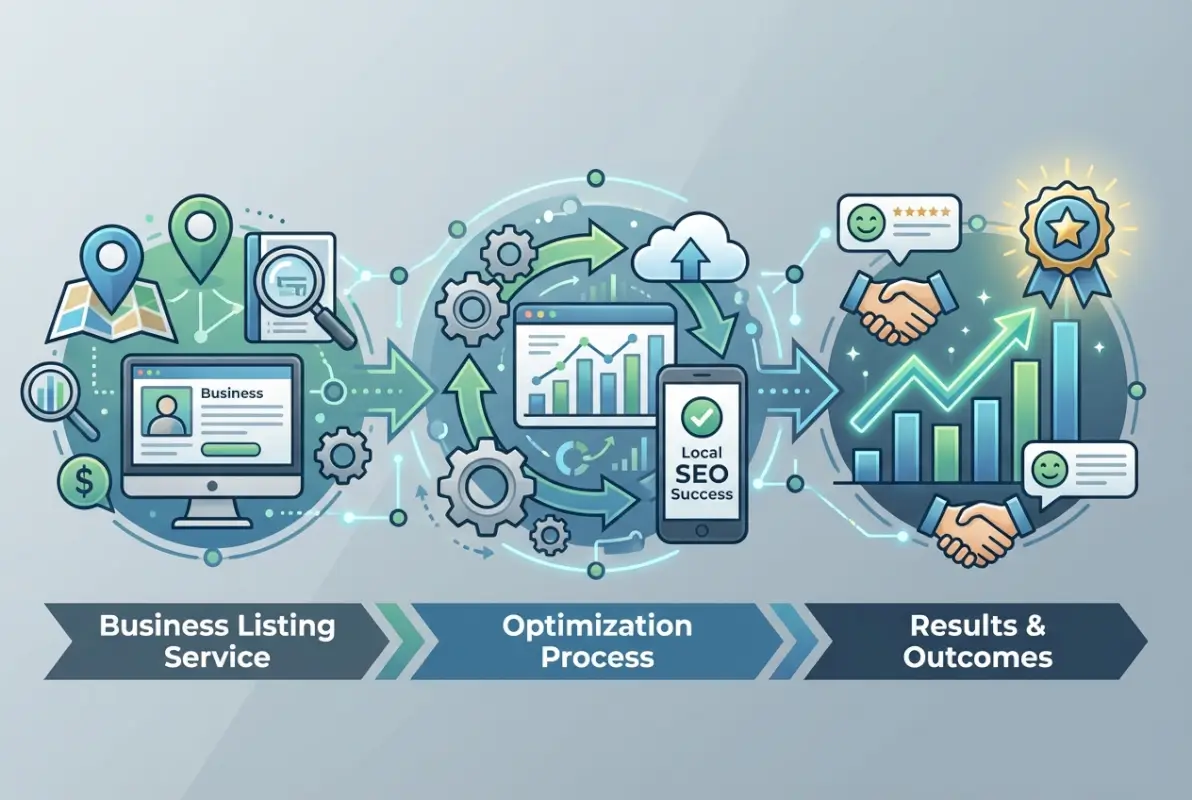
Create a citation style guide document that specifies your exact NAP format, primary and secondary business categories, standard business description (with 50-character, 150-character, and 500-character versions), and approved keywords. Share this with everyone who might update your listings—marketing staff, agency partners, and your listing service account manager. This single source of truth prevents drift and inconsistencies.
Pay special attention to business name consistency. Resist the temptation to stuff keywords into your business name on some platforms—if your legal business name is “Sunrise Dental,” don’t list yourself as “Sunrise Dental | Family Dentist Phoenix” on Yelp while using just “Sunrise Dental” on Google. Search engines detect these inconsistencies and may penalize you for attempting to manipulate listings.
Address formatting deserves particular care. Use the exact address format that matches your Google Business Profile and appears on your storefront. If your building uses “North Main Street” not “N Main St,” match that. If you’re in a complex or suite, include it consistently. For service-area businesses that don’t list a public address, maintain the same service area definitions across all platforms that support them.
Leverage High-Value Directories and Structured Data Signals
Not all citations are created equal—strategic directory selection delivers far better ROI than scattershot submissions. Start with the “Core Four” platforms that drive the most local search traffic: Google Business Profile, Bing Places, Apple Maps, and Facebook Business. Perfect these listings first with complete information, regular updates, and active engagement.
Next, layer in industry-specific directories where your customers actually search. Restaurants should prioritize OpenTable, Resy, and TripAdvisor. Healthcare providers need Healthgrades, Zocdoc, and WebMD. Home service contractors benefit from Angi, HomeAdvisor, and Thumbtack. Legal professionals should claim profiles on Avvo, Justia, and FindLaw. These vertical directories carry high contextual authority in their sectors.
Don’t overlook local citations that establish geographic relevance. Your city chamber of commerce, neighborhood business association, local news sites, and community event calendars all provide valuable local signals. A citation from “Scottsdale Chamber of Commerce” tells search engines you’re genuinely embedded in that community, not just targeting keywords.
Structured data markup amplifies your citation impact. When platforms support schema.org markup for local businesses—including properties like priceRange, paymentAccepted, areaServed, and openingHours—fill them out completely. This structured data helps search engines parse your business information more accurately and can trigger rich results in search pages. Those interested in how to search businesses in fslocal directory tips will find that complete schema implementation makes listings far more discoverable.
Optimize your business descriptions differently for each platform’s audience while maintaining core messaging consistency. Your GBP description should focus on what makes you immediately findable and trustworthy. Your Yelp description might emphasize customer experience and atmosphere. Industry directory descriptions should highlight credentials and specializations. Tailor the angle while keeping facts identical.
Measuring Impact: KPIs, Analytics, and ROI
Metrics to Track with Your Business Listing Service
Effective measurement starts with establishing a baseline before implementing your listing service. Document your current local pack rankings for your top 10 search terms, your Google Business Profile monthly views and actions, your total citation count, and your NAP consistency score across your top 20 existing listings. These benchmarks let you measure actual improvement rather than relying on directional feelings.

Track four categories of metrics monthly: visibility metrics (impressions, search appearances, discovery vs. direct searches), engagement metrics (clicks, calls, direction requests, website visits), reputation metrics (review volume, review rating, review response rate), and technical metrics (citation count, NAP consistency score, duplicate listings detected).
| Metric Category | Key Indicators | Measurement Frequency |
|---|---|---|
| Visibility | Local pack rankings, GBP impressions, discovery searches | Weekly for rankings, monthly for impressions |
| Engagement | Phone calls, direction requests, website clicks | Monthly with year-over-year comparison |
| Reputation | Review velocity, average rating, response rate | Monthly with quarterly deep dives |
| Technical | Citation count, NAP consistency, duplicate suppression | Monthly with quarterly audits |
Pay particular attention to the engagement-to-impression ratio—how many people who see your listing take action. If impressions are rising but engagement remains flat, you likely have an optimization problem with your photos, description, or reviews rather than a visibility problem. Conversely, high engagement rates with low impressions suggests you need more aggressive citation building to increase visibility.
Revenue attribution gets tricky but isn’t impossible. Use call tracking numbers unique to your GBP listing to measure phone conversions directly. Create dedicated landing pages for directory traffic using UTM parameters to track website visitors from specific citations. Ask new customers “How did you find us?” during intake and log responses systematically. These data points help you calculate actual ROI, not just activity metrics.
For multi-location businesses, segment all metrics by location to identify which sites benefit most from listing optimization and which need additional attention. Geographic performance variations often reveal opportunities—locations underperforming on citation consistency or review volume become obvious improvement targets.
Interpreting Results and Iteration Strategies
Citation updates and listing optimization aren’t instant-gratification tactics. Search engines take 4-8 weeks to recrawl and re-index citations, then additional weeks to incorporate those signals into ranking calculations. Set realistic expectations: measure initial results at 8 weeks, substantial impact at 12-16 weeks, and full maturation at 6 months.
Early indicators of success include rising NAP consistency scores (target 95%+ across your top 25 citations), increasing citation count on high-authority directories, and improved duplicate suppression. These technical improvements create the foundation for visibility gains that follow.
Mid-term indicators (12-16 weeks) include rising local pack rankings for target keywords, increased Google Business Profile impressions, and higher engagement rates. If you’re seeing technical improvements but not visibility gains, audit your category selections and business descriptions—you may have perfect data accuracy but poor optimization for relevant searches.
A/B test specific optimizations when possible. Try different business description variations on similar directories to see which drives more clicks. Test whether adding specific service keywords to your categories improves rankings for those terms. Experiment with photo types to identify what generates the most engagement on your GBP listing. Those looking to access business park directory platforms or organize active directory for business environment needs can apply these same testing principles to internal directory management.
When results plateau, shift focus from breadth to depth. Rather than adding more citations, optimize existing ones—update photos quarterly, refresh descriptions to match seasonal services, post regular updates on platforms that support them, and actively solicit reviews on your top-performing directories. Depth of engagement often outperforms breadth of presence once you’ve covered core platforms.
Frequently Asked Questions
What is a business listing service and how does it differ from traditional directories?
A business listing service is a centralized platform that manages your business information across dozens of directories simultaneously from one dashboard, unlike traditional directories that require manual updates on each individual site. The service uses API integrations to push NAP data, photos, hours, and descriptions to multiple platforms at once, then monitors for inconsistencies and unauthorized changes. This centralized approach saves 40+ hours compared to manual directory management while ensuring consistent data accuracy across your entire digital presence.
Do listing services really impact local search rankings, and how quickly will I see results?
Yes, listing services impact local rankings through improved citation consistency and broader distribution, which are trust signals search engines use to validate business legitimacy. However, results aren’t immediate—expect technical improvements like NAP consistency within 2-4 weeks, initial visibility gains at 8-12 weeks, and substantial local pack ranking improvements at 12-16 weeks. The timeline depends on your starting citation quality, competitive landscape, and how well you optimize listings beyond basic NAP data.
How should I choose which directories to optimize with my listing service?
Start with Google Business Profile, Bing Places, Apple Maps, and Facebook as your foundation, then add 5-7 industry-specific directories where your customers actually search—like Healthgrades for healthcare or OpenTable for restaurants. Prioritize directories with high domain authority, active user bases in your market, and strong relevance to your business category. Avoid spreading resources thin on hundreds of generic directories; 15-20 high-quality, contextually relevant citations outperform 100 low-authority mentions in local ranking algorithms.
What’s the difference between bulk listing and high-quality, industry-specific citations?
Bulk listing services submit your information to hundreds of generic directories for volume, while high-quality citations focus on authoritative, industry-relevant platforms. Search algorithms now weight citation quality over quantity—a single citation from your industry association or local chamber carries more ranking power than ten mentions on obscure, low-traffic sites. High-quality citations also drive actual customer discovery since they appear on platforms your target audience actively uses for research and decision-making.
How can I measure the ROI of a business listing service for local SEO?
Track four key metrics: local pack ranking improvements for your target keywords, Google Business Profile engagement increases (calls, direction requests, website clicks), citation count and consistency scores, and actual revenue attribution through call tracking and UTM parameters. Establish baselines before implementing the service, then measure monthly. Most businesses see positive ROI within 4-6 months when they track phone calls from listings and website conversions from directory traffic using dedicated landing pages and analytics.
How important is Google Business Profile optimization relative to other listings?
Google Business Profile is the single most important listing and should receive 40-50% of your optimization effort, as it directly controls your Google Maps and local pack visibility. However, third-party citations on Yelp, Bing, industry directories, and local sites amplify your GBP impact by validating your information through cross-platform consistency. Think of GBP as your foundation and other citations as reinforcement—you need both, but GBP optimization should always come first in your priority hierarchy.
How long does it take for citation updates to index and influence rankings?
Citation platforms typically publish updates within 1-7 days, but search engines take 4-8 weeks to recrawl and index those changes, then another 2-4 weeks to incorporate the signals into ranking calculations. Direct API integrations push updates faster than data aggregator methods which can take 6-12 weeks. For time-sensitive changes like holiday hours or emergency closures, update your Google Business Profile directly first, then let your listing service propagate to other platforms.
Are there risks or penalties associated with listing services or bulk submissions?
Reputable listing services don’t trigger penalties, but keyword stuffing in business names, creating fake locations, or listing in irrelevant categories can result in suspensions or ranking penalties. Avoid services that promise to submit to “1000+ directories instantly”—these often include low-quality sites that provide no value and may even harm your reputation. Stick with established platforms that use legitimate API integrations and follow each directory’s terms of service to maintain compliance.
Take Action on Your Local Visibility Today
The local search landscape rewards businesses that treat their digital presence as seriously as their physical storefront. Customers searching for your services right now are comparing listings, reading reviews, and making decisions based on the completeness and consistency of the information they find. A business listing service isn’t optional infrastructure anymore—it’s the foundation of local discoverability.
Start with an honest audit of your current state. Google your business name plus your city and note every platform where you appear. Check if your NAP data matches perfectly across all of them. Look at your Google Business Profile insights to understand how customers currently find you and what actions they take. These baseline metrics give you a clear picture of where you stand and how much improvement potential exists.
Then prioritize your next 90 days: perfect your Google Business Profile first, select a listing service that covers your industry-specific directories, establish your NAP style guide, and implement consistent monitoring for reviews and customer questions. Those looking to run successful directory website business models should apply these same principles to internal directory management and user experience.
Your 30-Day Action Plan
- Week 1: Audit current listings, document NAP inconsistencies, establish baseline metrics
- Week 2: Optimize Google Business Profile completely, create NAP style guide
- Week 3: Research and demo 2-3 listing services, select one that covers your priority directories
- Week 4: Implement service, suppress duplicates, set up monitoring and alerts
The businesses winning local search in 2026 aren’t necessarily the ones with the biggest marketing budgets—they’re the ones that executed consistent, strategic listing management before their competitors understood its value. Your customers are searching. Make absolutely certain they can find you.
Was this article helpful?