Top 5 US Business Directory Listings: Complete 2025 Guide for Local Visibility

Picture this: you’ve just launched your dream business, your website looks fantastic, and your product is outstanding. Yet somehow, potential customers in your own neighborhood are discovering your competitors instead. The missing link? Strategic business directory listings that actually work.

Here’s what most business owners don’t realize—directory listings aren’t just digital phonebook entries. They’re sophisticated discovery tools that control whether you appear when someone searches “plumber near me” at 11 PM on a Sunday night. For US-based businesses, mastering the right directories means the difference between obscurity and being the obvious choice in your market.
The landscape has shifted dramatically. While thousands of directories exist, only a handful genuinely drive customer acquisition and boost your local search rankings. According to research from BrightLocal’s local SEO statistics, businesses with consistent information across 5+ major directories see 68% more web traffic than those with scattered or incomplete listings.
TL;DR – Quick Takeaways
- Google Business Profile is non-negotiable – Controls 92% of local search visibility for US businesses
- The “Big 5” directories – Google, Yelp, BBB, LinkedIn, and Thumbtack cover 80% of directory-driven customer discovery
- NAP consistency is critical – Identical name, address, phone across all platforms boosts rankings by 30-50%
- Reviews drive conversions – 87% of consumers read reviews before visiting local businesses
- Free listings work – Premium features help, but optimized free profiles deliver measurable results
- Near-me searches dominate – 46% of all Google searches have local intent
Why US Business Directory Listings Still Dominate Local Discovery in 2025
The digital marketing world loves chasing shiny new platforms, but business directories have quietly remained the backbone of local customer acquisition. Why? Because they solve a fundamental problem: connecting people who need something right now with businesses that provide it.
Unlike social media where users scroll passively, directory users arrive with purchase intent. Someone searching a business directory isn’t browsing—they’re hunting for a solution. This intent-driven traffic converts at rates that make other channels jealous (typically 3-5x higher than social media traffic).
Search engines prioritize consistency signals. When Google’s algorithm encounters your business name, address, and phone number (collectively called NAP data) appearing identically across multiple authoritative directories, it interprets this as trustworthiness. This citation consistency directly influences whether you rank in the local 3-pack—those coveted map results that capture 44% of clicks for local searches.
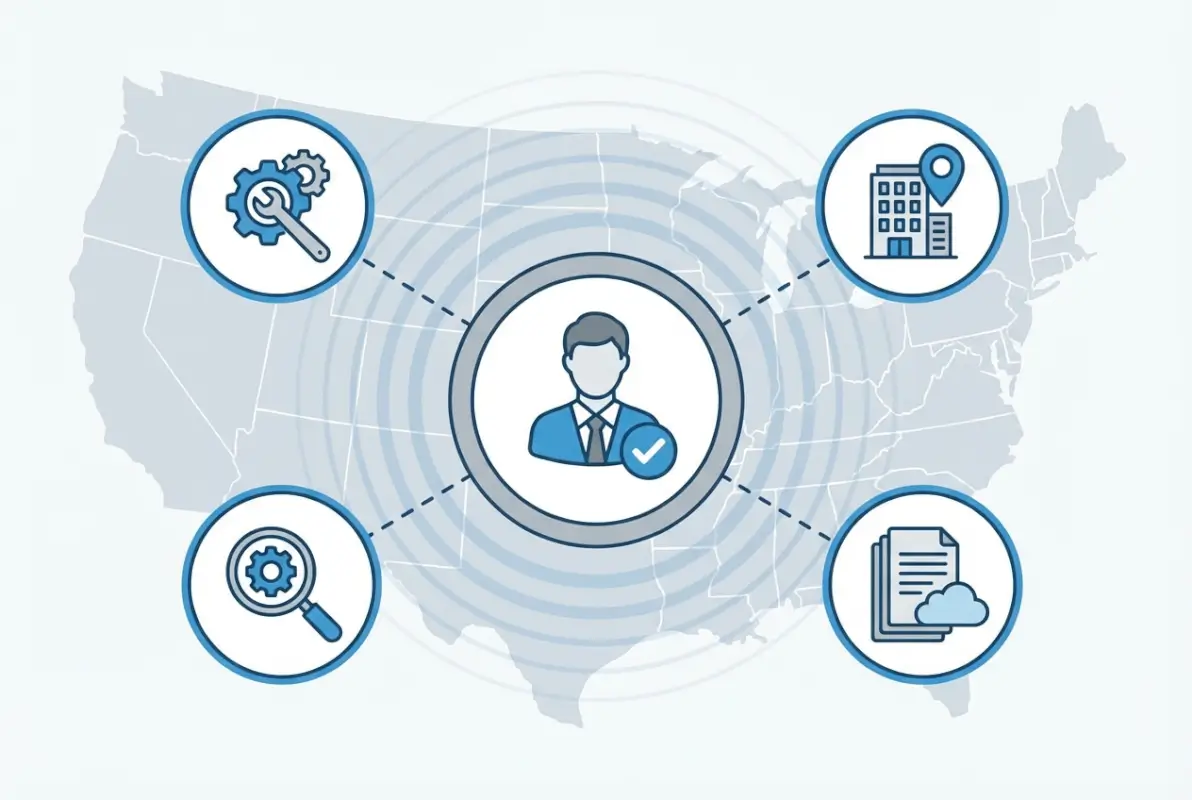
I’ve watched this play out dozens of times. A local HVAC company I worked with struggled to rank despite having an excellent website. Within six weeks of establishing accurate, complete profiles across five key directories, they jumped from page three to the local pack for their primary service terms. The only variable that changed? Directory presence.
The economics make sense too. While paid advertising costs continue climbing, directory listings—even premium ones—remain remarkably cost-effective. A $500 annual BBB accreditation or Yelp advertising package delivers continuous exposure, while that same budget might buy you 100-200 clicks through Google Ads.
The Five Essential US Business Directories Every Company Needs
Not all directories deserve your time. After analyzing traffic data, conversion rates, and SEO impact across hundreds of platforms, five directories consistently outperform the rest for US-based businesses. Let’s examine each one with the detail they deserve.
Google Business Profile: The Foundation of Local Visibility
If you only claim one directory listing in your entire business career, make it Google Business Profile (formerly Google My Business). This isn’t hyperbole—it’s mathematical reality. Google processes over 8.5 billion searches daily, and an estimated 46% involve local intent. Your GBP listing controls whether you appear in those searches.
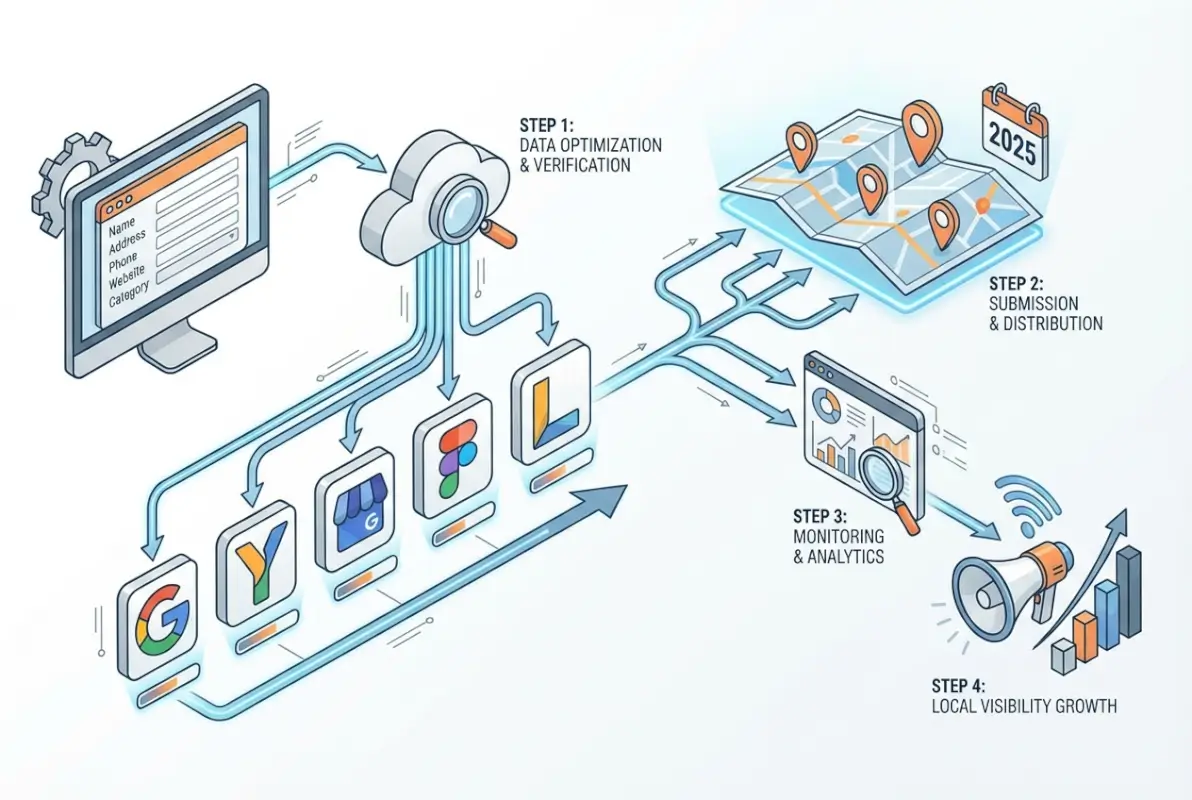
The platform integrates directly with Google Search and Maps, meaning your listing information appears in the most valuable digital real estate available. When someone searches for your business type in your area, your GBP determines whether you show up in the local pack, in Maps results, or in the knowledge panel.
Google’s data shows businesses with complete GBP profiles receive 7x more clicks than those with basic information. Complete means filling every field: business description, categories, attributes, services, products, hours (including special hours), photos, and regular posts.
Setting up your profile takes 15-30 minutes. Visit the Google Business Profile help center to claim your listing, then verify ownership through postcard, phone, or email. Post-verification, optimize aggressively: choose your most specific primary category, add secondary categories, enable messaging, activate booking features if relevant, and establish a posting schedule.
The Q&A feature deserves special attention. Customers can ask questions directly on your profile, and unanswered questions get answered by random users (often competitors or trolls). Monitor this section weekly and proactively seed it with common questions you answer professionally.
Yelp: The Review Powerhouse for Consumer-Facing Businesses
Yelp polarizes business owners, but the numbers don’t lie—178 million monthly unique visitors make it unavoidable for restaurants, retail, personal services, and home services businesses. The platform’s review ecosystem influences purchasing decisions at a scale few directories match.
What sets Yelp apart is its engaged community. Unlike passive directory listings, Yelp users actively contribute reviews, photos, and check-ins. This user-generated content creates social proof that dramatically impacts conversion rates. According to research, displaying just five Yelp reviews increases conversion probability by 270%.
Claiming your Yelp listing requires visiting their business owner portal and going through verification. Once claimed, optimization focuses on three areas: visual storytelling through photos, review generation and management, and regular profile updates.
The photo strategy matters more than most realize. Businesses with 20+ photos see 45% more website clicks than those with fewer images. Show your space, your products, your team, and your work in action. I remember a bakery that transformed their Yelp performance by posting daily photos of their fresh pastries—their profile views tripled within a month.
Responding to reviews—especially negative ones—demonstrates accountability and customer care. Keep responses professional, specific, and solution-oriented. When someone complains about wait times, acknowledge their frustration, explain what happened, and describe what you’re doing differently. Future customers reading your response often care more about your professionalism than the complaint itself.
Better Business Bureau: The Trust Signal That Converts Skeptics
The Better Business Bureau operates differently than other directories—it’s a trust verification service that happens to function as a discovery platform. For businesses where consumer trust is make-or-break (contractors, financial services, healthcare, major purchases), BBB accreditation provides credibility that justifies its annual cost.

The organization’s 110-year history and stringent accreditation standards create a trust signal that resonates particularly with older demographics and high-consideration purchases. The BBB rating system (A+ to F) offers quick trust assessment, and the dispute resolution process demonstrates your commitment to customer satisfaction.
Membership costs vary based on business size, ranging from approximately $200 to $10,000 annually. For many businesses, the ROI comes not from direct traffic but from conversion rate improvements. Displaying the BBB accreditation seal on your website can increase conversion rates by 15-30%, particularly for e-commerce and service businesses.
Joining requires an application demonstrating compliance with BBB standards: transparent business practices, truthful advertising, honoring commitments, and responsive customer service. The accreditation process takes 2-3 weeks and includes a review of your business history and complaint record.
The complaint management system deserves emphasis. BBB provides a structured process for resolving customer disputes, and your response rate and resolution approach directly impact your rating. Businesses maintaining A+ ratings demonstrate consistent responsiveness and fair resolution practices—qualities that build long-term reputation.
LinkedIn: The B2B Directory Hiding in Plain Sight
Most professionals view LinkedIn as a networking platform, missing its powerful directory features for B2B businesses and professional service providers. With 774+ million users (including most decision-makers), LinkedIn Company Pages function as sophisticated business directories optimized for professional discovery.
The platform excels at connecting businesses with specific professional demographics. Unlike consumer directories, LinkedIn allows targeting by job title, industry, company size, and seniority—precision that matters when your customers are CFOs, HR directors, or procurement managers.

Creating a Company Page takes 30-60 minutes and requires a personal LinkedIn account. The optimization process differs from consumer directories, focusing on professional credibility: detailed company description with industry keywords, showcase pages for different products or services, employee advocacy (encouraging team members to engage with company content), and regular thought leadership content.
As part of your overall listedin business directory key benefits for your business strategy, LinkedIn provides access to professional networks that consumer directories can’t reach.
The real power emerges when you treat LinkedIn as an active platform rather than a static listing. Companies posting weekly content see 2x higher engagement rates and 5.6x more follower growth than those posting monthly. Share industry insights, company updates, employee spotlights, and valuable content that positions your business as a thought leader.
Thumbtack: The Project-Based Directory for Service Providers
Thumbtack revolutionized directory listings by flipping the traditional model. Instead of customers browsing listings, they describe their specific project needs, and Thumbtack matches them with relevant service providers. This intent-driven approach produces highly qualified leads for home services, events, lessons, wellness, and business services.
The platform’s strength lies in detailed project specifications. When a homeowner requests “kitchen cabinet installation in Denver, CO for a 12×15 kitchen, starting next month, budget $3,000-5,000,” they’ve essentially pre-qualified themselves. Service providers can evaluate fit before purchasing the lead.
Setting up a Thumbtack profile requires 45-90 minutes of detailed input: service specifics, pricing structure, availability, service area radius, certification documentation, and portfolio photos. The more comprehensive your profile, the better Thumbtack’s algorithm matches you with appropriate projects.
The pay-per-lead model means you only invest when pursuing opportunities. Lead costs vary by service type and market competitiveness, typically ranging from $5-$50 per qualified lead. For many service businesses, this performance-based approach offers better ROI than fixed-cost advertising.
Success on Thumbtack correlates strongly with three factors: response speed (providers responding within one hour get hired 40% more often), competitive pricing aligned with market rates, and strong profile reviews. The platform rewards responsiveness and customer satisfaction with preferential matching and lower lead costs.
| Directory | Best For | Setup Time | Cost Model | Primary Advantage |
|---|---|---|---|---|
| Google Business Profile | All business types | 15-30 min | Free | Search & Maps dominance |
| Yelp | Consumer services | 20-40 min | Free + Premium | Review ecosystem |
| BBB | Trust-critical sectors | 2-3 weeks | $200-$10k/year | Credibility & trust |
| B2B & professional | 30-60 min | Free + Premium | Professional targeting | |
| Thumbtack | Service providers | 45-90 min | Pay-per-lead | Qualified project matching |
The Directory Optimization Playbook: Making Listings Actually Work
Claiming directory listings represents only 20% of the work—optimization delivers the remaining 80% of results. After setting up hundreds of business profiles, I’ve identified the tactics that consistently outperform.
NAP Consistency: The Non-Negotiable Foundation
Your business name, address, and phone number must appear identically across every directory. Not “similar”—identical. This means same abbreviations (or lack thereof), same suite number formatting, same phone number format.

Poor NAP consistency confuses search algorithms and dilutes your local SEO strength. When Google sees “John’s Plumbing LLC” on one directory, “John’s Plumbing” on another, and “Johns Plumbing LLC” on a third, it can’t confidently determine if these refer to the same business.
The solution requires creating a master NAP reference document and using it religiously. Include exact formatting: “Smith & Associates, 123 Main Street Suite 200, Denver, CO 80202, (303) 555-0100.” Every team member responsible for directory management should reference this document before updating any listing.
Category Selection: Specificity Wins
Most directories allow primary and secondary business categories. Your primary category should be the most specific descriptor of your core service. “Personal Injury Attorney” outperforms “Lawyer.” “Thai Restaurant” beats “Restaurant.”
Secondary categories expand your reach to related searches. A wedding photographer might select “Wedding Photographer” as primary, then add “Portrait Photographer,” “Event Photographer,” and “Commercial Photographer” as secondaries. This breadth captures searchers at different stages of their decision process.
Avoid category spam—selecting unrelated categories to boost visibility. Directories detect this and may penalize your listing. Stick to categories you actively provide and can substantiate through your website and portfolio.
Visual Content Strategy: Show, Don’t Just Tell
Photos and videos dramatically outperform text-only listings. According to consumer review behavior research, 60% of consumers say that images in local search results influence their business decisions.
Develop a diverse photo library spanning multiple categories: exterior (showing your storefront or building), interior (giving customers a sense of your space), products or completed work (demonstrating quality), team members (building personal connection), and action shots (showing services being performed).
Photo quality matters immensely. Invest in professional photography or at minimum use a current smartphone in good lighting. Blurry, dark, or amateur photos suggest your service quality matches your photography quality.
Review Generation and Management
Reviews function as trust signals, social proof, and ranking factors simultaneously. Businesses with consistent positive reviews rank higher, convert better, and command premium pricing.
Building a review generation system starts with identifying touchpoints where asking feels natural: post-service follow-up emails, after successful project completion, when customers express satisfaction. Make the process frictionless by providing direct links to your profiles on each directory.
The approach matters. Rather than generic “please leave us a review” requests, remind customers of the specific value you provided: “We’re thrilled your kitchen renovation exceeded expectations! If you have two minutes, sharing your experience on Google would help other homeowners discover our work.”
Responding to reviews—all reviews—demonstrates engagement and care. Thank positive reviewers specifically, mentioning details from their review. Address negative reviews professionally, acknowledge valid concerns, and offer resolution paths. The goal isn’t changing the reviewer’s mind (though that sometimes happens) but showing future customers how you handle issues.
The 30-60-90 Day Directory Optimization Roadmap
Optimizing directory presence feels overwhelming when viewed as a single project. Breaking it into phased implementation makes it manageable.
Days 1-30: Foundation Setup
Claim and verify listings on the Big 5 directories (Google Business Profile, Yelp, BBB, LinkedIn, Thumbtack). Establish your master NAP document. Complete basic information fields across all platforms—hours, categories, contact details, website links. Upload 5-10 initial photos to each profile. Set up review monitoring alerts.
Days 31-60: Content Enhancement
Expand photo libraries to 20+ images per profile. Write compelling, keyword-optimized business descriptions for each platform (tailoring messaging to each directory’s audience). Enable advanced features—booking, messaging, Q&A on Google, special offers on Yelp. Implement your review generation system. Begin regular posting schedules on Google Business Profile and LinkedIn.
Days 61-90: Analysis and Refinement
Review analytics across all platforms to identify performance patterns. Which directories drive the most traffic? What categories generate the most impressions? What photos get the most views? Refine your approach based on data. Expand to industry-specific directories if appropriate. Establish monthly maintenance routines for updating information and monitoring reviews.
Measuring Directory Performance: What Actually Matters
Directory optimization without measurement wastes effort. Track these metrics to evaluate performance and justify your investment:
Profile views and impressions indicate discovery—how many potential customers encounter your listing. Increasing views suggests improved visibility in search results and directory browsing.
Click-through rates (profile views to website clicks) reveal whether your listing content compels action. Low CTR despite high views signals weak descriptions, poor photos, or unconvincing reviews.
Phone calls and direction requests represent high-intent actions. Most directories track these interactions, providing insight into which platforms generate immediate customer response.
Review velocity and sentiment show reputation trajectory. Are you gaining reviews consistently? Is the average rating trending up or down? Review patterns often predict business health months before revenue reflects changes.
Local search rankings for your priority keywords indicate SEO impact. Track your position in the local 3-pack for your most important service terms. Directory citation quality directly influences these rankings.
For businesses implementing a business directory website complete guide approach that integrates third-party directories with owned platforms, tracking becomes more sophisticated but also more valuable.
Frequently Asked Questions
What exactly is a business directory and why should my company be listed?
A business directory is an online platform that organizes company information by location, industry, or service type, making businesses discoverable to consumers searching for specific solutions. Your company should be listed because directories drive high-intent traffic, improve local SEO through citation signals, provide social proof through reviews, and create multiple discovery touchpoints beyond your website. They’re particularly valuable for local businesses relying on geographic proximity to customers.
How do I choose which US business directories to prioritize?
Prioritize directories based on where your target customers actually search, your industry relevance, and cost-effectiveness. Google Business Profile is mandatory for virtually all businesses. Consumer-facing companies benefit from Yelp, while B2B firms prioritize LinkedIn. Evaluate traffic data, review each directory’s audience demographics, start with free options, and track performance before investing in premium features. Quality listings on five relevant directories outperform mediocre presence on twenty platforms.
What is NAP consistency and why does it matter?
NAP consistency means your business name, address, and phone number appear identically across all online directories and citations. It matters because search engines use NAP consistency as a trust signal when determining local search rankings. Inconsistent information confuses algorithms and dilutes your SEO authority. Even minor variations like “Street” versus “St.” or different phone number formats can harm your local visibility. Create a master NAP document and use it religiously across all platforms.
How often should I update my directory listings?
Update directory listings immediately when critical information changes—hours, location, phone number, or services offered. Beyond that, implement monthly maintenance to add fresh photos, respond to reviews, and post updates on platforms supporting dynamic content like Google Business Profile. Quarterly comprehensive audits ensure all information remains accurate and optimized. Active listings that demonstrate regular updates typically receive algorithmic preference over stale, neglected profiles.
Should I pay for premium directory listings or stick with free options?
Start with free listings and optimize them completely before considering premium options. Free profiles on major directories deliver substantial value when properly optimized with complete information, quality photos, and active review management. Upgrade to premium when you’ve maximized free features and analytics show specific directories driving significant traffic. Premium makes most sense for competitive markets where enhanced visibility creates measurable differentiation, typically costing $200-$1,000 annually per platform.
How can I generate more positive reviews on directory platforms?
Generate reviews by systematically asking satisfied customers at natural touchpoints—post-purchase follow-ups, project completion confirmations, or after positive interactions. Make the process frictionless with direct review links, personalize requests referencing specific services you provided, and ask when customer satisfaction is highest. Never incentivize reviews (violates most platform policies) or pressure customers. Focus instead on delivering exceptional service that naturally motivates customers to share their experience. Research shows 72% of customers will leave reviews when simply asked.
What’s the connection between directory listings and local SEO rankings?
Directory listings boost local SEO through citation building (NAP mentions across authoritative sites), backlink generation (directory profiles linking to your website), and reputation signals (review quantity and quality). Search algorithms interpret consistent directory presence as business legitimacy and relevance. The local 3-pack ranking factors include Google Business Profile optimization, citation consistency across directories, review signals, and NAP accuracy. Businesses with comprehensive directory presence typically rank 30-50% higher for local searches than those with limited citations.
How do I handle negative reviews on business directories?
Handle negative reviews by responding promptly (within 24-48 hours), professionally, and solution-focused. Acknowledge the customer’s experience without being defensive, apologize for genuine shortcomings, explain what happened if appropriate, and offer concrete resolution paths. Public responses show future customers your commitment to satisfaction. Contact unhappy reviewers privately to resolve issues, which sometimes leads to updated reviews. Never argue publicly, attack reviewers, or make excuses—professionalism under criticism builds trust with prospective customers reading your response.
Are industry-specific directories worth the effort beyond the major platforms?
Industry-specific directories are worthwhile when they genuinely serve your target audience and demonstrate meaningful traffic. For example, healthcare providers benefit from Healthgrades and Zocdoc, contractors from Houzz and Angie’s List, and restaurants from OpenTable. Evaluate each directory’s authority, traffic data, and relevance before investing time. Generally, complete optimization on the Big 5 general directories before expanding to niche platforms. Quality presence on three relevant directories beats rushed listings on ten mediocre ones.
How long does it take to see results from directory optimization?
Initial visibility improvements typically appear within 2-4 weeks as search engines index your updated directory information and NAP consistency strengthens. Local search ranking improvements generally manifest within 6-12 weeks as citation authority accumulates. Traffic and lead generation increases become measurable around 8-12 weeks with consistent optimization effort. Results accelerate when you actively generate reviews, post regular updates, and maintain accurate information. Directory optimization is a marathon, not a sprint—cumulative effects compound over months and years.
Take Control of Your Directory Presence Today
The businesses dominating local search results aren’t lucky—they’re systematic. They understand that directory listings form the foundation of local visibility, and they’ve invested the time to optimize each platform strategically.
You now have the blueprint. The top five US business directory sites—Google Business Profile, Yelp, Better Business Bureau, LinkedIn, and Thumbtack—represent your essential starting point. Claim them, optimize them completely, and maintain them consistently.
Start this week. Block two hours, claim your Google Business Profile, and complete it thoroughly. Next week, tackle Yelp. The week after, LinkedIn. Within a month, you’ll have established the directory foundation that supports all your other marketing efforts.
Your Action Plan This Week
- Create your master NAP document with exact formatting for all platforms
- Claim and verify your Google Business Profile (if you haven’t already)
- Upload 10 high-quality photos spanning different categories
- Write your keyword-optimized business description
- Set up review request automation for your next five satisfied customers
Remember that directory optimization compounds over time. The effort you invest this month will generate visibility, credibility, and customer acquisition for years. While competitors delay and procrastinate, you’ll be capturing the customers actively searching for exactly what you offer.
The directories are waiting. Your customers are searching. The only question is whether they’ll find you or your competitor when they click that search button.