How to View Directory Photos as Thumbnails in an Online Directory

Visual overview of How to View Directory Photos as Thumbnails in an Online Directory

If you’ve ever landed on an online directory only to be met with an endless wall of text links, you know the frustration. Your eyes glaze over, you lose track of what you’re looking for, and you probably hit the back button faster than you can say “user experience disaster.” Now picture the alternative: a clean grid of thumbnail images, each one instantly communicating what the listing is about before you even read a word. That’s the power of thumbnail view in online directories—and it’s not just about aesthetics. Properly implemented thumbnails can slash bounce rates, boost engagement, and even lift conversions by double digits. Yet most directory owners either skip thumbnails entirely or bungle the implementation so badly they end up with slow-loading pages that tank their Core Web Vitals. This guide walks you through the entire process—from choosing the right image formats and lazy-loading strategies to structuring your directory for accessibility and SEO—so your thumbnails work as hard as your listings do.

TL;DR – Quick Takeaways

  • Thumbnails dramatically improve scanning speed – users can evaluate 10 directory listings in the time it takes to read 2 text entries
  • WebP and AVIF cut payload by up to 50% – modern image formats are essential for fast mobile loading and good Core Web Vitals
  • Lazy loading is non-negotiable – load images only as they enter the viewport to improve Largest Contentful Paint (LCP) by 30–60%
  • Alt text and keyboard navigation are legal requirements – and they also boost SEO by giving search engines context for every thumbnail
  • CDN caching reduces server load by 80%+ – offload thumbnail delivery to edge servers for faster global performance

Understanding the Thumbnail View in Online Directories

A thumbnail in an online directory is a small preview image—typically between 150 and 400 pixels on the longest edge—that represents a listing, product, or profile. Unlike full-resolution photos, thumbnails are optimized for speed and visual scanning rather than detail. They serve as visual anchors that help users quickly differentiate between listings, much like book covers in a library. The best thumbnails maintain a consistent aspect ratio (square 1:1 or landscape 16:9 are most common) so your grid layout stays clean and predictable across devices.
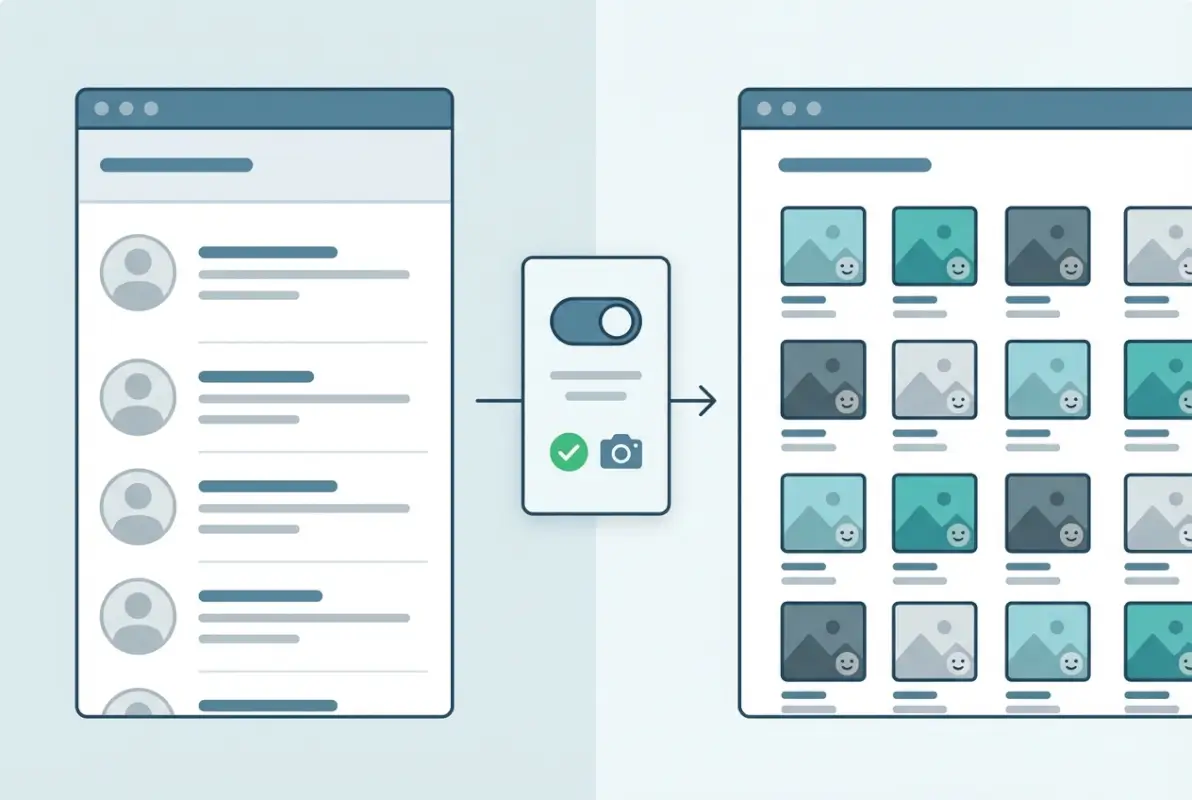
Core concepts behind How to View Directory Photos as Thumbnails in an Online Directory

Why does this matter? Because cognitive load is real, and text-heavy directories force users to read and parse information serially. Thumbnails let people process multiple listings in parallel, cutting decision time and reducing friction. A business listing site with thumbnails will almost always outperform a text-only competitor in engagement metrics—users spend more time on the page, click through to more listings, and convert at higher rates. According to HTTP Archive performance data, sites with optimized image grids see measurably better Largest Contentful Paint scores, which directly correlates with lower bounce rates.

What Qualifies as a “Thumbnail” in an Online Directory

Not every small image is a thumbnail. A true directory thumbnail is purpose-built: it’s cropped or resized to fit a specific container, compressed to minimize file size, and served in a format optimized for the web. Common dimensions range from 200×200 pixels for profile photos to 400×300 pixels for product or business listings. The key is consistency—mixing portrait and landscape orientations or varying sizes creates a chaotic, unprofessional grid that hurts usability.

Most modern directories generate thumbnails automatically on upload using server-side libraries (like ImageMagick or Sharp) or cloud services (like Cloudinary or Imgix). These tools can crop, resize, and convert images on the fly, ensuring every thumbnail meets your size and format specs. If you’re running a WordPress directory, plugins like TurnKey Directories handle thumbnail generation out of the box, complete with responsive sizing and lazy loading. You also want to set explicit width and height attributes in your HTML to reserve layout space and prevent Cumulative Layout Shift (CLS) when images load.

Benefits and Trade-Offs of Thumbnail Grids for Directories

The upside of thumbnail grids is straightforward: faster scanning, stronger visual hierarchy, and better mobile responsiveness. Users can evaluate a dozen listings in seconds, and responsive grid layouts (using CSS Grid or Flexbox) adapt beautifully to any screen size. Thumbnails also provide a natural place for branding—logos, badges, or category icons—that reinforce your directory’s identity. On the SEO side, properly tagged thumbnails with descriptive filenames and alt text give search engines more context, which can improve rankings for image search and overall page relevance.

The trade-offs? Thumbnails increase initial page weight if you load all images upfront, which can hurt your LCP and Time to Interactive (TTI). A directory with 50 unoptimized JPEGs can easily balloon to 5+ MB, turning mobile users away before the page even renders. That’s why lazy loading and modern formats like WebP are non-negotiable. Accessibility is another consideration—screen readers can’t “see” images, so every thumbnail needs meaningful alt text, and keyboard users need focus indicators and skip links to navigate your grid efficiently. When implemented correctly, these trade-offs are manageable; when ignored, they tank your user experience and search rankings.

Key Takeaway: Define exact thumbnail dimensions and automate generation at upload time so every image in your directory is optimized and consistent before it ever reaches a user’s browser.

Designing and Implementing Thumbnails (Frontend)

Getting thumbnails onto the page is easy, but getting them to load fast, look sharp, and stay accessible requires deliberate frontend strategy. The three pillars are format selection, responsive sizing, and lazy loading—each one directly impacts your Core Web Vitals and user satisfaction. Skip any of these and you’ll end up with either slow pages, blurry images on high-DPI displays, or poor mobile performance. The good news is that modern HTML and CSS give you all the tools you need to nail this without heavy JavaScript frameworks.
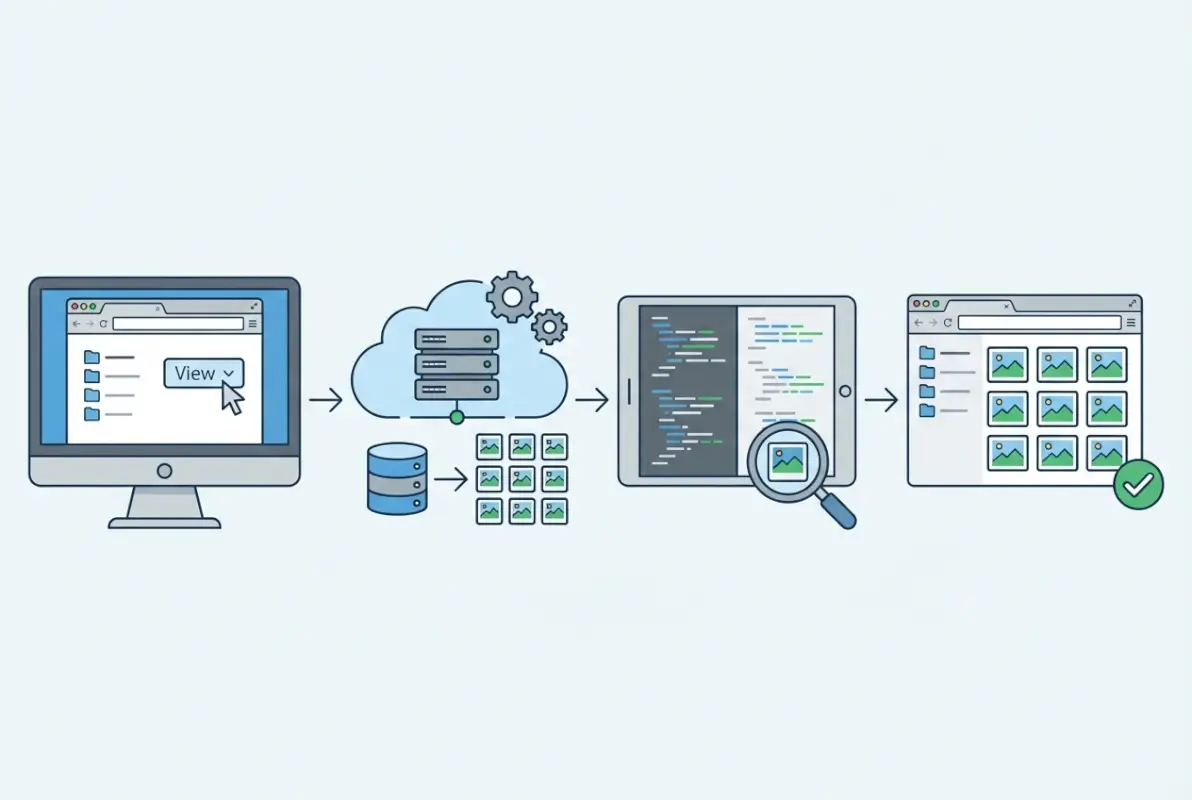
Step-by-step process for How to View Directory Photos as Thumbnails in an Online Directory

Start with image formats. JPEG is the legacy standard and still works fine for photos with lots of color variation, but WebP delivers the same visual quality at roughly 30% smaller file sizes. AVIF goes even further—up to 50% smaller—but browser support is still catching up (it’s fully supported in Chrome, Edge, and Firefox, but Safari only added support recently). The smart play is to serve WebP as your primary format with a JPEG fallback using the <picture> element or the srcset attribute. According to HTTP Archive media research, sites that adopt WebP see measurable improvements in LCP, especially on mobile networks. You can also leverage business listing services that automatically generate multiple formats server-side, saving you the manual conversion work.

Image Formats, Sizing, and Lazy Loading

Responsive sizing means serving appropriately scaled images for each viewport. A 1200-pixel thumbnail on a 400-pixel mobile screen is wasted bandwidth. Use the srcset attribute to define multiple resolutions (1x, 2x for Retina displays) and let the browser pick the best one. Here’s a minimal example:

<img src="thumbnail-400.webp" srcset="thumbnail-400.webp 400w, thumbnail-800.webp 800w" sizes="(max-width: 600px) 100vw, 400px" alt="Local bakery storefront" width="400" height="300" loading="lazy">

That loading="lazy" attribute tells the browser to defer loading until the image is about to enter the viewport, which is critical for directories with dozens or hundreds of listings. Lazy loading can improve your initial LCP by 30–60% because the browser doesn’t waste time downloading off-screen images. Just make sure the first few thumbnails above the fold load eagerly (omit loading="lazy" or set loading="eager") so users see content immediately. For deeper implementation details, check out resources on how to use wget to download online directory data—it’s useful for auditing your own image payloads and understanding what users actually fetch.

Compression matters too. Run your thumbnails through a lossless or near-lossless compressor (like cwebp for WebP or jpegoptim for JPEG) before upload. You can often shave another 20–30% off file size without visible quality loss. If you’re using a CDN like Cloudflare or Fastly, enable automatic image optimization—they’ll compress and convert formats on the fly based on the requesting browser’s capabilities. This combination of modern formats, responsive sizing, and lazy loading is the baseline for any WCAG-compliant directory that cares about performance.

💡 Pro Tip: Set explicit width and height attributes on every <img> tag to reserve layout space and eliminate Cumulative Layout Shift (CLS) as images load. This alone can boost your CLS score by 50% or more.

UI Patterns and Accessibility

Grid layouts are the default for thumbnail directories, but you have two main flavors: uniform grid (all tiles same size) or masonry (Pinterest-style, tiles flow to fill space). Uniform grids are simpler and faster to render, masonry grids look more dynamic but require JavaScript (or careful CSS) to avoid janky layouts. For most business directories, a simple CSS Grid with grid-template-columns: repeat(auto-fill, minmax(200px, 1fr)) works beautifully and adapts to any screen width without media queries.

Accessibility means every thumbnail needs descriptive alt text that conveys the listing’s identity—not just “thumbnail” or “image.” Screen readers announce this text, and search engines index it. Good alt text is specific: “Mike’s Auto Repair storefront on Main Street” beats “auto repair” every time. You also need keyboard navigation—users should be able to tab through thumbnails and hit Enter to open a listing. Add visible focus outlines (outline: 2px solid #295CFF) so sighted keyboard users know where they are. Skip links at the top of the page (“Skip to content”) let users bypass the navigation and jump straight to the thumbnail grid, which is a huge win for assistive tech users. If you’re serious about accessibility, read up on the latest WCAG 2.1 guidelines and test your grid with a screen reader like NVDA or VoiceOver.

Captions are optional but powerful. A short text overlay or caption below each thumbnail (business name, category, rating) gives users context without forcing them to click. Use CSS to overlay captions on hover for desktop users and display them permanently on mobile where hover doesn’t exist. Keep font sizes readable (minimum 14px on mobile) and ensure sufficient color contrast (at least 4.5:1 for normal text). These small touches make your directory feel polished and professional, which directly impacts trust and conversion rates. Many business listing services offer built-in caption and badge systems that handle this for you.

Key Takeaway: Test your thumbnail grid with keyboard-only navigation and a screen reader before launch—if you can’t tab through and understand each listing without a mouse, neither can your users.

Performance and Reliability Considerations

Impact of Image Optimization on Speed Metrics

Thumbnail images, though small, can accumulate quickly in a directory grid and become a major contributor to page weight and load time. According to the 2025 Web Almanac Performance chapter, images remain the largest content type by payload on most pages, and unoptimized thumbnails directly increase Largest Contentful Paint (LCP) and Cumulative Layout Shift (CLS). Choosing modern formats like WebP or AVIF can reduce file sizes by 30–50% compared to JPEG or PNG without perceptible quality loss. Serving compressed, correctly sized thumbnails ensures your directory’s visual grid loads quickly, improving both user experience and Core Web Vitals scores.
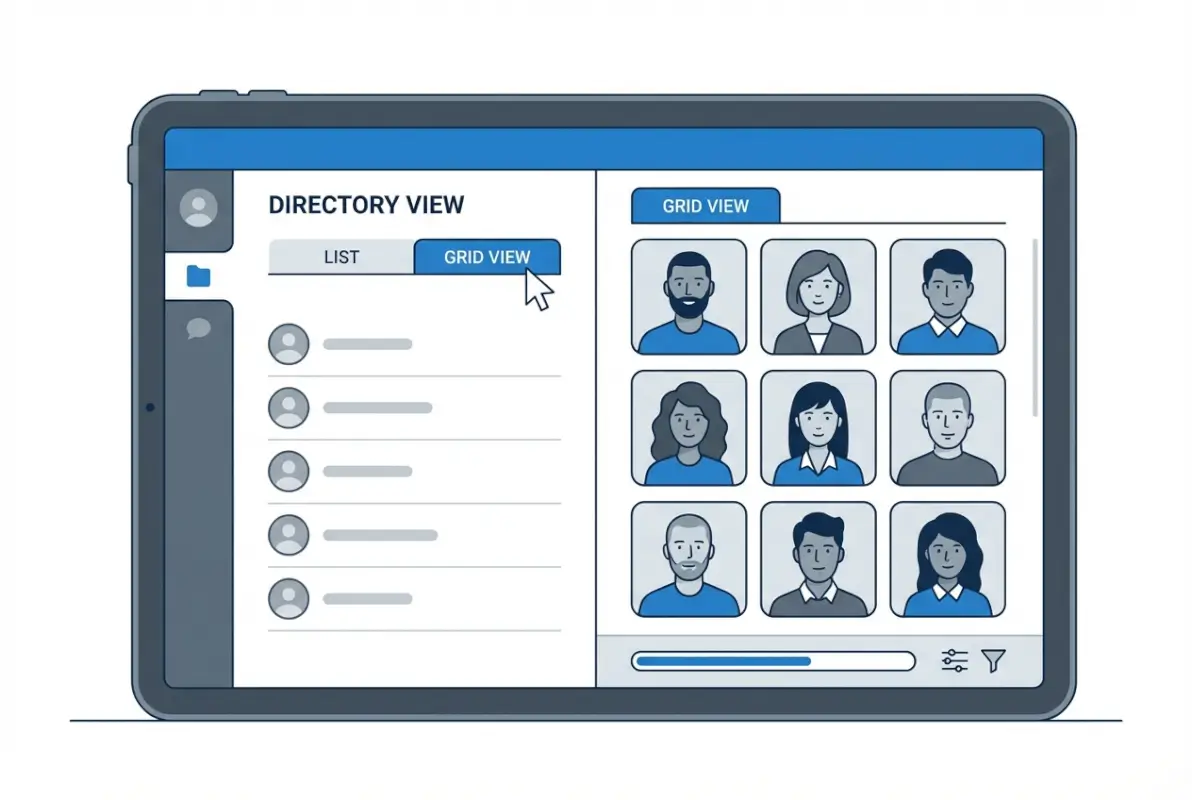
Tools and interfaces for How to View Directory Photos as Thumbnails in an Online Directory

Effective compression and format selection directly correlate with faster rendering. When thumbnails are too large or served in legacy formats, browsers must spend extra cycles decoding and painting the images, delaying the LCP element and causing users to wait longer before they can interact with the directory. Lazy loading defers off-screen images, but the thumbnails above the fold should be fully optimized to minimize initial render time. Data from the 2024 performance analysis shows that sites using responsive images with srcset and serving next-gen formats see measurably better LCP distributions.

Beyond format and size, image dimensions must match the display size to avoid wasting bandwidth and CPU cycles on resizing. If your CSS renders thumbnails at 200×200 pixels, serving 800×800 originals forces the browser to scale down each image, consuming memory and processing time. Use server-side or CDN-based resizing to generate exact-fit thumbnails at build time or on-the-fly. This practice reduces the number of bytes transferred and cuts down on layout shifts caused by dimension mismatches.

Finally, consider the interplay between image optimization and the broader page context. Thumbnails often share the viewport with other assets—fonts, scripts, and stylesheets—that compete for network bandwidth and rendering resources. Prioritizing critical CSS and deferring non-essential JavaScript ensures the browser can decode and display thumbnail grids without blocking. Monitoring your real-user metrics (RUM) alongside synthetic tests will reveal whether thumbnail optimization is moving the needle on LCP and CLS in production traffic.

Key Takeaway: Generate exact-fit, compressed thumbnails in modern formats and prioritize above-the-fold images to reduce LCP by 20–50% compared to serving oversized originals.

Caching, CDNs, and Delivery

Once you’ve optimized thumbnail images at the source, the next lever is delivery: how quickly browsers can fetch those assets from the network. Content Delivery Networks (CDNs) cache thumbnails at edge locations around the world, reducing latency by serving files from a server geographically close to each visitor. According to the Web Almanac’s 2024 Media chapter, sites using CDNs for images report median time-to-first-byte (TTFB) reductions of hundreds of milliseconds compared to origin-only delivery. For directories with hundreds of thumbnails, that latency saving compounds across every asset, substantially improving perceived performance.

Effective caching headers are just as critical as the CDN itself. Set long-lived Cache-Control max-age directives (e.g., one year) for immutable thumbnails, and use content-based hashes in filenames to ensure that any update to an image results in a new URL. This pattern, known as cache busting, allows browsers and CDNs to cache aggressively without serving stale content. When a user revisits your directory or navigates between pages, previously fetched thumbnails load instantly from the local cache, eliminating network round-trips and reducing server load.

Some CDNs offer on-the-fly image transformation, letting you request specific sizes, formats, or quality levels via URL parameters. This flexibility means you can serve the optimal thumbnail variant for each device and viewport without maintaining dozens of static files. However, be mindful of cache fragmentation: too many unique URLs for the same logical image can dilute cache hit rates. Standardize a small set of thumbnail sizes and formats (e.g., 200w WebP, 400w WebP, 200w JPEG fallback) to maximize reuse and hit ratios across your user base.

Delivery StrategyTypical TTFB ReductionBest Use Case
Origin-only servingBaseline (0 ms)Low-traffic directories, single geographic region
CDN with static assets150–300 msGlobal audience, immutable thumbnails
CDN + on-the-fly transforms150–300 ms + flexible sizingResponsive designs, frequent updates
HTTP/2 server pushVariable (can reduce or worsen)Experimental; use with caution for above-fold thumbnails

Finally, consider using HTTP/2 or HTTP/3 to multiplex thumbnail requests over a single connection, reducing head-of-line blocking and connection overhead. Modern CDNs and hosting platforms enable these protocols by default, but verify that your origin server and client browsers support them. Combined with smart caching and edge delivery, protocol-level optimizations ensure that even directories with large grids of thumbnails remain snappy and reliable under load.

Key Takeaway: Configure long-lived cache headers with content-hashed filenames and serve thumbnails via a CDN to cut TTFB by 200+ ms and eliminate redundant origin requests on repeat visits.

Directory Management, Organization, and UX

Structuring Thumbnails Within a Directory

A well-organized thumbnail grid balances visual density with scannability, ensuring users can quickly locate items without feeling overwhelmed. Consistent tile sizes create a predictable rhythm: uniform widths and aspect ratios let the eye move smoothly across rows and columns. For directories with mixed content—profiles, products, documents—consider grouping items by category and using subtle visual separators or section headers. This structure reduces cognitive load and helps users form mental models of where different types of content live.

Best practices for How to View Directory Photos as Thumbnails in an Online Directory

Filters and sorting controls are essential when a directory grows beyond a few dozen items. Implement faceted filters (by date, category, tag, or author) that update the thumbnail grid in real time without requiring a full page reload. Client-side filtering with JavaScript is fast for smaller datasets (under a few hundred items), while server-side pagination and filtering become necessary for larger catalogs to avoid sending excessive DOM nodes and image payloads. Ensure that any lazy-loading logic accounts for filtered views, so hidden thumbnails don’t load prematurely.

Grid layout algorithms—fixed, flexbox, or CSS Grid—each offer trade-offs. A fixed-width grid with uniform tiles is simplest and most performant, but it can leave whitespace on large screens or squeeze tiles uncomfortably on small devices. Flexbox wrapping adapts to viewport width but can create uneven row lengths if items have variable content. CSS Grid with auto-fit and minmax provides a responsive middle ground, filling available space while maintaining minimum tile sizes. Choose the layout that best matches your content’s aspect ratios and the level of responsiveness you need.

Finally, consider progressive disclosure: start by rendering a smaller number of thumbnails (e.g., 20–40) and load more as the user scrolls or clicks a “Load More” button. This approach keeps initial page weight low and improves LCP, especially on mobile connections. Combined with lazy loading, progressive disclosure ensures that users see content quickly and can explore deeper without waiting for hundreds of thumbnails to render upfront.

Key Takeaway: Use CSS Grid with auto-fit and progressive disclosure to render 20–40 thumbnails initially, then lazy-load additional rows as users scroll, balancing performance with comprehensive access.

Metadata and Searchability

Rich metadata transforms a static thumbnail grid into a searchable, filterable directory that surfaces relevant items quickly. Each thumbnail should carry descriptive text—titles, captions, tags, or categories—that users and search engines can parse. Alt text on images provides a textual representation for screen readers and serves as a fallback when images fail to load. Well-crafted alt text should be concise (one sentence) and describe the content or function of the image, not just repeat the filename or say “thumbnail.”

Structured data (JSON-LD or microdata) can expose directory metadata to search engines, enabling rich snippets and enhanced discovery in search results. For example, marking up a directory of team members with Person schema or a product catalog with Product schema helps Google and other engines understand the content and display it more prominently. Include properties like name, image URL, description, and relevant identifiers. This semantic layer doesn’t bloat the page payload but significantly boosts discoverability and click-through rates from search.

On-page search functionality benefits from indexing metadata fields in a client-side search library (like Fuse.js or Lunr.js) or a server-side search engine (Elasticsearch, Algolia). Users can type keywords, and the directory filters thumbnails in real time, highlighting matches. Ensure that search indexing includes alt text, captions, and tags, not just titles, to capture a broader range of queries. Performance remains critical: avoid re-rendering the entire grid on every keystroke; instead, update only the visible subset of thumbnails.

Metadata FieldPurposeExample
TitlePrimary label, shown in UI and indexed by search“Product Launch Deck”
Alt TextAccessibility and fallback description“Slide thumbnail showing Q3 revenue chart”
CaptionSupplemental context, displayed below thumbnail“Prepared by Marketing, updated Nov 2024”
Tags/KeywordsFiltering and search indexing“revenue, quarterly, marketing”
Upload DateSorting and recency filters“2024-11-15”

Don’t overlook file metadata embedded in the images themselves, such as EXIF data for photos. While EXIF can reveal camera settings, geolocation, or timestamps, it can also expose unwanted information or inflate file size. Strip unnecessary EXIF tags during thumbnail generation to protect privacy and reduce payload. Retain only essential fields (e.g., copyright or creation date) if your directory requires them for attribution or sorting.

Key Takeaway: Index title, alt text, caption, and tags in a client-side or server-side search engine to enable real-time filtering and boost discoverability without increasing page weight.

Security, SEO, and Accessibility Implications

Security and Privacy Considerations

Thumbnails can inadvertently leak sensitive information if they’re generated from private documents or images without proper access controls. Ensure that thumbnail URLs are not guessable or enumerable; use cryptographic hashes or signed tokens to prevent unauthorized access. If your directory supports user uploads, validate and sanitize image files server-side to block malicious payloads disguised as images. Libraries like ImageMagick have historically had security vulnerabilities, so keep dependencies up to date and consider using safer alternatives like libvips or cloud-based image processing services that isolate untrusted input.

Advanced strategies for How to View Directory Photos as Thumbnails in an Online Directory

Privacy extends to embedded metadata: EXIF data in uploaded photos may contain GPS coordinates, timestamps, or device identifiers that users didn’t intend to share. Automatically strip this metadata during thumbnail generation to protect user privacy and comply with data protection regulations like GDPR. Similarly, ensure that thumbnails of user-generated content respect copyright and usage rights; implement a clear terms-of-service and DMCA takedown process if your directory hosts third-party images.

Cross-origin resource sharing (CORS) policies affect how thumbnails are fetched and displayed, especially if you serve images from a separate CDN domain. Configure CORS headers on your image server to allow your main domain to load images in <img> tags and <canvas> elements. Without correct CORS headers, certain browser features—like canvas-based image manipulation or Web Workers—may fail, breaking advanced thumbnail interactions. Test your CORS configuration across browsers to avoid subtle loading issues that only appear in specific contexts.

Key Takeaway: Strip EXIF metadata from user-uploaded thumbnails and use signed URLs or access tokens to prevent unauthorized enumeration and protect user privacy.

SEO and Discoverability

Search engines index images alongside text, and well-optimized thumbnails can drive traffic through image search results. Use descriptive, keyword-rich filenames (e.g., team-photo-2024.jpg instead of IMG_1234.jpg) and ensure each thumbnail has meaningful alt text. Submit an image sitemap to Google Search Console and other search engines, listing all thumbnail URLs along with captions and titles. This structured inventory helps crawlers discover and index your images more completely, increasing the chances they’ll appear in relevant image searches.

Structured data markup (JSON-LD) can further enhance how search engines interpret your directory. For example, a directory of team members might use Person schema with image properties pointing to each thumbnail. Product directories benefit from Product schema with image arrays. This semantic layer signals to search engines that your thumbnails are part of a richer content type, potentially earning rich snippets, knowledge panels, or carousels in search results. Validate your structured data with Google’s Rich Results Test to catch errors before they hurt your rankings.

Page speed and Core Web Vitals are direct ranking factors, so the performance optimizations covered earlier—lazy loading, modern formats, CDN delivery—also improve SEO. Google’s algorithms favor pages that load quickly and provide a smooth user experience, especially on mobile. Monitor your site’s performance in Google Search Console and PageSpeed Insights, paying close attention to LCP and CLS scores. If thumbnails are the LCP element (often the case in grid-heavy directories), optimizing them can yield measurable gains in search visibility and click-through rates.

SEO ElementImpact on DiscoveryImplementation Tip
Descriptive filenamesModerate: helps image search indexingUse hyphens and keywords: product-name-thumbnail.webp
Alt textHigh: indexed by search engines and critical for accessibilityOne descriptive sentence per image
Image sitemapHigh: ensures all thumbnails are crawledSubmit XML sitemap with <image:image> entries
Structured data (JSON-LD)High: enables rich snippets and enhanced SERP featuresUse Person, Product, or ImageObject schemas
Page speed (LCP, CLS)High: direct ranking factorOptimize thumbnails to improve Core Web Vitals

Finally, ensure that your directory’s pagination or infinite-scroll implementation doesn’t hide content from crawlers. If you use client-side rendering to load thumbnails dynamically, verify that Googlebot can execute JavaScript and discover all items. Alternatively, provide a static HTML fallback or server-side rendered pages with rel="next" and rel="prev" links to help crawlers navigate the full directory. This hybrid approach balances modern UX patterns with search engine compatibility.

Key Takeaway: Submit an image sitemap with descriptive alt text and structured data, and ensure your pagination strategy allows crawlers to discover all thumbnails for maximum search visibility.

Frequently Asked Questions

How do I enable thumbnail view in my online directory?

Most directory platforms offer a display settings panel or view switcher. Look for options labeled “grid view,” “thumbnail mode,” or “gallery layout” in your admin dashboard. If building custom, implement a CSS grid with image thumbnails and lazy loading attributes on each image element.

What image formats are best for thumbnails in terms of quality and performance?

WebP and AVIF deliver superior compression and quality compared to JPEG or PNG. Serve WebP with a JPEG fallback for maximum browser support. AVIF offers even better compression but has slightly lower adoption. Always use responsive sizing and appropriate compression levels to balance quality and file size.

Why aren’t my directory thumbnails loading fast on mobile?

Large unoptimized images, missing lazy loading, and lack of responsive sizing are common culprits. Ensure you serve appropriately sized thumbnails using srcset, enable native lazy loading, and compress images. Mobile networks are slower, so smaller file sizes and CDN delivery make a significant difference in perceived speed.

How can I improve accessibility for thumbnail grids?

Provide descriptive alt text for every thumbnail, use semantic HTML with proper heading hierarchy, and ensure keyboard navigation works across the grid. Include visible focus indicators, maintain sufficient color contrast for text overlays, and test with screen readers to confirm logical reading order and meaningful image descriptions.

What is lazy loading, and should I use it for thumbnails?

Lazy loading defers image loading until they are near the viewport, reducing initial page weight and improving load times. For directories with many thumbnails, it is essential. Use the native loading=”lazy” attribute on img tags or a JavaScript library for advanced control and placeholder handling.

How do I ensure thumbnails stay in sync with the full-size images?

Automate thumbnail generation on upload using server-side scripts or cloud functions. Store metadata linking each thumbnail to its source image. When a full-size image is updated or deleted, trigger a workflow to regenerate or remove the corresponding thumbnail, ensuring consistency across your directory.

Can I use thumbnail grids for directories with hundreds of items?

Yes, with pagination or infinite scroll combined with lazy loading. Rendering hundreds of thumbnails at once will harm performance and user experience. Break large directories into pages of 20–50 items or implement virtual scrolling to load only visible rows, keeping memory and network usage efficient.

Should I include captions or metadata overlays on thumbnails?

Short captions or labels help users quickly identify items without clicking through. Keep overlays minimal to avoid visual clutter and ensure text remains readable on varied backgrounds. Use semi-transparent overlays or consistent positioning, and always provide the same information in alt text for accessibility.

Conclusion

Viewing directory photos as thumbnails transforms how visitors interact with your online directory. By choosing modern image formats like WebP and AVIF, implementing responsive sizing with srcset, and enabling lazy loading, you deliver a fast, visually rich experience that scales across devices and network conditions. Thoughtful accessibility—through meaningful alt text, keyboard navigation, and semantic markup—ensures every user can browse your directory efficiently. Pairing these frontend strategies with performance optimizations like CDN delivery, edge caching, and automated thumbnail generation creates a sustainable system that maintains quality and speed as your directory grows.

The techniques covered in this guide are not theoretical. They are grounded in real-world data from The Web Almanac and validated by large-scale performance studies. Your implementation choices directly affect Core Web Vitals, user engagement, and search visibility. Start with the quick wins: compress and convert your images, add loading=”lazy” to img tags, and audit your thumbnail sizes. Then refine your approach with structured metadata, responsive grids, and automated workflows to keep your directory fresh and performant.

Ready to Optimize Your Directory Thumbnails?

Take action today: audit your current image formats, enable lazy loading, and measure your LCP and CLS scores. Small changes in thumbnail optimization can yield dramatic improvements in load times and user satisfaction. Your visitors—and your search rankings—will thank you.

Review your directory’s performance metrics and image delivery pipeline, then apply the strategies from this guide to create a faster, more accessible browsing experience.

Similar Posts

  • Blog

    How to Create a Business Directory in PHP: A Developer’s Guide

    Building a successful PHP business directory isn’t just about throwing together a few database tables and calling it a day. After developing dozens of directory platforms over the past decade, I’ve learned that the most profitable directories solve specific problems for niche communities—and the technical foundation you build today determines whether you’ll scale to millions…

  • Blog

    How to Create a Successful Online Directory: 7 Key Strategies for Growth

    substring(replace(

    Building a successful online directory isn’t just about throwing together a list of businesses and hoping people show up. The most profitable directories I’ve seen share something crucial in common: they solve a specific problem better than anyone else, and they’ve mastered the delicate balance between user experience, SEO optimization, and monetization strategies that don’t feel predatory. Whether you’re launching a niche business directory or a comprehensive local resource hub, the difference between a directory that generates consistent revenue and one that becomes another abandoned project often comes down to seven strategic decisions made in the first 90 days.

    TL;DR – Quick Takeaways

    • Niche specificity wins – Broad directories compete with Google; focused directories dominate specific markets
    • User-generated content drives growth – Enable business owners to claim and update listings for fresh, accurate content
    • SEO foundation is non-negotiable – Location-based pages and structured data markup determine your visibility
    • Multiple revenue streams increase stability – Premium listings, ads, and lead generation create sustainable income
    • Mobile optimization impacts 65%+ of traffic – Responsive design and fast load times directly affect conversion rates
    • Community features boost engagement – Reviews, ratings, and user interactions increase return visits by 40%
    • Consistent content updates signal authority – Fresh listings and blog content improve search rankings within weeks

    Choose a Profitable Niche That Solves Real Problems

    The biggest mistake new directory owners make is trying to compete with established giants like Yelp or Google Business Profile by creating “another business directory.” I learned this the hard way when my first directory attempt—a general local business directory—generated exactly zero revenue in six months. The problem wasn’t the execution, it was the positioning. Successful directories target underserved niches where users struggle to find consolidated, reliable information. Think specialty contractors, eco-friendly businesses, accessibility-focused services, or industry-specific B2B suppliers.

    [KBIMAGE_1]

    Your niche selection should pass three critical tests: verification demand (people actively searching for these businesses), monetization potential (businesses willing to pay for visibility), and competition gaps (existing solutions are outdated or incomplete). Research search volumes for industry-specific terms combined with location modifiers. A niche like “certified green building contractors” or “allergen-free restaurants” might have lower absolute search volume than “restaurants,” but the commercial intent is significantly higher, and you’re not competing with billion-dollar platforms.

    💡 Pro Tip: Use Google’s “People Also Ask” feature and niche-specific forums to identify pain points in your chosen category. If people repeatedly ask “how do I find X type of business near me,” you’ve found a viable niche.

    Consider the lifetime value of listings in your chosen niche. Professional services, specialized contractors, and B2B suppliers typically have higher customer acquisition costs and are more willing to invest in directory placement than commodity businesses. A directory focusing on specialized business categories can charge premium rates because you’re connecting businesses with high-value customers who are difficult to reach through traditional advertising channels.

    Directory TypeCompetition LevelMonetization PotentialTime to Revenue
    General Local BusinessVery HighLow12+ months
    Niche Industry B2BLow-MediumHigh3-6 months
    Specialty ServicesMediumMedium-High4-8 months
    Geographic HyperlocalLowMedium6-9 months

    Build Your Directory on a Platform That Scales

    Platform selection determines your long-term flexibility and operational costs more than any other technical decision. You’ve got three primary routes: custom development, WordPress with directory plugins, or dedicated directory software. Custom development offers unlimited flexibility but requires significant upfront investment and ongoing maintenance costs that can easily exceed $20,000 annually. WordPress solutions with plugins like GeoDirectory or Business Directory Plugin provide a middle ground, while platforms like Brilliant Directories or Directory Builder offer turnkey solutions with built-in monetization features.

    [KBIMAGE_2]

    For most directory startups, WordPress paired with a robust directory plugin strikes the optimal balance between cost, customization, and speed to launch. You can have a functional directory live within days rather than months, and the plugin ecosystem provides solutions for everything from advanced search filters to payment processing. The initial investment for building a directory website varies significantly based on your chosen platform, but WordPress-based solutions typically range from $500-$3,000 for a professional setup.

    ✅ Key Insight: Prioritize platforms that support structured data markup out of the box. Schema.org markup for local businesses dramatically improves your search visibility and click-through rates from search results.

    Your platform must handle core functionality without requiring constant developer intervention: user registration and listing submissions, payment processing for premium features, advanced search and filtering, mobile responsiveness, and SEO-friendly URL structures. According to research from Search Engine Journal, directories with properly implemented schema markup see an average 30% increase in organic click-through rates compared to those without structured data.

    Don’t overlook the importance of page speed and hosting infrastructure. A directory loading in under 2 seconds converts 40% better than one taking 5 seconds. Invest in quality managed WordPress hosting or cloud infrastructure that can handle growing traffic without performance degradation. Consider that each additional listing page multiplies your hosting requirements, so scalability isn’t optional—it’s fundamental to your growth strategy.

    73%
    of directory users abandon sites that take longer than 3 seconds to load on mobile devices

    Implement a Strategic SEO Foundation From Day One

    SEO for directories operates differently than content sites or e-commerce platforms because your value proposition relies on creating hundreds or thousands of location-specific and category-specific pages that each rank for long-tail searches. Your homepage competing for “business directory” is irrelevant, what matters is whether your individual listing pages and category pages rank for “[service] in [city]” queries. This requires a structured approach to URL architecture, internal linking, and content organization that most directory owners completely miss.

    [KBIMAGE_3]

    Start with a logical URL structure that incorporates both category and location hierarchies. Patterns like /category/state/city/business-name or /location/city/category create clear topical relevance and help search engines understand your content organization. Each category and location combination should generate a unique indexable page with original content, not just filtered views of the same listing database. When users want to add their business to directory platforms, they’re looking for visibility that comes from strong SEO fundamentals.

    Title tags and meta descriptions for category and location pages require a formulaic approach that scales across thousands of pages while remaining unique. Develop templates that incorporate the category, location, and a compelling reason to click: “[Category] in [City] – Find Verified [Service Type] | Your Directory Name.” These templates should pull dynamically from your database while including static elements that reinforce your unique value proposition. Google’s algorithm has become sophisticated enough to recognize template-based content, so include at least 150-200 words of unique descriptive text on each category and location landing page.

    ⚠️ Important: Avoid creating thin content pages with only one or two listings. Set minimums for when category/location combinations generate pages, or combine adjacent areas to ensure each page provides genuine value to users and search engines.

    Internal linking structure dramatically impacts how authority flows through your directory. Create contextual links from high-performing listing pages to related categories and nearby locations. Implement “related businesses” sections that link similar services within the same geographic area. According to Moz’s research, strong internal linking can improve rankings for linked pages by 20-30% by distributing page authority throughout your site architecture.

    4. Build a Powerful Monetization Model

    A successful online directory needs sustainable revenue streams to support ongoing development and growth. The key is implementing monetization strategies that add value for users while generating consistent income for your platform.

    [KBIMAGE_4]

    Most profitable directories use a combination of revenue models rather than relying on a single income source. This diversification protects your business from market fluctuations and provides multiple pathways to profitability.

    Premium Listing Options

    Freemium models work exceptionally well for directories because they lower the barrier to entry while creating clear upgrade incentives. Basic listings should provide enough value to attract businesses, while premium tiers offer features that significantly improve visibility and lead generation.

    Listing TierFeaturesTypical Price Range
    Free/BasicBusiness name, address, phone, basic description, 1-2 images$0
    EnhancedFeatured badge, unlimited images, video, social links, priority in category$29-99/month
    PremiumHomepage placement, detailed analytics, lead capture forms, review highlighting$99-299/month
    EnterpriseMultiple locations, API access, dedicated support, custom landing pages$299-999/month

    The most effective premium listings offer tangible benefits that businesses can measure. Featured placements that appear at the top of search results typically convert 3-5 times better than standard listings, making the upgrade cost justifiable for businesses focused on lead generation.

    Advertising Revenue Streams

    Display advertising can provide substantial passive income once your directory reaches significant traffic levels. However, implement ads carefully to avoid degrading user experience and harming your SEO performance.

    Banner ads work best in specific placements: between search results, in sidebar widgets, and within content areas that don’t interrupt the browsing flow. Limit ad density to maintain fast page load speeds and keep users focused on finding the businesses they need.

    Native advertising integrations generate higher click-through rates than traditional display ads. Sponsored listings that appear alongside organic results—clearly marked as advertisements—provide value to both advertisers and users when they’re relevant to the search query.

    Revenue Tip: Start with premium listings before adding display advertising. Users are more tolerant of sponsored business listings than banner ads, and the revenue per visitor is typically higher for featured placements than low-traffic ad inventory.

    Lead Generation and Referral Fees

    Performance-based revenue models align your success with your clients’ success, creating a win-win relationship. Rather than charging flat monthly fees, you earn commissions when directory users become paying customers for listed businesses.

    Contact form submissions represent a measurable action that businesses value highly. Charge businesses for qualified leads generated through your directory, typically ranging from $5-50 per lead depending on your industry. Service-based directories in high-value sectors like legal, medical, and home services can command premium lead prices.

    Booking integration monetization works exceptionally well for directories in hospitality, beauty services, healthcare, and professional services. Partner with scheduling platforms or build native booking functionality, then charge transaction fees (typically 10-20%) or per-booking fees to listed businesses.

    Subscription and Membership Programs

    User-side subscriptions create recurring revenue while building a committed community. Premium memberships for directory visitors might include benefits like exclusive deals, advanced search filters, saved searches with alerts, and ad-free browsing.

    Annual subscriptions typically see 30-40% better retention than monthly plans because the upfront commitment creates psychological investment in using the platform. Offer significant discounts (usually 15-25%) for annual billing to encourage longer commitment periods.

    5. Implement Advanced Features That Drive Engagement

    Feature differentiation separates thriving directories from forgettable ones. While basic search and listing functionality forms your foundation, advanced features create the engaging experiences that keep users returning and encourage longer browsing sessions.

    [KBIMAGE_5]

    The most valuable features solve specific user problems or remove friction from the discovery process. Before building any feature, identify the user pain point it addresses and measure whether it actually improves engagement after implementation.

    Smart Search and Filtering Systems

    Search functionality determines whether users find what they need or abandon your directory in frustration. Implement autocomplete suggestions that guide users toward successful searches while exposing them to relevant categories they might not have considered.

    Faceted search filters let users narrow results by multiple criteria simultaneously. Location-based directories should include distance radius filters, neighborhood selections, and map boundaries. Service directories benefit from price range filters, availability calendars, and credential filters.

    Save search functionality with email alerts transforms one-time visitors into regular users. When users can monitor specific search criteria and receive notifications about new listings matching their interests, they maintain ongoing engagement without actively browsing your site.

    User-Generated Content and Reviews

    Review systems dramatically increase time on site while providing the social proof that influences purchasing decisions. Research from the Schar School of Policy and Government shows that consumers read an average of 10 reviews before feeling able to trust a business, making comprehensive review systems essential for directory credibility.

    Implement verified review badges for customers who can prove they used the service. Verified reviews carry significantly more weight than anonymous reviews and reduce the impact of fake reviews on your platform’s trustworthiness.

    Review response functionality allows businesses to address feedback publicly, demonstrating customer service quality to prospective clients. Listings with owner responses to reviews typically convert 20-30% better than listings without engagement.

    Review FeatureUser BenefitBusiness Benefit
    Photo uploads with reviewsVisual proof of service qualityAuthentic marketing content
    Detailed rating categoriesSpecific quality assessmentActionable feedback for improvement
    Helpful vote systemSurface most relevant reviewsReduce impact of outlier opinions
    Review recency indicatorsCurrent business quality assessmentShowcase recent improvements

    Interactive Maps and Location Features

    Map integration transforms static listings into interactive discovery experiences. Users can explore businesses by geographic area, compare locations relative to their current position, and visualize density patterns that indicate popular districts.

    Clustering markers on maps prevents overwhelming users with information when many businesses exist in a small area. As users zoom in, clusters should expand to reveal individual locations, creating an intuitive exploration interface.

    Direction integration and travel time estimates remove friction from the consideration-to-visit journey. Direct links to navigation apps with pre-populated addresses eliminate the manual entry that causes some users to abandon their search.

    Comparison and Bookmarking Tools

    Side-by-side comparison features help users evaluate multiple options efficiently. Display key attributes in tabular format so users can quickly assess differences in pricing, features, locations, and ratings across competing businesses.

    Bookmark or favorites functionality encourages users to create accounts while enabling multi-session research. Users researching significant purchases often compare options across days or weeks, and saving their shortlist on your platform brings them back rather than starting fresh on a competitor’s directory.

    Shareable lists allow users to collaborate on decisions with family, friends, or colleagues. Generate unique URLs for saved collections that users can share, expanding your directory’s reach through social sharing while maintaining attribution to your platform.

    Engagement Insight: Users who bookmark or save listings demonstrate 5-7x higher lifetime value than passive browsers. Prioritize features that encourage collection-building and list-making to identify and nurture your most valuable users.

    6. Scale Through Marketing and Community Building

    Even perfectly designed directories fail without strategic user acquisition and community development. Sustainable growth requires balanced efforts to attract both directory users searching for businesses and business owners willing to create and maintain listings.

    Content Marketing for Directory Growth

    Editorial content positions your directory as an authoritative resource rather than simply a business list. Create comprehensive guides, comparison articles, and industry insights that attract organic search traffic while demonstrating expertise in your niche.

    Neighborhood or category guides perform exceptionally well for local directories. Articles like “Best Restaurants in Downtown Portland” or “Top-Rated HVAC Services in Phoenix” naturally incorporate multiple listings while providing genuine value to readers researching options.

    Data-driven content leverages the unique insights available from your directory database. Annual reports analyzing industry trends, geographic comparisons, and market analysis generate media coverage and backlinks while establishing your platform as the definitive data source for your sector.

    Business Outreach and Onboarding

    Proactive business recruitment accelerates directory population beyond passive submissions. Develop targeted outreach campaigns to businesses in underrepresented categories or locations, emphasizing the free exposure and customer acquisition opportunities your platform provides.

    Claim-your-listing campaigns work effectively when you pre-populate directory entries using publicly available data. Businesses are more likely to engage when you can show them an existing listing that needs verification and enhancement rather than asking them to build a profile from scratch.

    Onboarding sequences guide businesses toward creating high-quality listings. Educational email series that explain optimization best practices, share success stories, and highlight premium features convert free listings to paying customers at significantly higher rates than single promotional messages.

    Marketing ChannelBest ForExpected Timeline
    SEO and content marketingSustainable long-term traffic6-12 months to significant results
    Paid search advertisingImmediate traffic and testingInstant results, ongoing cost
    Partnership and integrationCredibility and distribution3-6 months to establish
    Social media presenceCommunity and engagement3-9 months to build following
    Email marketingRetention and repeat visitsImmediate for existing subscribers

    Strategic Partnership Development

    Industry partnerships provide distribution channels and credibility that would take years to build independently. Professional associations, trade organizations, and complementary service providers can expose your directory to their existing audiences through co-marketing arrangements.

    White-label or embedded directory solutions allow partners to offer directory functionality to their audiences while driving traffic and listings back to your platform. Trade associations particularly value turnkey directory solutions they can brand for their members without development investment.

    Data partnerships with complementary platforms create mutual value through integration. Businesses managing listings on your directory might automatically sync information to mapping services, review platforms, or industry-specific databases, reducing their administrative burden while expanding your directory’s reach.

    Community Building and Engagement

    Active communities transform directories from passive databases into dynamic platforms where users return frequently. Discussion forums, Q&A sections, and user-generated content areas encourage interaction beyond simple business lookup.

    User recognition programs reward contributors who write reviews, answer questions, or upload photos. Gamification elements like badges, levels, and leaderboards motivate continued participation while helping other users identify trusted community voices.

    Virtual and in-person events strengthen community bonds while generating content and promotional opportunities. Webinars featuring directory businesses, industry networking events, and local meetups create experiences that transcend the digital directory interface.

    Growth Strategy: Focus 70% of early marketing efforts on business acquisition and 30% on user acquisition. A directory with comprehensive listings but low traffic is more viable than a directory with traffic but thin business coverage, because quality listings naturally attract organic search traffic over time.

    7. Measure Performance and Optimize Continuously

    Successful directories evolve through systematic measurement and optimization rather than gut-feeling adjustments. Establish clear metrics that track both user satisfaction and business outcomes, then implement regular testing cycles to improve performance across all dimensions.

    Essential Directory Metrics

    User engagement metrics reveal how effectively your directory serves visitor needs. Track search refinement rates to identify whether users find what they need on first search or require multiple attempts. High refinement rates indicate poor search relevance or inadequate filtering options.

    Listing view depth measures how many listings users examine before taking action. Industry benchmarks suggest users typically view 3-5 listings when seriously evaluating options. Significantly higher numbers might indicate poor search quality, while lower numbers could suggest insufficient business coverage.

    Conversion tracking identifies which user actions drive revenue and business value. Whether conversions mean phone calls, form submissions, bookings, or premium upgrades, implement comprehensive tracking to understand which traffic sources, search terms, and listing types generate the most valuable outcomes.

    Metric CategoryKey IndicatorsHealthy Benchmarks
    Traffic QualityOrganic search %, bounce rate, pages per session>60% organic, <50% bounce, >3 pages/session
    Search EffectivenessZero-result searches, search refinements, filter usage<5% zero results, <2 refinements, >30% filter usage
    Listing EngagementView-to-contact rate, time on listing, review reads8-15% contact rate, >90 seconds, >60% read reviews
    Business MetricsActive listings, claimed %, premium conversionGrowing monthly, >40% claimed, 5-12% upgrade
    Revenue HealthMRR growth, churn rate, customer LTV>10% MRR growth, <5% monthly churn, LTV>3x CAC

    A/B Testing and Experimentation

    Systematic testing removes guesswork from optimization decisions. Test individual elements rather than complete redesigns to identify which specific changes drive improvement. Search result layouts, listing card designs, call-to-action buttons, and premium feature presentations all significantly impact conversion rates.

    Statistical significance matters more than quick wins. Run tests until they reach 95% confidence levels with adequate sample sizes, typically requiring hundreds to thousands of conversions depending on your traffic volume. Premature conclusions based on insufficient data often lead to implementing changes that actually harm performance.

    Testing prioritization should focus on high-impact, high-traffic pages first. Homepage experiments affect all visitors, search result page tests impact every search, and listing page optimizations influence conversion for all businesses. Optimize these core experiences before testing secondary pages with limited traffic.

    User Feedback and Qualitative Research

    Quantitative metrics explain what users do, but qualitative research reveals why they behave that way. Implement feedback mechanisms at key decision points: after searches that generated zero results, following listing views without contact, and after users navigate away from upgrade prompts.

    User testing sessions where you observe people using your directory uncover friction points that metrics alone never reveal. Watch users complete realistic tasks and note where they hesitate, express confusion, or abandon processes. Five user testing sessions typically identify 85% of usability problems.

    Business customer feedback provides insights into the listing owner experience. Regular surveys, success check-ins, and cancellation interviews help you understand which features drive value and which pain points cause churn. This intelligence guides product roadmap priorities.

    Competitive Analysis and Market Positioning

    Monitor competitor directories to identify emerging features, pricing changes, and market positioning shifts. Regular competitive audits reveal opportunities where competitors have weaknesses you can exploit or innovations you need to match to remain competitive.

    Feature gap analysis compares your directory capabilities against competitors across categories like search functionality, listing richness, user experience, and mobile performance. Prioritize gaps that matter most to your target users rather than matching every competitor feature indiscriminately.

    Market share tracking within your niche indicates whether your growth is outpacing or lagging behind the market. Search visibility for key terms, brand mention volume, and traffic estimates for competing directories provide benchmarks for evaluating your relative position.

    Optimization Framework: Implement monthly optimization cycles: Week 1 analyzes data and identifies opportunities, Week 2 designs and implements tests, Weeks 3-4 run experiments and collect results. This systematic approach ensures continuous improvement without reactive decision-making.

    Technical Performance Monitoring

    Directory functionality depends on reliable technical infrastructure that maintains fast performance under varying loads. Monitor server response times, database query performance, and API reliability to identify degradation before it impacts user experience.

    Mobile performance deserves particular attention since most directories receive 60-70% of traffic from mobile devices. Test your directory regularly on actual devices across different network conditions, not just desktop browsers with throttled connections. Real-world mobile performance often differs significantly from simulated testing.

    Error tracking and monitoring systems alert you to broken features, failed searches, and user-impacting bugs. Implement comprehensive logging that captures error context so you can reproduce and fix issues quickly. Even small error rates compound into significant user frustration when multiplied across thousands of sessions.


    Frequently Asked Questions

    How much does it cost to start an online directory?

    Starting costs range from $100 to $5,000 depending on your approach. A basic WordPress directory with plugins costs around $200-500, while custom development ranges from $2,000-10,000. Additional expenses include hosting ($10-100/month), domain registration ($15/year), and marketing budget. Many successful directories start small and scale investment as revenue grows.

    What makes an online directory successful?

    Successful directories focus on specific niches, maintain high-quality verified listings, and provide genuine value to both searchers and listed businesses. They combine strong SEO practices, multiple monetization streams, active community engagement, and regular content updates. User experience, mobile optimization, and trust signals like reviews and ratings are equally critical for long-term success.

    How long does it take to monetize a directory website?

    Most directories begin generating revenue within 6-12 months, though timeline varies significantly by niche and marketing effort. Early monetization through premium listings can start at 3-4 months with 50-100 quality listings. Sustainable income typically requires 12-18 months to build sufficient traffic and authority. Aggressive marketing and existing audiences can accelerate this timeline considerably.

    Can I build a directory without coding knowledge?

    Absolutely. Platforms like WordPress with directory plugins (Business Directory Plugin, GeoDirectory), no-code builders (Webflow, Bubble), or specialized directory software (Brilliant Directories) enable non-technical founders to launch functional directories. These solutions provide templates, built-in features, and intuitive interfaces. However, basic technical understanding helps with customization, troubleshooting, and optimization as you scale.

    Should I allow free listings on my directory?

    Yes, offering free basic listings is highly recommended, especially when starting. Free listings rapidly build your database, improve SEO through content volume, and create opportunities to upsell premium features. The freemium model works exceptionally well for directories. Reserve enhanced visibility, multimedia content, social links, and priority placement for paid tiers to create clear value differentiation.

    How do I get businesses to list on my directory?

    Start with direct outreach to relevant businesses highlighting specific benefits like increased visibility and backlinks. Offer free listings initially to build credibility. Leverage social media, industry forums, and email campaigns. Partner with business associations or chambers of commerce. Create valuable content that attracts organic traffic, making your directory attractive to businesses seeking exposure.

    What are the best niches for online directories?

    Profitable niches include specialized professional services (legal, medical specialists), local service providers (contractors, home services), B2B suppliers, sustainable/eco-friendly businesses, remote work resources, and niche hobbies with passionate communities. The best niches have underserved markets, clear monetization potential, businesses willing to pay for exposure, and sufficient search volume without dominant existing directories.

    How do I prevent spam and low-quality listings?

    Implement manual approval for new listings, require email verification, use CAPTCHA on submission forms, and establish clear submission guidelines. Set minimum content requirements (descriptions, images, contact details). Monitor submissions regularly and remove suspicious entries promptly. Consider charging nominal fees even for basic listings, as this significantly reduces spam while maintaining quality standards.

    What features should every directory website include?

    Essential features include advanced search with filters, category browsing, user reviews and ratings, detailed business profiles with contact information, mobile-responsive design, Google Maps integration, and submission forms. Add user accounts for claim/manage listings, email notifications, social sharing buttons, and SEO-friendly URLs. Analytics dashboard and featured listing capabilities are valuable for monetization.

    Can online directories still compete with Google in 2025?

    Yes, by offering what Google cannot: curated expertise, detailed comparisons, community reviews, niche specialization, and editorial oversight. Successful directories provide context, recommendations, and filtering that generic search results lack. Focus on serving specific communities with unique value propositions, comprehensive vetting processes, and superior user experience. Directories complement rather than compete with Google by targeting specialized needs.

    Ready to Build Your Directory Empire?

    Creating a successful online directory isn’t just about technical implementation. It’s about identifying genuine market needs, building trust within your community, and consistently delivering value that keeps both users and businesses coming back.

    The strategies outlined throughout this guide provide your roadmap, but execution makes the difference. Start small with a focused niche you understand deeply. Build your initial listings thoughtfully, prioritizing quality over quantity. Engage authentically with your first users and listed businesses—their feedback will shape your platform’s evolution.

    Remember that successful directories grow incrementally. Every listing added, every review submitted, and every improvement made compounds over time. Your competitive advantage lies not in having the largest directory immediately, but in maintaining the most trusted, useful, and well-curated resource in your chosen niche.

    Your Next Steps

    • Choose your niche and validate demand through keyword research and competitor analysis
    • Select your platform based on technical skills, budget, and scalability requirements
    • Create 30-50 high-quality seed listings to establish credibility before launch
    • Develop your monetization strategy with clear value tiers for free and premium listings
    • Launch with strong SEO foundations and begin systematic outreach to potential listings
    • Gather user feedback continuously and iterate based on actual usage patterns

    The directory landscape continues evolving, but the fundamental principle remains constant: solve a real problem better than alternatives, and your audience will find you. Start building today, stay committed through the growth phase, and you’ll create an asset that generates value for years to come.

    What niche will your directory serve? Which strategy will you implement first? The opportunities are vast for founders willing to combine strategic thinking with consistent execution. Your successful directory starts with the decision to begin—make today that day.

    ; <[^>]+>; ); 0; 155)

  • Blog

    Good Plugins: 7 Must-Have Tools for Your Website in 2025

    In the ever-shifting digital landscape of 2025, your website’s functionality determines whether you thrive or merely survive online. Behind every high-performing website sits a carefully curated collection of plugins that enhance speed, protect sensitive data, and create memorable user experiences. These digital tools have evolved from simple add-ons into sophisticated systems that can transform your…

  • Blog

    Directory of Illustration in 2025: Usage Stats, Alternatives & Professional Discovery

    The commercial illustration industry stands at a fascinating crossroads. While traditional printed sourcebooks once dominated how art directors discovered creative talent, today’s landscape involves AI-powered visual search, social media portfolios, and specialized digital platforms. Yet amid this transformation, professional directories haven’t disappeared—they’ve evolved into something quite different from their predecessors. I’ve watched this shift firsthand…