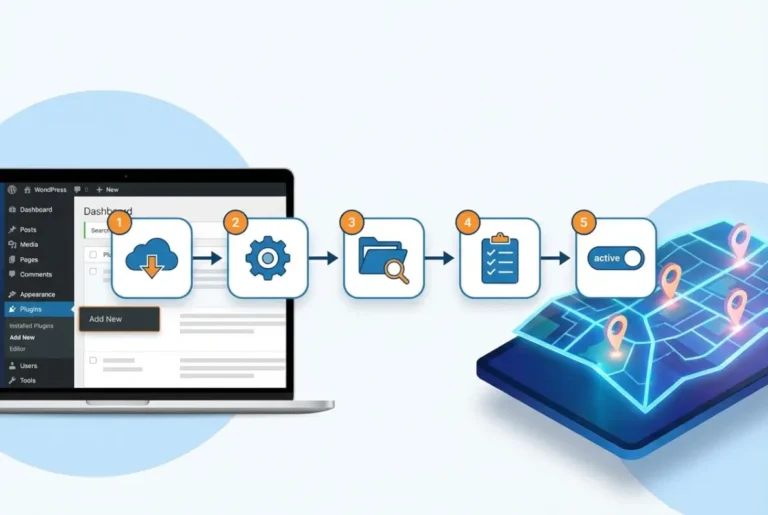
What Is a Business Listing Site? Essential Features & Benefits for 2025

Visual overview of What Is a Business Listing Site? Essential Features & Benefits for 2025

Finding customers online isn’t optional anymore—it’s the baseline for survival. Your business could offer the best service in town, but if people can’t discover you when they search, you’re leaving money on the table every single day. Business listing sites solve this problem by putting your company in front of customers at the exact moment they’re looking for what you offer.

I learned this the hard way when consulting for a family-owned bakery. Despite having a loyal customer base and exceptional products, they were practically invisible online. Within eight weeks of claiming and optimizing their business listings across key platforms, walk-in traffic jumped 42%. That’s not magic—it’s strategic visibility on business listing sites working exactly as intended.

TL;DR – Quick Takeaways

  • Business listing sites are digital directories where companies showcase their information to increase discoverability and credibility
  • Data accuracy across platforms directly impacts local search rankings and customer trust
  • Rich profiles with photos, reviews, and complete information convert browsers into customers
  • Platform selection should match your industry and audience—generic platforms plus niche directories create comprehensive coverage
  • Active management including review responses and regular updates separates effective listings from wasted opportunities

Why a Business Listing Site Matters in 2025–2026

The way consumers discover local businesses has fundamentally shifted. According to Pew Research Center data, the majority of Americans now use online search as their primary method for finding local services. Business listing sites serve as the connective tissue between customer intent and your front door.
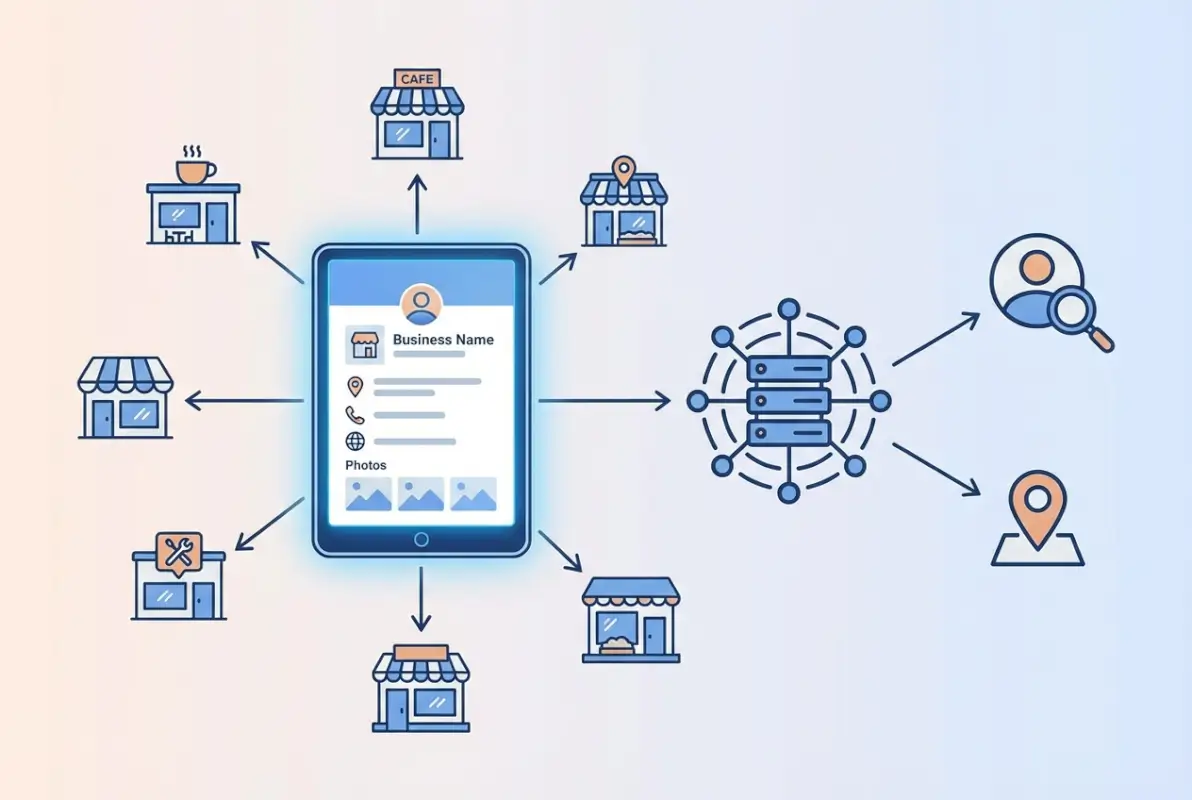
Core concepts behind What Is a Business Listing Site? Essential Features & Benefits for 2025

Think of business listing sites as your digital storefront that exists everywhere simultaneously. When someone searches for “coffee shop near me” or “emergency plumber,” these platforms determine whether your business appears in those critical moments of high purchase intent. They aggregate your business information—name, address, phone number, hours, services—and present it consistently across the web.

The Role of Listings in Local Discovery and Buyer Trust

Business listing sites function as trust validators in an age of skepticism. When potential customers see your business represented consistently across Google Business Profile, Yelp, and industry-specific directories, it signals legitimacy. Inconsistent or missing information, conversely, raises red flags that send prospects to competitors.

The discovery pathway typically works like this: a consumer has a need, performs a search, scans the top results (often dominated by business listings), evaluates options based on ratings and proximity, then takes action. Your listing quality directly determines whether you make it past the initial scan. Reviews, photos, and complete information separate the businesses that get clicks from those that get ignored.

76%
of people who search for something nearby visit a business within 24 hours
Source: Google Business Profile Insights

How Listing Quality Drives Local SEO and Consumer Decisions

Search engines use business listing data as a ranking factor for local queries. When your Name, Address, and Phone number (NAP) appear consistently across authoritative directories, it reinforces to Google that your business is real, stable, and relevant. This NAP consistency acts as a vote of confidence in the algorithmic determination of local search rankings.

Consumer decision-making heavily weighs what they find on listing platforms. A business with 4.7 stars and 200 reviews will outperform a 3.2-star competitor almost every time, regardless of actual service quality. The listing becomes the proxy for experience before the customer ever interacts with you. Complete profiles with photos, detailed descriptions, and recent activity signal an engaged, professional business worth choosing.

Key Takeaway: Your business listing acts as both an SEO signal to search engines and a trust signal to consumers—optimize for both audiences.

Core Features of a High-Quality Business Listing Site (Aligned to 2025 Trends)

Not all business listing platforms deliver equal value. The best ones share specific characteristics that maximize your visibility while protecting data integrity and user experience.
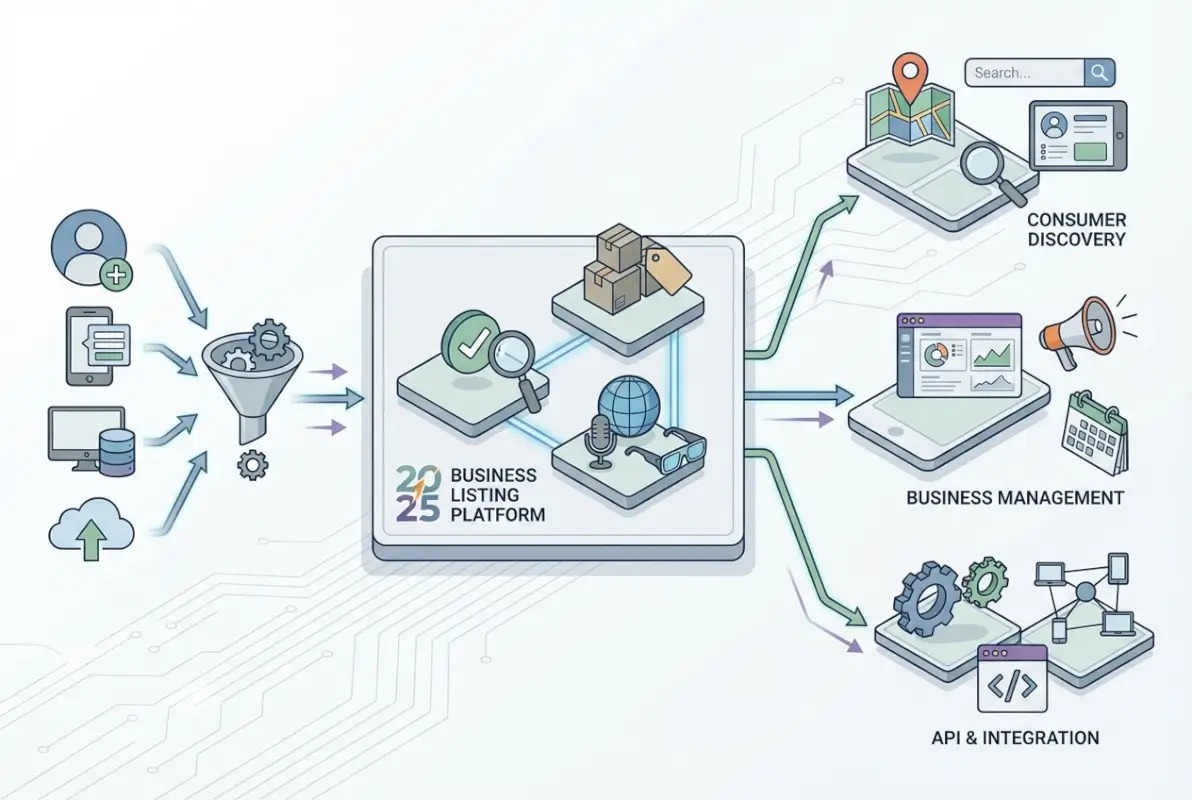
Step-by-step process for What Is a Business Listing Site? Essential Features & Benefits for 2025

When evaluating which platforms deserve your attention and maintenance effort, look for these non-negotiable features that separate effective directories from digital dead ends.

Data Accuracy, Trust Signals, and User-Generated Content Governance

Verification systems form the foundation of trustworthy listing platforms. Quality sites implement multi-step verification—postal mail codes, phone verification, or email confirmation—to ensure businesses are legitimate before allowing them to claim listings. Google Business Profile sets the standard here with rigorous verification protocols that maintain platform integrity.

User-generated content, primarily reviews, needs active moderation. Platforms that allow fake reviews to proliferate lose credibility fast. Look for sites with clear review policies, mechanisms to report suspicious content, and visible enforcement. The review ecosystem should balance accessibility (easy for genuine customers to leave feedback) with security (difficult for bad actors to manipulate).

Data accuracy extends beyond initial verification. The platform should make it simple to update information when your business hours change, you add services, or you move locations. Outdated listings damage both your business and the platform’s usefulness, creating friction that drives users elsewhere.

Pro Tip: Set quarterly calendar reminders to audit all your business listings. Seasonal hour changes and service updates often get overlooked, creating customer frustration and lost revenue.

Rich Profiles, Search UX, and Integration with Booking/Reservation Tools

Profile depth determines conversion potential. Basic listings show name, address, and phone. Rich profiles include high-quality photos, detailed service descriptions, pricing information, virtual tours, menus, staff bios, and appointment booking. Each additional element reduces friction in the customer journey.

Search functionality should be intuitive and powerful. Users need to filter by location, category, ratings, hours (open now), and specific services. The best platforms index business descriptions thoroughly, so detailed content about your specialties improves discoverability for long-tail searches. If someone searches “gluten-free bakery with vegan options,” your detailed profile content should surface that listing.

Integration capabilities multiply a listing’s value. Direct booking for restaurants, appointment scheduling for service providers, and e-commerce links for retail create frictionless paths from discovery to transaction. According to Statista research, listings with integrated booking options see conversion rates 3-4 times higher than those requiring customers to call or visit separately.

Feature TypeBasic ListingRich ProfileImpact
Photos0-2 images10+ curated images35% more engagement
DescriptionGeneric 1-2 sentencesDetailed 200+ wordsBetter keyword matching
BookingPhone number onlyIntegrated scheduling3-4x conversion rate
UpdatesStatic informationPosts, offers, eventsSignals active management
Key Takeaway: Treat your business listing profile as a mini-website that showcases value and removes barriers to conversion, not just a digital phone book entry.

How to Analyze and Benchmark Top Listing Platforms (Competitive Landscape)

Understanding which platforms drive actual results requires looking beyond popularity to examine domain authority, user intent, and industry fit. The right mix of general and specialized directories creates comprehensive coverage.

Tools and interfaces for What Is a Business Listing Site? Essential Features & Benefits for 2025

Start by auditing where your successful competitors maintain active listings. Tools like Moz Local or BrightLocal can scan for NAP mentions across the web, revealing which platforms your industry leaders prioritize. This competitive intelligence highlights where your target audience actually searches.

What the Top Platforms Do Well (Examples from Major Directories)

Google Business Profile dominates local search with unmatched visibility. Every local search query potentially surfaces Google Business listings in the map pack, knowledge panel, or organic results. Its integration with Google Maps, Reviews, and Search creates an ecosystem that businesses cannot afford to ignore. The analytics dashboard shows exactly how customers find and interact with your listing.

Yelp excels at consumer research and decision-making for restaurants, home services, and local experiences. Its review culture and detailed filtering create high-intent traffic. Yelp users typically research thoroughly before visiting, making them more qualified prospects. The platform’s credibility comes from aggressive review authenticity enforcement and comprehensive business vetting.

Industry-specific directories like Healthgrades for medical practices or Avvo for attorneys attract highly targeted traffic. These platforms understand niche requirements, offering specialized fields and search criteria that generic directories cannot match. A physical therapist gains more value from one Healthgrades profile than ten generic directories because the audience intent aligns perfectly.

For businesses wanting to create their own niche directories, TurnKey Directories offers WordPress-based solutions that let you build custom listing platforms. This approach works particularly well for industry associations, chambers of commerce, or businesses creating referral networks in specialized markets.

Gaps in Current Approaches and Opportunities

Many businesses treat listings as “set it and forget it” digital assets, missing ongoing optimization opportunities. The gap between claimed listings and actively managed profiles represents lost revenue. Competitors who post regular updates, respond to every review, and refresh photos quarterly outperform static listings significantly.

Another common gap: over-focusing on Google while neglecting platform diversity. While Google Business Profile should anchor your strategy, relying on a single platform creates vulnerability. Algorithm changes, policy violations, or technical glitches on one platform can devastate businesses without backup visibility channels. Smart operators diversify across 5-8 platforms matching their audience behavior.

Important: Never buy fake reviews or use black-hat tactics to manipulate listings. Platforms have sophisticated detection systems, and the penalties—suspension or permanent bans—far outweigh any short-term gains.
Key Takeaway: Audit competitor listings quarterly to identify which platforms they prioritize and how they structure their profiles, then adapt proven tactics to your business.

Data-Driven Insights: Current Statistics and Trends for 2025–2026

The business listing landscape continues evolving as consumer search behavior shifts and platforms introduce new features. Understanding current trends helps you allocate resources to highest-impact activities.

Best practices for What Is a Business Listing Site? Essential Features & Benefits for 2025

Recent data from the U.S. Census Bureau indicates that digital commerce and online research now account for the majority of purchase journey touchpoints. Business listings serve as critical information nodes in this digital-first environment, influencing decisions even for businesses that complete transactions offline.

Verified Statistics on Directory Usage and Impact on Local SEO

Business listing accuracy directly correlates with local search ranking performance. Studies consistently show that businesses with complete, consistent NAP information across major directories rank higher in local search results. The relationship isn’t coincidental—search algorithms use citation consistency as a trust and relevance signal.

Review volume and recency have become stronger ranking factors. Listings that accumulate regular reviews (ideally 3-5 per month) signal active, popular businesses worth prioritizing in search results. Review velocity matters more than absolute count; a business with 50 recent reviews may outrank one with 200 stale reviews from years ago.

88%
of consumers trust online reviews as much as personal recommendations
Source: BrightLocal Consumer Review Survey

Trends in Consumer Discovery via Listing Platforms

Voice search and mobile-first behavior reshape how users interact with business listings. “Near me” searches continue growing, with users expecting immediate, location-relevant results. Listings optimized for mobile viewing and quick actions (click-to-call, directions) capture this high-intent traffic more effectively.

Visual search introduces new discovery pathways. Platforms increasingly surface businesses based on photo content, making high-quality imagery essential. A restaurant’s food photos or a salon’s portfolio work now function as searchable assets that drive discovery beyond text queries.

Integration between listing platforms and social media blurs traditional boundaries. Businesses that maintain consistent information across Google, Facebook, Instagram, and directory sites create multiple discovery touchpoints that reinforce brand presence. The customer journey rarely follows linear paths anymore; comprehensive visibility across platforms catches prospects wherever they search.

Key Insight: Mobile users demonstrate higher purchase intent—they’re often searching while ready to make immediate decisions, making mobile-optimized listings especially valuable.
Key Takeaway: Prioritize platforms where your target demographic actively searches, using analytics to track which listings drive actual customer actions, not just impressions.

Implementation Playbook: How to Update Your Site and Content for Better Performance

Transforming business listing knowledge into results requires systematic implementation. The businesses that extract maximum value from listings follow structured processes for optimization and maintenance.

Advanced strategies for What Is a Business Listing Site? Essential Features & Benefits for 2025

Start with a comprehensive audit of your current listing presence. Search for your business name on Google, Bing, and major directories to discover which listings already exist. You’ll often find incomplete or inaccurate profiles created automatically by aggregators—these need claiming and correcting.

On-Page SEO for Listing-Centric Content

Schema markup implementation gives search engines structured data about your business. LocalBusiness schema provides specific fields for NAP, hours, geo-coordinates, and accepted payment methods. This structured data improves how search results display your business information and increases eligibility for rich snippets.

Keyword targeting in business descriptions should balance search optimization with natural language. Include your primary service keywords, location modifiers, and unique value propositions without keyword stuffing. “Family-owned Italian restaurant in downtown Portland specializing in wood-fired pizza and fresh pasta” performs better than generic “restaurant in Portland” both for algorithms and human readers.

Internal linking from your website to your listing profiles (and vice versa) creates authority signals. Your website’s contact page should link to your Google Business Profile. Your listing profiles should link back to specific service pages on your website, not just your homepage. This interconnection reinforces the relationship between properties.

Category selection deserves careful attention. Choose the most specific primary category available, then add relevant secondary categories. A business that installs and repairs HVAC systems should select “HVAC Contractor” as primary rather than generic “Contractor,” then add “Air Conditioning Repair,” “Heating Equipment Supplier,” etc. as secondary categories.

Content Updates and Maintenance Plan

Establish a quarterly maintenance schedule for all listings. Review and update:

  • Business hours (especially around holidays)
  • Service descriptions and offerings
  • Photos (add seasonal or recent project images)
  • Special attributes (women-led, veteran-owned, eco-friendly)
  • Payment methods accepted
  • COVID-related information (if applicable)

Monthly review response protocols keep your engagement current. Respond to all reviews within 48 hours maximum. Thank positive reviewers specifically (mention what they complimented). Address negative reviews professionally, acknowledging concerns and offering offline resolution. Template responses save time but customize each reply—generic copy-paste responses damage credibility.

Weekly posting on platforms that support it (Google Business Profile, Facebook) signals active management. Share updates about new products, special promotions, events, or company news. These posts appear in search results and on your profile, providing fresh content that keeps listings dynamic.

TaskFrequencyTime InvestmentImpact Level
Review responsesWithin 48 hours10-15 min/reviewHigh
Posts/updatesWeekly15-20 minMedium
Photo updatesMonthly30-45 minMedium
Full profile auditQuarterly2-3 hoursHigh
Analytics reviewMonthly30-45 minMedium

Track performance metrics religiously. Google Business Profile provides insights on search queries, customer actions (calls, website clicks, direction requests), and photo views. Document baseline metrics, then monitor monthly to identify trends. If direction requests spike after adding better photos, that’s actionable intelligence to replicate across other platforms.

Key Takeaway: Create a documented maintenance schedule with specific tasks, responsible parties, and completion tracking—listings that receive consistent attention dramatically outperform abandoned profiles.

Frequently Asked Questions

What is a business listing site and how does it differ from a review site?

A business listing site is an online directory where companies create profiles containing their name, address, phone number, hours, and services to help customers find them. While review sites focus primarily on customer feedback, business listing sites emphasize accurate business information and discoverability, though many platforms now combine both functions.

Do listing platforms really boost local search performance?

Yes, business listings directly impact local search rankings. Search engines use consistent NAP information across authoritative directories as a trust signal when determining which businesses to display for location-based queries. Businesses with complete, accurate listings across multiple platforms consistently rank higher than those with sparse or inconsistent presence.

How do you create a high-quality business listing profile?

Start by claiming your business on the platform, then complete every available field with accurate information. Add 10-15 high-quality photos, write a detailed description using relevant keywords naturally, select the most specific categories, verify your listing, and actively collect customer reviews. Update the profile quarterly to maintain freshness.

Which listing sites should I prioritize first for my business?

Begin with Google Business Profile as your foundation—it’s non-negotiable for local visibility. Add Bing Places and Apple Maps for broad coverage. Then identify 2-3 industry-specific directories where your target customers actually search. For custom directory needs, platforms like TurnKey Directories let you build specialized listing sites tailored to niche markets.

How can I verify the accuracy of my listing data across platforms?

Manually search for your business on each platform quarterly to verify what displays. Tools like Moz Local or BrightLocal can scan multiple directories simultaneously to identify inconsistencies. Create a master document with your standardized NAP information and use it as the single source of truth when updating any listing.

What are common mistakes businesses make with their listings?

The biggest mistakes include inconsistent NAP information across platforms, incomplete profiles missing photos or descriptions, ignoring customer reviews, using generic business descriptions, and abandoning listings after initial setup. Many businesses also overlook industry-specific directories that could connect them with highly qualified prospects.

How can I measure the impact of listing updates on traffic and leads?

Use the analytics dashboards provided by platforms like Google Business Profile to track views, clicks, calls, and direction requests. Document baseline metrics before making changes, then monitor monthly to identify trends. Tag listing-sourced traffic in Google Analytics to measure website conversions. Track phone calls using unique numbers for different platforms to attribute lead sources.

Should I pay for premium listing features or stick with free options?

Start with free listings on all relevant platforms to establish baseline visibility. Analyze performance data after 2-3 months to identify which platforms drive the most valuable traffic. Invest in premium features on those high-performing platforms where enhanced visibility or additional features would likely increase conversions enough to justify the cost.

Transform Listing Presence Into Competitive Advantage

Business listing sites represent one of the highest-ROI investments in your digital marketing arsenal, yet most businesses barely scratch the surface of their potential. The difference between businesses that thrive and those that struggle often comes down to who shows up consistently where customers are searching.

Your action plan starts today: audit every listing your business currently has, identify gaps where competitors appear but you don’t, and create a maintenance schedule you’ll actually follow. The businesses winning local search aren’t necessarily the biggest or best-funded—they’re the ones that systematically optimize every customer touchpoint.

Your Next Steps

Document your current listing presence across all major platforms this week. Note what’s accurate, what’s missing, and what’s inconsistent.

Choose 5-7 platforms that match your industry and audience, then claim and optimize each listing using the strategies outlined above.

Set quarterly calendar reminders to review and refresh all listings. Consistent attention compounds into significant competitive advantage over time.

The visibility gap between your business and local customers shrinks with every listing you optimize. Stop leaving discovery to chance—take control of how and where potential customers find you. Your competitors already understand this; the question is whether you’ll join them or watch from the sidelines.

Similar Posts

  • Blog

    How to Delete a Listing on Airbnb: 5 Simple Steps for Hosts

    TL;DR – How to Delete a Listing on Airbnb Check for active bookings and understand Airbnb policies before deletion Log into your host dashboard and navigate to the Listings section Select the correct property and confirm deletion through the Edit listing menu Verify removal and update account settings afterward Consider alternatives like unlisting instead of…

  • Blog

    How to Edit Listing Details in IDX: A Guide for Real Estate Agents

    Real estate agents often struggle with maintaining accurate property listings, and here’s the truth: your IDX platform is either your secret weapon for generating quality leads or a missed opportunity that’s costing you deals every single day. While most agents treat their IDX as a passive tool, the top 5% of producers understand that mastering…

  • Blog

    How to Create an Online Directory for ‘Claim Your Profile’ Functionality

    substring(replace(

    Picture this: a potential customer searches for your business category, lands on a directory listing with outdated hours and a disconnected phone number, and immediately bounces to your competitor. This scenario plays out thousands of times daily across online directories worldwide, and it’s exactly why “Claim Your Profile” functionality has become the cornerstone of modern directory platforms. When businesses take ownership of their listings through a robust claim and verification system, everyone wins—consumers get accurate information, businesses gain control over their digital presence, and directory operators build trust that translates directly into engagement and revenue.

    The stakes have never been higher for getting this right. In an ecosystem where search engines increasingly prioritize verified business information and consumers have zero tolerance for outdated data, directories without sophisticated claim workflows are essentially leaving money on the table. I remember consulting for a regional business directory that didn’t offer profile claiming, they wondered why their engagement metrics flatlined while competitors thrived. The answer was simple: without ownership verification, their listings became digital ghost towns that nobody trusted.

    TL;DR – Quick Takeaways

    • Trust drives discovery – Claimed and verified profiles receive significantly higher engagement and appear more prominently in local search results
    • Verification is non-negotiable – Multi-step ownership verification protects against fraud while building consumer confidence through visible trust badges
    • Data quality compounds value – Systematic approaches to NAP consistency, deduplication, and update workflows separate functional directories from exceptional ones
    • Staged implementation wins – Rolling out claim functionality in phases (foundation → trust signals → automation → optimization) reduces risk and accelerates time-to-value
    • Monetization follows trust – Premium verification features, enhanced profiles, and analytics add-ons only convert when the base claim experience is seamless

    Understanding the Landscape and Why “Claim Your Profile” Matters

    The digital directory ecosystem has evolved dramatically from the static yellow pages model of the early internet. Today’s online directories serve as critical trust intermediaries between businesses and consumers, with claimed profiles acting as verified credentials in an increasingly skeptical marketplace. When you allow businesses to claim their listings, you’re not just offering a feature—you’re creating a verification layer that fundamentally changes how users interact with your platform.

    [KBIMAGE_1]

    The consumer psychology here is straightforward yet powerful. When someone sees a “Verified Owner” or “Claimed Profile” badge next to a listing, they immediately assign it higher credibility than unclaimed competitors. This isn’t speculation; research consistently shows that trust signals directly influence click-through rates, contact attempts, and ultimately conversion decisions. Search engines recognize this pattern too, which is why platforms like Google have made business profile verification a prerequisite for accessing premium advertising features.

    Why Users Trust Claimed Profiles

    Trust doesn’t emerge from nowhere—it builds on concrete signals that users can evaluate. Claimed profiles demonstrate ownership, which implies accountability. If a business bothered to verify ownership and keep information current, users reasonably assume that business cares about accuracy in other areas too. The verification badge becomes a proxy for reliability, even before a consumer reads a single review or examines the services offered.

    This trust mechanism operates at both conscious and subconscious levels. Consciously, users notice badges and updated timestamps. Subconsciously, the completeness of a claimed profile (multiple photos, detailed descriptions, current hours, active response to reviews) signals professionalism. Unclaimed listings, by contrast, often contain sparse information, outdated details, and zero engagement—red flags that drive users elsewhere.

    💡 Pro Tip: The first 48 hours after a business claims their profile represent a critical engagement window. Send automated onboarding emails with completion checklists to maximize profile quality while enthusiasm is high.

    How Search Engines Treat Claimed vs. Unclaimed Listings

    Search algorithms have grown sophisticated at detecting signals of listing authority and freshness. When a business claims ownership and regularly updates their profile, that activity generates positive signals that influence local search rankings. Google’s local search ecosystem, for example, explicitly rewards verified business information through better visibility in Maps results and eligibility for enhanced SERP features.

    The mechanics work through both direct and indirect pathways. Directly, search engines can detect ownership verification status and factor it into ranking algorithms. Indirectly, claimed profiles typically accumulate more reviews, photos, and engagement signals—all ranking factors in their own right. This creates a virtuous cycle where claims drive engagement, engagement improves visibility, and visibility generates more consumer interactions.

    Recent changes in how major platforms handle local advertising have made verification even more consequential. Businesses without verified profiles increasingly find themselves locked out of premium advertising opportunities, a trend that underscores the strategic importance of robust claim functionality for any serious directory platform.

    Competitive Landscape Overview

    Examining successful directory platforms reveals consistent patterns in how they approach profile claiming and verification. The market leaders—whether general directories like Yelp or vertical-specific platforms in healthcare, legal services, or home improvement—all prioritize seamless claim workflows backed by multi-factor verification.

    What separates great implementations from mediocre ones usually comes down to friction points. The best platforms make discovering your unclaimed listing effortless (strong search functionality, business name autocomplete, address matching). They minimize verification hassle through multiple pathway options (email domain verification, phone verification, postcard codes, document uploads). And they immediately deliver value post-claim through analytics dashboards, lead notifications, and competitor insights.

    Platform TypeVerification MethodTime to VerifyTrust Signals
    General BusinessEmail + Phone5-15 minutesBasic badge
    Professional ServicesLicense verification1-3 business daysEnhanced badge + credentials
    HealthcareNPI database checkInstant to 24 hoursCredential verification + specialties
    Local ServicesPostcard + domain5-10 business daysPhysical location verified

    Typical Value Propositions

    Successful directories articulate clear value propositions that motivate businesses to complete the claim process. Visibility tops the list—claimed profiles typically rank higher in on-site search and receive preferential placement in browse categories. Data control comes next; businesses want the ability to correct errors, update hours during holidays, and manage how services are described.

    Review management capabilities provide another compelling hook. Once a business claims their profile, they can respond to reviews, flag inappropriate content, and showcase positive feedback. Analytics and insights round out the value proposition—showing businesses how many people viewed their listing, where traffic originated, and how their profile performs relative to competitors.

    The strongest directories don’t just list these features; they quantify the upside. “Claimed profiles receive 3x more inquiries” or “Verified businesses appear in 75% more search results” transforms abstract benefits into concrete ROI that justifies the time investment required to complete verification.

    Core Product and Platform Architecture

    Building a robust claim system requires thoughtful architecture that balances user experience, data integrity, security, and scalability. At its core, you need a data model that cleanly separates listing entities from ownership claims while maintaining audit trails for every change. This architectural foundation determines whether your platform can handle edge cases like ownership disputes, business relocations, and multi-location franchise scenarios.

    [KBIMAGE_2]

    The technical implementation splits into several interconnected subsystems: the listing database itself, the claim request and verification workflow engine, the ownership and access control layer, and the audit and change management system. Each subsystem needs to operate independently while maintaining referential integrity across the entire architecture. Get this wrong, and you’ll spend months untangling data inconsistencies and ownership conflicts.

    Data Model for Directory Listings

    Your listing data model serves as the foundation for everything else, so it needs to accommodate both simple and complex scenarios from day one. At minimum, each listing requires the core NAP data (Name, Address, Phone), but modern directories demand far more: multiple phone numbers (main line, mobile, fax), email addresses, website URLs, social media profiles, business hours (including special hours and seasonal variations), service area definitions, category taxonomies, multimedia assets, and custom attributes specific to your vertical.

    The challenge lies in structuring this data for flexibility without creating chaos. A common pattern uses a core listing entity with related tables for repeating elements like hours, categories, and media. This normalization prevents duplication while enabling complex queries. For instance, you might structure hours as a separate table with day-of-week, open-time, close-time columns plus flags for special hours (holidays, events), making it straightforward to display current status and handle edge cases.

    ✅ Key Insight: Build your data model to support listing history from the start. Every field change should create a timestamped record showing what changed, who changed it, and when. This audit trail becomes invaluable for dispute resolution and quality monitoring.

    Ownership and Verification Workflows

    The claim workflow represents where rubber meets road—this is the user-facing experience that either delights or frustrates business owners. A well-designed workflow offers multiple verification pathways because different businesses have different capabilities. A solo professional might easily verify via email domain but lacks access to business phone lines during claiming. A retail location might prefer phone verification but operates on a shared domain email system.

    Structurally, each claim creates a pending ownership record that links a user account to a listing while storing verification status, method used, timestamps, and any supporting documentation. The workflow engine then orchestrates verification steps, sends notifications, tracks completion, and ultimately promotes the pending claim to active ownership once verification succeeds. Building this as a state machine (pending → verification sent → verification completed → ownership active) makes the logic explicit and testable.

    Multi-location scenarios add complexity worth planning for early. Should regional managers verify individual locations or do franchisees claim their own? How do you prevent conflicts when different users claim different locations of the same brand? A hierarchical ownership model with organization-level accounts and location-level access rights solves most of these challenges, though implementation details matter tremendously.

    Data Integrity and Synchronization

    Once businesses start claiming profiles and making edits, maintaining data quality becomes an ongoing operational challenge. You need systems that detect and resolve conflicts when user edits contradict external data feeds, identify duplicate listings created by different sources, and flag suspicious changes that might indicate fraud or errors.

    A practical approach combines automated rules with manual review workflows. Automated systems can catch obvious issues (phone number formatting, invalid URLs, category mismatches) and either auto-correct or flag for review. Major changes to verified listings—address updates, business name changes, category shifts—might trigger review queues where moderators confirm legitimacy before publishing.

    External data synchronization adds another layer. If you pull listing data from third-party providers or scrape public sources, how do those updates interact with user-claimed profiles? The typical hierarchy gives claimed profile data precedence over external sources, but with alerts when external data diverges significantly—potentially indicating that the external source has more current information or that someone made unauthorized changes.

    ⚠️ Important: Never silently overwrite user edits with external data feeds. This destroys trust instantly when a business owner carefully updates their profile only to see it revert hours later.

    Verification and Trust Mechanisms

    Verification separates legitimate ownership claims from fraud attempts, making it the security backbone of your entire claim system. The methods you choose directly impact both user experience and platform credibility—too lax and you enable abuse, too strict and legitimate businesses abandon the process midway through. Striking the right balance requires offering multiple verification pathways with graduated trust levels.

    [KBIMAGE_3]

    Email domain verification works beautifully for businesses with company email addresses. The workflow sends a verification link to an email address at the business’s domain, and clicking that link proves the claimer has access to company email systems. This method completes in minutes and feels effortless to users. Its limitation is that many small businesses operate on Gmail or other consumer email platforms, making domain verification impossible.

    Badging, Verification Steps, and Audit Trails

    Trust badges serve dual purposes—they reward businesses for completing verification while signaling credibility to consumers. The badge system should reflect verification thoroughness: basic badges for simple email/phone verification, enhanced badges for document verification, premium badges for paid verification services that include additional vetting.

    Each verification method generates an audit trail entry capturing what was verified, when, by whom, and through what evidence. Phone verification logs the number called, timestamp, and confirmation code. Document uploads store copies of licenses, registrations, or other submitted materials. This documentation becomes essential if ownership disputes arise or if you need to demonstrate compliance with platform policies.

    The visual presentation of badges matters more than many platforms realize. Badges should appear prominently on listing pages, search results, and maps—anywhere a consumer might evaluate credibility. Including explanatory text (“Verified by phone on [date]” or “Document-verified professional”) adds transparency that further builds trust. For an example of how directories implement these features, platforms focused on professional listings have pioneered sophisticated verification displays.

    Handling Multi-Location and Franchise Scenarios

    Franchise and multi-location businesses represent both opportunity and challenge. These businesses need the efficiency of bulk management while maintaining location-specific accuracy. Your architecture should support organization-level accounts with delegated location management—corporate can maintain brand-level information while location managers control hours, photos, and local promotions.

    Verification for multi-location accounts typically happens at two levels. The organization itself undergoes verification (proving corporate identity through business registration documents), while individual locations go through lighter verification (confirming phone access or receiving postcards). This layered approach balances thoroughness with usability at scale.

    Conflict resolution protocols become critical when franchisees and corporate offices both claim the same locations. The typical solution establishes a hierarchy: corporate holds ultimate authority but can delegate day-to-day management to local operators. Building this delegation system into your access control from the beginning prevents painful refactoring later.

    SEO, Discoverability, and Content Strategy

    A directory’s value proposition depends entirely on discoverability—by search engines, by potential customers, and by the businesses you list. “Claim Your Profile” functionality amplifies that value, but only if your directory pages rank well, render correctly in search results, and convert visitors into engaged users. This section outlines the SEO, structured data, content strategy, and measurement practices that turn a directory into a discovery engine.

    [KBIMAGE_4]

    SEO Considerations for Directory Pages

    Directory pages face unique SEO challenges: they’re often thin on unique content, prone to duplication (especially for multi-location businesses or franchises), and compete directly with major aggregators (Google, Yelp, industry-specific platforms). To rank and retain visibility, apply these practices:

    SEO ElementImplementationWhy It Matters
    Structured Data (Schema.org)LocalBusiness, Organization, FAQPage, BreadcrumbList JSON-LD on every listing pageEnables rich snippets, local pack features, and improved click-through rates in SERPs
    Canonical URLsSelf-referencing canonical on primary listing page; avoid duplicate URLs for same businessPrevents dilution of ranking signals and duplicate content penalties
    Unique ContentRequire or encourage business descriptions, service lists, FAQs, photos; editorial oversight for qualityDifferentiates from scraped/thin listings; claimed profiles can provide richer, more rankable content
    Internal LinkingCategory pages, location hubs, related businesses, and “Claim Your Profile” landing pagesDistributes PageRank, improves crawl depth, and reinforces topical authority
    Mobile-First DesignResponsive templates, fast Core Web Vitals (LCP, CLS, INP), AMP or Lite variants if neededGoogle indexes mobile-first; poor mobile UX kills rankings and conversions
    Indexability ControlsNoindex on low-quality/unclaimed listings (or require minimum data); robots.txt, sitemap prioritizationAvoid indexing thin pages that trigger Helpful Content or quality updates; focus crawl budget on high-value pages

    Structured data is non-negotiable. Implement LocalBusiness schema with the following properties at minimum: name, address, telephone, url, geo (latitude/longitude), openingHours, and aggregateRating (if you support reviews). For claimed profiles, add the sameAs property linking to the business’s official website and social profiles—this reinforces entity recognition in Google’s Knowledge Graph and can improve the likelihood of appearing in the local pack.

    💡 Pro Tip: Use Google’s Rich Results Test and Schema Markup Validator during development. Monitor Google Search Console for structured data errors and warnings. A single missing or malformed property (e.g., missing postal code in address) can disqualify your listing from rich results.

    Canonical URL management is critical in directories. If you allow filtering, sorting, or alternate views (map view, list view, paginated results), ensure all variations canonicalize to the primary listing URL. For multi-location businesses, each location should have a distinct URL and its own LocalBusiness schema; use the Organization schema at the parent/brand level and link locations via the location property.

    Content Strategy to Support “Claim Your Profile”

    Your directory’s content strategy should educate, persuade, and guide both searchers and business owners. This means three content layers:

    • Help Center & Documentation: Step-by-step claim guides, verification FAQs, troubleshooting articles, video walkthroughs. Host these on a subdomain or /help/ path with clear internal links from every listing page.
    • Trust & Proof Content: Case studies showing before-and-after metrics (e.g., “Claimed profiles receive 3× more inquiries”), testimonials from verified business owners, badges and trust signals prominently displayed on claimed profiles.
    • Editorial & Topical Content: Blog posts, industry guides, and local area pages that attract organic traffic and link internally to relevant listings. This content can target long-tail keywords (e.g., “best plumbers in [city]”) and drive discovery of your directory.

    The help center is especially important. Business owners often arrive confused or skeptical about verification. Provide clear, jargon-free instructions for each verification method (email, phone, postcard, domain DNS record). Include screenshots, expected timelines (e.g., “Email verification: instant; Postcard: 5–7 business days”), and escalation paths for edge cases (ownership disputes, closed businesses, franchises). This content should be indexed, keyword-optimized, and linked from your main navigation and every “Claim Your Profile” CTA.

    Content TypePurposeSEO/UX Impact
    Claim GuideHow-to for verifying and claiming a listingReduces support burden; ranks for “[your directory] claim profile” queries
    Case StudySocial proof and ROI demonstrationIncreases conversion of listing views to claims; builds trust
    Local/Category HubAggregated listings for a city or verticalTargets head keywords (“dentists in Austin”); funnels traffic to individual listings
    Blog/Industry InsightsEditorial authority and link buildingAttracts backlinks, builds topical authority, drives referral traffic
    Video TutorialsVisual walkthrough of claim processEmbeds on YouTube/help center; ranks in video carousels; improves engagement

    Trust content—case studies, testimonials, success metrics—should be quantified wherever possible. For example: “Claimed profiles on our directory receive an average of 47% more phone calls and 62% more website clicks than unclaimed listings” (source your own analytics or cite comparable directory research). Display these statistics on your “Claim Your Profile” landing page and in onboarding emails. If you have badges (Verified, Premium, Featured), explain their meaning in a dedicated FAQ or glossary page.

    Metrics and KPIs

    Measure the impact of your “Claim Your Profile” functionality across three dimensions: engagement, conversion, and SEO performance. Track these KPIs on a monthly or weekly cadence:

    KPIDefinitionTarget/Benchmark
    Claim Rate% of total listings that are claimed10–25% in first year; mature directories 30–50%+
    Verification Completion Rate% of initiated claims that complete verification60–80% (drops with friction; improve with automation)
    Profile CompletenessAvg % of profile fields filled (NAP, hours, photos, description)Claimed: 70%+; Unclaimed: 30–40%
    Edit FrequencyAvg edits per claimed profile per month0.5–2 (higher indicates engagement and data freshness)
    Organic Visibility (Claimed vs. Unclaimed)Avg Google Search Console impressions/clicks for claimed vs. unclaimed pagesClaimed pages should outperform by 2–5× (due to richer content, schema, signals)
    Conversion Rate (Listing View → Claim Initiation)% of business-owner visits that start claim process5–15% (optimize CTA placement, messaging, and help content)
    Customer Action Rate (Claimed Profiles)Phone calls, website clicks, direction requests per 1k impressionsClaimed profiles typically 1.5–3× higher than unclaimed

    Integrate Google Search Console and your analytics platform (Google Analytics 4, Mixpanel, or similar) to track these metrics. Segment your data by claim status (claimed vs. unclaimed), by verification method (to identify bottlenecks), and by business category or location (to spot vertical-specific patterns). For example, healthcare directories may see higher claim rates but longer verification times due to credential checks, while home-services directories may see faster claims but lower profile completeness.

    SEO impact is measurable. Use Search Console to compare average position, impressions, and click-through rate (CTR) for claimed versus unclaimed listing pages. Claimed profiles with complete NAP data, photos, hours, and reviews should rank higher and attract more clicks. If they don’t, investigate: Are claimed profiles missing structured data? Are they being outranked by aggregators or competitors? Are internal links favoring unclaimed pages? Use this data to prioritize improvements—add schema, improve content quality, or boost internal link equity for high-value claimed listings.

    ⚠️ Common Pitfall

    Directories often index thousands of thin, unclaimed listings to appear comprehensive, but this can trigger Google’s Helpful Content system and degrade overall site quality. Prioritize quality over quantity: noindex low-quality unclaimed listings, or apply a minimum-data threshold (e.g., must have phone, hours, and description) before indexing.

    Monetization, Pricing, and Governance Implications

    A directory with “Claim Your Profile” functionality creates multiple monetization opportunities—but also introduces governance complexity. This section covers revenue models, vendor/partner ecosystems, compliance frameworks, and policy enforcement for claimed listings.

    [KBIMAGE_5]

    Revenue Models for Directory Platforms with “Claim Your Profile”

    Most successful directories adopt a freemium model: free basic claims with paid upgrades for enhanced visibility, analytics, and trust signals. Here are the most common monetization levers:

    Revenue StreamDescriptionTypical Pricing
    Free Basic ClaimClaim, verify, edit NAP and basic info; appears in search results$0 (acquisition funnel)
    Premium/Featured ListingTop placement in category/location results, badge, rich media (photos, videos), extended description$50–$500/month (varies by vertical, competition, traffic)
    Verification Badge/Trust SealEnhanced verification (business license, background check); displayed badge$25–$100/month or one-time $100–$300
    Analytics DashboardProfile views, clicks, lead sources, competitor benchmarksBundled with premium or $10–$50/month add-on
    Lead Generation/CRM IntegrationForward inquiries to CRM, lead scoring, response tracking$50–$200/month or per-lead fee
    Review/Reputation ManagementAutomated review solicitation, response templates, sentiment alerts$30–$150/month (SaaS model)
    Advertising (Display, Sponsored Listings)Banner ads, sponsored placements in search resultsCPM ($5–$20) or CPC ($0.50–$5) depending on traffic and niche

    The key to sustainable monetization is value alignment: business owners will pay only if they perceive a clear ROI—more leads, more visibility, better conversion. Start with free claims to build inventory and network effects (more listings = more traffic = more claims). Once you have critical mass (typically 500–1,000 claimed profiles in your target niche or geography), introduce premium tiers.

    Premium features should be modular and stackable. For example, a law firm might pay for Featured placement ($200/month) + Enhanced verification badge ($50/month) + Analytics dashboard (bundled) = $250/month total. A solo practitioner might pay only for the badge ($50/month). Offer annual discounts (10–20% off) to improve cash flow and reduce churn.

    💡 Pro Tip: A/B test premium pricing and feature bundles on a cohort basis. Track LTV (lifetime value) and payback period by acquisition channel. Businesses acquired via organic search often have higher LTV than paid ads, so tailor your upsell messaging accordingly.

    Vendor Management and Partner Ecosystems

    Directories rarely operate in isolation. You’ll integrate with CRM platforms (Salesforce, HubSpot), review aggregators (Trustpilot, Google Reviews API where permissible), marketing automation tools (Mailchimp, ActiveCampaign), and analytics providers (Google Analytics, Segment). Manage these integrations as a formal partner ecosystem:

    • API contracts: Document rate limits, authentication (OAuth 2.0 recommended), data ownership, and SLAs. Require partners to respect your terms of service and data privacy policies.
    • Revenue sharing: If a partner (e.g., a review platform) drives claims or premium upgrades, negotiate rev-share or referral fees. Track attribution via UTM parameters or partner-specific claim codes.
    • White-label/reseller programs: Some directories offer white-label “Claim Your Profile” flows to franchises, associations, or SaaS platforms. Structure these as licensing agreements with clear branding, support, and data-ownership terms.
    • Data syndication: You may syndicate your listings to Google, Bing, Apple Maps, or vertical aggregators. Ensure you retain ownership of claimed profile data and that syndication partners attribute your directory as the source.

    Vendor management extends to verification services. If you outsource phone or postcard verification, or use third-party identity/business validation (e.g., LexisNexis, Dun & Bradstreet), negotiate pricing, SLAs, and data-handling terms upfront. Build fallback providers to avoid single points of failure.

    Compliance and Policy Governance

    Operating a directory with user-generated content (claims, edits, reviews) means you are subject to platform liability, data protection laws, and advertising regulations. Key compliance areas:

    Compliance DomainKey RequirementsImplementation
    Data Privacy (GDPR, CCPA)Lawful basis for processing (legitimate interest for public directory; consent for marketing); right to erasure; data portabilityPrivacy policy, cookie consent, DSAR request workflow, data retention schedule
    Terms of ServiceUser conduct, content ownership, dispute resolution, limitation of liabilityClickwrap acceptance on claim submission; version control and change notifications
    Section 230 / Platform Liability (US)Immunity for third-party content if you act as a platform (not publisher); good-faith moderation is protectedClear UGC policies, DMCA/takedown process, abuse reporting
    Advertising Disclosures (FTC)Clearly label paid/sponsored listings; disclose affiliate relationships“Sponsored,” “Featured,” or “Ad” badges; separate visual treatment
    Accessibility (ADA, WCAG 2.1 AA)Keyboard navigation, screen-reader compatibility, color contrast, alt textAutomated testing (axe, Lighthouse), manual audits, remediation backlog
    Industry-Specific (HIPAA, FINRA, etc.)Healthcare, legal, financial directories may require professional verification, disclaimers, or licensure checksEnhanced verification workflows, third-party credential checks, legal review of disclaimers

    Privacy is paramount. Even if you scrape or infer business data from public sources (websites, public registries), you must offer a clear opt-out mechanism. Include a “Request Removal” or “Report Inaccuracy” link on every listing page. Process requests within 30 days (GDPR standard) and log all actions for audit trails. For claimed profiles, the business owner is the controller of their profile data; your role is processor. Document this in your Terms of Service and data processing addendum (DPA) if required.

    Conflict resolution is inevitable. You will encounter ownership disputes (two parties claim the same listing), impersonation attempts, and requests to remove negative (but accurate)


    Frequently Asked Questions

    How does claim your profile functionality work in online directories?

    Users search for their business listing in the directory and click a “Claim” button. The system sends a verification code via email, phone, or postcard. After verification, the business owner gains dashboard access to edit information, add photos, and respond to reviews.

    What verification methods should I implement for profile claims?

    Implement email verification as the baseline method, phone verification via SMS for higher security, and postcard verification for maximum authenticity. Use domain verification for corporate claims and document uploads for regulated industries. Multi-factor authentication adds an extra security layer.

    Can I monetize claim your profile features in my directory?

    Yes, you can offer free basic claims with paid premium tiers. Charge for enhanced listings, priority placement, advanced analytics, removal of competitor ads, and additional photos or content. Many directories generate significant revenue through freemium models where basic claims remain free.

    How do I prevent fraudulent profile claims?

    Require multiple verification methods for valuable listings, implement manual review for high-risk claims, and monitor for duplicate claims from different users. Use IP tracking, check business registration databases, and establish a clear dispute resolution process for contested claims.

    What features should I include in the claimed profile dashboard?

    Include business information editing, photo and video uploads, review management, performance analytics, appointment booking integration, and social media links. Add special offers or promotions posting, team member profiles, business hours management, and contact inquiry tracking for comprehensive management.

    Should I allow multiple users to manage one claimed profile?

    Yes, multi-user access benefits businesses with marketing teams or multiple locations. Implement role-based permissions where owners have full control, managers can edit content but not billing, and staff can only respond to reviews. Include activity logs to track changes.

    How long does profile verification typically take?

    Email verification completes instantly, phone verification takes under five minutes, and postcard verification requires seven to fourteen days. Manual reviews add one to three business days. Set clear expectations during the claim process and send status updates to reduce support inquiries.

    What happens if someone claims the wrong profile by mistake?

    Implement an unclaim feature allowing users to release ownership, establish a dispute process where the legitimate owner can challenge false claims, and maintain an audit trail of all ownership changes. Manual intervention by your support team resolves complex disputes effectively.

    Can I import existing business data for users to claim?

    Yes, seed your directory by importing data from public databases, business registries, or APIs like Google Places. This creates a foundation of listings for businesses to claim. Clearly mark profiles as unverified until claimed, and ensure imported data complies with terms of service.

    How do I encourage businesses to claim their profiles?

    Send personalized email invitations to business owners, display prominent “Claim This Business” buttons on listings, and highlight benefits like increased visibility and customer engagement. Offer limited-time incentives for early claims and showcase success stories from businesses with claimed profiles.

    Start Building Your Directory Today

    Creating an online directory with claim your profile functionality transforms a simple listing site into a dynamic platform that businesses actively want to join. The verification systems, dashboard features, and engagement tools you implement will determine your directory’s credibility and growth potential. Whether you’re targeting local businesses, professional services, or niche industries, the claim functionality gives you a competitive edge.

    Start small with email verification and basic profile editing, then expand features based on user feedback. Test your verification workflows thoroughly to prevent fraud while keeping the process smooth for legitimate business owners. Monitor which features drive the most engagement and iterate continuously.

    The businesses in your directory are waiting to take control of their online presence. Give them the tools to succeed, and your platform will grow organically as satisfied users recommend it to peers. Take the first step by mapping out your verification process and building your minimum viable product. Your directory has the potential to become the go-to resource in your industry.

    Ready to Launch?

    Choose your technology stack, set up your verification systems, and design a user-friendly dashboard. Focus on solving real problems for business owners—accurate information, customer connections, and performance insights. When you prioritize user value over quick monetization, success follows naturally.

    Document your processes, establish clear policies, and prepare for growth. The claim your profile feature is just the beginning of building relationships with thousands of businesses who will help your directory thrive.

    ; <[^>]+>; ); 0; 155)

  • Blog

    Company Email Directory: How to Create One in 6 Steps (2025 Guide)

    Have you ever wasted precious minutes searching through old emails or messaging colleagues just to find someone’s contact information? In today’s fast-paced business environment, efficient communication is critical, and a well-organized company email directory is the backbone of seamless interaction across departments and teams. A company email directory serves as a centralized database of all…

  • Blog

    How to Add and Setup Jetpack Plugin to WordPress: 5 Simple Steps

    If you’ve ever struggled with managing multiple WordPress plugins for security, performance, and functionality, you’re about to discover why millions of WordPress users swear by a single, comprehensive solution. The Jetpack plugin isn’t just another WordPress plugin—it’s a complete ecosystem that transforms your website into a powerhouse of features, security, and performance optimization. What makes…

  • Blog

    How to Advertise Your Airbnb Listing: 7 Tips to Boost Bookings in 2025

    In the ever-competitive world of vacation rental marketing, most Airbnb hosts make a critical mistake: they assume great photos and competitive pricing are enough to guarantee bookings. The harsh reality? Your beautiful property could be drowning in a sea of similar listings, invisible to potential guests who would absolutely love what you offer. What separates…