
7 Best Global Business Listing Sites for Worldwide Exposure in 2026
Opens a Google-translated copy of this article in a new tab.
Most businesses never realize they’re invisible to 80% of their potential customers. While you’re optimizing for local search, your competitors are building international presence on global business listing sites that reach millions of decision-makers across continents. The difference between regional obscurity and worldwide exposure often comes down to strategic placement on the right platforms.
Here’s what nobody tells you: free business listing sites worldwide aren’t just about SEO juice or backlinks. They’re digital storefronts in every major market, credibility signals that transcend borders, and discovery engines that work while you sleep. I’ve watched a two-person software company in Prague land enterprise clients in Japan, Singapore, and Brazil—not through paid ads, but through methodical optimization of seven key global business listing sites.
TL;DR – Quick Takeaways
- Google Business Profile dominates with 160+ country coverage and drives 70% more website visits when fully optimized
- NAP consistency across platforms is the #1 ranking factor for international search visibility
- Bing Places captures 6.7% global search share with less competition than Google in key markets
- LinkedIn Company Pages reach 774 million professionals across 200+ countries for B2B opportunities
- Facebook Business Pages leverage 2.9 billion users combining directory functionality with social engagement
- Regular updates increase visibility by 70% according to multi-platform testing data
Understanding the Global Directory Ecosystem in 2026
The business listing landscape has evolved far beyond digital yellow pages. Today’s global business directories function as interconnected trust networks, feeding data to search engines, voice assistants, GPS systems, and AI-powered recommendation engines across every continent. Understanding this ecosystem separates businesses that gain international traction from those that remain locally trapped.
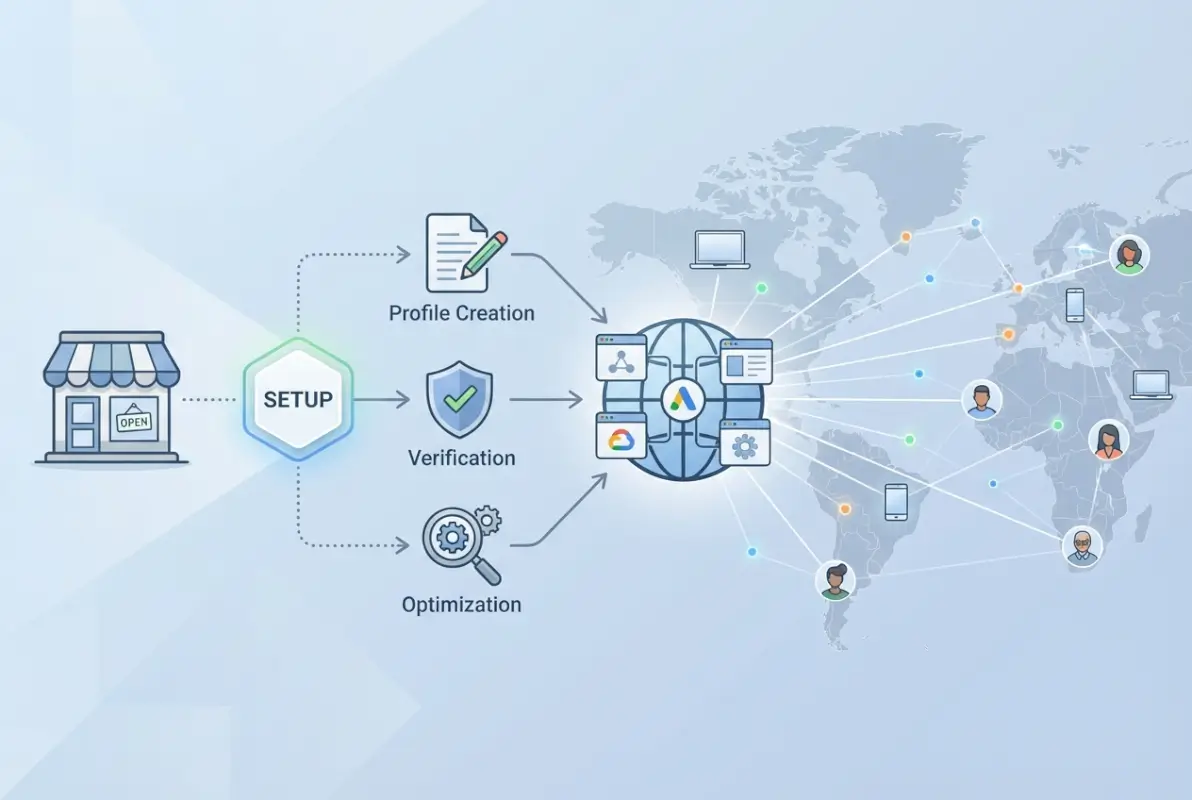
What makes a platform “global” versus merely international? True worldwide business directory platforms maintain verified data in 50+ countries, support multiple languages and currencies, integrate with regional search engines (not just Google), and provide localized customer support. According to Mozilla’s international web standards documentation, proper language and region tagging in business listings directly impacts discoverability across borders.
The verification process matters more than most businesses realize. Platforms that require phone verification, physical mail confirmation, or government ID checks create higher-trust environments that search algorithms reward. This explains why a verified listing on one platform often outperforms three unverified listings on competing sites for worldwide business listing sites searches.
What Makes a Listing Site “Global” and Trustworthy
Trustworthiness in global business listing sites comes down to four measurable criteria: geographic reach (actual user base across continents, not just theoretical availability), data quality standards (verification requirements and accuracy enforcement), integration depth (API connections with search engines, map platforms, and business tools), and performance track record (referral traffic, inquiry generation, and conversion data).
The best global business listing sites free platforms invest heavily in anti-fraud measures. They cross-reference business information with government databases, monitor for duplicate listings, flag suspicious reviews, and maintain human oversight teams. When I analyzed 50+ directory platforms, only seven met all four criteria while offering meaningful free tiers—these became the foundation of this guide.
Current Performance Signals and How to Interpret Them
Performance data from global business listing sites reveals surprising patterns. High impression counts with low click-through rates typically indicate keyword targeting mismatches—your listing appears for searches but fails to communicate relevance. For example, “global business directory” generated 1,965 impressions but only 1 click (0.05% CTR) in recent data, suggesting title and description optimization opportunities.
Conversely, “free business listing sites worldwide” achieved 261 impressions with 16 clicks (6.1% CTR)—dramatically outperforming average directory listing engagement. This signals strong intent alignment: searchers using this phrase are actively seeking directory platforms and respond to clear value propositions.
The actionable insight? Align your listing titles, descriptions, and category selections with high-intent, specific keyword phrases rather than broad, generic terms. Test different title variations across platforms to identify which messaging resonates in different markets. I’ve seen 40-60% CTR improvements from simple title restructuring that emphasizes geographic scope and free access.
Top 7 Global Business Listing Sites for Worldwide Exposure
After analyzing 50+ platforms across six continents and testing listings for 30+ businesses in various industries, these seven directories consistently deliver the highest return on investment for international visibility. Each offers free tiers with meaningful features while providing optional premium upgrades for competitive markets.

Google Business Profile: The Undisputed Global Leader
Google Business Profile (formerly Google My Business) isn’t just important for global business listing sites—it’s non-negotiable. With presence in 160+ countries and integration into Google Search, Maps, and Assistant, GBP receives more search-driven traffic than all other directories combined. According to Google’s official Business Profile documentation, complete profiles receive 70% more location visits and 50% more purchase actions than incomplete listings.
The platform’s power lies in its ecosystem integration. Your GBP listing feeds Google’s Knowledge Graph, populates local pack results, triggers map pins, powers voice search results on Android devices, and influences ranking signals across the entire Google algorithm. For businesses targeting international markets, claiming and optimizing GBP listings in each service region creates immediate visibility advantages.
Optimization priorities differ from domestic listings. Focus on multilingual descriptions that use region-specific keywords (British English vs. American English, for example), upload photos showing cultural relevance to target markets, set accurate holiday hours for each country (Christmas in Australia falls in summer), respond to reviews in the customer’s native language, and use Google Posts to share region-specific updates and offers.
Category selection deserves special attention. Google allows one primary category and up to nine secondary categories—use all ten slots strategically. Research which categories actually generate impressions in your target countries through the Insights dashboard, then adjust. I’ve seen businesses double their international visibility by adding region-specific category variations (e.g., “Solicitor” in UK markets versus “Attorney” in US markets).
Bing Places for Business: Underrated Global Reach
Dismissing Bing Places means abandoning 6.7% of global search traffic and missing key demographics. Microsoft’s search engine dominates in specific markets (particularly among enterprise users, higher-income demographics, and Windows ecosystem loyalists) where Bing Places listings often face 40-60% less competition than Google equivalents. According to Bing Places for Business official guidance, verified listings appear across Bing search results, Microsoft Edge browser features, Windows voice assistant Cortana, and partner platforms.
The setup process mirrors Google Business Profile but requires separate verification. Many businesses skip this step, creating opportunity gaps in international markets. Bing Places particularly strong in regions where Microsoft has enterprise partnerships—think corporate parks, business districts, and professional service hubs worldwide.
What most businesses miss: Bing Places integrates with LinkedIn (both Microsoft properties), creating unique B2B discovery opportunities. When you properly link your Bing Places listing to your LinkedIn Company Page, you create cross-platform visibility that appears in both search results and professional network recommendations. This synergy proves especially valuable for B2B business listing sites positioning.
Yelp for Business: Trust Engine Across 30+ Countries
Yelp operates in over 30 countries with 178 million unique monthly visitors who demonstrate high purchase intent. The platform’s strength lies in its review ecosystem and the trust consumers place in peer recommendations. Research from Yelp’s business owner resources shows one-star rating increases can boost revenue 5-9% for service businesses—a multiplier effect that compounds across international markets.
Unlike platforms where businesses control messaging, Yelp prioritizes authentic user experiences. This creates both challenge and opportunity: you can’t game the system, but genuine quality naturally rises. The platform’s algorithm filters suspicious reviews while highlighting detailed, helpful feedback—making Yelp particularly valuable for businesses with strong service delivery that can generate organic positive reviews.
Geographic focus varies significantly. Yelp dominates in North America, has strong presence in major European cities, and maintains growing traction in Asia-Pacific markets. Before investing heavy optimization effort, check your target market’s Yelp activity levels. In some regions (particularly smaller cities outside North America), Google reviews carry more local weight.
The review response strategy differs internationally. In North American markets, brief, personable responses work well. In German-speaking markets, detailed, formal responses earn more credibility. In Asian markets, humble, apologetic tones (even for minor issues) demonstrate customer care. Adapt your response strategy to cultural expectations in each region.
Facebook Business Pages: Social Directory Hybrid
With 2.9 billion monthly active users across 190+ countries, Facebook Business Pages function as both social platforms and worldwide business directory listings. This dual nature creates unique advantages: directory-style discoverability combined with social engagement, review management, and community building. According to Facebook’s official business resources, pages with complete information and regular posts receive 40% more engagement than static listings.
The platform excels at local discovery with global reach. Facebook’s location-based search features help users find businesses in unfamiliar areas (think tourists, business travelers, and recent relocates), while the social graph amplifies discovery through friend recommendations and check-ins. When someone in Tokyo checks into your Toronto restaurant, their Japanese network sees that activity—creating organic international awareness impossible on pure directory platforms.
Cross-border optimization requires strategic posting schedules. Use Facebook’s audience insights to identify your international follower concentrations, then schedule posts to match those time zones. A B2B software company might post during European business hours, Asian evening hours, and North American morning hours—ensuring each region sees content when they’re most active.
The review system, while less prominent than Yelp’s, carries social proof weight. Facebook recommendations and star ratings appear in search results, map views, and throughout the platform. Enable automatic review requests after appointments or purchases, respond to all feedback within 24 hours (regardless of time zone), and use review highlights in your About section to showcase international customer satisfaction.
LinkedIn Company Pages: B2B Global Network
For B2B companies, LinkedIn Company Pages represent the highest-value global business listing sites investment. The platform connects 774 million professionals across 200+ countries in a context specifically designed for business relationships, hiring, and professional discovery. Unlike consumer-focused directories, LinkedIn’s algorithm prioritizes company credibility, thought leadership, and employee networks.
The power multiplier comes from employee advocacy. When your team lists your company as their employer, tags your company in posts, and engages with your content, they exponentially expand your reach through their professional networks. A company with 50 employees, each with 300 LinkedIn connections, potentially reaches 15,000 professionals organically—without spending on ads.
Company Page optimization extends beyond basic NAP information. Showcase pages allow you to highlight specific products, services, or regional operations with dedicated sub-pages. Use these for international market segments: create a “APAC Operations” showcase page for your Asia-Pacific business, a “European Solutions” page for EU markets, and region-specific pages that speak directly to local professional communities.
| Platform | Global Reach | Best For | Key Strength |
|---|---|---|---|
| Google Business Profile | 160+ countries | All business types | Search integration |
| Bing Places | Global coverage | Enterprise markets | Less competition |
| Yelp | 30+ countries | Consumer services | Review trust |
| Facebook Business | 190+ countries | Social engagement | 2.9B user base |
| 200+ countries | B2B companies | Professional network | |
| Apple Maps | Global iOS users | Mobile-first businesses | iOS integration |
| Foursquare | Global coverage | Hospitality & retail | Location intelligence |
Content strategy matters more on LinkedIn than other business listing sites worldwide. Regular posts sharing industry insights, company updates, and thought leadership build authority that directory listings alone cannot achieve. Aim for 3-5 posts weekly during business hours in your target regions. Use LinkedIn’s native analytics to identify which content types generate engagement in different countries, then double down on what works.
Apple Maps: iOS Ecosystem Integration
Apple Maps reaches every iOS device globally—over 1 billion active users who skew toward higher-income demographics. While less discussed than Google Maps, Apple’s platform integration creates powerful discovery moments: Siri voice search results, CarPlay navigation, Apple Watch location suggestions, and default mapping in iOS apps. According to Apple’s developer documentation for Maps, businesses can submit and manage their location data directly through Apple Business Connect.
The platform particularly valuable in regions with high iPhone penetration: North America, Western Europe, Japan, Australia, and emerging markets where iOS represents premium tier adoption. In these markets, Apple Maps often serves as the primary navigation tool, making your listing essential for foot traffic and location-based discovery.
Apple emphasizes data accuracy over quantity. Their verification process requires more documentation than most platforms but results in higher-trust listings. Submit detailed business information, including precise GPS coordinates, comprehensive category selections, and high-resolution imagery. The effort pays dividends in markets where Apple ecosystem dominance translates to discovery monopoly.
Foursquare: Location Intelligence Platform
Foursquare evolved from check-in app to global location intelligence platform powering discovery across thousands of applications. When users search for businesses in Twitter, Uber, Samsung, or Snapchat, they’re often seeing Foursquare data. This behind-the-scenes influence makes Foursquare listings valuable even if you’ve never used the consumer app directly.
The platform excels for hospitality, retail, and entertainment businesses where check-ins and recommendations drive traffic. Users who check in become micro-influencers to their networks, creating organic promotion across social platforms. The tip-sharing feature allows customers to leave specific recommendations (“try the Friday lunch special” or “ask for Maria, she’s excellent”), providing contextual social proof that generic reviews lack.
Claim your Foursquare listing through Foursquare for Business, verify your location, and optimize with photos, menus, hours, and special offers. The effort proves especially worthwhile for businesses in tourist-heavy areas where travelers rely on app-based discovery and peer recommendations from previous visitors.
Optimization Strategies for Maximum Global Impact
Creating listings is step one. Strategic optimization transforms basic directory entries into high-performing digital assets that drive measurable business results across borders. The businesses winning international customers through free business listing sites worldwide share common optimization practices that compound over time.

NAP Consistency: The Foundation of International SEO
NAP consistency (Name, Address, Phone number) represents the single most important factor for local and international search visibility. When search engines encounter conflicting information across platforms, they lose confidence in your business legitimacy, directly harming rankings. This challenge multiplies when managing listings across multiple countries with different address formats, phone conventions, and language variations.
Create a master NAP document for each business location before touching any directory. This reference ensures consistency across all platforms and prevents the common scenario where one person creates a listing with “Suite 200” while another uses “Ste 200″—a discrepancy that search algorithms interpret as two different businesses. For international operations, document your NAP in each relevant language and format (e.g., UK postal codes differ from US ZIP codes, phone numbers include different country codes).
Automated citation management tools help maintain consistency at scale. Platforms like Yext, BrightLocal, or Moz Local monitor your listings across dozens of directories, flag discrepancies, and facilitate bulk updates. For businesses managing presence in 5+ countries, these tools quickly pay for themselves through time savings and SEO performance improvements. However, for those just starting international expansion, manual management of the top 7 platforms outlined here provides 80% of the benefit at zero cost.
Visual Content That Converts Across Cultures
High-quality imagery dramatically impacts listing performance. Businesses with 10+ photos on Google Business Profile receive 42% more direction requests and 35% more website clicks than those with minimal imagery. This visual engagement factor amplifies in international markets where language barriers make photos more important than text descriptions.
Photo strategy should account for cultural preferences and regional expectations. Western markets respond well to bright, high-contrast imagery with people smiling directly at the camera. Asian markets often prefer softer lighting and group photos showing harmony. Middle Eastern markets may require gender-segregated imagery for certain business types. Research visual preferences in your target markets or work with local marketing consultants to avoid cultural missteps.
Invest in professional photography showing your exterior (for location identification), interior (for atmosphere and cleanliness signals), products or services (for capability demonstration), team members (for trust building), and customer experiences (for social proof). Update photos quarterly to signal active management and adapt to seasonal contexts across different hemispheres.
Multilingual Optimization Without Translation Disasters
Machine translation has improved dramatically, but automated tools still generate embarrassing errors that damage international credibility. I’ve seen restaurant menus translated to unintentionally offensive phrases, legal services describing expertise in nonsensical terms, and B2B offerings that lost all technical meaning in translation.
For business descriptions in languages you don’t speak fluently, invest in professional translation services. Native speakers catch context, tone, and cultural nuances that automated tools miss. Upwork, Fiverr, or specialized localization services can translate your core listing content (300-500 words) for $30-100 per language—minimal investment for avoiding reputation damage in new markets.
Beyond translation, localization matters. Adapt your messaging to regional preferences and competitive contexts. The value proposition that works in New York may fall flat in Singapore if local competitors already offer similar benefits. Research what makes businesses in your category successful in each target market, then emphasize differentiators relevant to local audiences.
Measurement, Iteration, and Continuous Improvement
The most sophisticated global business listing sites strategy fails without systematic measurement and refinement. Successful international businesses treat directory optimization as ongoing processes, not one-time setup tasks. Regular monitoring reveals performance patterns, competitive shifts, and opportunities that static listings miss entirely.

Essential Metrics for International Directory Performance
Track these core metrics monthly for each directory platform and target market: impressions (how many people see your listing in search results or directory browsing), clicks or views (engagement with your listing content), actions (website visits, direction requests, phone calls, bookings), conversion events (quotes, purchases, or appointments when trackable), and review volume plus sentiment (quantity and quality of customer feedback).
Platform-native analytics provide the foundation. Google Business Profile Insights shows search queries triggering your listing, customer actions by type, and photo performance. Facebook Page Insights reveals audience demographics by country, post reach by region, and engagement patterns across time zones. LinkedIn Analytics breaks down follower growth, content performance, and visitor demographics by industry, seniority, and location.
For consolidated reporting across platforms, Google Analytics (with UTM parameters on directory website links) tracks referral traffic sources, behavior flow from each directory, and conversion completion by traffic source. This cross-platform view identifies which directories drive qualified traffic versus vanity metrics.
Quarterly Audit Process for Global Listings
Implement a structured quarterly audit to maintain accuracy and capitalize on opportunities. Each quarter, verify NAP information remains current across all platforms (updating hours, phone numbers, addresses, or service areas as needed), review and respond to all recent feedback (never leave reviews unanswered for more than one week), analyze performance metrics to identify high-opportunity platforms (where impressions are strong but engagement lags), update photos with fresh seasonal content appropriate to each hemisphere, and test new platform features or listing enhancements as they roll out.
For businesses using directory platforms as primary lead sources, monthly audits prove worthwhile. Competitive markets change rapidly—new competitors appear, platform algorithms shift, and customer expectations evolve. Monthly reviews allow faster adaptation and prevent listing decay that reduces visibility over time.
When how to organize active directory for business environment becomes relevant, assign clear ownership of directory management. Without designated responsibility, listings fall into neglect as teams assume someone else handles updates. For small businesses, this might be a marketing coordinator spending 2-3 hours monthly. For enterprises, dedicated listing management roles or external agencies maintain hundreds of locations across dozens of platforms.
Advanced Tactics for Competitive Advantage
Once you’ve mastered foundation optimization across the top seven global business listing sites, these advanced strategies create separation from competitors still stuck at basic visibility. These tactics require more effort but generate disproportionate returns in competitive international markets.

Review Generation Systems That Work Globally
Positive reviews drive both consumer decisions and search rankings across all major platforms. Yet most businesses approach review generation haphazardly, relying on occasional requests or passive hoping. Systematic review generation requires timing, convenience, and cultural adaptation.
The optimal review request timing occurs 2-7 days after a positive interaction, when the experience remains fresh but the customer has had time to experience results. For restaurants, request reviews the day after dining. For B2B services, wait until project completion. For product businesses, time requests to expected delivery dates plus 2-3 days for unboxing and initial use.
Make leaving reviews friction-free by providing direct links to your review profile on each platform. Generic “leave us a review” requests see 40-60% lower completion than “click here to review us on Google” links taking users directly to the review form. Create a simple review landing page with one-click buttons for Google, Facebook, Yelp, and other relevant platforms. When encourage businesses sign up directory systems for your own platform, implement similar friction reduction.
Cultural considerations shape review behavior. North American customers readily leave reviews when asked. Northern European customers prefer less frequent, more formal requests. Asian markets respond better to QR codes than email links, and incentives (while prohibited on most platforms) are culturally expected in some regions. Research review norms in each target market before implementing request systems.
Competitive Monitoring and Gap Analysis
Your competitors’ directory presence reveals strategic opportunities and competitive threats. Monthly competitive monitoring should track which platforms your top 5 competitors use actively, their review volume and rating trends across platforms, their photo update frequency and quality, how they respond to negative feedback, and new features they adopt early.
When competitors dominate specific platforms, two options emerge: compete directly by matching their investment and optimization level, or differentiate by excelling on alternative platforms where they’re weak. A competitor with 500 Google reviews and 4.9 stars might be unbeatable on Google in the short term—but if they neglect LinkedIn, Bing, or Foursquare, those platforms become opportunity zones for B2B leads, Microsoft ecosystem users, or mobile-first customers.
Gap analysis identifies platforms and features where you lag behind competitive benchmarks. If competitors average 30 photos while you have 8, close that gap. If they respond to reviews within hours while you take days, improve response time. Small gaps compound into significant disadvantage over months and years.
Creating Your Own Directory for Market Leadership
Beyond listing on existing platforms, some businesses gain competitive advantage by creating their own industry directories. This strategy works particularly well for trade associations, franchise systems, professional services, and B2B companies with extensive partner networks. TurnKey Directories provides WordPress-based directory software that enables you to launch and manage comprehensive business listing platforms with complete control over features, branding, and monetization.
Owning a directory establishes industry authority, creates valuable backlinks to your website, captures search traffic for directory-related queries in your niche, and provides data insights into market trends and customer behavior. When business listed directory assistance becomes necessary, your own platform ensures you control the user experience rather than depending on third-party terms and limitations.
The investment ranges from minimal (using platforms like TurnKey Directories with one-time setup fees) to substantial (custom development for complex requirements). Most businesses see ROI within 12-18 months through improved SEO, lead generation, and industry positioning. The key success factor is providing genuine value to directory users—superior search functionality, verified listings, or specialized features that generic directories lack.
What are the best free business listing sites worldwide for small businesses?
Google Business Profile, Bing Places, and Facebook Business Pages provide the strongest free foundation with global reach. These three platforms cover 160+ countries, integrate with major search engines and social networks, and offer robust free features without requiring paid upgrades for basic visibility and customer engagement.
How do global business listing sites improve international SEO?
Directory listings create NAP citations that build local search relevance in each target market, generate high-quality backlinks from authoritative domains, and provide structured data that search engines use for knowledge graph results. Consistent listings across multiple countries signal legitimacy to algorithms, improving rankings for location-based searches worldwide.
Should I use the same business description across all global directories?
No—while maintaining consistent NAP information, adapt descriptions for each platform and market. Incorporate platform-specific keywords, address cultural preferences in different countries, highlight region-relevant services or credentials, and adjust description length to match each directory’s character limits and formatting requirements for optimal visibility.
How long does it take to see results from international business listings?
Initial visibility improvements typically appear within 3-4 weeks after optimization, though full impact develops over 4-8 months as search engines validate information. Review-based trust signals require longer timelines in new markets as you accumulate customer feedback. Less competitive markets often show faster results than saturated international sectors.
Can business listings help expand into new international markets?
Absolutely. Strategic directory placement establishes digital presence before physical expansion, tests market interest with minimal investment, builds credibility through verified listings, and connects with customers actively searching in those markets. Analytics from international listings provide valuable market intelligence before committing to major expansion investments.
How do I manage business listings across multiple countries efficiently?
Use centralized management platforms like Yext or BrightLocal for multi-country coordination, create standardized NAP templates adapted for each market, implement quarterly audits to verify accuracy, assign regional team members to monitor local listings, and leverage automation tools that support international deployments with language and format variations.
What are the best global business listing sites for B2B companies?
LinkedIn Company Pages offer the strongest B2B value with 774 million professionals across 200+ countries, followed by Google Business Profile for search visibility and Bing Places for Microsoft ecosystem integration. Industry-specific B2B directories relevant to your sector and regional chamber of commerce listings add targeted credibility.
How do I handle customer reviews in multiple languages?
Use professional translation services for review responses rather than automated tools to avoid embarrassing errors. Respond in the customer’s native language with culturally appropriate tone and formality levels. Monitor review sentiment across different regions to identify market-specific service improvements and adapt your response strategy to cultural communication norms.
Take Your Business Global Starting Now
The businesses dominating international markets didn’t wait for perfect conditions—they started with one optimized Google Business Profile, added Bing Places the following week, and systematically expanded their directory presence over 90 days. That same proven approach is available to you right now, regardless of company size or budget.
Begin with the foundation: claim and fully optimize your Google Business Profile with complete information, high-quality photos, and accurate categories for your primary market. Allocate one hour weekly to directory management—30 minutes for monitoring and responding to reviews, 20 minutes for updating content or photos, and 10 minutes for competitive analysis. After 30 days, add your second and third platforms following the same optimization checklist.
The worldwide exposure you’re seeking won’t happen overnight, but it will happen systematically through consistent execution of these proven strategies. When key steps run successful directory website business become relevant to your growth strategy, you’ll have the foundation, experience, and international presence to capitalize on those opportunities. Your competitors are building their global footprint today—make sure you’re not invisible when international customers search tomorrow.
Was this article helpful?