
How to Sell Backlinks to Local Businesses Through Your Directory Site (Policy-Safe Strategy)
Opens a Google-translated copy of this article in a new tab.
Most directory site owners sit on a goldmine without realizing it. While everyone’s chasing high-ticket clients or running generic ad campaigns, there’s a massively underserved market right in your backyard: local businesses desperate for quality backlinks but drowning in sketchy offers from offshore link farms.
Here’s what nobody tells you about selling backlinks to local businesses—it’s not about pitching “SEO juice” or domain authority scores. Local business owners couldn’t care less about your DA rating. What they want is simple: more customers walking through their door, more phones ringing, more bookings filling up their calendar. If you can connect those dots for them (and do it without violating Google’s guidelines), you’ve got yourself a sustainable, profitable business model.
The trick is framing your directory backlinks as what they actually are—digital referrals in a trusted local ecosystem—rather than some technical SEO maneuver. I’ve watched directory owners transform struggling sites into six-figure businesses by nailing this positioning, and the beautiful part? Local businesses become incredibly loyal clients once they see results, often staying for years and referring others.
TL;DR – Quick Takeaways
- Policy matters: Selling backlinks requires transparent disclosure and genuine user value to avoid Google penalties
- Speak their language: Frame backlinks as “digital referrals” and “community visibility” rather than SEO jargon
- Target strategically: Focus on businesses with weak online presence but strong offline reputation
- Tiered pricing works: Offer $150-300 basic listings, $400-600 enhanced, and $800+ premium partnerships
- Compliance is non-negotiable: Use sponsored attributes, clear disclosures, and maintain genuine editorial value
- Measure what matters: Track referral traffic, phone calls, and local ranking improvements—not just technical SEO metrics
- Build relationships: One-time sales are nice, multi-year partnerships with referrals are the real prize
Understanding Google’s Stance on Link Schemes (And How to Stay Compliant)
Let’s address the elephant in the room right away. Google explicitly prohibits link schemes designed to manipulate search rankings, and yes, that includes buying and selling links purely for SEO purposes. But here’s the nuance most people miss: selling premium directory placements that happen to include backlinks is perfectly acceptable when done transparently.
The difference comes down to intent and disclosure. If you’re selling a “dofollow backlink package” with no real value beyond the link itself, you’re in dangerous territory. But if you’re offering a legitimate enhanced business listing that provides user value—prominent placement, detailed business information, customer reviews, photos, and yes, a backlink as part of the package—that’s a genuine advertising product.

Think about how Yelp, Yellow Pages, or any major directory operates. They charge for enhanced placements and featured positions. The backlink is a component of the visibility package, not the sole product. According to Google’s webmaster guidelines, the key factors are disclosure, user value, and avoiding manipulation.
The Three Pillars of Compliant Backlink Sales
To stay on the right side of Google’s policies while building a profitable backlink business, focus on these three foundational principles:
| Principle | What It Means | How to Implement |
|---|---|---|
| Genuine User Value | Listings must serve directory visitors, not just SEO algorithms | Detailed business info, reviews, photos, operating hours, maps |
| Clear Disclosure | Paid placements must be transparently marked | Use “Sponsored,” “Featured,” or “Premium” badges with rel=”sponsored” |
| Editorial Standards | Maintain quality control over who gets listed | Verify businesses, moderate reviews, remove bad actors |
When you structure your offerings this way, you’re not selling backlinks—you’re selling advertising space in a legitimate local business directory that happens to include backlinks as one component of the value proposition. That distinction matters enormously, both legally and practically.
Why Local Businesses Are the Perfect Target Market for Directory Backlinks
The local business segment offers advantages you won’t find anywhere else. Unlike digital agencies or e-commerce brands that understand SEO intricately (and might question every tactical decision), local brick-and-mortar businesses care about one thing: results they can see in their bank account.
A plumber doesn’t need to understand how PageRank flows through your directory’s link architecture. They need to know if being listed will get their phone ringing. This simplicity makes your sales process dramatically easier—you’re not debating anchor text diversity or link velocity; you’re showing how Mrs. Johnson’s bakery got 23 new customers last month from her directory listing.

Local businesses also operate in less competitive digital environments than national or e-commerce brands. A local dentist in a mid-sized city might be competing against 15 other practices, not 15,000. This means your directory backlinks deliver visible, measurable results much faster, which leads to higher retention and more referrals.
The Local Business Pain Points Your Directory Solves
Understanding exactly what keeps local business owners up at night helps you craft irresistible offers. Through hundreds of conversations with local business clients, I’ve identified the recurring challenges your directory backlinks directly address:
- Invisible to nearby customers: They know people are searching for their services, but competitors keep showing up instead
- No idea how to “do SEO”: Technical jargon intimidates them; they need simple, tangible solutions
- Burned by previous “SEO experts”: Many have paid for worthless services and are skeptical of new pitches
- Limited marketing budgets: They can’t afford $2,000/month retainers but can invest in proven, affordable solutions
- Need for trust signals: Competing against established competitors requires credibility builders
Your directory listing packages address all of these simultaneously. For $200-500 annually, a business gets prominent placement in a trusted local resource, complete with reviews, detailed information, and that crucial backlink improving their search visibility. That’s a no-brainer value proposition when positioned correctly.
How to Research and Identify High-Value Local Business Prospects
Not every local business makes an ideal client for directory backlinks. The sweet spot is businesses that would genuinely benefit from improved online visibility but currently lack it. Spray-and-pray outreach gets dismal results (trust me, I’ve tested it extensively), while targeted, research-driven prospecting converts at 5-10x higher rates.
Start by identifying businesses in your directory’s geographic and categorical coverage that show these characteristics: established reputation offline, weak digital presence, competitive local market, and reasonable marketing budget. A 20-year family restaurant with four-star Google reviews but zero website backlinks? Perfect. A brand-new coffee shop still finding its footing? Maybe wait six months.
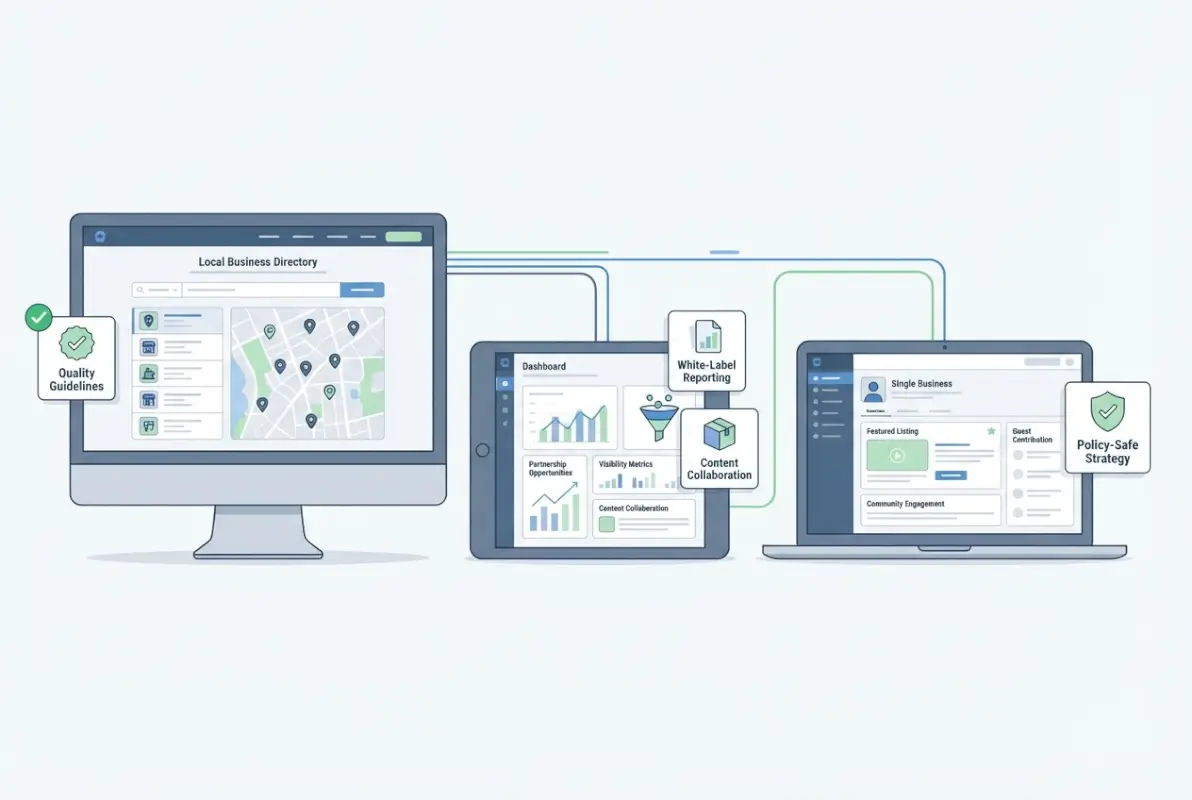
The Visibility Gap Analysis Approach
Here’s a prospecting method that works incredibly well. Pick a local business category relevant to your directory (dentists, contractors, restaurants, etc.), then run searches for the main service terms in your target area. Note which businesses rank prominently and which don’t appear at all despite having physical locations.
For the businesses absent from results, do a quick backlink check using tools like Moz or Ahrefs free tier. If they have fewer than 10 quality backlinks and aren’t ranking in the local pack, you’ve found a prime prospect. They have a visibility gap you can solve.
Crafting Your Initial Outreach
Cold emails rarely work for local businesses because they get bombarded with spammy SEO pitches daily. In-person visits during slow hours (mid-afternoon for restaurants, mid-morning for retail) yield dramatically better results. Walk in, introduce yourself as a fellow local business owner, and mention you run a community directory.
Skip the sales pitch entirely on the first visit. Just say you’re featuring outstanding local businesses and ask if they’d be interested in being included. Most will say yes to a free basic listing. Then, after they see the quality of your directory and the traffic it generates, upgrading them to a premium placement becomes much easier.
If in-person isn’t feasible, use highly personalized emails that reference specific details about their business. Mention a recent review, a unique service they offer, or something about their location. Generic templates get ignored; personalized messages that demonstrate you’ve actually researched them get responses.
Creating Pricing Packages That Convert Local Business Clients
Pricing for directory backlinks requires balancing perceived value, production costs, and market rates. Too cheap and businesses question your legitimacy; too expensive and you price out the small local operators who should be your bread and butter. After extensive testing across various markets, I’ve found tiered pricing with clear value differentiators works best.
The psychology behind effective pricing is offering choice. Most businesses won’t commit to a premium package immediately, but they’ll try a basic listing to test the waters. Once they see results (traffic, calls, visibility improvements), upgrading becomes a natural progression rather than a hard sell.

| Package Tier | Annual Price | What’s Included | Best For |
|---|---|---|---|
| Basic Listing | $150-300 | Standard listing, business info, one category, dofollow backlink with rel=”sponsored” | Testing the waters, budget-conscious businesses |
| Enhanced Listing | $400-600 | Featured badge, 3-5 categories, photo gallery, review integration, priority placement | Established businesses wanting more visibility |
| Premium Partnership | $800-1,200 | Homepage rotation, sponsored content, multiple backlinks, monthly reports, social mentions | Competitive markets, growth-focused businesses |
Justifying Your Pricing to Skeptical Prospects
When business owners question your rates (and they will), compare your offering to alternatives they’re already considering. A basic listing at $200 annually breaks down to $16.67 per month—less than a single Facebook ad, cheaper than one month of Yelp advertising, and a fraction of traditional Yellow Pages costs. Except unlike those options, your directory listing is a permanent asset that compounds in value over time.
Frame it as an investment in digital real estate rather than an expense. That $200 doesn’t disappear like ad spend; it buys them a permanent position in your directory that will drive referral traffic and improve their search rankings for years. According to research from BrightLocal’s consumer review survey, 87% of consumers read online reviews and directory listings before visiting local businesses.
Another effective tactic is offering quarterly payments instead of requiring full annual payment upfront. Many local businesses operate on tight cash flows, and breaking a $400 package into four $100 payments removes a significant objection. Some white label business directory software solutions include built-in payment processing that makes managing these subscription models seamless.
Crafting Sales Pitches That Resonate With Local Business Owners
The biggest mistake directory owners make is pitching backlinks using SEO terminology. Talking about “domain authority,” “link equity,” and “anchor text optimization” makes eyes glaze over. Local business owners don’t care about the mechanics; they care about outcomes they can measure in dollars and customers.
Instead of saying “Our directory provides high-authority dofollow backlinks that will improve your domain’s search rankings,” try this: “We connect 8,000 local customers per month with businesses like yours. Our featured listings typically see 15-30 new customer inquiries in the first 90 days.” See the difference? Same product, completely different framing.

The Results-Based Pitch Framework
Structure your pitch around the outcomes local businesses actually want. Here’s a framework that converts consistently:
- The Problem: “I noticed when I search for [their service] in [area], your business doesn’t show up even though you’ve been here for [years]”
- The Opportunity: “Our directory helps [number] local customers find businesses every month, and businesses in your category get an average of [specific metric] inquiries”
- The Proof: “For example, [similar business] joined three months ago and they’re now getting [specific results]”
- The Ask: “I’d love to feature your business in our [relevant category]. Can I show you what that would look like?”
Notice there’s zero SEO jargon. You’re speaking their language—visibility, customers, results—not Google’s algorithm updates or technical specifications.
Using Success Stories and Social Proof
Nothing sells like demonstrated success. Develop 3-5 case studies of local businesses that have benefited from your directory listings. These don’t need to be fancy—a simple one-pager with before/after metrics works perfectly:
- “Martinez Plumbing: Went from zero online visibility to 47 phone calls in 60 days”
- “Sarah’s Salon: Now ranking #2 for ‘hair salon [city]’ after three months, getting 12-15 new client bookings monthly”
- “Downtown Dental: Moved from page 3 to the local map pack, 34% increase in new patient inquiries”
Include actual testimonials with specific numbers whenever possible. Generic praise like “Great service!” doesn’t persuade anyone, but “We got 23 new customers in two months and our website traffic doubled” is incredibly compelling. For businesses looking to understand ways to access business park directory resources, showing concrete local examples makes the value immediately apparent.
Building Long-Term Relationships That Generate Recurring Revenue and Referrals
The real money in directory backlinks isn’t the initial sale—it’s the renewals and referrals that come from satisfied long-term clients. Treating backlink sales as transactional one-offs leaves massive value on the table. When you position yourself as a trusted digital advisor rather than just another vendor, clients stick around for years and become your best sales force.
I learned this lesson the expensive way after losing several early clients who felt like just numbers in a database. They paid for a year, saw some results, but didn’t renew because I never engaged with them after the initial setup. Now I treat every client as a long-term partnership opportunity, and my retention rate sits above 75% with consistent referrals flowing in.
Delivering Value Beyond the Backlink
To transform one-time buyers into multi-year partners, consistently provide value that exceeds their expectations. Here are tactics that dramatically improve retention:
- Monthly performance emails: Simple updates showing their listing traffic, clicks, and any ranking improvements you’ve noticed
- Quarterly strategy calls: 15-minute check-ins to review performance and suggest complementary marketing opportunities
- Periodic feature rotations: Surprise clients by moving them into premium positions or homepage features for a week
- Social media mentions: Highlight their business on your directory’s social channels periodically
- Networking introductions: Connect complementary businesses within your directory (the plumber who also does HVAC with the electrician who doesn’t)
These touches cost you almost nothing but make clients feel valued and appreciated. When renewal time comes, they’re not debating whether to continue—they’re asking if they can upgrade to a higher tier.
Creating a Referral System That Runs on Autopilot
Once you’ve built solid relationships with 15-20 local businesses, their networks become your most valuable lead source. Implementing a formal referral program incentivizes happy clients to introduce you to other businesses they know.
A simple structure works best: offer existing clients either $50 off their next renewal or a 20% commission for each new business they refer that becomes a paying client. Make the referral process effortless—provide unique referral links they can share or business cards they can hand out.
One contractor client of mine referred nine other businesses in his first 18 months, simply because we made him look good to his business network by improving his online presence. His receptionist became an internal champion, bragging to other business owners about how many new calls they were getting. That word-of-mouth advertising is worth more than any paid marketing you could run.
Measuring Success and Reporting Results That Matter to Local Businesses
To retain clients and justify rate increases over time, you need to demonstrate concrete, measurable value. But here’s the thing—the metrics SEO professionals care about (domain authority, referring domains, anchor text distribution) mean absolutely nothing to local business owners. They care about business outcomes: more calls, more customers, more revenue.
Your reporting should focus exclusively on metrics that tie directly to business results. Track directory-to-website traffic using UTM parameters, monitor position changes for their primary local keywords, measure click-through rates from your directory to their site, and whenever possible, track phone calls and form submissions that originated from your directory.
The Client Dashboard That Drives Renewals
Create a simple one-page monthly report for each client showing these key metrics:
- Directory profile views: How many people saw their listing this month
- Click-throughs to website: How many visitors clicked through to learn more
- Phone number clicks: How many people clicked to call (if you’re using trackable numbers)
- Ranking improvements: Position changes for 2-3 key local search terms
- Comparison to previous period: Month-over-month and year-over-year trends
Don’t just report numbers—contextualize them in business terms. Instead of “127 click-throughs this month,” say “127 potential customers visited your website from our directory this month, representing approximately $15,000 in potential revenue based on your average customer value.”
For businesses wondering how to organize active directory for business environment, showing clear, business-focused analytics helps them understand the value of maintaining current, comprehensive listings across multiple relevant platforms.
Frequently Asked Questions
How do I sell backlinks without violating Google’s guidelines?
Focus on selling enhanced directory placements that provide genuine user value (detailed business information, reviews, photos) rather than selling backlinks as standalone products. Always use rel=”sponsored” attributes on paid listings and clearly mark them as featured or sponsored placements. The backlink should be one component of a legitimate advertising package, not the sole product.
What pricing should I charge local businesses for directory backlinks?
Tiered pricing works best: $150-300 annually for basic listings, $400-600 for enhanced placements with premium features, and $800-1,200 for comprehensive partnerships including homepage features and sponsored content. Price based on your directory’s traffic, authority, and the competitive landscape of the local market you serve.
Should I use dofollow or nofollow links for paid directory listings?
Use dofollow links with the rel=”sponsored” attribute for paid listings. This properly signals to search engines that the link is part of a paid placement while still passing value. Avoid plain dofollow links on paid placements as this could be interpreted as attempting to manipulate search rankings.
How long does it take for local businesses to see results from directory backlinks?
Most local businesses see initial results within 30-60 days, including increased referral traffic and improved local search visibility. Significant ranking improvements typically take 2-4 months as search engines process the new citations and backlinks. Set realistic expectations during your sales process to avoid client disappointment.
What types of local businesses benefit most from directory backlinks?
Service-based businesses in competitive local markets see the greatest benefit: dentists, lawyers, contractors, salons, restaurants, and medical practices. Look for established businesses with strong offline reputations but weak digital presence—they typically have the budget to invest and see dramatic improvements quickly.
Can I offer free basic listings and still sell premium backlink packages?
Absolutely—this freemium model works exceptionally well for directories. Free basic listings build your content depth and allow businesses to test your platform’s value. Once they see initial traffic and results, upgrading to premium placements with enhanced backlinks becomes a natural progression rather than a cold sale.
How do I compete with established directories like Yelp or Yellow Pages?
Don’t compete directly—differentiate through niche focus, local expertise, and personalized service. Position your directory as a specialized alternative that provides targeted visibility and direct backlinks (which platforms like Yelp often don’t offer). Emphasize your community focus and lower competition for prominent placement compared to massive national directories.
What metrics should I track to prove ROI to local business clients?
Focus on business-outcome metrics rather than technical SEO measurements. Track directory profile views, click-throughs to their website, phone number clicks, contact form submissions, and local keyword ranking improvements. Translate these into business terms like “potential customers” and “estimated revenue opportunities” rather than raw numbers.
Should I require annual contracts or offer monthly billing for directory listings?
Annual contracts with quarterly payment options work best. This approach provides you with predictable recurring revenue while making the investment more manageable for cash-flow-conscious local businesses. Monthly billing creates too much administrative overhead and higher churn rates for the relatively low price points of directory listings.
How can I generate referrals from existing directory clients?
Implement a formal referral program offering either renewal discounts or cash commissions for successful referrals. Make the process effortless with unique referral links or business cards clients can distribute. Most importantly, deliver exceptional results and maintain regular communication—satisfied clients naturally refer others when their own success is visible and well-supported.
Ready to Transform Your Directory Into a Backlink Revenue Machine?
Selling backlinks to local businesses through your directory isn’t just profitable—it’s genuinely helpful when done right. You’re connecting businesses with customers, improving local search quality, and building a sustainable income stream that grows through renewals and referrals.
Start small: identify five local businesses in your area that could genuinely benefit from better online visibility. Research their current presence, craft personalized pitches highlighting specific opportunities, and offer them a risk-free basic listing to start. The relationships you build from these initial successes will form the foundation of a thriving directory business.
Remember, you’re not just selling links—you’re helping local businesses compete in an increasingly digital marketplace, connecting community members with quality services, and building genuine value for everyone involved. That mission-driven approach makes all the difference in how clients perceive and value what you offer.
Was this article helpful?